Prophet Harun عَلَيْهِ ٱلسَّلَامُ (Aaron)
Known as Harun in Arabic, Aaron was the brother and companion of Prophet Moses, blessed with eloquent speech and appointed as a prophet to assist Moses in his mission to Pharaoh and the Israelites.
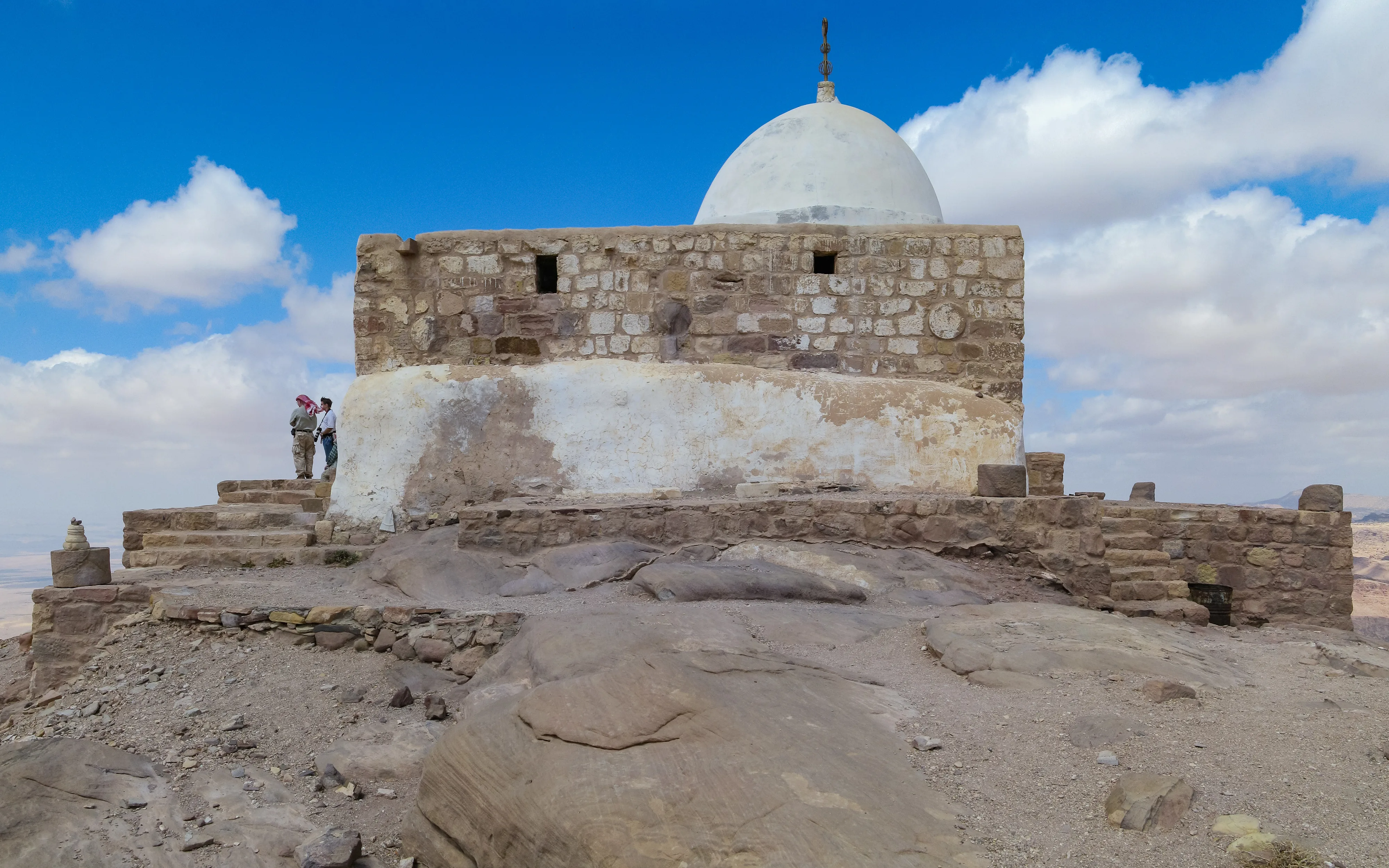
Prophet Aaron (Arabic: هارون, Harun) holds a unique position in Islamic tradition as both the brother and prophetic companion of Prophet Moses, blessed with eloquent speech and appointed by Allah to assist in the monumental mission of liberating the Israelites from Pharaoh's oppression and guiding them to the worship of Allah alone.
Family Background and Early Life
Noble Lineage
Aaron was born into the same blessed family as Moses. His father was Imran (Amram), a righteous man from the tribe of Levi, and his mother was Jochebed, a pious woman who feared Allah. His brother was Prophet Moses (Musa), the great prophet and lawgiver, and his sister was Miriam (Maryam), a righteous woman who played a crucial role in Moses' early life. Through his lineage, Aaron was a descendant of Jacob (Yaqub) through his son Levi. He was born during the period of Israelite slavery in Egypt, when Pharaoh was systematically oppressing the children of Israel and killing their male infants.
Early Character Development
From his youth, Aaron displayed characteristics that would later make him an ideal prophetic companion: an eloquent, natural ability to communicate clearly and persuasively, a gentle and patient temperament, a deep faith in Allah and commitment to righteousness, and an unwavering loyalty to his family and community. He was three years older than Prophet Moses and served as a protective older brother throughout their childhood and youth.
Divine Appointment as Prophet
Moses' Request for Support
When Allah commanded Prophet Moses to confront Pharaoh, Moses requested divine assistance:
Moses' Prayer: "And my brother Aaron is more fluent than me in speech, so send him with me as support, verifying me. Indeed, I fear that they will deny me." (Quran 28:34)
The Divine Response: "Allah] said, 'We will strengthen your arm through your brother and grant you both supremacy so they will not reach you. [It will be] through Our signs; you and those who follow you will be the predominant.'" (Quran 28:35)
Joint Prophetic Mission
Aaron's shared prophethood is affirmed in the Quran: "And We gave him out of Our mercy his brother Aaron as a prophet." (Quran 19:53) His appointment as a prophet was specifically to support Prophet Moses in their shared mission. Aaron's eloquence complemented Moses' other strengths, both were given prophetic authority and divine revelation, together they presented a stronger case to Pharaoh and the people, and their pairing reflected Allah's perfect planning in choosing both brothers.
The Quran emphasizes the distinctive nature of their prophetic partnership. Both held equal prophetic status as recipients of divine revelation, yet each had distinct roles suited to their abilities. They strengthened and encouraged one another, spoke with one voice despite their different styles, and shared a complementary authority in which Aaron's standing derived from both his prophethood and his role as Moses' assistant.
Allah specifically mentions strengthening Moses through Aaron: "We will strengthen your arm through your brother." (Quran 28:35) This strengthening took several forms, including the emotional support of companionship and encouragement, practical assistance in sharing the burden of leadership, the enhanced communication of articulating the message more effectively, the strategic advantage of a united prophetic front, and the spiritual reinforcement of mutual prayer and reliance on Allah.
The Mission to Pharaoh
Allah instructed the two brothers together: "Go, both of you, to Pharaoh. Indeed, he has transgressed. And speak to him with gentle speech that perhaps he may be reminded or fear [Allah]." (Quran 20:43-44) Their approach accordingly combined gentle speech that relied on wisdom and kindness rather than harshness, a clear presentation of the call to monotheism, the support of miraculous divine signs, and patient persistence in continuing their mission despite rejection.
The Confrontation with Pharaoh
The Initial Meeting
Aaron accompanied Moses to Pharaoh's court, where they delivered Allah's message. Their message called on Pharaoh to worship Allah alone and abandon the false gods of Egypt, to release the Israelites so they might leave Egypt and worship freely, to accept divine guidance and follow the path of righteousness, and it warned of the divine punishment that would follow continued oppression. Pharaoh rejected their message and challenged them to prove their divine mission through miracles.
The Contest with the Magicians
Pharaoh gathered his best magicians to compete with Moses and Aaron. The contest ended in divine victory: "And We inspired to Moses, 'Throw your staff,' and at once it devoured what they were falsifying. So the truth was established, and abolished was what they were doing." (Quran 7:117-118) When they witnessed the true miracle, the magicians immediately believed: "The magicians fell down in prostration. They said, 'We have believed in the Lord of the worlds, The Lord of Moses and Aaron.'" (Quran 7:120-122)
Aaron's presence and support were crucial in this pivotal moment that demonstrated Allah's power over Pharaoh's false claims.
The Exodus and Wilderness Journey
Leading the Israelites
After the plagues and Pharaoh's eventual permission for the Israelites to leave, Aaron played a crucial role in the Exodus. He helped to organize and lead the massive migration, provided religious instruction and encouragement, assisted with the logistical challenges of the journey, and worked to keep the diverse tribes together.
The Crossing of the Red Sea
The Miraculous Escape: When Pharaoh changed his mind and pursued the Israelites, Aaron stood with Prophet Moses as Allah parted the Red Sea:
Divine Intervention: "Then We inspired to Moses, 'Strike with your staff the sea,' and it parted, and each portion was like a great towering mountain." (Quran 26:63)
Aaron's faith and support were essential during this moment of crisis and divine intervention.
The Challenge of the Golden Calf
Moses' Absence on Mount Sinai
When Moses went to Mount Sinai to receive the Torah, he left Aaron in charge of the Israelites. Aaron was entrusted with spiritual leadership in maintaining the people's faith and worship, with community governance in managing disputes and daily affairs, with moral guidance in ensuring adherence to divine commands, and with preserving the unity of the tribes in Moses' absence.
The Crisis of Idolatry
In Prophet Moses' absence, some Israelites demanded that Aaron make them an idol to worship. Aaron warned them against it: "And Aaron had already told them before [the return of Moses], 'O my people, you are only being tested by it, and indeed, your Lord is the Most Merciful, so follow me and obey my order.'" (Quran 20:90) He faced an extremely challenging situation, caught between the popular pressure of a majority demanding idolatry, the fear that refusal might split the community, the limits of an authority that did not match that of Moses, and the spiritual responsibility of knowing that idolatry was forbidden.
The Golden Calf Incident
The Creation of the Idol: Despite Aaron's opposition, a man named Samiri created a golden calf that appeared to make sounds, leading many Israelites to worship it.
Aaron's Response: Aaron continued to oppose the idolatry and tried to guide the people back to the worship of Allah alone, but he was unable to prevent the widespread apostasy.
Moses' Return and Confrontation
The Angry Return: When Moses returned and saw the golden calf, he was furious:
The Confrontation: "Moses] said, 'O Aaron, what prevented you, when you saw them going astray, From following me? Then have you disobeyed my order?'" (Quran 20:92-93)
Aaron's Explanation: "Aaron] said, 'O son of my mother, do not seize [me] by my beard or by my head. Indeed, I feared that you would say, "You caused division among the children of Israel, and you did not observe [or await] my word."'" (Quran 20:94)
The Resolution: Moses understood Aaron's difficult position and the wisdom of his approach in trying to maintain unity while opposing the idolatry.
Aaron's Role as High Priest
Establishment of the Priesthood
After the golden calf incident was resolved, Allah established Aaron and his descendants as the priestly family for the Israelites:
Aaron was chosen to serve as the first High Priest, responsible for conducting sacrifices and rituals, instructing people in divine commands, providing religious counsel and direction, and overseeing the Tabernacle and its services. The establishment of his priesthood represented several important principles: the priest served as an intermediary in worship between Allah and the people, created structured and consistent religious practices, established a family line dedicated to religious service, recognized the special duties required for spiritual leadership, and provided a central religious authority that reinforced community cohesion among the Israelites.
Aaron was also given special garments that symbolized his sacred role and the dignity of his office. Each garment represented aspects of spiritual leadership, marked the priest as set apart for sacred service, reflected the importance of his role, and served the practical function of appropriate attire for conducting religious ceremonies.
Spiritual Leadership
As High Priest, Aaron's responsibilities included interpreting divine law by explaining Allah's commands to the people, mediating disputes according to divine guidance, offering the sacrifices that maintained the people's relationship with Allah, and blessing the community by invoking Allah's favor upon it. His priestly duties encompassed multiple dimensions, including the daily sacrifices that maintained regular worship and offerings, leading the community in festival observances, conducting purification rituals for spiritual cleansing, seeking divine guidance in consultation with Allah, caring for the Ark of the Covenant and other sacred objects, and teaching the people the divine law given to Moses in the Torah.
Aaron exemplified the qualities needed for spiritual leadership: humility in recognizing his dependence on Allah, dedication in fully committing to his sacred duties, compassion in caring for the spiritual needs of all people, integrity in maintaining the highest moral standards, patience in dealing gently with people's weaknesses and struggles, and wisdom in applying divine law with understanding and discernment.
Death and Legacy
The End of Aaron's Life
Aaron died before the Israelites entered the Promised Land, passing away in the wilderness during their forty-year journey:
Peaceful Death: Islamic tradition describes Aaron's death as peaceful, with Moses and the community mourning his loss.
Succession: Aaron's son Eleazar succeeded him as High Priest, continuing the priestly lineage that Aaron had established.
Lasting Impact
Aaron's establishment of the priesthood had lasting effects, creating structured religious practices, establishing systems for teaching divine law, providing ongoing spiritual guidance, and founding practices that would continue for generations. His role as Moses' supporter also stands as a model of collaborative leadership in working toward common goals, of complementary skills used to strengthen a shared mission, of loyal partnership maintained through difficulties, and of responsibility divided according to individual strengths.
Aaron in Islamic Tradition
Quranic Mentions
Aaron is mentioned numerous times in the Quran, always in positive terms. He is clearly identified as a prophet chosen by Allah, consistently shown as Moses' faithful companion, blessed with special abilities and responsibilities, and praised for his faith and dedication.
Prophetic Traditions
The hadith literature contains various references to Aaron. He is praised for his loyalty to Moses, recognized for his communication abilities, honored for his spiritual guidance, and commended for his perseverance through trials.
Conclusion
Prophet Aaron stands as a remarkable example of supportive leadership, eloquent communication, and faithful service to Allah. His partnership with Moses demonstrates the power of collaborative ministry and the importance of using our individual gifts to support common causes.
Aaron's eloquence complemented Moses' other strengths, showing how Allah brings together different abilities to accomplish His purposes. His role as High Priest established important precedents for organized worship and spiritual leadership that would influence religious practice for generations.
The challenges Aaron faced, particularly during the golden calf incident, provide valuable lessons about leadership under pressure, moral courage, and the complexity of maintaining both principles and unity. His response to these difficulties shows the importance of seeking Allah's guidance and making decisions based on long-term wisdom rather than immediate popularity.
In Islamic tradition, Aaron is remembered for using his gifts in the service of Allah, supporting Moses through the trials of their shared mission, and maintaining faith and integrity in difficult circumstances. His life is held to illustrate how differing abilities can combine in a single prophetic mission, and how faithful partnership and mutual support functioned within the leadership of the Israelites.
References and Further Reading
Primary Islamic Sources
- Quran, Surah Ta-Ha (20:29–36) — Moses's supplication: "And appoint for me a minister from my family — Aaron, my brother."
- Quran, Surah Ta-Ha (20:90–94) — Aaron's role during the golden calf incident and his defense.
- Quran, Surah Al-A'raf (7:142, 150–151) — Aaron left in charge during Moses's absence on Mount Sinai.
- Quran, Surah Maryam (19:53) — "And We gave him out of Our mercy his brother Aaron as a prophet."
- Quran, Surah As-Saffat (37:114–122) — "And We did certainly confer favor upon Moses and Aaron."
- Quran, Surah Al-Furqan (25:35) — "And We gave Moses the Scripture and made with him his brother Aaron an assistant."
- Quran, Surah Ash-Shu'ara (26:13) — Moses's request for Aaron's help due to his own speech difficulty.
- Sahih al-Bukhari, Book of Virtues of the Companions, Hadith 3706 — The Prophet to Ali: "You are to me as Aaron was to Moses, except there is no prophet after me."
- Sahih Muslim, Book of Virtues of the Companions, Hadith 2404 — Same hadith narrated through different chains.
Classical Islamic Sources
- Ibn Kathir, Ismail ibn Umar. Qisas al-Anbiya (Stories of the Prophets), Chapter on Harun. Beirut: Dar al-Kutub al-Ilmiyyah, 2003. [Original c. 1370 CE]
- Ibn Kathir, Ismail ibn Umar. Al-Bidaya wa al-Nihaya (The Beginning and the End), Vol. 1. Beirut: Dar al-Fikr, 1986. [Original c. 1370 CE]
- Al-Tabari, Muhammad ibn Jarir. Tarikh al-Rusul wa al-Muluk (History of the Prophets and Kings), Vol. 1. Cairo: Dar al-Ma'arif, 1960. [Original c. 915 CE]
- Al-Tha'labi, Ahmad ibn Muhammad. Qisas al-Anbiya (Tales of the Prophets), section on Harun. Beirut: Dar al-Kutub al-Ilmiyyah, 2004. [Original c. 1035 CE]
- Al-Qurtubi, Muhammad ibn Ahmad. Al-Jami' li Ahkam al-Quran, commentary on Surah Ta-Ha 20:29–36. Cairo: Dar al-Kutub al-Misriyyah, 1964. [Original c. 1273 CE]
Academic and Scholarly Sources
- Wheeler, Brannon M. Prophets in the Quran: An Introduction to the Quran and Muslim Exegesis. London: Continuum, 2002.
- Tottoli, Roberto. Biblical Prophets in the Quran and Muslim Literature. London: Routledge, 2002.
- Pregill, Michael E. The Golden Calf Between Bible and Quran: Scripture, Polemic, and Exegesis from Late Antiquity to Islam. Oxford: Oxford University Press, 2020.
- Brinner, William M., trans. The History of al-Tabari, Vol. III: The Children of Israel. Albany: SUNY Press, 1991.
- Thackston, Wheeler M., trans. The Tales of the Prophets of al-Kisa'i. Boston: Twayne Publishers, 1978.
- Schwarzbaum, Haim. Biblical and Extra-Biblical Legends in Islamic Folk-Literature. Walldorf-Hessen: Verlag für Orientkunde, 1982.
Further Reading
- Renard, John. Friends of God: Islamic Images of Piety, Commitment, and Servanthood. Berkeley: University of California Press, 2008.
- Newby, Gordon Darnell. The Making of the Last Prophet: A Reconstruction of the Earliest Biography of Muhammad. Columbia: University of South Carolina Press, 1989.
- Berkey, Jonathan P. The Formation of Islam: Religion and Society in the Near East, 600–1800. Cambridge: Cambridge University Press, 2003.
- Neuwirth, Angelika. The Quran and Late Antiquity: A Shared Heritage. Oxford: Oxford University Press, 2019.
Mentioned In
7 articles reference this topic
More from Age of the Prophets
Asiya bint Muzahim - Wife of Pharaoh
Asiya bint Muzahim, wife of Pharaoh during Prophet Musa's time, is revered in Islam as a model of faith. She secretly embraced belief in Allah and chose martyrdom over renouncing it, and the Qur'an preserves her prayer for a house in Paradise.
Maryam bint Imran (Mary, Mother of Jesus)
Maryam bint Imran (Mary), mother of Prophet Isa (Jesus), holds a uniquely exalted place in Islam as the only woman named in the Quran. Revered for her purity, devotion, and the miraculous virgin birth of Jesus, she is regarded as one of the greatest women and a model of faith.
Prophet Adam عَلَيْهِ ٱلسَّلَامُ
The first human being and the first Prophet in Islam, created by Allah as His khalifah (vicegerent) on Earth. Father of humanity, Adam's story encompasses creation, paradise, the fall, repentance, and the beginning of human civilization.
Prophet al-Yasa عَلَيْهِ ٱلسَّلَامُ (Elisha)
Known as Al-Yasa in Arabic, Elisha was the successor of Prophet Elijah, blessed with a double portion of his spirit and known for numerous miracles of healing, provision, and resurrection during his ministry to Israel.