Prophet Yaqub عَلَيْهِ ٱلسَّلَامُ (Jacob)
Prophet Yaqub (Jacob), grandson of Ibrahim and father of the twelve tribes of Israel, endured decades of grief over the loss of his beloved son Yusuf with a patience that became the Quranic paradigm of beautiful endurance (sabr jamil).
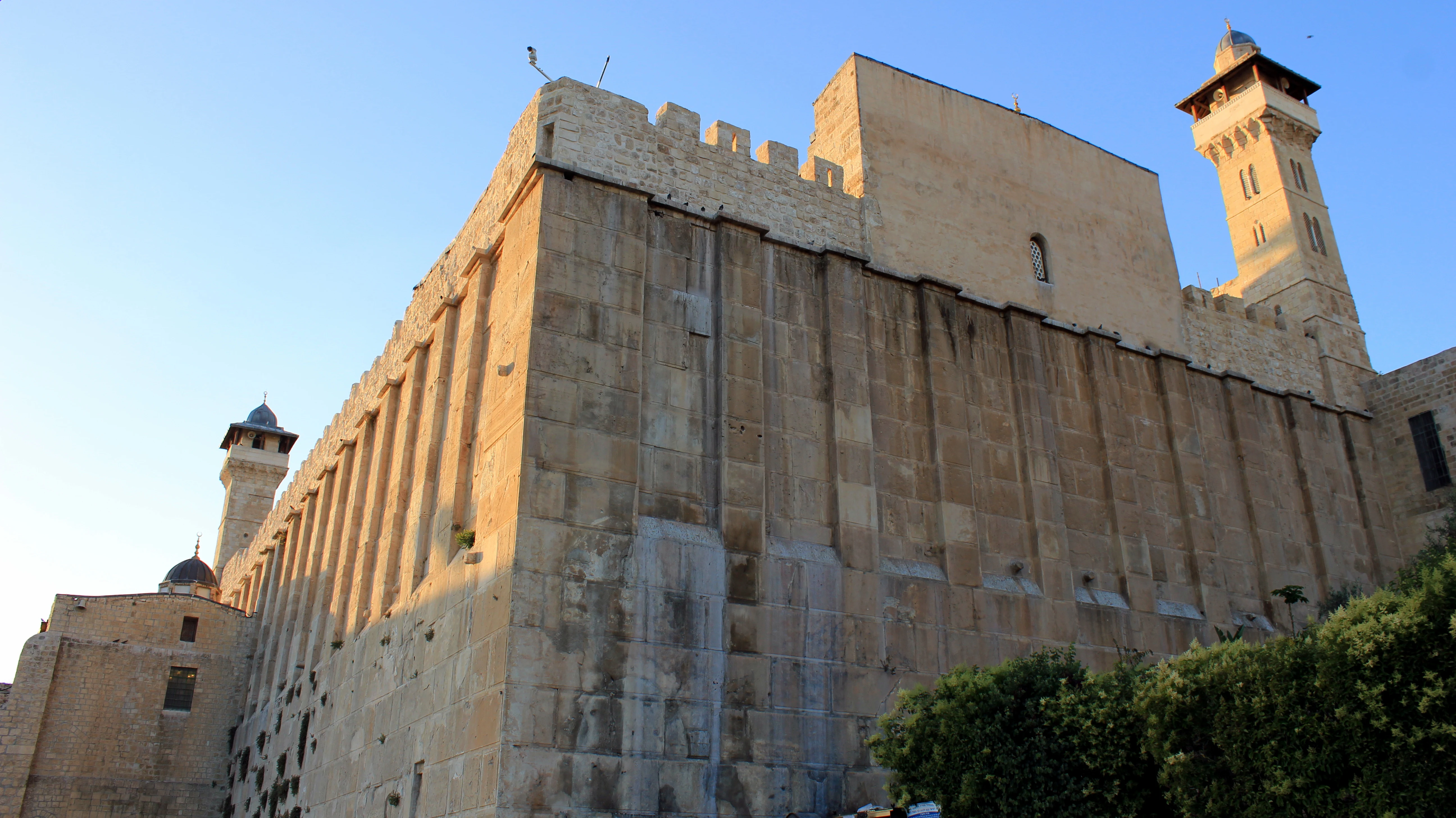
Prophet Yaqub (Arabic: يعقوب, Ya'qūb), known in the Judeo-Christian tradition as Jacob, was the son of Prophet Isaac (Ishaq) and the grandson of Prophet Ibrahim (Abraham). He is one of the great patriarchal prophets of Islam — the direct link between Ibrahim's original covenant with God and the nation of Israel (Banu Isra'il) that would produce the majority of the Old Testament prophets, from Joseph (Yusuf) through Moses (Musa), David (Dawud), Solomon (Sulaiman), and Jesus (Isa).
Yaqub is also known by the name Isra'il (إسرائيل, "Israel") — and it is from him that the Israelites (Banu Isra'il, the Children of Israel) derive their name. His twelve sons became the ancestors of the twelve tribes of Israel — the community to whom the Torah would be revealed through Musa and through whom the vast majority of Biblical prophecy would flow.
In the Quran, Yaqub's story is inseparable from that of his son Yusuf (Joseph) — whose narrative occupies the entirety of Surah Yusuf (12), the Quran's longest continuous story. Within that narrative, Yaqub occupies the role of the patient father — the patriarch who endures decades of agonising separation from his beloved son with a grief so profound that it blinds him physically, yet who never loses faith in God's ultimate mercy. His patience (sabr) became the Quranic paradigm of what the Prophet Muhammad ﷺ called sabr jamil — "beautiful patience" — a patience that endures without complaint, without bitterness, and without loss of hope in God.
The Quran mentions Yaqub by name sixteen times and references him indirectly throughout Surah Yusuf. He appears as a man of profound prophetic insight (correctly interpreting Yusuf's dream, warning him of his brothers' jealousy), as a model of unshakeable trust in God's plan despite devastating personal loss, and as a dying patriarch whose final words to his sons established the creed of monotheism that would define his descendants' identity for millennia.
Genealogy and Position in Prophetic History
The Abrahamic Lineage
Yaqub occupies a pivotal position in the prophetic genealogy. His grandfather was Ibrahim (Abraham) — the Friend of God, builder of the Kaaba, and father of monotheism — and his father was Ishaq (Isaac), the miraculous son of Ibrahim and Sarah, born in their old age. His mother was Rebecca (Rifqa), the wife of Ishaq, mentioned in Islamic tradition though not by name in the Quran, and he had a twin brother, Esau (al-'Is), according to Islamic and biblical traditions. Yaqub himself had twelve sons, including Yusuf (Joseph) and Binyamin (Benjamin).
Through this lineage, Yaqub connects Ibrahim's covenant directly to the nation of Israel — transforming a single family's faith into a people's destiny. The Quran acknowledges this continuity explicitly: Ibrahim prayed for righteous descendants, and God answered through the chain of Isaac, Jacob, and the twelve tribes.
The Name "Israel"
The Quran uses the name "Israel" (Isra'il) as an alternative designation for Yaqub: "All food was lawful to the Children of Israel except what Israel [Yaqub] had made unlawful to himself before the Torah was revealed" (Quran 3:93). Islamic tradition explains that the name means "servant of God" ('abd Allah) or "one who journeyed by night with God" — though the etymological derivation varies among commentators.
The designation "Children of Israel" (Banu Isra'il) — one of the most frequently used terms in the Quran (occurring over 40 times) — derives directly from Yaqub, making him the eponymous ancestor of the community that received the Torah, the Psalms, and the Gospel, and that produced the majority of prophets mentioned in the Quran.
Early Life and Divine Selection
Birth and Youth
According to Islamic tradition (drawing on both Quranic references and supplementary narrations), Yaqub was born in Palestine (Canaan) as one of the twin sons of Ishaq. His early life was spent in the pastoral environment of the patriarchal household — the same land that Ibrahim had migrated to from Mesopotamia and that God had described as "blessed for the worlds" (21:71).
The Quran emphasises that Yaqub's prophethood and guidance were divine gifts rather than earned achievements:
"And We gave him Isaac and Jacob — all [of them] We guided. And Noah, We guided before; and among his descendants, David and Solomon and Job and Joseph and Moses and Aaron. Thus do We reward the doers of good." (Quran 6:84)
"And We gave to him Isaac and Jacob and placed in his descendants prophethood and scripture." (Quran 29:27)
These passages establish that Yaqub's selection was part of God's deliberate plan to create a prophetic dynasty — a family through which divine guidance would flow for centuries. The prophethood was not merely individual but dynastic — placed "in his descendants" as a continuing inheritance.
Prophetic Knowledge and Spiritual Insight
From his earliest mention in the Quran (within Surah Yusuf), Yaqub is characterised by profound spiritual insight — a prophetic perception that sees beyond surface appearances to hidden realities. This insight manifests most clearly in his immediate recognition of the significance of Yusuf's dream and his warning to the young boy:
"He [Yaqub] said, 'O my son, do not relate your vision to your brothers or they will contrive against you a plan. Indeed, Satan, to man, is a manifest enemy.'" (Quran 12:5)
Yaqub understood instantly that the dream (eleven stars, the sun, and the moon prostrating to Yusuf) prophesied Yusuf's future elevation — and that this knowledge, if shared with his jealous older brothers, would endanger Yusuf. This combination of spiritual perception (understanding the dream's meaning) and practical wisdom (knowing the human consequences of sharing it) characterises Yaqub throughout the narrative.
The Twelve Sons and the Household
Yaqub's Family
Islamic tradition records that Yaqub married and had twelve sons who became the ancestors of the twelve tribes of Israel. The Quran names only two of these sons explicitly — Yusuf (Joseph) and Binyamin (Benjamin) — while referring to the others collectively as "the brothers" (ikhwat Yusuf). The older brothers are characterised in Surah Yusuf as jealous, impulsive, and capable of cruelty — yet ultimately repentant.
The two youngest sons — Yusuf and Binyamin — were born of a different mother (Rachel, in the biblical account) from the older ten, and it was this maternal distinction that partly fuelled the older brothers' jealousy: they perceived that their father loved Yusuf and Binyamin more than them.
The Special Love for Yusuf
The Quran records the brothers' complaint:
"When they said, 'Yusuf and his brother [Binyamin] are more beloved to our father than we, while we are a strong band. Indeed, our father is in clear error.'" (Quran 12:8)
Was Yaqub's preference for Yusuf a failure of parental fairness, as the brothers alleged? Islamic scholars have addressed this question carefully. The dominant view is that Yaqub's love for Yusuf was not mere favouritism but prophetic recognition — he perceived in Yusuf the signs of future prophethood, extraordinary character, and divine destiny that justified special attention and care. A prophet does not err in such judgments; rather, the brothers' inability to perceive what Yaqub perceived was their limitation, not his fault.
Nevertheless, the episode teaches a practical lesson about family dynamics: even if a parent's differential treatment is spiritually justified, the human reality of sibling jealousy remains dangerous. Yaqub's warning to Yusuf (not to tell the brothers about his dream) shows that he was fully aware of this danger — yet the divine decree unfolded as God willed.
The Great Trial: The Loss of Yusuf
The Brothers' Plot
The central drama of Yaqub's life — and the event that defined his spiritual legacy — was the loss of his beloved son Yusuf. The older brothers, consumed by jealousy, devised a plan to remove Yusuf from their father's presence:
"Kill Yusuf or cast him out to [another] land; the face [attention] of your father will [then] be only for you, and you will be after that a righteous people." (Quran 12:9)
They asked Yaqub to allow Yusuf to accompany them on a trip, promising to protect him. Yaqub's reply reveals his foreboding:
"He said, 'Indeed, it saddens me that you should take him, and I fear that a wolf would eat him while you are of him unaware.' They said, 'If a wolf should eat him while we are a [strong] band, then we would be losers.'" (Quran 12:13–14)
Yaqub's mention of the wolf was not a random concern — scholars note that he inadvertently provided the brothers with their alibi. Despite his reservations, Yaqub allowed Yusuf to go — trusting in God's protection while sensing (prophetically) that something terrible would occur.
The False Report
The brothers threw Yusuf into a well and returned to their father with Yusuf's shirt, stained with false blood, claiming:
"They said, 'O our father, indeed we went racing each other and left Yusuf with our possessions, and a wolf ate him. But you would not believe us, even if we were truthful.'" (Quran 12:17)
Yaqub's response to this report is one of the most theologically significant moments in the entire Quran:
"He said, 'Rather, your souls have enticed you to something, so patience is most fitting (fa-sabrun jamil). And Allah is the one sought for help against that which you describe.'" (Quran 12:18)
Sabr Jamil: Beautiful Patience
The phrase sabr jamil (صبر جميل, "beautiful patience") — uttered by Yaqub at this moment of devastating loss — became one of the defining concepts of Islamic spiritual ethics. The Prophet Muhammad ﷺ was asked about the meaning of "beautiful patience" and explained: "It is patience without complaint" (sabr la shakwa fihi) — patience that endures inwardly without broadcasting grief or accusing God of injustice.
Classical scholars have elaborated on the dimensions of sabr jamil. It is not the absence of grief: Yaqub grieved intensely — the Quran will later describe him weeping until blind — and beautiful patience does not mean emotional numbness. Rather, it is the absence of complaint to others, for Yaqub did not broadcast his grief publicly or seek human pity but contained his sorrow between himself and God. It is likewise the absence of accusation against God, since Yaqub never questioned God's wisdom, never asked "why me?", and never expressed doubt in God's ultimate mercy. It is the preservation of hope, for even decades later Yaqub continued to hope for Yusuf's return, telling his sons: "Do not despair of relief from Allah. Indeed, no one despairs of relief from Allah except the disbelieving people" (12:87). And it is the maintenance of worship, as Yaqub continued his prophetic duties and his devotion to God throughout his grief, never allowing personal tragedy to interrupt his service.
This concept became central to Islamic ethics: the believer who endures hardship without losing faith, without complaining to creation, and without abandoning hope is practising the patience of Yaqub — the highest form of human endurance.
The Decades of Grief
The Intensity of Yaqub's Sorrow
The Quran does not skip over Yaqub's grief or present him as stoically unmoved. On the contrary, it describes his sorrow in visceral, physical terms:
"And he turned away from them and said, 'Oh, my sorrow over Yusuf,' and his eyes became white [blind] from grief, for he was [of that] a suppressor [of tears]." (Quran 12:84)
This passage reveals several things. It shows the depth of his grief: Yaqub's sorrow was so intense and sustained that it caused physical blindness, decades of weeping destroying his eyesight. It shows the privacy of that grief, for he "turned away from them" — his sorrow was a private matter between himself and God, not a public performance. And it shows the suppression of tears (kazim): he restrained his grief, not expressing it in ways that would constitute complaint against God's decree, yet the suppressed tears still manifested physically through blindness.
The Brothers' Criticism
When the brothers saw their father's continued grief — years after Yusuf's disappearance — they criticised him:
"They said, 'By Allah, you will not cease remembering Yusuf until you become fatally ill or become of those who perish.'" (Quran 12:85)
Yaqub's reply is a masterpiece of prophetic dignity:
"He said, 'I only complain of my suffering and my grief to Allah, and I know from Allah that which you do not know.'" (Quran 12:86)
Two profound principles emerge from this response:
First: "I only complain of my suffering and my grief to Allah" — Yaqub's grief was real and he acknowledged it openly, but his complaint was directed exclusively to God, not to people. This is the essence of sabr jamil: not the denial of pain but the proper direction of one's complaints. A believer may pour out their heart to God in private supplication without this constituting impatience.
Second: "I know from Allah that which you do not know" — even after decades without news of Yusuf, Yaqub maintained prophetic certainty that God's promise would be fulfilled. He possessed knowledge — whether through revelation, spiritual insight, or unshakeable trust in the divine character — that his son was alive and that reunion was coming. This knowledge sustained him through the longest and most painful wait recorded in the Quran.
The Duration of the Separation
Islamic tradition varies in estimating the duration of Yaqub's separation from Yusuf — most classical scholars (drawing on al-Tabari and others) estimate approximately 40 years (some say less, some say more). Regardless of the exact period, the separation lasted decades — transforming Yaqub from a vigorous patriarch into a blind, aged man weakened by sustained sorrow. The length of the trial is itself theologically significant: God's tests are not necessarily brief or easily resolved. Some trials last a lifetime — and beautiful patience means enduring not for days or months but for as long as God decrees.
The Second Trial: The Loss of Binyamin
Joseph's Test
When famine drove Yaqub's sons to Egypt seeking grain, they unknowingly stood before their brother Yusuf — now the vizier of Egypt, managing the kingdom's grain distribution during the seven years of plenty. Yusuf, recognising his brothers, devised a plan to bring his younger brother Binyamin (Benjamin) to Egypt.
He told the brothers: bring me your younger brother, or receive no further grain. When the brothers returned and asked Yaqub's permission to take Binyamin, the old patriarch's response echoed the original tragedy:
"He said, 'Should I entrust you with him except [under coercion] as I entrusted you with his brother [Yusuf] before? But Allah is the best guardian, and He is the most merciful of the merciful.'" (Quran 12:64)
Despite his justified distrust, Yaqub ultimately allowed Binyamin to go — extracting from the brothers a solemn oath by God to return him unless they were overwhelmed by circumstances beyond their control.
The Devastating News
When the brothers returned without Binyamin — who had been detained in Egypt by Yusuf through a stratagem involving a royal cup — Yaqub faced the loss of his second beloved son. His response again invoked beautiful patience:
"He said, 'Rather, your souls have enticed you to something, so patience is most fitting (fa-sabrun jamil). Perhaps Allah will bring them to me all together. Indeed, it is He who is the Knowing, the Wise.'" (Quran 12:83)
Remarkably, even at this second devastating blow, Yaqub's response was identical in structure to his first: "beautiful patience" and trust in God. But now he added a note of defiant hope: "Perhaps Allah will bring them to me all together" — not only Binyamin but also Yusuf, whose return he had never ceased to expect. The accumulation of losses did not weaken his faith but somehow intensified his hope — a spiritual paradox that represents the deepest mystery of prophetic patience.
The Command: "Do Not Despair of God's Mercy"
The Instruction to Search
After the loss of Binyamin, and as his grief reached its peak, Yaqub did something remarkable: he sent his sons back to Egypt with the instruction to search — not merely for Binyamin but for Yusuf as well:
"O my sons, go and find out about Yusuf and his brother and despair not of relief from Allah. Indeed, no one despairs of relief from Allah except the disbelieving people." (Quran 12:87)
This verse contains one of the most powerful theological principles in the Quran: despair of God's mercy is itself a form of disbelief. As long as a person is alive, they must maintain hope in God's capacity to change their circumstances — because to despair is to deny God's power and mercy, which is a contradiction of tawhid itself.
That Yaqub could articulate this principle after decades of grief, physically blind from weeping, having lost two sons — demonstrates a faith so deep that it transcends all circumstantial evidence. Logic suggested Yusuf was dead (he had been gone for decades). Experience suggested the brothers could not be trusted (they had lost Binyamin too). Yet Yaqub's faith operated on a plane beyond logic and experience — on the plane of certainty in God's promises and God's character.
This verse has become one of the most quoted and most spiritually sustaining passages in the Islamic tradition — recited by those facing prolonged hardship, chronic illness, family separation, and apparently hopeless situations. Yaqub's example proves that hope in God is not naive optimism but profound theological conviction: the God who is all-powerful and all-merciful will not abandon His servant, however long the test continues.
The Miraculous Reunion
Yusuf Reveals Himself
When the brothers returned to Egypt and stood before the vizier in their poverty and need, Yusuf finally revealed his identity:
"He said, 'Do you know what you did with Yusuf and his brother when you were ignorant?' They said, 'Are you indeed Yusuf?' He said, 'I am Yusuf, and this is my brother. Allah has certainly been gracious to us. Indeed, he who fears Allah and is patient, then indeed, Allah does not allow to be lost the reward of those who do good.'" (Quran 12:89–90)
Yusuf's response — attributing everything to God's grace and to the principle that piety and patience (taqwa and sabr) are always ultimately rewarded — directly validated his father's decades of beautiful patience. Yaqub's trust had not been in vain.
The Shirt and the Restoration of Sight
Yusuf sent his shirt back to Canaan with the instruction:
"Take this, my shirt, and cast it over the face of my father; he will become seeing. And bring me your family, all together." (Quran 12:93)
When the brothers arrived with the shirt and placed it over Yaqub's blind eyes, his sight was miraculously restored:
"And when the bearer of good tidings arrived, he cast it over his face, and he returned [once again] seeing. He said, 'Did I not tell you that I know from Allah that which you do not know?'" (Quran 12:96)
This restoration — blindness caused by grief healed by the return of the beloved — operates on both physical and symbolic levels. Physically, God reversed the damage caused by decades of weeping. Symbolically, the return of Yusuf restored Yaqub's "vision" — his ability to see God's wisdom fully manifested.
His words — "Did I not tell you that I know from Allah that which you do not know?" — are not triumphalism but vindication of faith. He had maintained, throughout forty years of grief and against all apparent evidence, that God would bring Yusuf back. And God did.
The Journey to Egypt and the Fulfilment of the Dream
The Migration to Egypt
Following the reunion, Yaqub and his entire family migrated to Egypt to live with Yusuf, who by now governed the kingdom's agriculture and economy:
"And when they entered upon Yusuf, he took his parents to himself and said, 'Enter Egypt, Allah willing, safe [and secure].'" (Quran 12:99)
The Prostration: The Dream Fulfilled
The climax of the entire Surah Yusuf — and the vindication of everything that had occurred — came when Yaqub and his family prostrated before Yusuf:
"And he raised his parents upon the throne, and they fell down before him in prostration. And he said, 'O my father, this is the explanation of my vision of before. My Lord has made it reality.'" (Quran 12:100)
The dream that had begun the entire narrative — eleven stars, the sun, and the moon prostrating to Yusuf — was now fulfilled: the eleven brothers (stars), and the father and mother/aunt (sun and moon) had all bowed before Yusuf's authority. The circle was complete. What had begun with a child's dream, passed through jealousy, separation, slavery, prison, and decades of grief, had culminated in a family reunited under divine providence.
Yusuf then acknowledged that the entire journey — every painful step — was God's design:
"My Lord has been good to me when He took me out of prison and brought you from the desert-life after Satan had induced [estrangement] between me and my brothers. Indeed, my Lord is Subtle in what He wills. Indeed, it is He who is the Knowing, the Wise." (Quran 12:100)
The Deathbed of Yaqub: The Final Testament
The Creedal Statement
One of the most theologically important moments in Yaqub's life — preserved in the Quran as a model for all believing parents — is his deathbed conversation with his sons:
"Or were you witnesses when death approached Yaqub, when he said to his sons, 'What will you worship after me?' They said, 'We will worship your God and the God of your fathers, Ibrahim and Ismail and Ishaq — one God. And we are Muslims [in submission] to Him.'" (Quran 2:133)
This passage is remarkable for several reasons:
First, it establishes that the primary concern of a dying prophet is the continuation of monotheism in his descendants. Yaqub's final words are not about property, inheritance, or worldly affairs but about tawhid — the worship of God alone.
Second, it links Yaqub's sons back through the entire prophetic chain — "your God and the God of your fathers, Ibrahim and Ismail and Ishaq" — creating a consciousness of religious continuity across generations. The sons' faith is not new but inherited — a continuation of the same worship that began with Ibrahim.
Third, it describes the sons as "Muslims" (muslimun) — explicitly applying the term to the pre-Islamic Israelite community. This supports the Quranic thesis that all genuine prophets and their followers were "Muslim" (submitters to God) — and that institutional Judaism and Christianity represent later developments, not the original religion of the patriarchs.
Fourth, the Quran addresses its audience directly: "Or were you witnesses?" — challenging anyone who claims that Ibrahim, Ishaq, and Yaqub were "Jews" or "Christians" (a claim refuted in 2:140: "Say, 'Do you know better, or does Allah?'"). The deathbed scene provides documentary evidence of what the patriarchs actually believed and taught their children.
The Legacy of Twelve Sons
Yaqub's twelve sons — Reuben, Simeon, Levi, Judah, Dan, Naphtali, Gad, Asher, Issachar, Zebulun, Joseph, and Benjamin (traditional names from Islamic and biblical sources) — became the ancestors of the twelve tribes of Israel. This tribal structure would define Israelite society for over a millennium. The tribe of Levi produced the priestly class, including Musa and Harun; the tribe of Judah produced the royal line, including Dawud and Sulaiman; the tribe of Benjamin remained particularly associated with Jerusalem; and Yusuf's descendants formed two tribes, Ephraim and Manasseh.
Through these twelve branches, Yaqub's single family became a nation — fulfilling the promise made to his grandfather Ibrahim that his descendants would be "leaders" and "inheritors."
Yaqub in Islamic Theology
The Prophetic Dynasty
The Quran repeatedly emphasises that prophethood was placed in the descendants of Ibrahim, Ishaq, and Yaqub as a deliberate divine arrangement:
"And We gave him [Ibrahim] Ishaq and Yaqub and placed in his descendants prophethood and scripture. And We gave him his reward in this world, and indeed, he is in the Hereafter among the righteous." (Quran 29:27)
"And We gave him Ishaq and Yaqub, each [of them] We guided. And Nuh [Noah], We guided before; and among his [Ibrahim's] descendants, Dawud and Sulaiman and Ayyub and Yusuf and Musa and Harun." (Quran 6:84)
Yaqub is thus the conduit through which Ibrahim's spiritual legacy was transmitted to the Israelite community. He received prophethood from his father Ishaq, embodied it in his own life and patience, and passed it on to his twelve sons — particularly Yusuf, who demonstrated extraordinary prophetic qualities. Through this chain, the Abrahamic covenant was preserved and multiplied into an entire prophetic civilisation.
The Title "Israel"
The theological significance of Yaqub's alternative name — Isra'il — cannot be overstated. By giving this patriarch a second name (a phenomenon shared with Ibrahim, whose original name was Abram in biblical tradition), God established a national identity rooted in a single person's relationship with the Divine. The entire Israelite community — Banu Isra'il — carries Yaqub's name as their collective identity, just as the Muslim ummah carries Ibrahim's legacy through the name "Muslim" (Quran 22:78).
The Quran's frequent references to "Banu Isra'il" (over 40 occurrences) thus implicitly invoke Yaqub every time — connecting the subsequent history of the Israelite community (their deliverance from Pharaoh, their receipt of the Torah, their prophets and kings, their obedience and disobedience) back to the patriarch who fathered them and whose deathbed testament established their creed.
Yaqub and the Concept of Divine Testing (Ibtila')
Yaqub's life is one of the Quran's most sustained explorations of divine testing through loss and waiting. While other prophets were tested through persecution (Ibrahim in the fire, Musa before Pharaoh) or through mission-related challenges, Yaqub's primary trial was personal grief extended over decades — a form of suffering that many ordinary believers face (the loss of children, prolonged separation from loved ones, grief without resolution).
This makes Yaqub's example particularly accessible: not every believer will be thrown into a fire or asked to part a sea, but many will face the loss of someone beloved and the long wait for relief. Yaqub demonstrates that this ordinary form of suffering can be a path to the highest spiritual stations — that patience with personal grief, maintained without loss of faith, is itself a form of worship equal in rank to the dramatic trials of other prophets.
The Theology of Sabr (Patience) in Yaqub's Example
Islamic theology identifies several types of patience (sabr), and Yaqub's example illustrates the highest:
-
Patience in obedience (sabr 'ala al-ta'ah): continuing to worship and serve God despite hardship — Yaqub maintained his prophetic duties throughout his grief.
-
Patience in abstaining from sin (sabr 'an al-ma'siyah): avoiding the temptation to blame God, to turn to sin for comfort, or to allow grief to justify transgression — Yaqub never sinned despite decades of sorrow.
-
Patience with divine decree (sabr 'ala al-qadr): accepting God's will without resentment — Yaqub did not question why God allowed Yusuf's loss, but submitted while maintaining hope.
-
Beautiful patience (sabr jamil): the crown of all patience — enduring without complaint to creation, without display of grief for human sympathy, and without loss of hope in God's mercy. This is Yaqub's distinctive contribution to Islamic ethics.
Yaqub's Character: A Prophetic Portrait
Prophetic Insight (Firasah)
Throughout Surah Yusuf, Yaqub demonstrates extraordinary perceptiveness — a prophetic insight that sees through appearances to underlying realities. He immediately understood Yusuf's dream as prophecy of future greatness (12:5–6), and he sensed danger from the brothers, warning Yusuf accordingly (12:5). He did not believe the brothers' story about the wolf, declaring "your souls have enticed you to something" (12:18) and thereby perceiving their guilt through their words. He knew, prophetically, that Yusuf was alive even after decades without evidence (12:86: "I know from Allah that which you do not know"). And he detected Yusuf's scent from a great distance when the shirt was brought — "Indeed, I find the smell of Yusuf" (12:94) — while those around him thought he was delusional.
This pattern of perception — seeing what others cannot, knowing what evidence does not support, maintaining certainty against apparent reality — characterises Yaqub as a prophet of inner knowledge ('ilm ladunni). His prophethood operated primarily not through public miracles or confrontation with tyrants but through spiritual perception and unshakeable trust in the unseen.
Emotional Depth
Unlike some portrayals of prophetic patience that suggest emotional flatness, the Quran portrays Yaqub as a man of profound emotional depth. His love for Yusuf was intense and openly acknowledged — the brothers themselves noted it: "Yusuf and his brother are more beloved to our father than we" (12:8). His grief was physical and overwhelming, causing literal blindness (12:84), and his exclamation "Oh, my sorrow over Yusuf!" (ya asafa 'ala Yusuf — 12:84) reveals a man who felt the full weight of loss. His joy at Yusuf's shirt arriving was equally physical, for his sight was instantly restored (12:96), and his vindication — "Did I not tell you that I know from Allah that which you do not know?" (12:96) — reveals human satisfaction at being proven right after decades of being thought delusional.
This emotional richness — grief, love, hope, vindication, joy — makes Yaqub one of the most fully human prophets in the Quran. His beautiful patience was not achieved by suppressing emotion but by channelling it: directing his grief exclusively to God rather than broadcasting it to people, maintaining hope alongside sorrow, and never allowing pain to produce bitterness or doubt.
The Father's Forgiveness
When Yaqub's sons finally confessed their crime — "They said, 'O our father, ask for us forgiveness of our sins; indeed, we have been sinners'" (12:97) — his response demonstrated prophetic magnanimity:
"He said, 'I will ask forgiveness for you from my Lord. Indeed, it is He who is the Forgiving, the Merciful.'" (Quran 12:98)
After decades of suffering caused by his sons' jealousy and cruelty — blindness, grief, the loss of two children — Yaqub's response to their confession was not anger, punishment, or recrimination but a promise to intercede with God on their behalf. This capacity to forgive the very people who caused his greatest suffering represents the pinnacle of prophetic character — and echoes Ibrahim's prayer for his idolatrous father and Muhammad's forgiveness of the Quraysh at the conquest of Mecca.
Wisdom in Speech
Yaqub's statements in the Quran are remarkably concise yet theologically dense, and each of his recorded utterances has become a touchstone of Islamic spiritual literature. "Fa-sabrun jamil" — "Beautiful patience" (12:18, 12:83) — is the defining ethical principle. "Innama ashku baththi wa huzni ila Allah" — "I only complain of my suffering and my grief to Allah" (12:86) — establishes the proper direction of all complaint. "La tay'asu min rawh Allah" — "Do not despair of relief from Allah" (12:87) — is the prohibition of hopelessness. And "Alam aqul lakum inni a'lamu min Allahi ma la ta'lamun" — "Did I not tell you that I know from Allah what you do not know?" (12:96) — is the vindication of prophetic certainty.
Yaqub in Islamic Ethics and Spiritual Life
The Model of Patient Grief
For Muslims who have lost children, who are separated from loved ones, or who face any form of prolonged unresolved grief, Yaqub is the primary model. His example teaches, first, that grief is permissible: Islam does not demand emotional suppression, Yaqub wept for decades and the Quran does not criticise him for it, and the Prophet Muhammad himself wept at the death of his son Ibrahim, saying "The eye weeps and the heart grieves, but we say only what pleases our Lord" (Sahih al-Bukhari 1303). It teaches, second, that the direction of complaint matters: grieving to God in private prayer is worship, while grieving publicly for human sympathy, questioning God's wisdom, or allowing grief to produce bitterness is the opposite of sabr jamil. It teaches, third, that hope must persist — no matter how long the trial or how hopeless the situation appears, the believer must maintain hope in God's power to change circumstances, for despair is not merely an emotional state but a theological error, a denial of God's attributes. And it teaches, finally, that the trial will end: Yaqub's story proves that even the longest trials have conclusions, for the decades of blindness and grief ended in sight restored, son returned, and family reunited. No trial outlasts God's mercy.
The Ethics of Parenting
Yaqub's narrative also offers guidance on parenting in complex family dynamics. It counsels acknowledging spiritual differences between children without creating destructive favouritism, and protecting vulnerable children from jealous siblings, as Yaqub warned Yusuf not to share his dream. It counsels maintaining relationships even with children who have wronged you, for Yaqub continued to interact with the brothers and never cut them off permanently; forgiving when repentance is offered, however severe the original offence; and teaching monotheism as the primary legacy, exemplified in the deathbed testament.
Yaqub's Prayers
Unlike Musa or Ibrahim, Yaqub is not quoted in the Quran making formal supplications (du'a). His prayer is implicit rather than explicit — expressed through his patience, his refusal to despair, and his constant turning to God in his grief ("I only complain to Allah"). This suggests a mode of prayer that goes beyond words: the very state of the patient believer's heart is itself a supplication — a continuous, silent plea that God hears without needing articulation.
Yaqub in Comparative Religion
Yaqub in Judaism
In the Jewish tradition, Jacob is the third patriarch — son of Isaac, grandson of Abraham, renamed "Israel" by God after wrestling with an angel (Genesis 32:28). The biblical narrative includes significant elements not found in the Quran: the competition with his twin brother Esau for the birthright and the paternal blessing (Genesis 25, 27); the flight to his uncle Laban in Haran and twenty years of service (Genesis 28–31); the wrestling match with the angel at Peniel (Genesis 32:24–30), after which he received the name Israel; his marriage to both Leah and Rachel (Genesis 29); and the rape of his daughter Dinah and its violent aftermath (Genesis 34).
The Quran omits all of this material, focusing exclusively on Yaqub's relationship with Yusuf and his deathbed testament. This selectivity is characteristic of the Quran's approach: it does not narrate everything about a prophet's life but selects those episodes that carry the most direct spiritual and moral instruction for its audience.
Yaqub in Christianity
In Christianity, Jacob/Israel is honoured as a patriarch and ancestor of Christ (Matthew 1:2, Luke 3:34). Jesus's reference to "Abraham, Isaac, and Jacob" in the kingdom of heaven (Matthew 8:11) confirms their exalted status. Paul uses the Jacob-Esau story to illustrate divine election (Romans 9:10–13). The "twelve tribes of Israel" are invoked eschatologically in Revelation 7:4–8 (the 144,000 sealed from the tribes).
The Islamic Distinctive
Islam's distinctive treatment of Yaqub emphasises beautiful patience (sabr jamil) as his defining spiritual quality — a concept not developed with this specific terminology in Jewish or Christian tradition — and the inseparability of his story from Yusuf's, since in the Quran Yaqub's narrative meaning derives primarily from his role as the patient father. It emphasises the deathbed testament as a creedal statement, used to establish that the patriarchs were "Muslims" (submitters to God alone) rather than adherents of later institutional religions; the restoration of sight as a miracle demonstrating God's ability to reverse even physical damage caused by grief; and the prohibition of despair as a theological principle derived specifically from his experience.
Yaqub in Islamic Intellectual History
In Tafsir Literature
The exegetical tradition (tafsir) has devoted enormous attention to Surah Yusuf and Yaqub's role within it. Major commentaries explore whether Yaqub knew definitively, through revelation, that Yusuf was alive, or whether his knowledge was probabilistic, based on prophetic intuition; the permissibility of intense grief, and whether Yaqub's blindness was a divine test or a natural consequence of excessive weeping; the nature of Yaqub's "knowledge from Allah" (12:86), whether it was categorical revelation (wahy) or strong spiritual impression (ilham); and the identity of the "shirt" sent to restore his sight, whether it was the same shirt bloodied by the brothers or Yusuf's royal garment from Egypt.
Al-Razi, al-Qurtubi, Ibn Kathir, and al-Zamakhshari all offer detailed analyses of these questions, creating a rich interpretive tradition around Yaqub's narrative.
In Sufi Literature
Sufi masters found in Yaqub a kindred spirit — a man whose entire being was consumed by love for one who was absent, Yusuf serving as a symbol of the Beloved or God. Rumi references Yaqub's grief as a metaphor for the mystic's longing for the absent Beloved: the tears that blind are the tears of love, and the restoration of sight represents the mushahada (witnessing) that comes after ghayba (absence). Ibn Arabi explores the "scent of Yusuf" that Yaqub detected from afar (12:94) as a metaphor for the spiritual perception that transcends physical distance — the lover perceiving the Beloved's presence across the veil of separation. And Attar, in the Conference of the Birds, uses Yaqub as an example of love that endures any separation without diminishing.
In Islamic Ethics (Akhlaq)
Yaqub's story has been central to the development of Islamic ethical teachings on several virtues. Patience (sabr) is distinguished from mere endurance by its beauty, its direction toward God, and its preservation of hope. Grief (huzn) is legitimised as a natural human response while being directed toward proper channels, and hope (raja') is maintained against all evidence as a theological duty. Forgiveness ('afw) is extended to those who have caused great harm, when repentance is genuine; trust (tawakkul) is reliance on God's plan even when decades pass without visible progress; and parental love (rahma) is acknowledged as one of the deepest human bonds, whose sacrifice constitutes one of the greatest trials.
Yaqub and the Structure of Surah Yusuf
The "Best of Stories"
The Quran introduces Surah Yusuf with a unique designation:
"We relate to you, [O Muhammad], the best of stories in what We have revealed to you of this Quran, although you were, before it, among the unaware." (Quran 12:3)
The designation ahsan al-qasas ("the best of stories") — unique in the Quran — has generated extensive discussion about what makes this narrative supreme among prophetic stories. Several explanations have been offered. It is the most complete narrative in the Quran, told from beginning to end in a single surah without repetition elsewhere, and it contains the greatest range of human experience — love, jealousy, betrayal, slavery, temptation, prison, political power, and family reunion. It demonstrates the most comprehensive providence, showing how God weaves every thread, good and evil, into an ultimately beautiful pattern. And it offers the most direct comfort to the Prophet Muhammad, who was himself separated from loved ones, persecuted by kinsmen, and in need of assurance that God's plan operates even through apparent disasters.
Yaqub's Role in the Narrative Structure
Within this "best of stories," Yaqub serves a specific structural function: he is the frame within which Yusuf's adventures occur. The story begins with Yaqub (receiving Yusuf's dream), and it ends with Yaqub (being reunited with Yusuf and prostrating before him). He represents the perspective of faith — the one who sees the entire arc from promise to fulfilment and who maintains trust throughout the long, dark middle period.
If Yusuf's story is the dramatic adventure — sold into slavery, resisting temptation, interpreting dreams, rising to power — then Yaqub's story is the spiritual meditation: what does it mean to wait for God's plan to unfold when you cannot see the process? What does it cost to maintain faith through decades without news? How does one grieve beautifully, hope stubbornly, and trust absolutely when every piece of evidence suggests that hope is futile?
These questions are, for most believers, more directly relevant than Yusuf's dramatic adventures. Few believers will be viziers of Egypt; many will grieve for lost children, wait for prayers to be answered, and struggle to maintain faith during prolonged hardship. Yaqub speaks to them directly.
The Lessons of Yaqub's Life for Contemporary Believers
Faith Through Prolonged Hardship
In an age of instant gratification and impatient expectations, Yaqub's example offers a radical counter-narrative. His trial lasted approximately forty years — longer than many people's entire adult lives. He did not know when it would end, or even whether it would end in his lifetime. Yet he persisted in faith, in worship, and in hope. This challenges the modern believer's tendency to expect quick answers to prayer and to lose faith when relief does not come immediately.
The Privacy of Grief
In a culture of social media, public sharing, and performative emotion, Yaqub's insistence on keeping his grief between himself and God ("I only complain of my suffering and my grief to Allah") offers a model of spiritual dignity — the recognition that one's deepest pain is too sacred for public consumption and that the only adequate recipient of such grief is God Himself.
Hope as Theological Duty
Yaqub's prohibition of despair — "No one despairs of relief from Allah except the disbelieving people" — transforms hope from a mere emotion into a religious obligation. For a Muslim, giving up hope is not merely psychological weakness but a form of theological error: it implies that God cannot or will not help, which contradicts His attributes of power (qudra) and mercy (rahma). This makes hope, however counter-intuitive, an act of worship.
The Vindication of the Patient
The culmination of Yaqub's story — sight restored, son returned, family reunited, dream fulfilled — demonstrates the Quranic principle that patience is always ultimately rewarded. This does not mean the reward always comes in this world (some tests are resolved only in the Hereafter), but in Yaqub's case, God provided visible, tangible vindication: the blind father saw again, the lost son returned, and the prophet who had been thought delusional was proven right. "Did I not tell you?" — the question of the vindicated believer — becomes possible only for those who refused to give up.
Yaqub in Islamic Worship and Daily Life
In the Quran's Liturgical Use
Surah Yusuf — in which Yaqub plays the central spiritual role — is one of the most frequently recited surahs in Islamic devotional life. Its designation as ahsan al-qasas (the best of stories) and its themes of patience, hope, and divine providence make it a natural source of comfort during hardship. Muslims facing family difficulties, the loss of children, prolonged illness, or any form of extended trial commonly turn to Surah Yusuf for solace — and in doing so, they enter Yaqub's world of patient, hopeful endurance.
The specific verses associated with Yaqub have entered the devotional vocabulary of Muslims worldwide. "Fa-sabrun jamil" is invoked when receiving bad news, as a verbal commitment to beautiful patience, and "Innama ashku baththi wa huzni ila Allah" is recited when one is tempted to complain to people rather than to God. "La tay'asu min rawh Allah" is repeated as an affirmation when hope begins to waver, and "Alam aqul lakum inni a'lamu min Allahi ma la ta'lamun" is recalled when long-maintained faith is finally vindicated by events.
In Friday Sermons and Religious Instruction
Yaqub's story is among the most commonly referenced prophetic narratives in Islamic preaching and teaching. Imams delivering khutbas (Friday sermons) on the themes of patience, family, grief, hope, or trust in God almost invariably cite Yaqub's example. His story provides a complete practical model: here is how a believer should grieve (privately, to God), how they should hope (stubbornly, against evidence), how they should respond when vindicated (with gratitude and forgiveness, not bitterness), and how they should use their trial as a teaching opportunity (the deathbed testament).
In Personal Supplication (Du'a)
While the Quran does not record formal supplications from Yaqub (unlike Ibrahim or Musa), his statements have been adopted by Muslims as informal prayers and spiritual affirmations. In moments of loss, a believer may say, "Beautiful patience. And Allah is the one sought for help against that which you describe." In moments of despair, "I only complain of my suffering and my grief to Allah, and I know from Allah that which you do not know." And when sending a loved one into a potentially dangerous situation, "Allah is the best guardian, and He is the most merciful of the merciful" (12:64).
Yaqub's Relationship with Other Prophets
Yaqub and Ibrahim
As Ibrahim's grandson, Yaqub inherited and embodied the Abrahamic legacy in a distinctive way. Where Ibrahim was tested through fire, migration, and the command to sacrifice his son, Yaqub was tested through the involuntary loss of his son — a subtly different and arguably more difficult trial because it offered no opportunity for heroic action. Ibrahim could demonstrate his faith by laying his son on the altar; Yaqub could only wait, weep, and hope. This contrast between active and passive trials — between the trial of doing and the trial of enduring — makes Yaqub and Ibrahim complementary models of faith.
Both patriarchs, however, shared a common conclusion: trust in God was vindicated. Ibrahim's son was ransomed; Yaqub's son was returned. The Abrahamic covenant — that God would not forsake His chosen family — was confirmed in both cases.
Yaqub and Yusuf
The relationship between Yaqub and Yusuf is one of the most profound father-son relationships in all of scripture, and their parallel experiences create a structural mirror. Yaqub lost his son while Yusuf was the lost son, and Yaqub endured the trial from the perspective of the one who waits while Yusuf endured it from the perspective of the one who suffers directly. Both maintained patience — Yaqub through decades of grief, Yusuf through slavery, temptation, and prison — and both were vindicated, as Yaqub's sight was restored and his family reunited while Yusuf rose from prisoner to vizier. Both, too, forgave: Yaqub forgave his sons for their cruelty, and Yusuf forgave his brothers for their betrayal.
The narrative genius of Surah Yusuf lies partly in this dual perspective: the reader experiences the same events from two angles (the suffering son abroad and the grieving father at home) and sees both forms of patience rewarded simultaneously in the final reunion.
Yaqub and Musa
A meaningful thematic connection exists between Yaqub and Musa: both were patriarchs of the Israelite community, both endured prolonged trials involving separation and waiting, and both maintained faith through periods when visible progress was absent. Musa's forty years in the wilderness — leading a people toward a land he would not enter — echoes Yaqub's forty years of separation from a son whose return he could not engineer. Both prophets demonstrate that faith is measured not in moments of triumph but in decades of perseverance.
Yaqub and Muhammad
Prophet Muhammad ﷺ referenced Yaqub's example on specific occasions. When asked about "beautiful patience," he defined it using Yaqub's model — "patience without complaint." The Prophet himself practised this patience during the deaths of his children (all of his sons died in infancy, and all but one daughter predeceased him), during the Year of Sorrow ('Am al-Huzn, when both Khadijah and Abu Talib died), and during the hardships of the Meccan period. His ability to endure these personal losses while maintaining his public mission echoes Yaqub's combination of private grief and continued prophetic service.
Yaqub in Islamic Eschatology
The Patriarchs in the Hereafter
Islamic tradition places the patriarchs (Ibrahim, Ishaq, and Yaqub) among the most exalted inhabitants of Paradise. During the Night Journey (Isra and Mi'raj), Prophet Muhammad encountered prophets in various heavens — and the patriarchs are understood to occupy the highest stations due to their cumulative legacy of faith and their role as ancestors of the prophetic chain.
Yaqub's Witness on the Day of Judgment
The Quran indicates that the patriarchs will serve as witnesses regarding the faith of their communities:
"That was a nation which has passed on. It will have [the consequence of] what it earned, and you will have what you have earned. And you will not be asked about what they used to do." (Quran 2:134, 141)
This passage — repeated twice in the context of the Ibrahim-Ishaq-Yaqub discussion — establishes the principle of individual accountability while also affirming that the patriarchs fulfilled their responsibility: they transmitted monotheism faithfully to their descendants. What those descendants did with it is their own account.
The "Shirt of Yusuf" as Eschatological Symbol
In Sufi and devotional literature, the restoration of Yaqub's sight through Yusuf's shirt has been interpreted eschatologically: as the veil between this world and the next is lifted, the blindness caused by worldly grief will be healed, and believers will "see" the divine wisdom behind every trial they endured. The reunion of Yaqub and Yusuf thus prefigures the reunion of every believer with their lost loved ones in Paradise — the ultimate vindication of patience.
The Twelve Tribes: Yaqub's Living Legacy
From Family to Nation
Yaqub's twelve sons became the founders of a nation — the Banu Isra'il — that would produce the majority of prophets mentioned in the Quran. This transformation of a single family into a people represents one of the most significant developments in sacred history. Yusuf (Joseph) was himself a prophet, an interpreter of dreams, and vizier of Egypt. From the tribe of Levi came Musa (Moses) and Harun (Aaron); from the tribe of Judah came Dawud (David) and Sulaiman (Solomon); and from the tribe of Benjamin (or Judah) came Isa (Jesus), according to various genealogies. Numerous other prophets — Ayyub (Job), Ilyas, al-Yasa, Yunus (Jonah), Zakariya, and Yahya — are connected to the Israelite community that originated with Yaqub's twelve sons.
The sheer number of prophets produced by this single family — over a span of approximately two thousand years — demonstrates the extraordinary fertility of Yaqub's spiritual and physical legacy.
The Twelve Tribes in Quranic Narrative
The Quran references the tribal structure of the Israelite community in several contexts: the twelve springs that gushed from the rock for Musa (2:60), one for each tribe; the twelve leaders (naqib) appointed by Musa to lead each tribe (5:12); and the division of the community and its varying responses to prophetic guidance.
This tribal organisation — originating with Yaqub's twelve sons — structured Israelite society for its entire history, from the Exodus through the monarchy of David and Solomon to the Babylonian exile and beyond.
The Covenant and Its Obligations
Through Yaqub, the covenant that God had established with Ibrahim was transmitted to an entire nation. The Quranic reference to the "covenant of the Children of Israel" (2:40, 5:12) — with its obligations of worship, prayer, charity, belief in messengers, and moral conduct — traces its origin to the promise that Yaqub's sons made to their dying father: "We will worship your God and the God of your fathers, Ibrahim and Ismail and Ishaq — one God. And we are Muslims to Him" (2:133).
This covenant — binding the twelve tribes to monotheism and to the specific obligations of the Torah — remained in force until the coming of Prophet Isa (Jesus), who confirmed its core (monotheism and moral law) while modifying some of its specific regulations; and ultimately until the coming of Prophet Muhammad, whose dispensation completed and superseded all previous covenants while preserving their essential monotheistic core.
The Literary Art of Yaqub's Narrative
Emotional Architecture
Surah Yusuf is widely recognised — by both Muslim and non-Muslim literary scholars — as one of the most beautifully constructed narratives in world literature. Within this narrative, Yaqub's emotional arc provides the deep bass note beneath Yusuf's dramatic adventures. It opens in joy and love, with Yaqub's delight in Yusuf and his recognition of the boy's prophetic potential. The first loss brings the descent into grief — the brothers' crime, the false blood, and Yaqub's immediate invocation of sabr jamil. The long middle is one of sustained grief: decades of weeping, blindness, the brothers' criticism, and Yaqub's defiant hope. The second loss deepens it further with Binyamin's detention and the second invocation of sabr jamil, now combined with active hope. The turn comes with the scent of Yusuf, recognised from afar as the brothers call him delusional. The climax arrives with sight restored — the shirt on his face, vision returning, and the words "Did I not tell you?" And the resolution comes in the prostration, the family united in Egypt, Yusuf's dream fulfilled, and the circle complete.
This arc — from joy through loss, sustained suffering, deepened loss, a turn of hope, and final restoration — is one of the most satisfying emotional structures in narrative literature. Its power lies in the extraordinary duration of the middle section: Yaqub's patience is meaningful precisely because it lasted so long and cost so much.
The Use of Repetition
Yaqub's key phrase — "fa-sabrun jamil" — appears twice in the surah (12:18 and 12:83), at two parallel moments of loss (the loss of Yusuf and the loss of Binyamin). This repetition creates a structural echo: the second loss mirrors the first, and Yaqub's response is identically dignified — demonstrating that his patience was not a one-time achievement but a consistent character trait that endured under repeated testing. The repetition also generates dramatic tension: will this second loss break what the first could not? The reader discovers that Yaqub's faith is unbreakable — it grows stronger with each test rather than weaker.
Irony and Providence
The narrative is suffused with dramatic irony — situations where the reader knows more than the characters. The brothers throw Yusuf into a well while God's plan is to make him a vizier; Yaqub grieves for a son who is alive and prospering; the brothers beg for grain from the very brother they tried to destroy; and the father who was accused of "clear error" (12:8) for loving Yusuf too much turns out to have been perceiving prophetic destiny.
This pervasive irony serves a theological purpose: it demonstrates that human perception is limited and that God's plan operates on a scale that characters cannot see from their positions within the story. Only at the end — when all threads converge — does the full design become visible. Yaqub's insistence that "I know from Allah what you do not know" (12:86) is the narrative's theological thesis: there is always more happening than meets the eye, and faith means trusting the Author of the story even when one cannot read the next chapter.
Assessment: Yaqub's Distinctive Place
Prophet Yaqub occupies a unique position in Islamic prophetic history: he is not primarily remembered for public miracles, for confrontation with tyrants, or for receiving comprehensive divine law — but for the quality of his patience. His beautiful patience (sabr jamil) — maintained through forty years of separation, grief, blindness, and the mockery of those around him — represents the highest human response to prolonged suffering and has become one of the most referenced ethical concepts in Islamic spiritual literature.
His story teaches that the deepest form of worship is not necessarily the most dramatic: it may not involve parting seas or surviving fires but simply maintaining faith, day after day, year after year, through an apparently endless trial — trusting that God's plan is unfolding even when no evidence supports this trust, and refusing to despair even when every rational calculation suggests that hope is futile.
Yaqub's vindication — the restoration of sight, the return of Yusuf, the fulfilment of the dream — proves that this stubborn, beautiful, irrational hope is not delusion but the deepest form of wisdom. He knew from Allah what others did not know, and his knowledge proved true. For every believer who waits without seeing, who hopes without evidence, and who endures without understanding — Yaqub's story is a promise that patience is never wasted and that God's mercy, however long delayed, always arrives.
His final legacy — the deathbed testament establishing tawhid as the foundation of his descendants' identity — connects him to Ibrahim before him and to the entire prophetic chain after him. Through his twelve sons, he fathered a nation; through his patience, he modelled a virtue; and through his unshakeable faith in God's promises, he demonstrated what it truly means to be a "Muslim" — one who submits to God completely, in grief as in joy, in darkness as in light, through the longest night until the dawn.
"That was a nation which has passed on. It will have [the consequence of] what it earned, and you will have what you have earned. And you will not be asked about what they used to do." (Quran 2:134)
The Miracle of the Shirt: Theological Analysis
The Shirt as Narrative Device
The shirt (qamis) of Yusuf appears three times in Surah Yusuf, each time serving a different narrative and theological function:
First occurrence (12:18): The brothers bring Yusuf's shirt to Yaqub, stained with false blood, as "proof" that a wolf had devoured him. The shirt functions here as a false witness — a piece of evidence manufactured to deceive. But Yaqub is not deceived: he sees through the lie immediately ("your souls have enticed you to something"), perhaps because the shirt was undamaged (a wolf that kills a boy would tear his clothing). The first shirt represents deception and human evil.
Second occurrence (12:25–28): In Egypt, Yusuf's shirt is torn from behind when he flees from the wife of the Aziz (Potiphar's wife). A witness uses the shirt's condition as evidence: torn from behind proves Yusuf was fleeing (innocent), not approaching (guilty). Here the shirt functions as a truthful witness — material evidence that exonerates. The second shirt represents truth and divine justice.
Third occurrence (12:93–96): Yusuf sends his shirt back to Canaan with the instruction to place it over Yaqub's blind eyes, whereupon his sight is miraculously restored. Here the shirt functions as a vehicle of divine healing — a physical object carrying supernatural power. The third shirt represents divine mercy and restoration.
The Theological Pattern
The three shirts form a redemptive arc: from deception to truth to healing; from the beginning of suffering to its explanation to its resolution. Scholars have noted that the same garment that was used to cause Yaqub's grief (the blood-stained shirt) is paralleled by the garment that cures it (the shirt that restores sight). What began with a shirt ends with a shirt — but the intervening decades have transformed a symbol of loss into a symbol of reunion.
The Scent of Yusuf
Before the shirt physically arrived, Yaqub detected its approach through scent:
"And when the caravan departed [from Egypt], their father said, 'Indeed, I find the smell of Yusuf [in the wind], unless you think me delusional.'" (Quran 12:94)
Those around him responded: "By Allah, indeed you are in your same old error" (12:95) — confirming that others could not perceive what Yaqub perceived. This moment is one of the Quran's most intimate portrayals of prophetic perception: Yaqub could smell his son across the vast distance between Egypt and Canaan — a supernatural perception granted as a prelude to the physical reunion about to occur.
Islamic scholars have interpreted this scent in multiple ways. Read literally, God enabled Yaqub to perceive Yusuf's physical scent across hundreds of miles, as a miracle and a sign that reunion was imminent. Read spiritually, the "scent" represents a prophetic intuition or revelation — a perception of the spiritual reality of Yusuf's approaching presence. And read mystically, in the Sufi interpretation, the lover perceives the Beloved's nearness before physical evidence confirms it, the heart knowing before the eyes see.
Whatever interpretation is favoured, the passage demonstrates that Yaqub's decades of patience were not passive resignation but active expectation — a waiting that remained alert, perceptive, and ready to recognise God's mercy the moment it arrived.
Yaqub's Pedagogical Role in the Quran
Teaching Through Suffering
The Quran presents Yaqub not merely as a historical figure but as a teacher — his life is narrated specifically for the instruction of later communities. The Surah Yusuf addresses itself explicitly to Prophet Muhammad ﷺ and through him to the Muslim community:
"There was certainly in their stories a lesson for those of understanding." (Quran 12:111)
The lessons that Yaqub's story teaches are pedagogically arranged:
For those who grieve: Grief is permissible; suppression of all emotion is not required. But grief must be directed to God rather than broadcast to people, and it must coexist with hope rather than producing despair.
For those who wait: God's timing is not human timing. A trial that lasts decades is not a sign of God's abandonment but may be a sign of His special attention — the greater the trial, the higher the station being prepared.
For those who are wronged by family: Forgiveness is the prophetic response. Yaqub did not cut off his sons permanently despite their crime; he forgave them and prayed for them when they repented. This models reconciliation over permanent estrangement.
For those who doubt: The one who maintains faith against all evidence ("I know from Allah what you do not know") may appear delusional to observers ("you are in your same old error") — but the final vindication proves that faith-based knowledge is more reliable than empirical observation.
For parents: Love for children is not a spiritual weakness but a reflection of divine love for creation. The pain of losing a child is among the greatest trials God imposes — and enduring it with patience is among the greatest achievements a believer can attain.
The "Best of Stories" as Universal Pedagogy
The fact that Surah Yusuf is called "the best of stories" (ahsan al-qasas) — and that Yaqub's patience is central to it — suggests that his particular form of trial (family grief, prolonged waiting, hope against evidence) is somehow more universally relevant than the dramatic trials of other prophets. Most believers will never be thrown into a fire or asked to part a sea — but most will, at some point, experience the loss of someone they love and the agonising wait for resolution. Yaqub speaks to this universal human condition with a specificity and emotional depth that no other Quranic narrative matches.
Yaqub and the Islamic Understanding of Fatherhood
The Father as Spiritual Guide
Yaqub models a specific vision of Islamic fatherhood — one in which the father's primary role is as spiritual guide to his children. He recognised Yusuf's prophetic potential from childhood through his interpretation of the dream, and he warned and protected the boy, advising him not to share the dream with his brothers. He maintained relationship even after betrayal, continuing to interact with the guilty sons; he forgave and interceded, promising to pray for their forgiveness; and he made his final legacy the transmission of faith, in the deathbed testament.
This vision of fatherhood — centred on spiritual responsibility rather than material provision or social control — has informed Islamic ideals of parenting across centuries.
The Pain of Fatherly Love
The Quran does not present Yaqub's intense love for Yusuf as a flaw or a failure of parental equity (as the brothers claimed) but as a natural expression of prophetic perception: Yaqub loved Yusuf because he perceived in him extraordinary qualities that the brothers could not see. This validates the reality that parents may feel differently toward different children — while also showing the dangerous consequences when siblings perceive (or misperceive) favouritism.
The intensity of Yaqub's love for Yusuf made his loss proportionally devastating — and this proportionality is itself the point: the greater the love, the greater the potential grief, and the more extraordinary the patience required to endure that grief beautifully. Yaqub's love was not a weakness exploited by God for testing; it was the very soil in which his most spectacular patience grew.
Yaqub's Place in Islamic Civilisation
In Islamic Naming Traditions
The name Yaqub (in its various forms — Ya'qub, Yakoub, Yakub) is among the traditional prophetic names given to Muslim children across all cultures. It carries associations of patience, fatherhood, and faith maintained through adversity. Parents who name their sons Yaqub often express the hope that the child will inherit the patriarch's qualities of patience, spiritual insight, and trust in God.
In Islamic Architecture and Sacred Geography
The traditional burial site of Yaqub and his family in Hebron (al-Khalil) — shared with Ibrahim, Ishaq, Sarah, Rebecca, and Leah — is one of the most ancient and continuously venerated religious sites in the world. The massive enclosure (built by Herod the Great in the first century BCE) houses the cenotaphs of the patriarchs and has served as a place of prayer for Muslims, Jews, and Christians for over two millennia. The site's significance for Muslims derives from its connection to the entire patriarchal chain — Ibrahim, Ishaq, and Yaqub together — making it a physical link to the foundational figures of monotheistic faith.
In Islamic Legal Discourse
The Quranic reference to Yaqub's self-imposed dietary restriction — "All food was lawful to the Children of Israel except what Israel [Yaqub] had made unlawful to himself before the Torah was revealed" (3:93) — generated significant juristic discussion about the authority of prophets to legislate for themselves and their communities. Scholars debated: can a prophet prohibit for himself what God has not prohibited? The consensus is that Yaqub's restriction was either based on a vow (nadhr) or a personal medical/health decision — and that it demonstrates the principle that what is halal may still be voluntarily restricted for personal reasons without this becoming binding law for others.
Yaqub's Grief and the Islamic Psychology of Bereavement
The Quranic Legitimation of Grief
Yaqub's story provides the Islamic tradition with its most detailed psychology of grief — validating certain expressions while channeling others:
Permitted, and even praiseworthy, are weeping (the Prophet Muhammad himself wept at bereavements), private grief directed to God, longing for the absent loved one, hope for reunion in this life or the Hereafter, and speaking of the deceased with love. Prohibited, by contrast, are wailing, tearing clothing, or striking oneself (jahili mourning practices); accusing God of injustice or cruelty; despairing of God's mercy; ceasing worship or abandoning religious obligations; and allowing grief to become a permanent identity that prevents continued service to God and community.
Yaqub's model demonstrates that deep, sustained grief — grief intense enough to cause blindness — is compatible with perfect faith, as long as it is directed to God rather than broadcast as complaint against divine decree. This nuanced psychology — acknowledging the reality of human pain while channeling it toward spiritual growth — is one of Islam's distinctive contributions to the human understanding of bereavement.
The Healing of Grief
The restoration of Yaqub's sight through Yusuf's shirt suggests a theology of grief's resolution: that the same love that caused the wound also carries the cure. The grief was caused by separation from the beloved; it was healed by the beloved's return. By extension, Islamic eschatology promises that every grief caused by death (the ultimate separation) will be healed by reunion in Paradise — where believers will be reunited with their loved ones forever.
This eschatological promise — grounded in Yaqub's earthly experience of reunion — provides the ultimate horizon of sabr jamil: patience is beautiful because it is always temporary. Every grief ends — if not in this world (as Yaqub's did), then certainly in the Hereafter. The believer who dies still grieving for a lost child will be reunited with that child in Paradise — and the grief of a lifetime will dissolve in an instant of eternal joy.
The Universal Message of Yaqub's Story
For Every Age and Every Believer
Yaqub's story carries a message that transcends its historical context and speaks to believers in every age and every circumstance:
For the bereaved parent: Your grief is real, and God sees it. Weep as much as you need — but weep to God, not against God. Maintain hope: you will see your child again.
For the person facing prolonged hardship: God's plan operates on timescales that exceed human patience. Forty years of trial can end in a single moment of restoration. Do not set deadlines for God's mercy.
For the person wronged by family: Forgiveness is possible even for the most severe betrayals. The brothers who threw Yusuf into a well were ultimately forgiven when they repented sincerely. Family bonds can survive even catastrophic ruptures if God wills and if repentance is genuine.
For the person whose faith is mocked: "You are in your same old error," the world says to the believer who maintains hope against evidence. "Did I not tell you?" the believer replies when vindication comes. Do not let the mockery of those who cannot see what you see deter you from what you know from God.
For the person who fears that trials will never end: "Do not despair of relief from Allah. Indeed, no one despairs of relief from Allah except the disbelieving people." This is not merely a comforting sentiment but a theological principle: despair is incompatible with faith in a God who is all-powerful and all-merciful. As long as God exists — and God exists eternally — hope is rational.
Yaqub in Hadith Literature
Narrations About Yaqub's Patience
The hadith literature preserves several narrations that illuminate Yaqub's significance in Islamic tradition:
On the definition of beautiful patience: The Prophet Muhammad ﷺ was asked about the meaning of sabr jamil (beautiful patience) and said: "It is patience in which there is no complaint to people" (sabr la shakwa fihi li al-nas). This hadith — traced through multiple chains of transmission — directly interprets Yaqub's phrase and establishes it as a binding ethical standard for the Muslim community.
On the merit of patience with child loss: The Prophet said: "When a person's child dies, Allah says to the angels, 'You have taken the child of My servant?' They say yes. He says, 'You have taken the fruit of his heart?' They say yes. He says, 'What did My servant say?' They say, 'He praised You and said, Indeed we belong to Allah and to Him we return.' Allah says, 'Build for My servant a house in Paradise and call it the House of Praise (Bayt al-Hamd).'" (Jami’ at-Tirmidhi 1021, graded da’if by Darussalam though Tirmidhi himself called it hasan gharib) — This report, while not naming Yaqub, describes exactly his response to loss: praise and patience rather than complaint and despair.
On Yaqub's appearance: The Prophet, during the Night Journey, described seeing the prophets in the heavens. While specific descriptions of Yaqub are not extensively narrated (the Prophet's descriptions focused particularly on Ibrahim, Musa, and Isa), Yaqub is understood to be among those whose beauty and dignity impressed the Prophet.
On the connection between Yusuf and Yaqub: The Prophet said: "The noble one, son of the noble one, son of the noble one, son of the noble one: Yusuf son of Yaqub son of Ishaq son of Ibrahim" (Sahih al-Bukhari 3382) — the famous hadith identifying the most noble genealogical chain in history: four consecutive generations of prophets.
Narrations About Patience in General
Numerous hadith on patience invoke Yaqub's example implicitly. The Prophet said, "Amazing is the affair of the believer: all of it is good for him, and that is not the case for anyone except the believer. If prosperity comes to him, he is grateful, and that is good for him; and if adversity befalls him, he is patient, and that is good for him" (Sahih Muslim 2999) — and Yaqub's combination of gratitude at the reunion and patience during the separation exemplifies this perfectly. He also said, "Patience is at the first stroke [of calamity]" (al-sabr 'inda al-sadma al-ula) (Sahih al-Bukhari 1283), and Yaqub's immediate invocation of sabr jamil at the very moment of receiving the brothers' false report demonstrates this principle.
Yaqub and the Concept of Tawakkul (Reliance on God)
Trust Beyond Evidence
Yaqub's story is one of the Quran's most powerful demonstrations of tawakkul — reliance on God — in its most demanding form: trust maintained without supporting evidence. Consider the nature of his situation. His son had been gone for decades, and he had received no communication from Yusuf — no letter, no message, no sign. Everyone around him believed Yusuf was dead, he himself was blind, elderly, and physically weakened, and a second son had now also been lost.
By any rational calculation, hope was futile. The evidence uniformly suggested that Yusuf was dead and that the situation was irrecoverable. Yet Yaqub's response to this accumulation of counter-evidence was not despair but intensified hope: "Perhaps Allah will bring them to me all together" (12:83). This hope was not irrational optimism or psychological denial — it was tawakkul: conscious, deliberate reliance on God's power and mercy as more reliable than any empirical evidence.
The Distinction Between Tawakkul and Passive Waiting
Critically, Yaqub's trust was not passive. After invoking sabr jamil for the second time, he immediately issued a practical instruction: "O my sons, go and find out about Yusuf and his brother" (12:87). This demonstrates that tawakkul in Islam is not fatalistic passivity but active trust — one relies on God while simultaneously taking all available practical steps. Yaqub trusted God's plan while also sending his sons to search. The two are not contradictory: the believer acts as if everything depends on their effort while trusting as if everything depends on God.
Tawakkul and the Qadr (Divine Decree)
Yaqub's story also illuminates the relationship between patience, trust, and acceptance of divine decree (qadr). He accepted that the loss of Yusuf was within God's decree, not accusing God of injustice, and he trusted that the decree was ultimately wise and merciful even though he could not see the wisdom during the trial. He maintained active engagement with the situation — instructing his sons and continuing his prophetic duties — rather than withdrawing into passive acceptance, and he expected a positive resolution, hoping for reunion, without demanding it or setting conditions.
This combination — acceptance of the present decree, trust in God's ultimate wisdom, active engagement, and hopeful expectation — represents the Islamic ideal of tawakkul in its most mature and complete form. It avoids both the extreme of angry resistance to God's will and the extreme of fatalistic passivity that abandons all effort.
The Historical Context of Yaqub's Era
The Patriarchal Period
Yaqub lived during what historians call the Middle Bronze Age (c. 2000–1550 BCE) — a period when the Canaanite region (modern Palestine/Israel/Jordan) was characterised by semi-nomadic pastoral communities moving between settled areas, small city-states with localised governance, and trade networks connecting Mesopotamia, Egypt, and the Levant. Its religions were polytheistic, centred on local deities such as Baal, Asherah, and El, and the patriarchal family structure served as the primary social unit.
Within this environment, the patriarchal family — Ibrahim, Ishaq, and Yaqub — maintained their distinctive monotheism as a counter-cultural identity. They were not kings or rulers of cities but pastoralists whose authority derived from their relationship with God rather than from political or military power.
The Movement Between Canaan and Egypt
Yaqub's eventual migration to Egypt — to live with Yusuf during the years of famine — represents a historically plausible pattern: Semitic-speaking peoples from Canaan periodically migrated to the Nile Delta during periods of drought, drawn by Egypt's relative food security (the Nile's annual flood made Egyptian agriculture less dependent on rainfall). Archaeological evidence from Tell el-Dab'a (ancient Avaris) and other Delta sites confirms Canaanite/Semitic populations settling in Egypt during the Middle Bronze and Second Intermediate periods.
The Quranic narrative thus situates Yaqub's family within a historically attested pattern of migration — while giving that migration its theological meaning: not merely an economic movement but the unfolding of divine providence, placing the Israelite community in Egypt where they would eventually need to be liberated by Musa.
The Transition from Family to Nation
Yaqub's migration to Egypt with his entire household (twelve sons and their families) marks the transitional moment when the patriarchal family became a distinct community (qawm). In Canaan, they were a single extended family living among other peoples. In Egypt, they became a recognisable population — the "Children of Israel" — who would grow over generations into a nation numbering (according to tradition) hundreds of thousands by the time of the Exodus.
This transition — from Yaqub's individual family to the Banu Isra'il as a people — is the hidden drama of the narrative's conclusion. When the entire family prostrated before Yusuf and then settled in Egypt, the stage was set for the next act of sacred history: the growth, enslavement, and eventual liberation of the Israelites — a story that would produce the Quran's most extensively narrated prophet, Musa.
Yaqub's Significance for the Muslim Ummah
The Quranic Purpose of the Narrative
The Quran's narration of Yaqub's story was revealed to Prophet Muhammad ﷺ during a specific historical context: the period of his mission when he was facing intense persecution, family loss, and the apparent impossibility of his situation. The "best of stories" was given to provide direct comfort and instruction to the Prophet:
"We relate to you, [O Muhammad], the best of stories in what We have revealed to you of this Quran, although you were, before it, among the unaware." (Quran 12:3)
The parallel between Yaqub's situation and Muhammad's situation in Mecca was deliberate. Both were separated from those they loved — Yaqub from Yusuf, Muhammad from his supporters in Abyssinia and later from Mecca itself — and both faced mockery from those around them for maintaining faith, Yaqub called delusional and Muhammad called a madman. Both endured prolonged periods without visible progress, Yaqub's forty years and Muhammad's thirteen years in Mecca, and both ultimately experienced vindication, Yaqub's reunion and Muhammad's conquest of Mecca.
The message was clear: if Yaqub could maintain hope through forty years of blindness and grief, then Muhammad (and his followers) could maintain hope through the comparatively shorter trials of the Meccan period. Divine vindication comes to those who persevere — the only question is the timing.
Application to the Broader Community
Beyond the Prophet's personal context, Yaqub's story addresses every Muslim community facing difficulty. For prolonged periods of weakness, communities that have been powerful and are now weak can maintain hope that God's decree changes circumstances. For internal family conflicts, the reconciliation of Yusuf and his brothers models how even severely damaged family relationships can be restored through repentance and forgiveness. Against the temptation of despair, in periods of communal difficulty such as oppression, poverty, or division, the prohibition of despair — "no one despairs of relief from Allah except the disbelieving people" — functions as both comfort and obligation. And in matters of inter-generational responsibility, Yaqub's deathbed testament models how communities must transmit their core values to the next generation, particularly during times of transition.
Yaqub and the Modern Muslim Experience
For contemporary Muslims — many of whom live in contexts of displacement, family separation (due to migration, war, or economic necessity), and prolonged difficulty — Yaqub's story resonates with immediate, personal relevance. The refugee separated from family members, the immigrant who has not seen parents or children for years, the parent whose child has left the faith, the community facing decades of political marginalisation — all find in Yaqub a model of how to endure these specifically modern forms of the ancient trial of separation and waiting.
His example teaches that one need not be heroic in the conventional sense to be spiritually great: one need not perform miracles, lead armies, or convert nations. The quiet, private, sustained maintenance of faith through prolonged hardship — the kind of patience that no one sees except God — is itself one of the highest forms of spiritual achievement. Yaqub was not a leader of nations or a worker of spectacular miracles: he was a father who lost his son and kept faith. And for this, God called his story "the best of stories."
The Covenant Chain: From Ibrahim Through Yaqub to Muhammad
The Unbroken Thread
Yaqub's position in the prophetic chain ensures that the covenant of monotheism — first established with Ibrahim — was transmitted without interruption to the Israelite community and ultimately to the Muslim ummah:
Ibrahim → established tawhid and built the Kaaba
Ishaq → continued the covenant in Palestine
Yaqub → multiplied it into twelve tribes and established the Israelite identity
Yusuf → preserved the family through the Egyptian crisis
Musa → liberated the community and gave them divine law
...(prophets of Israel)...
Isa (Jesus) → confirmed and spiritualised the law
Muhammad ﷺ → restored the original Ibrahimic religion through the final revelation
In this chain, Yaqub is the multiplier — the one through whom a single family's faith became a nation's identity. Without his twelve sons and their tribal descendants, the prophetic chain would have remained a narrow family tradition rather than becoming the civilisational force that produced the Torah, the Psalms, the Gospel, and (through the Ishmaelite branch) the Quran.
The Deathbed Testament as Proof of Continuity
The Quran's preservation of Yaqub's deathbed words (2:133) serves a specific polemical function: it proves that the religion of the patriarchs was Islam (submission to One God) rather than Judaism or Christianity — both of which are named religions that developed specific institutional forms centuries after the patriarchs lived. By recording what Yaqub actually said to his sons — "We will worship your God and the God of your fathers, Ibrahim and Ismail and Ishaq — one God. And we are Muslims to Him" — the Quran establishes that the Muslim claim to Ibrahimic-Yaqubic legacy is not anachronistic but historically accurate: the patriarchs were submitters to God (muslimun) long before any named religion existed.
This argument — central to the Quran's presentation of Islam as restoration rather than innovation — depends fundamentally on Yaqub: he is the link between Ibrahim's individual covenant and the Israelite communal covenant, and his deathbed words demonstrate that the core creed remained unchanged across generations. What later changed was not the faith itself but human additions, alterations, and institutional structures that accumulated over centuries — until Muhammad was sent to restore the original simplicity of "la ilaha illallah" that Ibrahim had taught and Yaqub had confirmed.
Yaqub in Islamic Art, Literature, and Cultural Memory
In Persian and Urdu Poetry
The figure of Yaqub — the grieving father separated from his beloved — became one of the most productive metaphors in Islamic literary tradition, particularly in Persian and Urdu poetry. The grief of Yaqub (gham-e Ya'qub) is a standard poetic trope for the intensity of love-sorrow, and the patience of Yaqub (sabr-e Ya'qub) represents the highest form of love's endurance. The scent of Yusuf (bu-ye Yusuf), detected by Yaqub from afar, symbolises the lover's perception of the Beloved's nearness even during apparent absence, while the blindness and its restoration represent the mystic's journey through spiritual darkness (qabd) to illumination (bast). And the phrase "the shirt of Yusuf" (pirahan-e Yusuf) became a standard metaphor for the cure that comes from the very source of one's longing.
Hafez, Sa'di, Rumi, Jami, Iqbal, and Ghalib all reference Yaqub's grief as among the deepest expressions of love in human experience — demonstrating how the Quranic narrative permeated and shaped the literary imagination of Islamic civilisation.
In Islamic Manuscript Art
In Persian and Mughal manuscript traditions, the reunion of Yaqub and Yusuf was a popular subject for illumination — depicted as a moment of familial embrace in a courtly setting, with Yaqub's tears being wiped away and the family gathered in joy. These images — found in manuscripts of Firdawsi's Shahnama, Jami's Haft Awrang, and various Qisas al-Anbiya illustrated editions — testify to the story's emotional resonance across Islamic visual culture.
In Popular Devotion
Throughout the Muslim world, Yaqub's story is invoked in contexts of grief and hope. Parents who have lost children recite Surah Yusuf and invoke Yaqub's patience, and families separated by migration, conflict, or circumstance find comfort in the narrative of reunion. The phrase "sabr jamil" has entered everyday Muslim vocabulary as a response to hardship, spoken at funerals, during illness, when receiving bad news, and in countless moments of daily difficulty. The grave of Yaqub in Hebron, within the Ibrahimi Mosque or Cave of Machpelah, continues to be visited by pilgrims who pray at the site of the patriarch who modelled patience for all subsequent generations.
Conclusion
Prophet Yaqub occupies a unique position in Islamic prophetic history: he is not primarily remembered for public miracles, for confrontation with tyrants, or for receiving comprehensive divine law — but for the quality of his patience. His beautiful patience (sabr jamil) — maintained through forty years of separation, grief, blindness, and the mockery of those around him — represents the highest human response to prolonged suffering and has become one of the most referenced ethical concepts in Islamic spiritual literature.
His story teaches that the deepest form of worship is not necessarily the most dramatic: it may not involve parting seas or surviving fires but simply maintaining faith, day after day, year after year, through an apparently endless trial — trusting that God's plan is unfolding even when no evidence supports this trust, and refusing to despair even when every rational calculation suggests that hope is futile.
Yaqub's vindication — the restoration of sight, the return of Yusuf, the fulfilment of the dream — proves that this stubborn, beautiful, irrational hope is not delusion but the deepest form of wisdom. He knew from Allah what others did not know, and his knowledge proved true. For every believer who waits without seeing, who hopes without evidence, and who endures without understanding — Yaqub's story is a promise that patience is never wasted and that God's mercy, however long delayed, always arrives.
His final legacy — the deathbed testament establishing tawhid as the foundation of his descendants' identity — connects him to Ibrahim before him and to the entire prophetic chain after him. Through his twelve sons, he fathered a nation; through his patience, he modelled a virtue; and through his unshakeable faith in God's promises, he demonstrated what it truly means to be a "Muslim" — one who submits to God completely, in grief as in joy, in darkness as in light, through the longest night until the dawn.
"That is a nation which has passed on. It will have [the consequence of] what it earned, and you will have what you have earned. And you will not be asked about what they used to do." (Quran 2:134)
References and Further Reading
Primary Islamic Sources
- Quran, Surah Yusuf (12:1–111) — the complete narrative of Yaqub and Yusuf, the "best of stories"
- Quran, Surah Al-Baqarah (2:132–141) — Yaqub's deathbed testament and the patriarchal creed
- Quran, Surah Al-An'am (6:84) — Yaqub among the guided prophets
- Quran, Surah Al-Anbiya (21:72) — Yaqub given as a gift to Ibrahim
- Quran, Surah Maryam (19:49–50) — Yaqub among those blessed in Ibrahim's lineage
- Quran, Surah Sad (38:45–47) — Ibrahim, Ishaq, and Yaqub as possessors of strength and vision
- Quran, Surah Al-'Ankabut (29:27) — prophethood placed in Ibrahim's and Yaqub's descendants
- Quran, Surah Al-Imran (3:93) — reference to Israel (Yaqub) and dietary self-restriction
- Sahih al-Bukhari, Book of the Prophets — narrations on Yaqub's grief, patience, and reunion with Yusuf
- Sahih Muslim, Book of Faith — the merit of patience and hope in God
Classical Islamic Sources
- Ibn Kathir, Ismail ibn Umar. Qisas al-Anbiya (Stories of the Prophets), Chapters on Ishaq, Yaqub, and Yusuf. Beirut: Dar al-Kutub al-Ilmiyyah, 2003. [Original c. 1370 CE]
- Al-Tabari, Muhammad ibn Jarir. Tarikh al-Rusul wa al-Muluk, Vol. 1: The Patriarchs and the Children of Israel. Cairo: Dar al-Ma'arif, 1960. [Original c. 915 CE]
- Al-Tha'labi, Ahmad ibn Muhammad. Qisas al-Anbiya, sections on Yaqub and Yusuf. Beirut: Dar al-Kutub al-Ilmiyyah, 2004. [Original c. 1035 CE]
- Al-Qurtubi, Muhammad ibn Ahmad. Al-Jami' li Ahkam al-Quran, commentary on Surah Yusuf. [Original c. 1273 CE]
- Al-Razi, Fakhr al-Din. Mafatih al-Ghayb, tafsir of Surah Yusuf with extensive discussion of Yaqub's patience. [Original c. 1210 CE]
Academic and Scholarly Sources
- Wheeler, Brannon M. Prophets in the Quran: An Introduction to the Quran and Muslim Exegesis. London: Continuum, 2002.
- Tottoli, Roberto. Biblical Prophets in the Quran and Muslim Literature. London: Routledge, 2002.
- Mir, Mustansir. Understanding the Islamic Scripture: A Study of Selected Passages from the Qur'an. New York: Pearson Longman, 2008.
- Neuwirth, Angelika. The Qur'an and Late Antiquity: A Shared Heritage. Oxford: Oxford University Press, 2019.
- Goldman, Shalom. The Wiles of Women/The Wiles of Men: Joseph and Potiphar's Wife in Ancient Near Eastern, Jewish, and Islamic Folklore. Albany: SUNY Press, 1995.
- Brinner, William M., trans. The History of al-Tabari, Vol. II: Prophets and Patriarchs. Albany: SUNY Press, 1987.
Further Reading
- Rendsburg, Gary A. The Book of Genesis: Composition, Reception, and Interpretation. Leiden: Brill, 2012.
- Khalidi, Tarif. The Quran: A New Translation. London: Penguin Classics, 2008.
- Renard, John. Friends of God: Islamic Images of Piety, Commitment, and Servanthood. Berkeley: University of California Press, 2008.
- Siddiqui, Mona. The Good Muslim: Reflections on Classical Islamic Law and Theology. Cambridge: Cambridge University Press, 2012.
- Johns, Anthony H. "Joseph in the Quran: Dramatic Dialogue, Human Emotion, and Prophetic Wisdom." Islamochristiana 7 (1981): 29–55.
Mentioned In
10 articles reference this topic
More from Age of the Prophets
Maryam bint Imran (Mary, Mother of Jesus)
Maryam bint Imran (Mary), mother of Prophet Isa (Jesus), holds a uniquely exalted place in Islam as the only woman named in the Quran. Revered for her purity, devotion, and the miraculous virgin birth of Jesus, she is regarded as one of the greatest women and a model of faith.
Prophet Adam عَلَيْهِ ٱلسَّلَامُ
The first human being and the first Prophet in Islam, created by Allah as His khalifah (vicegerent) on Earth. Father of humanity, Adam's story encompasses creation, paradise, the fall, repentance, and the beginning of human civilization.
Prophet al-Yasa عَلَيْهِ ٱلسَّلَامُ (Elisha)
Known as Al-Yasa in Arabic, Elisha was the successor of Prophet Elijah, blessed with a double portion of his spirit and known for numerous miracles of healing, provision, and resurrection during his ministry to Israel.
Prophet Ayyub عَلَيْهِ ٱلسَّلَامُ (Job)
Ayyub, the Job of the Bible, is named in four passages of the Qur'an and is the Islamic tradition's standing example of patience under trial. The Qur'an records his loss of wealth, family and health, his supplication, and his restoration, while naming no specific illness.