Islam in North America - Historical and Contemporary Overview
Islam has been present in North America for more than four centuries, beginning with enslaved West African Muslims. Some 3.45 million Muslims now live in the United States and 1.05 million in Canada, in communities formed by conversion and by immigration.
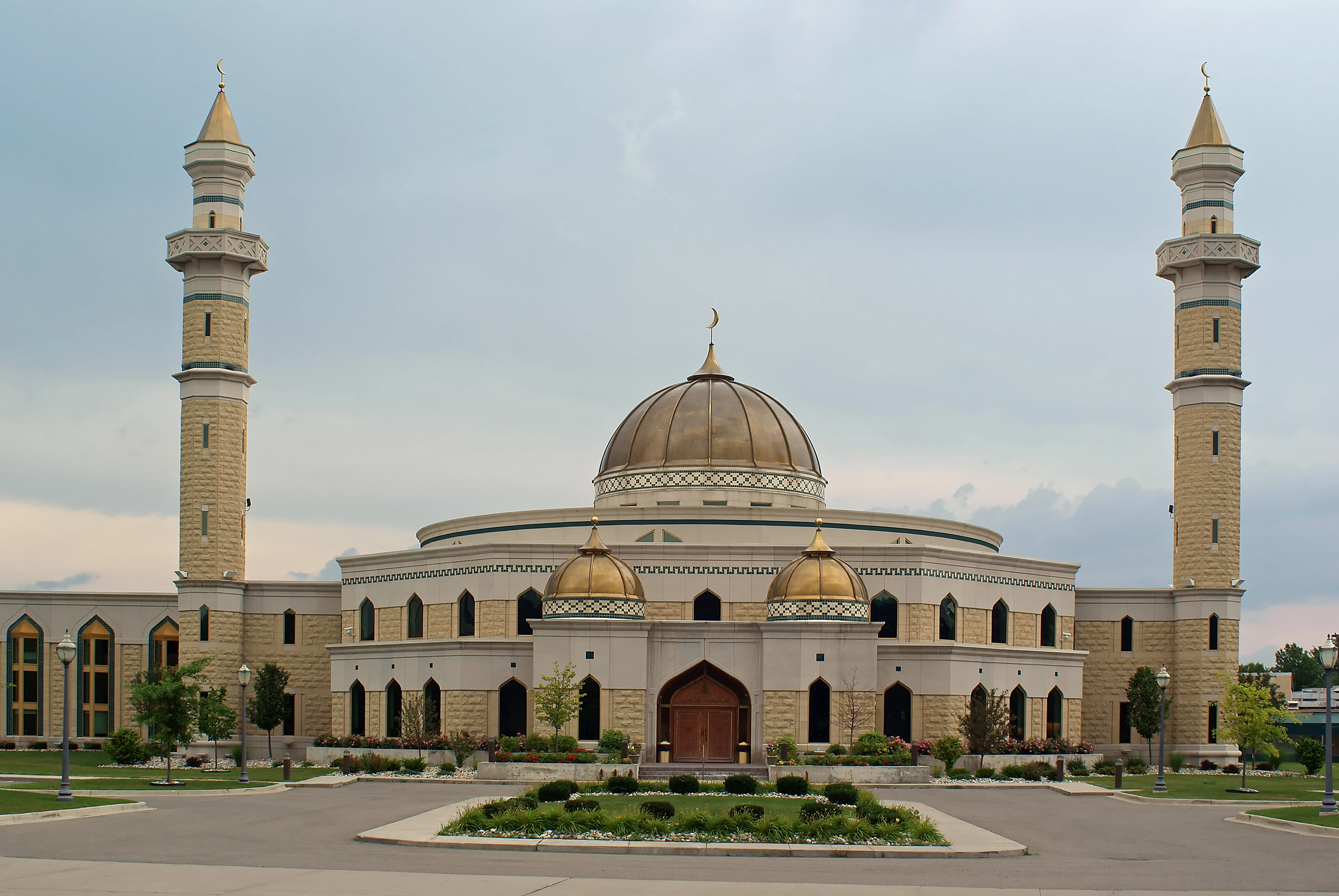
Islam's presence in North America spans over four centuries, from the earliest Muslim slaves brought from Africa to the vibrant and diverse Muslim communities of today. With an estimated 3.45 million Muslims in the United States and 1.05 million in Canada, representing about 1.1% and 2.8% of their respective populations, Islam has become an integral part of North American religious and cultural landscape.
Early Islamic Presence (1500s-1800s)
Muslim Slaves from Africa
A significant number of the Africans enslaved and brought to North America were Muslim. Many were literate in Arabic and well-versed in Islamic scholarship, and historians estimate that between 15 and 30 per cent of enslaved Africans were Muslim. They came primarily from Senegambia, the lands of the Mali Empire, and other West African Islamic regions.
Several individuals are documented by name. Ayuba Suleiman Diallo, also known as Job ben Solomon, was a Senegalese Muslim who gained his freedom and returned to Africa. Omar ibn Said was an enslaved scholar who wrote Arabic manuscripts in North Carolina. Yarrow Mamout was a free Muslim who lived in Georgetown, Washington, D.C. Bilali Muhammad was a Muslim leader on Sapelo Island, Georgia, who maintained Islamic practices and wrote in Arabic.
Religious practice persisted under slavery in various forms. Some enslaved Muslims continued to pray, fast, and observe other Islamic practices, and Arabic writing and Quranic knowledge were preserved. Islamic practice also functioned as a form of cultural resistance to slavery, though many enslaved Muslims eventually converted to Christianity under pressure and circumstance.
Early Free Muslim Communities
Small free Muslim communities also existed. Small numbers of immigrants arrived from Ottoman territories, and Muslim merchants and traders appeared in port cities. Historical records of this early free Muslim presence are sparse, and many of these early immigrants assimilated into the broader American society.
Late 19th and Early 20th Century Immigration (1880s-1920s)
First Wave of Muslim Immigration
The first wave of Muslim immigration drew on the Ottoman Empire, bringing immigrants from Syria, Lebanon, Palestine, and other Ottoman territories. Motivated largely by the search for economic opportunity and the desire to escape Ottoman conscription, these immigrants concentrated in industrial cities such as Detroit, New York, and Chicago, where they worked in factories, in peddling, and in small business ownership.
They also began to build Islamic institutions. Early mosques and Islamic centres were established, mutual aid societies and cultural organizations were formed, religious leaders were brought from home countries, and communities made efforts to maintain Islamic and Arab cultural traditions.
These communities faced significant challenges of adaptation. They needed to learn English and adjust to American culture, to maintain Islamic practices within a non-Muslim society, to establish businesses and achieve economic stability, and to create support networks and Islamic institutions.
Mid-20th Century Developments (1920s-1960s)
Indigenous Islamic Movements
The Nation of Islam, founded in 1930, was established by Wallace Fard Muhammad and later led by Elijah Muhammad. It advanced a distinctive interpretation of Islam combined with Black nationalism and attracted African Americans seeking a religious and cultural identity. Its notable members included Malcolm X, Muhammad Ali, and Louis Farrakhan, and it placed strong emphasis on self-reliance, education, and economic development.
The Moorish Science Temple, founded in 1913 by Noble Drew Ali, combined Islamic, Christian, and other religious elements and emphasised a Moorish and Islamic identity for African Americans. It served as a precursor to later African American Islamic movements, and it has continued to exist and to influence African American Islam.
Continued Immigration
Immigration continued after the Second World War. Muslim refugees arrived as displaced persons from the war and its aftermath, Muslim students came to American universities, skilled professionals sought new opportunities, and families joined earlier immigrants through reunification.
The Immigration Act of 1965 marked a turning point. By eliminating national-origins quotas, it opened immigration from Asia and Africa, producing a significant increase in Muslim immigration from a wide range of countries and backgrounds, many of them highly educated and skilled professionals.
Contemporary Muslim Communities (1970s-2024)
Demographic Overview
In the United States, estimates for 2024 place the Muslim population at 3.45 million, or about 1.1 per cent of the total population. It has been among the fastest-growing religious groups in America, is concentrated in major metropolitan areas, and comprises a mix of immigrants and American-born Muslims.
In Canada, estimates for 2024 place the Muslim population at 1.05 million, or about 2.8 per cent of the total population. It has grown rapidly through both immigration and natural increase, is concentrated in the Toronto, Montreal, and Vancouver areas, and has been drawn in part by Canada's welcoming immigration policies.
Origins and Diversity
North American Muslims come from many regions. The largest group originates in South Asia, primarily from Pakistan, India, and Bangladesh. Significant populations come from the Middle East, including various Arab countries, Iran, and Turkey. Growing communities have arrived from Africa, including Somalia, Nigeria, Egypt, and other countries, and from Southeast Asia, including Indonesia, Malaysia, and others. The community also includes American and Canadian converts to Islam and African American Muslims descended from earlier Islamic movements as well as newer converts.
Religious diversity is likewise pronounced. Sunni Islam accounts for the majority of North American Muslims, approximately 85 to 90 per cent. Shia Islam is represented by significant communities, particularly among Iranians, Iraqis, and Lebanese. Various Sufi orders are present, Ahmadiyya communities exist in smaller numbers in both countries, and there are reform-oriented, progressive Muslim communities and individuals.
Socioeconomic Characteristics
In educational attainment, Muslims have a higher than average level of education, with strong representation in medicine, engineering, and academia, a significant presence among students at major universities, and the development of Islamic schools and weekend programmes.
Economically, North American Muslims are generally in the middle to upper-middle income range, with high rates of business ownership and entrepreneurship, a strong presence in healthcare, technology, finance, and education, and generally successful economic integration.
In political participation, voter registration and political engagement have increased, the number of Muslim elected officials at all levels has grown, Muslim political advocacy groups have developed, and there is active involvement in civic and community organizations.
Religious Life and Institutions
Mosques and Islamic Centers
Mosques and Islamic centres have grown considerably, with over 2,100 mosques in the United States and more than 300 in Canada. Their architecture mixes traditional Islamic and contemporary North American styles, and they frequently serve as community centres, schools, and social service providers, led by a mix of immigrant and North American-trained religious leaders.
These institutions offer a range of services and programmes. They provide religious services such as daily prayers, Friday congregational prayers, and religious education; community services including social services, counselling, and community support; educational programmes such as Islamic schools, weekend schools, and adult education; and interfaith activities including dialogue and community outreach.
Islamic Education
Islamic schooling has expanded, with over 300 full-time Islamic schools in North America. These schools combine a standard academic curriculum with Islamic studies, many of them seeking and achieving regional accreditation, alongside the development of Islamic teacher training programmes.
At the higher-education level, Islamic universities and seminaries have been established, Islamic studies programmes exist at major universities, scholarship programmes support Muslim students, and Islamic research centres and think tanks have been founded.
Religious leadership has developed in parallel. North American Islamic seminaries and imam-training programmes have emerged, together with continuing education for religious leaders, efforts to train imams specifically to serve North American Muslim communities, and a growing role for women in Islamic education and community leadership.
Cultural Contributions and Integration
Arts and Culture
In literature and media, there is a growing number of Muslim American and Canadian authors, greater Muslim representation in film and television, Muslim journalists and media professionals, and Islamic publishing houses and media companies.
In music and performance, North American Islamic musical traditions have developed, alongside Islamic cultural festivals and celebrations, Muslim participation in theatre, dance, and other performing arts, and an Islamic influence on youth culture and hip-hop.
Cuisine and Lifestyle
Culinary influence has grown through the expansion of halal food production and restaurants, the introduction of diverse Islamic culinary traditions, Islamic food festivals and cultural events, and the provision of halal options in schools, hospitals, and other institutions.
In fashion and design, a modest fashion industry has grown, alongside contemporary Islamic art and design, Islamic architectural influences in contemporary design, and Islamic aesthetic influences in home and commercial interior design.
Challenges and Issues
Post-9/11 Impact
In the immediate aftermath of the 11 September 2001 attacks, hate crimes and discrimination against Muslims increased, surveillance of Muslim communities was enhanced, and concerns arose about civil liberties and constitutional rights, while the Muslim community responded with condemnation of terrorism and outreach efforts.
The longer-term effects have included persistent Islamophobia in the form of negative stereotypes and discrimination, ongoing security measures affecting Muslim communities, legal battles over religious freedom and civil rights, and the development of community resilience and advocacy.
Integration and Identity
Questions of cultural identity have arisen from differences between immigrant and North American-born Muslims, the balancing of cultural preservation with integration, the adaptation of Islamic practices to a North American context, and young Muslims navigating multiple cultural identities.
In the area of social integration, communities have worked on building interfaith relations, developing positive relationships with the broader community, integrating Muslim students in public and private schools, and integrating Muslims into various professional environments.
Political and Legal Issues
On religious freedom, communities have encountered challenges in building new mosques and Islamic centres, questions of workplace and school accommodation of Islamic practices, misconceptions and controversies surrounding Islamic law, and issues related to Islamic symbols and dress.
On civil rights, there have been legal cases involving discrimination against Muslims, concerns about racial and religious profiling, questions about the impact of immigration policies on Muslim communities, and advocacy for stronger hate-crime protections.
Positive Contributions and Achievements
Professional and Economic Contributions
In healthcare, there is a significant Muslim presence among healthcare professionals, contributions to medical research and innovation, Muslim professionals serving diverse communities, and Islamic perspectives contributing to medical ethics and bioethics.
In technology and innovation, Muslim entrepreneurs and professionals work throughout the technology sector, contributing to scientific research and development, working as engineers in various fields, and leading startups and technological innovations.
In business and entrepreneurship, there are high rates of small business ownership, Muslims in corporate leadership positions, a role in facilitating trade with Muslim-majority countries, and contributions to local and national economic development.
Social and Community Contributions
In charitable work, major Islamic charitable organizations operate, Muslims participate in disaster relief efforts, social services are provided to diverse communities, and there are contributions to community development and improvement.
In interfaith and civic engagement, Muslims have taken leadership roles in interfaith dialogue and cooperation, participated in civic and community organizations, shown high rates of volunteerism and community service, and advocated for social justice and human rights.
Regional Variations
United States Regional Differences
In the Northeast, the New York and New Jersey area has a large and diverse Muslim population, Boston has significant Somali and other African Muslim communities, and Philadelphia has historic Muslim communities alongside growing diversity.
In the Midwest, Detroit and Dearborn hold the largest concentration of Arab Muslims in North America, Chicago has a diverse Muslim community with strong institutions, and Minneapolis has a large Somali Muslim community.
In the South, Houston has a growing Muslim population of diverse origins, Atlanta has a significant Muslim community with strong institutions, and Florida has diverse Muslim communities in Miami, Orlando, and Tampa.
In the West, Los Angeles has a large and diverse Muslim population, the San Francisco Bay Area has significant South Asian and other Muslim communities, and Seattle has a growing Muslim community of diverse origins.
Canadian Regional Differences
In Ontario, Toronto has the largest Muslim population in Canada, Ottawa has a significant Muslim community in the national capital, and London has a growing Muslim community.
In Quebec, Montreal has a large and primarily French-speaking Muslim population, and Quebec City has a smaller but established Muslim community.
In Western Canada, Vancouver has a significant Muslim community, particularly South Asian, Calgary has a growing Muslim population, and Edmonton has an established Muslim community.
Contemporary Issues and Debates
COVID-19 Impact
The Muslim community responded actively to the COVID-19 pandemic. Communities adapted religious practices during lockdowns, organised mutual aid and community support during the crisis, and Muslim healthcare workers contributed throughout the pandemic.
Social Justice and Activism
In civil rights advocacy, Muslim communities have worked against discrimination and hate crimes, participated in criminal justice reform, advocated for immigrant rights and refugee protection, and collaborated with others on interfaith social justice issues.
Climate Change and Environmental Issues
In environmental activism, communities have applied Islamic environmental ethics to contemporary issues, led Muslim environmental and sustainability projects, participated in climate change advocacy, and implemented sustainable practices in Muslim institutions.
Conclusion
Islam in North America represents a remarkable story of diversity, resilience, and contribution. From the early Muslim slaves who maintained their faith under the most difficult circumstances to the thriving Muslim communities of today, Islam has become an integral part of the North American religious and cultural landscape.
The contemporary Muslim communities in the United States and Canada, numbering over 4.5 million people combined, represent extraordinary diversity in terms of origins, cultures, and religious practices. Despite facing challenges related to discrimination, integration, and identity formation, these communities have made significant contributions to North American society in virtually every field of human endeavor.
The story of Islam in North America to 2026 has been one of steady growth and deepening integration, in which Muslim communities have built enduring institutions, contributed across many fields of society, and served as points of connection between North America and the broader Muslim world within the framework of religious freedom, cultural diversity, and inclusive citizenship.
References and Further Reading
Primary Islamic Sources
- Quran, Surah Al-Hujurat (49:13) — "O mankind, indeed We have created you from male and female and made you peoples and tribes that you may know one another."
- Quran, Surah Al-Baqarah (2:143) — "And thus We have made you a just community that you will be witnesses over the people."
- Sahih al-Bukhari, Book of Knowledge — The obligation to convey the message of Islam.
- Omar ibn Said. Autobiography (written in Arabic by an enslaved African Muslim scholar in North Carolina, 1831).
Classical Islamic Sources
- Al-Idrisi, Muhammad. Nuzhat al-Mushtaq, early references to Atlantic geography. [Original c. 1154 CE]
- Ottoman diplomatic correspondence with the early American republic. Ottoman Imperial Archives, Istanbul.
Academic and Scholarly Sources
- GhaneaBassiri, Kambiz. A History of Islam in America: From the New World to the New World Order. Cambridge: Cambridge University Press, 2010.
- Curtis, Edward E., IV. Muslims in America: A Short History. Oxford: Oxford University Press, 2009.
- Diouf, Sylviane A. Servants of Allah: African Muslims Enslaved in the Americas. New York: New York University Press, 1998.
- Haddad, Yvonne Yazbeck, ed. The Muslims of America. Oxford: Oxford University Press, 1991.
- Jackson, Sherman A. Islam and the Blackamerican: Looking Toward the Third Resurrection. Oxford: Oxford University Press, 2005.
- Smith, Jane I. Islam in America. 2nd ed. New York: Columbia University Press, 2010.
- Nyang, Sulayman S. Islam in the United States of America. Chicago: ABC International Group, 1999.
- Bagby, Ihsan. The American Mosque 2011: Basic Characteristics of the American Mosque.
- McCloud, Aminah Beverly. African American Islam.
Further Reading
- Austin, Allan D. African Muslims in Antebellum America: Transatlantic Stories and Spiritual Struggles. New York: Routledge, 1997.
- Cesari, Jocelyne. When Islam and Democracy Meet: Muslims in Europe and the United States. New York: Palgrave Macmillan, 2004.
- Haddad, Yvonne Yazbeck, and John L. Esposito, eds. Muslims on the Americanization Path? Oxford: Oxford University Press, 2000.
- Esposito, John L. Islam: The Straight Path. 4th ed. Oxford: Oxford University Press, 2010.
- Pew Research Center. Muslim Americans: No Signs of Growth in Alienation or Support for Extremism.
- Statistics Canada. The Muslim Population in Canada.
- Islamic Education in the Modern Era — the institutions and reforms that shaped Muslim schooling worldwide
Mentioned In
1 article references this topic
More from Modern Era
Islamic Education in the Modern Era
Islamic learning from the nineteenth century to the present. The classical pattern of mosque school, madrasa and scholarly circle met colonial and state education systems, producing reform, new Islamic universities, and lasting debate over how the two should meet.
Major Mosques Built in the 20th Century
Mosque building in the twentieth century, when newly independent states raised great congregational mosques and migrant communities built for themselves. The result set traditional forms alongside reinforced concrete, new engineering and contemporary design.
Modern Islamic History (1800-2024)
Islamic history from 1800 to the present: the weakening of the Ottoman and other Muslim empires, the period of European colonial rule, the independence movements that followed, the founding of the modern Muslim states, and the changes since.
A.P.J. Abdul Kalam: The People's President and Missile Man of India
Avul Pakir Jainulabdeen Abdul Kalam served as India's eleventh President (2002–2007) and was a principal architect of the country's missile programme and a coordinator of the 1998 nuclear tests. A DRDO and ISRO scientist, he became a symbol of Indian scientific aspiration.