Islamic Education in the Modern Era
Islamic learning from the nineteenth century to the present. The classical pattern of mosque school, madrasa and scholarly circle met colonial and state education systems, producing reform, new Islamic universities, and lasting debate over how the two should meet.
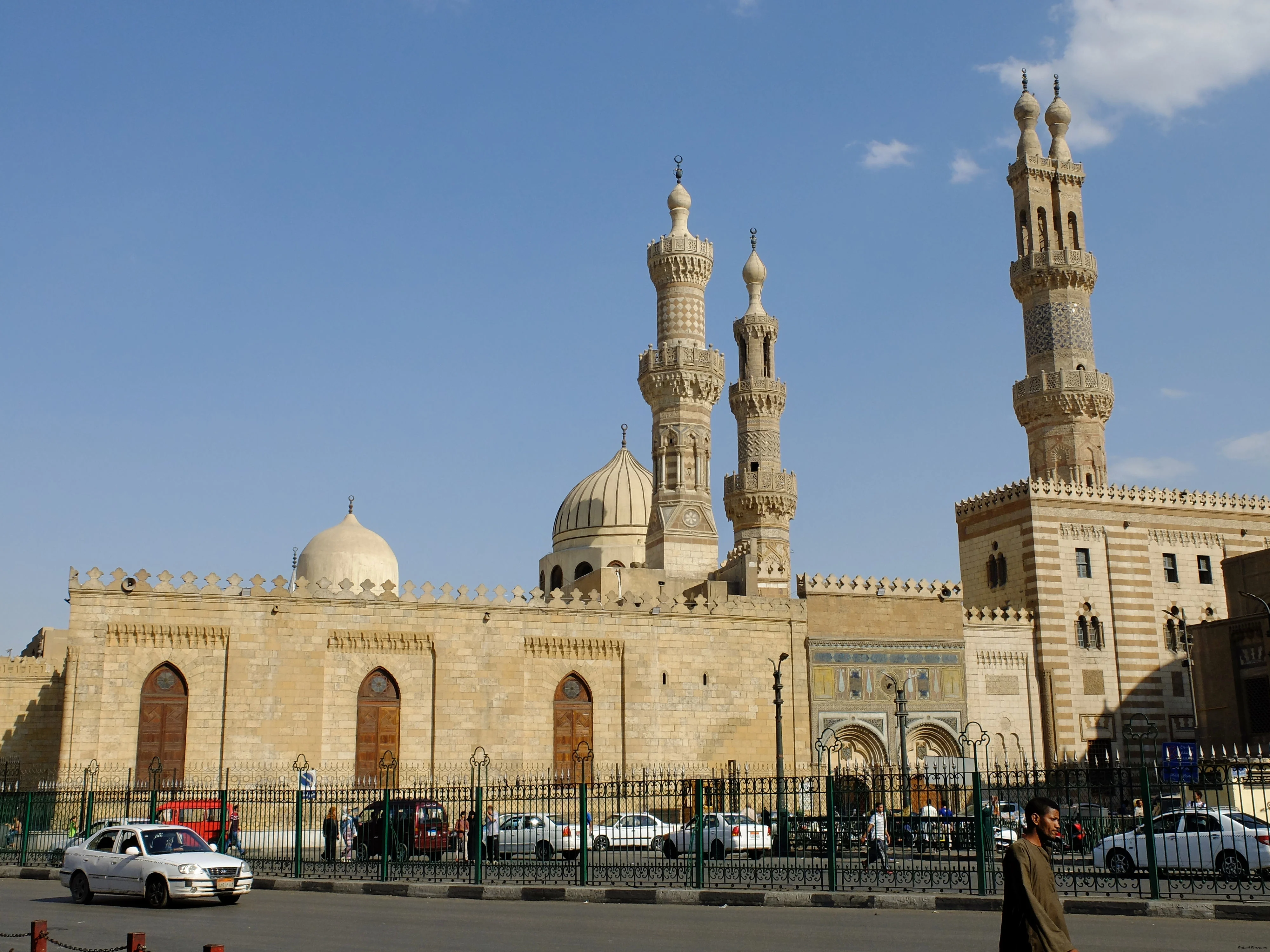
Islamic education in the modern era represents a dynamic field that has undergone significant transformation while maintaining its core commitment to Islamic knowledge and values. From traditional madrasas to modern Islamic universities, from Quranic schools to integrated educational systems, Islamic education has adapted to contemporary challenges while preserving its essential character and mission rooted in the Islamic Golden Age.
Historical Context and Traditional Foundations
Pre-Modern Islamic Education
The classical system of Islamic learning rested on several complementary institutions. Basic education was centred on mosque schools, while advanced study took place in the madrasas, the higher Islamic educational institutions. Alongside these formal settings, learning was also transmitted informally through scholarly circles, the gatherings in which students assembled around recognised teachers, and through private tutoring, in which qualified scholars gave individual instruction.
The curriculum was built around a defined body of disciplines. Quranic studies covered the memorization and interpretation of the Quran, while the hadith sciences addressed the study of prophetic traditions and their authentication. Islamic jurisprudence (fiqh) provided training in Islamic law and legal methodology, and the study of the Arabic language encompassed grammar, rhetoric, and literature. Theology (kalam) supplied the framework for Islamic theological study, and logic and philosophy furnished the rational sciences within an Islamic framework.
Educational methods reflected the priorities of this tradition. There was a strong emphasis on oral transmission, with memorization and oral learning at its core, sustained by a close teacher-student relationship built on mentorship and guidance. The ijaza system provided formal authorization to teach specific texts, and scholarly networks connected teachers and students across an international community of Islamic scholars.
Impact of Colonialism and Modernization
Colonial rule presented Islamic education with a series of challenges. Western education systems introduced secular educational models, while language policies promoted European languages over Arabic. Curriculum changes emphasised Western sciences and knowledge, and institutional competition developed between Islamic and Western schools.
Muslim communities responded in several ways. Reformers pursued educational reform aimed at modernizing Islamic education, and synthesis approaches sought to integrate Islamic and modern subjects. Institutional innovation produced new types of Islamic institutions, and a broader intellectual revival gave rise to Islamic intellectual renaissance movements.
19th Century Reform Movements
Pioneers of Educational Reform
Muhammad Abduh (1849-1905) of Egypt worked to modernize the curriculum of Al-Azhar University and advocated a rational approach that integrated reason and revelation in Islamic education. He supported the inclusion of modern sciences within the Islamic curriculum and promoted the reform of teacher preparation programmes.
Sir Sayyid Ahmad Khan (1817-1898) of India led the Aligarh Movement, which established modern Islamic education in India. The Aligarh Muslim University was founded as the Muhammadan Anglo-Oriental College in 1875. Khan promoted English education, encouraging the study of the English language and Western sciences, and sought a religious-secular integration that combined Islamic and modern education.
Jamal al-Din al-Afghani (1838-1897) championed pan-Islamic education across the Muslim world and stressed education as a means of building political and social consciousness. He emphasised an Islamic intellectual revival and exerted international influence across multiple Muslim countries.
Institutional Innovations
The period saw the emergence and modernization of major institutions. Al-Azhar University in Egypt underwent gradual modernization while maintaining its traditional character, and Aligarh Muslim University in India offered a model of integrated Islamic-modern education. The Deoband Seminary in India combined traditional Islamic education with modern organization, and similar institutions were established across the Muslim world.
Curriculum reforms accompanied these developments. A dual-track system ran parallel Islamic and modern education tracks, while an integrated approach sought to combine Islamic and secular subjects. Language policies attempted to balance Arabic, local languages, and international languages, and teacher training focused on the professional preparation of Islamic educators.
20th Century Developments
Expansion and Diversification
Institutional growth was a defining feature of the century. There was a massive increase in the number of Islamic educational institutions and a wide geographic spread, with Islamic schools established worldwide. Institutions diversified by level, ranging from primary schools to doctoral programmes, and specialized institutions emerged in the form of dedicated Islamic colleges and universities.
Curriculum development advanced in parallel. There was better integration of Islamic and modern subjects, methodological innovation introduced new teaching methods and pedagogical approaches, educational technologies were gradually adopted, and comprehensive assessment methods were developed.
Regional Variations
In the Middle East and North Africa, many governments provided state support for Islamic education. The Al-Azhar system expanded through its affiliated institutions, oil wealth enabled significant investment in Islamic educational infrastructure, and Islamic education was frequently treated as part of national identity.
In South and Southeast Asia, extensive networks of traditional Islamic schools, or madrasas, remained central. Governments and communities made efforts to integrate these madrasas with national education systems, community support for Islamic education was strong, and a diversity of approaches produced various models of Islamic education.
In Sub-Saharan Africa, widespread Quranic schools sustained traditional Islamic education. The region continued to feel the impact of colonial educational policies, faced the challenge of Arabic instruction in non-Arabic-speaking areas, and confronted development challenges arising from limited resources for educational development.
In Western countries, Islamic education served Muslim immigrant communities. Weekend schools offered supplementary Islamic education programmes, full-time Islamic schools were established, and Islamic studies programmes developed within Western universities.
Contemporary Islamic Education (1980-2024)
Institutional Landscape
Among traditional institutions, Al-Azhar University in Egypt continues as a premier centre of Islamic learning, Deoband in India remains an influential traditional Islamic seminary, the Qom Seminary in Iran serves as a major centre of Shia Islamic education, and the Islamic University of Medina in Saudi Arabia operates as an international Islamic university.
Modern Islamic universities include the International Islamic University Malaysia (IIUM), regarded as a model of integrated Islamic education, and the Islamic University of Medina, an international centre for Islamic higher education. The American University of Sharjah integrates Islamic values with modern education, and Aga Khan University focuses on development and Islamic values.
Specialized institutions have also multiplied. Islamic banking and finance institutes provide specialized education in Islamic finance, Islamic teacher training colleges handle the professional preparation of Islamic educators, Islamic research centres conduct advanced research in Islamic studies, and online Islamic universities offer digital platforms for Islamic education.
Curriculum and Pedagogy
Efforts to build an integrated curriculum have centred on the Islamization of knowledge, integrating an Islamic worldview across all subjects, and on holistic education emphasising spiritual, intellectual, and moral development. Educators have sought contemporary relevance, making Islamic education responsive to modern challenges, while encouraging critical thinking through analytical skills.
Pedagogical innovations have included a shift from teacher-centred to student-centred learning and the adoption of interactive methods such as discussion, debate, and collaborative learning. There has been growing emphasis on the practical application of Islamic knowledge and on assessment reform that incorporates character development.
Technology has been integrated in several forms. Digital resources such as the digital Quran, hadith databases, and Islamic libraries are widely used; online learning platforms for Islamic education have been developed; Islamic educational software and applications have appeared; and virtual reality has been applied in innovative ways to Islamic historical education.
Contemporary Challenges
Questions of quality and standards remain prominent. These include accreditation issues affecting quality assurance, the need for well-trained and qualified Islamic educators, resource constraints arising from limited financial and material resources, and inadequate physical infrastructure in many regions.
Curriculum relevance poses further challenges: making the traditional Islamic curriculum relevant to contemporary needs, integrating modern sciences with Islamic education, balancing Arabic instruction with local language needs, and developing practical skills alongside religious knowledge.
Social and political challenges are also significant. Institutions navigate complex relationships with government education policies, face competition with secular educational institutions, address concerns about radicalization in Islamic schools, and work through the challenges of integrating Islamic education with national systems.
Regional Developments and Innovations
Middle East and North Africa
In Saudi Arabia, significant government investment has supported Islamic education, accompanied by scholarships for international students, ongoing curriculum reform to modernize Islamic education, and advanced use of educational technology.
In Egypt, the modernization of the Al-Azhar system has continued, supported by the state's backing of Islamic educational institutions, comprehensive teacher training programmes, and Al-Azhar's global influence on Islamic education.
In Turkey, the Imam Hatip schools form a network of Islamic secondary schools, complemented by Islamic studies programmes in universities. The system balances Islamic and secular education and involves cooperation with other Muslim countries.
South and Southeast Asia
In Indonesia, the pesantren system of traditional Islamic boarding schools remains central, alongside efforts to integrate the pesantren with the national education system, the development of Islamic universities, and an emphasis on moderate and tolerant Islamic education.
In Malaysia, the successful integration of Islamic and modern education is a defining feature, exemplified by the International Islamic University as a model institution for Islamic higher education, strong government support, and innovation in Islamic educational methods and technology.
In Pakistan, ongoing efforts have aimed at reforming traditional madrasas, developing modern Islamic universities, and integrating Islamic and secular subjects, while addressing concerns about quality and extremism.
In India, a wide variety of Islamic educational institutions coexist. Efforts to modernize traditional Islamic education continue within a complex relationship with government education policies and against a background of strong community support for Islamic education.
Western Countries
In the United States, a growing number of full-time Islamic schools operate alongside extensive weekend Islamic education programmes, Islamic studies programmes in universities, and training programmes for the professional development of Islamic educators.
In the United Kingdom, Islamic faith schools function within the state education system, complemented by supplementary weekend and after-school Islamic education, university programmes in Islamic studies and Islamic education, and the challenge of balancing Islamic values with British educational standards.
In Canada, a network of Islamic schools operates across the country, with some government support, within a multicultural framework and sustained by strong community support for Islamic education.
Within the European Union, approaches differ across member states, encompassing various policies for integrating Islamic education, programmes for training Islamic educators, and academic research initiatives on Islamic education.
Contemporary Issues and Debates
Modernization vs. Tradition
Curriculum debates centre on balancing traditional Islamic subjects with modern disciplines, on the language of instruction as between Arabic, local languages, and international languages, on the choice between traditional methods and modern pedagogical approaches, and on the relative merits of traditional evaluation and modern assessment techniques.
Debates over institutional identity address the clarity of mission and purpose in Islamic education, the maintenance of Islamic cultural authenticity, the meeting of international educational standards, and the need to ensure relevance to local contexts and needs.
Quality and Accreditation
The development of standards involves the creation of quality assurance frameworks, the establishment of Islamic education accreditation bodies, efforts to achieve international recognition for Islamic qualifications, and the building of systems for continuous quality improvement.
Teacher development encompasses the establishment of professional standards for Islamic educators, comprehensive teacher training and development programmes, ongoing continuing education opportunities, and the cultivation of research skills among Islamic educators.
Technology and Innovation
Digital transformation has taken several forms, including the development of comprehensive online Islamic education platforms, mobile learning through Islamic applications, the use of artificial intelligence in Islamic education and research, and immersive virtual reality experiences for Islamic historical and cultural education.
Educational innovation has included blended learning that combines traditional and digital methods, personalized learning that customises experiences for individual students, collaborative learning through international cooperation, and the integration of research with teaching and learning.
Social Impact and Community Engagement
In the area of community development, Islamic educational institutions provide social services, train community leaders and activists, promote interfaith dialogue and cooperation, and emphasise social justice and community service.
In fostering global citizenship, these institutions work to develop a global Islamic perspective, build cultural competence for multicultural environments, train future Muslim leaders, and encourage active citizenship and civic engagement.
Conclusion
Islamic education in the modern era represents a remarkable story of adaptation, innovation, and resilience. From the 19th-century reform movements to contemporary digital innovations, Islamic education has continuously evolved while maintaining its core commitment to Islamic values and knowledge.
The contemporary landscape of Islamic education is characterized by diversity, innovation, and global reach. From traditional madrasas to modern Islamic universities, from local community schools to international online platforms, Islamic education serves millions of students worldwide and continues to play a vital role in preserving and transmitting Islamic knowledge and values.
The challenges facing Islamic education today—including quality assurance, technological integration, curriculum relevance, and global competitiveness—are significant but not insurmountable. The ongoing efforts at reform, innovation, and collaboration demonstrate the dynamism and adaptability of Islamic educational institutions and communities.
The rich heritage of Islamic learning, combined with contemporary innovations and global collaboration, has provided a foundation for its continued growth and contribution to human knowledge and development. The balance of tradition with innovation, authenticity with change, and local service with global engagement represents the ongoing evolution of one of humanity's great educational traditions.
References and Further Reading
Primary Islamic Sources
- Quran, Surah Al-Alaq (96:1–5) — "Read in the name of your Lord who created."
- Quran, Surah Al-Mujadilah (58:11) — "Allah will raise those who have believed among you and those who were given knowledge, by degrees."
- Rashid Rida, Muhammad. Al-Manar (journal), articles on educational reform. Cairo, 1898–1935.
- Muhammad Abduh. Risalat al-Tawhid (Theology of Unity), on the compatibility of reason and revelation. Cairo: al-Matba'ah al-Amiriyyah, 1897.
- Jamal al-Din al-Afghani. Writings on Islamic educational renewal. Various, 1870s–1890s.
Classical Islamic Sources
- Al-Tahtawi, Rifa'a. Takhlis al-Ibriz fi Talkhis Bariz (An Imam in Paris — on European education systems). Cairo: Bulaq Press, 1834.
- Khayr al-Din al-Tunisi. Aqwam al-Masalik fi Ma'rifat Ahwal al-Mamalik, on educational modernization. Tunis, 1867.
- Sir Syed Ahmad Khan. Writings on modern Muslim education and the founding of Aligarh. [c. 1870s–1890s]
Academic and Scholarly Sources
- Hefner, Robert W., and Muhammad Qasim Zaman, eds. Schooling Islam: The Culture and Politics of Modern Muslim Education. Princeton: Princeton University Press, 2007.
- Zaman, Muhammad Qasim. The Ulama in Contemporary Islam: Custodians of Change. Princeton: Princeton University Press, 2002.
- Hourani, Albert. Arabic Thought in the Liberal Age, 1798–1939. Cambridge: Cambridge University Press, 1983.
- Metcalf, Barbara D. Islamic Revival in British India: Deoband, 1860–1900. Princeton: Princeton University Press, 1982.
- Gesink, Indira Falk. Islamic Reform and Conservatism: Al-Azhar and the Evolution of Modern Sunni Islam. London: I.B. Tauris, 2010.
- Kurzman, Charles, ed. Modernist Islam, 1840–1940: A Sourcebook. Oxford: Oxford University Press, 2002.
- Douglass, Susan L. and Munir A. Shaikh. Defining Islamic Education: Differentiation and Applications.
- Tan, Charlene. Islamic Education and Indoctrination: The Case in Indonesia.
- Berkey, Jonathan P. The Transmission of Knowledge in Medieval Cairo: A Social History of Islamic Education.
- Makdisi, George. The Rise of Colleges: Institutions of Learning in Islam and the West.
Further Reading
- Robinson, Francis. The Ulama of Farangi Mahall and Islamic Culture in South Asia. London: Hurst, 2001.
- Starrett, Gregory. Putting Islam to Work: Education, Politics, and Religious Transformation in Egypt. Berkeley: University of California Press, 1998.
- Eickelman, Dale F., and James Piscatori. Muslim Politics. Princeton: Princeton University Press, 1996.
- Lapidus, Ira M. A History of Islamic Societies. 3rd ed. Cambridge: Cambridge University Press, 2014.
Mentioned In
2 articles reference this topic
More from Modern Era
Abd al-Fattah Abu Ghudda
A Syrian Hanafi scholar and editor whose critical editions of works of law and hadith brought many neglected texts into print. He introduced modern South Asian hadith scholarship to Arab readers and held one of the widest networks of hadith transmission of his generation.
Aligarh Muslim University: From the Muhammadan Anglo-Oriental College to a Central University
Aligarh Muslim University grew out of the school founded by Syed Ahmad Khan in 1875, which became the Muhammadan Anglo-Oriental College in 1877 and a university by Act of the Indian legislature in 1920. It was the central institution of the Aligarh Movement.
Islam in North America - Historical and Contemporary Overview
Islam has been present in North America for more than four centuries, beginning with enslaved West African Muslims. Some 3.45 million Muslims now live in the United States and 1.05 million in Canada, in communities formed by conversion and by immigration.
Jamia Millia Islamia: The National Muslim University
Jamia Millia Islamia was founded at Aligarh on 29 October 1920 by nationalist Muslim leaders and students who left the Muhammadan Anglo-Oriental College during the Non-Cooperation movement. It moved to Delhi in 1925, to Okhla in 1935, and became a central university by Act of Parliament in 1988.