Modern Islamic History (1800-2024)
Islamic history from 1800 to the present: the weakening of the Ottoman and other Muslim empires, the period of European colonial rule, the independence movements that followed, the founding of the modern Muslim states, and the changes since.
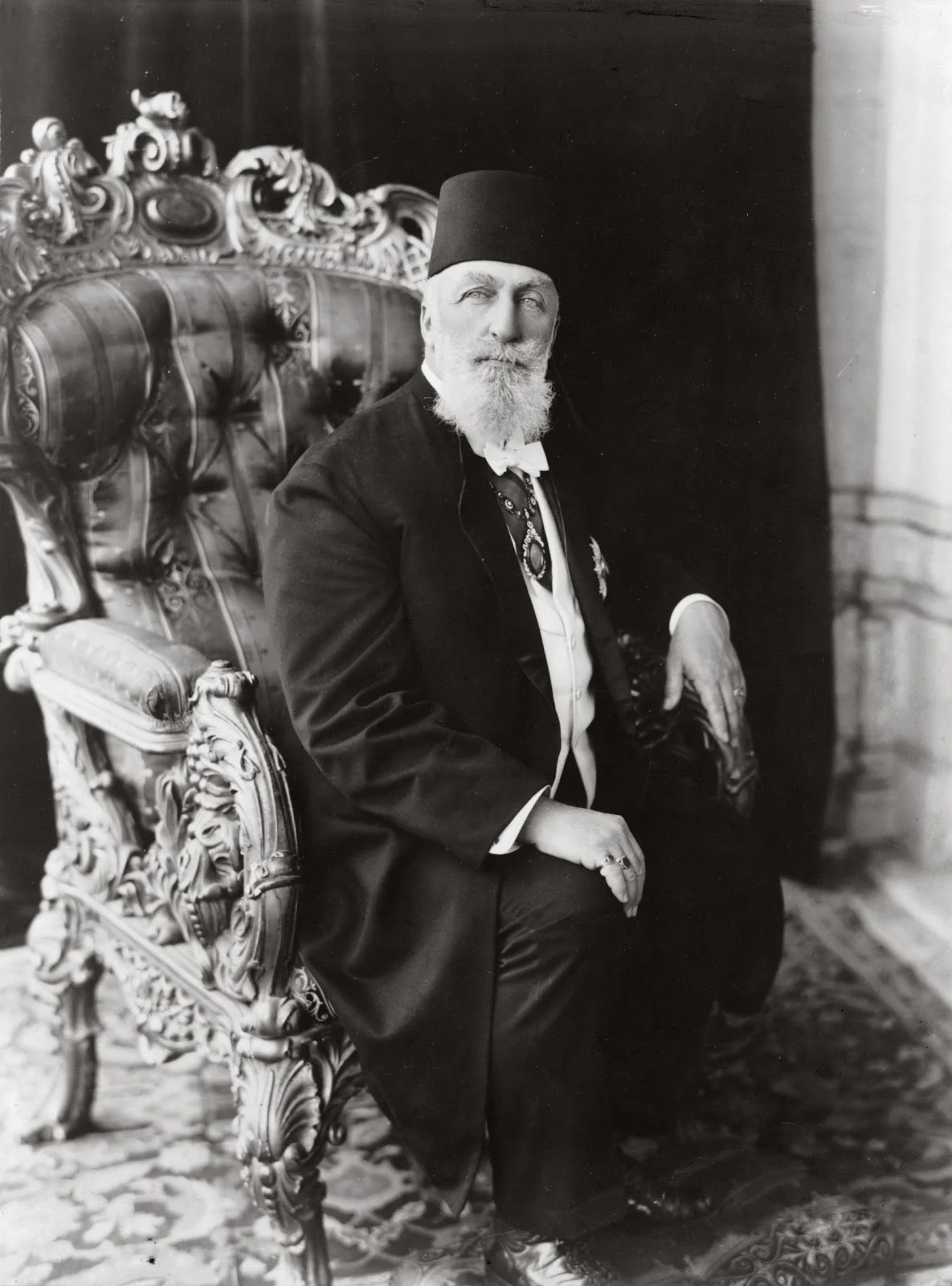
The modern period of Islamic history, spanning from 1800 to 2024, represents a transformative era marked by the decline of traditional Islamic empires like the Ottoman Empire, the colonial period, independence movements, and the emergence of contemporary Muslim nations. This period has witnessed significant political, social, and religious developments that have shaped the current landscape of the Islamic world, affecting Muslims across the globe.
The Early 19th Century: Decline of Islamic Empires
The Ottoman Empire's Gradual Decline
By 1800, the Ottoman Empire, once the most powerful Islamic state, was experiencing significant challenges that would characterize much of the 19th century.
Its economic difficulties were considerable. The empire lost trade routes to European maritime powers, accumulated increasing debt to European creditors, fell into a technological lag behind the industrializing European nations, and suffered currency devaluation and inflation.
Military challenges compounded these strains. The Ottomans were defeated in wars against Russia and Austria, lost territories in the Balkans and Caucasus, relied on outdated military technology and tactics, and faced rebellions in various provinces.
In response, the administrative reforms of the Tanzimat period (1839-1876) sought to modernize the legal system, introduce educational reforms, develop infrastructure, and create greater equality among all Ottoman subjects.
The Mughal Empire's Final Collapse
The Mughal Empire in India faced complete dissolution during this period. The expansion of the British East India Company had already established British dominance following the Battle of Plassey (1757), and it proceeded through the gradual annexation of Mughal territories and the reduction of the Mughal emperor to a ceremonial figurehead.
The Indian Rebellion of 1857 was the last major attempt to restore Mughal authority. It drew the participation of various Indian rulers and soldiers, was brutally suppressed by British forces, and ended with the abolition of the Mughal Empire and the beginning of direct British rule.
Qajar Dynasty in Persia
Persia under the Qajar dynasty (1789-1925) faced similar challenges. Russian and British influence dominated its external affairs through the Great Game competition between the two powers, the loss of territories to Russia in the Caucasus, British influence in southern Persia, and economic concessions granted to European powers.
The Constitutional Revolution (1905-1911) brought demands for a constitutional monarchy, the establishment of a parliament (Majlis), and a struggle between traditional and modernizing forces.
The Colonial Period (1800-1950)
European Colonial Expansion
The 19th and early 20th centuries saw unprecedented European colonial expansion into Muslim territories.
The British colonial empire encompassed India (including present-day Pakistan and Bangladesh), Egypt (1882-1956), Sudan (1899-1956), Malaya and other Southeast Asian territories, and parts of East Africa. The French colonial empire covered Algeria (1830-1962), Tunisia (1881-1956), Morocco (1912-1956), West and Central African territories, and Syria and Lebanon as League of Nations mandates. The Dutch colonial empire held Indonesia, then the Dutch East Indies, expanding gradually throughout the archipelago and exploiting its natural resources. Russian expansion, meanwhile, brought the Central Asian territories and the Caucasus region into the Russian Empire through gradual incorporation.
Impact of Colonialism on Muslim Societies
Politically, colonialism dismantled traditional Islamic governance systems, introduced European legal and administrative systems, created artificial borders, and suppressed local autonomy.
Its economic impact included the extraction of natural resources, the transformation of agricultural systems, the introduction of cash crops, and the integration of colonised economies into the global capitalist economy.
Socially and culturally, colonial rule introduced Western education systems and missionary activities, altered social hierarchies, and drove urban development and modernization.
In the religious sphere, colonialism challenged traditional Islamic authority, prompted the emergence of Islamic reform movements, opened debates about Islam's compatibility with modernity, and contributed to the development of anti-colonial Islamic ideologies.
Islamic Reform and Revival Movements
19th Century Reform Movements
Muhammad Abduh (1849-1905) in Egypt was an advocate for Islamic modernism who emphasised reason and science in Islamic thought, pursued educational reforms at Al-Azhar University, and exercised lasting influence on Islamic intellectual development.
Jamal al-Din al-Afghani (1838-1897) was a pan-Islamic activist and philosopher who advocated Muslim unity against colonial powers, exerted influence across the Islamic world, and promoted Islamic political consciousness.
Sir Sayyid Ahmad Khan (1817-1898) in India founded Aligarh Muslim University, advocated modern education among Muslims, promoted Hindu-Muslim cooperation, and offered an interpretation of Islam compatible with modern science.
20th Century Islamic Movements
The Muslim Brotherhood, founded in 1928 by Hassan al-Banna in Egypt, emphasised Islamic education and social services, engaged in political activism and opposition to secular governance, and spread throughout the Arab world.
Jamaat-e-Islami, founded in 1941 by Abul A'la Maududi in India, articulated a systematic Islamic ideology, influenced Islamic political thought, and held the establishment of an Islamic state as its ultimate goal.
The Deobandi movement originated in India in 1866. It emphasised traditional Islamic scholarship, resisted British colonial influence, and spread to Afghanistan and Pakistan.
The Independence Era (1920-1970)
Dissolution of the Ottoman Empire
The First World War and its aftermath proved decisive. The Ottoman Empire allied with the Central Powers, was defeated and occupied by Allied forces, faced partition under the Treaty of Sèvres (1920), and was contested in the Turkish War of Independence (1919-1923).
The establishment of modern Turkey followed under the leadership of Mustafa Kemal Atatürk, marked by the abolition of the Caliphate in 1924, the founding of a secular republic, and policies of modernization and Westernization.
Arab Independence Movements
The end of Ottoman rule came through the Arab Revolt during the First World War, the imposition of British and French mandates in the Middle East, and the gradual independence of Arab states.
The key independence dates of this era run as follows: Egypt in 1922 (nominal) and 1952 (republic); Iraq in 1932; Lebanon in 1943; Syria and Jordan in 1946; Libya in 1951; Tunisia and Morocco in 1956; and Algeria in 1962, after a prolonged war.
South Asian Independence
The Partition of India in 1947 created Pakistan as a homeland for Muslims. It brought massive population displacement, communal violence, and a refugee crisis, and it established the Islamic Republic of Pakistan.
Bangladesh gained independence in 1971. East Pakistan's struggle for autonomy, its language movement and assertion of cultural identity, and the liberation war with Indian intervention culminated in the creation of the People's Republic of Bangladesh.
Southeast Asian Independence
Indonesia declared independence in 1945 and secured it through the Indonesian National Revolution (1945-1949), under Sukarno's leadership and the Pancasila ideology, becoming the world's largest Muslim-majority nation.
Malaysia gained independence from Britain in 1957, and the federation of Malaysia was formed in 1963. It developed as a multi-ethnic society with a Muslim majority and a constitutional monarchy in which Islam is the official religion.
African Independence
In North Africa, Egypt saw its 1952 revolution and Nasser's leadership; Libya gained independence in 1951, followed by the Gaddafi revolution of 1969; Tunisia and Morocco became independent in 1956; and Algeria achieved independence in 1962 after an eight-year war.
In Sub-Saharan Africa, Nigeria, Senegal, and Mali all gained independence in 1960, among many other states with Muslim majorities or significant Muslim minorities.
The Oil Era and Economic Transformation (1950-1980)
Discovery and Development of Oil Resources
Middle Eastern oil transformed the region through major discoveries in Saudi Arabia, Kuwait, Iraq, and Iran, the formation of national oil companies, increasing government control over oil resources, and the use of oil as a tool of foreign policy.
The formation of OPEC, the Organization of Petroleum Exporting Countries, in 1960 allowed for the coordination of oil policies. The 1973 oil embargo and the price increases that followed gave producing states significant economic leverage in international relations.
Economic and Social Impact
Rapid modernization brought infrastructure development, urban growth and construction booms, educational expansion, and improvements in healthcare.
Accompanying social changes included the emergence of middle classes, greater women's education and workforce participation, generational differences in values and lifestyle, and new patterns of migration and urbanization.
Regional disparities also grew, with wealth concentrated in the oil-rich states, economic challenges in non-oil-producing countries, labour migration within the region, and the development of the Gulf Cooperation Council in 1981.
Political Developments and Challenges
Arab Nationalism and Pan-Arabism
Under Gamal Abdel Nasser, Egypt (1952-1970) experienced the Free Officers Revolution, the Suez Crisis of 1956, the United Arab Republic experiment, and leadership of the Arab nationalist movement.
The Ba'ath Party movement advanced a secular Arab nationalist ideology, rose to power in Syria and Iraq, emphasised Arab unity and socialism, and came into conflict with Islamic movements.
Arab-Israeli Conflict
The establishment of Israel in 1948 brought Palestinian displacement and a refugee crisis, the First Arab-Israeli War, and an ongoing regional conflict. Major wars followed, including the Six-Day War of 1967 and the Yom Kippur War of 1973, alongside the Lebanon conflicts, all of which affected regional politics and Islamic consciousness.
Iranian Revolution (1979)
The revolution arose from opposition to the Shah's modernization policies, economic inequality and political repression, and religious opposition led by Ayatollah Khomeini, culminating in a popular uprising.
Its outcome was the establishment of an Islamic Republic with a theocratic government system, the export of revolutionary ideology, the Iran-Iraq War (1980-1988), and a pattern of regional influence and proxy conflicts.
Contemporary Islamic World (1980-2024)
Islamic Revival and Awakening
The Islamic revival has been characterised by increased religious observance and practice, the growth of Islamic education and institutions, the development of Islamic banking and finance, and da'wah (missionary) activities worldwide.
Several factors contributed to this revival, among them a reaction to Western cultural influence, a search for authentic identity, economic and political challenges, and educational and media developments.
Globalization and Muslim Communities
Muslim diaspora communities grew through migration to Western countries, established Islamic institutions, navigated challenges and opportunities of integration, and contributed to multicultural societies.
International Islamic organizations proliferated, including the Organization of Islamic Cooperation (OIC), the Islamic Development Bank, the World Muslim League, and various regional Islamic organizations.
Technological Revolution and Islam
The digital age has shaped Muslim life through online Islamic education and resources, social media and religious discourse, e-commerce and Islamic finance, and virtual religious communities.
These developments have brought both challenges and opportunities, including wider access to Islamic knowledge, questions about religious authority in the digital age, new forms of youth engagement with Islamic teachings, and the global connectivity of Muslim communities.
Regional Developments (1990-2024)
Middle East and North Africa
The Gulf War of 1991 began with Iraq's invasion of Kuwait and drew an international coalition response, reshaping the regional security architecture and strengthening the United States presence in the region.
The Arab Spring of 2010-2012 saw popular uprisings across the Arab world and demands for democracy and reform, with varied outcomes across different countries and a series of ongoing political transitions.
The Syrian conflict, beginning in 2011, produced a civil war and humanitarian crisis, drew regional and international involvement, generated a refugee crisis affecting neighbouring countries, and affected regional stability.
South and Southeast Asia
Afghanistan experienced the Soviet invasion (1979-1989), Taliban rule (1996-2001), the US-led intervention (2001-2021), and the return of Taliban rule in 2021.
Pakistan pursued nuclear weapons development and passed through military coups and democratic transitions, while facing terrorism and security challenges and pursuing economic development efforts.
Indonesia underwent the fall of Suharto in 1998 and a democratic transition in the Reformasi era, achieving economic growth and development and a role of moderate Islamic leadership.
Malaysia advanced through economic development and modernization, the Vision 2020 development goals, an emphasis on multi-ethnic harmony and Islamic identity, and a regional leadership role in ASEAN.
Africa
Nigeria experienced a democratic transition in 1999, economic growth alongside significant challenges, religious and ethnic tensions, and the Boko Haram insurgency.
Egypt passed through the Mubarak era (1981-2011), the Arab Spring revolution, Muslim Brotherhood rule (2012-2013), and a subsequent military intervention that shaped its present government.
Contemporary Challenges and Issues
Security and Terrorism
The period saw the emergence and activities of extremist groups, including al-Qaeda, the territorial control and eventual defeat of ISIS/ISIL, and various regional terrorist organizations, met by counter-terrorism efforts.
These developments affected Muslim communities through Islamophobia and discrimination, security measures that raised questions about civil liberties, community responses and condemnation of violence, and interfaith dialogue initiatives.
Economic Development
Efforts at economic diversification have sought to reduce dependence on oil revenues, exemplified by Vision 2030 in Saudi Arabia, alongside knowledge-economy development and renewable energy investments.
The growth of Islamic finance has included the expansion of Sharia-compliant banking, the development of the sukuk (Islamic bonds) market, the rise of fintech and digital Islamic finance, and the emergence of a global Islamic finance industry.
Social and Cultural Issues
In the area of women's rights and participation, educational achievements, workforce participation, and political representation have advanced amid ongoing debates and reforms.
Questions of youth and education have centred on large youth populations, educational challenges and opportunities, technology adoption, and questions of cultural identity.
Environmental Challenges
Climate change has affected the Islamic world through water scarcity in arid regions, extreme weather events, agricultural challenges, and the adoption of renewable energy.
Approaches to sustainable development have engaged the UN Sustainable Development Goals, drawn on Islamic principles of environmental stewardship, involved green technology investments, and fostered regional cooperation initiatives.
Islamic Scholarship and Intellectual Development
Modern Islamic Thought
Contemporary scholars associated with this period include Yusuf al-Qaradawi, Abdolkarim Soroush, Fazlur Rahman, and Seyyed Hossein Nasr. Their work has engaged key themes such as Islam and modernity, democracy and Islamic governance, human rights in an Islamic context, and gender issues and Islamic law.
Educational Institutions
Traditional centres of learning include Al-Azhar University in Egypt, the Qom Seminary in Iran, Deoband in India, and Najaf in Iraq. Modern Islamic universities include the International Islamic University Malaysia, the Islamic University of Medina, the American University of Sharjah, and Aga Khan University.
Conclusion
The period from 1800 to 2024 represents one of the most transformative eras in Islamic history. From the decline of traditional Islamic empires through the colonial period to the emergence of modern Muslim nation-states, the Islamic world has undergone profound changes while maintaining its core religious and cultural identity.
The contemporary Islamic world faces both significant challenges and unprecedented opportunities. With Muslims worldwide representing diverse cultures, languages, and national contexts, the Islamic community continues to play a vital role in global affairs.
Key achievements of this period include the establishment of independent Muslim nations, the development of Islamic financial systems, the growth of Islamic educational institutions, and the emergence of influential Islamic organizations. At the same time, challenges such as political instability, economic development needs, social tensions, and environmental concerns have required continued attention.
The recurring question across the modern period has been how Muslim societies balance the preservation of Islamic values against adaptation to global change, and how they manage internal diversity alongside external pressure — a question this article has traced rather than resolved.
References and Further Reading
Primary Islamic Sources
- Quran, Surah Al-Imran (3:110) — "You are the best nation produced [as an example] for mankind." (Frequently cited in Islamic reform movements)
- Quran, Surah Ar-Ra'd (13:11) — "Indeed, Allah will not change the condition of a people until they change what is in themselves."
- Rashid Rida, Muhammad. Al-Manar (journal), Cairo, 1898–1935 — Key organ of the Islamic modernist movement.
- Al-Afghani, Jamal al-Din, and Muhammad Abduh. Al-Urwa al-Wuthqa (The Firmest Bond), Paris, 1884 — Pan-Islamic reformist journal.
- Mawdudi, Abul A'la. Tafhim al-Quran (Towards Understanding the Quran). Lahore: Islamic Publications, 1942–1972.
- Qutb, Sayyid. Ma'alim fi al-Tariq (Milestones). Cairo: Dar al-Shuruq, 1964.
Classical Islamic Sources
- Al-Jabarti, Abd al-Rahman. Aja'ib al-Athar fi al-Tarajim wa al-Akhbar (History of Egypt under French and Ottoman rule). Cairo: Matba'at Dar al-Kutub al-Misriyyah, 1879. [Original c. 1822 CE]
- Khayr al-Din al-Tunisi. Aqwam al-Masalik fi Ma'rifat Ahwal al-Mamalik (The Surest Path to Knowledge of the Condition of Countries). Tunis: al-Matba'ah al-Rasmiyyah, 1867.
- Al-Tahtawi, Rifa'a. Takhlis al-Ibriz fi Talkhis Bariz (An Imam in Paris). Cairo: Bulaq Press, 1834.
Academic and Scholarly Sources
- Hourani, Albert. A History of the Arab Peoples. Cambridge: Harvard University Press, 1991.
- Hourani, Albert. Arabic Thought in the Liberal Age, 1798–1939. Cambridge: Cambridge University Press, 1983.
- Cleveland, William L., and Martin Bunton. A History of the Modern Middle East. 6th ed. Boulder: Westview Press, 2016.
- Esposito, John L. Islam: The Straight Path. 4th ed. Oxford: Oxford University Press, 2010.
- Lapidus, Ira M. A History of Islamic Societies. 3rd ed. Cambridge: Cambridge University Press, 2014.
- Gelvin, James L. The Modern Middle East: A History. 4th ed. Oxford: Oxford University Press, 2016.
- Schulze, Reinhard. A Modern History of the Islamic World. London: I.B. Tauris, 2000.
- Brown, L. Carl. Religion and State: The Muslim Approach to Politics.
- Voll, John O. Islam: Continuity and Change in the Modern World.
- Nasr, Seyyed Hossein. Islam: Religion, History, and Civilization.
Further Reading
- Hodgson, Marshall G.S. The Venture of Islam, Vol. 3: The Gunpowder Empires and Modern Times. Chicago: University of Chicago Press, 1974.
- Owen, Roger. State, Power and Politics in the Making of the Modern Middle East. 3rd ed. London: Routledge, 2004.
- Kurzman, Charles, ed. Modernist Islam, 1840–1940: A Sourcebook. Oxford: Oxford University Press, 2002.
- Ruthven, Malise. Islam in the World. 3rd ed. Oxford: Oxford University Press, 2006.
- Islam in North America — Muslim communities in the United States and Canada
More from Modern Era
Amin al-Husseini: Grand Mufti of Jerusalem
Mohammed Amin al-Husseini (born c. 1895-97, died 1974) was appointed grand mufti of Jerusalem and president of the Supreme Muslim Council in 1921. This article treats his institutional career, in particular the council's restoration of the Dome of the Rock.
Islam in North America - Historical and Contemporary Overview
Islam has been present in North America for more than four centuries, beginning with enslaved West African Muslims. Some 3.45 million Muslims now live in the United States and 1.05 million in Canada, in communities formed by conversion and by immigration.
Islamic Education in the Modern Era
Islamic learning from the nineteenth century to the present. The classical pattern of mosque school, madrasa and scholarly circle met colonial and state education systems, producing reform, new Islamic universities, and lasting debate over how the two should meet.
Jamal al-Din al-Afghani: The Revolutionary Pan-Islamist
Jamal al-Din al-Afghani (1838-1897 CE) was a revolutionary Islamic thinker and Pan-Islamist who advocated for Islamic unity, anti-colonialism, and reform. His ideas profoundly influenced modern Islamic political thought and inspired generations of reformers.