Jahanara Begum
Jahanara Begum (1614–1681 CE / 1023–1092 AH), the eldest daughter of the Mughal emperor Shah Jahan, held the first place among the women of his household from 1631. She stayed with him during his confinement in Agra Fort, wrote two works on Sufism and built the Jami' Masjid of Agra.
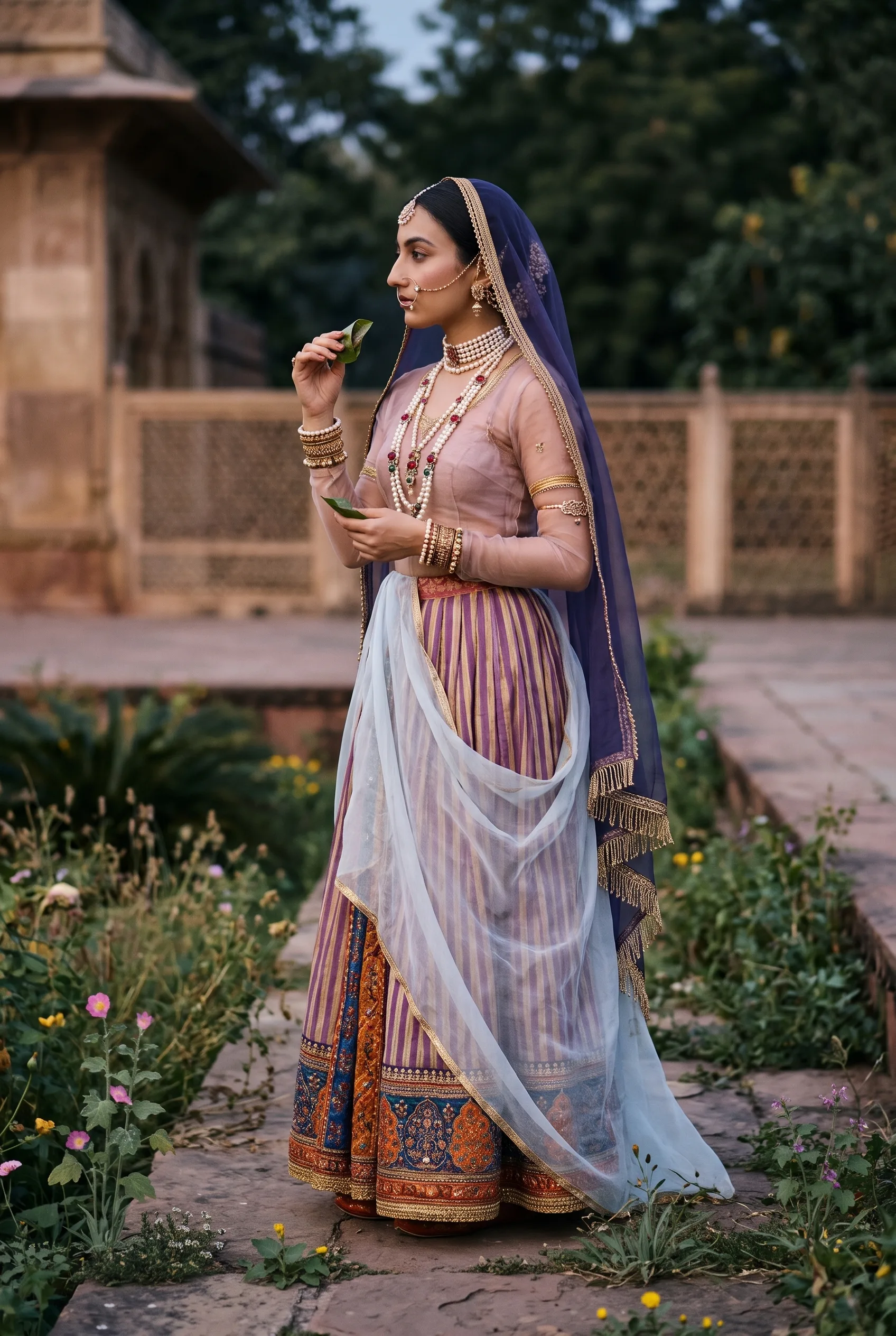
Jahanara Begum (1023–1092 AH / 1614–1681 CE) was the eldest daughter of the Mughal emperor Shah Jahan and his wife Mumtaz Mahal. The sources give her the court titles Begum Sahib and Padshah Begum and write her name Jahanara Begam, Jahan Ara Begum and Cihânârâ Begüm.123 She was born at Ajmer.2 After her mother's death in 1631 she held the first place among the women of her father's household, and the sources record that she kept the royal seal, received an allowance of several lakhs of rupees a year, arranged weddings in the imperial family and held jagirs, gardens and the revenue of Surat.14567
In 1644 she was badly burnt in a fire at the palace in Agra and recovered after several months. In the war between her brothers for the throne in 1657 and 1658 she supported Dara Shikoh, and after his defeat she went to Aurangzeb's camp with a proposal of settlement, which he refused. She then stayed with her father in Agra Fort for the whole of his confinement, until his death in 1666. Aurangzeb then restored her to her position at court, and in October 1666 she moved to Delhi.2891011
She followed the Sufi path: the Encyclopaedia of Islam and the TDV entry name Mulla Shah as her guide and record that she later turned to the Chishti order, while the historian Jadunath Sarkar calls her a disciple of Mian Mir.1212 She wrote a life of Mu'in al-Din Chishti called Mu'nis al-arwah and a treatise on Mulla Shah called Sahibiyya.12 She built the Jami' Masjid of Agra, with a madrasa attached, which the Encyclopaedia of Islam and the TDV entry date to 1058 AH (1648 CE) and the archaeologist G. Yazdani, from its inscription, to 1057 AH (1647 CE).1213 She never married. She died in 1092 AH (1681 CE) and was buried in Delhi, in a tomb that she had built in the enclosure of the shrine of Nizam al-Din Awliya.1214
The sources
This article follows the Encyclopaedia entries and the modern historians of the Mughal court. The Encyclopaedia of Islam has an entry on her by A. S. Bazmee Ansari and shorter passages on her in its entries on Mughal architecture, on Srinagar, on Shah Jahan, on the Sufi teacher Shah Muhammad (Mulla Shah) and on the tomb at Nizam al-Din.11516171819 The TDV İslâm Ansiklopedisi has an entry on her by Enver Konukçu, published in 1993.2 The Arabic biographical dictionary Nuzhat al-khawatir of Abd al-Hayy al-Hasani (d. 1341 AH) has a notice of her in its fifth volume.3
Four modern works give most of the detail. B. P. Saksena's History of Shahjahan of Dihli is a doctoral thesis approved by the University of London in 1931.20 Rekha Misra's Women in Mughal India, written at the University of Allahabad and published in Delhi after a preface dated October 1967, treats the Mughal women as a subject of its own and gives several passages to her.21 Jadunath Sarkar's History of Aurangzib, first published in 1912, covers her in connection with the succession and the first half of Aurangzeb's reign.2223 G. Yazdani, Director of the Archaeological Department of the Nizam's Dominions, read a paper called Jahanara to the Punjab Historical Society on 12 April 1913, and it was issued in 1937; it is the one work read here that is wholly about her.24
None of the Persian chronicles of Shah Jahan's and Aurangzeb's reigns was read directly. Their account of her reaches this article through Saksena, Misra, Sarkar and Yazdani, who cite the Padshahnama of Abd al-Hamid Lahori, the Amal-i Salih of Muhammad Salih and the Ma'asir-i Alamgiri of Musta'idd Khan.252627 The sources differ on her birth, her teachers, her spiritual guide, the date of her book on Mu'in al-Din Chishti, her allowance, the plan of partition of 1658, the date of her death and the form of her tomb. Each difference is given where the point is told, and the main ones are gathered in the Historiographical Note.
Name and titles
The Encyclopaedia of Islam writes that the titles by which contemporary historians knew her were Begam Sahib or Sahiba and Padshah Begam. Its article on titles records that begam was an honorific confined in Indian history to royal princesses, and that she bore the official title Padshah Begam during her father's reign and kept it after his dethronement.128 Yazdani writes that Shah Jahan gave her the title Padshah Begam at the imperial darbar held after his accession, because the simple title of Begam Sahib was not in keeping with her new position, and that a gift went with it of one lakh of gold mohurs and four lakhs of rupees, with an annual grant of six lakhs.2930 Misra gives the title Sahibat-uz-Zamani ("Mistress of the age") as conferred on her after Mumtaz Mahal's death and says that she was usually known as Begam Saheb.31 Sarkar writes that Aurangzeb, when she died, ordered her name to be entered in official papers as Sahibat-uz-zamani, "the Mistress of the Age".32
The Encyclopaedia of Islam adds that the title Fatima al-Zaman led von Kremer and Macdonald, as the entry names them, to take Fatima for her personal name. The TDV entry gives Fatimat al-Zaman as an epithet by which she was known.12
Birth, family and education
Her parents and her birth
Her father was Shah Jahan, who became emperor in 1628, and her mother was Mumtaz Mahal, the daughter of Asaf Khan, whom the TDV entry calls I'timad al-Dawla Asaf Khan.229 The Nuzhat al-khawatir names her father Sultan Shihab al-Din Muhammad Shah Jahan al-Gurkani.3
The Encyclopaedia of Islam gives her birth as 21 Safar 1023 AH (23 March 1614 CE), and Saksena gives 23 March 1614 at Ajmir.133 The TDV entry gives the year, 1023 AH (1614 CE), and the place, Ajmer.2 The Nuzhat al-khawatir gives the night as a Saturday night with nine days remaining of Safar 1023 AH.3
The sources differ on her place among the children. The Encyclopaedia of Islam calls her Shah Jahan's eldest daughter and "first child"; Saksena calls her his eldest surviving child; and Yazdani, who calls her the eldest child of the emperor at his accession, notes in a footnote that she had an elder sister, Hur Nisa' Begam, who died in 1025 AH (1616 CE).13429
Her education
The TDV entry records that she spent her childhood and youth with her father and that she studied Quranic recitation and tajwid (the rules of correct recitation) with Sitti Khanum, the wife of Nasir al-Din al-Kashi, and learned calligraphy, Persian and literature.2 The Nuzhat al-khawatir also names Sitti Khanum as her teacher in reading and tajwid, calligraphy and Persian, but describes her as the sister of al-Amili, and adds that Jahanara became skilled in composition, poetry and the management of a household.3 Yazdani writes that her mother placed her under Satti-un-nisa' Khanam, a learned woman who was the sister of the poet laureate of Jahangir's court and who kept Mumtaz Mahal's seal, and says, citing Abd al-Hamid Lahori, that Jahanara knew the reading of the Quran and Persian poetry and prose and had some knowledge of medicine.25 Misra writes that Satiunnisa, a woman learned in Persian and Islamic theology, was appointed her tutoress; and, in another place, that Nazir, the brother of Hakim Rukna Kashi, taught her the Quran and Persian.3536
At the court of Shah Jahan, 1628–1657
Her position and income
Saksena records that at the coronation festivities he gave Jahanara one hundred thousand ashrafis (gold coins) and four hundred thousand rupees and fixed her annual allowance at six hundred thousand rupees, half to be paid in cash from the treasury and the other half in jagirs, grants of land revenue. The Encyclopaedia of Islam gives the same allowance and the same division.37128 Yazdani, reading the court historian Abd al-Hamid Lahori, gives the same sum as six lakhs and dates the gift of one lakh of gold mohurs and four lakhs of rupees to the darbar after the accession.2930
Mumtaz Mahal died in 1631. Yazdani gives the day as Wednesday, 17 Dhu al-Qa'da 1040 AH (16 June 1631), and writes that Jahanara, who had been her constant companion, then became the first lady of the palace; that Shah Jahan divided his wife's cash and jewellery, which Yazdani gives as ten million rupees, giving half to Jahanara and half to the other children; and that he added an annual grant of four lakhs of rupees.307 The Encyclopaedia of Islam, the TDV entry and Misra all place her in the first position after Mumtaz Mahal's death.124 The TDV entry adds that Shah Jahan then took a closer interest in his daughter, and that this closeness lasted until his death in 1666.2
Two of the sources describe the royal seal. Yazdani writes that in 1041 AH (1631–32 CE), when Asaf Khan handed the Privy Seal back to the emperor, Shah Jahan entrusted it to her, so that the emperor's mandates passed through her hands.38 Misra writes that the royal seal was given to her after Mumtaz Mahal's death and was used on imperial documents concerning titles, high appointments, jagirs and large sums. She adds that Jahanara was among the highest-ranking princesses allowed to issue nishans, written orders, which usually concerned small matters such as the payment of debts.639
Misra lists the lands that Shah Jahan assigned to her: the jagirs of Achchol and Farjahara and the sarkars of Bachchol, Safapur and Doharah, and later Panipat, with a yearly revenue of one crore dams, together with the revenue of Surat for her expenses.405 Yazdani dates the grant of Surat's revenue, which he puts at five lakhs, to the celebrations after her recovery in 1644.41 Misra writes that her allowance rose from six lakhs to ten lakhs of rupees.5 The TDV entry and the Nuzhat al-khawatir record that she spent her income from her assigned lands on charitable institutions and good works.23
Ceremonies, weddings and mediation
Yazdani, citing Abd al-Hamid Lahori, records that she arranged the gifts for the emperor's birthday celebrations, the spring carnival and the festival of the vernal equinox, and that on the festival of 22 Shawwal 1046 AH (19 March 1637 CE) she gave him an octagonal throne of embossed work, which he says was valued at two lakhs and fifty thousand rupees.38 Saksena writes that she supervised the display of Dara Shikoh's wedding gifts in the Hall of Public Audience with Sati-un-Nisa' Khanum, and that the wedding cost three million two hundred thousand rupees, of which she gave one million six hundred thousand, six hundred thousand came from the exchequer and the bride's mother supplied the rest.4243 Yazdani gives about sixteen lakhs as her share of the cost of that wedding, and names the weddings of Dara and Shuja as the two she arranged; Misra writes that she arranged Dara's wedding with the help of Satiunnisa, with an ambassador from Balkh present, and also the marriages of Aurangzeb and Shuja.744
Yazdani records that in 1056 AH (1646–47 CE) the wives and daughters of Nazir Muhammad Khan of Balkh, who had come to the court as political prisoners, were received by Jahanara as their hostess, and that she arranged, in consultation with the emperor, the marriage of his daughters to ministers of state.45
Misra writes that people seeking the emperor's favour needed her support, that she sometimes resolved disputes within the imperial family, and that surviving letters show requests made to her about appointments, disputes and court business.446 Three cases are recorded. In 1656 Raja Prithvichand of Srinagar wrote to her offering submission if Dara Shikoh would intercede, and through her was reconciled with Shah Jahan.47 The same year, during Aurangzeb's siege of Golkonda, Qutb Shah wrote to Jahanara and to Dara, and Misra writes that their intervention led to his pardon and to peace after he paid an indemnity.48 Sarkar gives the same affair from the other side: Jahanara told Shah Jahan how Aurangzeb had withheld imperial farmans (orders) from Qutb Shah and given a false account in his dispatches, and Shah Jahan then ordered Aurangzeb to raise the siege.49 The third case is that of Raja Budh Prakash of Sirmur, who sent her presents and asked her to plead his dispute with the Raja of Garhwal; Misra and Yazdani record that she told him to put serious matters to the emperor himself.4650 The TDV entry notes that H. A. Rose published her Persian letters to him in the Journal of the Asiatic Society of Bengal in 1911.2
Trade
Misra writes that Jahanara carried on trade on her own account, owned ships and kept friendly commercial relations with Dutch and English merchants. Because the revenue of Surat formed part of her privy purse, she says, Dutch traders sought her favour, and a settlement fixed their annual payment at 55,000 rupees in place of customs at Surat and Broach. Foreign traders approached her through her diwan (steward), her maids or her nurse to obtain her nishans for recovering debts.514652 The Nuzhat al-khawatir mentions, in its notice of Abu al-Qasim al-Akbarabadi, that Alamgir appointed him diwan for his sister Jahan Ara Begum.53
The fire of 1644
Sarkar writes that on the night of 26 March 1644 Jahanara was walking from her father's rooms to her own in Agra Fort when her skirt brushed against a candle and caught fire, and that her four maids, who tried to put the flames out, were burnt as well.8 Yazdani dates the accident to the night of 27 Muharram 1054 AH (6 April 1644 CE) and gives the same account of the four maids; a later sentence of his gives the Christian year as 1646.2654 Saksena writes only that it happened in March 1644.55
Saksena and Yazdani describe the emperor's response. Shah Jahan called in the best physicians and ordered a thousand rupees to be given in alms each day; Yazdani adds that he ordered prayers for her recovery in the mosques and the release of prisoners, and gives fifteen thousand gold mohurs and the same number of rupees as distributed in the first three days.5526 Saksena says she was bedridden for four months and that Aurangzeb and Murad came from their provinces to see her; Yazdani says that the healing took eight or nine months, that physicians and surgeons were brought from different parts of the empire, and that Aurangzeb, hearing the news at Burhanpur, came to Agra by forced marches.552656 Saksena dates the feast celebrating her recovery to 25 November, and Yazdani, citing the Indian historians, to 5 Shawwal 1054 AH (6 December 1644 CE), eight months and eight days after the accident.5554 On her recovery Shah Jahan gave her jewels, which Sarkar values at ten lakhs and Yazdani describes as a hundred and thirty pearls worth five lakhs, a jewelled head ornament and other valuables.5741 Misra writes that after she recovered she visited the tomb of Khwaja Mu'in al-Din Chishti at Ajmer.58
Aurangzeb had at this time lost the emperor's favour. Yazdani places her successful plea for him, which restored his rank and his jagir, in 1053 AH (1643–44 CE), before the accident; Saksena places the restoration at the end of the festival of her recovery, on her recommendation, and Misra says that she appealed to the emperor in 1644 and that Shah Jahan restored his former rank and office.7385547
The succession war, 1657–1658
Shah Jahan fell seriously ill in 1657 (1067 AH), and war broke out among his four sons for the throne.45 Jahanara took Dara Shikoh's part. Misra writes that she helped him, prayed for his success and tried to persuade her brothers to avoid war; Sarkar describes her as Dara's partisan, in opposition to her sister Roshanara Begum, who supported Aurangzeb; and the Encyclopaedia of Islam records that her attachment to Dara earned her Aurangzeb's displeasure.4859521 Yazdani adds that she never showed active hostility to her other brothers.60
Before the battle of Samugarh she wrote to Aurangzeb. Misra dates the letter 23 May 1658 and says that she asked him to give up his plans and obey their father; Saksena gives the letter as saying that Shah Jahan still controlled the affairs of state and as urging Aurangzeb to stop where he had reached, so that Muslim lives would not be lost, and reports, from Salih, that she sent it through her own bakhshi, Mir Faruq; Yazdani writes that she argued that a rising against the heir apparent could be justified by neither religious nor secular law.486162
Dara was defeated at Samugarh on 29 May 1658, and Shah Jahan was then confined in the fort at Agra.6364 Jahanara then went to Aurangzeb's camp. The accounts of her mission differ. Misra and Yazdani write that she proposed a division of the empire, giving the Punjab and the neighbouring provinces to Dara, Gujarat to Murad, Bengal to Shuja and the Deccan to Aurangzeb's son Muhammad Sultan, and the rest of the empire with the rank of heir apparent to Aurangzeb himself; Misra dates her visit to 10 June.6364 Saksena writes that she carried a message from Shah Jahan, who offered to name Aurangzeb heir apparent, to confirm Dara in the Punjab and the western provinces, and to give the Deccan to Prince Mu'azzam, Gujarat to Murad and Bengal to Shuja.65 Sarkar says only that she visited the victors' camp at Agra with a proposal of peace.9 Misra, Yazdani and Sarkar write that Aurangzeb refused the proposal; Saksena writes that he refused to visit Shah Jahan until he had dealt with Dara, and that Jahanara returned disappointed.6364965
With Shah Jahan in Agra Fort, 1658–1666
After the refusal she chose to share her father's confinement. Misra and Sarkar write that she preferred imprisonment with him to joining the victor's side, and the sources give her as his nurse and constant companion until his death: the Encyclopaedia of Islam writes that she looked after him in Agra Fort; the TDV entry on Shah Jahan places her beside him; the Nuzhat al-khawatir records that she stayed with her father in the fort; and Sarkar puts the length of the confinement at eight years.63917116632 The Encyclopaedia of Islam adds that she served as a link between the deposed emperor and Aurangzeb and that political correspondence between them passed through her.1
Sarkar writes that during these years she three times asked Shah Jahan to forgive Aurangzeb, that he twice refused, and that shortly before his death he signed a formal pardon. Yazdani likewise places her request for the pardon near the end of the emperor's life.960
Shah Jahan died in 1666. The TDV entry on him gives the date as 16 Rajab 1076 AH (22 January 1666 CE) and records his burial in the Taj Mahal beside Mumtaz Mahal; Sarkar's account of his last night is dated Monday, 22 January; Yazdani gives Monday, 26 Rajab 1076 AH (1 February 1666 CE).116768 Yazdani writes that on the eve of his death he left his daughter Pur Hunar Bano Begam and his wives in Jahanara's care; Sarkar writes that he charged Jahanara to look after her half-sister Purhunar Banu and the other women whom his death would leave helpless.6867 Sarkar writes that after the emperor died she ordered the commandant of Agra Fort and a eunuch to send for two men of the city to prepare the body for burial; that she had wished the body to be taken to the Taj Mahal next day in a procession of the officers of state, the nobles and the scholars of Agra; and that it was instead carried out by a few men. According to Sarkar, the officers of the fort, joined by the governor of Agra, took the coffin across the Jumna by boat, and the qazis and leading citizens who had assembled at the Taj Mahal read the funeral prayer at noon and buried him beside Mumtaz Mahal.67
Under Aurangzeb, 1666–1681
Yazdani writes that after the first grief Aurangzeb restored Jahanara to her former position and dignity at court, and that she advised him in political matters.69 Sarkar writes that when Aurangzeb came to Agra after the funeral, in February 1666, he visited her repeatedly and made her "the first lady of the realm"; that nobles were ordered to salute her quarters in the fort and present gifts; and that on the next coronation day, 27 March, she received a hundred thousand gold pieces, which he values at fourteen lakhs of rupees, and her pension was raised to seventeen lakhs.10 The other sources give other figures. The Encyclopaedia of Islam and the TDV entry write that Aurangzeb assigned her 1,200,000 rupees a year, the Encyclopaedia adding that he doubled her allowance.1282 Misra writes that in 1666 he gave her a lakh of gold coins and raised her allowance by five lakhs to seventeen lakhs.5 Yazdani reports that in 1076 AH (1666) he increased her annual grant from twelve lakhs to fifteen and gave her a lakh and ten thousand gold mohurs.69 Misra writes that Aurangzeb kept her allowance although she had supported Dara.5
In October 1666 she moved to Delhi and was given the mansion of Ali Mardan Khan. In December 1669, according to Sarkar, Aurangzeb sent Danishmand Khan, one of his ministers, to offer her his service; Misra gives the year 1669 for the same visit.1070
She brought up Jahanzeb Banu, the daughter of Dara Shikoh. Yazdani writes that she had adopted her, called Jam Begam, and arranged her marriage to Aurangzeb's third son, Muhammad A'zam. The sources date the marriage differently: Yazdani gives 1076 AH (1666 CE), Misra gives 1668, saying that it was solemnised in Jahanara's house, and Sarkar gives January 1669, with the bride married from her household.697110
Death, burial and tomb
Jahanara died in 1092 AH (1681 CE). The TDV entry gives the day as 3 Ramadan 1092 AH, which it equates with 16 September 1681, and the Nuzhat al-khawatir also gives 3 Ramadan 1092 AH, in the days of her brother Alamgir. Sarkar gives 6 September 1681.2332 Yazdani, translating Musta'idd Khan, the historian of Aurangzeb's reign, records that the news was reported to Aurangzeb on 7 Ramadan from the capital and that she had died "on the third of the month"; the emperor forbade the customary music for three days, and Sarkar writes that Aurangzeb mourned her for three days and ordered her name to be entered in official papers as Sahibat-uz-zamani.271432 No source read here gives the place where she died. She had lived in Delhi since October 1666.10
She was buried in Delhi, as she had wished, in the enclosure of the shrine of Nizam al-Din Awliya, in a tomb she had built for herself. The Encyclopaedia of Islam and the TDV entry say so; Musta'idd Khan, in Yazdani's translation, calls it "the mausoleum built by herself in her life-time"; and the Nuzhat al-khawatir places it in the enclosure of the shaykh Nizam al-Din Muhammad ibn Ahmad al-Badayuni.12143 The Encyclopaedia of Islam and the TDV entry record that she never married.12
The sources describe the tomb in different terms. The Encyclopaedia of Islam describes it in its entry on her as a simple marble tomb covered with grass at the top, in its entry on tombs as having a stepped surround and an interior filled with grass, all of white marble, with an inscribed marble headstone, and in its entry on the Mughals as a flat, grass-covered resting place, adding that neither she nor Aurangzeb allowed any construction over their graves.11915 The Nuzhat al-khawatir describes it as surrounded by screens of white carved stone, without a roof, with greenery growing over it.3 Yazdani describes an enclosure of fine white marble with trellis screens, open to the sun and rain.14
The epitaph is in Persian. The Nuzhat al-khawatir gives the verse as her own composition and says that it was written on the marble at the head of the grave; Misra says she wrote her own epitaph; and Yazdani translates it:
Let no one cover my tomb with aught but verdure, For the green turf is pall enough for the poor stranger. "The humble and frail Jahanara, the devotee of the saints of Chisht, daughter of the victorious King Shahjahan, may God illuminate his reason! 1093 A.H."33672
The date at its foot, 1093 AH, is a year after the death year that the other sources give.
Sufism and writings
The sources name different guides. The Encyclopaedia of Islam writes that she was originally a disciple of Mulla Shah Qadiri and later took her oath of allegiance in the Chishti order, and gives a statement of hers that she was the first woman of the line of Timur to take to mysticism.1 The TDV entry writes that she became a disciple of Mulla Shah Badakhshi when she visited Kashmir with her father in 1650, and later of Mu'in al-Din Chishti.2 Misra writes that Dara Shikoh led her towards the Qadiri order, though she was devoted to the Chishti, and that she made Mulla Shah her spiritual guide.73 Sarkar calls her a disciple of Mian Mir, in one place, and in another writes that she was initiated into the order of Shaikh Mu'in al-Din Chishti as his disciple.1274 Yazdani records that in 1061 AH (1651 CE) she built a mosque and monastery at Srinagar for Mulla Badakshi, whom he calls a disciple of Mian Mir, and gives her epitaph's description of her as a devotee of the saints of Chisht.7572
The Encyclopaedia of Islam writes in its entry on Shah Muhammad (Mulla Shah) that his reputation attracted Dara Shikoh and Jahanara, that both wrote accounts of him, and that they built buildings and fountains in Kashmir for his garden house; it says that Shah Jahan visited him there.18 In its entry on Srinagar it writes that the Hari Parbat complex was created by Mulla Shah Badakhshani and his imperial disciples Dara and Jahanara.16 The TDV entry on Mulla Shah, by Hamid Algar, names Dara Shikoh and Jahanara among his leading disciples, and records that after Aurangzeb came to the throne in 1658, when Mulla Shah's life was in danger, Jahanara acted to save him, and that on his death at Lahore three years later he was buried beside his own shaykh, Mian Mir, in a tomb she had built.76
She wrote two works. Mu'nis al-arwah is a Persian life of Mu'in al-Din Chishti with information about other Chishti shaykhs.12 The Nuzhat al-khawatir describes it as a brief work on the Chishti masters.3 The TDV entry says she completed it in 1640 and that an Urdu translation was published at Lahore in 1938; Misra says she wrote it in 1671; and Yazdani dates a life of Mu'in al-Din Chishti by her, with brief notices of his chief disciples, to 1049 AH (1643–44 CE), and in a note on her epitaph cites her Mu'nis al-arwah in the manuscript of Hakim Ghulam Riza Khan of Delhi, who, he says, lent him his manuscript of that work.2367772 The second work, Sahibiyya, is a treatise on her guide Mulla Shah; the Encyclopaedia of Islam calls it an incomplete biography of Mulla Shah Qadiri, and the TDV entry names manuscripts in libraries in Gujarat and Ahmedabad and an abridged Urdu translation by M. Ibrahim, printed in the Oriental College Magazine at Lahore in August 1937.12 Misra writes that in the Risala-i-Sahibiya she says that she sometimes cooked vegetables and bread and sent them to the saint Miyan Mir.78
Yazdani writes that her favourite study was religion, especially the mystical theology of the Sufis, and that she wrote several religious treatises of which the life of Mu'in al-Din Chishti is the only one then known.77 The TDV entry records that Mughal historians say she spent her life after 1658 in worship and writing.2 Misra writes that she gave allowances and rewards to writers, and that Mir Muhammad Ali Mahir, entitled Murid Khan, wrote a long poem in praise of her generosity.36
Buildings and gardens
Jahanara built the Jami' Masjid of Agra, outside the north-west of Agra Fort. The Encyclopaedia of Islam gives its completion as 1058 AH (1648 CE), and Saksena says that it took five years of work and cost 500,000 rupees; the Nuzhat al-khawatir also gives 500,000 in coin, citing the Badshah-nama.15793 Yazdani, reading the inscription, dates it to 1057 AH (1647 CE).13 The Encyclopaedia of Islam describes it as a building of red sandstone with three domes and five arches, its central archway a semi-domed double portal, and says that it enlarges the plan of the Wazir Khan Mosque by doubling the bays of the wings of the prayer hall.8015 Its entry on her gives it an attached madrasa and calls it the first mosque of major dimensions built under the Mughals other than Akbar's at Fathpur Sikri; the TDV entry calls it the largest place of worship built by the Mughals after that mosque.12 Misra writes that Shah Jahan first meant to pay for it himself and then allowed her to build it from her own allowance.8182
In Shahjahanabad, the new capital at Delhi, she built a complex in Chandni Chowk of a caravanserai, a bathhouse and her garden Sahibabad; Misra describes the caravanserai as having a garden and a reservoir and admitting only the great Mughal and Persian merchants.1582 Her gardens, Yazdani writes, lay at Agra, Delhi, Ambala, Kashmir and Kabul, and she improved some of them with pavilions, aqueducts, cascades and fountains.75 The Encyclopaedia of Islam records that she altered the Acabal garden in Kashmir between 1634 and 1640.15 Misra lists three gardens of hers in Kashmir, Bagh-i-Aishabad, Nur Afshan and Safa, laid out under the supervision of Jawahar Khan Khwajasara, and a house for the poor in Kashmir that cost 20,000 rupees.8381 Misra adds that she received a garden at Agra, the Bagh-i-Jahanara, after Mumtaz Mahal's death.83 Yazdani places her apartments in Agra Fort in the southern wing of the Khass Mahall, and Misra describes her room there as lying between the Shahburj and Shah Jahan's bedroom.7770
Historiographical Note
The sources differ on a number of points, and each difference is told where the point arises. Some need more explanation than that.
Her death. The sources agree on the year, 1092 AH (1681 CE), and the TDV entry, the Nuzhat al-khawatir and Yazdani's translation of Musta'idd Khan agree on 3 Ramadan. They differ on the Christian date: the TDV entry gives 16 September 1681, Sarkar 6 September 1681, and Yazdani gives no Christian day. Neither source, as read here, gives its reason for its date. Her epitaph, as Yazdani translates it, is dated 1093 AH.2332271472
Her spiritual guide and her writings. The Encyclopaedia of Islam names her first guide as Mulla Shah Qadiri and the TDV entry as Mulla Shah Badakhshi, while Misra calls him Mulla Shah and Yazdani Mulla Badakshi; Sarkar alone calls her a disciple of Mian Mir, and Yazdani says that Mulla Badakshi was himself a disciple of Mian Mir. The date of Mu'nis al-arwah is 1640 in the TDV entry and 1671 in Misra; Yazdani gives 1049 AH (1643–44) for her life of Mu'in al-Din Chishti.127336127577
Her allowance. The sources give 600,000 rupees at Shah Jahan's accession, and then different figures for Aurangzeb's reign: 1,200,000 (the Encyclopaedia of Islam and the TDV entry), seventeen lakhs (Sarkar and Misra) and fifteen lakhs raised from twelve (Yazdani). Misra's own figures, six lakhs rising to ten and then raised by five lakhs to seventeen, do not add up to the total she gives.371210569
The partition of 1658. Misra and Yazdani make the proposal hers and give the Deccan to Muhammad Sultan; Saksena makes it Shah Jahan's message and gives the Deccan to Mu'azzam; Sarkar calls it a proposal of peace without the terms.6364659
Her place among the children and her teachers. The Encyclopaedia of Islam calls her Shah Jahan's first child; Saksena calls her his eldest surviving child; Yazdani mentions an elder sister who died in 1616. For her teachers the Nuzhat al-khawatir and the TDV entry agree on a Sitti Khanum but describe her differently, Yazdani and Misra name a Satti-un-nisa' (Satiunnisa), and Misra also names Nazir, the brother of Hakim Rukna Kashi; none of them says whether these are the same teacher or different ones.1342932253536
The date of the fire and of her recovery. Sarkar gives 26 March 1644, Yazdani 27 Muharram 1054 AH (6 April 1644), with one later sentence giving 1646, and the day of the recovery feast is 25 November in Saksena and 6 December 1644 in Yazdani. The gifts on her recovery are valued at ten lakhs by Sarkar and as pearls worth five lakhs, with other jewels, by Yazdani.82654555741
Shah Jahan's death. The TDV entry gives 16 Rajab 1076 AH (22 January 1666) and Sarkar dates his last night to Monday, 22 January; Yazdani gives Monday, 26 Rajab 1076 AH (1 February 1666), the same day of the week.116768
The marriage of Jahanzeb Banu, and the Jami' Masjid. The marriage is dated 1666 (Yazdani), 1668 (Misra) and January 1669 (Sarkar); the mosque 1647 (Yazdani, from its inscription) and 1648 (the Encyclopaedia of Islam and Saksena).697110131579
Her tomb. The Encyclopaedia of Islam describes a stepped surround in one entry and a flat grave in another; the Nuzhat al-khawatir and Yazdani describe an unroofed enclosure of white stone or marble with screens.1915314
The title Sahibat-uz-zamani. Misra says that it was conferred after Mumtaz Mahal's death, and Sarkar says that Aurangzeb ordered it to be used in papers after her own death.3132
See also
- Mughal Empire — the state in which she lived
References
Citations
Footnotes
-
A. S. Bazmee Ansari, 'Djahanara Begam', The Encyclopaedia of Islam, new edition, vol. 2 — her birth, titles, the title Fatima al-Zaman, her position, allowance, Sufi works and guide, her loyalty to her father and her place between him and Aurangzeb, her death unmarried and burial, her tomb and the Agra mosque. ↩ ↩2 ↩3 ↩4 ↩5 ↩6 ↩7 ↩8 ↩9 ↩10 ↩11 ↩12 ↩13 ↩14 ↩15 ↩16 ↩17 ↩18 ↩19 ↩20 ↩21 ↩22 ↩23 ↩24 ↩25 ↩26
-
Enver Konukçu, 'Cihânârâ Begüm', TDV İslâm Ansiklopedisi, vol. 7 (Istanbul, 1993), pp. 536–537 — the dedicated entry: her birth, teacher, titles, the fire, her discipleship, her service to her father, her allowance, her death and burial, the Agra mosque, her two works and her letters; https://islamansiklopedisi.org.tr/cihanara-begum, register entry 2, islamansiklopedisi.org.tr. ↩ ↩2 ↩3 ↩4 ↩5 ↩6 ↩7 ↩8 ↩9 ↩10 ↩11 ↩12 ↩13 ↩14 ↩15 ↩16 ↩17 ↩18 ↩19 ↩20 ↩21 ↩22 ↩23 ↩24 ↩25 ↩26 ↩27 ↩28 ↩29 ↩30
-
Abd al-Hayy al-Hasani, Nuzhat al-khawatir, vol. 5, p. 518 — the notice of Jahan Ara Begum: her parentage, birth, teacher, income, Mu'nis al-arwah, the Agra mosque, her death, grave and verse; https://shamela.ws/book/1584/452, register entry 4, shamela.ws. ↩ ↩2 ↩3 ↩4 ↩5 ↩6 ↩7 ↩8 ↩9 ↩10 ↩11 ↩12 ↩13 ↩14 ↩15
-
Rekha Misra, Women in Mughal India (1526–1748 A.D.) (Delhi: Munshiram Manoharlal), p. 42 — her position after Mumtaz Mahal's death, her influence at court and her mediation in the family; https://archive.org/details/emvi_women-in-mughal-india-1526-1748-ad-by-rekha-misra-history-delhi-1967-munshi, register entry 12, archive.org. ↩ ↩2 ↩3
-
Rekha Misra, Women in Mughal India (1526–1748 A.D.), p. 63 — Panipat and Surat, her allowance and Aurangzeb's grant of 1666; https://archive.org/details/emvi_women-in-mughal-india-1526-1748-ad-by-rekha-misra-history-delhi-1967-munshi, register entry 12, archive.org. ↩ ↩2 ↩3 ↩4 ↩5 ↩6
-
Rekha Misra, Women in Mughal India (1526–1748 A.D.), p. 68 — the royal seal; https://archive.org/details/emvi_women-in-mughal-india-1526-1748-ad-by-rekha-misra-history-delhi-1967-munshi, register entry 12, archive.org. ↩ ↩2
-
G. Yazdani, Jahanara (1937), p. 5 — her position after 1631, the weddings, Dara's illness and Aurangzeb's restoration in 1053 AH; https://archive.org/details/in.ernet.dli.2015.80251, register entry 12, archive.org. ↩ ↩2 ↩3 ↩4
-
Jadunath Sarkar, History of Aurangzib, vols I and II, 2nd ed. (Orient Longman Ltd., 1925), pp. 38–39 — the fire of 26 March 1644; https://archive.org/details/aurangzeb-1-2-jadunath-sarkar, register entry 12, archive.org. ↩ ↩2 ↩3
-
Jadunath Sarkar, History of Aurangzib, vol. III (Calcutta: M. C. Sarkar & Sons, 1928), pp. 55–56 — her part in 1658 and her captivity; https://archive.org/details/aurangzeb-3-jadunath-sarkar, register entry 12, archive.org. ↩ ↩2 ↩3 ↩4 ↩5 ↩6
-
Jadunath Sarkar, History of Aurangzib, vol. III (Calcutta: M. C. Sarkar & Sons, 1928), pp. 56–57 — Aurangzeb's treatment of her from 1666, her pension, her move to Delhi and the marriage of Jahanzeb Banu; https://archive.org/details/aurangzeb-3-jadunath-sarkar, register entry 12, archive.org. ↩ ↩2 ↩3 ↩4 ↩5 ↩6 ↩7
-
Azmi Özcan, 'Şah Cihan', TDV İslâm Ansiklopedisi, vol. 38 (Istanbul, 2010), pp. 251–252 — her presence beside Shah Jahan in Agra Fort, and the date of his death and burial; https://islamansiklopedisi.org.tr/sah-cihan, register entry 2, islamansiklopedisi.org.tr. ↩ ↩2 ↩3 ↩4
-
Jadunath Sarkar, History of Aurangzib, vol. III (Calcutta: M. C. Sarkar & Sons, 1928), pp. 138–139 — her description as a disciple of Mian Mir; https://archive.org/details/aurangzeb-3-jadunath-sarkar, register entry 12, archive.org. ↩ ↩2 ↩3
-
G. Yazdani, Jahanara (1937), p. 25 — the Agra Jami' Masjid, dated by its inscription to 1057 AH; https://archive.org/details/in.ernet.dli.2015.80251, register entry 12, archive.org. ↩ ↩2 ↩3
-
G. Yazdani, Jahanara (1937), p. 23 — Musta'idd Khan's account of her death and burial, and her tomb; https://archive.org/details/in.ernet.dli.2015.80251, register entry 12, archive.org. ↩ ↩2 ↩3 ↩4 ↩5 ↩6
-
Ebba Koch, 'Mughals', The Encyclopaedia of Islam, new edition, vol. 7 — the Acabal garden, the Chandni Chowk complex, the Agra Jami' Masjid and its plan, and her grave at Nizamuddin. ↩ ↩2 ↩3 ↩4 ↩5 ↩6 ↩7 ↩8
-
Ebba Koch, 'Srinagar', The Encyclopaedia of Islam, new edition, vol. 9 — the Hari Parbat complex. ↩ ↩2
-
M. Athar Ali, 'Shah Djahan', The Encyclopaedia of Islam, new edition, vol. 9 — her care of Shah Jahan in Agra Fort. ↩ ↩2
-
K. A. Nizami, 'Shah Muhammad b. 'Abd Ahmad', The Encyclopaedia of Islam, new edition, vol. 9 — Mulla Shah, Dara Shikoh and Jahanara, and the buildings made for his garden house. ↩ ↩2
-
C. E. Bosworth, 'Makbara', The Encyclopaedia of Islam, new edition, vol. 6 — her grave at the shrine of Nizam al-Din Awliya. ↩ ↩2 ↩3
-
B. P. Saksena, History of Shahjahan of Dihli (Allahabad: The Indian Press, Ltd.; no year printed on the title page), title page — the author's post, the foreword and the approval of the thesis by the University of London in 1931; https://archive.org/details/in.ernet.dli.2015.281500, register entry 12, archive.org. ↩
-
Rekha Misra, Women in Mughal India (1526–1748 A.D.) (Delhi: Munshiram Manoharlal), title page and preface — the author's department and the date of the preface, October 1967; https://archive.org/details/emvi_women-in-mughal-india-1526-1748-ad-by-rekha-misra-history-delhi-1967-munshi, register entry 12, archive.org. ↩
-
Jadunath Sarkar, History of Aurangzib: Mainly Based on Persian Sources, vols I and II, 2nd ed. (Orient Longman Ltd., 1925), title page — the edition and the date of the first edition, 1912; https://archive.org/details/aurangzeb-1-2-jadunath-sarkar, register entry 12, archive.org. ↩
-
Jadunath Sarkar, History of Aurangzib: Mainly Based on Persian Sources, vol. III, Northern India, 1658–1681, 3rd ed. revised (Calcutta: M. C. Sarkar & Sons, 1928), title page — the edition; https://archive.org/details/aurangzeb-3-jadunath-sarkar, register entry 12, archive.org. ↩
-
G. Yazdani, Jahanara (Hyderabad-Deccan: Government Central Press, 1937), title page — the paper read before the Punjab Historical Society on 12 April 1913 and the author's post; https://archive.org/details/in.ernet.dli.2015.80251, register entry 12, archive.org. ↩
-
G. Yazdani, Jahanara (Hyderabad-Deccan: Government Central Press, 1937), p. 2 — her wet-nurse, her instructress Satti-un-nisa' Khanam and her learning; https://archive.org/details/in.ernet.dli.2015.80251, register entry 12, archive.org. ↩ ↩2 ↩3
-
G. Yazdani, Jahanara (1937), p. 7 — the fire of 27 Muharram 1054 AH and the first alms; https://archive.org/details/in.ernet.dli.2015.80251, register entry 12, archive.org. ↩ ↩2 ↩3 ↩4 ↩5
-
G. Yazdani, Jahanara (1937), p. 22 — the year of her death and the report to Aurangzeb on 7 Ramadan; https://archive.org/details/in.ernet.dli.2015.80251, register entry 12, archive.org. ↩ ↩2 ↩3
-
A. S. Bazmee Ansari, 'Begum', The Encyclopaedia of Islam, new edition, vol. 1 — the title Padshah Begam and her allowance. ↩ ↩2 ↩3
-
G. Yazdani, Jahanara (1937), p. 3 — the accession of 14 February 1628, the title Padshah Begam, and the footnote on her elder sister; https://archive.org/details/in.ernet.dli.2015.80251, register entry 12, archive.org. ↩ ↩2 ↩3 ↩4 ↩5
-
G. Yazdani, Jahanara (1937), p. 4 — the accession gifts and the grant, and Mumtaz Mahal's death; https://archive.org/details/in.ernet.dli.2015.80251, register entry 12, archive.org. ↩ ↩2 ↩3
-
Rekha Misra, Women in Mughal India (1526–1748 A.D.), p. 60 — her titles Sahibat-uz-Zamani, Padshah Begam and Begam Saheb; https://archive.org/details/emvi_women-in-mughal-india-1526-1748-ad-by-rekha-misra-history-delhi-1967-munshi, register entry 12, archive.org. ↩ ↩2
-
Jadunath Sarkar, History of Aurangzib, vol. III (Calcutta: M. C. Sarkar & Sons, 1928), p. 58 — her titles, her captivity, her death on 6 September 1681 and Aurangzeb's order; https://archive.org/details/aurangzeb-3-jadunath-sarkar, register entry 12, archive.org. ↩ ↩2 ↩3 ↩4 ↩5 ↩6
-
B. P. Saksena, History of Shahjahan of Dihli (Allahabad: The Indian Press, Ltd.), p. 15 — her birth at Ajmir on 23 March 1614; https://archive.org/details/in.ernet.dli.2015.281500, register entry 12, archive.org. ↩
-
B. P. Saksena, History of Shahjahan of Dihli (Allahabad: The Indian Press, Ltd.), p. 341 — the description of her as Shah Jahan's eldest surviving child; https://archive.org/details/in.ernet.dli.2015.281500, register entry 12, archive.org. ↩ ↩2
-
Rekha Misra, Women in Mughal India (1526–1748 A.D.), pp. 89–90 — Satiunnisa as her tutoress; https://archive.org/details/emvi_women-in-mughal-india-1526-1748-ad-by-rekha-misra-history-delhi-1967-munshi, register entry 12, archive.org. ↩ ↩2
-
Rekha Misra, Women in Mughal India (1526–1748 A.D.), p. 90 — her teacher Nazir, her writings, Mu'nis al-arwah in 1671, her epitaph and her patronage of writers; https://archive.org/details/emvi_women-in-mughal-india-1526-1748-ad-by-rekha-misra-history-delhi-1967-munshi, register entry 12, archive.org. ↩ ↩2 ↩3 ↩4 ↩5 ↩6
-
B. P. Saksena, History of Shahjahan of Dihli (Allahabad: The Indian Press, Ltd.), p. 63 — the gifts and the allowance at the coronation; https://archive.org/details/in.ernet.dli.2015.281500, register entry 12, archive.org. ↩ ↩2
-
G. Yazdani, Jahanara (1937), p. 6 — the court ceremonies, the throne of 1637 and the Privy Seal; https://archive.org/details/in.ernet.dli.2015.80251, register entry 12, archive.org. ↩ ↩2 ↩3
-
Rekha Misra, Women in Mughal India (1526–1748 A.D.), p. 67 — her power to issue nishans; https://archive.org/details/emvi_women-in-mughal-india-1526-1748-ad-by-rekha-misra-history-delhi-1967-munshi, register entry 12, archive.org. ↩
-
Rekha Misra, Women in Mughal India (1526–1748 A.D.), p. 62 — her jagirs; https://archive.org/details/emvi_women-in-mughal-india-1526-1748-ad-by-rekha-misra-history-delhi-1967-munshi, register entry 12, archive.org. ↩
-
G. Yazdani, Jahanara (1937), p. 8 — the feast after her recovery and the grant of Surat; https://archive.org/details/in.ernet.dli.2015.80251, register entry 12, archive.org. ↩ ↩2 ↩3
-
B. P. Saksena, History of Shahjahan of Dihli (Allahabad: The Indian Press, Ltd.), p. 311 — her part in the display of Dara Shikoh's wedding gifts; https://archive.org/details/in.ernet.dli.2015.281500, register entry 12, archive.org. ↩
-
B. P. Saksena, History of Shahjahan of Dihli (Allahabad: The Indian Press, Ltd.), p. 312 — the cost of the wedding and her share; https://archive.org/details/in.ernet.dli.2015.281500, register entry 12, archive.org. ↩
-
Rekha Misra, Women in Mughal India (1526–1748 A.D.), p. 115 — the weddings she arranged; https://archive.org/details/emvi_women-in-mughal-india-1526-1748-ad-by-rekha-misra-history-delhi-1967-munshi, register entry 12, archive.org. ↩
-
G. Yazdani, Jahanara (1937), p. 16 — the Balkh prisoners and the beginning of the succession war; https://archive.org/details/in.ernet.dli.2015.80251, register entry 12, archive.org. ↩ ↩2
-
Rekha Misra, Women in Mughal India (1526–1748 A.D.), p. 46 — her correspondence, Raja Budh Prakash of Sirmur and the Dutch traders; https://archive.org/details/emvi_women-in-mughal-india-1526-1748-ad-by-rekha-misra-history-delhi-1967-munshi, register entry 12, archive.org. ↩ ↩2 ↩3
-
Rekha Misra, Women in Mughal India (1526–1748 A.D.), p. 43 — Aurangzeb's pardon in 1644 and the reconciliation of Raja Prithvichand in 1656; https://archive.org/details/emvi_women-in-mughal-india-1526-1748-ad-by-rekha-misra-history-delhi-1967-munshi, register entry 12, archive.org. ↩ ↩2
-
Rekha Misra, Women in Mughal India (1526–1748 A.D.), p. 44 — the Golkonda affair of 1656, her support of Dara in 1658 and her letter of 23 May 1658; https://archive.org/details/emvi_women-in-mughal-india-1526-1748-ad-by-rekha-misra-history-delhi-1967-munshi, register entry 12, archive.org. ↩ ↩2 ↩3
-
Jadunath Sarkar, History of Aurangzib, vols I and II, 2nd ed. (Orient Longman Ltd., 1925), p. 132 — her part in the Golkonda affair; https://archive.org/details/aurangzeb-1-2-jadunath-sarkar, register entry 12, archive.org. ↩
-
G. Yazdani, Jahanara (1937), p. 28 — her letters to Raja Budh Prakash of Sirmur; https://archive.org/details/in.ernet.dli.2015.80251, register entry 12, archive.org. ↩
-
Rekha Misra, Women in Mughal India (1526–1748 A.D.), p. 70 — her trade; https://archive.org/details/emvi_women-in-mughal-india-1526-1748-ad-by-rekha-misra-history-delhi-1967-munshi, register entry 12, archive.org. ↩
-
Rekha Misra, Women in Mughal India (1526–1748 A.D.), p. 47 — foreign traders' approach to her through her household, and her relations with Raushanara; https://archive.org/details/emvi_women-in-mughal-india-1526-1748-ad-by-rekha-misra-history-delhi-1967-munshi, register entry 12, archive.org. ↩ ↩2
-
Abd al-Hayy al-Hasani, Nuzhat al-khawatir, vol. 5, p. 493 — the notice of Abu al-Qasim al-Akbarabadi, who was appointed her diwan; https://shamela.ws/book/1584/427, register entry 4, shamela.ws. ↩
-
G. Yazdani, Jahanara (1937), p. 9 — the dates of the accident and of the recovery; https://archive.org/details/in.ernet.dli.2015.80251, register entry 12, archive.org. ↩ ↩2 ↩3
-
B. P. Saksena, History of Shahjahan of Dihli (Allahabad: The Indian Press, Ltd.), p. 316 — the fire of March 1644, the alms, the physicians, the feast and Aurangzeb's restoration; https://archive.org/details/in.ernet.dli.2015.281500, register entry 12, archive.org. ↩ ↩2 ↩3 ↩4 ↩5 ↩6
-
B. P. Saksena, History of Shahjahan of Dihli (Allahabad: The Indian Press, Ltd.), p. 149 — Aurangzeb's visit to Agra to see her after her burns; https://archive.org/details/in.ernet.dli.2015.281500, register entry 12, archive.org. ↩
-
Jadunath Sarkar, History of Aurangzib, vols I and II, 2nd ed. (Orient Longman Ltd., 1925), p. 40 — the gifts on her recovery; https://archive.org/details/aurangzeb-1-2-jadunath-sarkar, register entry 12, archive.org. ↩ ↩2
-
Rekha Misra, Women in Mughal India (1526–1748 A.D.), p. 105 — her visit to the tomb of Mu'in al-Din Chishti at Ajmer; https://archive.org/details/emvi_women-in-mughal-india-1526-1748-ad-by-rekha-misra-history-delhi-1967-munshi, register entry 12, archive.org. ↩
-
Jadunath Sarkar, History of Aurangzib, vols I and II, 2nd ed. (Orient Longman Ltd., 1925), p. 385 — her support of Dara Shikoh in opposition to Raushanara; https://archive.org/details/aurangzeb-1-2-jadunath-sarkar, register entry 12, archive.org. ↩
-
G. Yazdani, Jahanara (1937), p. 17 — her attitude to her brothers and the pardon on Shah Jahan's deathbed; https://archive.org/details/in.ernet.dli.2015.80251, register entry 12, archive.org. ↩ ↩2
-
B. P. Saksena, History of Shahjahan of Dihli (Allahabad: The Indian Press, Ltd.), p. 329 — her letter to Aurangzeb in the succession struggle; https://archive.org/details/in.ernet.dli.2015.281500, register entry 12, archive.org. ↩
-
G. Yazdani, Jahanara (1937), p. 18 — her letter to Aurangzeb before Samugarh; https://archive.org/details/in.ernet.dli.2015.80251, register entry 12, archive.org. ↩
-
Rekha Misra, Women in Mughal India (1526–1748 A.D.), p. 45 — Samugarh, her visit to Aurangzeb on 10 June 1658, the partition proposal and her choice of captivity; https://archive.org/details/emvi_women-in-mughal-india-1526-1748-ad-by-rekha-misra-history-delhi-1967-munshi, register entry 12, archive.org. ↩ ↩2 ↩3 ↩4 ↩5
-
G. Yazdani, Jahanara (1937), p. 19 — her visit to Aurangzeb after Samugarh and the plan of partition; https://archive.org/details/in.ernet.dli.2015.80251, register entry 12, archive.org. ↩ ↩2 ↩3 ↩4
-
B. P. Saksena, History of Shahjahan of Dihli (Allahabad: The Indian Press, Ltd.), p. 332 — her message from Shah Jahan to Aurangzeb and his refusal to visit; https://archive.org/details/in.ernet.dli.2015.281500, register entry 12, archive.org. ↩ ↩2 ↩3
-
Abd al-Hayy al-Hasani, Nuzhat al-khawatir, vol. 6, p. 738 — her stay with her father in the fort; https://shamela.ws/book/1584/658, register entry 4, shamela.ws. ↩
-
Jadunath Sarkar, History of Aurangzib, vol. III (Calcutta: M. C. Sarkar & Sons, 1928), pp. 140–143 — Shah Jahan's last night, his charge to her and his funeral; https://archive.org/details/aurangzeb-3-jadunath-sarkar, register entry 12, archive.org. ↩ ↩2 ↩3 ↩4
-
G. Yazdani, Jahanara (1937), p. 20 — Shah Jahan's confinement, his death on 26 Rajab 1076 AH and his charge to her; https://archive.org/details/in.ernet.dli.2015.80251, register entry 12, archive.org. ↩ ↩2 ↩3
-
G. Yazdani, Jahanara (1937), p. 21 — Aurangzeb's restoration of her, the grants of 1076 AH and the marriage of Jam Begam; https://archive.org/details/in.ernet.dli.2015.80251, register entry 12, archive.org. ↩ ↩2 ↩3 ↩4 ↩5
-
Rekha Misra, Women in Mughal India (1526–1748 A.D.), p. 75 — her stay with Shah Jahan, her move to Delhi, the visit of Danishmand Khan and her room in Agra Fort; https://archive.org/details/emvi_women-in-mughal-india-1526-1748-ad-by-rekha-misra-history-delhi-1967-munshi, register entry 12, archive.org. ↩ ↩2
-
Rekha Misra, Women in Mughal India (1526–1748 A.D.), p. 116 — the marriage of Jahanzeb Begam in 1668; https://archive.org/details/emvi_women-in-mughal-india-1526-1748-ad-by-rekha-misra-history-delhi-1967-munshi, register entry 12, archive.org. ↩ ↩2
-
G. Yazdani, Jahanara (1937), p. 24 — the epitaph, the manuscript of Mu'nis al-arwah and the statement that she did not marry; https://archive.org/details/in.ernet.dli.2015.80251, register entry 12, archive.org. ↩ ↩2 ↩3 ↩4
-
Rekha Misra, Women in Mughal India (1526–1748 A.D.), p. 86 — her spiritual guide and her Risala-i-Sahibiya; https://archive.org/details/emvi_women-in-mughal-india-1526-1748-ad-by-rekha-misra-history-delhi-1967-munshi, register entry 12, archive.org. ↩ ↩2
-
Jadunath Sarkar, History of Aurangzib, vols I and II, 2nd ed. (Orient Longman Ltd., 1925), p. 169 — her Mu'nis al-arwah and her initiation into the Chishti order; https://archive.org/details/aurangzeb-1-2-jadunath-sarkar, register entry 12, archive.org. ↩
-
G. Yazdani, Jahanara (1937), p. 26 — the mosque and monastery at Srinagar and her gardens; https://archive.org/details/in.ernet.dli.2015.80251, register entry 12, archive.org. ↩ ↩2 ↩3
-
Hamid Algar, 'Bedahşî, Şah Muhammed', TDV İslâm Ansiklopedisi, vol. 5 (Istanbul, 1992), p. 293 — Dara Shikoh and Jahanara among Mulla Shah's leading disciples, her action to save him after 1658, and his tomb beside Mian Mir; https://islamansiklopedisi.org.tr/bedahsi-sah-muhammed, register entry 2, islamansiklopedisi.org.tr. ↩
-
G. Yazdani, Jahanara (1937), pp. 27–28 — her apartments, her studies, her writings and the manuscript lent to the author; https://archive.org/details/in.ernet.dli.2015.80251, register entry 12, archive.org. ↩ ↩2 ↩3 ↩4
-
Rekha Misra, Women in Mughal India (1526–1748 A.D.), p. 93 — her sending of food to Miyan Mir; https://archive.org/details/emvi_women-in-mughal-india-1526-1748-ad-by-rekha-misra-history-delhi-1967-munshi, register entry 12, archive.org. ↩
-
B. P. Saksena, History of Shahjahan of Dihli (Allahabad: The Indian Press, Ltd.), p. 264 — the Agra Jami' Masjid, its completion and its cost; https://archive.org/details/in.ernet.dli.2015.281500, register entry 12, archive.org. ↩ ↩2
-
Nurul Hasan, 'Agra', The Encyclopaedia of Islam, new edition, vol. 1 — the Jami' Masjid of Agra. ↩
-
Rekha Misra, Women in Mughal India (1526–1748 A.D.), p. 111 — her buildings and the house for the poor in Kashmir; https://archive.org/details/emvi_women-in-mughal-india-1526-1748-ad-by-rekha-misra-history-delhi-1967-munshi, register entry 12, archive.org. ↩ ↩2
-
Rekha Misra, Women in Mughal India (1526–1748 A.D.), p. 112 — the Agra mosque and the Delhi caravanserai; https://archive.org/details/emvi_women-in-mughal-india-1526-1748-ad-by-rekha-misra-history-delhi-1967-munshi, register entry 12, archive.org. ↩ ↩2
-
Rekha Misra, Women in Mughal India (1526–1748 A.D.), p. 113 — her gardens; https://archive.org/details/emvi_women-in-mughal-india-1526-1748-ad-by-rekha-misra-history-delhi-1967-munshi, register entry 12, archive.org. ↩ ↩2
Sources
Works in the approved library. Cited by title and author, and by the entry used.
- Bearman, P. J., et al., eds. The Encyclopaedia of Islam, new (second) edition — A. S. Bazmee Ansari, 'Djahanara Begam' (vol. 2) and 'Begum' (vol. 1); Ebba Koch, 'Mughals' (vol. 7) and 'Srinagar' (vol. 9); M. Athar Ali, 'Shah Djahan' (vol. 9); K. A. Nizami, 'Shah Muhammad b. 'Abd Ahmad' (vol. 9); C. E. Bosworth, 'Makbara' (vol. 6); Nurul Hasan, 'Agra' (vol. 1).
Read at archive.org (register entry 12, archive.org).
- Saksena, B. P. History of Shahjahan of Dihli. Allahabad: The Indian Press, Ltd. (K. Mittra); no year printed on the title page.
- Misra, Rekha. Women in Mughal India (1526–1748 A.D.). Delhi: Munshiram Manoharlal; preface dated October 1967.
- Sarkar, Jadunath. History of Aurangzib: Mainly Based on Persian Sources, vols I and II, 2nd ed. Orient Longman Ltd., 1925.
- Sarkar, Jadunath. History of Aurangzib: Mainly Based on Persian Sources, vol. III, Northern India, 1658–1681, 3rd ed. revised. Calcutta: M. C. Sarkar & Sons, 1928.
- Yazdani, G. Jahanara. Paper read before the Punjab Historical Society on 12 April 1913. Hyderabad-Deccan: Government Central Press, 1937.
Arabic work read at Shamela (register entry 4, shamela.ws).
- Abd al-Hayy al-Hasani. Nuzhat al-khawatir, vols 5 and 6.
Encyclopaedia entries read at the TDV (register entry 2, islamansiklopedisi.org.tr).
- Konukçu, Enver. 'Cihânârâ Begüm'. TDV İslâm Ansiklopedisi, vol. 7. Istanbul, 1993.
- Özcan, Azmi. 'Şah Cihan'. TDV İslâm Ansiklopedisi, vol. 38. Istanbul, 2010.
- Algar, Hamid. 'Bedahşî, Şah Muhammed'. TDV İslâm Ansiklopedisi, vol. 5. Istanbul, 1992.
Further reading
Offered to the reader for further study. Nothing in this article rests on the works below beyond what the sources above record of them.
- Mahbub al-Rahman. Jahanara (in Urdu). Aligarh, 1918 — cited in the bibliographies of the Encyclopaedia of Islam and the TDV entry.
- Rose, H. A. 'Persian Letters from Jahan Ara, Daughter of Shah Jahan, King of Delhi, to Raja Budh Parkash of Sirmur'. Journal of the Asiatic Society of Bengal, 1911 — cited in the bibliographies of the Encyclopaedia of Islam and the TDV entry.
- Temple, R. C. 'Shah-jahan and Jahanara'. Indian Antiquary, vol. 44, 1915, pp. 111–112 — cited in the bibliographies of the Encyclopaedia of Islam and the TDV entry.
- Qanungo, K. R. Dara Shukoh. Calcutta, 1935 — cited in the bibliography of the Encyclopaedia of Islam.
- Koch, Ebba. 'The Zahara Bagh (Bagh-i Jahanara) at Agra'. Environmental Design, 1986, pp. 30–37 — cited in the bibliography of the Encyclopaedia of Islam, 'Mughals'.
External links
Approved sources only, each with its number on the Register of Approved External Web Sources.
- Cihânârâ Begüm — the TDV İslâm Ansiklopedisi, register entry 2, islamansiklopedisi.org.tr: the dedicated entry, in Turkish
- Şah Cihan — the TDV İslâm Ansiklopedisi, register entry 2, islamansiklopedisi.org.tr: the entry on her father, in Turkish
- Abd al-Hayy al-Hasani, Nuzhat al-khawatir, vol. 5, p. 518 — register entry 4, shamela.ws: the notice of Jahan Ara Begum, in Arabic
- History of Shahjahan of Dihli — Saksena, register entry 12, archive.org
- Women in Mughal India — Misra, register entry 12, archive.org
- History of Aurangzib, vols I and II — Sarkar, register entry 12, archive.org
- History of Aurangzib, vol. III — Sarkar, register entry 12, archive.org
- Jahanara — Yazdani, register entry 12, archive.org
Mentioned In
3 articles reference this topic
More from Mughal Empire
Taj Mahal - Monument to Eternal Love
The Taj Mahal (1632-1653 CE) is an ivory-white marble mausoleum built by Mughal Emperor Shah Jahan in memory of his wife Mumtaz Mahal. Located in Agra, India, this masterpiece blends Persian, Islamic, and Indian architectural traditions, representing the pinnacle of Mughal achievement.
The Mughal Empire: Three Centuries of Islamic Rule in the Indian Subcontinent
The Mughal Empire (1526-1857) ruled most of the Indian subcontinent for three centuries, from Babur's victory at Panipat to the deposition of Bahadur Shah Zafar. At its height it was among the wealthiest and most populous states in the world.
Akbar Shah II: A Mughal Emperor Without an Empire
Akbar Shah II (r. 1806-1837) was the penultimate Mughal emperor, holding a Delhi court that kept its ceremonial and literary life while the East India Company reduced its standing and revenue. He tried for thirty years to make Mirza Jahangir his heir instead of the future Bahadur Shah Zafar.
Aurangzeb Alamgir: The Last Great Mughal Emperor
Aurangzeb Alamgir (1618-1707 CE) was the sixth Mughal emperor, ruling nearly fifty years over the empire at its greatest extent. He commissioned the Fatawa-i Alamgiri, annexed Bijapur and Golconda, and spent his last decades campaigning in the Deccan.