Shah Jahan: The Builder Emperor and the Limits of Mughal Power
Shah Jahan (1592-1666), fifth Mughal emperor, ruled from 1628 until his deposition in 1658. His reign brought Mughal architecture to its height and drained the treasury in failed campaigns for Balkh and Kandahar, ending in the succession war that raised Aurangzeb.
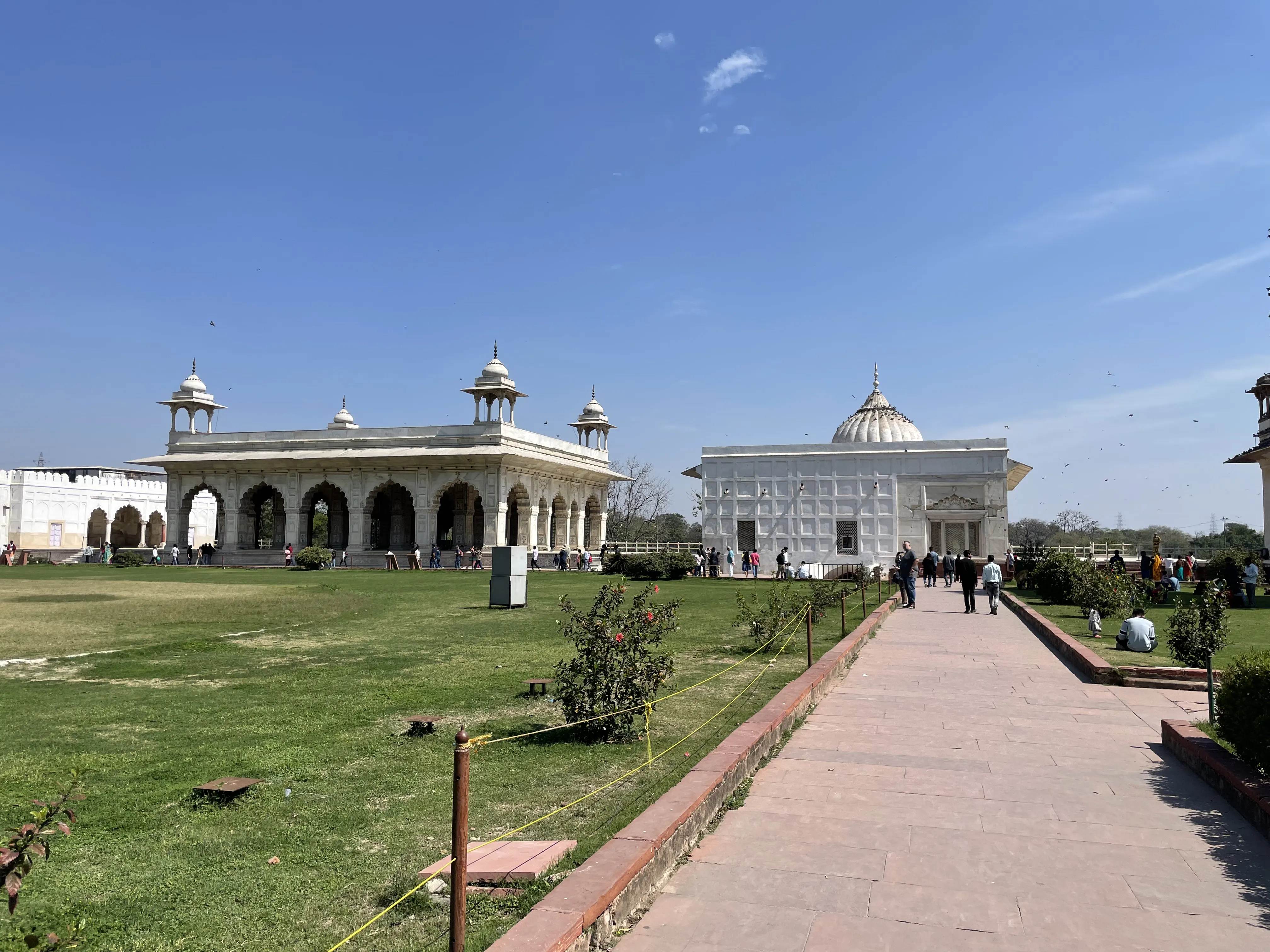
Shah Jahan, born Shahab-ud-Din Muhammad Khurram, was the fifth emperor of the Mughal dynasty and ruled from 1628 until his sons deposed him in 1658. His name is attached above all to the buildings raised in his reign, and with reason: the thirty years of his rule produced the Taj Mahal, the walled capital of Shahjahanabad with its great fort and congregational mosque, and a distinctive architectural manner in white marble and inlaid stone that defines the visual memory of Mughal India.
The political record of the reign is more mixed than the monuments suggest, and the two are connected. Shah Jahan inherited an empire at its most prosperous and left it at its most strained. He annexed the last independent sultanate of the northern Deccan and reduced the others to tribute, and he also spent immense sums on campaigns in Central Asia and on the Afghan frontier that failed. The succession war that ended his reign was not caused by that expenditure, but it was fought over an empire whose fiscal margin had narrowed.
Much of what follows draws on the contemporary Persian chronicles of the reign — Abdul Hamid Lahori's Badshah-nama, the official history of its first two decades; Inayat Khan's Shah Jahan-nama, which continues the record through the Kandahar campaigns; and Rai Bhara Mal's later Lubbu-t Tawarikh-i Hind — as translated and excerpted in Elliot and Dowson's compilation of Indian historical sources. This article treats the reign, the administration, the campaigns, and the fall. The Taj Mahal — its design, construction, and meaning — is covered in its own article, and is discussed here only as part of the wider building programme.
Early Life and Accession
Khurram was born at Lahore on 5 January 1592, the son of the future emperor Jahangir and a Rajput princess. His grandfather Akbar took a particular interest in his upbringing, and he was raised partly in the imperial household at Agra.
He emerged as the most capable of Jahangir's sons in military service. He commanded in the Mewar campaign of 1614–15 that brought the long Mughal conflict with the Sisodia Rajputs to a settlement, and he served in the Deccan, where his success in 1617 earned him the title Shah Jahan, "King of the World," from his father.
Mumtaz Mahal and the Imperial Family
In 1612 he married Arjumand Banu Begum, given the title Mumtaz Mahal ("Nawab Aliya Begam" in the court chronicles), the daughter of Asaf Khan and a niece of the empress Nur Jahan. She was not his only wife — Mughal emperors contracted marriages for political as well as personal reasons, and he had others — but the sources are unanimous that she held a position none of the others approached. She travelled with him on campaign, including during the years of rebellion, and the chronicles credit her with influence over petitions and appointments.
She died on 17 Zi'l-Qa'da 1040 AH (1631) in the fortieth year of her age, in the course of giving birth to her fourteenth child, in the Deccan — Lahori's Badshah-nama records the date and the Emperor's grief directly, and a note appended to the translated extract cites Khafi Khan's later history for the fact that she died in childbirth. She had borne Shah Jahan eight sons and six daughters; the Badshah-nama names the eldest surviving son as Dara Shukoh, followed by Shah Shuja, Aurangzeb, and Murad Bakhsh — the same four princes whose contest for the throne closed the reign twenty-seven years later.
The mausoleum at Agra was begun the following year. The scale of the building is itself evidence of the significance attached to her.
The Rebellion of 1622–1626
The last years of Jahangir's reign were dominated by the question of succession and by the influence of the empress Nur Jahan, who had come to exercise substantial authority at court and who favoured a different candidate — Shahryar, Jahangir's youngest surviving son, whom she married to her own daughter by a previous marriage.
The immediate trigger was a military order. In 1622 the Safavids under Shah Abbas I besieged Kandahar, and Shah Jahan was directed to march for its relief. He refused the terms of the command, judging that to leave the vicinity of the court with his army would surrender the succession to his rivals, and demanded conditions that Jahangir would not grant. Kandahar fell to the Safavids, and Shah Jahan was in open revolt.
The rebellion lasted some four years and ranged across Hindustan, the Deccan, and Bengal. He was defeated in the field near Delhi, campaigned in the Deccan and Bengal to raise resources, and was steadily worn down by imperial forces commanded by Mahabat Khan. By 1626 he had submitted, sending two of his sons — Dara Shukoh and Aurangzeb — to the court as hostages for his conduct.
The episode is worth recording for two reasons beyond its own drama. It established the pattern of his relations with his family: a claim pressed by force against a reigning father, resolved by submission and then by inheritance. And it gave Aurangzeb, then a boy, his first extended experience of the imperial court as a hostage of his father's failed rebellion.
When Jahangir died in 1627, the succession was contested even before Shah Jahan could reach the capital: the Badshah-nama records that the court factions of Asaf Khan and Iradat Khan, acting together and judging that Shah Jahan was too far away to secure the throne immediately, moved to place Bulaki — a grandson of Jahangir through the executed Prince Khusrau — on the throne as a stopgap, while working to keep the young princes out of the dowager empress Nur Jahan's hands. Shah Jahan proceeded from Ahmedabad by way of Ajmer to Agra and was formally enthroned there on 18 Jumada al-Thani 1037 AH (6 February 1628), taking the regnal title Abu'l Muzaffar Shihab al-Din Muhammad Sahib-i Qiran-i Sani. As was usual in Mughal successions, the rival claimants and their male supporters within the family were eliminated, and Nur Jahan was retired from public life on a pension.
Campaigns and Frontiers
Early Rebellions and the Deccan
Shah Jahan's early reign was occupied first with internal rebellions before the Deccan settlement was reached. Jajhar Singh Bundela, whose father Nar Singh Deo had killed Akbar's historian Abu'l-Fazl at Jahangir's covert instigation decades earlier, rose in the first year of the reign; he submitted to the imperial commander Mahabat Khan once his stronghold at Orchha was surrounded.
The more serious challenge came from Khan Jahan Lodi, governor of the Deccan, who allied with the Nizam Shahi ruler of Ahmadnagar and ceded him the revenue-rich Balaghat district rather than face him in battle. Recalled to answer for it, Khan Jahan obtained a written pardon under the emperor's own hand and returned to court, but grew convinced — on a false report that he and his son were to be arrested — that his life was in danger, and fled the court by night with his family and Afghan followers. Lahori's Badshah-nama traces the pursuit in close detail: overtaken at the Chambal river, Khan Jahan's party fought before forcing the crossing under fire, escaping into the territory of Jajhar Singh Bundela, whose son Bikramajit let them pass unmolested rather than seize a beaten rebel he might otherwise have delivered to the crown. From Bundela territory Khan Jahan made his way through Gondwana and Berar to seek refuge with the Nizam Shah, but found no lasting sanctuary there either: the imperial forces of Azam Khan and Abdullah Khan hunted him across the Deccan for months, killing his commander Darya Khan and steadily stripping away his following, his elephants, and his baggage train in a running series of skirmishes. Cornered near Sahenda in 1631 with only a handful of followers left and both hope and elephants exhausted, Khan Jahan dismounted and fought on foot alongside his son Aziz and a companion named Aimal until all three were cut down; a hundred of his remaining adherents fell with them, and the heads of Khan Jahan, Aziz, and Aimal were sent to the imperial court and afterward displayed over the gate of the fort at Sahenda. His surviving sons were taken into custody, and his pursuers Azam Khan and Abdullah Khan — the latter given the title Firoz Jang — were rewarded with higher rank on their return to court.
The most substantial territorial achievement of the reign followed. Mughal pressure on the successor states of the Bahmani sultanate had continued for decades; Ahmadnagar's own minister Fath Khan, having imprisoned the reigning Nizam Shah as his predecessor Malik Ambar had done before him, secretly had the king put to death on a hint from the Mughal court and installed a child in his place, before Ahmadnagar was finally extinguished and annexed in 1636. Bijapur and Golconda were compelled to accept tributary status and to cede territory, and were left as subordinate but surviving states — though the terms were reached only after a hard campaign: Asaf Khan's siege of Bijapur in 1631 stalled for want of supply, forcing the Mughal army to withdraw and lay waste the surrounding country instead, and it was several more years before Muhammad Adil Khan of Bijapur agreed to the tribute and territorial concessions that settled the region. Shah Jahan appointed his son Aurangzeb as viceroy of the Deccan, an assignment that gave the future emperor both his military apprenticeship and his base of support.
That settlement did not hold permanently, and in the thirty-first year of the reign (1657) Aurangzeb resumed active operations against Bijapur, which Muhammad Salih Kanbo's Amal-i Salih records in close detail. Aurangzeb marched first on the Bijapuri fortress of Bidar, held by Sidi Marjan with some five thousand men behind walls twelve yards high and three deep ditches; after ten days of siege-work his commander Mu'azzam Khan pushed the trenches to the ditch's edge, and when the garrison mined a bastion against the assault a Mughal rocket struck the powder store by chance, touching off an explosion that burned Sidi Marjan and two of his sons and let the besiegers carry the fortress in a single rush. Bidar fell after twenty-seven days, yielding twelve lakhs of rupees and two hundred and thirty guns. Aurangzeb then sent Mahabat Khan to ravage the country around Kalyani and defeat the Bijapuri commander Afzal Khan's forces in the field, while he himself went on to besiege Kalyani and then to press the siege of Bijapur itself — a campaign broken off before its conclusion by events at Delhi described below.
The Famine of 1630–1632
The Deccan campaigns coincided with the worst humanitarian episode of the reign. Failure of the rains across the Deccan and Gujarat produced a famine of extraordinary severity between 1630 and 1632. The court chronicles record measures of relief: distributions of charity to the poor timed to the anniversary of the emperor's accession, and revenue remission in the affected districts. The scale of the crisis, and the adequacy of the response to it, is more fully described in independent European accounts of the period than in the Persian court chronicles consulted for this article, which treat it chiefly as an occasion for recording the emperor's charitable measures rather than as a subject in its own right.
Balkh, Badakhshan and Kandahar
The two great military failures of the reign lay to the north and west, and the Elliot and Dowson excerpts from Inayat Khan's Shah Jahan-nama preserve an unusually detailed campaign record of the three Kandahar expeditions.
In 1646–47 Shah Jahan sent armies across the Hindu Kush to take Balkh and Badakhshan, the ancestral Timurid lands from which Babur had come. Balkh was occupied, but the position proved impossible to hold, and a costly withdrawal followed.
Kandahar itself, the fortress commanding the route between India and Iran, was lost to the Safavids in 1649. Shah Jahan mounted three expeditions to recover it. The first, in 1649, saw the army under Sa'd Allah Khan and Prince Aurangzeb reach Kandahar after a difficult winter march by way of Kabul and Ghazni, and lay siege for three and a half months; but lacking a proper siege train of heavy battering guns and skilled artillerymen, and with winter closing in, Aurangzeb was ordered to withdraw and return to Hindustan. The second, in 1651–52, again under Aurangzeb, lasted two months and eight days of continuous fighting: the Mughal guns cracked from constant firing, the defending Qizilbash garrison sallied repeatedly against the siege trenches, and news that the Uzbeks were raising disturbances near Ghazni finally forced the withdrawal of the siege train before the walls had been breached. The third and largest expedition, in 1652–53, was entrusted to Dara Shukoh, who spent three months at Lahore assembling an exceptional siege train — including two named heavy guns, Kishwar-kusha ("clime-conquering") and Garh-shikan ("fort-shattering"), the larger firing a shot of over a hundredweight, together with 30,000 cannonballs, thousands of maunds of gunpowder and lead, and fourteen thousand rockets. Even this force could not take the fortress: the siege extended beyond five months, the winter set in, the ammunition and forage were exhausted, and Dara Shukoh withdrew from Kandahar in Zi'l-Qa'da 1063 AH (1653).
The reasons for the failure were consistent across all three attempts, and the chronicles are candid about them: Kandahar's fortifications were built to withstand exactly this kind of assault, the Mughal artillery available in the field was not equal to the walls, and no siege begun in spring could be sustained through an Afghan winter at the end of so long a supply line. The command arrangements added a further dimension. Aurangzeb led the first two attempts and Dara Shukoh the third, and both failed; the rivalry between the brothers meant that each failure was material for the other's advocates at court.
The financial cost of the northern wars taken together was very large. A later chronicler's summary, preserved in the same collection, records that the paid military establishments alone maintained in Balkh, Badakhshan, and Kandahar amounted at one point to fourteen krors of rupees in a single disbursement — a figure offered specifically to illustrate the scale of expenditure the northern campaigns required, against which the same source contrasts Shah Jahan's success in nonetheless accumulating treasure faster than his predecessors, attributed to his close personal attention to revenue administration.
Hugli and the Portuguese
Elsewhere the reign saw the destruction of the Portuguese settlement at Hugli in Bengal in 1632. The Badshah-nama traces its origin to a small trading post permitted to Portuguese-linked merchants under earlier Bengali rule, which grew over time, through what the chronicle calls the negligence of the local authorities, into a fortified town with its own cannon and defences, eclipsing the older market of Satgaon. The chronicle's complaint against the settlement combines commercial and religious grounds, alleging that the Portuguese there drew some of the local population to Christianity and shipped converts to Europe. An Imperial force under Qasim Khan and Allah Yar Khan was sent by land and water to reduce it, and the town was taken.
Government, Economy and Court
Shah Jahan's empire was, by the measures available, the wealthiest state in the world of its time. Administratively he worked within the framework established by Akbar, and it is worth setting out because the strains of the later empire arose from its mechanics.
Office-holders were graded in the mansabdari system by two numbers: the zat, which fixed personal rank and pay, and the sawar, which fixed the number of cavalry the holder was obliged to maintain. Salary was normally not paid in cash but assigned as jagir — the right to collect the assessed revenue of a specified territory, up to the value of the entitlement. The territory was not hereditary property; assignments were rotated between provinces precisely so that no officer struck roots in one place.
The system's logic was elegant and its vulnerability specific. The value of an assignment depended on the difference between the revenue assessed on paper and the revenue that could actually be collected. As the number of ranked officers grew, as military obligations expanded, and as the assessed figures drifted away from what the land would bear, that margin narrowed. Officers responded by pressing collection harder, and since assignments rotated, none had a durable interest in the long-term condition of the district he was squeezing.
Rai Bhara Mal's Lubbu-t Tawarikh-i Hind, written by a former official of Dara Shukoh's own household under Aurangzeb's later reign, records a specific and striking measure of the reign's revenue efficiency: a pargana that had yielded three lakhs of rupees under Akbar was assessed at ten lakhs under Shah Jahan, and even the largest recorded single-year military expenditure — fourteen krors of rupees, chiefly on the Balkh, Badakhshan, and Kandahar garrisons — did not prevent Shah Jahan from accumulating treasure faster than his predecessors had managed even in years of lower outlay. The same source describes Shah Jahan's own close personal supervision of the courts: only one day a week, Wednesday, was ordinarily needed to hear the plaints of the whole empire, and the emperor is recorded personally rebuking the court's darogha when even the modest quota of twenty plaintiffs a week could not be found — a detail the chronicler, who had himself attended those audiences, offers as evidence of the general tranquillity of the realm rather than of any deficiency in access to justice.
Provincial government followed Akbar's template: the empire divided into subas under governors, subdivided into sarkars and parganas, with the revenue administration, the military command and the judiciary held by separate officers reporting independently to the centre — a deliberate division designed to prevent any provincial figure from accumulating the whole apparatus of power in one hand.
In religious policy Shah Jahan moved away from the accommodating posture of Akbar. The Lubbu-t Tawarikh-i Hind records that Shah Jahan abolished the practice of full prostration (sijda) before the sovereign that had been customary, replacing it first with the lesser gesture of kissing the ground and then, judging that objectionable too, with the ordinary bow and touch of the head performed three times — a sequence the chronicler presents as motivated by the emperor's own piety and scruple about receiving an act of reverence properly owed to God alone. At the same time Hindu nobles continued to hold senior military and administrative rank throughout the reign, most prominently Raja Jai Singh, and his eldest son and designated heir Dara Shukoh was a serious student of comparative religion. The record therefore does not support a single characterisation, and it is set out here as the mixed evidence it is.
The Building Programme
The architecture of the reign represents the mature phase of the Mughal style: white marble in place of red sandstone, pietra dura inlay of coloured stones, bulbous domes, cusped arches, and an insistence on bilateral symmetry and formal garden settings. The whole is often labelled the Shahjahani manner, and it is treated at greater length in the survey of Indo-Islamic architecture.
The principal works were these. The Taj Mahal at Agra, begun in 1632 as the mausoleum of Mumtaz Mahal, with the tomb itself substantially finished by the early 1640s and the wider complex completed over the following decade. The new capital of Shahjahanabad at Delhi, founded in 1639 and inaugurated in 1648, with the Red Fort at its heart containing the halls of public and private audience. The Jama Masjid at Delhi, built between 1650 and 1656, among the largest congregational mosques of the subcontinent. The Moti Masjid and other additions within Agra Fort. And the Shalimar gardens at Lahore, laid out in the early 1640s.
Two points about this programme are worth stating. First, it was an instrument of rule as much as an aesthetic project: a new capital bearing the emperor's name, a dynastic mausoleum on the river at Agra, and a congregational mosque of unprecedented scale were assertions of legitimacy and permanence directed at subjects and rivals alike. Second, the scale of expenditure was possible because of the revenue base Akbar's settlement had created, and it coincided with the military spending that strained it.
The War of Succession and Deposition
Two of the contemporary chronicles date the onset of Shah Jahan's final illness slightly differently — Muhammad Kazim's Alamgir-nama to 8 Zi'l-Hijja 1067 AH (8 September 1657), Muhammad Salih Kanbo's Amal-i Salih to around a month earlier, 1 Zi'l-Qa'da 1067 AH — and the Amal-i Salih adds that the illness took the form of strangury, constipation, and related complaints that his physicians could not relieve, worsening steadily until his recovery in Safar 1068 AH. With Dara Shukoh kept constantly at his father's side through the illness and given growing influence over the government, the Amal-i Salih records that Dara urged the emperor to recall the army serving under Aurangzeb before Bijapur and to move against his brother's treasury and following in the Deccan, on the ground that Aurangzeb's continued command of that army was a danger to the state; the letters conveying this instruction reached Aurangzeb while he had Bijapur under close siege, unsettled his own commanders, and led several of his nobles to leave for Agra without permission, forcing Aurangzeb to accept terms from Bijapur and withdraw toward Aurangabad before the siege was complete.
Recovery, on the Amal-i Salih's account, came in Safar 1068 AH, but by then the illness had already set the succession contest in motion that Mughal practice made almost unavoidable, since there was no law of primogeniture and each adult prince held a provincial command with troops. His four sons — Dara Shukoh, the eldest and his father's choice, at court; Shah Shuja in Bengal; Aurangzeb in the Deccan; and Murad Bakhsh in Gujarat — each moved to secure the throne. The victor's own chronicle, Muhammad Kazim's Alamgir-nama, records that as Shah Jahan's illness worsened and the administration of the state fell into disorder, Dara Shukoh took charge of the government at Delhi, restricted the flow of news to the provinces, and moved against officials suspected of communicating with his brothers — while, in the provinces, Murad Bakhsh had the khutba read and coin struck in his own name at Ahmedabad and took the royal title, and Shah Shuja did the same in Bengal before marching on Patna and then Benares.
The war was decided in a sequence of engagements across 1658 and 1659. Aurangzeb and Murad Bakhsh combined their forces and defeated an imperial army sent against them near Ujjain; the decisive battle followed near Agra, where Dara Shukoh's larger but less cohesive army broke. Aurangzeb took Agra, and Shah Jahan — by then recovered from his illness — was deposed and confined. The remaining claimants were eliminated in turn: Shah Shuja was defeated and driven eventually into Arakan; Dara Shukoh was captured after a final stand and executed later that year; and Murad Bakhsh, Aurangzeb's early ally, was imprisoned and put to death. The establishment of Aurangzeb's rule and his own assessment of these events are treated in that emperor's article.
The Years of Confinement
Shah Jahan spent the last seven and a half years of his life under confinement in Agra Fort. The conditions reported by the sources were those of a deposed sovereign rather than a prisoner in the ordinary sense: he retained apartments in the palace, a household, and his own attendants, and correspondence passed between him and his son, some of it preserved and much of it acrimonious. He was not permitted to leave, and the ceremonial functions of kingship were withheld.
His daughter Jahanara Begum, who had supported Dara Shukoh's cause, chose to share the confinement and remained with him until his death. Her position illustrates something of the character of the Mughal household: a princess of the first rank could take a side in a civil war, lose, and retain both her life and her property, and Aurangzeb restored her to honour at court after their father's death.
Shah Jahan died in Agra Fort on 22 January 1666, aged seventy-four. He was buried beside Mumtaz Mahal in the mausoleum he had built for her — the only substantial asymmetry in an otherwise exactly symmetrical building, since his cenotaph was added beside hers on the central axis rather than in a place designed for it.
Court Culture and Patronage
The court of Shah Jahan was the most elaborate the dynasty produced, and its ceremonial and administrative culture is unusually well documented by the court chronicles that recorded it in detail: the imperial audience system, the calendar of religious and dynastic observance, and the careful record of ranks, titles, and precedence that the Badshah-nama itself catalogues at length.
Imperial painting reached a distinct manner under his patronage. Where Akbar's workshop had favoured crowded narrative composition and Jahangir's had specialised in naturalistic portraiture and studies of birds, animals, and plants, the Shahjahani style is formal, hieratic, and concerned with dynastic statement: the emperor in profile in durbar, haloed, receiving submission amid careful hierarchies of rank. The great illustrated Padshahnama manuscript is the central document of this manner. It is court art in the strict sense, produced to assert the order it depicts.
Manuscript production, calligraphy, jewellery, textiles, and jade carving flourished on the same principle. The relevant background on the wider tradition is set out in the survey of Islamic art and in the article on Islamic calligraphy, whose inscriptional programmes on his buildings — Quranic passages selected and placed with evident deliberation — are among the finest achievements of the craft in India.
The emperor's children were significant figures in this culture. Dara Shukoh, the eldest son and intended heir, was a serious scholar with an interest in comparative religion who commissioned Persian translations of the Upanishads and associated himself with Sufi teachers. Jahanara Begum, the eldest daughter, was a builder and patron in her own right, commissioning works in Shahjahanabad and holding a position of unusual influence at court, and she chose to share her father's confinement.
Shahjahanabad: The Building of a Capital
The foundation of a new capital at Delhi in 1639 was the largest single undertaking of the reign and deserves separate notice, since it is often overshadowed by the mausoleum at Agra.
Shahjahanabad was a planned city, walled, with a fort-palace at its north-eastern corner on the river, a congregational mosque on high ground to the south-west, and two great processional avenues connecting the fort to the city's gates, one of them lined with a canal and a covered bazaar. The plan integrated the palace, the mosque, the market, and the residential quarters of the nobility into a single composition expressing the relationship between sovereign, faith, commerce, and service nobility.
The Red Fort within it contains the halls of public and private audience, the imperial apartments, and the Moti Masjid added later; the Jama Masjid, raised on its rocky platform above the city, remains among the largest mosques in South Asia. The whole ensemble is the most complete surviving example of Mughal urban design and is treated further in the survey of Islamic urban planning.
The choice of Delhi carried its own argument. Agra had been the Mughal seat since Babur, but Delhi was the historic capital of the Delhi Sultanate and the site of the tombs of earlier Muslim dynasties in India, including Humayun's. Founding a new city there, bearing his own name, placed Shah Jahan in that longer succession of Indo-Islamic sovereignty. The same year that Shah Jahan turned sixty by the lunar reckoning, the Shah Jahan-nama records that the court's jurists ruled, in accordance with the Quran's own dispensation for those unable to observe it, that the emperor was excused the fast of Ramadan and might instead expend money in charity — a ruling followed by the distribution of sixty thousand rupees to the poor and a nightly provision of food at the Chihal Sutun.
Religious Policy
Shah Jahan's religious policy marked a shift from the position his grandfather Akbar had established, and it is a subject on which the evidence pulls in more than one direction.
The shift is real and documented in the court chronicles themselves. Akbar had cultivated an eclectic court religion and had suspended a number of the disabilities that Islamic law traditionally attached to non-Muslim subjects. Shah Jahan reversed the ceremony of prostration before the emperor, as described above, on grounds of religious scruple, and he gave a more prominent place at court to scholars of the ulama. Lahori's Badshah-nama records a further, concrete measure from the sixth year of the reign (1632): informed that a number of Hindu temples begun but left unfinished in earlier reigns were nearing completion, Shah Jahan ordered that such unfinished temples be demolished throughout his dominions, and that seventy-six were destroyed in the district of Benares alone under this order.
Against this stands the composition of his administration and his household. Hindu nobles held senior military and civil rank throughout the reign; Raja Jai Singh of Amber commanded imperial armies, and Rajput contingents were integral to Mughal campaigns including the succession war fought at the reign's end. His designated heir, Dara Shukoh, pursued the study of Hindu religious philosophy openly and with his father's knowledge, commissioning Persian translations of Sanskrit works.
The pattern is therefore neither the tolerant syncretism sometimes attributed to the earlier Mughals nor the confessional rigour sometimes attributed to Aurangzeb, and modern scholarship has largely abandoned attempts to resolve it into either. What can be said is that the ceremonial and legal presentation of the monarchy became more explicitly Islamic while the practical composition of the ruling class remained mixed.
The Economy of the Reign
The reign is the period for which the wealth of Mughal India is most fully attested, and also the period in which the strains on its fiscal structure become visible.
Revenue rested overwhelmingly on agriculture, assessed and collected through the system inherited from Akbar's settlement and administered by revenue officials whose demand was calculated on measured area and expected yield. Around this ran an extensive commercial economy: cotton textiles above all, produced in Bengal, Gujarat, and the Coromandel for markets across the Indian Ocean and increasingly for European companies; indigo, saltpetre, silk, and spices; and an inflow of silver, much of it ultimately from the Americas, that paid for these exports and supplied the mints.
The pressures were structural. The mansabdari and jagir systems paid officers by assigning them the revenue of a territory, and the value of assignments depended on the gap between the assessed demand and what could actually be collected. As the number of ranked officers grew and as military expenditure rose, that gap narrowed and assignments were pressed harder, which fell on the cultivator. Rai Bhara Mal's own record of Shah Jahan's revenue settlement — the increase from three lakhs to ten lakhs on a single pargana cited above, achieved through closer supervision of the chakladars who collected it — shows one side of this mechanism operating in the reign itself: heavier assessment yielded higher recorded revenue, and the same chronicle notes that districts falling short of the expected increase drew unfavourable notice at court.
The building programme and the Central Asian wars drew on the same revenue. The distinction between them is that the buildings were a one-time capital expenditure yielding durable assets and prestige, while Balkh and Kandahar consumed men and money without return.
Historiographical Note
The contemporary Persian chronicles of the reign — Kazwini's Padshah-nama, Lahori's Badshah-nama, Inayat Khan's continuation, and Muhammad Salih Kanbo's Amal-i Salih — form a connected series, largely official productions commissioned by or associated with the court to record the reign as it wished to be remembered, though the Amal-i Salih was completed only after Shah Jahan's death and under Aurangzeb's patronage. Their detail on campaigns, revenue, and ceremonial is correspondingly full, and their treatment of setbacks correspondingly restrained: the Kandahar failures are recorded candidly enough to be reconstructed here in some detail, but always as failures of supply and season rather than as failures of judgement.
The later chronicle used for the succession war, Muhammad Kazim's Alamgir-nama, presents a different problem, since it was written under Aurangzeb's own patronage to justify his accession. Its account of Dara Shukoh's conduct during Shah Jahan's illness includes hostile characterisation of the prince's motives and abilities that this article does not repeat; the neutral, checkable facts it reports — the date of the emperor's illness, Dara Shukoh's assumption of the administration at Delhi, and the self-proclamations of Murad Bakhsh and Shah Shuja in the provinces — are used here, and the chronicle's judgement of Dara Shukoh's character is not. The Amal-i Salih's account of Dara Shukoh's advice to recall Aurangzeb's army during the earlier phase of the emperor's illness is reported here as a fact about what was recommended and what followed from it, on the same basis: as with the Alamgir-nama, this article reports the chronicle's record of events and instructions rather than any characterisation of the prince's motives that either source attaches to them.
Assessment
The judgement on Shah Jahan has to separate two things that his reputation usually merges: the cultural achievement, which is beyond dispute, and the political stewardship, which is more equivocal.
The architecture is the most complete and coherent body of imperial building in Indian history, and its influence on the visual identity of the subcontinent has no rival. The Taj Mahal is a work of the first rank by any standard, and the ensemble of Shahjahanabad, the Delhi Jama Masjid, and the marble pavilions of Agra constitutes a single sustained artistic programme carried out over three decades. The court culture of the reign — its painting, its manuscript production, its jewellery and its ceremonial — was correspondingly refined.
As a ruler he consolidated in the Deccan and overreached in Central Asia and at Kandahar. The northern campaigns were undertaken for dynastic and prestige reasons and returned nothing, despite three attempts and, on the third occasion, an exceptionally large and costly siege train; they consumed revenue and manpower at precisely the period when the jagir system was beginning to show strain. The empire he handed on was territorially larger and financially tighter than the one he received.
His reign also demonstrated the unresolved constitutional weakness of the Mughal state. The absence of any rule of succession meant that the illness of an emperor was sufficient to produce a civil war among armed provincial governors who happened to be his sons. Shah Jahan had himself come to the throne through rebellion against his father and the elimination of rivals; he lost it the same way, to a son who had been a hostage for that first rebellion. That pattern, rather than any particular policy, was the most consequential inheritance he passed to his successors.
References and Further Reading
Primary Islamic Sources
- Quran, Surah Al-Imran (3:26) — on sovereignty being given and taken away by God; a text used in the Mughal chronicles to frame both accession and deposition
- Quran, Surah al-Rahman (55:26–27) — on the passing of all things and the endurance of God alone; among the Quranic passages inscribed in the calligraphic programmes of his mausoleum architecture
- Quran, Surah al-Baqarah (2:184–185) — on the dispensation from fasting for those unable to observe it, the basis of the ruling that excused Shah Jahan the fast of Ramadan in his old age
- Quran, Surah al-Nisa (4:58) — on rendering trusts and judging with justice, the standard invoked in Indo-Persian writing on the duties of rulers
- Sahih al-Bukhari and Sahih Muslim, Books of Leadership (Kitab al-Imarah) — the prophetic material on rulers' accountability, the framework of contemporary religious assessment of his reign
Classical Islamic Sources
- Kazwini, Muhammad Amin. Padshah-nama. [Composed c. 1648] — the first official history of the reign, covering its first ten years, and the model on which Lahori's later work was based
- Lahori, Abdul Hamid. Badshah-nama. [Composed c. 1636–1655] — the principal chronicle of the first twenty years of the reign, commissioned by the Emperor and modelled on Abu'l-Fazl's Akbarnama
- Khan, Inayat. Shah Jahan-nama. [Compiled c. 1657] — the continuation covering the Kandahar campaigns and the later years of the reign
- Bhara Mal, Rai. Lubbu-t Tawarikh-i Hind. [Composed c. 1696] — a later summary history written by a former official of Dara Shukoh's household, valuable for its independent record of court ceremonial and revenue administration
- Kanbo, Muhammad Salih. Amal-i Salih [also known as Shah Jahan-nama]. [Composed c. 1659–1671] — a chronicle of the reign from Shah Jahan's birth to his death, used here for its detailed record of the 1657–58 Bijapur campaign
- Kazim, Muhammad. Alamgir-nama. [Composed c. 1688] — the official history of Aurangzeb's reign, used here only for its dateable facts on the outbreak of the war of succession
- Excerpted and translated in: Elliot, H.M., and Dowson, John. The History of India as Told by Its Own Historians, vol. VII. London: Trubner and Co., 1877.
Academic and Scholarly Sources
- No modern academic or scholarly work outside the approved source base has been used as the authority for a claim in this article; the reign is reconstructed here directly from the contemporary Persian chronicles listed above. Works of modern scholarship on Shah Jahan's reign and its architecture appear below under Further Reading, for the reader's own further research, rather than here.
Further Reading
- Koch, Ebba. The Complete Taj Mahal and the Riverfront Gardens of Agra. London: Thames and Hudson, 2006.
- Koch, Ebba. Mughal Architecture: An Outline of Its History and Development. Munich: Prestel, 1991.
- Asher, Catherine B. Architecture of Mughal India. Cambridge: Cambridge University Press, 1992.
- Begley, W.E., and Z.A. Desai, eds. Taj Mahal: The Illumined Tomb. Cambridge, MA: Aga Khan Program for Islamic Architecture, 1989.
- Archaeological Survey of India, documentation on the Taj Mahal, Agra Fort, and the Red Fort complex.
Mentioned In
16 articles reference this topic
and 4 more articles
More from Mughal Empire
Taj Mahal - Monument to Eternal Love
The Taj Mahal (1632-1653 CE) is an ivory-white marble mausoleum built by Mughal Emperor Shah Jahan in memory of his wife Mumtaz Mahal. Located in Agra, India, this masterpiece blends Persian, Islamic, and Indian architectural traditions, representing the pinnacle of Mughal achievement.
The Mughal Empire: Three Centuries of Islamic Rule in the Indian Subcontinent
The Mughal Empire (1526-1857) ruled most of the Indian subcontinent for three centuries, from Babur's victory at Panipat to the deposition of Bahadur Shah Zafar. At its height it was among the wealthiest and most populous states in the world.
Aurangzeb Alamgir: The Last Great Mughal Emperor
Aurangzeb Alamgir (1618-1707 CE) was the sixth Mughal emperor, ruling nearly fifty years over the empire at its greatest extent. He commissioned the Fatawa-i Alamgiri, annexed Bijapur and Golconda, and spent his last decades campaigning in the Deccan.
Jahangir: The Fourth Mughal Emperor
Jahangir (r. 1605-1627) succeeded Akbar as the fourth Mughal emperor. He issued twelve ordinances, hung a chain of justice at Agra, blinded and then had physicians treat his rebel son Khusrau, shared government with Nur Jahan, lost Kandahar to Iran, and kept a candid memoir of his reign.