Mu'in al-Din Chishti: The Shaikh of Ajmer
Mu'in al-Din Hasan Sijzi (d. 1236 CE) settled at Ajmer in Rajasthan and is held by the Chishti order to be its founder in India. His shrine became the most visited Muslim sanctuary in the subcontinent, though the early record of his life is thinner than his fame suggests.
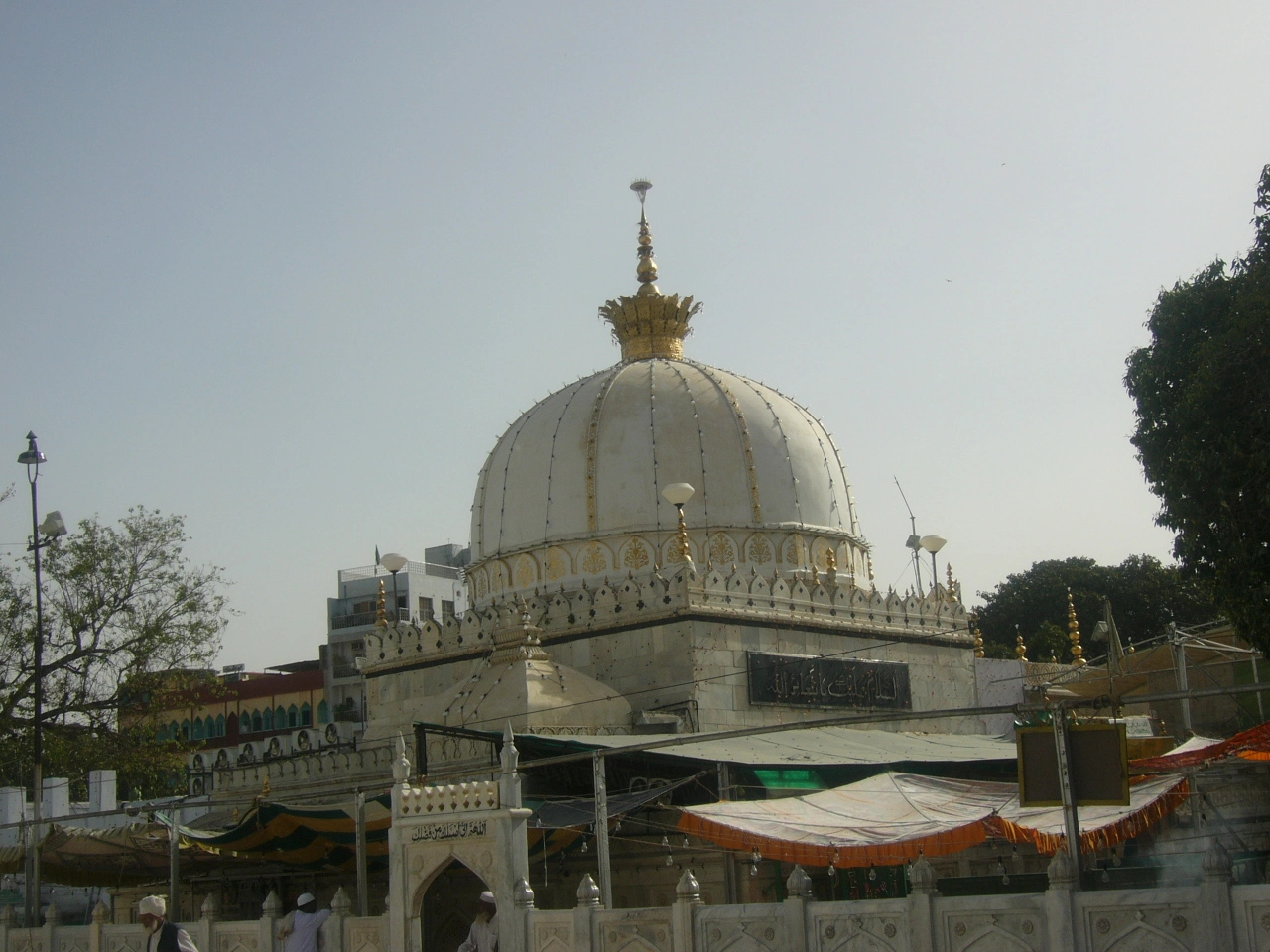
Khwaja Mu'in al-Din Hasan Sijzi (c. 536–633 AH / c. 1141–1236 CE) was the Sufi master who settled at Ajmer in Rajasthan and whom the Chishti order of the Indian subcontinent regards as its founder there. His tomb at Ajmer became, and remains, the most frequented Muslim shrine in South Asia, and the order that traces its chain of succession to him became the most widely diffused of the four great Sufi orders of the subcontinent. Almost everything specific that is said about his life, however, comes from hagiographical compilations written a century or more after his death, and the modern critical literature on the Chishtis has shown that several of the best-known episodes cannot be substantiated. This article sets out both what is recorded and how firmly it is recorded, because in his case the distance between the two is unusually wide and is itself part of the subject.
The Chishti Tradition Before India
Chisht and the line of Abu Ishaq Shami
The order takes its name not from a person but from a place: Chisht, a village east of Herat on the river Harirud, in what is now western Afghanistan. The tradition's own account of its beginnings is preserved in two works, Amir Khurd's Siyar al-Awliya, compiled in the fourteenth century, and Jami's Nafahat al-Uns, completed in 881 AH / 1476 CE. In that account Khwaja Abu Ishaq Shami, a Sufi of Syria of whom little else is known, settled for a time at Chisht at the direction of his Persian master Mamshad Dinawari, who died in 299 AH / 912 CE.
The line of spiritual affiliation, the silsilah, that the order traces back from Abu Ishaq is one of the places where the tradition's own claims and the historical record part company. Jami traces it to Ibrahim ibn Adham, who died in 160 AH / 777 CE. The later Indian Chishti sources extend it from Ibrahim ibn Adham through Fudayl ibn Iyad, Abd al-Wahid ibn Zayd, Hasan al-Basri and Ali ibn Abi Talib to the Prophet himself. Gerhard Böwering, writing on the order in the Encyclopaedia Iranica, describes this chain as historically flawed: the generations it names cannot in fact have transmitted from one another as the sequence requires. The point matters for reading everything that follows, because a silsilah was the instrument by which a Sufi master's authority was established, and the tradition had a strong interest in the chain being unbroken.
The dispersal of the tradition from Chisht
Before returning to his own region — he died at Acre on the Palestine coast in 329 AH / 941 CE — Abu Ishaq is said to have trained a local Sufi, Abu Ahmad Abdal, who died in 355 AH / 966 CE, as his successor at Chisht. The tradition then passed within an extended family: to Khwaja Yusuf ibn Muhammad ibn Sam'an, who died in 459 AH / 1067 CE and is held to have been in contact with the great Herati master Khwaja Abdallah Ansari; and from him to his son Khwaja Qutb al-Din Mawdud Chishti, who died in 527 AH / 1133 CE.
From Mawdud the succession passed to his son Ahmad, who died at Multan in 577 AH / 1181 CE, and it was here that the line fractured. Ahmad's authority was contested by two other disciples, Rukn al-Din Muhammad of Sanjan, who died in 597 AH / 1201 CE, and Hajji Sharif Zandani, who died in 612 AH / 1215 CE. Böwering connects the dispute to the political conditions of the moment: Chisht lay in the neighbourhood of Firuzkuh, the Ghurid capital, which was then in its ascendancy under Sultan Ghiyath al-Din Muhammad, who reigned from 558 to 599 AH / 1163 to 1203 CE. A local Sufi tradition in the shadow of a rising imperial capital was under pressures it had not faced before, and the effect of the succession struggle was to disperse it.
One branch continued at Harvan in the district of Nishapur, under a certain Khwaja Uthman, a successor of Hajji Sharif and the leader of a group of dervishes, who is said to have died in 617 AH / 1220 CE. This is the man whom Mu'in al-Din met. It is worth stating plainly what follows from that: the whole connection between Mu'in al-Din and the Chishti tradition of Chisht rests on the single link of Khwaja Uthman, and Böwering describes that link as tenuous. The order in India is named for a village in Afghanistan to which its Indian founder's attachment runs through one relationship attested only in hagiography.
Origins and Early Life
Sistan and the departure from it
Mu'in al-Din Hasan Sijzi — the last element of the name is a form of Sijzi or Sijistani, meaning "of Sistan" — is said to have been born in Sijistan, that is Sistan, in 536 AH / 1141–42 CE. The Encyclopaedia Iranica gives this date; the essay on the Sufis of the subcontinent by Nazeer Ahmed on historyofislam.com gives 1139 CE and places the birth in "Sajistan," and the year is not fixed with certainty in the literature.
What moved him is not recorded, but the possibilities are datable. His father died while he was young, and Böwering suggests that his departure from Sistan may have come as early as the Ghuzz invasion of Khorasan against Sultan Sanjar in 548 AH / 1153 CE, or later during the Ghuzz incursions into Sistan itself in 564 AH / 1169 CE and 574 AH / 1178 CE. The Tarikh-i Sistan records those incursions. This is the ordinary pattern of the period: the great Sufi migrations from Iran and Central Asia into the Indian subcontinent in the twelfth and thirteenth centuries were set in motion by the movement of armies, and the men who made them were displaced before they were missionaries.
The account on historyofislam.com adds that he was orphaned at twelve, travelled to Samarkand for his early education, had memorised the Qur'an by fifteen, and had command of Arabic, Persian and Turkish. These details belong to the devotional literature rather than to any documentary record, and they are reported here as that literature's account of his formation.
Bukhara, Samarkand and Nishapur
His route eastward and then westward again ran through the great cities of Transoxiana. He came first to Bukhara and Samarkand, the two centres of Islamic learning in the region, and then to Nishapur in Khorasan. It was at Nishapur that he attached himself to the circle of Khwaja Uthman, and Böwering's description of the terms on which he did so is worth registering: he joined the group as an errant dervish, a qalandar. The word denotes a wandering ascetic without fixed abode, discipline of dress, or institutional attachment — a very different figure from the settled shaikh presiding over a hospice that the later Chishti tradition would build around him.
Khwaja Uthman and the years of wandering
He travelled with his master's company for a number of years, in some accounts as many as twenty, before establishing himself independently. The length of the apprenticeship is characteristic of the period and of the order: the Chishti relation of disciple to master was one of long personal service rather than of formal instruction in texts, and time was itself the discipline.
A cluster of encounters is attached to these years in the devotional literature, and it is where the critical literature is most direct. Mu'in al-Din is said to have visited the towering Sufi figures of his age: Abd al-Qadir al-Jilani, who died in 561 AH / 1166 CE and to whom the Qadiri order traces its chain; Najib al-Din Suhrawardi, who died in 563 AH / 1168 CE; and Najm al-Din Kubra, who died in 618 AH / 1221 CE. The essay on historyofislam.com places these meetings at Baghdad and adds Awhad al-Din Kirmani and Abu Sa'id Tabrizi to the list. Böwering's judgement is that these alleged visits cannot be substantiated. The function such meetings serve in a hagiography is transparent — they place the subject in the company of the age's recognised masters and so authenticate him — and the article does not treat them as events.
The Journey to India
Lahore and the Ghurid conquest
Mu'in al-Din's move to the subcontinent is placed after the capture of Lahore in 582 AH / 1186 CE by Mu'izz al-Din Muhammad, the Ghurid sultan of Ghazni since 568 AH / 1173 CE — the ruler this encyclopaedia treats as Muhammad of Ghor. The taking of Lahore ended Ghaznavid rule there and opened the Punjab to movement from the north-west, and Böwering records that Mu'in al-Din is said to have visited the shrine of Abu al-Hasan Hujwiri at Lahore, the author of the Kashf al-Mahjub and the earliest Sufi authority whose grave in the subcontinent drew visitors.
The essay on historyofislam.com places him at Ghazni, Lahore and Multan in these years, and states that he learned Sanskrit and Hindi in order to speak with the people around him. Whether or not the linguistic detail can be documented, the sequence of towns describes the road any traveller from Khorasan to the Indian plains would take.
The arrival at Ajmer
The point at which he reached Ajmer is genuinely disputed, and the disagreement is not a minor one, because it concerns whether he arrived in the wake of a conquest or before it.
Mu'izz al-Din defeated the Chauhan Rajputs under Prithviraja at the second battle of Tara'in in 588 AH / 1192 CE, and Ajmer had been the Chauhan capital. One line of the sources has Mu'in al-Din travelling as far as Ajmer after that battle, in some accounts by way of Delhi after the city was taken in 589 AH / 1193 CE. A second has him arriving only after Mu'izz al-Din's death in 602 AH / 1206 CE. A third has him at Ajmer before the conquest of 588 AH, and delivering the local ruler into the hands of the Ghurid army. The essay on historyofislam.com follows the first of these, having him move from Multan to Delhi and then to Ajmer after Tara'in.
The three accounts cannot be reconciled, and the third is of a different order from the other two, since it makes the shaikh an agent in a military conquest rather than a migrant in its aftermath. What the disagreement demonstrates is that the arrival at Ajmer was, for the later tradition, a thing to be explained rather than simply recorded — and that the explanation offered varied with what the explainer wanted the relationship between the saint and the conquest to have been.
Ajmer
The town he settled in
Ajmer sits in the eastern Rajasthan desert, and the ordinary description of it as a frontier town of a new Muslim polity understates what the Tabaqat-i Nasiri actually records about its condition after 1192.
Juzjani's account of the campaign, with Raverty's notes, gives the sequence. Mu'izz al-Din sent an envoy — Rukn al-Din Hamzah, bearing the titles Sadr-i Kabir and Qiwam al-Mulk — to Ajmer with an ultimatum calling on Pithora Rae, the Chauhan king whom this encyclopaedia elsewhere names Prithviraja, to accept Islam and acknowledge Ghurid supremacy. The reply was a refusal, and Prithviraja advanced with the support of most of the rajahs of Hind; the sources give his strength as two or three hundred thousand horse, figures of the customary chroniclers' order. In the battle that followed he was defeated and taken prisoner, and the sultan then advanced on Ajmer and subdued the territory.
What happened next is the part that matters for this article. Raverty records that all the authors he knows of state that after Prithviraja's death his son — written Kolah or Golah — was made tributary ruler of Ajmer by Mu'izz al-Din. Ajmer was therefore not annexed and garrisoned but left under a Chauhan prince paying tribute to a Muslim overlord. The town in which Mu'in al-Din settled was a Hindu-ruled tributary principality within the Ghurid sphere, its population overwhelmingly non-Muslim and its ruler the son of the king the Ghurids had killed. That is a very different setting from a conquered Muslim garrison, and it bears directly on the character of what he is said to have done there: a shaikh living among people who were neither his co-religionists nor his subjects, in a town whose recent history gave them ample reason for wariness.
Mu'in al-Din settled there in what were already his later years and remained until his death.
Of his household the sources record that he married twice, first a Muslim and then a Hindu woman, and had three sons and a daughter. Böwering notes that his sons owned large landholdings, for which their father had to intercede at Delhi — a detail that bears directly on the question of the order's relation to the state, treated below.
Only one journey away from Ajmer is recorded. The essay on historyofislam.com has him return to Delhi once, in the reign of Sultan Shams al-Din Iltutmish, and describes the sultan presenting himself in person with gifts of gold, silver and jewels, which were politely declined. The episode belongs to a very large class of stories in which a ruler seeks a saint and is refused, and the article reports it as the tradition's account rather than as a documented meeting.
Mu'in al-Din died at Ajmer on 6 Rajab 633 AH / 16 March 1236 CE. He was venerated as a holy man credited with wonders, and the flow of pilgrims to his grave began soon after his death.
The transmission
Three men are named in the tradition as his principal successors, and the geography of their work is the geography of the order's early spread.
Qutb al-Din Bakhtiyar Kaki, who died in 633 AH / 1235 CE, came to India from Ush in Farghana as a wandering dervish, stayed briefly at Multan during the rule of Nasir al-Din Qabacha, who died in 625 AH / 1228 CE, and then settled at Delhi in Iltutmish's reign. He declined the office of Shaikh al-Islam that the sultan offered him. Böwering records that he died in ecstasy during a performance of sama, the listening to music that he cultivated, and that his grave at Mehrauli was the principal shrine of the Delhi area when Ibn Battuta visited India between 734 and 743 AH / 1333 and 1342 CE.
Hamid al-Din Muhammad Nagauri, who died in 673 AH / 1274 CE, was born in India and lived on unclaimed land in the village of Suwal outside Nagaur, keeping to a strict vegetarianism. He is credited as the first Chishti to write a treatise on sama, the Risala-i Sama.
Farid al-Din Mas'ud Ganj-i Shakar, who died in 664 AH / 1265 CE and is universally known as Baba Farid, was also born in India and educated at Multan. He lived for many years at Hansi before establishing his hospice at Ajodhan, now Pakpattan, a staging post on the main road from Multan to Delhi on the Sutlej. Both surviving branches of the Chishti order in the subcontinent — the Sabiriyya and the Nizamiyya — descend from him, and Metcalf's study of the Deoband movement records that these two were still the Chishti lines current in India in the nineteenth century.
Between them these three men set the order's pattern: an urban master at the capital, a rural master among the villages, and a master on a trunk road between the two.
The Practice the Order Traces to Him
Distinguishing what Mu'in al-Din himself taught from what the order later attributed to him is not possible on the available evidence; no writing of his survives that scholarship accepts as genuine. The essay on historyofislam.com states that over ten thousand Persian couplets are ascribed to him and that most of his writings are lost. What can be described is the practice the Chishtis of India traced to him and made their own.
Sama
The listening to music and sung poetry as a means of inducing mystical states was the most contested Chishti practice and the most characteristic. The order justified it from a report in the Awarif al-Ma'arif of Abu Hafs Umar Suhrawardi, who died in 632 AH / 1234 CE, in which the Prophet approves sama in a dream of Mamshad Dinawari, provided the assembly opens and closes with recitation of the Qur'an. Chishti writers often qualified the justification with the view of Abu Ali Daqqaq, who died in 406 AH / 1015 CE, that sama is forbidden to ordinary people yet lawful for Sufis, for whom it is the shortest road to God.
Within the tradition Mawdud Chishti is said to have preferred sama even to the ritual prayer, on the ground that its acceptance by God was assured — a position that indicates how far the practice could be pressed and why the jurists objected. Mu'in al-Din is himself said to have held sama sessions nightly. Böwering attributes the practice's establishment at Delhi to Qutb al-Din Bakhtiyar in Iltutmish's reign, and records a detail that connects this article to others in the encyclopaedia: the legal opinion given in favour of sama in that reign came from Minhaj al-Siraj Juzjani, the qadi of Delhi and author of the Tabaqat-i Nasiri, the chronicle on which this encyclopaedia's accounts of the early Delhi sultans rest.
Walaya
The second distinctive Chishti teaching concerned the nature of a saint's authority. The Qur'an's phrase awliya Allah, the friends of God (Qur'an 10:62), gave the Sufis their name for themselves, and the tradition distinguished walaya, spiritual authority, from nubuwwa, prophetic authority. The ideas reached the Indian Chishtis chiefly through Hujwiri's Kashf al-Mahjub, which treats walaya as the very principle of Sufism.
The practical form the doctrine took among the Chishtis was territorial. A shaikh held walaya over a group of disciples in a geographical region; when he died he took his wilaya — his own relation to God — with him, but left his walaya behind and conferred it on a disciple. This is the conceptual basis of the pattern visible in Mu'in al-Din's succession: a master does not merely train pupils, he assigns regions.
The question of relations with the state
The Chishtis are conventionally contrasted with the Suhrawardis of Multan on this point, the former said to have kept clear of government and refused its grants, the latter to have entered its service. Böwering calls the contrast a questionable, though often repeated, assertion, and sets out the evidence against it. The Chishtis generally refused stipends but accepted unsolicited gifts, futuh. Mu'in al-Din's own sons held large lands for which he interceded at Delhi. Hamid al-Din Nagauri held his own land. Qutb al-Din Bakhtiyar came to Delhi at Iltutmish's request.
The refusal recorded in the devotional literature was therefore a refusal of office and of regular stipend, not a general withdrawal from the world of rulers, and the well-known stories of saints turning sultans away are better read as statements about the terms of the relationship than as evidence that there was none.
After His Death
The shrine at Ajmer was not built immediately. Böwering dates its construction by the sultans of Malwa to shortly after 859 AH / 1455 CE, more than two centuries after Mu'in al-Din's death — which is to say that the institution through which he is now known belongs to a later phase of the order than his own.
That phase brought a structural change. As shrines were established at the tombs of the venerated Chishtis, devotion transferred from living masters to dead ones, and a hereditary office grew up beside the older one: the sajjada-nishin, the occupant of the prayer-carpet, drawn from the saint's patrilineal descendants, alongside the khalifa appointed for spiritual succession. Family control of a shrine turned Chishti sama into a routine with the features of a ritual, performed on the anniversary of a saint's death and eventually called qawwali.
The order's reach became very wide. Böwering traces it from Delhi into the Deccan under Burhan al-Din Gharib, who died in 741 AH / 1340 CE; into Malwa, Bengal, Bihar and Gujarat through the disciples of Nizam al-Din Awliya and his successors; and, three centuries later, back into a reformed and centralised Nizamiyya branch under Shah Kalimullah Jahanabadi at Delhi, who died in 1142 AH / 1729 CE. The Sabiriyya branch, traced from Ala al-Din Ali Sabir of Kalyar, who died in 691 AH / 1291–92 CE, runs through Abd al-Quddus Gangohi to the founders of the Deoband school, which claims its spiritual ancestry through that line.
Imperial attention followed. The essay on historyofislam.com records that the Mughal emperor Akbar was a disciple of Shaikh Salim Chishti and made annual pilgrimages on foot to Salim's tomb and to Mu'in al-Din's at Ajmer, and that Shah Jahan and his son Dara Shikoh were attached to these shaikhs. By the eighteenth and nineteenth centuries the order was one of the two most current in India, and, as Rizvi's history of the Dar al-Ulum records from within the tradition, was habitually combined with the Naqshbandiyya rather than held separately from it.
Historiographical Note
The sources for Mu'in al-Din's life are late, devotional in purpose, and thin in the particular respect that matters most: none of them is contemporary with him.
The nearest are Amir Khurd's Siyar al-Awliya, compiled in the fourteenth century by a member of Nizam al-Din Awliya's circle, and Jami's Nafahat al-Uns, completed in 1476. Both are tazkira — collections of notices of holy men, assembled to establish and celebrate a chain of transmission — and both were written to connect the Chishti tradition in India with its origins in Khorasan. Böwering states the resulting difficulty directly: the main purpose of the hagiographical accounts of Mu'in al-Din appears to be his followers' concern to link the immigrant tradition of an errant dervish from Sistan with the indigenous tradition of a holy man of Ajmer, and so to build a bridge between the Iranian beginnings of the Chishti tradition and the order that flourished in India. That is a description of a source's motive, not of its dishonesty; but it tells the reader what the material was assembled to accomplish, and hence which of its claims are load-bearing for the compilers and should be tested hardest.
A second point concerns silence. Minhaj al-Siraj Juzjani completed the Tabaqat-i Nasiri at Delhi around 1260, within a generation of Mu'in al-Din's death, and was himself the qadi who ruled in favour of sama in Iltutmish's reign. He does not mention Mu'in al-Din. A search of Raverty's translation of both volumes for the name and its variants returns nothing but false positives inside the place-name Gharchistan. The chronicler best placed to record the shaikh of Ajmer, and demonstrably interested in the Sufi question of the day, is silent about him. That silence does not establish that Mu'in al-Din was unimportant in his own lifetime; it does establish that his standing as the fountainhead of Indian Sufism is a retrospective judgement of the tradition rather than a contemporary one.
Three specific corrections follow from the critical literature and are made in the article above. The silsilah running from Abu Ishaq Shami to the Prophet through Ibrahim ibn Adham and Hasan al-Basri is chronologically impossible as transmission. The reported meetings with Abd al-Qadir al-Jilani, Najib al-Din Suhrawardi and Najm al-Din Kubra cannot be substantiated. And the claim, very widely repeated, that Mu'in al-Din's mission rested on Ibn Arabi's doctrine of the unity of being, wahdat al-wujud, is not supportable: Böwering points out that Ibn Arabi, who died in 638 AH / 1240 CE, was hardly read in India during the early Chishtis' lifetimes, that the two earliest genuine records of Chishti conversation never mention him, and that Chishti commentary on his work begins only with Gisu Daraz in the fifteenth century.
On sourcing, this article was written from the approved base first. The project's own library yielded the Tabaqat-i Nasiri — used above chiefly for what it does not contain — together with Metcalf and Rizvi on the order's later branches; the approved website historyofislam.com yielded a substantial essay on the Sufis of the subcontinent by Nazeer Ahmed, which carries no citations of its own and is internally inconsistent on several dates, and which is accordingly used for narrative shape and named relationships rather than for chronology. Because the approved base establishes very little about Mu'in al-Din himself, the critical scholarly account was taken from Gerhard Böwering's article on the Chishtiyya in the Encyclopaedia Iranica, an external source consulted under the owner's standing instruction that external material may be used where the approved base is insufficient, and recorded here so that the reliance remains auditable.
Conclusion
Mu'in al-Din Chishti's importance is not in doubt, but it is of a particular kind. He did not found an order in any organisational sense, leave writings that shaped its doctrine, or hold office that gave him public authority. What he did was to settle, late in a wandering life, in a frontier town in Rajasthan, and to train men who went on to establish hospices at Delhi, in the Rajasthan villages, and on the road to Multan. From those three points the Chishti order spread across the subcontinent over the following two centuries, and every branch of it traced its authority back through him.
The gap between the modesty of the documented life and the scale of the later veneration is the most interesting thing about him. His shrine was built two hundred and twenty years after he died; the emperors who walked to it were three centuries further on; and the chronicler who shared his city and his controversies never wrote his name. A tradition, given time, can make a founder of a man who was in his own day one dervish among many — and the making is a historical process worth understanding in its own right, quite apart from the question of what the dervish himself was like.
References and Further Reading
Primary Islamic Sources
- Qur'an 10:62 — the phrase awliya Allah, the friends of God, from which the Sufi understanding of sainthood and the technical vocabulary of walaya derive.
- Amir Khurd, Muhammad ibn Mubarak Kirmani. Siyar al-Awliya, compiled in the 8th century AH / 14th century CE — the earliest sustained hagiographical account of the Chishti masters, and the source of most of what is reported of Mu'in al-Din's life; written from within Nizam al-Din Awliya's circle.
- Jami, Abd al-Rahman. Nafahat al-Uns, completed 881 AH / 1476 CE — the second principal source for the Chishti beginnings, and the authority for the silsilah as traced to Ibrahim ibn Adham.
- Hujwiri, Abu al-Hasan. Kashf al-Mahjub — the earliest Persian treatise on Sufism written in the subcontinent, and the channel through which the doctrine of walaya reached the Indian Chishtis.
- Suhrawardi, Abu Hafs Umar. Awarif al-Ma'arif — the manual used in Chishti instruction, and the source of the tradition's justification of sama.
Classical Islamic Sources
- Juzjani, Minhaj al-Siraj. Tabaqat-i Nasiri, translated by H. G. Raverty. [approved PDF library:
sources/study/] — the chronicle of the Delhi sultanate completed c. 1260, used here for the reign of Iltutmish, for Juzjani's own legal opinion in favour of sama, and for its silence on Mu'in al-Din. - Tarikh-i Sistan — the source for the Ghuzz incursions into Sistan that may have prompted Mu'in al-Din's departure.
- Ibn Battuta. Rihla, c. 1355 CE — records the shrine of Qutb al-Din Bakhtiyar Kaki at Mehrauli as the principal shrine of the Delhi region in the 1330s.
- Hamid al-Din Nagauri. Risala-i Sama — the first Chishti treatise on the practice of listening to music.
- Amir Hasan Sijzi Dihlavi. Fawa'id al-Fu'ad — the earliest genuine record of Chishti conversation, and one of the two works whose silence on Ibn Arabi is evidence against the claim that the early Chishtis were his followers.
Academic and Scholarly Sources
- Metcalf, Barbara Daly. Islamic Revival in British India: Deoband, 1860–1900. [approved PDF library:
sources/study/] — for the Sabiri and Nizami branches as the Chishti lines current in nineteenth-century India, and for the practice of multiple initiation. - Rizvi, Sayyid Mahboob. History of the Dar al-Ulum Deoband, Volume 1. [approved PDF library:
sources/study/] — the seminary's own institutional history, used for the standing of the Chishtiyya in India as described from inside the tradition. - Ahmed, Nazeer. "The Sufis of India and Pakistan." historyofislam.com. https://historyofislam.com/contents/the-post-mongol-period/the-sufis-of-india-and-pakistan/ [approved external web source, §4A.1a] — used for narrative shape, the naming of disciples, and the episode of Iltutmish's visit; it carries no citations of its own and is internally inconsistent on several dates, and is not relied on here for chronology.
- Böwering, Gerhard. "Češtīya." Encyclopaedia Iranica. [external source, used under the owner's standing instruction that external sources may be consulted where the approved base is insufficient; recorded per §4A.6] — the critical scholarly account of the order's origins, of Mu'in al-Din's biography and its evidentiary problems, of the doctrines of walaya and sama, and of the questionable status of the Chishti-Suhrawardi contrast over state service.
Further Reading
- Nizami, K. A. "Chishtiyya," in the Encyclopaedia of Islam, second edition — the standard reference account of the order.
- Nizami, K. A. Some Aspects of Religion and Politics in India during the Thirteenth Century. Delhi: Oxford University Press, 1961 — the study whose reading of wahdat al-wujud among the early Chishtis the critical literature has since disputed.
- Schimmel, Annemarie. Islam in the Indian Subcontinent. Leiden: Brill, 1980 — for the institutional form of the Chishti jama'at-khana.
- Digby, Simon. Studies on the Chishti literature of the sultanate period.
- The Sufi Orders in South Asian Islam — the four orders as institutions in the eighteenth and nineteenth centuries, including the later history of the Chishti line.
- Nizamuddin Auliya — the Chishti master under whom the order reached its widest influence in the subcontinent.
- Bahauddin Zakariya — the contemporary Suhrawardi master of Multan against whom the Chishtis are conventionally contrasted.
Mentioned In
7 articles reference this topic
More from South Asian Islam
Delhi Sultanate: Islamic Rule in Medieval India
The Delhi Sultanate (1206-1526 CE) was a series of five successive Islamic dynasties that ruled northern India for over three centuries, establishing Muslim political power in the subcontinent, creating a unique Indo-Islamic culture, and leaving an enduring architectural and administrative legacy.
The Sufi Orders in South Asian Islam
Four Sufi orders shaped religious life in the Indian subcontinent: the Chishti, Naqshbandi, Qadiri and Suhrawardi. This article traces how they functioned there in the eighteenth and nineteenth centuries, and how initiation into several orders at once weakened the identity of each.
Ahmed Raza Khan Barelvi and the Barelvi Movement
Ahmed Raza Khan of Bareilly (1856-1921) was an Indian Hanafi jurist, Sufi of the Qadiri order and prolific writer whose defence of the veneration due to the Prophet and the saints gave rise to the movement known as Barelvi, whose adherents call themselves the ulama of the Ahl-i Sunnat wa Jamaat.
Darul Uloom Deoband: The Seminary and the School of Thought
Darul Uloom Deoband is an Islamic seminary founded in northern India in 1866 or 1867 and the origin of the Deobandi school of thought. Its innovation was institutional: it carried the traditional religious sciences in the form of a modern school funded by public subscription.