Akbar Shah II: A Mughal Emperor Without an Empire
Akbar Shah II (r. 1806-1837) was the penultimate Mughal emperor, ruling a Delhi court stripped of real power and increasingly hemmed in by the East India Company. He tried and failed to make his favourite son, Mirza Jahangir, heir apparent in place of his eldest son, the future Bahadur Shah Zafar.
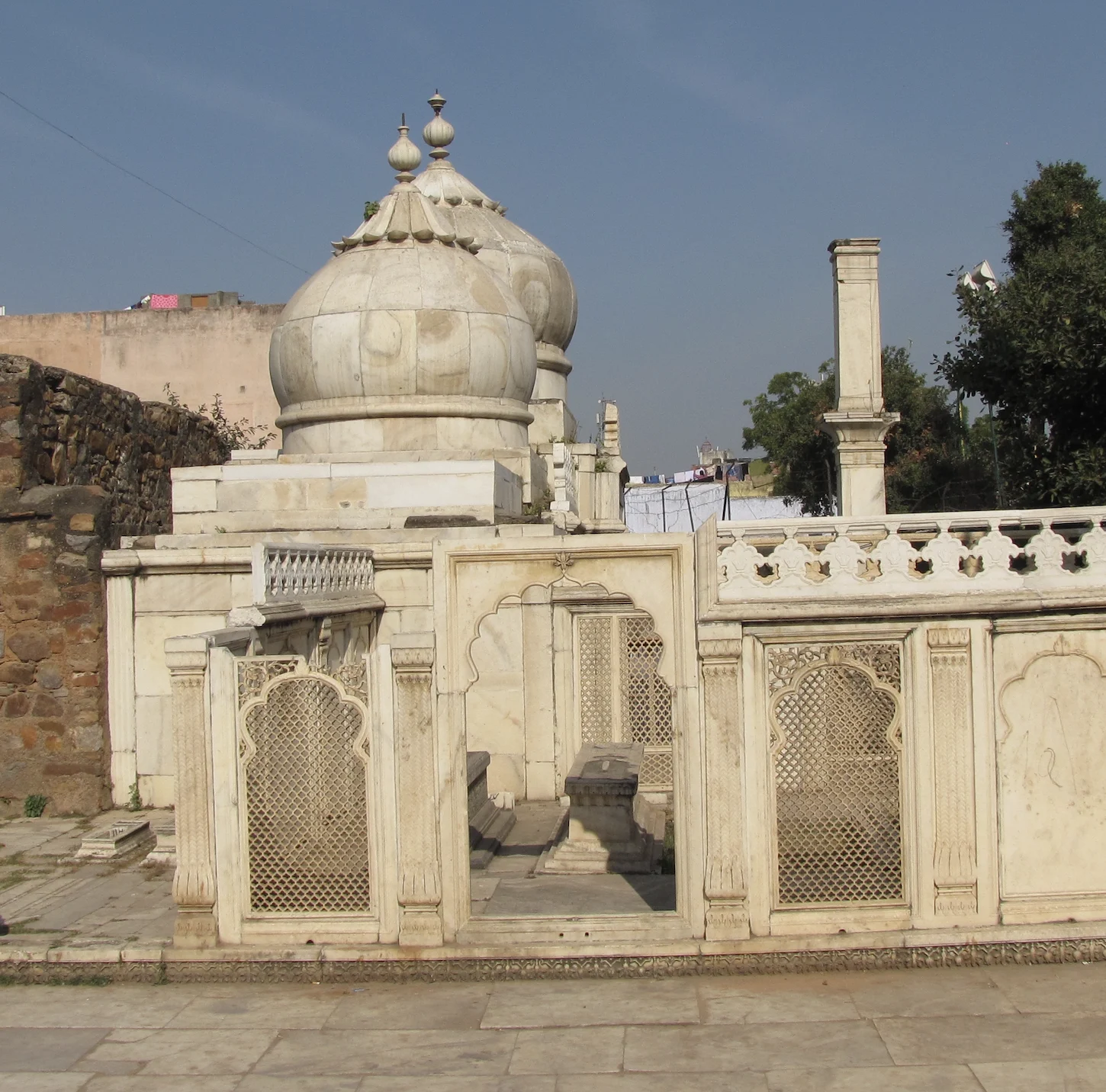
Akbar Shah II was the penultimate emperor of the Mughal dynasty, reigning at Delhi from 1806 until his death in 1837. He succeeded his father Shah Alam II to a throne that retained the outward ceremony of Mughal sovereignty long after the substance of it had passed to the British East India Company, and his three decades on it were marked by a running contest with successive Company Residents over precedence, income and ceremonial recognition, and by a bitter and ultimately unsuccessful attempt to set aside the succession of his eldest son in favour of a younger one. That eldest son survived him as the emperor Bahadur Shah Zafar, the last of the Mughal line.
Accession to a Diminished Throne
By the time Akbar Shah came to the throne in 1806, the Mughal emperor's writ, in the mocking phrase current in Delhi, ran no further than from the city to Palam, a village some ten miles away near what is now the site of Delhi's international airport. His father Shah Alam II had been blinded by the Rohilla adventurer Ghulam Qadir in 1788, a decade before Akbar Shah's own accession, and had spent his last years as, in one contemporary's phrase, "only a chessboard king." The British had first entered Delhi as the Mughal's professed protectors after defeating the Maratha confederacy in 1803, and for a time maintained the forms of vassalage: as late as 1832 the East India Company's own seal still carried the inscription Fidvi Shah Alam, "Shah Alam's devoted dependant," and the Company's rupees were struck in the emperor's name.
That deference eroded steadily over Akbar Shah's reign. Sir Charles Metcalfe, appointed Resident at Delhi, declared in 1832 that he had "renounced my former allegiance to the house of Timur" and persuaded the Governor-General to end the practice of offering the emperor a nazr, the ceremonial gift that had publicly acknowledged British subordination. The following year the emperor's name was removed from Company coinage altogether, and a Governor-General visiting Delhi no longer troubled to pay Akbar Shah a courtesy call. Metcalfe's own view of the relationship, set down in a letter to Calcutta, was blunt: if the emperor would not accept the new realities, "I think it is our best policy in future to let him sink into insignificance instead of upholding his dignity as we have done."
The Contest over the Succession
The defining struggle of Akbar Shah's reign was internal to his own household, and it shaped the character of the son who eventually succeeded him.
Akbar Shah's eldest son was Mirza Abu Zafar, later the emperor Bahadur Shah Zafar, but the emperor's affections lay elsewhere. According to the British Resident Archibald Seton, Akbar Shah was "devotedly fond" of a younger son, Mirza Jahangir, and largely neglected the future Zafar, who Seton described as "a very respectable character" but "much neglected" for not being his father's favourite. On 21 March 1807 Akbar Shah wrote to Seton in terms that closely anticipate the language Zafar himself would later use against his own eldest son: he described Zafar as "wholly devoid of every qualification for occupying the throne" and levelled against him an unspecified accusation "too delicate to admit explanation." Seton privately thought the charge unlikely.
Mirza Jahangir's favour did not end well. Irritated by Seton's support for his elder half-brother's claim, he fired a pistol shot at the Resident from the battlements of the Red Fort, succeeding only in knocking off his hat. He was exiled to Allahabad in 1809 and died there in 1821, at the age of thirty-one, reportedly from excessive drinking. Akbar Shah's preference for Mirza Jahangir over his own heir left its mark on Zafar, whose later biographers have traced to these years a lasting strain of insecurity: when Akbar Shah later sent the reformer Ram Mohan Roy to England as his envoy to press the Company for an increased stipend, Zafar assumed the mission was intended to disinherit him and wrote angry letters to the Governor-General and to Roy himself, drawing from Roy the tart reply that "those who do not comprehend their own good or evil cannot comprehend the good or evil of others."
It was only the British insistence on the principle of primogeniture — imposed on the Mughals as an alien European convention — that secured Zafar's eventual succession against his father's wishes, an irony not lost on contemporaries when Zafar himself later tried and failed to overturn primogeniture in favour of his own preferred son.
Court and Ceremony
Despite the contraction of his real authority to little beyond the walls of the Red Fort, Akbar Shah maintained a court of considerable ceremonial dignity, and the emperor continued to be received with much of the outward pageantry due a sovereign. A surviving image of the reign, dated to around 1811-19, depicts Akbar Shah in procession together with his sons and the British Resident at Delhi — a scene that captures precisely the paradox of his reign: full ceremonial precedence maintained alongside a real dependency on the power processing beside him.
Akbar Shah continued to insist on this ceremonial precedence being observed even in small matters, and could still make it stick. During his annual holiday at Mehrauli in 1830, the acting British Resident, Francis Hawkins, approached the Diwan-i-Khas on horseback without dismounting or removing his shoes, breaking a protocol unbroken since Ghulam Qadir's violent seizure of the Palace decades before. Akbar Shah complained to Calcutta of this "offensive and disrespectful act" and demanded that steps be taken "to wipe off the dust of grief and affliction from the polished mirror of our enlightened and resplendent mind"; Hawkins was promptly dismissed from his post.
Akbar Shah died in 1837, and was succeeded, as the British had insisted, by his eldest son, who took the throne as Bahadur Shah II — known by his pen-name Zafar — and who would be the last man to reign, however nominally, as Mughal emperor of Hindustan.
Historiographical Note
Akbar Shah II has left no substantial dedicated modern biography distinct from the Mughal court's general history in this period; the fullest connected account of his reign appears within the biographical and narrative material assembled around his son in William Dalrymple's The Last Mughal, which draws in turn on the Delhi Palace diary, British Residency correspondence, and Percival Spear's earlier study Twilight of the Moghuls. The exact nature of the accusation Akbar Shah levelled against Zafar in 1807 is not specified in the surviving correspondence and is not asserted here beyond what Seton's own report records: that it was made, and that the Resident who received it doubted it.
References and Further Reading
Primary Islamic Sources
- Delhi Palace Diary (Court News-writer's Records) and the correspondence of Archibald Seton, British Resident at Delhi, 1807-1811 — as quoted and discussed in Dalrymple's The Last Mughal, cited below; not independently consulted for this article.
Academic and Scholarly Sources
- Dalrymple, William. The Last Mughal: The Fall of a Dynasty, Delhi, 1857. London: Bloomsbury, 2006. [approved PDF library:
sources/study/] — the principal source for this article.
Further Reading
- Spear, Percival. Twilight of the Moghuls: Studies in Late Mughal Delhi. Cambridge: Cambridge University Press, 1951. — for the reader's further research; not consulted for this article.
Mentioned In
2 articles reference this topic