Prophet Dawud عَلَيْهِ ٱلسَّلَامُ (David)
Prophet Dawud (David), both prophet and king, was the slayer of Jalut (Goliath), the recipient of the Zabur (Psalms), and the ruler whose just governance and extraordinary devotion made him the Quranic model of the righteous sovereign.
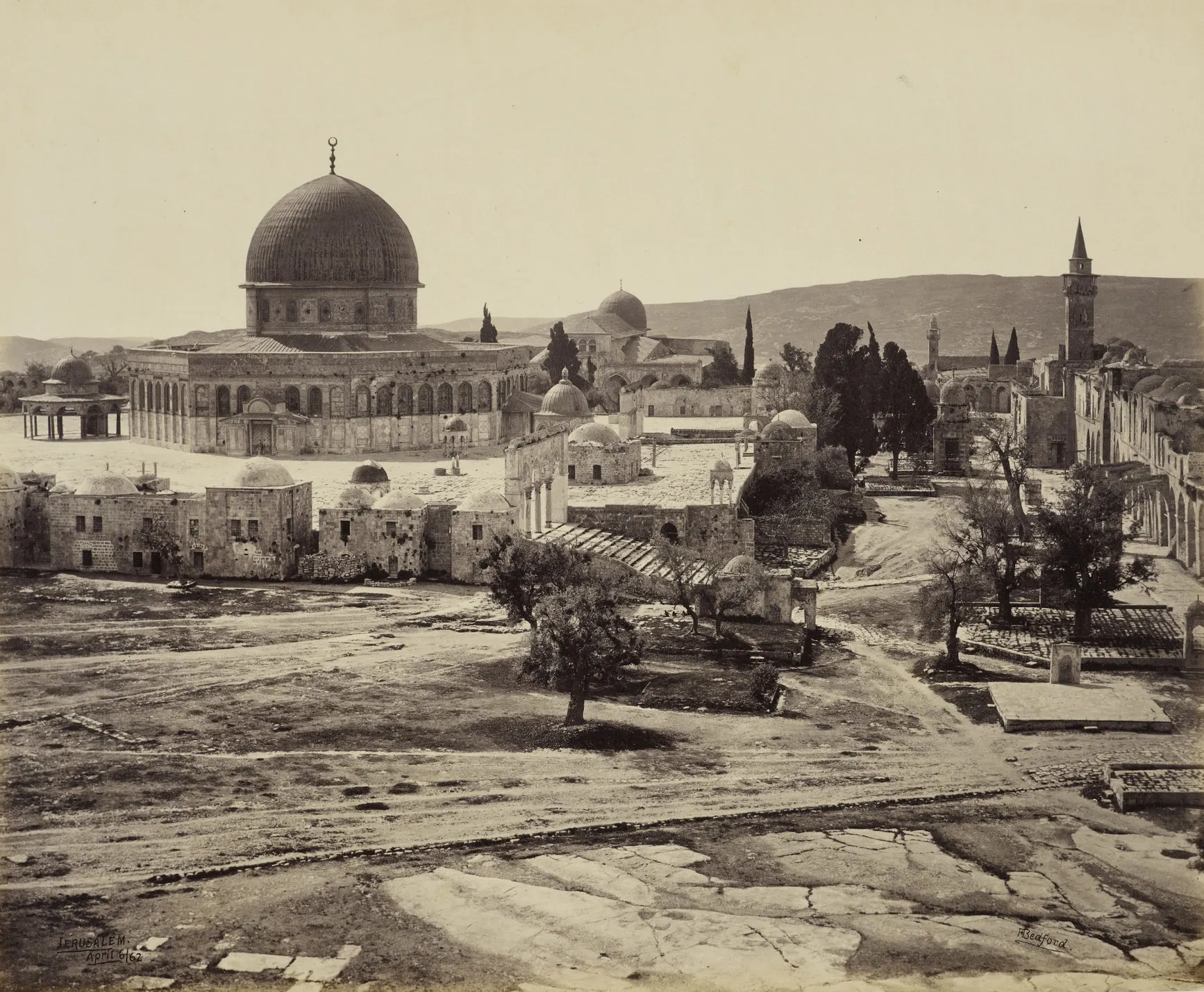
Prophet Dawud (Arabic: داود, Dāwūd), known in the Judeo-Christian tradition as David, occupies a unique position among the prophets of Islam: he is simultaneously a prophet (nabi), a messenger (rasul) who received a revealed scripture (the Zabur/Psalms), and a king (malik) who ruled the Israelites with justice and wisdom. This combination of spiritual authority and temporal power — prophecy and kingship united in one person — makes Dawud the Quranic paradigm of the righteous sovereign: the ruler who governs by divine guidance, judges with equity, and maintains constant worship of God despite the demands of political leadership.
The Quran mentions Dawud by name sixteen times across nine surahs, presenting him through several distinct lenses: the young warrior who slew the giant Jalut (Goliath) against overwhelming odds (2:251); the king to whom God granted wisdom, sound judgment, and decisive speech (38:20); the prophet who received the Zabur as a revealed book of praise (4:163, 17:55); the craftsman to whom God made iron malleable (34:10, 21:80); and the man who, despite his exalted station, fell into an error of judgment, repented immediately, and was forgiven and elevated further (38:21–25).
Dawud's story in the Quran is intimately connected to that of his son Sulaiman (Solomon) — together they represent the golden age of Israelite civilisation, when prophethood, kingship, wisdom, military power, and divine favour converged in a single dynasty. Their combined reign (approximately 1000–930 BCE) established Jerusalem as the capital of a united Israelite kingdom and produced the literary and spiritual legacy of the Psalms — a tradition of devotional praise that continues to resonate in Islamic, Jewish, and Christian worship to this day.
The Historical Context
The Israelites Before Dawud
The period immediately preceding Dawud's rise to prominence was one of crisis for the Israelites. After the era of Musa (Moses) and the entry into the Holy Land under his successor Yusha' ibn Nun (Joshua), the Israelites had passed through the period of the Judges — a time of political fragmentation, intermittent faithfulness, and recurring military threat from surrounding peoples. The Quran captures this period through the narrative of the Israelites requesting a king:
"Have you not considered the assembly of the Children of Israel after [the time of] Musa, when they said to a prophet of theirs, 'Send to us a king, and we will fight in the way of Allah'?" (Quran 2:246)
The prophet mentioned here is identified in Islamic tradition as Samuel (Shamwil or Ishmawil) — the last judge and the one who anointed both Talut (Saul) and later Dawud as kings over Israel. The Israelites' request for a king reflected their military vulnerability: they were being oppressed by the Philistines (a powerful coastal people) and needed unified military leadership to survive.
The Reign of Talut (Saul)
God appointed Talut (طالوت, identified with Saul) as the first king of Israel — but the appointment was controversial:
"Their prophet said to them, 'Indeed, Allah has sent to you Talut as a king.' They said, 'How can he have kingship over us while we are more worthy of kingship than him and he has not been given an abundance of wealth?' He said, 'Indeed, Allah has chosen him over you and has increased him abundantly in knowledge and stature.'" (Quran 2:247)
The Israelites objected to Talut because he lacked tribal prestige and personal wealth — revealing their worldly criteria for leadership versus God's criteria (knowledge and physical capacity). This episode establishes an important principle that the young Dawud would soon embody: God's choice of leaders is based on spiritual and moral qualities, not on social status or material wealth.
The Battle with Jalut (Goliath)
The climactic event that brought Dawud to prominence was the battle against Jalut (جالوت, Goliath) and his army. The Quran narrates this within a broader lesson about faith, obedience, and divine selection:
Talut led his army out to face the enemy, testing them at a river crossing (those who drank freely were dismissed; those who restrained themselves were retained — 2:249). The remaining faithful were few: "How many a small company has overcome a large company by permission of Allah" (2:249).
When the armies faced each other, the young Dawud stepped forward:
"So they defeated them by permission of Allah, and Dawud killed Jalut, and Allah gave him the kingship and wisdom and taught him from that which He willed." (Quran 2:251)
This verse is remarkable in its compression: in a single sentence, the Quran narrates the defeat of an entire army, Dawud's killing of the giant champion, and God's subsequent bestowal of kingship, wisdom, and divine knowledge upon Dawud. The transition from shepherd boy to king is immediate — earned through a single act of faith and courage.
The Significance of the Jalut Episode
The Theology of the Weak Overcoming the Strong
The Dawud-Jalut narrative is one of the Quran's most explicit demonstrations of the principle that divine support trumps material superiority. Jalut was a giant warrior with vastly superior physical power; Dawud was a young man (possibly still an adolescent, according to some traditions). The outcome was not determined by size, training, or equipment but by God's permission (bi-idhn Allah).
The Quran places this episode within a broader theological framework:
"And if it were not for Allah checking [some] people by means of others, the earth would have been corrupted, but Allah is full of bounty to the worlds." (Quran 2:251)
This principle — that God uses some people to check others, preventing the uncontested domination of the corrupt — is fundamental to Islamic political theology. The strong do not always win; the weak are not always defeated; and God raises champions from unexpected sources (a shepherd boy against a giant) to maintain the balance of justice in the world.
Dawud's Courage as a Model
For Muslims, Dawud's confrontation with Jalut models the proper response to apparently overwhelming opposition: not despair or retreat but trust in God combined with personal action. Dawud did not passively wait for God to strike Jalut down; he stepped forward, aimed, and struck — but his success was "by permission of Allah." This balance between human effort and divine enablement (tawakkul combined with action) is characteristic of Islamic ethics and distinguishes it from both fatalistic passivity and self-sufficient humanism.
The Kingship of Dawud
The Union of Prophethood and Political Power
After the death of Talut, God bestowed kingship upon Dawud — creating the unprecedented combination of prophetic authority and political sovereignty in one person:
"And Allah gave him the kingship and wisdom and taught him from that which He willed." (Quran 2:251)
"And We strengthened his kingdom and gave him wisdom and discernment in speech (fasl al-khitab)." (Quran 38:20)
The phrase fasl al-khitab (فصل الخطاب, "decisive speech" or "clear judgment") indicates Dawud's ability to resolve disputes, articulate rulings, and communicate with clarity and authority. This quality made him an effective judge — one whose verdicts were wise, fair, and final.
The Just Ruler
The Quran presents Dawud as the model of just governance — a king who ruled not for personal aggrandisement but as God's representative (khalifa) on earth:
"O Dawud, indeed We have made you a successor (khalifa) upon the earth, so judge between the people in truth and do not follow [your own] desire, as it will lead you astray from the way of Allah." (Quran 38:26)
This verse is foundational for Islamic political thought: it establishes that earthly authority is a divine trust (amana), that rulers are God's vicegerents (khulafa') accountable to divine law, and that the primary obligation of sovereignty is justice — judging between people according to truth rather than personal interest or caprice.
Dawud's kingdom — traditionally centred on Jerusalem — thus represents the ideal Islamic polity in miniature: governed by a prophet-king who combined spiritual authority with temporal power, who judged by divine guidance, and who maintained constant worship alongside his administrative responsibilities.
The Administration of Justice
The Quran provides a specific example of Dawud's judicial role through the famous parable of the two litigants who entered his private chamber:
"And has there come to you the news of the adversaries, when they climbed over the wall of [his] prayer chamber? When they entered upon Dawud and he was alarmed by them? They said, 'Fear not. [We are] two adversaries, one of whom has wronged the other, so judge between us with truth and do not exceed [it] and guide us to the sound path. Indeed, this, my brother, has ninety-nine ewes, and I have one ewe; so he said, "Entrust her to me," and he overpowered me in speech.' [Dawud] said, 'He has certainly wronged you in demanding your ewe [in addition] to his ewes. And indeed, many associates oppress one another, except for those who believe and do righteous deeds — and few are they.'" (Quran 38:21–24)
Dawud immediately grasped the injustice — a man with ninety-nine ewes demanding the single ewe of another — and ruled against the oppressor. But then he realised that the parable was directed at him — it was a divine test:
"And Dawud became certain that We had tried him, and he asked forgiveness of his Lord and fell down bowing [in prostration] and turned in repentance. So We forgave him that, and indeed, for him is nearness to Us and a good place of return." (Quran 38:24–25)
The Trial and Repentance of Dawud
The Islamic Understanding
The Quran refers to Dawud's trial (fitna) obliquely — through the parable of the ewes — without specifying the exact nature of his error. Islamic scholars have debated this extensively:
The dominant position (held by al-Tabari, Ibn Kathir, and later scholars who rejected the Isra'iliyyat narratives) is that Dawud's trial involved a judicial error or a failure of protocol: perhaps he judged before hearing both sides of a case, or he was attracted to something that was not his to seek. The specific nature of the failing is left vague in the Quran intentionally — because the lesson lies not in the specific sin but in the speed and completeness of repentance.
What is clear from the text is that Dawud was tested by God (ibtala'nahu — "We tried him"), that he recognised his error immediately (fa-zahanna — "he became certain"), and that he sought forgiveness without delay, prostrating in repentance (wa kharr raki'an wa anab). God then forgave him completely (fa-ghafarna lahu), and his station was in fact elevated after that repentance, for the verse affirms "indeed, for him is nearness to Us."
The Rejection of Biblical Elaboration
Islamic scholars of the later period firmly rejected the biblical account of David's sin (the Bathsheba/Uriah narrative of 2 Samuel 11) as incompatible with prophetic dignity. While some early commentators (relying on Isra'iliyyat — narratives borrowed from Jewish sources) repeated elements of this story, the mature Islamic position (represented by Ibn Kathir, al-Razi, and others) insists that prophets are protected (ma'sum) from major sins, that the Quran's oblique reference deliberately avoids detailing the error, that whatever the test was it was minor in nature and immediately repented, and that the speed and sincerity of Dawud's repentance is the intended lesson rather than the nature of the failing.
The Lesson of Repentance
The theological significance of this episode is twofold:
For rulers: Even the most just king can err; what distinguishes the righteous ruler from the tyrant is not sinlessness but the capacity for immediate self-correction. Dawud did not defend his error, did not blame others, and did not delay — he recognised, repented, and prostrated instantly. This is the model for all authority figures.
For all believers: Repentance (tawba) does not merely restore one to the pre-sin state — it can actually elevate beyond it. After his repentance, Dawud was granted "nearness to Us and a good place of return" (38:25) — suggesting that sincere repentance pleased God more than the hypothetical sinless continuation of what came before. This encourages believers to repent immediately rather than despairing after sin.
The Zabur (Psalms): Dawud's Revealed Scripture
The Divine Gift
The Quran confirms that Dawud received a revealed scripture — the Zabur (زبور, Psalms):
"And your Lord is most knowing of whoever is in the heavens and the earth. And We have made some of the prophets exceed others [in various ways], and to Dawud We gave the Zabur." (Quran 17:55)
"Indeed, We have revealed to you, [O Muhammad], as We revealed to Nuh and the prophets after him. And We revealed to Ibrahim and Ismail and Ishaq and Yaqub... and to Dawud We gave the Zabur." (Quran 4:163)
The Zabur is thus one of the four major revealed scriptures in Islam (alongside the Tawrat/Torah of Musa, the Injil/Gospel of Isa, and the Quran of Muhammad). Its content — in both Islamic tradition and the surviving biblical Psalms — consists primarily of praise (hamd), supplication (du'a), glorification (tasbih), and devotional poetry. Unlike the Torah (which is primarily legal) or the Gospel (which is primarily narrative and ethical), the Zabur is predominantly liturgical — a book of worship rather than law.
The Content of the Zabur
Islamic tradition describes the Zabur as containing praise and glorification of God, wisdom (hikma) and moral admonition, prophecy about the coming of Prophet Muhammad, supplication and prayer formulae, and reflection on God's creation, power, and mercy.
The Quran references one specific content from the Zabur:
"And We have already written in the Zabur, after the [previous] reminder, that the land [is inherited by] My righteous servants." (Quran 21:105)
This verse — stating that the righteous will inherit the earth — is identified by scholars as corresponding to Psalm 37:29 ("The righteous shall inherit the land, and dwell therein for ever") in the biblical Psalms, suggesting a degree of textual continuity between the Islamic concept of the Zabur and the extant Book of Psalms.
The Zabur and Islamic Worship
While Muslims do not use the biblical Psalms liturgically (as the Quran supersedes all previous scriptures), the concept of the Zabur — devotional praise expressed through poetic beauty — deeply influenced Islamic worship tradition. The culture of dhikr (remembrance of God), tasbih (glorification), and hamd (praise) that characterises Islamic devotional life echoes the Psalmic tradition that Dawud established. Many scholars have noted the structural parallels between certain Quranic passages of praise (particularly in Surah al-Rahman and Surah al-Mulk) and the Psalmic literary form.
Dawud's Extraordinary Worship
The Most Devout Worshipper
Prophet Muhammad ﷺ described Dawud's worship in terms that establish him as the supreme model of devotional practice:
"The most beloved prayer to Allah is the prayer of Dawud: he would sleep half the night, then stand [in prayer] for a third of it, then sleep for a sixth of it. And the most beloved fast to Allah is the fast of Dawud: he would fast one day and break his fast the next." (Sahih al-Bukhari 1131; Sahih Muslim 1159)
This hadith establishes Dawud's worship pattern in two dimensions. In night prayer, he would sleep the first half of the night (approximately six hours), pray for one-third of it (approximately four hours), then sleep the final sixth (approximately two hours); this schedule maximises night worship while ensuring adequate rest, and the Prophet called it "the most beloved prayer" because it balances devotion with human sustainability. In fasting, he practised alternate-day fasting — one day fasting, the next day eating. This is the maximum recommended fast, the Prophet having told a companion who wanted to fast every day, "Fast the fast of Dawud, for it is the most moderate" (Bukhari); it maintains the body's strength while dedicating half of one's days to fasting.
The Beautiful Voice
Dawud was blessed with a voice of extraordinary beauty — a voice that, when raised in recitation of the Zabur, moved not only human listeners but all of creation:
"Indeed, We subjected the mountains [to praise] with him, exalting [Allah] in the [late] afternoon and [after] sunrise. And the birds, assembled — all with him repeating [praises]." (Quran 38:18–19)
"And We certainly gave Dawud from Us bounty. [We said], 'O mountains, repeat [Our] praises with him, and the birds [as well].'" (Quran 34:10)
This picture — mountains and birds joining Dawud in praise — is one of the most beautiful in the entire Quran. It suggests that Dawud's worship was so pure, so aligned with the natural order, that creation itself responded to his voice. The mountains (jibal) and birds (tayr) — representing the inanimate and animate creation respectively — are described as participating in a cosmic symphony of praise with Dawud as its conductor.
The hadith literature adds further detail: Abu Musa al-Ash'ari reported that the Prophet, hearing him recite the Quran beautifully, said: "You have been given one of the flutes (mazamir) of the family of Dawud" (Sahih al-Bukhari 5048; Sahih Muslim 793) — indicating that Dawud's vocal beauty was proverbial and that any subsequent reciter of extraordinary beauty is compared to him.
The Prostration of Gratitude
The specific verse of Dawud's prostration — his immediate falling down in sujud upon recognising his error (38:24) — became one of the fifteen prostrations of recitation (sajdat al-tilawa) in Islamic practice. Whenever a Muslim recites or hears this verse, they perform a prostration — physically re-enacting Dawud's repentance and connecting every Muslim's worship life to the prophet-king's devotional intensity.
Dawud's Miraculous Abilities
The Softening of Iron
One of Dawud's most distinctive miracles was God's making iron soft and malleable in his hands:
"And We certainly gave Dawud from Us bounty... and We made pliable (alanna) for him iron, [commanding], 'Make full coats of mail (sabiighat) and calculate [precisely] the links (as-sard), and work righteousness. Indeed I, of what you do, am Seeing.'" (Quran 34:10–11)
"And We taught him the fashioning of coats of armor for you to protect you from your [enemy in] battle. So will you then be grateful?" (Quran 21:80)
This miracle — iron becoming soft as dough in Dawud's hands — enabled him to create chain mail armour (dir') with precisely measured links. The practical significance was military: proper armour protected soldiers while allowing mobility. The theological significance was that God provided His prophet-king with the means to defend his people through divinely-facilitated craftsmanship.
Islamic tradition notes that Dawud, despite being a king, worked with his own hands — earning his livelihood through his craft rather than depending on treasury funds. The Prophet Muhammad ﷺ said: "No one ever ate food better than the food earned by the work of his own hands. The prophet of Allah, Dawud, used to eat from the work of his own hands" (Sahih al-Bukhari 2072). This combination of kingship with manual labour establishes a principle against royal parasitism: even a king should contribute productively rather than merely consuming.
The Language of Birds
The Quran attributes to both Dawud and Sulaiman the understanding of birds' language:
"And Sulaiman inherited Dawud. He said, 'O people, we have been taught the language of birds (mantiq al-tayr), and we have been given from all things.'" (Quran 27:16)
While this attribute is more extensively associated with Sulaiman, its mention in the context of inheritance (waritha) from Dawud indicates that the father possessed it before the son. This ability — communication with the natural world — reinforces the picture of Dawud as a man in harmony with all creation: the mountains praise with him, the birds sing with him, iron yields to him. He occupies a unique position as a master of both the natural and supernatural worlds.
Judgment and Wisdom
Beyond his physical miracles, Dawud possessed extraordinary judicial wisdom. The Quran records the episode of the sheep grazing in the field:
"And [mention] Dawud and Sulaiman, when they judged concerning the field — when the sheep of a people overflowed into it [at night], and We were witness to their judgment. And We gave understanding of the case to Sulaiman, and to each [of them] We gave judgment and knowledge." (Quran 21:78–79)
Both Dawud and Sulaiman gave judgments, but Sulaiman's was deemed superior. The fact that the Quran praises both — "to each We gave judgment and knowledge" — while noting Sulaiman's specific superiority in this case demonstrates that prophetic wisdom admits of degrees: both father and son were divinely guided, but the son excelled the father in this particular instance. This affirms the humanity of prophets (they can be exceeded even by their own children in specific domains) without diminishing their prophetic dignity.
Dawud's Character: A Comprehensive Portrait
The Warrior-Worshipper
Dawud's character combines qualities that might seem contradictory: he is both a fierce warrior (killing Jalut, leading armies) and a tender worshipper (spending hours in night prayer, weeping in prostration, singing praises that moved creation). This combination — strength and tenderness, martial courage and devotional beauty — represents the Islamic ideal of complete manhood: a man who can fight when justice demands it and worship with his whole heart when the battle is over.
The Prophet Muhammad embodied this same combination, and the parallel is deliberate: the ideal Muslim leader unites strength and compassion, justice and mercy, action and worship. Dawud demonstrated that these are not contradictory but complementary — that the man who prostrates most sincerely before God is often the one who stands most firmly before oppressors.
Gratitude (Shukr)
The Quran commands Dawud's family to express gratitude:
"Work, O family of Dawud, in gratitude. And few of My servants are grateful." (Quran 34:13)
This command — and the parenthetical remark that "few are grateful" — establishes gratitude as both Dawud's distinctive quality and a rare virtue. Dawud was grateful for his kingdom, his wisdom, his beautiful voice, his ability to work iron, and the subjection of mountains and birds to his praise. His entire life was framed as a response to divine gift — not the entitlement of a king but the thanksgiving of a servant.
Immediate Repentance
Dawud's most celebrated spiritual quality (after his worship) is the speed of his repentance. Upon recognising his error in the parable of the ewes, his response was instantaneous: "he asked forgiveness of his Lord and fell down bowing in prostration and turned in repentance" (38:24). There was no delay, no rationalisation, no self-justification — only immediate acknowledgement and prostration.
This quality — al-awba (الأوبة, returning to God quickly after error) — is repeatedly emphasised in the Quran's description of Dawud. The Arabic word awwab (أوّاب, "one who constantly returns to God") is used specifically for Dawud:
"Be patient over what they say and remember Our servant Dawud, the possessor of strength; indeed, he was one who repeatedly returned (awwab)." (Quran 38:17)
The root a-w-b suggests not a single repentance but a pattern — a constant oscillation between human imperfection and immediate return to God. This makes Dawud the model of the believer who does not claim perfection but who never stays long in error.
The Khalifa (Vicegerent) Concept
The Quran's use of the word khalifa (خليفة, vicegerent/successor) for Dawud (38:26) is theologically momentous. This term — previously applied only to Adam (2:30: "Indeed, I will make upon the earth a vicegerent") — connects Dawud's kingship to the original human mandate. The implication is that just governance is not merely a political arrangement but a cosmic function: the righteous ruler enacts on earth what God wills in heaven, serving as the bridge between divine justice and human society.
This concept — the ruler as khalifa accountable to God — became foundational for Islamic political thought. The title "Caliph" (khalifa) used by Muslim rulers after Prophet Muhammad derives directly from this Quranic concept, with Dawud's governance serving as the archetypal model of what a khalifa should be: just, wise, worshipping, and immediately self-correcting when error occurs.
Dawud and Jerusalem
The Establishment of the Capital
Islamic tradition, consistent with biblical accounts, places Dawud's capital in Jerusalem (Arabic: القدس, al-Quds; or بيت المقدس, Bayt al-Maqdis). It was under Dawud's reign that Jerusalem first became the spiritual and political centre of the Israelite kingdom — a status it would maintain through Sulaiman's construction of the Temple and that persists in Islamic consciousness through the Al-Aqsa Mosque and the Dome of the Rock.
The Sacred Geography
Dawud's association with Jerusalem connects him to the broader Islamic sacred geography. Jerusalem is Islam's third holiest city (after Mecca and Medina), the destination of the Prophet Muhammad's Night Journey (Isra), and the site of the first qibla (direction of prayer) before it was changed to Mecca. Dawud's establishment of the city as a centre of monotheistic worship was thus a foundational act in a sacred lineage that would eventually include the Prophet Muhammad's own miraculous connection to the site.
Dawud and Sulaiman: The Royal Prophetic Dynasty
Father and Son
The relationship between Dawud and his son Sulaiman (Solomon) is one of the great partnerships in prophetic history. Together, they represent the zenith of Israelite power and wisdom: Dawud conquered, established the kingdom, received the Zabur, and modelled worship, while Sulaiman inherited and expanded the kingdom, built the Temple, and modelled wisdom and authority over creation.
The Quran presents Sulaiman as Dawud's successor in both kingship and prophetic knowledge: "And Sulaiman inherited Dawud" (27:16) — not merely material inheritance but the continuation of prophethood, wisdom, and divine favour. This dynastic succession of prophets (father to son) is relatively rare in Quranic narrative and emphasises the special blessedness of this family.
The Judgment of the Field
The one episode in which both appear together — the judgment concerning the sheep in the field (21:78–79) — shows the father deferring to the son's superior judgment in a specific case, without loss of dignity. This models humility in leadership: even a great prophet-king can recognise that his son has received a particular insight that surpasses his own. Authority is not threatened by acknowledging another's wisdom; it is strengthened.
Dawud in Islamic Theology and Law
The Four Revealed Scriptures
Dawud's receipt of the Zabur places him in a select group of prophets who received named scriptures: Musa received the Tawrat (Torah), Dawud the Zabur (Psalms), Isa the Injil (Gospel), and Muhammad the Quran.
Belief in all four scriptures (in their original, uncorrupted forms) is an article of Islamic faith (iman). The Zabur's existence confirms that divine revelation takes multiple literary forms: law (Torah), devotional poetry (Zabur), narrative/ethical teaching (Injil), and comprehensive guidance (Quran). This diversity demonstrates that God communicates with humanity through every appropriate literary medium.
Islamic Political Theology
Dawud's governance has deeply influenced Islamic political thought. From his narrative are drawn the concept of the ruler as God's khalifa accountable to divine law (38:26), the obligation to judge with truth and resist personal desire (38:26), the principle that kingship is a divine gift rather than a human right and can be withdrawn (2:251), the ideal of the ruler who works with his hands (the iron-working hadith), the model of immediate self-correction when the ruler errs (38:24), and the legitimacy of military action in defence of the oppressed (the Jalut campaign).
These principles — ruler as divine trustee, justice as the primary obligation of sovereignty, immediate accountability, productive contribution, and legitimate use of force — form the backbone of classical Islamic governance theory.
The Fast of Dawud in Islamic Practice
The alternate-day fast remains one of the recognised voluntary fasting practices in Islam — specifically recommended by the Prophet Muhammad as "the most beloved fast to Allah" and "the most moderate" (Sahih al-Bukhari 1131). Muslims who wish to practice supererogatory fasting beyond Ramadan often adopt Dawud's pattern as their model. This direct adoption of a previous prophet's worship pattern into ongoing Islamic practice demonstrates the continuity between prophetic dispensations: what pleased God in Dawud's era continues to please God in Muhammad's era and beyond.
Dawud in Comparative Religion
Dawud in Judaism
In Jewish tradition, David is the ideal king of Israel — the anointed of God (mashiach), the ancestor of the future Messiah, the sweet singer of Israel, and the author of most of the 150 Psalms. His reign is considered the golden age of Israelite monarchy, and his dynasty (the House of David) carried messianic significance for over a thousand years.
The biblical narrative of David (1–2 Samuel, 1 Kings 1–2, 1 Chronicles) is far more extensive than the Quranic account, including his anointing by Samuel, his service to Saul, his friendship with Jonathan, the pursuit by Saul, the Bathsheba episode, the rebellion of Absalom, and his old age. The Quran selects from this vast narrative only those episodes that serve its moral and theological purposes: the Jalut battle, the trial-and-repentance, and the attributes of worship.
Dawud in Christianity
In Christianity, David is the royal ancestor of Jesus (Matthew 1:1: "Jesus Christ, the son of David"), and the Psalms are the most quoted Old Testament book in the New Testament. Jesus is called "Son of David" as a messianic title (Mark 10:47), and David's throne is the throne that Christ is understood to inherit eternally (Luke 1:32–33).
The typological reading of David includes: his kingship prefigures Christ's kingship; his shepherd background prefigures Christ as "the Good Shepherd"; and the Psalms are read prophetically as anticipating Christ's suffering and glory.
The Islamic Distinctive
Islam's distinctive treatment of Dawud includes the rejection of the major sin attributed to him in the biblical account, which protects prophetic dignity while acknowledging a minor trial; the emphasis on worship, through his prayer and fasting patterns, as his primary contribution; the khalifa concept, a political theology derived specifically from his narrative; the iron miracle and manual labour, which establish the dignity of craftsmanship even for kings; the cosmic worship of mountains and birds joining his praise, unique to the Quranic account; and the integration of his fasting pattern into ongoing Islamic practice.
Dawud in Islamic Devotional and Literary Tradition
In Sufi Literature
Sufi masters found in Dawud the ideal of the worshipping servant — a man who combined worldly authority with intense devotion. Al-Ghazali cites Dawud's night prayer schedule and alternate-day fasting as the balanced model of 'ibada (worship) that avoids both excessive asceticism and spiritual laxity; Rumi references Dawud's voice as the voice of the soul in prayer, the cry that moves even inanimate creation to respond; and Ibn Arabi explores Dawud's khilafa (vicegerency) as a model of the Perfect Man (al-insan al-kamil) who manifests divine attributes in the earthly realm.
In Islamic Music and Recitation
Dawud's legendary voice has influenced Islamic attitudes toward vocal beauty in worship. While Islam does not have a liturgical music tradition comparable to Christianity's, the tajwid (beautiful recitation) of the Quran is explicitly valued — and exceptional reciters are compared to Dawud. The hadith "You have been given one of the flutes of the family of Dawud" connects all beautiful Quranic recitation back to the prophet-king, establishing an unbroken aesthetic lineage of devotional vocal beauty.
The Psalmic Influence on Islamic Devotion
While Muslims do not recite the Psalms as scripture, the culture of praise established by Dawud permeates Islamic worship: the tasbih (SubhanAllah), tahmid (Alhamdulillah), and takbir (Allahu Akbar) that punctuate every Muslim's day represent the continuation of the Psalmic tradition of continual praise that Dawud exemplified. The Quran's own passages of praise — such as the opening of Surah al-Fatihah ("All praise is due to Allah, Lord of the worlds") — echo the Psalmic form that Dawud's Zabur established.
Dawud in Islamic Eschatology
On the Day of Judgment
Islamic tradition attributes to Dawud a specific role in the eschatological events. In the hadith of intercession (hadith al-shafa'ah), Dawud is among the prophets who will be approached by humanity seeking intercession — though the final intercession belongs exclusively to Muhammad ﷺ.
The Prophet said regarding the Zabur: "Recitation of the Zabur was made easy for Dawud. He would command that his riding animals be saddled, and he would finish reciting the Zabur before they were saddled" (Sahih al-Bukhari 3417). This hadith — describing supernatural speed of recitation — indicates the intimacy between Dawud and his revealed text, a relationship that will be honoured in the Hereafter.
The Inheritance of the Righteous
The Quranic verse: "And We have already written in the Zabur, after the [previous] reminder, that the land [is inherited by] My righteous servants" (21:105) — originally revealed in Dawud's scripture — is understood eschatologically as referring to the righteous inheriting Paradise (or, in some interpretations, the earth in a renewed form after the Day of Judgment). This prophecy connects Dawud's Zabur to the ultimate destiny of all believers and establishes that his scripture contained not only praise but prophetic promises about the final outcome of human history.
Dawud and the Believers in Paradise
According to Islamic tradition, the people of Paradise will hear Dawud's voice in praise — his beautiful recitation of the Zabur continuing eternally in the gardens of bliss. This tradition (found in some narrations) suggests that Dawud's worship — the worship that moved mountains and birds — will not be confined to earthly history but will continue forever, providing an eternal soundtrack of praise in the Divine Presence.
The Detailed Analysis of Dawud's Worship Schedule
The Night Prayer (Tahajjud) Structure
The Prophet Muhammad's description of Dawud's prayer schedule — "sleep half, pray a third, sleep a sixth" — has been analysed by Islamic scholars as the optimal balance between devotion and physical sustainability:
Assuming a twelve-hour night, a common Near Eastern calculation, the first six hours were given to sleep, recovering from the day's exertions; the middle four hours to standing in prayer, recitation, and supplication, understood as the most spiritually productive portion of the night, when distractions are minimal and the heart is closest to God; and the final two hours to light sleep, ensuring freshness for the day's obligations.
This schedule — endorsed by the Prophet as "the most beloved prayer to Allah" — has been adopted as a model by pious Muslims throughout history. Its genius lies in its sustainability: unlike the extreme ascetics who attempted to pray the entire night (and burned out), Dawud's pattern could be maintained indefinitely — night after night, year after year, for an entire lifetime. It maximises worship while respecting human biological needs.
The Alternate-Day Fast
Dawud's fasting pattern — one day on, one day off — similarly balances devotion with sustainability. The fasting day trains the nafs (lower self) in self-discipline and reminds the body of its dependence on God; the eating day provides restoration and ensures that the body maintains strength for worship, work, and family responsibilities; the alternation prevents the body from adapting to a continuous fast, which would reduce the fast's spiritual impact; and over a lifetime exactly half of one's days are spent fasting, an extraordinary accumulation of devotion.
The Prophet Muhammad specifically endorsed this pattern when a companion (Abdullah ibn Amr) wanted to fast every day: "Fast one day and break your fast the next — that is the fast of Dawud, and it is the best fast" (Sahih al-Bukhari 1976; Sahih Muslim 1159). He also said, "There is no better fast than that" — establishing Dawud's pattern as the absolute maximum of recommended voluntary fasting.
The Integration of Worship and Work
What makes Dawud's worship schedule particularly remarkable is that he maintained it while simultaneously ruling a kingdom — administering justice, leading armies, managing state affairs, and working with iron. This demonstrates that extraordinary devotion does not require withdrawal from worldly responsibilities. The man with the most beloved prayer and the most beloved fast was also a king, a warrior, a judge, and a craftsman — proving that Islam's ideal is not the monastic renunciation of the world but its sanctification through worship maintained alongside engagement.
The Subjection of Creation: Theological Analysis
Mountains and Birds in Praise
The Quranic description of mountains and birds praising God with Dawud (34:10, 38:18–19) raises profound theological questions about the nature of creation's worship:
The Ash'ari position: All of creation worships God constantly (as stated in 17:44: "There is not a thing that does not exalt Him by His praise, but you do not understand their [way of] exalting"), but Dawud was given the special ability to hear this praise and to synchronise his own worship with it. The mountains and birds were always praising — Dawud simply joined an already-existing cosmic symphony.
The literal position: God specifically commanded the mountains and birds to praise with Dawud — making their praise a special, miraculous response to his voice that went beyond their ordinary worship. When Dawud sang, creation visibly and audibly responded in a way that was unique to him.
The Sufi position: The passage describes the state of the perfect worshipper whose dhikr (remembrance of God) achieves such intensity that it resonates with the dhikr that permeates all existence. Dawud's heart was so perfectly aligned with the divine frequency that the entire created world vibrated in sympathy with his praise — a taste of the harmony that will characterise Paradise.
Theological Implications of Creation's Praise
Whatever interpretation is favoured, the passage establishes several important principles. All creation worships God, so that the universe is not spiritually inert but alive with praise; human worship can harmonise with this cosmic worship, so that the believer is not alone in prayer but participates in a universal reality of devotion; sincerity in worship produces marked effects, Dawud's worship being so pure that it transcended normal human limits; and beauty in worship is valued by God, the aesthetic dimension of praise, exemplified by Dawud's voice, being not irrelevant but divinely appreciated.
Dawud and the Concept of Khilafa (Vicegerency)
The Political Theology of Surah Sad
The Quran's instruction to Dawud — "O Dawud, indeed We have made you a khalifa upon the earth, so judge between the people in truth" (38:26) — is among the most politically consequential verses in the Islamic scripture. It establishes:
1. The divine source of authority: Political power originates from God's appointment, not from human force, democratic choice, or hereditary right alone. Dawud was made khalifa by God — his legitimacy derived from divine designation.
2. The conditional nature of authority: The instruction "so judge between the people in truth" implies a covenant — authority is granted for the purpose of justice. If the ruler abandons justice, the basis of his authority is undermined.
3. The prohibition of caprice: "Do not follow [your own] desire, as it will lead you astray from the way of Allah." The ruler must subordinate personal preferences to divine law. The ruler is bound by the same law he enforces — he is not above it.
4. Accountability to God: "Indeed, those who stray from the way of Allah will have a severe punishment for having forgotten the Day of Account." The ruler will be called to account on the Day of Judgment for every exercise of authority — making governance one of the most dangerous positions a person can occupy spiritually.
The Influence on Islamic Political Thought
This verse, and the broader Dawudic model of governance, influenced a range of later thought. Al-Mawardi's Al-Ahkam al-Sultaniyyah (11th century) theorises the caliphate as a divine trust modelled on prophetic governance; Ibn Khaldun's political analysis examines how dynastic authority relates to religious legitimacy; modern Islamic constitutionalism draws on the khalifa concept to argue for accountable, law-bound governance; and the concept of shura (consultation) finds support in the fact that even Dawud, despite his prophetic authority, was expected to judge according to truth rather than personal whim.
The Iron Miracle: Economic and Civilisational Significance
Iron as Divine Gift
The Quran frames Dawud's ability to work iron as a divine bounty (fadl) given specifically to him:
"And We certainly gave Dawud from Us bounty. [We said], 'O mountains, repeat praises with him, and the birds [as well].' And We made pliable for him iron." (Quran 34:10)
This gift — iron becoming soft as dough in his hands — has been interpreted on multiple levels:
Literal miracle: Iron physically softened in Dawud's hands without fire, enabling him to shape it as easily as clay. This is the majority position of classical commentators.
Divinely-granted expertise: God gave Dawud exceptional metallurgical knowledge — the ability to work iron with a skill and efficiency that appeared miraculous to observers. (Some modern commentators favour this interpretation.)
Both: The initial miracle may have been literal (iron softening without fire), while the ongoing legacy was the establishment of advanced iron-working craft that benefited his kingdom permanently.
The Significance of Chain Mail
God commanded Dawud specifically to make coats of mail (sabiighat) — armour composed of interlocking metal rings:
"Make full coats of mail and calculate precisely the links." (Quran 34:11)
The instruction to "calculate precisely the links" (qaddir fi al-sard) indicates engineering precision — the rings must be sized correctly to provide protection without excessive weight. This combines artistic craft with military engineering, divine gift with human effort and skill.
The development of chain mail was one of the most significant military technologies of the ancient world — and the Quran attributes its perfection to divine instruction given to Dawud. This suggests that technological advancement, when used for just purposes (defending the community), can itself be a form of divine revelation.
Manual Labour and Royal Dignity
The Prophet's statement — "Dawud used to eat from the work of his own hands" (Sahih al-Bukhari 2072) — carries significant social implications. It dignifies manual labour, for if a prophet-king worked with his hands then no form of productive work is beneath anyone's dignity; it condemns parasitism, since even rulers should contribute productively rather than merely consume the labour of others; it models self-reliance, since depending on one's own work rather than on others' gifts preserves independence and character; and it connects worship and work, since Dawud's iron-working was itself an act of obedience (God commanded him to make armour), blurring the boundary between "secular" work and "religious" service.
Dawud's Family Life
Marriages and Children
Islamic tradition records that Dawud had multiple wives and many children — consistent with the patriarchal customs of his era and the needs of establishing a royal dynasty. His most significant child, from an Islamic perspective, was Sulaiman (Solomon) — who inherited both his kingdom and his prophethood:
"And to Dawud We gave Sulaiman. An excellent servant, indeed he was one repeatedly returning [to Allah]." (Quran 38:30)
The description of Sulaiman as ni'ma al-'abd ("excellent servant") echoes the language used for Dawud himself ('abduna — "Our servant," 38:17), establishing a family identity centred on servitude to God rather than on royal privilege.
The Dynasty's Characteristics
The "family of Dawud" (al Dawud) in Quranic and hadith usage represents a spiritual lineage characterised by extraordinary worship (night prayer, fasting, and beautiful praise), royal authority combined with divine service, gratitude as a way of life (34:13: "Work, O family of Dawud, in gratitude"), justice in governance, immediate repentance after error, and the transmission of prophethood from father to son.
The Mountains and Birds: Expanded Analysis
The Mountains as Worshippers
The Quran's repeated reference to mountains praising God with Dawud draws on a broader Quranic theme: the worship of all creation. Other Quranic verses establish this theme. One declares that "The seven heavens and the earth and whatever is in them exalt Him" (17:44); another asks, "Do you not see that to Allah prostrates whoever is in the heavens and whoever is on the earth, and the sun, the moon, the stars, the mountains, the trees, the moving creatures and many of the people?" (22:18); and a third states, "Indeed, We offered the Trust to the heavens and the earth and the mountains" (33:72).
Mountains in the Quran are presented as entities with a form of consciousness: they were offered the Trust (and declined), they prostrate to God, and they praise with Dawud. This suggests that the natural world is not merely a backdrop for human drama but a community of worshippers in its own right — and that Dawud's special grace was his inclusion in this cosmic worship community, his ability to hear what others could not and to join what was already in progress.
The Birds as Worshippers
Similarly, birds in the Quran are presented as creatures of praise: one verse asks, "Do you not see that Allah is exalted by whomever is within the heavens and the earth and [by] the birds with wings spread [in flight]? Each [of them] has known his [means of] prayer and exalting [Him]" (24:41); the birds assembled with Dawud, praising (38:19); and Sulaiman inherited the language of birds (27:16).
The birds' praise (tasbih) — whether understood as their natural songs and flight patterns expressing divine design, or as a conscious worship that humans cannot usually perceive — was made audible and participatory for Dawud. His worship sessions were not solitary but accompanied by visible congregations of birds joining his praise — a scene of extraordinary beauty that represents the ideal of creation in harmony with its Creator.
Dawud in the Chain of Prophets
Before Dawud
The prophets who preceded Dawud in the Israelite lineage — Yaqub, Yusuf, Musa, Harun, and the judges — established the Israelite community's identity, freed it from slavery, gave it divine law, and settled it in the Holy Land. Dawud's contribution was to unify and strengthen this community into a kingdom capable of projecting power, administering justice systematically, and supporting a flowering of worship and culture.
After Dawud
Dawud's son Sulaiman would extend his father's kingdom to its greatest territorial and economic extent, build the Temple in Jerusalem, and demonstrate wisdom and authority over the natural world (jinn, animals, wind) that surpassed even his father's gifts. Together, the reigns of Dawud and Sulaiman represent the pinnacle of Israelite civilisation — a golden age of prophetic governance that would never be replicated and that the subsequent history of the Israelites would measure itself against (and usually fall short of).
The Prophetic Lineage from Dawud
Through Dawud's descendants — the House of David — came Sulaiman (Solomon), his immediate successor; the subsequent prophets of the Israelite monarchy; and ultimately Isa (Jesus), who, through Mary, was connected to the Davidic lineage and whom Islamic tradition acknowledges as a descendant of Dawud through the Israelite royal line.
This makes Dawud the ancestor of the final Israelite prophet (Isa) — just as his predecessor Ibrahim was the ancestor of the final prophet overall (Muhammad through the Ishmaelite line). Dawud thus occupies a pivotal genealogical position: the bridge between the Mosaic era and the prophets of the monarchy and post-monarchy period.
The Two Disputants: A Deeper Reading
The Parable's Structure
The episode of the two men who climbed over the wall of Dawud's prayer chamber (38:21–25) is structured as a divine pedagogy — God using a parable to make Dawud see something about himself:
- Setting: Dawud is in his private worship space (mihrab), presumably in prayer or meditation
- Intrusion: Two men enter unexpectedly (climbing over the wall rather than using the door — itself alarming)
- The case: A simple injustice — a rich man (99 ewes) demanding the single ewe of a poor man
- Dawud's judgment: Immediate and correct — the rich man has wronged the poor man
- The recognition: Dawud realises the parable applies to him (fa-zhanna Dawud annama fatannahu)
- The response: Instantaneous prostration and repentance
- The outcome: Complete forgiveness and elevated status
The Narrative Genius
The brilliance of this divine communication lies in its indirect approach: rather than confronting Dawud directly with his error (which might have triggered defensive reactions), God presented the error in the form of a case for judgment — allowing Dawud to condemn the behaviour objectively before recognising it in himself. This technique — seeing clearly in others what is obscured in oneself — is one of the most profound psychological and spiritual insights in the Quran.
The passage also demonstrates God's gentleness with His prophets: the correction came privately (in Dawud's prayer chamber, not publicly), indirectly (through a parable, not an accusation), and was followed immediately by complete forgiveness and elevation. God did not shame Dawud but lovingly guided him to self-awareness, accepted his repentance, and granted him even greater nearness.
Application to Believers
This episode teaches believers several things: that God corrects those He loves, so that divine testing is a sign of attention rather than abandonment; that indirect self-reflection, looking for one's faults through analogies and parables, is more effective than direct confrontation or waiting for others to point them out; that immediate repentance upon recognising error is the prophetic response, since any delay allows the nafs (ego) to construct justifications; that forgiveness follows sincere repentance without exception and without limit; and that repentance can elevate the penitent beyond the pre-sin state, for God's response to Dawud's prostration was not merely "you are forgiven" but "you are brought closer."
Dawud in Hadith Literature: A Comprehensive Survey
Hadith on Worship
The Prophet Muhammad's descriptions of Dawud's worship provide the most detailed practical guidance for Muslim devotional life drawn from a previous prophet:
The prayer schedule: "The most beloved prayer to Allah is the prayer of Dawud. He would sleep half the night, then stand in prayer for a third of it, then sleep for a sixth of it" (Sahih al-Bukhari 1131; Sahih Muslim 1159). This hadith is cited in virtually every manual of Islamic spirituality and night-prayer practice.
The fasting pattern: "The most beloved fast to Allah is the fast of Dawud. He would fast one day and break his fast the next" (Sahih al-Bukhari 1131; Sahih Muslim 1159). When Abdullah ibn Amr desired to fast daily and pray the entire night, the Prophet repeatedly guided him toward Dawud's balanced model as the maximum sustainable devotion.
The voice: "Allah has not listened to anything as He has listened to a prophet reciting the Quran — or he said: 'the Zabur' — in a beautiful, loud voice" (Sahih al-Bukhari 7544). Another version: "If you could see Abu Musa [al-Ash'ari] last night as he was reciting [the Quran]! He was given one of the psalms (mazamir) of the family of Dawud" (Sahih al-Bukhari 5048; Sahih Muslim 793). These narrations establish Dawud's vocal beauty as the standard against which all subsequent reciters are measured.
The livelihood: "The best food a person eats is that which he earns with his own hands. The prophet of Allah, Dawud, used to eat from the earnings of his own hands" (Sahih al-Bukhari 2072). This hadith — placing Dawud as the exemplar of self-earned livelihood — has been cited in Islamic economic ethics for fourteen centuries.
Hadith on Character
On gratitude: The Quran's command to Dawud's family — "Work in gratitude" — is echoed in the Prophet's personal practice: when asked why he prayed so long at night despite being forgiven all sin, he replied: "Should I not be a grateful servant?" (Sahih al-Bukhari 1130; Sahih Muslim 2819). This direct echo of the Dawudic model shows Muhammad himself following the tradition of gratitude-as-worship that Dawud exemplified.
On repentance: The speed of Dawud's repentance (falling immediately into prostration upon recognising his error) is referenced implicitly in hadith emphasising immediate tawba: "The one who repents from sin is like one who has no sin" (Sunan Ibn Majah 4250, graded hasan). Dawud demonstrated this principle centuries before Muhammad articulated it as a general rule.
On the Day of Judgment: "Dawud will be brought on the Day of Judgment, and it will be said: 'Read your record!' He will read it and find good deeds therein that he did not remember. He will say, 'My Lord, these are not from my deeds!' Allah will say, 'They are from the mountains and the birds that used to praise Me with you'" (narrated in some collections with varying chains). This tradition — that Dawud's heavenly record includes the praise of mountains and birds who worshipped alongside him — beautifully demonstrates that sincere worship generates blessings beyond what the worshipper can calculate.
The Historical Context: The United Monarchy
Archaeological and Historical Framework
Dawud's reign is placed by both Islamic tradition and modern scholarship in approximately the 10th century BCE — the period of the United Monarchy of Israel, when the previously fragmented Israelite tribes were unified under a single king. Archaeological evidence from this period (Iron Age IIA) includes the Tel Dan Stele (9th century BCE), the earliest non-biblical reference to the "House of David" and a confirmation of the historical reality of the Davidic dynasty; the Khirbet Qeiyafa excavations, a fortified city from the 10th century BCE that some scholars associate with the early Davidic kingdom; and the expansion of Jerusalem from a small Jebusite settlement into a royal capital during this period.
While the exact boundaries and extent of Dawud's kingdom remain debated among archaeologists (the "minimalist" vs. "maximalist" debate about the United Monarchy), the existence of a historical David as founder of a dynasty in Jerusalem is supported by both textual and archaeological evidence.
The Geopolitical Context
Dawud's rise coincided with a temporary power vacuum in the ancient Near East: both Egypt (then in its Third Intermediate Period) and Mesopotamia (between the late Assyrian and Neo-Assyrian empires) were in phases of relative weakness. This created a window of opportunity for smaller Levantine states to expand — and Dawud's military genius enabled the Israelites to establish a significant regional power during this window.
The enemies Dawud faced included the Philistines (among them Jalut, or Goliath), a powerful coastal people with advanced iron technology and military organisation; various Canaanite city-states; the Ammonites, Moabites, and Edomites, the Transjordanian peoples; and the Aramaean kingdoms to the north.
His victories over these enemies — beginning with Jalut and continuing through his reign — established the territorial extent that Sulaiman would inherit and administer at its peak.
Jerusalem as Capital
Dawud's conquest of Jerusalem (then a Jebusite fortress called Zion/Jebus) and his establishment of it as his capital was one of the most consequential political decisions in ancient history. By choosing a city that did not belong to any of the twelve tribes, Dawud created a neutral capital — one that would not provoke tribal jealousy but would serve as a unifying centre for the entire nation.
This political wisdom — the choice of a capital that transcends factional identity — has been noted by Islamic political thinkers as a model of statesmanship. The subsequent centrality of Jerusalem in Islamic sacred geography (as the first qibla, the site of the Isra, and the location of al-Aqsa Mosque) builds upon the foundation that Dawud laid.
Dawud's Significance in the Islamic Calendar and Practice
The Wednesday Fast
Some Islamic traditions associate specific days of the week with specific prophets' fasts. While the alternate-day fast is Dawud's primary legacy, the broader culture of voluntary fasting that he exemplifies has shaped Muslim practice permanently.
The Night Prayer Culture
The institution of tahajjud (voluntary night prayer) — while commanded in the Quran and practised by Muhammad — finds its most detailed structural model in Dawud's schedule. Muslims who wish to establish a regular night prayer routine frequently adopt "the prayer of Dawud" as their template, particularly the division of the night into three portions (sleep/prayer/sleep).
The Prostration of Surah Sad
Every time Surah Sad (38) is recited — whether in private study, in taraweeh prayers during Ramadan, or in Quranic circles — and the verse of Dawud's prostration (38:24) is reached, the reciter performs a sajda (prostration). This means that Dawud's repentance is physically re-enacted by Muslims worldwide every time this passage is encountered — connecting every Muslim's body to the prophet-king's moment of humility before God.
Dawud and the Concept of Sacred Artisanship
Work as Worship
Dawud's iron-working — combined with his prophetic and royal status — establishes a principle that has profoundly shaped Islamic attitudes toward craft and artisanship: manual skill, when exercised in obedience to God and in service to the community, is itself a form of worship. The divine command "Make full coats of mail and calculate precisely the links, and work righteousness" (34:11) places craft alongside righteousness — suggesting that excellent workmanship is itself a righteous act.
This principle influenced the development of Islamic craft traditions — from the geometric perfection of Islamic tilework to the precision of Islamic calligraphy to the engineering of Islamic architecture. The Muslim artisan works not merely for economic gain but in emulation of Dawud: with divine guidance, precise calculation, and the consciousness that God is watching ("Indeed I, of what you do, am Seeing" — 34:11).
The Guild Tradition (Futuwwa)
Medieval Islamic craft guilds (futuwwa organisations) frequently invoked Dawud as their spiritual patron — the prophet who dignified manual labour and demonstrated that craft could coexist with the highest spiritual station. The guild initiation ceremonies and ethical codes drew on the Dawudic model: the craftsman was expected to be both skilled in his work and righteous in his conduct, combining technical excellence with moral integrity.
Dawud's Place in the Quranic Narrative Architecture
The Pattern of Prophet-Kings
In the Quran's overall architecture, Dawud (together with Sulaiman) represents a specific stage in prophetic history: the stage where prophethood is combined with political power and material prosperity. This stage follows the patriarchal stage of Ibrahim, Ishaq, and Yaqub, which was family-level prophecy without political power; the liberation stage of Musa, prophecy directed toward freeing an enslaved people; and the settlement stage of Yusha' (Joshua) and the Judges, which established a community in a land. It in turn precedes the decline and exile stage of the later prophets of Israel, prophecy directed toward a disobedient community facing divine punishment; the renewal stage of Isa (Jesus), prophecy that spiritualises the law and prepares for the final revelation; and the completion stage of Muhammad, prophecy that encompasses all previous stages and establishes the final dispensation.
Dawud's place in this architecture — the stage of power combined with prophecy — makes his story particularly relevant to Muslim communities that possess political power and must learn how to exercise it justly. His example teaches that power is a test (as his trial in Surah Sad demonstrates) and that the response to power must be gratitude, justice, worship, and immediate self-correction when error occurs.
The Talut-Dawud Transition
The Quranic narrative of the Talut-Dawud transition (2:246–252) illustrates a broader theme: the transfer of authority from the merely capable to the divinely chosen. Talut was appointed for his knowledge and stature (2:247) — practical qualities for a military leader. But Dawud, through his faith-driven killing of Jalut, demonstrated something beyond practical capability: divine selection manifested through miraculous courage. God's choice of leaders, the passage teaches, may begin with practical criteria but ultimately rests on spiritual qualities that only become visible in moments of extreme testing.
The Dawudic Legacy in World Civilisation
The Psalmic Tradition
Dawud's most enduring contribution to world civilisation — transcending the boundaries of any single religion — is the Psalmic tradition of devotional praise. The Psalms (in their biblical form, attributed largely to David) have influenced several traditions. In Jewish liturgy the Psalms are central to synagogue worship and daily prayer; in Christian worship the Psalter has been the backbone of monastic prayer, the Divine Office, for over 1,500 years; in Islamic devotion, while the biblical text is not used, the culture of dhikr, tasbih, and hamd carries the Dawudic spirit of continuous, beautiful praise; and in global literature the Psalms are among the most quoted, translated, and memorised texts in human history.
This legacy — a single man's worship generating a tradition of praise that has sustained three civilisations for three millennia — testifies to the extraordinary power of Dawud's spiritual gift and to the truth of God's promise: "And We left for him [favourable mention] among later generations" (37:78 — said of Ibrahim, applicable by principle to Dawud).
The Messianic Hope
In both Jewish and Christian tradition, Dawud's dynasty carries messianic significance — the hope for a future king from his lineage who will restore perfect justice. Christianity identifies Jesus as this Messiah; Judaism awaits him still. Islam, while not sharing this specific messianic framework, acknowledges Dawud's role as ancestor of Isa (Jesus) and recognises that God's promise to his dynasty was fulfilled through the prophetic chain that continued from him.
Jerusalem as Shared Sacred Space
Dawud's establishment of Jerusalem as a centre of monotheistic worship created a sacred geography that remains central to all three Abrahamic faiths — and that continues to shape geopolitics in the modern world. The city's significance for Muslims (al-Aqsa, the first qibla, the Isra), for Jews (the Temple Mount, the Western Wall), and for Christians (the Church of the Holy Sepulchre, Calvary) all trace their roots to Dawud's decision to make this hilltop fortress the capital of a prophetic kingdom.
Dawud's Legacy in Islamic Naming and Memory
The Name Dawud in Muslim Culture
The name Dawud (and its variant forms: Daoud, Da'ud, Daud) is among the traditional prophetic names given to Muslim children worldwide. It carries associations of strength combined with devotion, kingship combined with humility, and artisanship combined with worship. Parents who name their sons Dawud often express the hope that the child will inherit the prophet-king's qualities: martial courage, judicial wisdom, beautiful voice in recitation, devotional discipline, and immediate repentance after error.
Dawud in Islamic Proverbs and Popular Wisdom
Several proverbial expressions in Islamic cultures derive from Dawud's story. "The fast of Dawud" has become a standard expression for the most rigorous sustainable devotional discipline; "one of the psalms of the family of Dawud" is used to describe any person of exceptional vocal beauty in Quranic recitation; "he ate from the work of his own hands, like Dawud" is invoked to praise someone who maintains self-sufficiency despite high status; and "mountains and birds praised with him" is used metaphorically for anyone whose worship is so sincere that it seems to affect the world around them.
Dawud as Model for Muslim Leaders
Throughout Islamic history, just rulers have been compared to Dawud — the standard against which sovereign behaviour is measured. The caliph Umar ibn Abd al-Aziz (known as the fifth Rightly Guided Caliph for his justice) was compared by contemporaries to Dawud in his combination of political authority with personal piety and immediate self-correction. The principle that the ruler must be the most devoted worshipper in the land — rather than the most indulgent — derives directly from Dawud's example of spending his nights in prayer while governing his kingdom by day.
The Enduring Prayer and Fasting Pattern
Perhaps Dawud's most tangible living legacy in Islam is the continued practice of his prayer and fasting patterns by Muslims worldwide. Every Muslim who rises in the last third of the night for tahajjud is following the tradition Dawud established. Every Muslim who fasts on alternate days is practising "the fast of Dawud." These are not merely historical references but active, current devotional practices performed by millions — making Dawud one of the prophets whose practical example most directly shapes Muslim daily life, three thousand years after his death.
Assessment: The Many Dimensions of Dawud
Prophet Dawud stands as one of the most multi-dimensional figures in the Quran — simultaneously warrior, king, prophet, craftsman, judge, worshipper, psalmist, and penitent. This extraordinary range of roles and qualities, unified in a single life, makes him the Quranic ideal of completeness — a demonstration that faith does not require withdrawal from the world but engagement with every dimension of it under divine guidance.
His primary legacy in Islam is fourfold: the Zabur (establishing the tradition of devotional praise), the model of worship (night prayer and fasting adopted directly into Islamic practice), the khalifa concept (foundational for Islamic political theology), and the ethic of immediate repentance (demonstrating that the greatest saints are not sinless but quick to return).
For believers facing the challenge of balancing worldly responsibilities with spiritual devotion, Dawud provides the supreme model: a king who prayed half the night, a warrior who wept in prostration, a judge who worked with his hands, and a ruler who submitted utterly to the Ruler of rulers. His life proves that worldly authority, when exercised in obedience to God, is itself a form of worship — and that the most powerful person on earth is still nothing more than a grateful, repentant servant.
"Be patient over what they say and remember Our servant Dawud, the possessor of strength; indeed, he was one who repeatedly returned [to Allah]." (Quran 38:17)
The Battle with Jalut: Detailed Analysis
The Military Context
The confrontation between the Israelites under Talut and the Philistine army under Jalut (Goliath) was not merely a personal duel but a civilisational turning point. The Philistines represented the dominant military power in the southern Levant — a warrior people with advanced iron weapons and armour technology (the Israelites were still largely in the Bronze Age at this time). Their champion Jalut was the physical embodiment of this military superiority: a giant whose armour and weapons represented technology the Israelites could not match.
The Quranic account of the battle begins with a test of faith:
"And when Talut went forth with the soldiers, he said, 'Indeed, Allah will be testing you with a river. So whoever drinks from it is not of me, and whoever does not taste it is indeed of me, excepting one who takes [from it] in the hollow of his hand.'" (Quran 2:249)
This test — separating those who could exercise self-discipline from those who could not — reduced Talut's army dramatically. The majority failed, leaving only a small band of the truly faithful. The Quran uses this to establish the principle that quality of faith matters more than quantity of soldiers:
"But those who were certain that they would meet Allah said, 'How many a small company has overcome a large company by permission of Allah. And Allah is with the patient.'" (Quran 2:249)
The Moment of the Kill
The Quran compresses the actual killing of Jalut into a single phrase — "wa qatala Dawudu Jalut" ("and Dawud killed Jalut," 2:251) — without providing mechanical details (the sling and stone of the biblical account are not mentioned). This compression is deliberate: the Quran is not interested in the technique of the killing but in its theological significance — that God enabled a young, lightly-armed believer to overcome a military champion, demonstrating divine power over material advantage.
Theological Implications of the Victory
The Dawud-Jalut confrontation established principles that resonate throughout Islamic military theology:
1. Victory is by God's permission: The repeated phrase "bi-idhn Allah" (by Allah's permission) removes both despair (the weak should not assume defeat is inevitable) and arrogance (the victorious should not attribute success to their own strength).
2. Faith compensates for material deficiency: A smaller, weaker army of believers can overcome a larger, stronger army of disbelievers — not through magic but through the combination of faith, discipline, and divine support.
3. Individual courage can decide collective outcomes: Dawud's personal willingness to step forward — when others hung back — changed the fortunes of an entire nation. This validates the Islamic concept of shaja'a (courage) as a virtue with communal consequences.
4. God checks tyranny through unexpected agents: The Quran's commentary on the event (2:251) — "If it were not for Allah checking some people by means of others, the earth would have been corrupted" — establishes a permanent divine principle: oppressive powers will always eventually face a divinely-raised opposition, however unlikely that opposition may seem.
The Application to the Muslim Community
The Dawud-Jalut narrative was particularly relevant to the early Muslim community in Medina: a small, poorly-equipped group of believers facing the much larger and better-armed Quraysh army at Badr. The parallel is explicit: just as Dawud's small band defeated Jalut's overwhelming force, the 313 Muslims at Badr could (and did) defeat the 1,000 Quraysh — "by permission of Allah." The Surah al-Baqarah passage about Talut and Jalut was revealed in Medina, likely in part to prepare the community for exactly this kind of faith-driven military confrontation.
Dawud as the Contrast to Pharaoh
Two Models of Sovereignty
The Quran implicitly sets up Dawud as the antithesis of Pharaoh — two rulers representing opposite approaches to power:
Source of authority. Pharaoh claimed divinity for himself — "I am your lord most high." Dawud held authority by divine appointment — "We made you a khalifa."
Attitude to subjects. Pharaoh ruled through enslavement and infanticide. Dawud was commanded to justice and equity, to "judge between the people in truth."
Response to prophets. Pharaoh met prophecy with persecution and murder. Dawud was the prophet-king, the two offices held in one person.
Worship. Pharaoh demanded worship of himself. Dawud spent his nights in worship of God.
Economy. Pharaoh's wealth was the parasitic exploitation of slaves. Dawud worked with his own hands, in iron.
Response to error. Pharaoh persisted in tyranny until his death. Dawud, shown his fault, prostrated immediately and repented.
End. Pharaoh was drowned as a punishment. Dawud was granted "nearness to Us and a good place of return."
Legacy. Pharaoh's body was preserved as a warning (10:92). Dawud's name is honoured in prayer and devotion to this day.
This contrast — present implicitly in the Quranic architecture rather than stated explicitly — teaches that political power is morally neutral: it can produce either Pharaonic tyranny or Dawudic justice depending on the character of the ruler and the source of their authority.
The Warning to Muslim Rulers
The juxtaposition of these two models serves as a permanent warning to every Muslim ruler: every sovereign is either moving toward the Dawudic model (just, worshipping, accountable, productive, repentant) or toward the Pharaonic model (arrogant, self-serving, oppressive, unaccountable, stubborn in error). There is no neutral middle ground in the exercise of power — it either serves God's purposes or serves the ego's.
Dawud's Contribution to Islamic Aesthetics
The Theology of Beauty in Worship
Dawud's beautiful voice — and God's pleasure in it — establishes an important principle in Islamic aesthetics: beauty in worship is not merely permissible but divinely valued. God "listened to" Dawud's recitation with special attention (as the hadith states); the mountains and birds were moved by his voice; and his vocal gift is presented as one of God's specific bounties to him.
This principle — that God appreciates beauty in His servants' worship — has shaped Islamic civilisation deeply. It appears in the art of Quranic recitation (tajwid and tartil), which invests great care in the beauty of how the Quran is recited and not merely in its accuracy; in Islamic calligraphy, the pursuit of visual beauty in writing divine words; in Islamic architecture, the creation of beautiful spaces for worship, with mosques designed to inspire awe and devotion; and in the adhan, or call to prayer, for which beautiful voices are chosen for the muezzin, a practice explicitly modelled on Dawud's gift.
In all of these, the underlying theological premise is Dawudic: God is Beautiful and loves beauty (inna Allaha jamilun yuhibbu al-jamal — hadith), and the offering of beauty in His worship is itself an act of devotion.
Music and the Islamic Tradition
The question of music in Islam — hotly debated throughout Islamic history — is partly shaped by Dawud's example. Scholars who permit certain forms of musical expression cite Dawud's Psalmic recitation as evidence that beautiful, melodious praise of God is divinely sanctioned. Scholars who restrict music distinguish between recitation (even melodious recitation) and music (with instruments), noting that Dawud's praise is described as vocal recitation accompanied by creation's natural response, not as instrumental music in the modern sense.
Regardless of where individual scholars fall on this debate, all agree that Dawud's example validates the aesthetic dimension of worship: that monotone, lifeless recitation falls short of the prophetic model, and that investing effort in vocal beauty is following Dawud's sunnah (practice).
Dawud's Prophetic Wisdom: Sayings and Principles
Wisdom in the Quranic Account
The Quran emphasises that God gave Dawud hikma (wisdom) alongside kingship (2:251, 38:20). While the specific content of this wisdom is not extensively quoted in the Quran (unlike Ibrahim's prayers or Musa's dialogues), the wisdom manifests through his actions and judgments:
In governance: His immediate, correct judgment in the case of the ewes (38:23) demonstrates the ability to perceive justice intuitively — to see through complexity to the essential principle (the strong should not oppress the weak by demanding what is not rightfully theirs).
In worship: His balanced approach to devotion (the prayer and fasting schedules) demonstrates practical wisdom — understanding that sustained moderate devotion is more effective than unsustainable extremes.
In self-knowledge: His immediate recognition that the parable applied to himself (38:24) demonstrates the rarest wisdom of all — the ability to see one's own faults clearly and without self-deception.
In craft: The command to "calculate precisely the links" of chain mail (34:11) demonstrates engineering wisdom — the application of mathematical precision to practical problems.
Attributed Wisdom in Islamic Tradition
Islamic wisdom literature (hikam) attributes various sayings and principles to Dawud. One is "Wisdom (hikma) is the lost property of the believer" — though this is more commonly attributed to Muhammad, the principle is considered Dawudic in origin. Another is "The beginning of wisdom is the fear of God," echoed in both Islamic and biblical Psalmic tradition. A third is the Quranic command "Work, O family of Dawud, in gratitude" (Quran 34:13), expressing the principle that gratitude is shown through action and not merely through words.
The Zabur as Wisdom Literature
The Zabur itself — while primarily a book of praise — contained hikma (wisdom) according to the Quran (2:251). This suggests that Dawud's revealed scripture included not only devotional poetry but also moral instruction and practical wisdom for living a righteous life. The Psalms in their biblical form contain numerous wisdom passages (particularly Psalms 1, 37, 49, 73, 112, 119) that deal with the themes of justice, the fate of the righteous vs. the wicked, the value of divine law, and the transience of worldly power — themes consistent with the Quranic portrait of Dawud's concerns.
Dawud's Du'as and Supplications
Recorded Prayers
While the Quran does not record extensive formal supplications from Dawud (unlike Ibrahim or Musa), his prostration and repentance (38:24) constitutes a powerful prayer-through-action. Additionally, if the Zabur is understood as Dawud's revealed book of prayer, then the entire Psalmic tradition represents his supplicatory legacy.
The hadith literature records one specific du'a attributed to Dawud that became widely used:
"O Allah, I ask You for Your love, and the love of those who love You, and the deeds that will bring me to Your love. O Allah, make Your love dearer to me than myself, my family, and cold water [to the thirsty]." (Jami’ at-Tirmidhi 3235, graded hasan)
This supplication — asking for divine love as the highest priority, above self, family, and even the most basic physical needs — captures Dawud's spiritual essence: the man whose entire being was oriented toward loving and praising God. The comparison with "cold water to the thirsty" reveals the intensity of the prophetic desire for God: it surpasses even the most desperate physical need.
The Psalms as Universal Prayer
The Psalmic tradition that Dawud established — prayer expressed through poetic beauty, through praise interwoven with petition, through honest expression of both joy and grief — represents one of humanity's most enduring prayer forms. Every Muslim who says "Alhamdulillah" (All praise is due to God), every Christian who sings a psalm, and every Jew who recites Tehillim is participating in the devotional tradition that Dawud inaugurated three thousand years ago.
The Concept of Mulk (Kingdom) in Dawud's Story
Kingdom as Divine Gift
The Quran repeatedly emphasises that Dawud's kingdom was a gift from God rather than a human achievement, declaring "And Allah gave him the kingship" (2:251), "We strengthened his kingdom" (38:20), and "We made you a khalifa upon the earth" (38:26).
This framing establishes a theological principle: political power originates with God and is distributed according to His wisdom. The one who possesses it is not its owner but its trustee — and the trust can be withdrawn as easily as it was given. This principle — "Say: O Allah, Owner of sovereignty, You give sovereignty to whom You will and You take sovereignty away from whom You will" (Quran 3:26) — finds its practical demonstration in Dawud's story.
The Test of Power
Dawud's trial (38:21–25) came after he received kingship — suggesting that power itself is a test (perhaps the most dangerous test). A man who endured poverty, exile, and battle as a young warrior might be corrupted by the comfort and authority of kingship. The parable of the ewes tested whether Dawud's justice remained intact after acquiring power — and his immediate repentance proved that it did.
This pattern — virtue tested by prosperity rather than adversity — has been noted by Islamic scholars as one of the subtlest and most important themes in the Quran. Many people maintain virtue during hardship but lose it during ease. Dawud's trial came in the midst of plenty, not poverty — and his passage of this test demonstrated that his character was genuine rather than circumstantial.
The Difference Between Mulk and Khilafa
The Quran uses two terms for Dawud's authority: mulk (kingdom or sovereignty — 2:251) and khilafa (vicegerency — 38:26), and the distinction is significant. Mulk describes the external reality of political power — territorial control, military strength, and administrative authority — while khilafa describes the spiritual reality of the same power: a divine trust exercised on God's behalf and accountable to divine law.
A ruler may possess mulk without khilafa (Pharaoh: enormous temporal power without divine legitimacy) or khilafa without significant mulk (a small community's righteous leader). Dawud possessed both — and his story teaches that the combination is possible but demanding: the larger the mulk, the heavier the responsibility of khilafa, and the greater the accountability before God.
The Death and Succession of Dawud
The Prophetic Death
Islamic tradition records that Dawud died peacefully after a reign of approximately 40 years over the united Israelite kingdom. His death was mourned by all of Israel, and his kingdom passed smoothly to his son Sulaiman — who had already demonstrated judicial wisdom and prophetic qualities during his father's lifetime. The transition was seamless because Sulaiman had been groomed for leadership, had judged alongside his father, and had been acknowledged by both divine designation and popular recognition as the rightful heir to the prophetic kingdom that Dawud had built from nothing through divine favour, military genius, just governance, and forty extraordinary years of exemplary prophetic kingship that united spiritual authority with temporal power as no ruler before or since has achieved with such grace, devotion, and complete, joyful submission to the divine will in every dimension of life — from the battlefield to the prayer chamber, from the workshop to the throne, from the judicial court to the midnight supplication.
The Prophet Muhammad said about Dawud's death: "Dawud was devoted to guarding himself. He would lock his doors and no one would enter upon him until he finished his devotions. One day, when he was in his prayer chamber, he found a man had entered. He said, 'Who are you?' The man said, 'I am the one who does not fear kings and is not stopped by gatekeepers.' Dawud said, 'Then you are the Angel of Death. Welcome to the command of Allah'" (narrated in various forms). This tradition presents Dawud meeting death with the same directness and submission that characterised his entire life — recognising the divine command and accepting it immediately, as he had accepted every other divine test.
The Transfer of Authority
The succession from Dawud to Sulaiman — "And Sulaiman inherited Dawud" (27:16) — represents one of the smoothest transitions of power in prophetic history. Unlike the turbulent successions that would characterise later Israelite kingship, the Dawud-Sulaiman transition was divinely ordained and peacefully executed. The kingdom, the prophethood, the wisdom, and the divine favour all passed intact from father to son — a model of the ideal dynastic succession that Muslim political theorists would later study and aspire to replicate.
The "inheritance" included not merely political power but spiritual station: Sulaiman inherited Dawud's relationship with God, his worship practices, his command over nature, and his prophetic insight. This comprehensive inheritance — material, spiritual, and intellectual — makes the Dawud-Sulaiman succession unique in prophetic history and establishes a model of what ideal generational transfer looks like.
The Quran's instruction — "remember Our servant Dawud" — is addressed to Prophet Muhammad ﷺ during difficulty, suggesting that Dawud's example provides comfort and strength to all who face adversity in God's service. The description as "possessor of strength" (dha al-ayd) and "one who repeatedly returned" (awwab) captures his dual essence: immense power combined with constant humility. This combination — strength that serves rather than dominates, power that prostrates rather than tyrannises — is the Dawudic ideal that every Muslim is called to embody. His story assures that the righteous exercise of authority, beautiful worship, honest livelihood, and immediate repentance are not merely compatible but mutually reinforcing.
"Indeed, for him is nearness to Us and a good place of return." (Quran 38:25)
"Work, O family of Dawud, in gratitude. And few of My servants are grateful." (Quran 34:13)
Conclusion
Prophet Dawud stands as one of the most multi-dimensional figures in the Quran — simultaneously warrior, king, prophet, craftsman, judge, worshipper, psalmist, and penitent. This extraordinary range of roles and qualities, unified in a single life, makes him the Quranic ideal of completeness — a demonstration that faith does not require withdrawal from the world but engagement with every dimension of it (political, economic, artistic, devotional, military) under divine guidance.
His primary legacy in Islam is fourfold: the Zabur (establishing the tradition of devotional praise that continues in Islamic worship), the model of night prayer and fasting (adopted directly into Islamic practice), the khalifa concept (foundational for Islamic political theology), and the ethic of immediate repentance (demonstrating that the greatest saints are not those who never err but those who never persist in error).
For believers facing the challenge of balancing worldly responsibilities with spiritual devotion — the universal struggle of the working Muslim — Dawud provides the supreme model: a king who prayed half the night, a warrior who wept in prostration, a judge who worked with his hands, and a ruler who submitted utterly to the Ruler of rulers. His life proves that worldly authority, when exercised in obedience to God, is itself a form of worship — and that the most powerful person on earth is still, in relation to God, nothing more than a grateful, repentant servant.
"Be patient over what they say and remember Our servant Dawud, the possessor of strength; indeed, he was one who repeatedly returned [to Allah]." (Quran 38:17)
References and Further Reading
Primary Islamic Sources
- Quran, Surah Al-Baqarah (2:246–252) — the appointment of Talut, the test at the river, and Dawud killing Jalut
- Quran, Surah Sad (38:17–26) — Dawud's worship, the parable of the ewes, the trial and repentance, the khalifa designation
- Quran, Surah Saba (34:10–13) — the subjection of mountains and birds, the softening of iron, the command to work in gratitude
- Quran, Surah Al-Anbiya (21:78–80) — the judgment of the field with Sulaiman, the teaching of armour-making
- Quran, Surah An-Naml (27:15–16) — Dawud and Sulaiman given knowledge, the language of birds
- Quran, Surah Al-Isra (17:55) — "to Dawud We gave the Zabur"
- Quran, Surah An-Nisa (4:163) — the Zabur among the revealed scriptures
- Sahih al-Bukhari, Book of Fasting and Book of Night Prayer — Dawud's fasting and prayer patterns
- Sahih Muslim, Book of Prayer — the Prophet describing Dawud's worship as "most beloved to Allah"
- Sahih al-Bukhari, Book of Earning a Livelihood — "Dawud used to eat from the work of his own hands"
Classical Islamic Sources
- Ibn Kathir, Ismail ibn Umar. Qisas al-Anbiya (Stories of the Prophets), Chapter on Dawud. Beirut: Dar al-Kutub al-Ilmiyyah, 2003. [Original c. 1370 CE]
- Al-Tabari, Muhammad ibn Jarir. Tarikh al-Rusul wa al-Muluk, Vol. 3: The Kings of Israel. Cairo: Dar al-Ma'arif, 1960. [Original c. 915 CE]
- Al-Tha'labi, Ahmad ibn Muhammad. Qisas al-Anbiya, section on Dawud and Sulaiman. [Original c. 1035 CE]
- Al-Qurtubi, Muhammad ibn Ahmad. Al-Jami' li Ahkam al-Quran, commentary on Surah Sad (38:17–26). [Original c. 1273 CE]
- Al-Razi, Fakhr al-Din. Mafatih al-Ghayb, tafsir of the Dawud passages with theological analysis. [Original c. 1210 CE]
Academic and Scholarly Sources
- Wheeler, Brannon M. Prophets in the Quran: An Introduction to the Quran and Muslim Exegesis. London: Continuum, 2002.
- Tottoli, Roberto. Biblical Prophets in the Quran and Muslim Literature. London: Routledge, 2002.
- Brinner, William M., trans. The History of al-Tabari, Vol. III: The Children of Israel. Albany: SUNY Press, 1991.
- Firestone, Reuven. Journeys in Holy Lands. Albany: SUNY Press, 1990.
- Halpern, Baruch. David's Secret Demons: Messiah, Murderer, Traitor, King. Grand Rapids: Eerdmans, 2001.
- McKenzie, Steven L. King David: A Biography. Oxford: Oxford University Press, 2000.
- Thackston, Wheeler M., trans. The Tales of the Prophets of al-Kisa'i. Boston: Twayne Publishers, 1978.
Further Reading
- Renard, John. Friends of God: Islamic Images of Piety, Commitment, and Servanthood. Berkeley: University of California Press, 2008.
- Khalidi, Tarif. The Quran: A New Translation. London: Penguin Classics, 2008.
- Al-Mawardi, Ali ibn Muhammad. Al-Ahkam al-Sultaniyyah (The Ordinances of Government). [Original c. 1058 CE] — uses Dawud's model in theorising Islamic governance.
- Crone, Patricia. God's Rule: Government and Islam. New York: Columbia University Press, 2004.
- Siddiqui, Mona. The Good Muslim. Cambridge: Cambridge University Press, 2012.
Mentioned In
7 articles reference this topic
More from Age of the Prophets
Maryam bint Imran (Mary, Mother of Jesus)
Maryam bint Imran (Mary), mother of Prophet Isa (Jesus), holds a uniquely exalted place in Islam as the only woman named in the Quran. Revered for her purity, devotion, and the miraculous virgin birth of Jesus, she is regarded as one of the greatest women and a model of faith.
Prophet Adam عَلَيْهِ ٱلسَّلَامُ
The first human being and the first Prophet in Islam, created by Allah as His khalifah (vicegerent) on Earth. Father of humanity, Adam's story encompasses creation, paradise, the fall, repentance, and the beginning of human civilization.
Prophet al-Yasa عَلَيْهِ ٱلسَّلَامُ (Elisha)
Known as Al-Yasa in Arabic, Elisha was the successor of Prophet Elijah, blessed with a double portion of his spirit and known for numerous miracles of healing, provision, and resurrection during his ministry to Israel.
Prophet Ayyub عَلَيْهِ ٱلسَّلَامُ (Job)
Ayyub, the Job of the Bible, is named in four passages of the Qur'an and is the Islamic tradition's standing example of patience under trial. The Qur'an records his loss of wealth, family and health, his supplication, and his restoration, while naming no specific illness.