Prophet Yunus عَلَيْهِ ٱلسَّلَامُ (Jonah)
Known as Yunus in Arabic, Jonah is famous for being swallowed by a great whale after initially fleeing from his prophetic mission to Nineveh, demonstrating Allah's mercy and the power of sincere repentance.
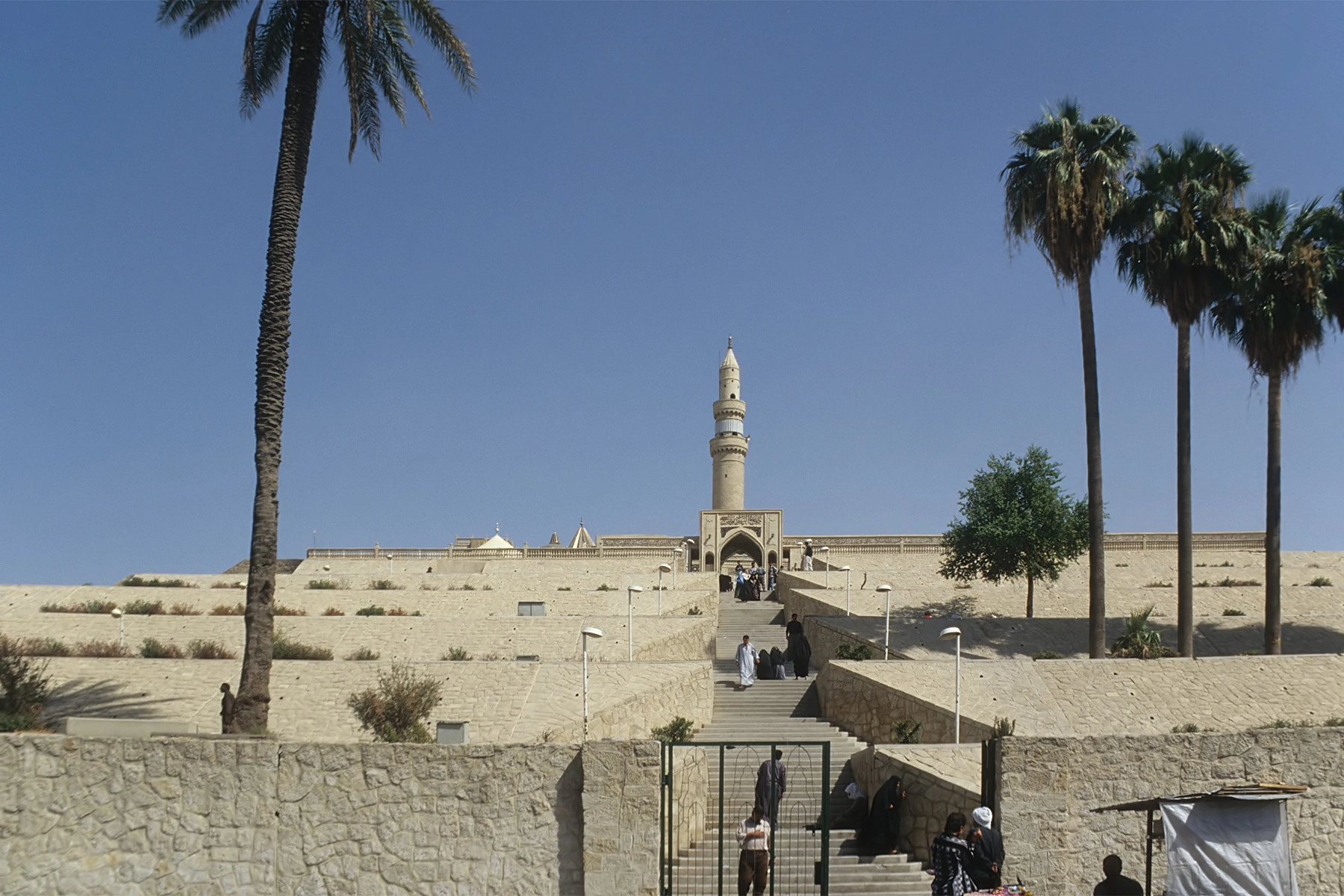
Prophet Jonah (Arabic: يونس, Yunus) is one of the most beloved prophets in Islamic tradition, known for his extraordinary experience of being swallowed by a great whale and his eventual success in guiding the entire city of Nineveh to repentance. His story demonstrates Allah's infinite mercy, the power of sincere repentance, and the importance of patience and perseverance in fulfilling divine missions.
Early Life and Prophetic Mission
Divine Selection
Jonah was chosen by Allah as a prophet to guide his people to the straight path. Like all prophets, he received divine revelation commanding him to call his people to worship Allah alone and abandon their idolatrous practices. His first assignment was to preach to his own people, calling them to monotheism and the worship of Allah alone, to moral reform and the abandonment of sinful practices, to the social justice of treating others with fairness and compassion, and to the spiritual purification of cleansing their hearts from corruption.
The People's Rejection
Despite Jonah's sincere efforts, his people initially rejected his message. They ridiculed his teachings and warnings, refused to abandon their ancestral practices, showed increasing hostility toward his mission, and persisted in their corrupt ways despite clear guidance. The continued rejection of his message led Jonah to feel frustrated and discouraged, setting the stage for the events that would follow.
The Flight and Divine Decree
The Decision to Leave
Feeling overwhelmed by his people's rejection, Jonah made a fateful decision to depart: "And [mention] the man of the fish, when he went off in anger and thought that We would not decree [anything] upon him." (Quran 21:87). His departure was motivated by disappointment at his people's continued rejection, an impatient desire to see immediate results from his preaching, a natural human emotional response to persistent opposition, and a misunderstanding of divine timing and mercy.
The Journey by Sea
Jonah boarded a ship, seeking to travel far from his people and their rejection of his message. When a severe storm threatened the ship, the sailors cast lots to determine who was responsible for their misfortune: "So the lot fell upon him, and he was among the ones thrown [overboard]." (Quran 37:141). The lot fell upon Jonah, and he was thrown overboard.
The Great Whale
The Miraculous Rescue
Instead of drowning, Jonah was swallowed by a great whale (or large fish), which became his temporary prison and place of reflection: "Then the fish swallowed him, while he was blameworthy." (Quran 37:142). Allah protected him within it: "And had he not been of those who exalt Allah, he would have remained inside its belly until the Day they are resurrected." (Quran 37:143-144). Allah protected Jonah inside the whale because of his previous righteousness and devotion, even though he had made an error in judgment.
The Prayer of Repentance
In the darkness of the whale's belly, Jonah offered one of the most beautiful prayers of repentance in religious literature: "And [mention] the man of the fish, when he went off in anger and thought that We would not decree [anything] upon him. Then he called out within the darknesses, 'There is no deity except You; exalted are You. Indeed, I have been of the wrongdoers.'" (Quran 21:87). The prayer combines tawhid, or monotheism ("There is no deity except You"), glorification ("Exalted are You"), and confession ("Indeed, I have been of the wrongdoers"). In these words Jonah acknowledged his mistake and Allah's sovereignty in humility, maintained his faith in Allah's mercy even in dire circumstances, expressed sincere regret for his hasty decision, and placed his complete trust in Allah for deliverance.
Divine Response
Allah accepted his repentance: "So We responded to him and saved him from the distress. And thus do We save the believers." (Quran 21:88). He was then delivered onto land: "So We cast him onto the open shore while he was ill. And We caused to grow over him a gourd vine." (Quran 37:145-146). Allah commanded the whale to cast Jonah onto the shore, where he was weak and vulnerable but alive and forgiven.
The Second Mission to Nineveh
The Divine Command
After his recovery, Allah gave Jonah a new mission: "And We sent him to [his people of] a hundred thousand or more." (Quran 37:147). Jonah was commanded to go to the great city of Nineveh (in present-day Iraq) to call its inhabitants to repentance. Nineveh was a major city with over 100,000 inhabitants, known for its wickedness and injustice, the capital of the Assyrian Empire, and marked by widespread idolatry and rejection of divine guidance.
The Successful Mission
This time, Jonah approached his mission with a renewed humility drawn from his previous experience, a complete trust that relied entirely on Allah's guidance and timing, a patient perseverance that continued despite initial resistance, and a deeper understanding of the importance of his role. He warned the people of Nineveh about the divine punishment that would follow their continued sinfulness, the need to turn back to Allah in sincere repentance, the necessity of moral reform and treating others justly, and the call to abandon idolatry and worship Allah alone.
The Great Repentance
The entire city of Nineveh responded to Jonah's message: "And they believed, so We gave them enjoyment [of life] for a time." (Quran 37:148). From the king to the common people, all believed; they genuinely regretted their past sins, changed their behavior and practices, and the entire city, including its animals, fasted as a sign of repentance. Islamic tradition emphasizes the role of Nineveh's king in leading the repentance: he removed his royal garments and wore sackcloth, issued a decree calling for citywide repentance, fasted and prayed alongside his subjects, ordered the cessation of all oppression and injustice, and commanded that stolen property be returned to its rightful owners.
The repentance of Nineveh was unprecedented in its completeness. Rich and poor, powerful and weak, all participated equally, as did the young and the old; business and commerce ceased during the period of repentance, livestock were included in the fasting as a symbol of total submission, and the change was not merely external but reflected true inner conversion.
Allah accepted their repentance and spared the city from the threatened punishment, demonstrating His infinite mercy and forgiveness. This acceptance shows that no sin is too great for even the most corrupt society to be forgiven, that collective repentance is powerful when communities unite in seeking Allah's mercy, that sincerity matters most because Allah looks at the heart rather than merely outward actions, and that Allah's desire to forgive surpasses His inclination to punish.
Theological Significance in Islamic Thought
Divine Attributes Manifested
Jonah's story is fundamentally about Allah's mercy (Ar-Rahman, Ar-Rahim): mercy to the prophet, whom Allah protected and guided despite his error; mercy to the people, whom Allah gave the opportunity to repent; mercy in timing, through Allah's perfect sending of warnings and accepting of repentance; and universal mercy that encompasses all creation. The story also reveals Allah's wisdom (Al-Hakim), teaching Jonah patience through his ordeal, guiding him step by step to understanding, ordering every element of the story toward a divine purpose, and balancing accountability with forgiveness. It further demonstrates Allah's power (Al-Qadir) through His control over nature in commanding the storm, the whale, and the gourd plant, His transformation of an entire city from disbelief to faith, His protection of Jonah alive in impossible circumstances, and His fulfillment of His promise to save the believers.
The Concept of Qadar (Divine Decree)
The verse states that Jonah "thought that We would not decree [anything] upon him" (Quran 21:87), teaching the inescapability of divine decree, that no one can flee from Allah's plan; submission to the divine will; trust in the wisdom of Allah's plans; and patience with divine timing. The account also reflects the balance of free will and decree: Jonah chose to flee, exercising his free will; Allah allowed the consequences to teach important lessons; Allah guided Jonah back to the right path; and the divine decree ensured the mission's eventual success.
The Whale as Symbol
Spiritual Symbolism
The belly of the whale has been read as a place of spiritual darkness representing confusion, isolation calling for solitary reflection and repentance, protection through Allah's care in the most unlikely circumstances, transformation where spiritual change occurs, a testing ground where faith is purified and strengthened, and a womb of rebirth in which spiritual gestation precedes emergence. Islamic scholars interpret the "darknesses" mentioned in the Quran as three: the darkness of the night when Jonah was in the whale, the darkness of the sea in the depths of the ocean, and the darkness of the whale's belly within the creature. These represent layers of difficulty and the depth of Jonah's trial, yet also the depth of Allah's mercy in reaching him even there. His emergence is understood as a rebirth in which he came out renewed and transformed, a sign of Allah's forgiveness and second chances, the granting of a new mission, wisdom gained through difficult experience, and a state of physical weakness paired with spiritual strength and a learned humility grounded in complete dependence on Allah.
Universal Themes
Jonah's story follows the classic pattern of a call to adventure in the prophetic mission, a refusal of the call in fleeing from responsibility, an ordeal in the experience within the whale, a transformation through spiritual growth and understanding, and a return with new wisdom and commitment.
Jonah's Legacy
Religious Tradition
Within Islamic teaching, Jonah receives Quranic prominence through multiple mentions throughout the Quran, praise in the hadith literature, extensive scholarly commentary analyzing the lessons of his story, and widespread love and respect among Muslims. He is also recognized across traditions: honored as a prophet in Hebrew scriptures within the Jewish tradition, recognized in the Christian tradition as a prefiguration of Christ's death and resurrection, and his story resonates across cultures and religions.
Cultural Impact
Jonah's story has left a mark on literature and the arts, inspiring religious poetry celebrating his account, visual depictions of his experience with the whale, children's literature teaching patience and repentance, and contemporary retellings of his message. Its moral teaching centers on patience and perseverance in difficult circumstances, the power of sincere repentance, Allah's willingness to forgive and give second chances, and the importance of completing one's responsibilities.
The Prayer of Yunus
The Famous Supplication
The prayer that Jonah offered in the whale's belly has become one of the most beloved supplications in Islamic tradition. In Arabic it is "Lā ilāha illā anta subḥānaka innī kuntu mina'ẓ-ẓālimīn", translated as "There is no deity except You; exalted are You. Indeed, I have been of the wrongdoers." It is recommended in times of distress when facing difficult circumstances, when seeking forgiveness and acknowledging mistakes, for the spiritual purification of the heart, and when needing Allah's help.
The Promise of Response
The Prophet Muhammad ﷺ said: "The supplication of my brother Yunus in the belly of the whale was: 'There is no deity except You; exalted are You. Indeed, I have been of the wrongdoers.' No Muslim man supplicates with it for anything ever except that Allah responds to him." (Narrated by Tirmidhi, Book of Supplications, Hadith 3505; graded Sahih). This hadith establishes the special status of this prayer in Islamic tradition and its guaranteed effectiveness when recited with sincerity.
The conditions for its acceptance are understood to include sincere belief and genuine faith in Allah's power and mercy, the humble acknowledgment of one's mistakes and limitations, complete trust and reliance on Allah for deliverance, patient acceptance of Allah's timing for the response, consistent practice of the supplication rather than resort to it only in crisis, and the combining of the prayer with practical efforts to improve one's situation. Each component of the prayer serves a specific spiritual purpose: "Lā ilāha illā anta" (There is no deity except You) affirms tawhid and Allah's uniqueness; "Subḥānaka" (Exalted are You) glorifies Allah and acknowledges His perfection; and "Innī kuntu mina'ẓ-ẓālimīn" (Indeed, I have been of the wrongdoers) confesses personal shortcomings and sins. This three-part structure combines theology (tawhid), praise (tasbih), and confession (i'tiraf), making it a complete supplication.
Conclusion
Prophet Jonah's story stands as one of the most powerful testimonies to Allah's mercy and the transformative power of sincere repentance. From his initial flight from responsibility to his eventual success in guiding an entire city to faith, Jonah's journey demonstrates that Allah's plans are perfect, even when they cannot be fully understood.
His experience in the whale's belly is presented in the Quran as a sign that no situation is too dark or desperate for Allah's mercy to reach a person. His prayer from the depths has become a supplication of hope for believers facing their own trials, and Islamic tradition holds that sincere repentance and trust in Allah can transform any circumstance.
The mass conversion of Nineveh is cited in the Quran as the one city whose faith benefited it when it believed, illustrating that no heart is too hard for Allah to soften and no society too corrupt for divine mercy to reform. Jonah's patient preaching, informed by his own experience of Allah's forgiveness, succeeded on his second mission.
The legacy of Prophet Jonah remains central to Islamic understanding of repentance and divine mercy, and his account connects the Quranic themes of patience, the acceptance of the divine decree, and the readiness of Allah to forgive those who turn to Him.
References and Further Reading
Primary Islamic Sources
- Quran, Surah Yunus (10:98) — "Then has there not been a [single] city that believed so its faith benefited it except the people of Jonah?"
- Quran, Surah Al-Anbiya (21:87–88) — "And [mention] the man of the fish [Dhun-Nun], when he went off in anger and thought that We would not decree [anything] upon him. And he called out within the darknesses, 'There is no deity except You; exalted are You. Indeed, I have been of the wrongdoers.'"
- Quran, Surah As-Saffat (37:139–148) — The full account: Jonah's flight, the whale, his glorification, and being cast onto the shore.
- Quran, Surah Al-Qalam (68:48–50) — "Then be patient for the decision of your Lord, and be not like the companion of the fish."
- Quran, Surah An-Nisa (4:163) — Jonah listed among the prophets who received revelation.
- Quran, Surah Al-An'am (6:86) — Jonah listed among those preferred over the worlds.
- Sahih al-Bukhari, Book of the Stories of the Prophets, Hadith 3413 — The Prophet saying: "No one should say I am better than Yunus ibn Matta."
- Sahih Muslim, Book of Virtues, Hadith 2377 — The same hadith regarding Jonah's status.
- Jami' al-Tirmidhi, Book of Supplication, Hadith 3505 — The supplication of Jonah (La ilaha illa Anta, Subhanaka, inni kuntu min adh-dhalimin) and its virtue.
Classical Islamic Sources
- Ibn Kathir, Ismail ibn Umar. Qisas al-Anbiya (Stories of the Prophets), Chapter on Yunus. Beirut: Dar al-Kutub al-Ilmiyyah, 2003. [Original c. 1370 CE]
- Ibn Kathir, Ismail ibn Umar. Al-Bidaya wa al-Nihaya (The Beginning and the End), Vol. 1. Beirut: Dar al-Fikr, 1986. [Original c. 1370 CE]
- Al-Tabari, Muhammad ibn Jarir. Tarikh al-Rusul wa al-Muluk (History of the Prophets and Kings), Vol. 1. Cairo: Dar al-Ma'arif, 1960. [Original c. 915 CE]
- Al-Tha'labi, Ahmad ibn Muhammad. Qisas al-Anbiya (Tales of the Prophets), section on Yunus. Beirut: Dar al-Kutub al-Ilmiyyah, 2004. [Original c. 1035 CE]
- Al-Qurtubi, Muhammad ibn Ahmad. Al-Jami' li Ahkam al-Quran, commentary on Surah As-Saffat 37:139–148. Cairo: Dar al-Kutub al-Misriyyah, 1964. [Original c. 1273 CE]
Academic and Scholarly Sources
- Wheeler, Brannon M. Prophets in the Quran: An Introduction to the Quran and Muslim Exegesis. London: Continuum, 2002.
- Tottoli, Roberto. Biblical Prophets in the Quran and Muslim Literature. London: Routledge, 2002.
- Thackston, Wheeler M., trans. The Tales of the Prophets of al-Kisa'i. Boston: Twayne Publishers, 1978.
- Brinner, William M., trans. The History of al-Tabari, Vol. III: The Children of Israel. Albany: SUNY Press, 1991.
- Sherwood, Yvonne. A Biblical Text and its Afterlives: The Survival of Jonah in Western Culture. Cambridge: Cambridge University Press, 2000.
- McAuliffe, Jane Dammen, ed. Encyclopaedia of the Quran, s.v. "Jonah." Leiden: Brill, 2001.
Further Reading
- Renard, John. Friends of God: Islamic Images of Piety, Commitment, and Servanthood. Berkeley: University of California Press, 2008.
- Newby, Gordon Darnell. The Making of the Last Prophet: A Reconstruction of the Earliest Biography of Muhammad. Columbia: University of South Carolina Press, 1989.
- Berkey, Jonathan P. The Formation of Islam: Religion and Society in the Near East, 600–1800. Cambridge: Cambridge University Press, 2003.
- Farrin, Raymond. Structure and Quranic Interpretation: A Study of Symmetry and Coherence in Islam's Holy Text. Ashland: White Cloud Press, 2014.
Mentioned In
5 articles reference this topic
More from Age of the Prophets
Maryam bint Imran (Mary, Mother of Jesus)
Maryam bint Imran (Mary), mother of Prophet Isa (Jesus), holds a uniquely exalted place in Islam as the only woman named in the Quran. Revered for her purity, devotion, and the miraculous virgin birth of Jesus, she is regarded as one of the greatest women and a model of faith.
Prophet Adam عَلَيْهِ ٱلسَّلَامُ
The first human being and the first Prophet in Islam, created by Allah as His khalifah (vicegerent) on Earth. Father of humanity, Adam's story encompasses creation, paradise, the fall, repentance, and the beginning of human civilization.
Prophet al-Yasa عَلَيْهِ ٱلسَّلَامُ (Elisha)
Known as Al-Yasa in Arabic, Elisha was the successor of Prophet Elijah, blessed with a double portion of his spirit and known for numerous miracles of healing, provision, and resurrection during his ministry to Israel.
Prophet Ayyub عَلَيْهِ ٱلسَّلَامُ (Job)
Ayyub, the Job of the Bible, is named in four passages of the Qur'an and is the Islamic tradition's standing example of patience under trial. The Qur'an records his loss of wealth, family and health, his supplication, and his restoration, while naming no specific illness.