Qutb ud-Din Aibak: The First Sultan of Delhi
Qutb ud-Din Aibak (d. 607 AH / 1210 CE) was the Turkish slave-commander who governed the Ghurid conquests in northern India for Mu'izz al-Din Muhammad of Ghor and, after his master's death, ruled from Lahore as the first sultan of the line that became the Delhi Sultanate.
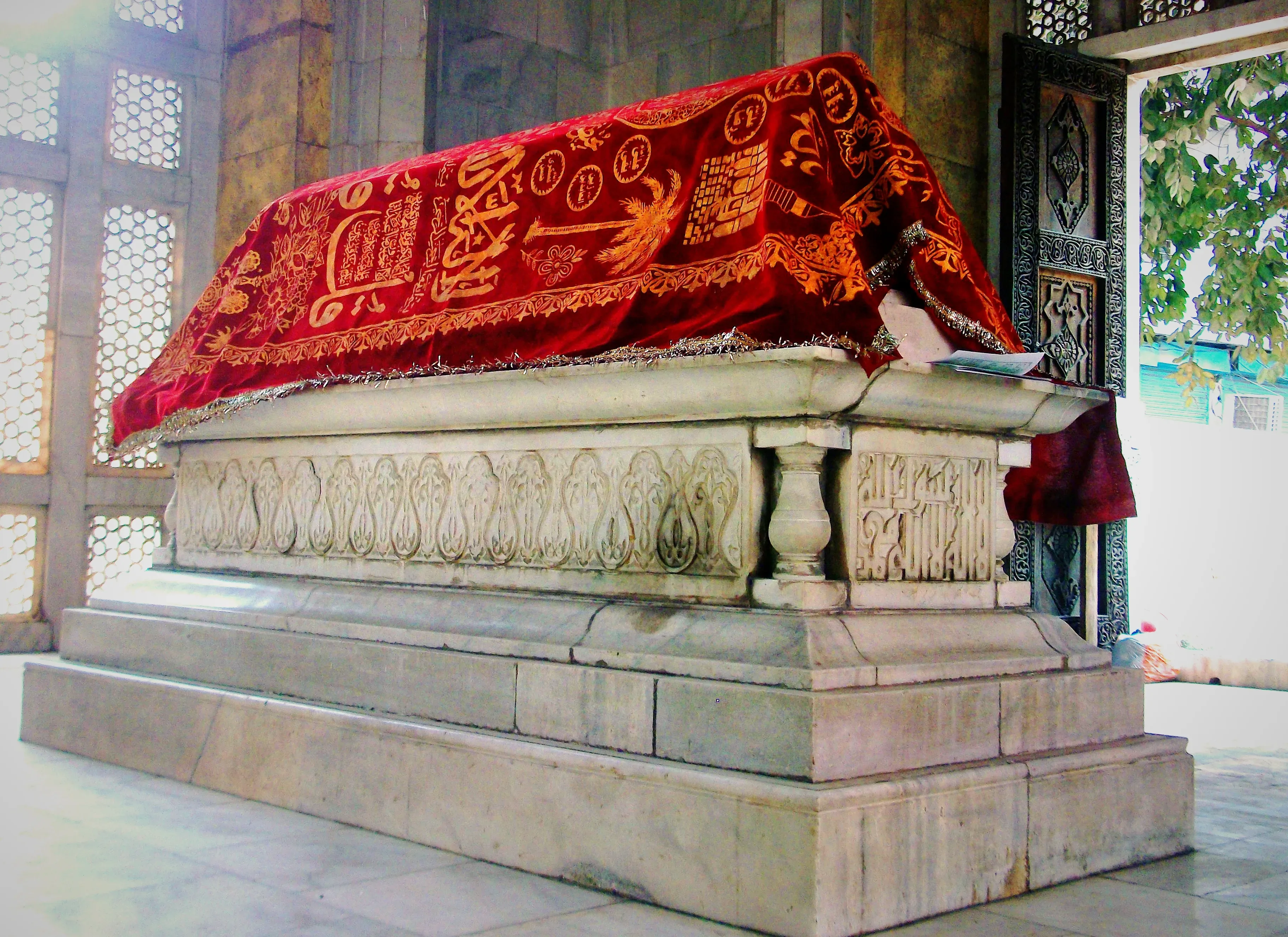
Qutb ud-Din Aibak (d. 607 AH / 1210 CE) was a Turkish slave who rose through the household of the Ghurid sultan Mu'izz al-Din Muhammad of Ghor to govern his conquests in northern India, and who, after his master was killed in 602 AH, ruled in his own name from Lahore as the first sultan of the line that became the Delhi Sultanate. He was brought from Turkistan as a boy and sold at Nishapur; he was bought from merchants at Ghazna by Mu'izz al-Din; he rose to the office of master of the stables; and from 588 AH he held the Ghurid territories in Hindustan as his master's deputy, taking Meerut, Delhi, Thankir, Badaun, Kalinjar and Mahoba, and carrying Ghurid arms as far west as Nahrawala in Gujarat and as far east as Banaras. He died at Lahore after a fall from his horse at the ball-game of chaugan, and was buried there.
Almost everything that can be established about him comes from two Persian chronicles. The earlier is the Tabaqat-i Nasiri of Minhaj al-Siraj Juzjani, written around the middle of the seventh century AH at the court of Aibak's successors, which devotes a short chapter to him in its section on the Mu'izzi sultans of Hind. The later is the Muntakhab al-Tawarikh of Abd al-Qadir Bada'uni, compiled in the tenth century AH under the Mughals, which treats him more briefly but preserves details the earlier work omits. Both are terse, and they disagree with each other and sometimes with themselves on dates, on titles, and on the identities of his relations by marriage. The nineteenth-century translator of the Tabaqat-i Nasiri, H. G. Raverty, appended to his version a dense apparatus of notes comparing the chronicles and the coinage, and those notes are a second and separable layer of evidence: where this article reports a reconstruction or an argument rather than a statement of the chronicles, it is Raverty's, and it is named as his.
The result is that the outline of the career is firm while a number of its load-bearing dates are not. The year in which he began to rule in his own name, the year in which he was legally freed, whether he ruled from Delhi or from Lahore, and whether he or his successor began the tower at Mehrauli that now carries his name are all matters on which the approved sources differ. Those disagreements are set out at the end of this article rather than smoothed over, because in this case they are the state of the evidence.
The Ghurid Advance into Northern India
The conquests Aibak administered were not his own in conception. Minhaj's history treats them under the Shansabani dynasty of Ghazna, whose dominions he lists as Ghur, Gharjistan, Talkan, Guzarwan, the district of Faras and Garmsir. Authority was divided between two brothers: Ghiyath al-Din Muhammad, who held the dynastic capital of Firuzkuh and the kingdom of Ghur, and Mu'izz al-Din Muhammad — whom the chronicles also call Shihab al-Din, and whom Bada'uni names in that form — who held Ghazna and conducted the campaigns eastward. Lahore had been in the hands of the Ghaznavids for more than a century, Raverty notes, when Mu'izz al-Din took it from the last of that dynasty five or six years before the campaigns described below, and from that point the Punjab was a Ghurid province under a Ghurid governor.
Minhaj records two engagements at Tarain, on the Sarsuti, which decided the fate of the Indian plains. In 587 AH Mu'izz al-Din reduced the fortress of Tabarhindah, the strongest place belonging to the great rajas of Hindustan, and left it under Malik Ziya al-Din, the Qazi of Tilak, with twelve hundred horse drawn from the forces of Hindustan and Ghazna, on the stipulation that they hold it for eight months until he should return from Ghazna. Rae Pithora — the Chohan, whom one of Raverty's authorities styles sovereign of Hindustan and whom Bada'uni calls the governor of Ajmer — came up before that term was out, together with his brother, called Gobind Rae in the oldest copies of Minhaj's text and Khandi Rae in most other authors, who governed Delhi. Bada'uni places the field seven kroh from Thanesar and forty from Delhi, and records that it was known in his own day as Tarawari. The armies met at Tarain. Mu'izz al-Din struck the brother on the mouth with his lance; the brother threw a javelin which wounded the Sultan severely in the upper arm; the Ghurid army broke, and the Sultan was carried from the field by a Khalji youth who recognised him in the confusion. Bada'uni's account agrees in substance and adds that Tabarhindah held out for a year and a month before Ziya al-Din gave it up on terms.
The following year Mu'izz al-Din returned. Bada'uni gives the force as forty thousand cavalry and says it was divided into four corps; Minhaj describes an order of battle in which the baggage, standards and elephants were left miles to the rear while four divisions of light horse were sent against the opposing army on four sides, with ten thousand mounted archers instructed to engage and then fall back a horse's course rather than close. The second battle at Tarain, in 588 AH, broke the Chohan army. Rae Pithora's brother was killed, and the accounts of Pithora's own end differ irreconcilably; they are set out in the Historiographical Note below. Mu'izz al-Din then reduced Sarsuti and Hansi and took Ajmer, and it is at this point that Aibak enters the record as a man with a province of his own.
Origins, Purchase and Education
Minhaj's notice of him opens with his arrival in the slave markets of Khurasan. He was brought from Turkistan as a boy and reached the city of Nishapur, where he was bought by the chief qadi of the province, Fakhr al-Din Abd al-Aziz al-Kufi, whom Minhaj describes as a descendant of Abu Hanifa of Kufa and governor of Nishapur and its dependencies. In that household he was educated alongside the qadi's own sons: he read the Word of God, and was taught horsemanship and shooting with the bow. The TDV İslâm Ansiklopedisi, whose entry on him rests on the same two chronicles, records the purchase and the upbringing in the qadi's household in the same terms, and adds that he was trained as an accomplished horseman and archer.
How he passed from Nishapur to Ghazna is not settled. Minhaj says only that when he reached adolescence certain merchants brought him to the court of Ghazna, and that Mu'izz al-Din bought him from those traders. Raverty records three accounts current among the authorities he consulted: that the qadi sold him to a merchant; that after the qadi's death a merchant bought him from the qadi's sons and took him to Ghazna, having heard of Mu'izz al-Din's appetite for buying slaves, and that the Sultan paid a very high price for him; and that the merchant made a gift of him to the Sultan but received a large sum in return. The three cannot be reconciled and nothing in the sources decides between them.
Minhaj states that he was endowed with laudable qualities but had no outward comeliness, and that the little finger of one hand was fractured, on which account he was styled I-bak-i-Shil, which Raverty renders "the powerless-fingered". Raverty also corrects a misreading that had entered English writing on India through the eighteenth- and nineteenth-century translations of Firishtah: Alexander Dow made Aibak a proficient in Persian and Arabic and a ripe scholar, John Briggs repeated it, and Mountstuart Elphinstone followed them, whereas Firishtah's statement had been about his aptitude for government and his accomplishments in war. The distinction matters, because the Nishapur education is the whole of the evidence for his learning, and what the chronicle claims for it is the Qur'an, horsemanship and archery, not the sciences.
The Name
The meaning of the name is itself disputed between the two translators of the two chronicles, and the dispute is worth setting out because it is a question about the evidence rather than about the man.
Raverty argues that I-bak cannot have been his real name, since the addition of shil would then make the name mean "I-bak of the withered hand", and Aibak was an active man not paralysed in his limbs; he states that in every work in which the name appears it is explained by the broken or injured little finger, that one author expressly gives this as the reason for the nickname, and that ibak in Turkish means finger. Bada'uni gives a different account altogether: that Aibak had a broken little finger on the occasion of an eclipse of the moon, and was known by that sobriquet in consequence. Ranking, translating Bada'uni, notes that he cannot find Raverty's meaning in the dictionaries — that aybak signifies the moon, or a lord, while the Turkish for finger is parmaq — and concludes that in Bada'uni's text it is the connection with the moon, and not the broken finger, that is the cause of the name. He also records that it does not appear whether the finger was broken at the time of the eclipse or was a defect from birth. Bada'uni gives the same lunar derivation for the name of Aibak's successor Iltutmish, whose birth he places on the night of an eclipse, which is some support for Ranking's reading of his author.
Two further names attach to him. Bada'uni records that he was also called Qutb al-Din lakh bakhsh, the bestower of lakhs, and explains it by his habit of giving successful petitioners far more than they expected; Raverty notes independently that in his own day people in India praising a man for liberality would call him "the Qutb al-Din of the age". The TDV entry records a second by-name, Qur'an-khan, given him for the quality of his recitation.
A note of identification is needed here, because the encyclopaedia covers two rulers whose names are written alike. Izz al-Din Aybak, the Mamluk commander who became sultan in Egypt in the following century and who is treated in the articles on the Mamluk Sultanate and on Shajarat al-Durr, is a different person in a different country, and nothing in this article refers to him. The spelling of the Indian ruler's own name varies widely in the sources and in modern writing — Aibak, Aybak, Aybeg, I-bak — and that variation carries no distinction of identity.
In the Service of Mu'izz al-Din
Minhaj explains the beginning of his advancement by a single incident. Mu'izz al-Din gave an entertainment at which he ordered a gift of money and of wrought and unwrought gold and silver to each of the slaves present. Aibak took his share out of the gathering and distributed the whole of it among the Turks, the doorkeepers and the other attendants, keeping nothing. The story reached the Sultan the next day, and from that point Aibak was given a post among the offices before the throne and the audience hall, was put at the head of a body of men, and rose by stages to Amir-i Akhur, Lord of the Stables. The TDV entry gives the same office, under its Persian form mirahur, and records a further promotion to ustad al-dar, a post in the royal household.
The office of master of the stables placed him in the field in a subordinate capacity, and the first episode in which the chronicle shows him on campaign is a personal reverse. When the Ghurid rulers of Ghur, Ghazna and Bamiyan moved into Khurasan against Sultan Shah the Khwarazmi, Aibak commanded the escort of the stable's foraging parties and went out daily in search of forage. He was attacked and taken prisoner. After Sultan Shah's army was broken he was brought back, on a camel and in irons, to Mu'izz al-Din, who commended him; and the fief of Kuhram was given him then. Raverty notes that Dow and Briggs wrongly report the title Qutb al-Din as conferred on this occasion, and observes that he had borne it long before.
This captivity is Raverty's ground for rejecting one of Minhaj's Indian dates, as the following section shows.
Deputy in Hindustan
The sources agree that after the decisive battle at Tarain Aibak was left in charge of the Ghurid conquests as his master's deputy, and they agree on his first holdings. Minhaj gives him Kuhram; Raverty's abstract of the Taj al-Ma'asir and Firishtah has Kuhram and Samana left in his charge as the Sultan's deputy; and TDV records that after the battle of 1192 he was appointed naib with the title of malik, and that his first iqta in India consisted of Kuhram and Samana. One further account, the Alfi version of the battle reported by Raverty, has Mu'izz al-Din advance on Ajmer after the victory, subdue that territory, and make Aibak governor of Ajmer before returning to Ghazna, which would make Ajmer rather than Kuhram his first charge; TDV's list of his territories includes Ajmer without dating its acquisition. Bada'uni places the arrangement in 588 AH and calls him Mu'izz al-Din's servant and adopted son and his vicegerent in the town of Kuhram, seventy kroh from Delhi, left there while the Sultan raided the Siwalik hills to the north and then went on to Ghazna.
From that base the conquest was extended over something more than a decade. TDV summarises the period between 1192 and 1203 as adding Meerut, Ajmer, Delhi, Kol, Thankir, Gwalior, Badaun, Kannauj and Nahrawala to his iqtas. The chronicles allow the sequence to be followed more closely, though not without difficulty.
Meerut and Delhi
Delhi did not fall at once. The Taj al-Ma'asir, as Raverty summarises it, has Mu'izz al-Din install Rae Pithora's son as tributary ruler of Ajmer after the father's death and then move on Delhi, which was held by a kinsman of Pithora's brother; the holder tendered submission and paid a large sum in tribute, and was left in place on the same terms as Ajmer. Only afterwards, and by Aibak, was the city taken outright.
Minhaj records the taking of Meerut in 587 AH, and says that from Meerut he captured Delhi in 588 AH. Raverty's note on the first of these dates is blunt: in 587 AH Aibak was a prisoner in Khurasan, so the date "is impossible", and he adds that Minhaj "constantly contradicts his own dates". The account Raverty prefers has Aibak march from Kuhram against Meerut, take it, and then invest Delhi; the kinsman holding the city appealed to his Rajput countrymen, and a relieving army attempted, in concert with the garrison, to break the investment by attacking Aibak's forces in the plain before the walls. The attempt failed, and the defenders, reduced to straits, asked for quarter and surrendered the place. Bada'uni also places the capture of Delhi in 588 AH and describes the city as taken from the kinsmen of Rae Pithora and his brother; he then puts the fall of the fort of Kol into Aibak's hands in 589 AH, which his translation glosses as 1193 CE.
Chandwar, Thankir, Badaun and Nahrawala
For 590 AH Minhaj records that Aibak and the Sipah-Salar Izz al-Din Husain, son of Khar-mil, each leading a wing of the van, overthrew Jai Chand, the Rae of Banaras, at Chandwal. Bada'uni assigns the same victory to Mu'izz al-Din himself, in 589 AH, fighting Rae Jai Chand the governor of Kannauj on the confines of Chandwar and Etawah. Raverty's abstract adds details from the Taj al-Ma'asir and Firishtah: that Aibak's following on this campaign was fifty thousand horse, that Jai Chand was killed by an arrow in the eye and fell from his elephant, that Banaras was taken, that the temples there were destroyed, and that a white elephant was among the spoil. Raverty is scathing about Dow's and Briggs's embellishment of this episode into a personal feat of archery by Aibak, which he says their source does not support.
Thankir was taken in 591 AH according to Minhaj; Bada'uni gives the same year for the forts of Thankir and Badaun. In 593 AH Minhaj has Aibak march on Nahrawala in Gujarat and attack Rae Bhim Diw, taking vengeance on that people for the Sultan's earlier defeat, and adds that he subdued other territories of Hindustan as far as the frontier of the territory of Ujjain — a direction over which Raverty inserts a query of his own in the translation. Bada'uni's account of the same year has him conquer Gujarat, take his army to Nahrawala — which he glosses as the place known as Pattan — exact vengeance on Bhim Rai Dev on the Sultan's behalf, and return with much spoil. Bada'uni adds that Sultan Ghiyath al-Din died in that year, which left Mu'izz al-Din sole sovereign.
Raverty's abstract supplies two episodes that Minhaj's own text passes over. The first is the relief of Hansi in Ramazan 588 AH, when Aibak marched twelve leagues on the night the news reached him to raise a siege by the Jats under a leader named Jatwan; Firishtah gives the year as 587. The second is a campaign in support of a son of Rae Pithora against a rival named variously Bhiraj, Hemraj and Hamir at Rantabhur, after which the rival took Ajmer, was defeated, and died on a funeral pyre.
The Reverse near Ajmer
Raverty's abstract also records a defeat, which he dates to the ninth or tenth month of 592 AH. Near Ajmer, Aibak was met by a rising of the Mers together with an army from Nahrawala. His horse was wounded and he was carried into Ajmer, where he was besieged for several months until a relief force under Mu'izz al-Din arrived. Raverty is careful about the extent of the injury: Firishtah states that it was only the horse that was wounded, and the accounts in Dow, Briggs and Elphinstone, which have Aibak himself take six wounds and be carried off in a litter, are their own additions.
In the same period Raverty places a journey to Ghazna. Aibak was summoned to the royal presence, fell dangerously ill there, recovered, and had the government of his provinces conferred on him again; Minhaj puts this journey after the Nahrawala campaign, and Firishtah in 592 AH. On the return, by way of Gardaiz and Kayman, he married the daughter of Taj al-Din Yildiz, the Ghurid slave-commander who held Ghazna and who would later be his principal rival. Bada'uni independently records a marriage between Aibak and a daughter of Yildiz.
Kalinjar, Mahoba and the Eastern Conquests
Raverty's abstract and Firishtah place a campaign against Kalinjar in 599 AH, the year in which Ghiyath al-Din died and Mu'izz al-Din became supreme. The Taj al-Ma'asir has the Rae of Kalinjar, of the Pramara line, fight in the open before retiring within the walls; Firishtah has him withdraw into the fortress at once. Besieged, he agreed to submit on the terms on which his ancestors had paid obedience to Sultan Mahmud of Ghazni, and undertook to hand over a large sum in jewels and other precious things together with horses and elephants. He died the next day while the tribute was being gathered. His minister, named Ajah Diw by one source and Jadah Diw by Firishtah, chose to resist instead, relying on a spring in the upper part of the fortress that had never failed; the spring dried up within a few days and the garrison asked for quarter and surrendered the place. The accounts record a great quantity of jewels, arms and elephants taken, fifty thousand captives of both sexes, and the conversion of the temples into mosques. Raverty devotes several paragraphs to showing that the version of this siege which passed into English histories — a tributary prince named Gola, a dismounted cavalry, a Hindu flag rehoisted on the fort, and the assassination of the raja by his own minister — is an invention of Dow's and Briggs's, repeated as fact by Marshman.
From Kalinjar, the same abstract continues, Aibak marched to the city of Mahoba, the capital of the territory of Kalbi, took possession of it, and returned to Delhi by way of Badaun, which he also occupied.
The eastern conquests were not his own work. Minhaj's notice names Muhammad son of Bakhtiyar the Khalji — whose title he gives as Izz al-Din but which Raverty corrects to Ikhtiyar al-Din — as having subdued the cities of Bihar and Nidiah during Aibak's government. TDV states that Ikhtiyar al-Din Muhammad Khalji conquered Benares, Bihar, Bengal and western Assam in Malik Aybeg's name. Raverty's abstract records a formal submission: Bakhtiyar presented himself before Aibak bearing rich presents in jewels and coin, was received with distinction because his fame had spread over Hind and Sind, and on taking his leave was given a robe of honour, a standard and other insignia. Raverty places that interview about ten years before 599 AH, and notes that Minhaj's text has Bakhtiyar present himself before the muster-master at Delhi rather than before Aibak in person.
Minhaj is explicit that Aibak's authority over the other Ghurid commanders in India was incomplete. Powerful chiefs, among them Malik Baha al-Din Tughril and Malik Husam al-Din Aghul-Bak, held their fiefs independently of him; Bada'uni records that Tughril was given the command of Thankir by Mu'izz al-Din himself and then built and settled in a fortress in the country of Bayana. Nasir al-Din Qabacha held Uchh and Multan by Mu'izz al-Din's grant during the Sultan's lifetime. Seven of Mu'izz al-Din's generals and slaves, in Bada'uni's count, reached princely power in Hindustan, Ghazna, Bengal and elsewhere.
The Question of Manumission
Aibak remained legally a slave throughout his master's life, and the moment at which that changed is the single most consequential uncertainty in his biography. It is consequential because of a legal principle Raverty states flatly in the course of his argument — that an unmanumitted slave could not assume sovereignty — and on which his dating of the accession turns.
Minhaj's own text, in the section on the Ghurid dynasty, describes what happened after Mu'izz al-Din's death. When the Ghurid dominions passed under the control of his slaves — Taj al-Din Yildiz, Qutb al-Din Aibak and the other Turkish maliks and amirs — each of them sent a person of rank to the court of Ghiyath al-Din Mahmud, Mu'izz al-Din's nephew and heir, and solicited from him letters of manumission together with the investiture of Ghazna and Hindustan respectively. Raverty adds the legal basis: on Mahmud's succession to his uncle's dominions, his uncle's slaves became his slaves by succession. Mahmud sent Yildiz a deed of investiture for Ghazna and a canopy of state. As for Aibak, Minhaj writes that when he had advanced to Ghazna he despatched Nizam al-Din Muhammad to Firuzkuh in the year 605 AH, and that Mahmud directed a scarlet canopy of state and a deed of investiture of the government of Hindustan to be sent to him.
Raverty's reconstruction of events draws on an account in the Alfi, which supplies a motive. Mahmud asked Yildiz to strike coin and read the khutba in his name; Yildiz replied that he would do so when Mahmud sent him a deed of manumission, and that otherwise he would give his allegiance where he chose. Mahmud, not safe from the Khwarazm Shah and afraid that Yildiz would go over to him, sent the deed of manumission to Yildiz and another to Aibak, together with deeds of investiture for Ghazna and Hindustan; Aibak was at Purshor at the time, where he had come to guard one of the routes into Hind, and was well satisfied with what was conferred on him. Raverty notes that, on this evidence, neither Yildiz nor Aibak can have been styled sultan at that point, whatever Minhaj's usage suggests.
Raverty's conclusion is stated plainly in his Additional Notes: that the correct date of Aibak's assumption of sovereignty was 605 AH, as Minhaj's own text has it in the Ghurid section, "for it was only in that year that he received his manumission from Sultan Mahmud; and it is very certain that an unmanumitted slave could not assume sovereignty." He repeats the point in the second volume: the man styled sultan was a slave, continued a slave during his master's lifetime, and did not obtain his freedom and the title until 605 AH. He concedes one possibility that would reconcile the dates — that Ala al-Din Muhammad, who held Ghur immediately after Ghiyath al-Din Muhammad's death and was later ousted by Mahmud, may have sent Aibak the investiture of Hindustan when Mu'izz al-Din was assassinated, with Mahmud confirming it afterwards.
Raverty's abstract of the Indian authorities also records a tradition that the manumission came far later than the English histories assumed — "upwards of twelve years" after the appointment to Kuhram and Samana — and he notes drily that all the native authors, Firishtah included, state as much.
Accession at Lahore
Mu'izz al-Din was killed on the road back from a campaign against the Khokhars. Bada'uni records that the Khokhars in the neighbourhood of Lahore showed signs of revolt, that the Sultan brought an army against them and summoned Aibak from Delhi to join it, and that on the return journey to Ghazna he was killed at Damyak, a village among the dependencies of Ghazna, at the hands of Khokhar bandits. Bada'uni preserves a chronogram on the event which dates it to the third day of Sha'ban in the year 602; Raverty gives the third of Sha'ban in his Additional Notes and the second elsewhere. Bada'uni adds that the Sultan's reign, reckoned from the beginning of his rule at Ghazna, had lasted thirty-two years and some months, and that he left no heir but a single daughter. Ranking's note records the quarrel over the succession that followed, the dispute between the Turkish and Ghuri parties over the route by which the body should be carried to Ghazna, its settlement by the diplomacy of the Khwaja Mu-ayyid al-Mulk, and the burial on 22 Sha'ban in a grave Yildiz had built for his own daughter.
Raverty reconstructs Aibak's movements from the fact that he had joined the Khokhar campaign and had not left the Punjab. The Sultan was killed fifteen days after leaving Lahore; only two months and sixteen days separated the assassination from Aibak's assumption of sovereignty at Lahore; and Raverty concludes that Aibak probably returned to Lahore at once on hearing the news, and may not have left it. He also corrects the text of Minhaj at this point: the received reading, which makes Aibak "determine to go to the capital, Lahore", is defective and reverses the sense, since Lahore was not the capital. The passage refers to his going into the Lahore territory to join his master against the Khokhars, an event Minhaj has related in the wrong place.
On the accession itself the sources are close but not identical. Minhaj's text has Ghiyath al-Din Mahmud, Mu'izz al-Din's brother's son, send a canopy of state to Malik Qutb al-Din and confer on him the title of sultan; and in the year 602 AH Aibak determined to proceed from Delhi to the royal presence at Lahore, and on Tuesday the seventeenth of Dhu al-Qa'dah of that year ascended the throne in the royal palace of Lahore. Bada'uni has Mahmud send the canopy and insignia of royalty from Firuzkuh and address him by the title of sultan, and gives the accession as Tuesday the sixteenth of Dhu al-Qa'dah 602, after a journey from Delhi to Lahore. Raverty records that several further histories — the Tarikh-i Ibrahimi, the Tabaqat-i Akbari, the Lubb al-Tawarikh-i Hind, the Tazkirat al-Muluk and Bada'uni among them — give Tuesday the eighteenth, with one having Sunday the seventeenth and another Wednesday, and he notes that one of these works states that Aibak had gone to Lahore precisely in order to receive the canopy of state, a standard, the deed of manumission and the title of sultan, having been styled malik until then. The TDV entry dates the accession at Lahore to 25 June 1206, which is the conversion of Minhaj's date, and records that Mahmud confirmed the position, gave him the title of sultan, and sent the chatr, the canopy of state, as its token.
Bada'uni adds a detail about the manner of the accession that the earlier chronicle does not: that with the consent of the nobles of Hindustan he established himself as protector of the kingdom of Delhi.
Two things about the title are worth stating precisely. The first is that it was a grant, not a claim: both chronicles have the canopy and the title come from the Ghurid ruler at Firuzkuh, and Minhaj records that the khutba was read and the coin struck in Mahmud's name throughout Ghur, Ghazna and Hindustan. The second is that Raverty doubts the year. Mahmud did not obtain even nominal supremacy immediately after his uncle's death, since Ala al-Din Muhammad then held Ghur and Firuzkuh while Mahmud was at Bust, and dispossessing him must have taken some months — which would bring the grant to 603 AH, the year borne by a coin inscription Raverty reproduces. He also notes the arithmetic of the reign: the chronicles give Aibak a little over four years as sultan and his death in 607 AH, and four years from Dhu al-Qa'dah 602 reaches only the same month of 606.
Ghazna and the Struggle with Taj al-Din Yildiz
The years of independent rule were occupied by a contest over Lahore and Ghazna with Taj al-Din Yildiz, another of Mu'izz al-Din's slaves, who had succeeded to Ghazna by Mahmud's grant and who was Aibak's father-in-law. Minhaj's narrative is compressed to a few lines: hostility arose between them over Lahore, it came to an engagement, the victory was Aibak's, Yildiz was defeated and retreated; Aibak then advanced on Ghazna and possessed himself of that kingdom as well, sat on its throne for forty days, and returned to Hindustan.
Raverty's note sets out a fuller sequence. Yildiz regarded the Punjab as part of the Ghazna dominion he had inherited, and as having been assigned by Mahmud neither to Aibak nor to Qabacha; he sent the Khwaja Mu-ayyid al-Mulk Sanjari, his wazir at Ghazna, against Lahore and ousted Qabacha, who held it nominally for Aibak. Aibak marched against Yildiz with all the troops available in Hindustan, defeated him in the Punjab, and drove him into the hill country of Karman and Shaluzan, which had been his charge in Mu'izz al-Din's reign. Aibak then pushed on to Ghazna by another route and expelled the governor holding it on behalf of Jalal al-Din, the son of the Khwarazm Shah Sultan Muhammad, who had taken the city. Among those captured on this occasion, Raverty notes, was Izz al-Din Ali-i Mardan the Khalji, who later received the government of Lakhnauti from Aibak. Bada'uni's account agrees on the essentials and adds that Yildiz had read the khutba in his own name at Ghazna and that he withdrew to Kirman, which was his usual residence.
The occupation did not hold. All the accounts agree that the people of Ghazna sent secretly to Yildiz and asked him to return, that he came promptly and unexpectedly, that Aibak was in no condition to resist him, and that he withdrew to Lahore by the route of Sang-i Surakh — one of the roads between Ghazna and the Punjab, taken, Raverty observes, because he dared not use the road through Karman. The sources differ on what Aibak had been doing during the forty days, and the difference is addressed below. Minhaj records a third phase in which Yildiz marched again from Karman and brought Ghazna back under his rule.
TDV dates the loss of Ghazna to 1208–1209 and names Yildiz and Qabacha as Aibak's most dangerous rivals, noting that they were also his relatives by marriage. Raverty's conclusion on the aftermath is that Aibak does not appear to have returned to Delhi again, and that he remained at Lahore until his death because he did not consider himself safe from Yildiz. The later fortunes of the rivalry belong elsewhere: Bada'uni records that Yildiz was finally taken prisoner at Tarain, fighting Iltutmish.
Government, Patronage and Building
The chronicles say little about the administration of the territories, and this article does not supply what they omit. What they do record concerns his distributions, the two historians who wrote under him, and his coinage; the buildings attributed to him are treated separately below, because they are the most disputed part of the record.
Distribution and patronage. Raverty's abstract records promotions and favours conferred on the Muslim chiefs after the accession, and gifts reaching the poor and needy of Delhi. Bada'uni makes the practice the basis of the by-name lakh bakhsh and quotes a quatrain in Aibak's praise by Baha al-Din Ushi, whom Ranking identifies as Baha al-Din Muhammad Ushi Farghani, a preacher and writer of note. Minhaj's own earliest anecdote about him — the distribution of the whole of a royal gift among the Turks and attendants at Ghazna — belongs to the same pattern, and is the incident the chronicle gives as the beginning of his advancement.
The two historians. TDV records that Fakhr al-Din Mubarak Shah and Hasan Nizami both wrote under him, and that the two works are evidence for the cultural condition of the first Turkish sultanate of Delhi. The separate TDV entries on the two men give the particulars. Fakhr al-Din Mubarak Shah, known as Fakhr-i Mudabbir, was probably born at Multan in 552 AH (1157 CE) and moved to Lahore when Mu'izz al-Din took Multan in 582 AH; there he spent fourteen years on the genealogies of the Prophet and of the ten Companions to whom Paradise was promised, producing a large number of genealogical tables. He met Mu'izz al-Din at Lahore in 602 AH but found no opportunity to show him the tables. After the Sultan's death Aibak took an interest in the work and ordered that the book be copied and placed in the palace library. Hasan Nizami, the author of the Taj al-Ma'asir, was born at Nishapur at the end of the sixth century AH, the son of the Persian writer Nizami-i Aruzi; he went to Ghazna on his shaykh's advice, migrated to Delhi after Aibak had taken it, entered the court under the patronage of Sadr-i A'la Sharaf al-Mulk, and took part in some of Aibak's campaigns — which is why Raverty treats the Taj al-Ma'asir as a contemporary source, noting that its author began it the year before Mu'izz al-Din's assassination.
Coinage. Minhaj's measure of the sovereignty is the canopy of state, the khutba and coin struck in Aibak's own name and titles, which he says lasted four years and a little over. Raverty reports a difficulty: although the coins of other rulers of the period are comparatively plentiful, he knew of no surviving coin bearing Aibak's name, and the specimen inscription he prints — reading as the coin of the inheritor of the kingdom and signet of Sultan Qutb al-Din I-bak in the year 603 AH, struck at the Dar al-Khilafat, Delhi, in the first year of his accession — comes from a work of coin inscriptions rather than from a coin he had seen. The TDV entry, written a century later, records that copper coins struck in Aibak's name are held in the Delhi Museum and silver coins in the Central Museum at Lahore.
The Mosque at Delhi and the Tower at Mehrauli
The buildings attributed to him are the subject of the sharpest disagreement in the sources, and the disagreement runs between the approved library on one side and the approved reference work on the other.
Raverty's abstract records the completion in 592 AH of the Jami Masjid at Delhi, which he says was known in his own day as the Kutbi Masjid and was reported to have been founded in 589 AH. In his note on the inscriptions of the minaret at Mehrauli he reads the recorded dates as a sequence: 589 AH for the occupation of Delhi as the Muslim capital, 592 AH for the foundation of the Kutbi mosque, 594 AH for its completion, and 629 AH for the year in which Iltutmish founded the minaret. On this reading the tower is not Aibak's work at all. Raverty explains the presence of Aibak's name on it as an act of gratitude by Iltutmish, recording on a monument of his own erection the name of his master, benefactor and father-in-law; and he insists that the tower takes its name not from Aibak but from the Chishti shaykh Qutb al-Din Bakhtiyar Kaki, who is buried near it, citing both the Afghan sources for the saint and a correction published in the Bengal Asiatic Journal. He adds that he doubts the accuracy of the copy of the inscription available to him, since it omits Mu'izz al-Din's name altogether. Bada'uni's text supports the general direction of Raverty's reading: he states that the erection of minarets and of buildings of that kind, such as mosques, began in the reign of Iltutmish, in 606 AH.
The TDV İslâm Ansiklopedisi gives a different account, drawn from the archaeological and architectural literature. In its entry on the tower, the Quwwat al-Islam mosque was begun by Aibak in 1193, while he was still malik; the minaret was begun about fifty metres to its south as a monument of the victory of Islam in India; and only the first storey was finished in Aibak's lifetime. Iltutmish completed the tower to four storeys, and his additions to the mosque in 1225 left the minaret standing at the south-west corner of the southern outer courtyard. A lightning strike in the reign of Firuz Shah Tughluq destroyed the fourth storey, and the repair of 1368 replaced it and added a fifth, both of them faced largely in white marble rather than the red sandstone of the lower stages and left undecorated. TDV gives the tower a base diameter of 14.42 metres, a present height of 72.59 metres and a diameter of two metres at the top. It places the tower in a family of thick, circular, high minarets which began with Qarakhanid examples, was developed by the Ghaznavids and the Ghurids, and was conceived as a victory monument rather than simply as a mosque tower; the entry regards its close relation to the Ghurid minarets in particular as largely explained by the builder's own position as the freedman of a Ghurid sultan. Alauddin Khalji later began a second and larger minaret in the same complex and completed only its lower part.
On the name, the two accounts agree. TDV records that the tower had no particular name at first, and came to be called after the Chishti shaykh Qutb al-Din Bakhtiyar, who was buried nearby in 1235.
Death at Lahore
Minhaj's account of the death is brief and precise. In the year 607 AH, as the decree of fate supervened, Aibak fell from his horse while playing at ball on the course, and the horse came down on him so that the raised front of the saddle struck him on the chest, and he died. Raverty glosses the game as chaugan, something similar to modern polo, and notes that the high pointed pommel of an eastern saddle makes the described injury readily intelligible. Bada'uni gives the same account: he fell from his horse while playing chaugan at Lahore in 607 AH and died, and was buried in that city, where his tomb was in Bada'uni's time a resort of pilgrims. Raverty likewise records the burial at Lahore and says the tomb continued for centuries to be a place of pilgrimage. The TDV entry dates the death to 4 November 1210, records that it happened during a game of chaugan of which he was very fond, and confirms the burial at Lahore.
Minhaj's reckoning of the span is twofold, and the division is the clearest statement in the sources of how the career was understood: the period of his rule from the first taking of Delhi was twenty years, and the stretch of his sovereignty — with a canopy of state, the khutba and coin in his own name and titles — was four years and a little over. Bada'uni reckons it the same way, giving twenty years from the conquest of Hindustan, of which four were as sultan.
The variants on the year of death are set out below. Minhaj does not give the month, and Raverty observes that he gives no detailed list of Aibak's offspring, kinsmen, qadis, nobles or victories of the kind he supplies for Iltutmish.
Aram Shah and the Division of Hindustan
Minhaj records that on Aibak's death the amirs and maliks of Hindustan judged it advisable, to restrain disorder and satisfy the soldiery, to place Aram Shah on the throne; and he states that Aibak had three daughters, of whom two were married in succession to Malik Nasir al-Din Qabacha and the third to Iltutmish. Raverty's note observes that although a number of authors call Aram Shah Aibak's son, others state that Aibak had no son, and Minhaj says more than once that three daughters were his only offspring; Raverty therefore treats Aram Shah as an adopted son — set up at Lahore under the name Aram Bakhsh, of a pedigree the sources do not give — and notes that some of those who call him a son add that Aibak had no other heir, which he regards as self-defeating. He records that Abu'l-Fazl called Aram Shah Aibak's brother, and in his Additional Notes allows that the words "brother's son" may have been intended and a word lost by the copyists. Bada'uni's chapter heading calls him the son of Qutb al-Din Aibak and says he succeeded his father.
The succession was settled against him, in Bada'uni's reckoning within the year. Both chronicles record that Amir Ali-i Isma'il, the Sipah-Salar and governor of Delhi, with the Amir-i Dad and other leading men, invited Iltutmish — Aibak's own former slave, son-in-law and, in Bada'uni's words, servant and adopted son, then holding the fief of Badaun — to come and take the sovereignty; that he came and took possession of the city and its surrounding country; and that when Aram Shah advanced on Delhi with his adopted father's old amirs and soldiers, gathered from Amrohah and elsewhere, he was defeated in the plain before the city. Minhaj's text says Aram Shah was put to death, though Raverty notes that most copies read instead that the decree of destiny reached him. Minhaj adds that Aibak had intended the succession for Iltutmish, had called him son, and had conferred Badaun on him.
Minhaj closes the episode by describing the partition that followed. Hindustan fell into four portions: Sind to Nasir al-Din Qabacha; the dominion of Delhi to Iltutmish; the territory of Lakhnauti to the Khalji maliks; and the state of Lahore seized by turns, as circumstances altered, by Yildiz, by Qabacha and by Iltutmish. Bada'uni records that Qabacha took the whole country from Uchh to Sarsuti and Kuhram after Aibak's death and occupied Lahore as well, defeating the Ghazna army under the Khwaja Mu-ayyid al-Mulk Sanjari; and Ranking's note adds that Ali Mardan threw off his allegiance in Bengal on Aibak's death. One further detail of the sequel is recorded by Raverty: on Aibak's death and Aram Shah's deposition, Yildiz sent a canopy of state and the other insignia of royalty to Iltutmish.
It was under Iltutmish, and then under his daughter Razia, that the sultanate acquired the institutional form the dynasty is known by. What Aibak transmitted was narrower: a body of conquered territory, a corps of Turkish commanders accustomed to his authority, the grant of the title from Firuzkuh, and a successor he had marked out and married into his family.
Historiographical Note
The sources for this reign disagree on several matters of substance. The disagreements are between identifiable works that each rest on evidence, and they are reported here rather than resolved by preference.
The year of the accession. Minhaj's text gives Tuesday 17 Dhu al-Qa'dah 602 AH at Lahore, and TDV converts that date to 25 June 1206. Bada'uni gives Tuesday the sixteenth of the same month and year. Raverty records a group of later histories giving the eighteenth, with one having Sunday the seventeenth and another Wednesday. Raverty himself argues for 605 AH, on two grounds: that Minhaj's own Ghurid section dates the embassy to Firuzkuh and the grant of the canopy to that year, and that the manumission came only then, an unmanumitted slave being unable to assume sovereignty. He offers a reconciliation — that Ala al-Din Muhammad may have sent the investiture in 602 and Mahmud confirmed it later — and he notes that a coin inscription in his possession bears 603 AH as the first year of the accession, a date he finds consistent with the time Mahmud needed to dispossess his rival. Fasih-i, whom Raverty considers unreliable for Indian events, puts the acquisition of power as late as 608 AH. The present article gives the chronicles' 602 AH as the date of the accession at Lahore and records Raverty's argument alongside it, because the argument is about the legal capacity to rule rather than about the ceremony.
The year of the death. Minhaj, the Taj al-Ma'asir, Bada'uni and the greater number of the histories Raverty consulted give 607 AH, without the month. The Mir'at-i Jahan-Numa and the Lubb al-Tawarikh give 609 AH and Fasih-i gives 610 AH. Raverty narrows the month by a calculation from the Tarikh-i Ibrahimi, which reckons the whole career at nineteen years — fourteen as the Sultan's lieutenant from 588 AH and five and a half as sovereign from Dhu al-Qa'dah 602 — and arrives at about the middle of Jumada al-Awwal 607. TDV's 4 November 1210 falls inside that same month, so two reckonings made more than a century apart and by different routes agree to within a few weeks. The year 607 AH may be taken as established; the day cannot.
The name. Raverty holds that ibak means finger in Turkish and that the name records the broken little finger, which is the explanation he finds in every work he consulted. Ranking cannot find that meaning in the dictionaries, gives aybak as the moon or a lord, and reads Bada'uni as deriving the name from a lunar eclipse rather than from the finger. Bada'uni's parallel derivation of Iltutmish's name from birth during an eclipse supports Ranking's reading of his own author; it does not settle the philology.
Delhi or Lahore. Bada'uni states that after the fall of Kol Aibak made Delhi his capital and brought the surrounding districts under his sway, and that from that date Delhi became once more the metropolis of the sultans; TDV likewise describes Delhi as the capital of the country and a cultural centre in his time. Against this, Raverty records that the Taj al-Ma'asir says he made Lahore his capital, the place where the throne of sultans had been established; that he did not appear to return to Delhi after losing Ghazna; and that he stayed at Lahore until his death through fear of Yildiz. Raverty also rejects as defective the reading of Minhaj that calls Lahore the capital. All the sources agree that the accession took place at Lahore and that he was buried there. The two positions are not wholly irreconcilable — Delhi may have been the seat of his government as deputy and Lahore his residence as sultan — but no approved source states that reconciliation, and it is not asserted here.
The mosque and the minaret. Raverty reads the inscription dates as placing the foundation of the Kutbi mosque at Delhi in 592 AH and its completion in 594, and the foundation of the minaret by Iltutmish in 629 AH, explaining Aibak's name on the tower as Iltutmish's tribute to his master; Bada'uni assigns the beginning of the minarets and mosques to Iltutmish's reign in 606 AH. TDV, drawing on the archaeological literature, has Aibak begin the Quwwat al-Islam mosque in 1193 and the minaret as a victory monument, with only the first storey completed before his death, and Iltutmish raising it to four storeys. Both accounts agree that the tower takes its name from the Chishti shaykh buried nearby and not from the sultan. The disagreement is about the beginning of the tower, and this article reports both readings without choosing.
The end of Rae Pithora. The accounts collected in Raverty's notes to the second battle of Tarain cannot be reconciled, and the question matters here because one of them makes Aibak governor of Ajmer as a direct consequence. The summary Raverty draws from the Taj al-Ma'asir has Pithora taken prisoner within the limits of Sarsuti and put to death. The history of the rajas of Jamun has him captured alive and taken to Ghazna, where he was blinded. The Alfi has him defeated and taken prisoner, after which Mu'izz al-Din advanced on Ajmer, subdued it, put him to death, and appointed Aibak governor there. One further writer states that he was killed in the battle and that his brother escaped unhurt — the reverse of what every other account records of the brother — and another that both were captured and killed. Bada'uni says only that he was taken prisoner, and does not state how he died. What is common to all of them is the defeat and that he did not survive it long.
The Chandwar campaign. Minhaj credits the defeat of Jai Chand in 590 AH to Aibak and Izz al-Din Husain son of Khar-mil, each leading a wing of the van. Bada'uni assigns the same victory to Mu'izz al-Din in person in 589 AH. Neither is obviously derivative of the other.
The marriages. Minhaj states that two of Aibak's three daughters were married in succession to Nasir al-Din Qabacha and the third to Iltutmish. Bada'uni states that Qabacha married a daughter of Taj al-Din Yildiz, and that another daughter of Yildiz was married to Aibak; Ranking notes the conflict with Minhaj's account himself. Raverty's abstract independently records Aibak's marriage to a daughter of Yildiz, so that marriage is attested twice; the identity of Qabacha's wives is not settled.
Aram Shah. Minhaj implies, and Raverty argues, that Aibak had no son and that Aram Shah was an adopted son; Bada'uni calls him Aibak's son; Abu'l-Fazl, as reported by Raverty, called him Aibak's brother. The length of his reign is given as within the year by some authors and as three years by others, the latter resting on the dates borne by his coin and by Iltutmish's.
The forty days at Ghazna. Minhaj's two accounts of the same episode do not agree. In the section on the sultans of Hind he writes that during the forty days on the throne of Ghazna Aibak bestowed abundant benefactions and favours on the people. In the section on the Ghurid dynasty, and in Bada'uni's account, the conduct of those forty days is given in terms that explain what both chronicles then record: that the people of Ghazna were sufficiently dissatisfied to send secretly to Yildiz and ask him to return. Raverty remarks on the discrepancy in his author. The underlying events — the forty days, the appeal to Yildiz, his unexpected arrival and Aibak's withdrawal by Sang-i Surakh — are common to all the accounts.
The nineteenth-century translations. A substantial part of Raverty's apparatus is given to showing that the English histories of India then in circulation had introduced material which is in neither Minhaj nor Firishtah. He identifies as inventions of Dow, Briggs, Elphinstone or Marshman: the claim that Aibak received the title Qutb al-Din on the grant of Kuhram; the account of him as a scholar of Arabic and Persian; his having personally shot Jai Chand; his having taken six wounds and been carried in a litter at Ajmer, where Firishtah has only the horse wounded; the tributary prince Gola, the dismounted cavalry and the rehoisted flag at Kalinjar, together with the assassination of the raja by his minister; and the statement that he recovered Ghazna, a city he had not previously held, and was crowned there. These are recorded because the claims have had a long life in writing about the period, and because none of them is supported by the sources used here.
What the sources do not establish. No approved source consulted gives his year of birth, the name of his father or his tribe, the number or names of his wives beyond the daughter of Yildiz, or the names of his daughters. No approved source consulted describes the administrative arrangements of his government, the revenue system of his territories, or the terms on which the submitting Indian rulers held their lands under him. Those gaps are left as gaps. One source that might have been expected to help does not: Abu'l-Fazl's Akbarnama, the official history of the Mughal court, was searched in full for this article and carries nothing on the subject, every occurrence of the name in both volumes referring to the town of Aibak near Balkh rather than to the sultan.
References and Further Reading
Primary Islamic Sources
- Juzjani, Minhaj al-Siraj. Tabaqat-i Nasiri. Translated from the Persian, with extensive critical notes, by Major H. G. Raverty. 2 vols. [Original composed c. 1260 CE.] Section XX, "Account of the Mu'izziah Sultans of Hind", carries the biography of Qutb ud-Din Aibak and the notices of Aram Shah and Nasir al-Din Qabacha; Section XIX carries the account of the Ghurid sultans, the battles of Tarain and the letters of manumission; Section XXI carries the notice of Iltutmish.
- Bada'uni, Abd al-Qadir. Muntakhab al-Tawarikh, vol. 1. Translated from the Persian, with notes, by G. S. A. Ranking. [Original compiled c. 1595 CE.]
- The chronogram on the death of Mu'izz al-Din Muhammad of Ghor, dating it to 3 Sha'ban 602 AH, as preserved in Bada'uni's Muntakhab al-Tawarikh.
- The quatrain of Baha al-Din Ushi in praise of Qutb ud-Din Aibak, as preserved in Bada'uni's Muntakhab al-Tawarikh.
- The inscription of a coin of Qutb ud-Din Aibak dated 603 AH, naming the Dar al-Khilafat at Delhi, as reproduced by Raverty in his notes to the Tabaqat-i Nasiri.
Classical Islamic Sources
- Nizami, Hasan. Taj al-Ma'asir, as quoted throughout Raverty's notes to the Tabaqat-i Nasiri. Begun, Raverty states, in the year before Mu'izz al-Din's assassination, and so contemporary with the events of this reign.
- Firishtah, Muhammad Qasim. Tarikh-i Firishtah, as quoted and corrected in Raverty's notes to the Tabaqat-i Nasiri and in Ranking's notes to Bada'uni.
- Tarikh-i Ibrahimi, as quoted in Raverty's notes to the Tabaqat-i Nasiri for the reckoning of the reign at nineteen years and for the month of the death.
- Tarikh-i Alfi, as quoted in Raverty's notes to the Tabaqat-i Nasiri for the deeds of manumission sent by Sultan Mahmud and for the loss of Ghazna to the Khwarazm Shah.
- Tabaqat-i Akbari, Lubb al-Tawarikh-i Hind, Tazkirat al-Muluk, Khulasat al-Tawarikh, Mir'at-i Jahan-Numa and the Jami' al-Tawarikh, as quoted in Raverty's notes for the variant dates of the accession and the death.
Academic and Scholarly Sources
- "AYBEG, Kutbüddin", TDV İslâm Ansiklopedisi (Istanbul, 1991), vol. 4, pp. 231–232. https://islamansiklopedisi.org.tr/aybeg-kutbuddin
- "KUTUB MİNÂR", TDV İslâm Ansiklopedisi (Ankara, 2002), vol. 26, pp. 499–500. https://islamansiklopedisi.org.tr/kutub-minar
- "FAHREDDİN MÜBÂREK ŞAH", TDV İslâm Ansiklopedisi. https://islamansiklopedisi.org.tr/fahreddin-mubarek-sah
- "HASAN NİZÂMÎ", TDV İslâm Ansiklopedisi. https://islamansiklopedisi.org.tr/hasan-nizami
- Raverty, H. G. Translator's introduction, critical notes and "Additional Notes and Emendations" to the Tabaqat-i Nasiri. A separable nineteenth-century scholarly apparatus, used here for the collation of the chronicles, the argument from the manumission to the date of the accession, the reading of the Mehrauli inscriptions, and the correction of the earlier English translations.
- Ranking, G. S. A. Translator's notes to Bada'uni's Muntakhab al-Tawarikh, vol. 1, used here for the etymology of the name, the marriages of Nasir al-Din Qabacha, and the partition of Hindustan after Aram Shah.
Further Reading
- Ahmad, M. Aziz. Political History and Institutions of the Early Turkish Empire of Delhi (1206–1290 A.D.). Lahore, 1949, pp. 123–151.
- Nizami, K. A. "The Early Turkish Sultans of Delhi", in the Cambridge History of India, vol. 5, pp. 191–206.
- Jackson, P. "Ḳuṭb al-Dīn Aybak", Encyclopaedia of Islam, 2nd edn., vol. 5, p. 546.
- Wright, H. N. The Coinage and Metrology of the Sultāns of Dehlī. New Delhi, 1974, pp. 14–15.
- Agrawal, J. Researches in Indian Epigraphy and Numismatics. Delhi, 1986, pp. 126–127.
- Koch, E. "The Copies of the Qutb Minar", Iran: Journal of the British Institute of Persian Studies, XXIX (London, 1991), pp. 95–107.
- Arnold, T. W., and K. Fisher. "Ḳuṭb Mīnār", Encyclopaedia of Islam, 2nd edn., vol. 5, pp. 548–549.
- Petersen, A. Dictionary of Islamic Architecture. London, 1996, pp. 241–243.
Every item in this Further Reading list is drawn from the bibliographies of the two TDV entries used above, and is given as that encyclopaedia gives it. None of them was consulted for this article, and nothing in the body rests on any of them.
Mentioned In
5 articles reference this topic