Qutbuddin Bakhtiar Kaki: The Saint of Mehrauli
Qutbuddin Bakhtiar Kaki (c. 1173-1235) was a Chishti Sufi from Farghana who settled in Delhi under Sultan Iltutmish after training under Mu'in al-Din Chishti. His grave at Mehrauli gave the nearby Qutb Minar its name, and his successor Baba Farid carried the Chishti order into the Punjab.
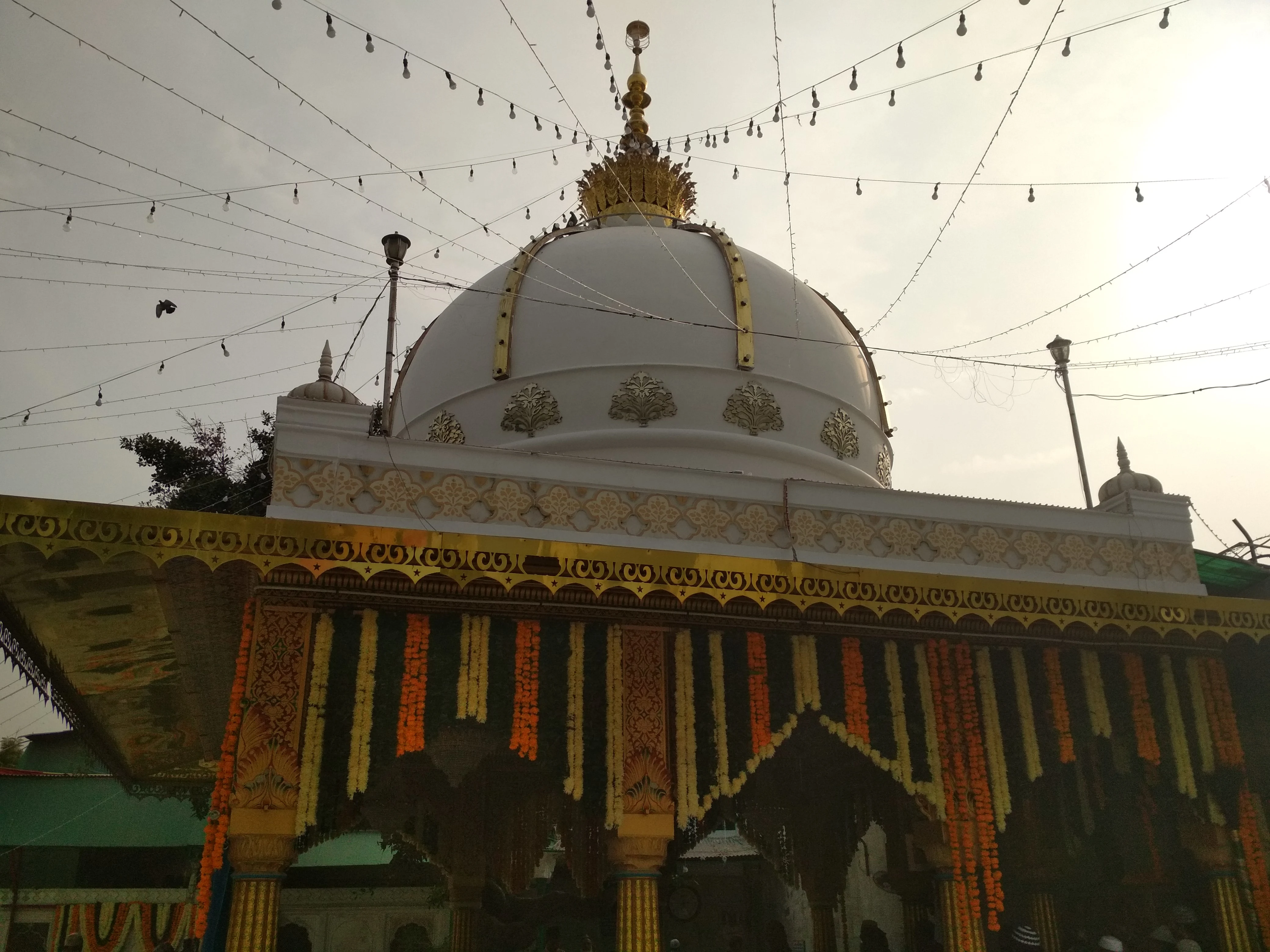
Khwaja Qutb al-Din Bakhtiyar b. Kamal al-Din Ahmad b. Musa al-Ushi al-Kaki, generally known as Qutbuddin Bakhtiar Kaki, was a Sufi of the Chishti order who settled in Delhi in the early thirteenth century, during the reign of Sultan Iltutmish. A disciple of Mu'in al-Din Chishti of Ajmer, he became the leading Sufi figure of the Delhi Sultanate's new capital in his own lifetime, declined the office of Shaikh al-Islam offered him by the sultan, and died during a session of devotional music in 1235. He is buried at Mehrauli in what is now south Delhi, close by the tower later ages came to call the Qutb Minar — a name, as an editorial note in the Tabaqat-i Nasiri takes some trouble to establish, that belongs to him rather than to the sultan Qutb al-Din Aybak who began the tower's construction.
Origins and the Two Names
He was born in the city of Ush in the Farghana valley — in present-day Kyrgyzstan — in the year 569 AH (1174 CE) according to most accounts, though some sources give 582 AH (1186 CE). His father was a sayyid, a descendant of the Imam Ja'far al-Sadiq. Qutb al-Din lost his father at eighteen months old and was raised by his mother.
Two nicknames attached to him, and the tradition explains both. "Kaki" is said to derive from an episode in which, needing provisions himself or wishing to help poor families prepare a daughter's dowry, he produced dry biscuits from beneath his prayer rug that turned to gold — kaki being the word for such biscuits, and the name became permanently attached to him. "Bahtiyar" ("fortunate") is explained by a story that at the age of five he was led to his first school by the figure of Khidr, and that his teacher, noticing this, remarked, "Child, how fortunate you are that Khidr himself brought you here" — after which Bahtiyar became his name.
He studied the religious sciences at that school under a teacher named Abu Hafs al-Ushi, and alongside his formal education began to take an interest in Sufism, for which he set out on his travels.
Discipleship under Mu'in al-Din Chishti
According to Qutb al-Din's own work Dalil al-Arifin, as discussed in the Diyanet/TDV İslâm Ansiklopedisi's account of his life, he pledged allegiance to the head of the Chishti order, Khwaja Mu'in al-Din Hasan al-Chishti, at the mosque of Abu'l-Lays al-Samarqandi in Baghdad, and received the Sufi cloak from him there. Other reports hold that his allegiance to his master was actually given at Ush or at Isfahan rather than Baghdad, and the sources do not settle the point. While in Baghdad he is also said to have attended the gatherings of the Sufis Awhad al-Din Kirmani and Shihab al-Din al-Suhrawardi, the author of the Awarif al-Ma'arif.
When his shaikh Mu'in al-Din returned to the Indian subcontinent and settled at the Chishti order's new centre in Ajmer, Bakhtiyar resolved to follow him to India.
Multan and the Mongol Siege of 1224
On his way to India, Bakhtiyar passed through Multan, where he met Baha al-Din Zakariya, one of the leading Sufis of the period, and where he also first met the man who would become his own successor and khalifa: Farid al-Din Mas'ud, later known as Ganj-i Shakar, or Baba Farid.
While Bakhtiyar was at Multan, the Mongols began their invasion of the Indian frontier, and an army under the command of Tuluy Noyan besieged the city in 1224. Nasir al-Din Qabacha, the ruler of Multan, defended the city with every resource at his disposal for forty days, and it is recorded that he asked Shaikh Bakhtiyar to pray for the city's deliverance. Having done so, the shaikh is said to have given Qabacha an arrow and told him to shoot it at the besieging force; the following day the Mongol army lifted the siege and withdrew. Whatever the precise course of events, the episode marks the point from which Bakhtiyar's standing among the people of Multan, and with Qabacha himself, rose considerably. The Ghurid-era chronicler Minhaj al-Siraj Juzjani, in the Tabaqat-i Nasiri, likewise places Bakhtiyar at Multan "during the reign of Sultan Nasir al-Din, Kabajah [Qabacha]" before his move to Delhi, corroborating the sequence independently of the hagiographical tradition.
Delhi and Sultan Iltutmish
Bakhtiyar subsequently left Multan for Delhi, where he won the confidence of Sultan Shams al-Din Iltutmish. According to Juzjani's chronicle, such was the veneration in which he was held that Iltutmish himself came out from the city to receive him and escorted him in.
The sultan offered him appointment as Shaikh al-Islam, the senior religious office of the sultanate, but Bakhtiyar declined it, and Najm al-Din al-Sughra was appointed to the post instead. Relations between Bakhtiyar and the new Shaikh al-Islam, who resented his standing and popularity, grew strained, and Bakhtiyar wrote to his own master Mu'in al-Din asking permission to leave Delhi for Ajmer. Mu'in al-Din wrote back telling him to remain in Delhi, adding that he himself would shortly come there in person.
Bakhtiyar settled at Kilokhri, on the bank of the Yamuna near Delhi, and his disciples and companions gathered there around him. When he learned that his master had fallen ill, he travelled to Ajmer to visit him; Mu'in al-Din died some twenty days after Bakhtiyar's return to Delhi.
Death
Not long afterward, while Bakhtiyar was engaged in a session of sama — the devotional listening to music practised by the Chishti order — with a company of dervishes, a line of verse was recited to the effect that those slain by the sword of submission receive at every moment a new life from the unseen. On hearing it, Bakhtiyar fell into a state of ecstasy from which he did not recover, and he died four days later, on 14 Rabi al-Awwal 633 AH (27 November 1235 CE).
He was buried at Mehrauli in old Delhi, in the area between the Hauz-i Shamsi reservoir and the tower today called the Qutb Minar; a shrine was later built over his grave, in which his mother and sister are also buried. His tomb was for centuries a place of visitation for the Muslims of Delhi, though in later times the number of visitors gradually declined and, left without regular upkeep, the shrine fell into a state of disrepair.
The Name of the Qutb Minar
A point recorded independently in the Tabaqat-i Nasiri, in an editorial note to Raverty's translation, deserves to be set out because it corrects a very widely repeated error. The great minaret at Mehrauli, begun under Sultan Qutb al-Din Aybak and completed by Iltutmish, is popularly assumed to take its name "Qutb Minar" from Aybak himself, on the reasoning that the word qutb was sufficient evidence in itself. The note in the Tabaqat-i Nasiri states this to be incorrect: the minaret is named the "Lath of Qutb Sahib" after the saint buried nearby, "the celebrated Muhammadan saint Khwajah Qutb-ud-Din Bakht-yar Kaki." The same conclusion had already been drawn independently by a contributor to the Bengal Asiatic Journal, cited in the same note, who wrote that "the Qotb Minar has not its name from Qotb(aldyn) Aybak... but from the saint — Qotb aldyn Baktyar Kaky, who is buried not far from it." Later Delhi tradition duly styled him the "Qutb Sahib" of the city.
Legacy
Qutbuddin Bakhtiar Kaki was among the most important figures of the Chishti order and exercised real influence on the development of Sufi life in the subcontinent. He is credited with authorship of a hagiographical account of his master Mu'in al-Din Chishti, entitled Dalil al-Arifin (also known as Malfuzat-i Mu'in al-Din Chishti), and with Persian verse of his own composition. His successor and khalifa, Farid al-Din Mas'ud — Baba Farid — in turn composed a hagiographical account of Bakhtiyar himself, entitled Fawa'id al-Salikin (also known as Malfuzat-i Khwaja Qutb al-Din Bakhtiyar). Baba Farid went on to carry the Chishti order into the Punjab, establishing his own hospice at Ajodhan, and it was through that line that the order's two enduring branches in the subcontinent descended.
Historiographical Note
The fullest connected account of Bakhtiyar's life comes from the Diyanet/TDV İslâm Ansiklopedisi, which draws in turn on the hagiographical tradition — his own Dalil al-Arifin, Baba Farid's Fawa'id al-Salikin, and later biographical compilations such as Jami's Nafahat al-Uns and Dara Shikoh's Safinat al-Awliya. As with much Sufi hagiography, the miracle at Multan and the circumstances of Khidr's role in his naming are transmitted within that tradition rather than independently documented, and are reported here as its account rather than as established fact. Two points, however, are corroborated by the Tabaqat-i Nasiri, a near-contemporary chronicle of the Delhi sultans held in the approved library and unconnected to the hagiographical literature: his presence at Multan under Nasir al-Din Qabacha before his move to Delhi, and the derivation of the Qutb Minar's popular name from his grave rather than from Qutb al-Din Aybak. The date of his birth is uncertain between 569 AH and 582 AH, and is reported here as the sources leave it, without resolving the difference.
References and Further Reading
Primary Islamic Sources
- Bakhtiyar, Qutb al-Din. Dalil al-Arifin [also known as Malfuzat-i Mu'in al-Din Chishti] — Bakhtiyar's own account of his allegiance to Mu'in al-Din Chishti, as discussed in the Diyanet/TDV İslâm Ansiklopedisi entry cited below; not independently consulted for this article.
- Farid al-Din Mas'ud (Baba Farid). Fawa'id al-Salikin [also known as Malfuzat-i Khwaja Qutb al-Din Bakhtiyar] — Baba Farid's hagiographical account of his own master Bakhtiyar, as discussed in the same Diyanet entry; not independently consulted for this article.
Classical Islamic Sources
- Juzjani, Minhaj al-Siraj. Tabaqat-i Nasiri, translated by H.G. Raverty. London, 1881. [approved PDF library:
sources/study/] — the near-contemporary Delhi Sultanate chronicle corroborating Bakhtiyar's presence at Multan under Nasir al-Din Qabacha; the editorial note appended to Raverty's translation, discussing the derivation of the Qutb Minar's name from Bakhtiyar's grave and giving his death date as 24 Rabi al-Awwal 633 AH, his residence at Kilokhri, and Iltutmish's reception of him, is also drawn on directly.
Academic and Scholarly Sources
- Konukçu, Enver. "KUTBÜDDİN BAHTİYÂR." TDV İslâm Ansiklopedisi. Istanbul: Türkiye Diyanet Vakfı İslâm Araştırmaları Merkezi, 2002, vol. 26. [approved external source: islamansiklopedisi.org.tr] — the principal source for this article, drawing in turn on the hagiographical tradition named above.
Further Reading
- Rizvi, Sayyid Athar Abbas. A History of Sufism in India. New Delhi: Munshiram Manoharlal, 1978. — for the reader's further research into the wider Chishti tradition; not consulted for this article.
Mentioned In
1 article references this topic