The Ahl-i Hadis Movement
A nineteenth-century Indian Sunni movement that set aside the authority of the historic schools of law in favour of direct recourse to the Qur'an and hadith. Led by scholars at Delhi and Bhopal, it was marked by its manner of prayer and an austere standard of interpretation.
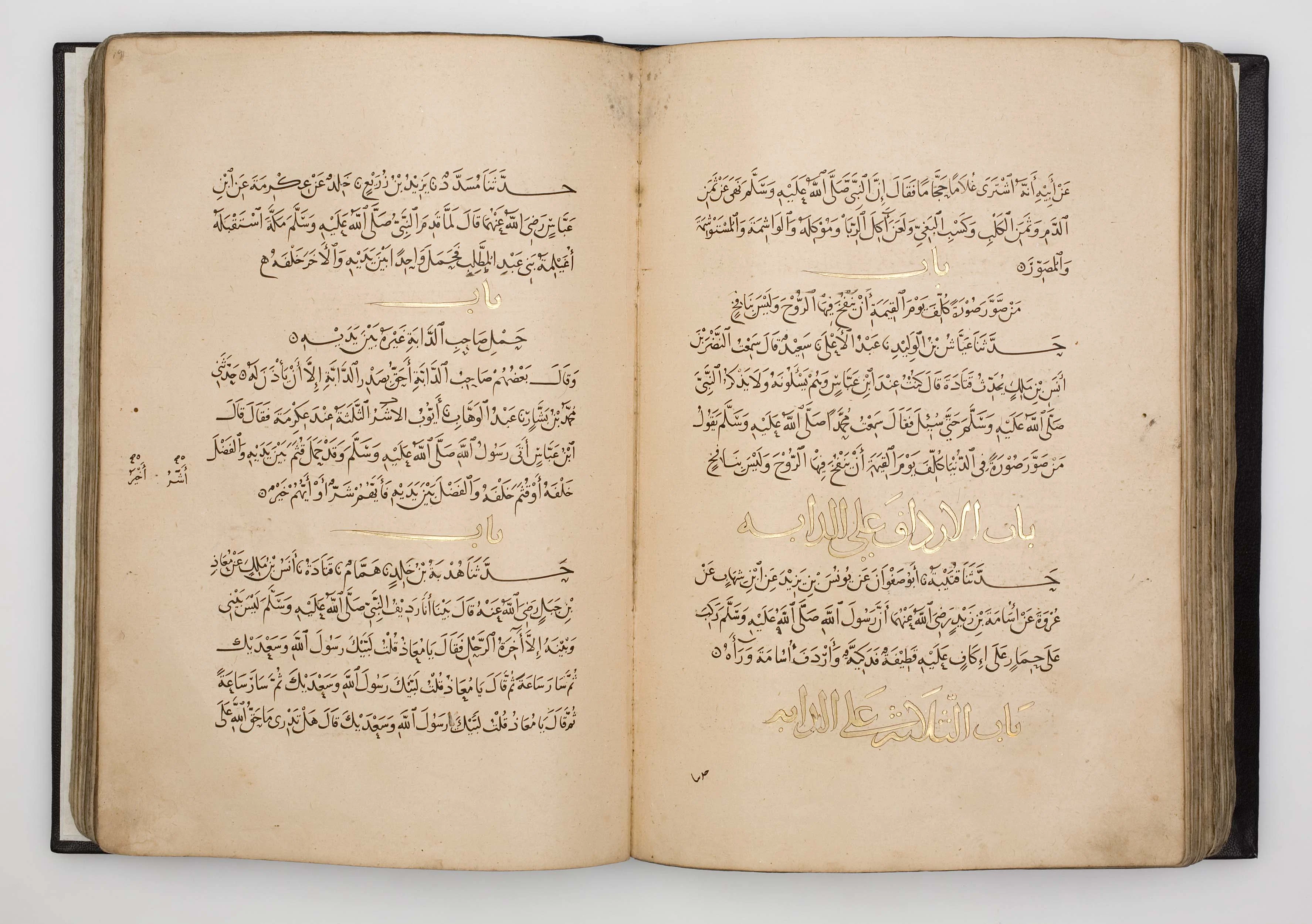
The Ahl-i Hadis — "the People of Hadith" — were one of three Sunni tendencies that took distinct shape in northern India in the second half of the nineteenth century, alongside the Deobandi and Barelvi movements. What set them apart from both was a jurisprudential position: they denied the binding authority of the historic schools of law and held that a Muslim should derive practice directly from the Qur'an and the hadith.
Barbara Metcalf, whose study of the period is the principal source for this article, places them close to the Deobandis in purpose and far from them in method. The Ahl-i Hadis, she writes, like the Deobandis, were committed to revitalisation of the Law by reform of custom. The divergence lay in what they were prepared to set aside in pursuing it.
The Name
The name was a deliberate claim to lineage. As the position of those who rejected the law schools hardened in the later nineteenth century, they adopted the designation Ahl-i Hadis in order to associate themselves with the classical Ahl al-Hadith, the early group that had stressed the centrality of the hadith texts against the developing legal traditions. Metcalf notes an instructive difference between the two: the classical group's emphasis was eventually absorbed into the law schools themselves, whereas the nineteenth-century movement attacked those schools and so set itself against what had by then become mainstream Sunni practice.
The name appears to have been first used in writing by Sayyid Nazir Husain in 1864. An earlier self-designation, Muhammadi, was adopted for a time but soon dropped under the criticism that it raised the relation with the Prophet above the relation with God.
Their opponents used a different term. Because they were held to follow none of the four schools, they were called ghair-muqallid — those who do not practise taqlid, conformity to an established school — and Metcalf's glossary defines the term as one who does not follow the historic law schools but consults the Qur'an and hadith.
Doctrine and Method
The rejection of taqlid
The movement did not claim to work from different sources than the classical jurists. Its scholars accepted the same four — the Qur'an, hadith, analogical reasoning and consensus — but construed the last two so narrowly as to change the character of the whole enterprise. Metcalf's assessment is that they so wanted precision in interpretation that the scope they gave to these last two was very narrow. Analogy was admissible only where no explicit ruling existed and the analogy was exact; consensus was confined to what all Muslims agree upon, such as the obligation of the five pillars.
Their reading of texts was correspondingly literal. They sought single determinate meanings, particularly shunned the esoteric and symbolic interpretations offered by mystics, and denied that any verse of the Qur'an had been abrogated. Opponents called them zahirparast, worshippers of the external sense.
Two inversions of the standard vocabulary show the confidence of the position. One scholar argued that the true muqallid imitates not the law books but the behaviour of the founding imams, and therefore follows hadith; another claimed that the Ahl-i Hadis were the real Hanafis, since they conformed to the practice of Abu Hanifa himself.
The individual believer
The practical consequence was a heavy emphasis on individual responsibility. They opposed the Deobandi principle of taqlid-i shakhsi, the requirement that a believer follow not only one school but one scholar's reading of it. Their concern, in Metcalf's words, was with the religious behaviour of the spiritual elite, who were called on to leave behind all intermediaries and guides other than that of the text itself.
This is precisely where the Deobandis criticised them. The charge was that their position placed too great a burden on the individual — workable for the learned, but not for ordinary people. Metcalf judges the Deobandis to have been the least exclusive of the three groups in their teaching, presenting a repertoire of beliefs suitable for the capacity of both the spiritual elite and of ordinary people.
Sufism
Unlike either the Deobandis or the Barelvis, the Ahl-i Hadis discouraged the institutional forms of Sufism. This did not amount in every case to a rejection of Sufism as such: Siddiq Hasan Khan said that he was a Naqshbandi, but insisted that Sufism be wholly private.
Their attitude to the saints requires care, because it was not simple hostility. They prohibited the shrine festivals and the devotional singing associated with them, opposing in particular the monthly commemoration of Abd al-Qadir al-Jilani, and they prohibited all pilgrimage — even, Metcalf records, that to the grave of the Prophet at Medina. But they insisted that they respected the great saints themselves. One of their leading figures wrote of Abd al-Qadir's perfections, and some claimed him as an Ahl-i Hadis; it was the practices of his followers that they deplored.
Their relation to the Prophet they understood as direct and textual rather than mediated. The Ahl-i Hadis, Metcalf writes, felt they had a special access to the Prophet because of their familiarity with hadith, and a later scholar credited them with a rebirth from the heart of love for the Prophet.
Practice
The movement was visible in the mosque, and this was the aspect of it that ordinary Muslims encountered. Its adherents were readily recognisable by their style of prayer and cut of beard; they prayed separately and often had their own mosques.
Four practices marked them out. They said "amen" aloud rather than silently (amin bil-jahr); they raised their hands at the bowing (raf-i yadain); they folded their hands above the navel; and they recited the Fatiha aloud along with the prayer leader. The Hanafi objection was that these practices rested on reports that had been abrogated. The Ahl-i Hadis denied it, and claimed that great Muslims of the past — among them Shah Waliullah — had prayed exactly as they did.
The stakes were not merely formal. Metcalf notes that the Ahl-i Hadis in particular feared harm to their own prayer from praying behind someone whose practice was defective, which is why the question of who might lead prayer in which mosque became a matter of litigation.
Beyond prayer they were, in her account, resolute in fulfilling all the fundamental requirements of the faith, encouraging performance of the pilgrimage and scrupulously rendering the required alms.
Leading Figures
Sayyid Nazir Husain of Delhi
Sayyid Nazir Husain, who died in 1902, was the movement's central scholarly authority in Delhi. He was trained at the reformist centre of Sadiqpur in Bihar, then at Chiryakot and at Allahabad, before coming to Delhi, where he remained for the rest of his life. He studied there under Shah Muhammad Ishaq, and the Ahl-i Hadis held him to be Ishaq's intellectual heir in a line running back through Shah Abdul Aziz to Shah Waliullah — a claim scholars outside the movement rejected.
He first taught at a mosque in Delhi, marrying the daughter of its guardian; after 1857 his son built him a mosque and madrasa. He was accorded the title Shaikh al-Kull because so many of the Ahl-i Hadis held certificates in hadith from him. He published a collection of his legal opinions and a celebrated refutation of taqlid, and his Urdu work Miyar al-Haqq was written for a scholarly readership.
A visitor who met him in the mid-1890s described him as cheerful and fond of poetry, giving a daily audience and leading the prayer, and showing marked deference to the surviving descendants of the Mughals — standing in their presence and offering the customary gift. Metcalf reads him as one of those who still sustained the style of the elite ulama who had worked through the nobles and the courts.
Nawwab Siddiq Hasan Khan of Bhopal
Siddiq Hasan Khan came originally from Qanauj. His family had served the rulers of Oudh and, like much of that court, had become Shi'i; his father, impressed by students of Shah Abdul Aziz, travelled to Delhi, left Shi'ism and became Abdul Aziz's disciple.
His own career was made at the court of Bhopal, and Metcalf's account of how is candid: he arrived in Bhopal penniless and established himself not by the modest job he secured but by his opportune marriages — first to the daughter of the prime minister and then to the widowed ruler herself. Her reading is that such stratagems could secure individual success, but that the success was fragile and did not mitigate an abiding sense of social dislocation. His writings, she notes, carry a pervasive pessimism and a fear of the end of the world, which he expected at the turn of the fourteenth Islamic century.
From Bhopal he exercised considerable influence. He founded madrasas, including one for orphans, established his own printing press and distributed his books free of charge in Bhopal and through agents in British India. He prohibited elaborate court ceremonies, and brought Ahl-i Hadis scholars from northern India into the state bureaucracy, one of them becoming director of the congregational mosque and supervisor of all state madrasas.
Zaman's account adds two things to this picture. The first is his education: Siddiq Hasan Khan had studied at al-Azhar, which places his formation in Cairo as well as in India. The second, and the more consequential, is the scale and direction of his publishing. Beyond his own writings on hadith, Qur'anic exegesis and law, he arranged for classical works of hadith to be printed and widely circulated — among them Fath al-Bari, Ibn Hajar's commentary on the Sahih of al-Bukhari, and al-Shawkani's Nayl al-Awtar. His distribution network, on Zaman's account, reached well past British India, with agents in Cairo, Alexandria, Beirut, Jeddah and Constantinople.
This is a significant point about the movement's method rather than merely about one man's career. A tendency that rested its authority on direct access to the hadith needed the hadith literature itself to be physically available, and putting the great classical commentaries into print was a way of arming its own case. Zaman notes that the arrival of such works in print, from presses in India and the Middle East alike, put them before the ulama in numbers for the first time, and that they served both as ammunition and as models for the commentaries the scholars of the period went on to write themselves.
His literary output was large, though the counts given for it differ. One tally in Metcalf's account gives eighty-four works in Urdu, fifty-four in Arabic — seventeen of them on hadith — and forty-three in Persian; elsewhere she reports a figure of some 223 titles. His biographer judged the works limited in range and often excerpted from others, and found him not tactful but rigid.
The connection with Shah Waliullah
The movement's own account of its descent was central to its self-understanding. Above all, Metcalf writes, they argued that they alone continued the tradition of Shah Waliullah. Many of its scholars came from families drawn into the reformist current by Shah Waliullah and his successors, and its network in the eastern districts was built by scholars associated with the earlier movement of Sayyid Ahmad Barelwi — one of whose deputies was decisive in spreading reformist ideas in the east, and whose student made the town of Mau, near Azamgarh, a celebrated Ahl-i Hadis centre.
Metcalf considers the claim strong but qualified. Shah Waliullah had indeed brought back from the Hijaz both an emphasis on hadith and the principle of its primacy over the rulings of the law schools. But his position, she argues, was not a dogmatic one, and was balanced by an eclectic willingness to accept the rulings of the schools and to use analogy and reasoning; none of the leading ulama of the late nineteenth century, in her judgement, continued that broadly based orientation.
Muhammad Qasim Zaman's study of the modern ulama sets the descent in a wider frame and names a second eighteenth-century source. On his account the movement's scholars admired the work of Ibn Taymiyya, who died in 1328, and were shaped by two later figures in particular: Shah Waliullah, who died in 1762, and al-Shawkani of Yemen, who died in 1839. What the two had in common, and what mattered for the Ahl-i Hadis, was that each had contributed substantially to the study of hadith and each had insisted on the necessity of ijtihad, the independent derivation of rulings from the sources. Zaman also records an affinity of orientation with the reformers of the Arabian peninsula, which bears on the question of the Wahhabi label discussed below. The Yemeni line of descent is worth noting because it shows the movement drawing on a hadith-centred scholarship that was neither Indian nor Arabian in origin.
Others
Among the movement's other figures Metcalf names a scholar who was Sayyid Ahmad Khan's administrative successor at Aligarh and who wrote its principal exposition of the jurisprudential case; the editor of an influential Lahore journal; a leading teacher in the Punjab, blinded as a child; an Afghan-born scholar expelled three times by the amir who settled at Amritsar; and a former Deoband student who organised an All-India Ahl-i Hadith Conference at Delhi in 1912. Another former Deoband student founded the movement's madrasa at Arah in Bihar, and Metcalf's point about him is that the impulse to Deobandi-style institutional organisation came from that quarter.
A splinter group, the Ahl-i Qur'an, went further still in setting aside the hadith, and its influence was largely confined to the Punjab.
Social Composition
Metcalf's most distinctive claim about the movement concerns who belonged to it. United by aristocratic social background and a high and austere standard of religious interpretation, she writes, the Ahl-i Hadis were clearly a cohesive sect; and at least initially they directed their reform to the educated and the well born. Their leadership, in her summary, was from the well born.
The evidence comes from a biographical dictionary of the movement's scholars. A fifth of those listed for Delhi and the United Provinces are noted as sayyids — a strikingly high proportion of claimed descendants of the Prophet — and a further tenth came from socially eminent families, including descendants of the Mughals, of the nawwabs of Oudh, and wealthy landholders. About a quarter of the whole were in government or princely service, all in high positions.
To this Metcalf adds a qualification on which she builds a good deal: many, even of those who had found such employment, were of families who had fallen on poor times. It is downward mobility rather than simple eminence that she takes to characterise the movement's constituency.
They took pride in their standing as intellectuals, and Metcalf considers the claim a valid one. Three-quarters of the scholars in their biographical dictionary were teachers and almost half were writers, and many continued to write in Persian and Arabic rather than in Urdu — a contrast with the Deobandi strategy of reaching a wide readership in the vernacular.
Geographically they were the least concentrated of the three movements, dispersed across Delhi, the towns of the Punjab, the eastern districts of the United Provinces and Bhopal, with ties to similar groups in Afghanistan and the Hijaz. Kinship could carry whole groups: an entire extended family at Aligarh became Ahl-i Hadis for a time under one of its members.
Relations with the State
Political stance
Of the three movements, Metcalf judges the Ahl-i Hadis the most opposed of all these groups to the legitimacy of British rule. Her reasons are their ties to Muslim countries, their close association with Muslim princes, and their literal acceptance of the legitimacy of jihad — though she notes individual exceptions.
The Wahhabi label
They were widely described by others as Wahhabis, and the label brought them serious difficulty. Metcalf's account of the substance behind it is balanced. They did share an orientation with the reformers of the Hijaz: they valued Ibn Taymiyya and translated him into Urdu, met Arabian scholars on pilgrimage, read their books, and associated with émigré Arabian ulama at the Bhopal court.
But members of the Ahl-i Hadis often denied the influence of the so-called Arabian Wahhabis, pointing out that the Arabians were Hanbali in law where they themselves were not, and doing so, Metcalf notes, because they did not want to be tainted by their reputation for disruptive political action. They stressed instead their descent from Shah Waliullah, and her own conclusion is that indigenous influence, more than the Arabian or the historical, was the decisive one in the formation of their thought.
Trials and rehabilitation
Government suspicion produced concrete consequences. After a campaign against the last of the frontier fighters in 1863, the authorities moved against what they took to be the supply network supporting them, and trials were held at Ambala and Patna in 1864 and 1865, continuing intermittently to 1871. Among those imprisoned was Sayyid Nazir Husain, who was later, his good faith proven, awarded an honorific title.
Siddiq Hasan Khan's fall was the most dramatic case. The British singled him out as an exponent of the doctrine of jihad, and he did present the classical position without the apologetic glosses that had become common. He wrote a work in 1884 to prove that the Ahl-i Hadis were loyal, citing an official testimonial, noting Bhopal's assistance to the British in Egypt, and invoking the obligation to accept a ruler who provides security. Metcalf's own judgement is that he was probably less distrusted for sedition than for his activities as consort within the Bhopal court. In 1884 the Resident deprived him of all his titles and official responsibilities on grounds of disloyalty, which the movement read as persecution. Metcalf's text gives the year of his demotion as both 1884 and 1885, and the fuller account is followed here.
The movement then set about removing the label itself. In 1887 the editor of one of its journals led a campaign that persuaded the Punjab government to drop the word Wahhabi from all official correspondence, and two years later he obtained the same policy from provincial governments across India. When the trials were concluded, Metcalf records, political suspicion of the movement effectively came to an end.
The mosque cases
The movement's most consequential legal victories concerned access to mosques. Three decisions of the Privy Council in the late nineteenth century on mosque usage were, in Metcalf's assessment, although hailed as exemplary decisions of neutrality, triumphs for the Ahl-i Hadis. The question in each was whether they could be excluded, and all followed a precedent set in 1889 by a judge of the Allahabad High Court, who held that a mosque cannot be dedicated or appropriated exclusively to any particular school or sect of Sunni Muslims, that members of the movement were Muslims entitled to worship there, and that while "amen" must be said there is no rule as to whether it be said loudly or quietly.
Lower courts, motivated by the fear of disorder, had usually ruled for the Hanafis on the precedent of previous practice, and local arrangements varied: at Meerut in 1892 the magistrate simply divided the city's mosques, allotting five to the Ahl-i Hadis; at Agra in 1889 a ruling that "amen" was not to be said aloud led them to cease using the mosque in question.
They were suspect not only in India. Metcalf records that Nazir Husain was called before officials at Mecca as well, and had to answer accusations concerning his positions on marriage, alms and dietary law.
Relations with the Other Movements
The Deobandis criticised them more sharply than they criticised other ulama, and Metcalf's suggested explanation is that they came so close to the Deobandis in their common commitment to reform. Rashid Ahmad Gangohi's device was to treat them as Shafi'i, which at once denied their claim to be the followers of hadith and conceded their standing as Muslims of a recognised school; Metcalf notes that the label was chosen in order to define the rivalry as a difference between schools of law.
Neither the Ahl-i Hadis nor the Barelvis were excluded from common prayer by the Deobandis, who judged both to deviate only in practice and not in belief. From the other direction, the Barelvi ulama regularly accused both the Deobandis and the Ahl-i Hadis of unbelief and of political disloyalty.
Zaman traces one further consequence of the disagreement, and it is a scholarly rather than a social one. The exchange between the two tendencies was carried on largely through commentaries on the classical hadith collections, a genre well suited to it because each side could argue its position while appearing simply to explain the text. Scholars of the Ahl-i Hadis were prominent among those writing on hadith in the late nineteenth and early twentieth centuries, and many wrote in Arabic — partly to demonstrate their competence, and partly to establish a working relationship with scholars elsewhere in the Muslim world. The best-known such work from the movement is the Tuhfat al-Ahwadhi, an Arabic commentary on the Jami' of al-Tirmidhi by Muhammad Abd al-Rahman Mubarakpuri, who died in 1935; alongside elucidating al-Tirmidhi's traditions it engages the Hanafi readings of them throughout.
The Deobandi reply came on the same ground and at greater length. Zaman describes the I'la al-Sunan of Maulana Zafar Ahmad Usmani, a work of twenty-one volumes, as the most ambitious response the Deobandis made. It is not a commentary on any single collection but a treatment of the prophetic traditions bearing on legal questions generally, and its stated purpose was to show that Hanafi legal doctrine rested on those traditions rather than on opinion or analogy alone. It took two decades to complete. That two of the largest works of hadith scholarship produced in twentieth-century South Asia should have arisen from this disagreement is the clearest measure of how much intellectual effort it absorbed.
Metcalf's comparative summary of the three movements' constituencies is that the Deobandis and the Ahl-i Hadis, who rejected customary practice and local cults, appealed to the more urban and educated, whereas Barelvi support lay largely among the rural and less well educated. And her judgement on the three together is that, for all the bitterness of the controversy, they perceived themselves as radically different from one another while in fact carrying out a common work of religious redefinition — and that all came to share the modern institutional forms the Deobandis had pioneered, so that formal schools, annual conferences and preaching deputations were standard among all of them by the beginning of the twentieth century.
Institutions in the Twentieth Century
Metcalf's study closes at 1900, and the movement's later institutional history has to be taken from elsewhere. Zaman's account carries it forward, and the pattern he describes is one of formal seminaries with standing links to universities in Saudi Arabia — an outward orientation consistent with the movement's long-standing ties to the Hijaz, and with the affinity of religious orientation discussed above.
The principal Ahl-i Hadis institution in Pakistan is the Jami'a Salafiyya at Faisalabad, established in 1955. Zaman records it as affiliated with three Saudi universities: the Islamic University of Medina, the Imam Muhammad ibn Saud Islamic University at Riyadh, and Umm al-Qura University at Mecca. Students are sent from it to Saudi Arabia for advanced study, and many return to teach there or in other madrasas of the movement. A second seminary of the same name was established at Islamabad on land allotted for the purpose by the government of Pakistan.
In India the corresponding institution is the Jami'a Salafiyya of Banaras, a large complex housing five hundred students, inaugurated in 1966 by the Saudi ambassador and financed in part from Saudi Arabia.
What these institutions represent is the completion of a process Metcalf identified in its early stages. The Ahl-i Hadis had begun as a dispersed network of scholars bound by family, teaching lineage and correspondence, with its organisational impetus arriving late and, as she notes, from men who had passed through Deoband. By the second half of the twentieth century it possessed what the Deobandis had built two generations earlier: permanent seminaries with fixed curricula, a defined succession of teachers, and institutional relationships reaching beyond the subcontinent.
References and Further Reading
Primary Islamic Sources
- The Qur'an — the first of the two sources to which the movement confined its derivation of practice, read on the principle that no verse had been abrogated
- Hadith — the second, and the source of the movement's name; familiarity with the collections was the basis of its claim to direct access to the Prophet's practice
- Sayyid Nazir Husain, Miyar al-Haqq — his Urdu work for a scholarly readership
- Sayyid Nazir Husain, published fatawa and his refutation of taqlid — the movement's principal statements of its jurisprudential position
- Siddiq Hasan Khan, Tarjuman-i Wahhabiyyat (1884) — written to demonstrate the loyalty of the Ahl-i Hadis to the government
Classical Islamic Sources
- The classical Ahl al-Hadith — the early group whose emphasis on the primacy of the hadith texts the movement claimed to continue, and from which it took its name
- Ibn Taymiyya — valued by the movement's scholars and translated by them into Urdu
- Shah Waliullah (1703–1762) — the scholar from whom the movement claimed descent, on the strength of his emphasis on hadith and its primacy over the rulings of the schools; Metcalf accepts the claim as strong but notes that his own position was less dogmatic than theirs
- Abu Hanifa — invoked against the Hanafis by the argument that conformity to his practice, rather than to the later law books, was the true form of taqlid
Academic and Scholarly Sources
- Metcalf, Barbara Daly. Islamic Revival in British India: Deoband, 1860-1900. Princeton: Princeton University Press. Chapter VII, on the Ahl-i Hadis and the Barelwis, is the source for the nineteenth-century material throughout: for the movement's name and doctrinal position, its distinctive practices in prayer, the careers of Nazir Husain and Siddiq Hasan Khan, its claimed descent from Shah Waliullah, its social composition, its relations with the colonial state including the trials and the mosque litigation, and its relations with the Deobandi and Barelvi movements.
- The Ulama in Contemporary Islam: Custodians of Change by Muhammad Qasim Zaman — consulted for the material Metcalf's period does not reach and for the intellectual genealogy: the movement's rejection of taqlid and its insistence on the direct sufficiency of the Qur'an and hadith, the descent from Ibn Taymiyya together with Shah Waliullah and al-Shawkani of Yemen and their shared emphasis on ijtihad, Siddiq Hasan Khan's Azhar education and his programme for printing and distributing the classical hadith literature, the movement's use of Arabic to reach scholars abroad, the commentaries of Mubarakpuri and the Deobandi reply in Zafar Ahmad Usmani's I'la al-Sunan, and the twentieth-century seminaries at Faisalabad, Islamabad and Banaras with their Saudi university affiliations.
Further Reading
- Naushaharawi, Tarajim-i Ulama-yi Hadis-i Hind — the biographical dictionary of the movement's scholars on which Metcalf's account of its social composition rests; not consulted directly for this article.
- Nawwab Sultan Jahan Begum. An Account of My Life — the Bhopal court memoir Metcalf draws on for Siddiq Hasan Khan's career there.
- The articles on the Deobandi movement and the Barelvi movement — the two other Sunni tendencies of the same decades, in relation to which the Ahl-i Hadis defined their position.
More from South Asian Islam
Darul Uloom Deoband: The Seminary and the School of Thought
Darul Uloom Deoband is an Islamic seminary founded in northern India in 1866 or 1867 and the origin of the Deobandi school of thought. Its innovation was institutional: it carried the traditional religious sciences in the form of a modern school funded by public subscription.
Delhi Sultanate: Islamic Rule in Medieval India
The Delhi Sultanate (1206-1526 CE) was a series of five successive Islamic dynasties that ruled northern India for over three centuries, establishing Muslim political power in the subcontinent, creating a unique Indo-Islamic culture, and leaving an enduring architectural and administrative legacy.
Mufti Kifayatullah Dehlawi
An Indian Hanafi jurist widely titled Mufti-e-Azam, or Grand Mufti of India. He led Madrasa Aminia in Delhi for nearly half a century, was a founder and twice president of the Jamiat Ulama-i-Hind, and left some four and a half thousand legal rulings collected as Kifayat al-Mufti.
Muhammad Idris Kandhlawi
A scholar of hadith and Qur'anic commentary who taught at Darul Uloom Deoband, Hyderabad State, Bahawalpur and Lahore. He wrote an eight-volume Urdu tafsir, an Arabic commentary on the Mishkat al-Masabih, and a four-volume Urdu life of the Prophet.