Abu Ubaydah ibn al-Jarrah
Abu Ubaydah ibn al-Jarrah (583-639 CE), known as 'Amin al-Ummah' (Trustee of the Nation), one of the ten companions promised Paradise and the supreme commander of Muslim forces in Syria, renowned for his trustworthiness, humility, and military leadership during the Islamic conquests.
Abu Ubaydah ibn al-Jarrah (583-639 CE), known by the honorific title "Amin al-Ummah" (Trustee of the Nation), stands as one of the most trusted and beloved companions of Prophet Muhammad and the commander who held overall charge of the Muslim forces in Syria during the conquests under Umar ibn al-Khattab. He is named among the ten companions given glad tidings of Paradise, and he died in the plague that swept Syria in 18 AH while refusing to leave the army he commanded.
Name and Family
The biographical literature gives his name as Amir ibn Abdullah ibn al-Jarrah, of the Banu al-Harith ibn Fihr, a clan of the Quraysh. He is known throughout the sources by his kunya, Abu Ubaydah. His year of birth is given as 583 CE in the later biographical works, though the early material does not establish it.
Islam and the Meccan Years
Abu Ubaydah was among the earliest to accept Islam in Mecca, and he is named in the lists of those who emigrated to Abyssinia when the Quraysh pressure on the small community intensified. Beyond his precedence in Islam and his participation in that emigration, the early sources record little of his Meccan years, and the details often supplied for this period are not established. They are not carried here.
The Title Amin al-Ummah
The honorific by which he is known — Amin al-Ummah, the Trustee of the Community — rests on a prophetic statement recorded in Sahih al-Bukhari and Sahih Muslim: that every community has a trustee, and that the trustee of this community is Abu Ubaydah ibn al-Jarrah. The significance of the term, and the weight it carried given that the Prophet himself had been called al-Amin before Islam, is discussed further below.
He is also named in the report listing the ten companions given glad tidings of Paradise, transmitted in Jami' at-Tirmidhi 3747 and in Sunan Abu Dawud. That report is a prophetic statement rather than a passage of revelation, and it is not among the material in the two Sahihayn; the hadith scholars grade its chain sound.
Uhud
Abu Ubaydah was present at Badr and at the campaigns that followed. The episode most often associated with him belongs to Uhud in 3 AH, where two rings of the Prophet's mail had driven into his cheek. Ibn Ishaq reports that Abu Ubaydah drew them out with his teeth, losing two of his own front teeth in doing so. The account belongs to the sira literature rather than to the sound hadith collections, and is recorded here on that basis.
Under Abu Bakr
Abu Ubaydah was present at the gathering at Saqifa Bani Sa'ida following the Prophet's death, at which Abu Bakr was acknowledged as caliph. He served under Abu Bakr through the campaigns that opened the Syrian front, and it was under Umar that he was given overall command there.
Umar is reported to have said, when considering the succession during his final illness, that he would have appointed Abu Ubaydah had he been alive. The remark is transmitted in the biographical literature and is reported here as such.
What the Sources Do Not Establish
A considerable body of writing about Abu Ubaydah does not derive from the early material, and this article omits it rather than presenting it with qualifying language. His year of birth is not recorded, and consequently neither is his age at any point in his life. Nothing reliable survives about his character or temperament before Islam, nor about the circumstances and timing of his conversion beyond the fact of his precedence among the earliest Muslims. Accounts of personal instruction he is said to have received from the Prophet in strategy, administration or leadership belong to later literature, as do the specific commands attributed to him during the Prophet's lifetime beyond his presence at the major engagements. What follows rests on the early sources alone, and is correspondingly shorter than the popular accounts.
The Conquest of Syria Under Abu Ubaydah
Supreme Commander
Abu Ubaydah's most significant historical achievement was his role as the supreme commander of the Muslim forces in Syria (the Levant) during the great conquests of Umar ibn al-Khattab's caliphate. When Umar removed Khalid ibn al-Walid from overall command of the Syrian front, it was Abu Ubaydah who was appointed in his place. Umar's reasons are not stated in the sources, and the explanations offered for the decision belong to later interpretation rather than to the record; none is asserted here.
The transfer of command was handled with remarkable discretion. According to the sources, the letter of appointment reached Abu Ubaydah during the campaign, but he delayed informing Khalid until the immediate military situation was resolved — not wanting to disrupt operations or to humiliate Khalid in front of the army. This diplomatic handling of a potentially explosive situation demonstrated exactly the qualities that had earned Abu Ubaydah the title "Trustee of the Ummah": prudence, selflessness, and concern for the collective good over personal advancement.
Under Abu Ubaydah's overall command the Muslim forces took the major cities of Syria in succession. Damascus, one of the great cities of the Roman East, fell after a siege. Homs, ancient Emesa, followed as the strategic centre of the interior, and Antioch — the former capital of the Roman eastern provinces and one of the largest cities of the empire — after it. The coastal towns, Sidon and Beirut among them, were reduced in the same period, which mattered strategically because they were the points at which a Byzantine counter-landing could be supported.
Jerusalem was the exception in its handling. Abu Ubaydah's forces surrounded the city, but its surrender was made to Umar in person, who travelled from Medina to receive it; Abu Ubaydah received the city's delegation alongside the caliph. The decision to have the caliph accept the surrender of that particular city, rather than the field commander, is the clearest indication in the campaign of how its significance was understood at the time.
The Relationship with Khalid
The working relationship between Abu Ubaydah (the overall commander) and Khalid (the tactical genius who was now technically his subordinate) has been the subject of much discussion. The sources indicate that Abu Ubaydah treated Khalid with respect and gave him considerable tactical autonomy, recognizing that Khalid's battlefield abilities exceeded his own. For his part, Khalid accepted his demotion with grace — at least publicly — and continued to serve effectively under Abu Ubaydah's authority.
This arrangement — the humble administrator commanding the brilliant warrior — was characteristic of the Rashidun period's approach to leadership. Abu Ubaydah was not the best tactician in the army, but he was the most trusted, the most even-tempered, and the most likely to hold diverse factions together. His command was about coordination, morale, and governance rather than tactical brilliance on the battlefield.
The Plague of Amwas and Abu Ubaydah's Death
The Plague in Syria
In 639 CE (18 AH), a devastating plague struck Syria — the Plague of Amwas (Ta'un Amwas), named for the village of Amwas (Emmaus) in Palestine where it was first recorded. The epidemic swept through the Muslim army and the general population, killing thousands. Among its victims were many senior companions who had settled in Syria during the conquest, including Abu Ubaydah himself.
When Umar learned of the plague, he traveled from Medina toward Syria but stopped at Sargh (on the border) after consulting with the companions and recalling the Prophet's instruction (transmitted by Abd al-Rahman ibn Awf) that one should neither enter a land where plague had broken out nor flee from a land in which one was already present. Umar sent word to Abu Ubaydah to leave Syria and come to Medina — but Abu Ubaydah, understanding that this was an attempt to save his life, refused to abandon his army.
Abu Ubaydah's Final Address
When Abu Ubaydah contracted the plague, he gathered the remaining Muslim troops and delivered a final address. He reportedly told them: "I advise you with matters that, if you follow them, will keep you on the path of goodness. Establish prayer, fast during Ramadan, give charity, perform Hajj and Umrah, command one another to good, counsel your leaders sincerely, and do not let the world deceive you." He then prayed: "O God, give Abu Ubaydah his share [of plague, i.e., let him die as a martyr from it]."
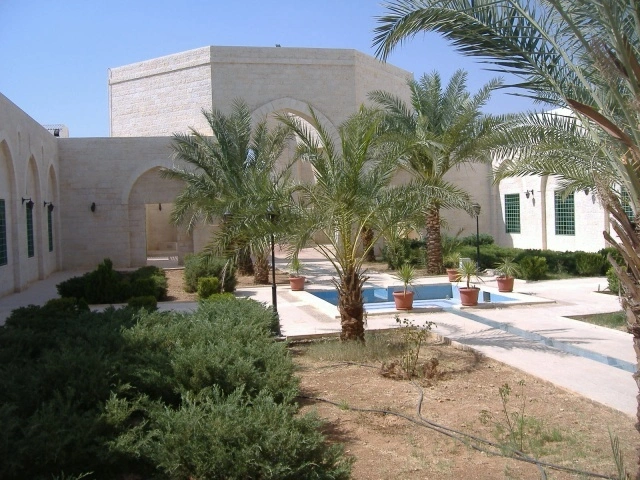
He died shortly afterward, in 639 CE (18 AH), at approximately fifty-eight years of age. He was buried in the Jordan Valley, and his grave in the village of Deir Alla (or nearby) became a known site. The death of Abu Ubaydah — along with the deaths of Mu'adh ibn Jabal, Yazid ibn Abi Sufyan, and other senior commanders in the same plague — was a devastating loss for the Muslim community and particularly for the governance of newly conquered Syria.
The Prophet's Hadith About Abu Ubaydah
The Prophet's declaration that "every community has a trustee, and the trustee of this community is Abu Ubaydah ibn al-Jarrah" (Sahih al-Bukhari; Sahih Muslim) gave Abu Ubaydah a unique title among the companions. The word amin (trustee/trustworthy) carries profound connotations in Arabic: it denotes not merely honesty but complete reliability, the quality of a person to whom anything can be entrusted without fear of betrayal or mishandling. The Prophet himself had been known before Islam as al-Amin (the Trustworthy) among the Quraysh; his extension of this title to Abu Ubaydah was thus an honor of the highest order — identifying him as the one person in the community most worthy of unconditional trust.
This title informed Abu Ubaydah's entire career: he was trusted with the command of armies, with the governance of conquered territories, and with the lives of soldiers and civilians. His death during the plague, while refusing to abandon the army he commanded, was the final expression of this trustworthiness — the trustee remained at his post even when remaining meant death.
References and Further Reading
Primary Islamic Sources
- Quran, Surah Al-Fath (48:29) — "Muhammad is the Messenger of Allah; and those with him are forceful against the disbelievers, merciful among themselves" — describes the companions including Abu Ubaydah
- Quran, Surah Al-Tawbah (9:20) — on the virtue of those who strove with their wealth and lives in the way of Allah
- Sahih al-Bukhari, Book of Merits of the Companions, Hadith 3744 — the Prophet names Abu Ubaydah as "the trustee of this nation"
- Sahih al-Bukhari, Book of Jihad, Hadith 2813 — Abu Ubaydah's role in the Syrian campaigns
- Jami' at-Tirmidhi 3747; also Sunan Abu Dawud — the naming of the ten companions given glad tidings of Paradise (al-'Ashara al-Mubashshara), in which Abu Ubaydah is named. The report is not in Sahih al-Bukhari or Sahih Muslim; it is transmitted in these two collections, and its isnad is graded sound
- Sunan al-Tirmidhi, Book of Virtues, Hadith 3795 — prophetic praise for Abu Ubaydah ibn al-Jarrah
- Sahih al-Bukhari, Book of Prophetic Medicine, Hadith 5728 — the Prophet's instructions during the Plague of Emmaus regarding staying in afflicted lands
Classical Islamic Sources
- Al-Tabari, Muhammad ibn Jarir. Tarikh al-Rusul wa al-Muluk. Edited by M.J. de Goeje. Leiden: Brill, 1879–1901. [Completed c. 915 CE]
- Ibn Hisham. Al-Sirah al-Nabawiyyah. Edited by Mustafa al-Saqqa. Cairo: Mustafa al-Babi al-Halabi, 1955. [Original c. 833 CE]
- Ibn Sa'd, Muhammad. Al-Tabaqat al-Kubra. Edited by Eduard Sachau. Leiden: Brill, 1904–1940. [Compiled c. 845 CE]
- Al-Dhahabi, Shams al-Din. Siyar A'lam al-Nubala'. Beirut: Mu'assasat al-Risalah, 1981–1988. [Compiled c. 1348 CE]
- Ibn Kathir, Ismail. Al-Bidaya wa al-Nihaya. Beirut: Dar al-Kutub al-Ilmiyyah, 1994. [Compiled c. 1373 CE]
- Al-Baladhuri, Ahmad ibn Yahya. Futuh al-Buldan. Translated by Philip K. Hitti as The Origins of the Islamic State. New York: Columbia University Press, 1916. [Original c. 892 CE]
- Ibn Hajar al-Asqalani. Al-Isabah fi Tamyiz al-Sahabah. Beirut: Dar al-Kutub al-Ilmiyyah, 1995. [Compiled c. 1449 CE]
Academic and Scholarly Sources
- Kennedy, Hugh. The Great Arab Conquests: How the Spread of Islam Changed the World We Live In. London: Weidenfeld and Nicolson, 2007.
- Donner, Fred M. The Early Islamic Conquests. Princeton: Princeton University Press, 1981.
- Shoufani, Elias. Al-Riddah and the Muslim Conquest of Arabia. Toronto: University of Toronto Press, 1973.
- Kaegi, Walter E. Byzantium and the Early Islamic Conquests. Cambridge: Cambridge University Press, 1992.
- Saunders, J.J. A History of Medieval Islam. London: Routledge, 1965.
Further Reading
- Al-Sallabi, Ali Muhammad. Abu Ubaydah ibn al-Jarrah: The Trustee of This Nation. Riyadh: International Islamic Publishing House, 2010.
- Azzam, Abd al-Rahman. The Eternal Message of Muhammad. New York: Devin-Adair, 1964.
- Rogerson, Barnaby. The Heirs of the Prophet Muhammad. London: Little, Brown, 2006.
Mentioned In
19 articles reference this topic
and 7 more articles
More from Prophetic Era
Battle of Uhud
The Battle of Uhud (March 625 CE) was the second major engagement between Medina's Muslims and the Meccan Quraysh. After an early Muslim advantage, archers left their posts, enabling a Qurayshi cavalry attack that wounded the Prophet, killed Hamza, and ended in a strategic draw.
The Meccan Period: The Foundation of Islam and Early Persecution
The Meccan Period (610-622 CE) encompasses the first thirteen years of Prophet Muhammad's mission, from the first revelation to the Hijra. This period saw the establishment of Islamic monotheism and the formation of the early Muslim community.
Al-Masjid al-Nabawi: The Prophet's Mosque
Al-Masjid al-Nabawi (the Prophet's Mosque) in Medina is the second holiest mosque in Islam. Founded by Prophet Muhammad in 622 CE after the Hijra, it served as the center of the early Muslim community and contains the Prophet's tomb beneath the Green Dome.
Battle of Badr - The First Great Victory
The first major military victory of the Muslim community on March 13, 624 CE, where 313 Muslims defeated a much larger Meccan army. This decisive battle established the military credibility of the Islamic state and marked the beginning of Islamic expansion.