Abu al-Darda
Abu al-Darda, named Uwaymir in most of the sources, was a merchant of Medina who became a Muslim among the last of his household and left trade for worship. He later served as a judge and taught the Quran at Damascus, where most sources place his death in 32 AH (652 CE).
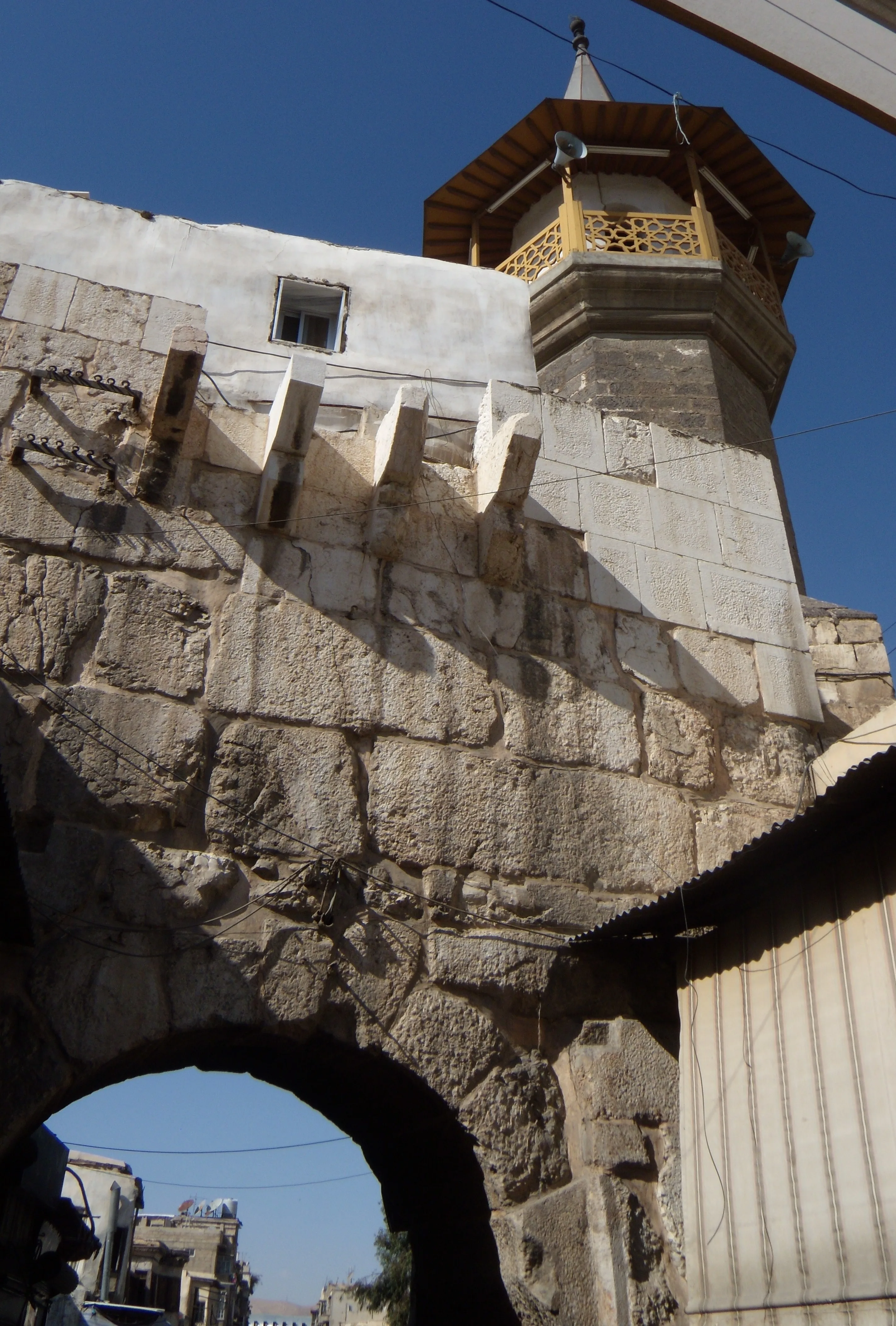
Abu al-Darda (Abu al-Darda al-Ansari al-Khazraji) was a Companion of the Prophet Muhammad (Peace Be Upon Him), a man of Medina and of the Balharith family of the Khazraj.12 He is known by his kunya, the name of honour built on abu (father of), and the biographical dictionaries give his own name most often as Uwaymir ibn Zayd ibn Qays, with other forms that the section on his name sets out.34 Before the Prophet's mission he was a merchant in Medina, and after he became a Muslim he gave up trade for worship.56 The sources give him as the last of his household to become a Muslim, and they differ on whether this was on the day of the battle of Badr or after it, and on whether he fought at Uhud.271 The Prophet joined him in brotherhood with Salman al-Farisi, although one early report names Awf ibn Malik instead, and he is counted among those who collected the Quran in the Prophet's lifetime.158
He went to Syria and settled at Damascus, where he served as a judge and gathered groups in the mosque to teach the Quran, and the sources differ on who sent him and who made him judge.1910 Most of the sources place his death at Damascus in 32 AH (652 CE), in the caliphate of Uthman ibn Affan; Ibn Sa'd and the TDV entry also record 31 AH, other sources give his death as one, two or three years before Uthman's, and a further report places it after the battle of Siffin.1961112131415 The TDV İslâm Ansiklopedisi, the Turkish encyclopaedia of Islam, names the Bab al-Saghir cemetery of Damascus as the place of his burial, and the Encyclopaedia of Islam says that his tomb was shown near one of the city's gates.91
This article follows him from his name and family through his conversion and the years at Medina, then to Syria, his teaching, his sayings, his family, his death and burial, and how the sources remember him. The sources disagree on a number of points of detail, among them the form of his name, the time of his conversion, his part at Uhud, the person with whom the Prophet joined him in brotherhood and the year of his death, and the article gives each version with the source that records it.
The sources
The earliest notice consulted is that of Ibn Sa'd (d. 230/844–5), the compiler of the biographical dictionary al-Tabaqat al-kubra, which is read here in two editions, the Khanji and the Dar Sadir, that differ in the pedigree they print, as noted below.162 The longest is that of Ibn Asakir, the twelfth-century historian of Damascus (d. 571/1175–6), who gives the reports on Abu al-Darda with the chains by which each reached him, among them reports from Ibn Sa'd and from Abu Nu'aym, the compiler of a dictionary of the Companions (d. 430/1038–9).171819 Ibn Abd al-Barr, the author of al-Isti'ab (d. 463/1070–71), and Ibn al-Athir, the author of Usd al-ghaba (d. 630/1232–3), have notices in their dictionaries of the Companions, and Ibn Hajar al-Asqalani (d. 852/1448–9) has one in his own dictionary of the Companions, al-Isaba, and another in his Tahdhib al-tahdhib.2021322 Al-Mizzi (d. 742/1341–2), in his Tahdhib al-kamal, and al-Dhahabi (d. 748/1347–8), in the Siyar a'lam al-nubala', give notices that quote the earlier authorities and name the persons who transmitted from him.234 The editors of these two works add footnotes on the strength of the reports, and the article attributes each such note to the editor and not to the classical author.247
The modern reference works consulted are the entry by A. Jeffery in the Encyclopaedia of Islam, the entry by Abdullah Aydınlı in the TDV İslâm Ansiklopedisi, the entry in the biographical dictionary al-A'lam of Khayr al-Din al-Zirikli (d. 1396/1976), and the translator's note on him in the volume of biographies of the Companions that completes the translation of the History of al-Tabari (d. 310/922–3).19625 The reports of the Prophet and of his Companions that bear on him are read in the Darussalam English editions of Sahih al-Bukhari, Sahih Muslim and Jami' at-Tirmidhi.
No notice consulted gives the year or the place of his birth, and the Encyclopaedia of Islam describes him only as a younger contemporary of the Prophet.1 None of the notices read gives a Hijri or Common Era year for Badr or Uhud in connection with his life, and the article gives no year for his conversion.
Name and lineage
His name and his kunya
Abu al-Darda is a kunya, and Ibn Hajar notes that he is known both by it and by his name.3 The Encyclopaedia of Islam gives the name and pedigree as Uwaymir ibn Zayd ibn Qays ibn A'isha ibn Umayya ibn Malik ibn Adi ibn Ka'b ibn al-Khazraj ibn al-Harith, of the Balharith family of the Khazraj.1 Ibn Sa'd's pedigree in the Dar Sadir edition runs Uwaymir ibn Zayd ibn Qays ibn A'isha ibn Umayya ibn Malik ibn Amir ibn Adi ibn Ka'b ibn al-Khazraj, while the Khanji edition prints the same line without Amir and Adi.216 Al-Tabari's biographical supplement lists him as Uwaymir ibn Zayd of the Banu al-Harith ibn al-Khazraj.25 Al-Dhahabi heads his notice with the same name, Uwaymir ibn Zayd ibn Qays.4
The sources give other forms, and each is told here with the authority that records it. Al-Dhahabi lists as further forms Uwaymir ibn Amir, Uwaymir ibn Abd Allah and Uwaymir ibn Tha'laba ibn Abd Allah, and he records that Ibn Abi Hatim (d. 327/938–9), whom he quotes, gives Uwaymir ibn Qays ibn Zayd ibn Qays ibn Umayya ibn Amir ibn Adi ibn Ka'b ibn al-Khazraj.4 On the next page he gives Uwaymir ibn Amir of the Banu al-Harith ibn al-Khazraj from a report through Sa'id ibn Abd al-Aziz; Uwaymir ibn Tha'laba, which Ibn Ishaq (d. 151/768–9), the early biographer of the Prophet, gave once, and which he also ascribes to Abu Mushir, a transmitter whom these notices quote; and Uwaymir ibn Amir, the form of Ahmad ibn Hanbal (d. 241/855–6) and a number of others.12 Ibn Abd al-Barr heads his notice Uwaymir ibn Amir, also called Uwaymir ibn Qays ibn Zayd, and records Ibn Ishaq's Uwaymir ibn Tha'laba of the Banu al-Harith ibn al-Khazraj and a further form, Uwaymir ibn Tha'laba ibn Zayd ibn Qays, which he attributes to Ibrahim ibn al-Mundhir, an authority he cites by name.20 Ibn Hajar adds that his father's name is given as Amir, Malik, Tha'laba, Abd Allah or Zayd.3 Abu Nu'aym, in the words Ibn Asakir quotes, writes that the name is given as Uwaymir, Umayra, Amr or Amir, and that Uwaymir may be a diminutive of Amir by which he named himself.18 Al-Zirikli gives Uwaymir ibn Malik ibn Qays ibn Umayya, and a note to his entry quotes a work on the readers of the Quran, Ghayat al-nihaya, for Uwaymir ibn Zayd, or ibn Abd Allah, or ibn Tha'laba, or ibn Amir ibn Ghanm.6
A second disagreement is whether Uwaymir is his name at all. Al-Dhahabi quotes al-Bukhari (d. 256/869–70), who writes that he asked one of Abu al-Darda's descendants and was told that his name was Amir ibn Malik and that Uwaymir was his nickname (laqab).12 Al-Mizzi gives the same account from a descendant and from al-Asma'i, an earlier authority whom he quotes, and Ibn Hajar records that it was reported from some of his sons by Amr ibn al-Fallas and that al-Asma'i was certain of it.233 The TDV entry takes this form, giving his name as Amir, his laqab as Uwaymir, his father's name as Zayd or Amir and his grandfather's as Qays.9 The Encyclopaedia of Islam notes that some sources give his name as Amir where others give Uwaymir.1 Ibn Abd al-Barr, in his first notice, writes that the statement that his name was Amir ibn Malik is nothing and that the form he has given is the sound one; in his second notice he records, as something said, that his name was Amir ibn Malik and Uwaymir a nickname.2627 This article uses Uwaymir ibn Zayd, with Uwaymir as the name by which most of the sources know him, and gives the other forms as the sources give them.
His mother and his appearance
Ibn Sa'd gives his mother as Mahabba, the daughter of Waqid ibn Amr ibn al-Itnaba, and the line of her ancestors runs back to Ka'b.16 Ibn Abd al-Barr writes her name as Muhibba, daughter of Waqid ibn Amr ibn al-Itnaba, and records another report that she was Waqida, the daughter of Waqid.26 Al-Mizzi gives her pedigree in the form recorded by Khalifa ibn Khayyat (d. 240/854–5), the author of a history.23
Abu Nu'aym, as Ibn Asakir quotes him, describes Abu al-Darda as having a long, fine nose with a raised bridge and a reddish tinge in the black of his eyes, and as dyeing his hair yellow.18
Conversion and the years in Medina
The merchant
Ibn Sa'd records Abu al-Darda's own words, in a report whose chain runs through al-A'mash and Khaythama: he had been a merchant before Muhammad was sent as a prophet, and when Muhammad was sent he tried to combine trade with worship and found that the two would not go together, so he took worship and left trade.510 Al-Mizzi, al-Dhahabi and Ibn Hajar give the report in the same terms, and the Encyclopaedia of Islam, the TDV entry and al-Zirikli, who places the trade in Medina, state it without the chain.281215196
His conversion
Ibn Sa'd says that Abu al-Darda was the last of his household to become a Muslim.162 Before that he kept an idol, over which he had laid a cloth, and Abdullah ibn Rawaha, who had been his brother in the time before Islam and after it, invited him to Islam and was refused.16 According to Ibn Sa'd, Ibn Rawaha waited until Abu al-Darda had left the house, went in with an adze and broke the idol into pieces, reciting verses as he did so. Abu al-Darda's wife, who was in the house, heard the blows and said that Ibn Rawaha had ruined her, and when Abu al-Darda came home he found her weeping out of fear of him and was very angry. He then reflected that if the idol had had any good in it, it would have defended itself, and he went to the Prophet with Ibn Rawaha and became a Muslim.165 The TDV entry records that Ibn Rawaha, whom it calls his friend, was the means of his becoming a Muslim and shaped his Islamic character.9
Ibn Asakir records a second account of the breaking of the idol, which came to him through Mu'awiya ibn Salih, from Abu al-Zahiriyya, from Jubayr ibn Nufayr. In it Abdullah ibn Rawaha and Muhammad ibn Maslama together entered the house and broke the idol. Abu al-Darda came back and began to gather the pieces, and his wife told him that an idol that could neither protect itself nor anyone else could do him no good. He then washed, dressed and went to the Prophet and became a Muslim.29 The two accounts differ on who broke the idol and on what moved him to go to the Prophet. Ibn Asakir gives Ibn Sa'd's account in the same place.29
Two further reports in Ibn Asakir, one through Abu al-Zahiriyya and one through Abd al-Rahman ibn Jubayr, say that Abu al-Darda was among the last of the Ansar to become a Muslim.30 Ibn Abd al-Barr and Ibn al-Athir say that his conversion was somewhat late and that he was the last of his household to accept Islam, and the Encyclopaedia of Islam places it after the battle of Badr and calls him the last member of his family to convert.27211
Badr and the stipend
The sources differ on whether he became a Muslim at Badr or after it. A report that Abu Mushir had from Sa'id ibn Abd al-Aziz says that Abu al-Darda became a Muslim on the day of Badr and was at Uhud, where he did well; al-Mizzi, Ibn Hajar, al-Dhahabi and Ibn Asakir give it, and al-Mizzi and Ibn Asakir add that Umar ibn al-Khattab assigned him a stipend of four hundred, attaching him to the veterans of Badr.28223731 Al-Dhahabi's version adds that the Prophet ordered him that day to turn back those who were on the mountain, and that he turned them back alone, and he describes the conversion as having come a little late.7 Ibn Asakir gives the same chain in a second place with the words ba'da Badr (after Badr) in place of yawm Badr (on the day of Badr), and there too he has the Prophet's order and the turning back alone.32 Ibn Asakir also quotes Abu Nu'aym for the statement that Badr passed him by, after which he strove in worship and said that his companions had outstripped him; the editor takes the reading from the abridgement of Ibn Asakir's work, the manuscripts being unclear.18 Ibn Asakir further records that Ibrahim ibn al-Mundhir, an earlier authority, said that he did not witness Badr.33 The TDV entry says that although he had not taken part in Badr, Umar treated him as one of its men and assigned him a stipend.9
Uhud
Ibn Sa'd preserves both versions. He gives a report from al-Waqidi (d. 207/822–3), whom Ibn Asakir names as Muhammad ibn Umar al-Waqidi, that the Prophet saw Abu al-Darda at Uhud while the people were fleeing in every direction and said that Uwaymir was a good horseman; and then al-Waqidi's statement that he had heard some say that Abu al-Darda did not attend Uhud, although he was among the leading Companions, people of good intention, who narrated many hadith from the Prophet and were present at many of his campaigns.53419 Ibn Abd al-Barr writes that he was at Uhud and at the campaigns after it, records that others said he was not at Uhud because his conversion came late, and adds that he was at the Trench and the campaigns after it; in his second notice he writes only that he was at the campaigns after Uhud and that people differ over his presence at Uhud.2627 Ibn al-Athir likewise calls his presence at Uhud disputed, and the TDV entry gives one report that he showed bravery there, the report of others that he did not take part, and the statement that he took part in many later battles.219
A third report, which reaches Ibn Asakir through Shurayh ibn Ubayd, tells of the rally of the men who returned to the Prophet at Uhud and gives the Prophet's words about Abu al-Darda. Ibn Asakir marks it mursal, and the editors of al-Mizzi and of al-Dhahabi explain that Shurayh ibn Ubayd did not meet Abu al-Darda, so the article does not tell it.34247
The brotherhood with Salman
Sahih al-Bukhari records, from Abu Juhayfa, that the Prophet made a bond of brotherhood between Salman and Abu al-Darda, and the report goes on to tell how Salman visited him (Sahih al-Bukhari 1968; 6139). Salman found Abu al-Darda's wife in shabby clothes and asked why. She answered that her husband had no interest in the luxuries of this world. When Abu al-Darda came, he prepared food and said that he was fasting; Salman said that he would not eat until Abu al-Darda did, and Abu al-Darda ate. At night Abu al-Darda rose to pray and Salman told him to sleep, and he slept; he rose again and Salman again told him to sleep; in the last part of the night Salman told him to get up, and they prayed together. Salman said that his Lord, his own self and his family each had a right over him and that he should give each its due. Abu al-Darda went to the Prophet and told him, and the Prophet said, "Salman has spoken the truth." (Sahih al-Bukhari 1968; 6139). The two versions, in the Book of Fasting and the Book of Good Manners, agree in substance. The TDV entry records that in the early period after his conversion he gave himself so wholly to worship that he neglected his wife, and that Salman told him that Islam did not allow it.9
The pairing itself is told in two ways. The Encyclopaedia of Islam, Ibn Abd al-Barr, Ibn al-Athir, Abu Nu'aym as Ibn Asakir quotes him, and the TDV entry give Salman.12721189 Ibn Sa'd gives two reports. One, whose chain runs through Abu Sinan, who had it from some of his own companions and does not name them, says that the Prophet joined Abu al-Darda to Awf ibn Malik al-Ashja'i; the other, from al-Waqidi, gives Salman.5 Ibn Hajar repeats Ibn Sa'd's statement of the bond with Awf, and the TDV entry gives it as another report.229
The Quran in the Prophet's lifetime
Most of the sources count him among those who learned the Quran in the Prophet's lifetime, and the lists of the others named with him differ. Al-Dhahabi counts him among those who recited the Quran to the Prophet and among those who collected it in his lifetime.8 The TDV entry says that he memorised the Quran while the Prophet was alive and recited all of it to him, and al-Zirikli says that he was among those who collected the Quran by memory in the Prophet's lifetime without disagreement.96 The Encyclopaedia of Islam lists him among the few who collected the revelations in that time and adds that the literature on the readings of the Quran records a small number of variant readings from him.1
The lists of those who collected the Quran differ. In Sahih al-Bukhari Anas ibn Malik says that when the Prophet died none had collected the Quran but four, Abu al-Darda, Mu'adh ibn Jabal, Zayd ibn Thabit and Abu Zayd (Sahih al-Bukhari 5004), and Ibn Asakir and al-Dhahabi give the same report.1935 In two other reports of Anas in the same collection the four are all from the Ansar and are Ubayy, Mu'adh ibn Jabal, Abu Zayd and Zayd ibn Thabit, and Abu al-Darda is not among them (Sahih al-Bukhari 3810; 5003). A report from al-Sha'bi says that six of the Ansar collected the Quran in the Prophet's lifetime, and names them as Ubayy ibn Ka'b, Zayd ibn Thabit, Mu'adh ibn Jabal, Abu al-Darda, Sa'd ibn Ubayd and Abu Zayd; in one version Ibn Asakir says six and names seven, and the seventh, Mujammi' ibn Jariya (the name as the editor reads it from Ibn Sa'd), had collected all of the Quran except two or three surahs, so the editor suggests that the six leave him out for that reason.193635 The editor of the Siyar adds that the limit of four in Anas's report is relative and not literal, since a great number of the Companions memorised the whole Quran.35
Hadith from the Prophet
Abu al-Darda narrates a journey with the Prophet in Ramadan, in heat so great that none of the party fasted except the Prophet and Abdullah ibn Rawaha (Sahih Muslim 1122). Al-Dhahabi counts 179 hadith reported from him, of which the two collections agree on two, al-Bukhari alone has three and Muslim alone eight, and the TDV entry and al-Zirikli give the same total.1296
Under Umar, before Syria
The TDV entry records that he served as a judge at Medina with other Companions in the caliphate of Umar.9 Ibn Asakir records reports that Umar questioned Abu al-Darda, Ibn Mas'ud and a third man, Abu Dharr in some versions and Abu Mas'ud in another, about the hadith they were narrating from the Prophet, and he adds a comment of his own: Umar did this out of no suspicion of them, but to reduce their narration so that the people would not be taken from learning the Quran by what they heard from them.37 The sources give more than one account of how and when he came to Syria, and the next section sets them out.
In Syria
One account, which Ibn Asakir quotes from al-Asma'i, who had it from Sufyan, has Abu al-Darda come to Syria with Abu Ubayda in the time of Abu Bakr. Ibn Asakir's own notice says that Abu al-Darda was at al-Yarmuk and at the siege of Damascus and then settled at Homs.3817 Ibn Asakir also quotes Sayf ibn Umar for the statement that the judge at al-Yarmuk was Abu al-Darda, and the TDV entry says he was army judge (qadi al-jund) there, the first holder of that office in Islamic history.389
Other reports place his going to Syria in the caliphate of Umar, after he had been at Medina. In one that Ibn Asakir gives, Abu al-Darda went into a property of his with some companions, called them to witness that what he had left behind him was for God's cause and for the Commander of the Faithful to place where he saw fit, and asked Umar's leave to go to Syria. Umar said he would give leave only if Abu al-Darda took an official post. Abu al-Darda said that he would not, and that he would go to teach the people the practice of their Prophet and to lead them in prayer, and Umar gave him leave.39 The TDV entry tells the exchange as an offer of the governorship that Abu al-Darda declined.9
A second report has Umar send him. Ibn Sa'd's account, which Ibn Asakir gives through Muhammad ibn Ka'b al-Qurazi, says that Yazid ibn Abi Sufyan wrote in Umar's caliphate that the people of Syria had multiplied and needed men to teach them the Quran and the law, and that Umar called five of the Ansar who had collected the Quran in the Prophet's lifetime and asked for three. Abu Ayyub, who was old, and Ubayy ibn Ka'b, who was ill, stayed; Mu'adh ibn Jabal, Ubada ibn al-Samit and Abu al-Darda went.40 The TDV entry gives this as a second report, and the modern author Ali Muhammad al-Sallabi gives it in his life of Umar.941
In Ibn Sa'd's report Umar told the three to begin at Homs and to part when satisfied with the people there. Ubada stayed at Homs, Abu al-Darda went to Damascus and Mu'adh to Palestine, and Abu al-Darda stayed at Damascus until he died.40 The TDV entry says the three went first to Homs and that Abu al-Darda then moved to Damascus.9 Ibn Asakir gives Makhul's statement that Umar moved him from Homs to Damascus.42 His house at Damascus stood at the Bab al-Barid.43
The judgeship
The sources agree that Abu al-Darda was judge of Damascus, and differ on who appointed him and when. Ibn Asakir's notice says that Umar moved him to Damascus and that he took the judgeship there.17 Abu Zur'a al-Dimashqi (d. 281/894–5), through Abu Mushir and Sa'id ibn Abd al-Aziz, says that Umar put him in charge of judging at Damascus, and adds that the judge acted as the governor's deputy when the governor was away; Ibn Abd al-Barr gives the same report.4244 Ibn Hibban (d. 354/965–6), quoted by Ibn Hajar, says that Mu'awiya appointed him in Umar's caliphate.15 Al-Zirikli says that Mu'awiya appointed him on Umar's order, and the TDV entry that Umar appointed him while Mu'awiya was governor, each making him the first judge of Damascus.69 Ibn Abd al-Barr records both views, that Umar made him judge and that Mu'awiya did, and states that the sound account is that Abu al-Darda was judge for Mu'awiya in the caliphate of Uthman.444514 Ibn Sa'd records, through Yahya ibn Sa'id, that when Abu al-Darda was appointed people congratulated him, and that he answered that he had been set on the edge of a precipice from which the fall was farther than Aden Abyan; it does not say who appointed him.46
Two reports speak of the extent of the office. Jabala ibn Abd al-Rahman is quoted as saying that Abu al-Darda was Mu'awiya's deputy (khalifa) in Syria, without saying what the deputyship covered, and Sayf ibn Umar's account says that when Uthman died Mu'awiya held authority in Syria and Abu al-Darda was in charge of justice there; Ibn Asakir and al-Tabari both give Sayf's account.4247 Ibn Asakir and the TDV entry add that, after giving judgment between two parties, he would call them back and ask them to state their case again.489
Cyprus
Al-Tabari gives three years for the conquest of Cyprus under Mu'awiya: al-Waqidi says 28, Abu Ma'shar 33, and other authorities 27. In the account of the year 27 a body of the Prophet's Companions attacked the island, among them Abu Dharr, Ubada ibn al-Samit and his wife Umm Haram, al-Miqdad, Abu al-Darda and Shaddad ibn Aws.49 The TDV entry records his taking part with other Companions while Mu'awiya was governor of Syria, and Akbar Shah Najeebabadi, a modern author, lists him in a party that Abdullah ibn Qays commanded.950
Al-Tabari gives, from al-Waqidi through Jubayr ibn Nufayr, an account of his weeping. When the Cypriots were taken captive Jubayr saw Abu al-Darda weeping and asked why he wept on a day when God had exalted Islam and abased unbelief. Abu al-Darda struck Jubayr's shoulder and answered, "How despicable mankind becomes to God when they abandon his commandments." He went on to say that this had been a mighty nation that dominated others and held royal power, and that it had fallen into captivity after abandoning God's commandments.51 Ibn Asakir gives a second account, from Jubayr's son Abd al-Rahman, in which Abu al-Darda says that the nation had been dominant and visible until it disobeyed God.52
Teaching the Quran in Damascus
The Encyclopaedia of Islam entry by A. Jeffery says that his principal reputation was as an authority on the Quran, and that during his stay at Damascus, where he had been sent as a judge, he gathered groups in the mosque and taught them the Quran. The entry traces the Damascus school of reading, later headed by Ibn Amir, to him, and its entry on Ibn Amir lists Abu al-Darda among the Companions who stood as guarantors for Ibn Amir's recitation.153 Al-Dhahabi gives him the title of leader of the Quran reciters of Damascus.4
The TDV entry calls him the reciter of Damascus (muqri' al-Dimashq) and says that he began teaching after the dawn prayer. It names as students who recited to him his wife the younger Umm al-Darda, Atiyya ibn Qays al-Kilabi, Khalid ibn Ma'dan and Suwayd ibn Abd al-Aziz, and adds that Ibn Amir, one of the seven reading imams, also studied with him; it says that his circles sometimes reached 1,600 students.9 Al-Sallabi writes of a large circle in the mosque of Damascus attended by more than sixteen hundred people, who recited in groups of ten while he taught them different readings, and quotes al-Dhahabi's description of him as the scholar of the people of Syria and the teacher, jurist and judge of the people of Damascus.41
His sayings and conduct
The sources give his sayings with chains, and the last links are named here. Ibn Sa'd gives, through Salim ibn Abi al-Ja'd, Umm al-Darda's answer when she was asked what his best deed had been, which was reflection (al-tafakkur), and, from her, his saying that an hour of reflection is better than a night of prayer.46 Through Malik ibn Dinar, Ibn Sa'd records his saying that whoever increases in knowledge increases in pain, and that his chief fear was to be asked on the Day of Resurrection what he had done with what he knew.54 Through Ayyub, from Abu Qilaba, he gives the sayings that a man will not understand the law fully until he sees that the Quran has many aspects, and that he will not understand it fully until he hates people for God's sake and then turns on himself and hates himself more.55 Al-Mizzi gives his address to the people of Damascus, asking why they gathered what they did not eat, built what they did not live in and hoped for what they would not reach, and telling them that those before them had gathered much and built firmly, and that their gathering had come to ruin and their dwellings to graves.56
Ibn Sa'd records, through Abu Uthman al-Nahdi, his saying that but for three things he would not mind when he died: thirst in the midday heat, putting his face in the dust, and enjoining good and forbidding evil.57
The reports of his conduct include these. Jarir ibn Abd al-Hamid says that when his allowance was paid out he gave it in charity, gave any remainder to his wife, and told her in the morning that she could return it to him if she wished.58 Ibn Asakir records, through Hakim ibn Jabir, that when a Christian priest passed him and his companions and they cursed the man, Abu al-Darda uncovered his face and told them not to curse anyone, because a curser would not be among the truthful with God on the Day of Resurrection.59 Ibn Asakir's account of Umar's visit to Syria, which comes from Juwayriya through Nafi and a man of Abu al-Darda's descendants, ends at Abu al-Darda's house: his door had no lock, and he lay on gravel with a saddle-cloth for a pillow and a thin cloak. He asked Umar whether he remembered the Prophet's saying that each of them should take from the world only what a traveller carries for his journey, and asked what they had done since, and the two answered each other with weeping until morning.60 On his prayer for others, Ibn Sa'd gives Umm al-Darda's statement that he had three hundred and sixty friends in God for whom he prayed, and, in a second report, her statement that she heard him pray by name in prostration for three hundred and fifty; Ibn Asakir's report gives seventy.54661
On rulers and on taxes
Ibn Asakir gives several versions of what Abu al-Darda said at the door of Mu'awiya. In one, through Ismail ibn Ubayd Allah, he came to Mu'awiya's door and was not admitted, sat in a corner of the mosque, and said that whoever goes to the ruler's gate must stand and sit, while whoever finds a closed door will find a wide door beside it, from which he is given if he asks and answered if he calls, and that the first hypocrisy of a servant is attacking his imam.62 In the version through Hisham ibn Ammar and al-Haytham ibn Imran he adds that hating those in authority is unbelief and attacking them hypocrisy, and al-Haytham states that this was before the community of Muhammad differed.63
Through Umm al-Darda, Ibn Asakir gives another report from Mu'awiya's gate. Some men had sought Abu al-Darda's help against Mu'awiya, so that he would speak to him and ask him to lighten the kharaj, the land tax. When Abu al-Darda was not admitted he told them that they were more unjust than Mu'awiya, and when they asked why, he answered that if they wished they could become Muslims and then Mu'awiya would have no way over them. The printed text calls the men people of Medina (ahl al-Madina); the editor notes that the abridgement of Ibn Asakir's work has people of the dhimma (ahl al-dhimma).64
Family
The TDV entry says he had two wives called Umm al-Darda, the elder a Companion and the younger a Successor; the younger is the subject of the article on Umm al-Darda al-Sughra.9 Abu Nu'aym, whose notice Ibn Asakir quotes, says that Abu al-Darda left descendants and that Umm al-Darda, the mother of his son Bilal, was Khayra bint Abi Hadrad ibn Aslam; Ibn Sa'd names Bilal's mother as Umm Muhammad bint Abi Hadrad ibn Aslam.1816 Ibn Sa'd names two sons, Bilal and Yazid, and says that Yazid left no descendants; the TDV entry adds that Bilal served as judge of Damascus in the Umayyad period.169 Ibn Sa'd names two daughters, al-Darda, who married Abd Allah ibn Sa'd ibn Khaythama, and Nusayba, who married Sa'id ibn Sa'd ibn Ubada.16
The TDV entry says that Yazid ibn Mu'awiya sought to marry al-Darda, that Abu al-Darda refused, and that he married her to a poor Muslim.9 Abu Nu'aym gives the account through Thabit al-Bunani: a man of Yazid's company asked leave to propose to her, Abu al-Darda gave it, and the man proposed and married her. Abu al-Darda said that he had considered what was best for al-Darda and her religion.65
Ibn Sa'd records that Umm al-Darda asked whether she would be his wife in Paradise, and that he answered that she would, so long as she did not marry after him; in another report she asked whether she might eat charity if she were in need after him, and he told her to work and eat and, if too weak, to gather what the harvesters left, and not to eat charity.5458 The reports name her only as Umm al-Darda, and the sources read for this article do not say which of the two wives is meant.
Death and burial
Ibn Sa'd gives, through Mu'awiya ibn Qurra, an account of his last illness: his companions asked what he complained of and he answered that it was his sins, asked what he desired and he answered Paradise, and asked whether they should call a physician and he answered that it was God who had laid him down. Through Muhammad ibn Ka'b al-Qurazi, Habib ibn Maslama came to him when death was near and asked how he found himself, and Abu al-Darda said he found himself heavy.57 In Ibn Asakir's version of that visit Habib says that he sees only parting, thanks him as a teacher and asks for counsel, and Abu al-Darda tells him to beware the prayer of the wronged.66
Ibn Asakir gives reports of the last hours. In one, through Abu Imran al-Jawni, Abu al-Darda called Umm al-Darda to him, embraced her and wept, told her that something had come upon him such as had never come before, and asked her to work for the like of that hour; he then called his son Bilal and told him the same.67 In others, which Umm al-Darda gave through Ismail ibn Ubayd Allah, he kept asking who would work for the like of his resting place and of that hour, and recited a verse of the Quran (Quran 6:110) until he died.6768 Ibn Asakir also gives an account from Abu Idris al-Khawlani, in which Abu Idris came to the dying man saying Allahu akbar and Abu al-Darda said that when God decrees a matter He likes us to be content with it; Ibn Asakir adds that the account is preserved of Abu Muslim al-Khawlani and gives that version too.69
Ibn Sa'd, through al-Waqidi, says that Abu al-Darda died at Damascus in 32 AH, in the caliphate of Uthman, and that he left descendants in Syria. Al-Mizzi gives 32 AH on the authority of al-Waqidi, Ibn Numayr and Abu Ubayd, the TDV entry gives 32 AH (652 CE), the Encyclopaedia of Islam 32/652 or thereabouts, the translator's note in al-Tabari's volume of biographies 32/652–53, and al-Zirikli 32 AH (652 CE).577091256 The other dates and intervals are in the Historiographical Note.
The TDV entry puts his grave in the Bab al-Saghir cemetery and says that in 1938 two gravestones were found 20 metres south-west of the grave of Mu'awiya, one attributed to Abu al-Darda and one to Umm al-Darda, with Kufic inscriptions, now in the National Museum, which the entry dates to the 4th/10th or the 5th/11th century. It adds that he has memorial graves at Eyup and Uskudar in Istanbul.9 The Encyclopaedia of Islam says that his tomb and that of Umm al-Darda were shown near one of the gates of Damascus.1
Remembrance
Abu Nu'aym's notice in the Hilya introduces him as a scholar and reflective worshipper who left trade for worship.71 The Encyclopaedia of Islam says that the biographical dictionaries call him a zahid (ascetic) and one to whom knowledge ('ilm) was given, and the hakim (sage) of the early community; al-Dhahabi gives him the same title, and the TDV entry counts him among the leading Companions in the interpretation of the Quran, in law, in hadith and in recitation.149 The Encyclopaedia of Islam adds that the Sufis claimed him as one of the ahl al-Suffa and quoted sayings of an ascetic character from him.1
Jami' at-Tirmidhi records that Mu'adh ibn Jabal, when death was upon him, told those around him to seek knowledge from four men, Abu al-Darda first, then Salman al-Farisi, Abd Allah ibn Mas'ud and Abd Allah ibn Salam; al-Tirmidhi grades the report hasan sahih gharib (Jami' at-Tirmidhi 3804). Ibn Abd al-Barr gives Masruq's statement that the knowledge of the Companions came down to six, Umar, Ali, Abd Allah, Mu'adh, Abu al-Darda and Zayd ibn Thabit, and Abu Dharr's statement to Abu al-Darda that no one more learned than he was carried by the earth or covered by the sky.1472
Ibn Asakir lists among those who narrated from him Anas ibn Malik, Abd Allah ibn Abbas, Abu Idris al-Khawlani, Jubayr ibn Nufayr, his son Bilal, his wife Umm al-Darda and Sa'id ibn al-Musayyab.17 When he reported from the Prophet he would add a prayer that, if the wording was not exactly so, something like it should stand in its place; Ibn Sa'd gives this through Mu'awiya ibn Salih from Rabi'a ibn Yazid, Ibn Asakir gives the same report, and the TDV entry says that he described the hadith as being like this, or similar to this.5739
Historiographical Note
The sources differ on the points below, and the article gives each version with its source. The differences on the form of his name and his father's name, on whether Uwaymir is his name or a nickname, on the time of his conversion and his presence at Badr, on his part at Uhud, on the man joined to him in brotherhood and on the lists of those who collected the Quran are told with their sources in the sections on his name, his conversion, Badr and the stipend, Uhud, the brotherhood with Salman and the Quran in the Prophet's lifetime, and are not repeated here.
How he came to Syria and his office. The accounts of his coming are three: with Abu Ubayda in Abu Bakr's time, at his own request in Umar's, and sent by Umar after Yazid ibn Abi Sufyan's letter. His appointment as judge is ascribed to Umar, to Mu'awiya in Umar's caliphate, to Mu'awiya in Uthman's, and Ibn Sa'd names no appointer.38394042154546 The sources read for this article do not reconcile them, and the article gives no date for his going.
The year of his death. Most sources give 32 AH.5770916 Ibn Sa'd records a second report, from Khalid ibn Ma'dan, that he died in Syria in 31, and the TDV entry records reports of 31 AH.119 Khalifa ibn Khayyat, as Ibn Asakir quotes him, says 31 or 32, and Ibn Abd al-Barr gives al-Waqidi's 32 and Khalid ibn Ma'dan's 31.7414 The intervals before Uthman's death also differ. Al-Dhahabi writes that he died three years before Uthman. Abu Mushir, through Sa'id ibn Abd al-Aziz, and al-Awza'i give two years, and Abu Mushir adds that Ka'b al-Ahbar died with him; al-Bukhari gives, through al-Hasan, Damra and Ibn Ayyash, one year; and Ibn Abd al-Barr gives a report through Yazid ibn Abi Maryam that he died two years before Uthman's killing.121345 Ibn Abd al-Barr also records that some historians (ahl al-akhbar) said he died after Siffin, in 38 or 39 AH, and gives as the soundest and best-known view among the scholars of hadith that he died in Uthman's caliphate; Ibn Hajar writes that the sounder view among them is the same.451415 Al-Tabari's reports that name him in Syria in the year 35 and at Uthman's death do not agree with the dates before Uthman's death, and the sources read for this article do not reconcile them.7547
See also
- Umm al-Darda al-Sughra — his wife of the same kunya, the younger of the two women so called, a Successor who lived in Damascus and Jerusalem
- Salman al-Farisi — the Companion with whom, in most of the sources, the Prophet joined him in brotherhood
- Mu'awiya ibn Abi Sufyan — the governor of Syria under whom, in several sources, he served as judge at Damascus
References
Citations
Footnotes
-
A. Jeffery, 'Abu 'l-Darda'', The Encyclopaedia of Islam, new edition, vol. 1 — his name and pedigree and the variants of his name and his father's name, his conversion after Badr as the last member of his family, his brotherhood with Salman, his earlier life as a merchant, his place among those who collected the Quran in the Prophet's lifetime, his sending to Damascus as a qadi and his teaching there, the Damascus school of reading later headed by Ibn Amir, the titles the biographical dictionaries give him, the Sufis' claim to him, his death at Damascus in 32/652 or thereabouts, and the tomb shown near a gate of Damascus. ↩ ↩2 ↩3 ↩4 ↩5 ↩6 ↩7 ↩8 ↩9 ↩10 ↩11 ↩12 ↩13 ↩14 ↩15 ↩16 ↩17 ↩18 ↩19 ↩20
-
Ibn Sa'd, al-Tabaqat al-kubra (Beirut: Dar Sadir), vii, 391 — his pedigree and his mother, his being the last of his household to become a Muslim, and the breaking of the idol; https://shamela.ws/book/9351/3252, register entry 4, shamela.ws. ↩ ↩2 ↩3 ↩4 ↩5
-
Ibn Hajar al-Asqalani, al-Isaba fi tamyiz al-Sahaba, iv, 621 — that he is known by both kunya and name, the disagreement on his name and his father's name, the pedigree, and the report on Badr and Uhud; https://shamela.ws/book/9767/2364, register entry 4, shamela.ws. ↩ ↩2 ↩3 ↩4 ↩5 ↩6
-
Al-Dhahabi, Siyar a'lam al-nubala', ed. Shu'ayb al-Arna'ut et al. (Beirut: Mu'assasat al-Risala), ii, 335 — the heading of the notice, the variants of his name, and his titles as leader of the reciters of Damascus and sage of the community; https://shamela.ws/book/10906/2315, register entry 4, shamela.ws. ↩ ↩2 ↩3 ↩4 ↩5 ↩6
-
Ibn Sa'd, al-Tabaqat al-kubra (Maktabat al-Khanji edition), iv, 352 — the end of the account of the idol, his own words on his trade, the two reports on the brotherhood, al-Waqidi's reports on Uhud, his many campaigns, his care in transmitting the Prophet's words, and Umm al-Darda's statement of the three hundred and sixty friends; https://shamela.ws/book/146/1736, register entry 4, shamela.ws. ↩ ↩2 ↩3 ↩4 ↩5 ↩6 ↩7 ↩8
-
Khayr al-Din al-Zirikli, al-A'lam, 15th printing (Dar al-'Ilm lil-Malayin, 2002), v, 98 — his name, his trade in Medina, his appointment as judge of Damascus on Umar's order, his death in 32 AH (652 CE), the count of 179 hadith, his collecting the Quran, and the note on other forms of his name; https://shamela.ws/book/12286/4254, register entry 4, shamela.ws. ↩ ↩2 ↩3 ↩4 ↩5 ↩6 ↩7 ↩8 ↩9 ↩10
-
Al-Dhahabi, Siyar a'lam al-nubala', ii, 338 — the report through Sa'id ibn Abd al-Aziz on Badr and Uhud, the report through Shurayh ibn Ubayd and the editor's note that it is mursal; https://shamela.ws/book/10906/2318, register entry 4, shamela.ws. ↩ ↩2 ↩3 ↩4 ↩5
-
Al-Dhahabi, Siyar a'lam al-nubala', ii, 336 — that he is counted among those who recited the Quran to the Prophet and among those who collected it in his lifetime; https://shamela.ws/book/10906/2316, register entry 4, shamela.ws. ↩ ↩2
-
Abdullah Aydınlı, 'EBÛ'd-DERDÂ', TDV İslâm Ansiklopedisi, vol. 10 (Istanbul, 1994), pp. 310–311 — the form of his name, Abdullah ibn Rawaha and his conversion, the brotherhood with Salman and with Awf ibn Malik, his trade, the two reports on Uhud, his memorising of the Quran, Umar's stipend, the judgeship at Medina, al-Yarmuk, his going to Syria in the two reports, Homs and Damascus, his judgeship at Damascus, Cyprus, his teaching and students, the size of his circles, his care in transmission, the refusal of Yazid ibn Mu'awiya, his family, his death in 32 AH (652 CE) with reports of 31 AH, and his burial at the Bab al-Saghir cemetery; https://islamansiklopedisi.org.tr/ebud-derda, register entry 2, islamansiklopedisi.org.tr. ↩ ↩2 ↩3 ↩4 ↩5 ↩6 ↩7 ↩8 ↩9 ↩10 ↩11 ↩12 ↩13 ↩14 ↩15 ↩16 ↩17 ↩18 ↩19 ↩20 ↩21 ↩22 ↩23 ↩24 ↩25 ↩26 ↩27 ↩28 ↩29 ↩30 ↩31 ↩32
-
Ibn Sa'd, al-Tabaqat al-kubra (Beirut: Dar Sadir), vii, 392 — his words on his trade, the report on Uhud, and his going to Syria; https://shamela.ws/book/9351/3253, register entry 4, shamela.ws. ↩ ↩2
-
Ibn Sa'd, al-Tabaqat al-kubra (Maktabat al-Khanji edition), iv, 358 — the second report, through Khalid ibn Ma'dan, that he died in Syria in 31; https://shamela.ws/book/146/1742, register entry 4, shamela.ws. ↩ ↩2
-
Al-Dhahabi, Siyar a'lam al-nubala', ii, 337 — the count of 179 hadith, the further forms of his name and the authorities who give them, al-Bukhari's report of the descendant's answer, the report of the merchant, and his statement that he died three years before Uthman; https://shamela.ws/book/10906/2317, register entry 4, shamela.ws. ↩ ↩2 ↩3 ↩4 ↩5 ↩6
-
Ibn Asakir, Tarikh madinat Dimashq, xlvii, 199 — the statements that he died two years, or one year, before Uthman's killing; https://shamela.ws/book/71/21828, register entry 4, shamela.ws. ↩ ↩2
-
Ibn Abd al-Barr, al-Isti'ab, vii, 127 — the dates of his death, his statement that the sound account is that he was judge for Mu'awiya in Uthman's caliphate, and Masruq's statement on the six; https://shamela.ws/book/1499/3765, register entry 4, shamela.ws. ↩ ↩2 ↩3 ↩4 ↩5
-
Ibn Hajar al-Asqalani, al-Isaba fi tamyiz al-Sahaba, iv, 622 — the report of the merchant, Ibn Hibban's statement that Mu'awiya appointed him judge in Umar's caliphate, and the disagreement on the date of his death; https://shamela.ws/book/9767/2365, register entry 4, shamela.ws. ↩ ↩2 ↩3 ↩4 ↩5
-
Ibn Sa'd, al-Tabaqat al-kubra (Maktabat al-Khanji edition), iv, 351 — his pedigree and his mother, that he was the last of his household to become a Muslim, the idol, his sons Bilal and Yazid, his daughters, and the name of Bilal's mother; https://shamela.ws/book/146/1735, register entry 4, shamela.ws. ↩ ↩2 ↩3 ↩4 ↩5 ↩6 ↩7 ↩8 ↩9
-
Ibn Asakir, Tarikh madinat Dimashq, xlvii, 93 — the opening of the notice, with his presence at al-Yarmuk and the siege of Damascus, his settling at Homs, Umar's moving him to Damascus, and the list of those who narrated from him; https://shamela.ws/book/71/21722, register entry 4, shamela.ws. ↩ ↩2 ↩3 ↩4
-
Ibn Asakir, Tarikh madinat Dimashq, xlvii, 104 — Abu Nu'aym's notice: the name in several forms, his mother, his appearance, his trade, his missing Badr and the brotherhood with Salman; https://shamela.ws/book/71/21733, register entry 4, shamela.ws. ↩ ↩2 ↩3 ↩4 ↩5 ↩6
-
Ibn Asakir, Tarikh madinat Dimashq, xlvii, 110 — al-Waqidi's statement that some said he did not attend Uhud, and the reports on those who collected the Quran; https://shamela.ws/book/71/21739, register entry 4, shamela.ws. ↩ ↩2 ↩3 ↩4
-
Ibn Abd al-Barr, al-Isti'ab fi ma'rifat al-ashab, v, 274 — the name in the forms of Ibn Ishaq and of Ibrahim ibn al-Mundhir; https://shamela.ws/book/1499/2729, register entry 4, shamela.ws. ↩ ↩2
-
Ibn al-Athir, Usd al-ghaba fi ma'rifat al-sahaba (Dar al-Sha'b edition), vi, 97 — his name and pedigree, his late conversion, the brotherhood with Salman, and the dispute over Uhud; https://shamela.ws/book/1564/2724, register entry 4, shamela.ws. ↩ ↩2 ↩3 ↩4
-
Ibn Hajar al-Asqalani, Tahdhib al-tahdhib (Hyderabad), viii, 176 — Abu Mushir's report on Badr and Uhud, the report of the merchant, and Ibn Sa'd's report of the brotherhood with Awf ibn Malik; https://shamela.ws/book/3310/3452, register entry 4, shamela.ws. ↩ ↩2 ↩3
-
Al-Mizzi, Tahdhib al-kamal, ed. Bashshar Awwad Ma'ruf (Beirut: Mu'assasat al-Risala), xxii, 470 — the variants of his name, al-Asma'i's and a descendant's statement of the name Amir, and his mother's pedigree; https://shamela.ws/book/3722/11724, register entry 4, shamela.ws. ↩ ↩2 ↩3
-
Al-Mizzi, Tahdhib al-kamal, xxii, 473 — the report on Uhud through Shurayh ibn Ubayd and the editor's note that it is mursal; https://shamela.ws/book/3722/11727, register entry 4, shamela.ws. ↩ ↩2
-
Al-Tabari, The History of al-Tabari, vol. 39, Biographies of the Prophet's Companions and Their Successors, translated by Ella Landau-Tasseron (Albany: State University of New York Press, 1998), p. 283 — the entry on Uwaymir ibn Zayd and the translator's note giving his death as 32/652–53; https://archive.org/details/tabarivolume39, register entry 12, archive.org. ↩ ↩2 ↩3
-
Ibn Abd al-Barr, al-Isti'ab, v, 275 — his judgement on the form of his name, his mother, and the two versions on Uhud with his presence at the Trench; https://shamela.ws/book/1499/2730, register entry 4, shamela.ws. ↩ ↩2 ↩3
-
Ibn Abd al-Barr, al-Isti'ab, vii, 126 — the name in its forms, his late conversion as the last of his household, the brotherhood with Salman, and the disagreement on Uhud; https://shamela.ws/book/1499/3764, register entry 4, shamela.ws. ↩ ↩2 ↩3 ↩4
-
Al-Mizzi, Tahdhib al-kamal, xxii, 472 — Abu Mushir's report on Badr, Uhud and the stipend, and the report of the merchant; https://shamela.ws/book/3722/11726, register entry 4, shamela.ws. ↩ ↩2
-
Ibn Asakir, Tarikh madinat Dimashq, xlvii, 106 — the second account of the breaking of the idol and Ibn Sa'd's account; https://shamela.ws/book/71/21735, register entry 4, shamela.ws. ↩ ↩2
-
Ibn Asakir, Tarikh madinat Dimashq, xlvii, 105 — the two reports that he was among the last of the Ansar to become a Muslim; https://shamela.ws/book/71/21734, register entry 4, shamela.ws. ↩
-
Ibn Asakir, Tarikh madinat Dimashq, xlvii, 107 — the report through Abu Mushir that he became a Muslim on the day of Badr, and Umar's stipend; https://shamela.ws/book/71/21736, register entry 4, shamela.ws. ↩
-
Ibn Asakir, Tarikh madinat Dimashq, xlvii, 108 — the same chain with "after Badr" and the Prophet's order to turn back those on the mountain; https://shamela.ws/book/71/21737, register entry 4, shamela.ws. ↩
-
Ibn Asakir, Tarikh madinat Dimashq, xlvii, 103 — the name in the forms of the early authorities and Ibn al-Mundhir's statement that he did not witness Badr; https://shamela.ws/book/71/21732, register entry 4, shamela.ws. ↩
-
Ibn Asakir, Tarikh madinat Dimashq, xlvii, 109 — the report through Shurayh ibn Ubayd, marked mursal, and the report from al-Waqidi; https://shamela.ws/book/71/21738, register entry 4, shamela.ws. ↩ ↩2
-
Al-Dhahabi, Siyar a'lam al-nubala', ii, 339 — the reports on those who collected the Quran in the Prophet's lifetime, and the editor's note on the limit of four; https://shamela.ws/book/10906/2319, register entry 4, shamela.ws. ↩ ↩2 ↩3
-
Ibn Asakir, Tarikh madinat Dimashq, xlvii, 111 — al-Sha'bi's lists of those who collected the Quran; https://shamela.ws/book/71/21740, register entry 4, shamela.ws. ↩
-
Ibn Asakir, Tarikh madinat Dimashq, xlvii, 142 — the reports of Umar's questioning of Abu al-Darda and others over their narration of hadith, and Ibn Asakir's comment; https://shamela.ws/book/71/21771, register entry 4, shamela.ws. ↩
-
Ibn Asakir, Tarikh madinat Dimashq, xlvii, 138 — al-Asma'i's report from Sufyan that he came to Syria with Abu Ubayda, and Sayf ibn Umar's statement that he was the judge at al-Yarmuk; https://shamela.ws/book/71/21767, register entry 4, shamela.ws. ↩ ↩2 ↩3
-
Ibn Asakir, Tarikh madinat Dimashq, xlvii, 135 — the report of his giving away his property and asking Umar's leave to go to Syria; https://shamela.ws/book/71/21764, register entry 4, shamela.ws. ↩ ↩2
-
Ibn Asakir, Tarikh madinat Dimashq, xlvii, 137 — Ibn Sa'd's report of Yazid ibn Abi Sufyan's letter, the sending of Mu'adh, Ubada and Abu al-Darda, and their separation at Homs; https://shamela.ws/book/71/21766, register entry 4, shamela.ws. ↩ ↩2 ↩3
-
Ali Muhammad as-Sallabi, 'Umar ibn al-Khattab: His Life and Times, vol. 1, translated by Nasiruddin al-Khattab — the section on the school of Syria: Yazid ibn Abi Sufyan's letter, the sending of Mu'adh, Ubada and Abu al-Darda, the circle at Damascus and the quotation from al-Dhahabi. ↩ ↩2
-
Ibn Asakir, Tarikh madinat Dimashq, xlvii, 139 — Makhul's statement that Umar moved him from Homs to Damascus, Sayf ibn Umar's account of the offices when Uthman died, Jabala ibn Abd al-Rahman's statement that he was Mu'awiya's deputy, and Sa'id ibn Abd al-Aziz's statement that Umar put him in charge of judging; https://shamela.ws/book/71/21768, register entry 4, shamela.ws. ↩ ↩2 ↩3 ↩4
-
Ibn Asakir, Tarikh madinat Dimashq, xlvii, 94 — the position of his house at Damascus at the Bab al-Barid; https://shamela.ws/book/71/21723, register entry 4, shamela.ws. ↩
-
Ibn Abd al-Barr, al-Isti'ab, vii, 129 — Abu Zur'a's report that Umar put him in charge of judging at Damascus, the statement that it is said Umar or Mu'awiya appointed him, and Abd Allah ibn Amr's request for traditions from Mu'adh and Abu al-Darda; https://shamela.ws/book/1499/3767, register entry 4, shamela.ws. ↩ ↩2
-
Ibn Abd al-Barr, al-Isti'ab, v, 277 — the report that he died two years before Uthman's killing, the view that he died after Siffin, his judgement that he died in Uthman's caliphate, and the views on who appointed him judge; https://shamela.ws/book/1499/2732, register entry 4, shamela.ws. ↩ ↩2 ↩3 ↩4
-
Ibn Sa'd, al-Tabaqat al-kubra (Maktabat al-Khanji edition), iv, 353 — Yahya ibn Sa'id's report of his appointment as judge and of his answer to the congratulations, Umm al-Darda's answer on his best deed, his saying on reflection, and her statement of the three hundred and fifty names; https://shamela.ws/book/146/1737, register entry 4, shamela.ws. ↩ ↩2 ↩3 ↩4
-
Al-Tabari, The History of al-Tabari, vol. 15, The Crisis of the Early Caliphate: The Reign of 'Uthman, A.D. 644–656/A.H. 24–35, translated by R. Stephen Humphreys (Albany: State University of New York Press, 1990), p. 255 (Leiden i 3058) — Sayf ibn Umar's account that when Uthman died Mu'awiya held authority in Syria and Abu al-Darda was in charge of justice; https://archive.org/details/tabarivolume15, register entry 12, archive.org. ↩ ↩2
-
Ibn Asakir, Tarikh madinat Dimashq, xlvii, 141 — his calling back of litigants; https://shamela.ws/book/71/21770, register entry 4, shamela.ws. ↩
-
Al-Tabari, The History of al-Tabari, vol. 15, The Crisis of the Early Caliphate: The Reign of 'Uthman, A.D. 644–656/A.H. 24–35, translated by R. Stephen Humphreys (Albany: State University of New York Press, 1990), p. 25 (Leiden i 2820) — the three dates given for the conquest of Cyprus and the list of Companions who attacked it; https://archive.org/details/tabarivolume15, register entry 12, archive.org. ↩
-
Akbar Shah Najeebabadi, The History of Islam, vol. 1 (Riyadh: Darussalam) — the naval party to Cyprus under Abdullah ibn Qays that included Abu al-Darda. ↩
-
Al-Tabari, The History of al-Tabari, vol. 15, The Crisis of the Early Caliphate: The Reign of 'Uthman, A.D. 644–656/A.H. 24–35, translated by R. Stephen Humphreys (Albany: State University of New York Press, 1990), p. 31 (Leiden i 2827) — the account from al-Waqidi through Jubayr ibn Nufayr of Abu al-Darda's weeping at the captives of Cyprus; https://archive.org/details/tabarivolume15, register entry 12, archive.org. ↩
-
Ibn Asakir, Tarikh madinat Dimashq, xlvii, 186 — his weeping at the captives of Cyprus, in the account from Jubayr's son Abd al-Rahman; https://shamela.ws/book/71/21815, register entry 4, shamela.ws. ↩
-
'Ibn 'Amir, Abu 'Umar 'Abd Allah b. 'Amir al-Yahsubi', The Encyclopaedia of Islam, new edition, vol. 3 (entry signed by the editors) — Abu al-Darda among the Companions who stood as guarantors for Ibn Amir's recitation. ↩
-
Ibn Sa'd, al-Tabaqat al-kubra (Maktabat al-Khanji edition), iv, 355 — his sayings on knowledge and on fear of being asked about it, and Umm al-Darda's question whether she would be his wife in Paradise; https://shamela.ws/book/146/1739, register entry 4, shamela.ws. ↩ ↩2
-
Ibn Sa'd, al-Tabaqat al-kubra (Maktabat al-Khanji edition), iv, 354 — his sayings that a man will not understand the law fully until he sees many aspects in the Quran and until he hates people for God's sake and then hates himself more; https://shamela.ws/book/146/1738, register entry 4, shamela.ws. ↩
-
Al-Mizzi, Tahdhib al-kamal, ed. Bashshar Awwad Ma'ruf (Beirut: Mu'assasat al-Risala), xxii, 474 — his address to the people of Damascus on gathering, building and hoping; https://shamela.ws/book/3722/11728, register entry 4, shamela.ws. ↩
-
Ibn Sa'd, al-Tabaqat al-kubra (Maktabat al-Khanji edition), iv, 357 — his sayings on what he would not mind in dying, the report of his last illness, Habib ibn Maslama's visit, and al-Waqidi's statement that he died at Damascus in 32 in Uthman's caliphate and left descendants in Syria; https://shamela.ws/book/146/1741, register entry 4, shamela.ws. ↩ ↩2 ↩3 ↩4
-
Ibn Sa'd, al-Tabaqat al-kubra (Maktabat al-Khanji edition), iv, 356 — his giving of his allowance in charity, and Umm al-Darda's question on eating charity after his death; https://shamela.ws/book/146/1740, register entry 4, shamela.ws. ↩ ↩2
-
Ibn Asakir, Tarikh madinat Dimashq, xlvii, 187 — his rebuke of those who cursed the priest; https://shamela.ws/book/71/21816, register entry 4, shamela.ws. ↩
-
Ibn Asakir, Tarikh madinat Dimashq, xlvii, 136 — the account of Umar's visit to his house in Syria; https://shamela.ws/book/71/21765, register entry 4, shamela.ws. ↩
-
Ibn Asakir, Tarikh madinat Dimashq, xlvii, 188 — the report of the seventy brothers for whom he prayed; https://shamela.ws/book/71/21817, register entry 4, shamela.ws. ↩
-
Ibn Asakir, Tarikh madinat Dimashq, xlvii, 189 — the version of his saying at Mu'awiya's door through Ismail ibn Ubayd Allah; https://shamela.ws/book/71/21818, register entry 4, shamela.ws. ↩
-
Ibn Asakir, Tarikh madinat Dimashq, xlvii, 190 — the versions of his saying at Mu'awiya's door through Ubada ibn Nusayy and through Hisham ibn Ammar and al-Haytham ibn Imran; https://shamela.ws/book/71/21819, register entry 4, shamela.ws. ↩
-
Ibn Asakir, Tarikh madinat Dimashq, xlvii, 191 — the report through Umm al-Darda of his words to the men who sought his help over the land tax, and the editor's note on their description; https://shamela.ws/book/71/21820, register entry 4, shamela.ws. ↩
-
Abu Nu'aym, Hilyat al-awliya', i, 215 — the account through Thabit al-Bunani of Yazid ibn Mu'awiya's proposal for al-Darda and Abu al-Darda's marrying her to another man; https://shamela.ws/book/10495/213, register entry 4, shamela.ws. ↩
-
Ibn Asakir, Tarikh madinat Dimashq, xlvii, 195 — the version of Habib ibn Maslama's visit and Abu al-Darda's counsel; https://shamela.ws/book/71/21824, register entry 4, shamela.ws. ↩
-
Ibn Asakir, Tarikh madinat Dimashq, xlvii, 197 — the report of his last words to Umm al-Darda and Bilal; https://shamela.ws/book/71/21826, register entry 4, shamela.ws. ↩ ↩2
-
Ibn Asakir, Tarikh madinat Dimashq, xlvii, 198 — the reports through Umm al-Darda that he recited Quran 6:110 as he died; https://shamela.ws/book/71/21827, register entry 4, shamela.ws. ↩
-
Ibn Asakir, Tarikh madinat Dimashq, xlvii, 196 — the accounts of his last hours from Abu Idris al-Khawlani and from Abu Muslim al-Khawlani; https://shamela.ws/book/71/21825, register entry 4, shamela.ws. ↩
-
Al-Mizzi, Tahdhib al-kamal, xxii, 475 — the dates of his death from al-Waqidi, Ibn Numayr and Abu Ubayd and the report of Abu Mushir; https://shamela.ws/book/3722/11729, register entry 4, shamela.ws. ↩ ↩2
-
Abu Nu'aym, Hilyat al-awliya' wa-tabaqat al-asfiya' (al-Sa'ada edition), i, 208 — the opening of his notice and Umm al-Darda's answer on his best deed; https://shamela.ws/book/10495/206, register entry 4, shamela.ws. ↩
-
Ibn Abd al-Barr, al-Isti'ab, vii, 128 — Abu Dharr's statement to Abu al-Darda; https://shamela.ws/book/1499/3766, register entry 4, shamela.ws. ↩
-
Ibn Asakir, Tarikh madinat Dimashq, xlvii, 143 — his words when reporting a hadith of the Prophet; https://shamela.ws/book/71/21772, register entry 4, shamela.ws. ↩
-
Ibn Asakir, Tarikh madinat Dimashq, xlvii, 97 — Khalifa ibn Khayyat's statement that he died in 31 or 32; https://shamela.ws/book/71/21726, register entry 4, shamela.ws. ↩
-
Al-Tabari, The History of al-Tabari, vol. 15, The Crisis of the Early Caliphate: The Reign of 'Uthman, A.D. 644–656/A.H. 24–35, translated by R. Stephen Humphreys (Albany: State University of New York Press, 1990), p. 165 (Leiden i 2961) — the statements of Ubada ibn al-Samit, Abu al-Darda and Abu Umama in Syria in the year 35; https://archive.org/details/tabarivolume15, register entry 12, archive.org. ↩
Sources
Works in the approved library. Cited by title and author, and by the entry used.
- Bearman, P. J., et al., eds. The Encyclopaedia of Islam, new (second) edition — A. Jeffery, 'Abu 'l-Darda'' (vol. 1); N. Elisséeff, 'Dimashk' (vol. 2), for the picture caption; 'Ibn 'Amir, Abu 'Umar 'Abd Allah b. 'Amir al-Yahsubi' (vol. 3).
- Al-Bukhari. Sahih al-Bukhari, Darussalam English edition.
- Muslim ibn al-Hajjaj. Sahih Muslim, Darussalam English edition.
- Al-Tirmidhi. Jami' at-Tirmidhi, Darussalam English edition.
- As-Sallabi, Ali Muhammad. 'Umar ibn al-Khattab: His Life and Times, vol. 1. Translated by Nasiruddin al-Khattab.
- Najeebabadi, Akbar Shah. The History of Islam, vol. 1. Riyadh: Darussalam.
Classical works read at Shamela (register entry 4, shamela.ws).
- Ibn Sa'd. Al-Tabaqat al-kubra, vol. 4 (Maktabat al-Khanji edition) and vol. 7 (Beirut: Dar Sadir).
- Ibn Asakir. Tarikh madinat Dimashq, vol. 47.
- Abu Nu'aym. Hilyat al-awliya' wa-tabaqat al-asfiya', vol. 1. Al-Sa'ada edition.
- Ibn Abd al-Barr. Al-Isti'ab fi ma'rifat al-ashab, vols. 5 and 7.
- Ibn al-Athir. Usd al-ghaba fi ma'rifat al-sahaba, vol. 6. Dar al-Sha'b edition.
- Ibn Hajar al-Asqalani. Al-Isaba fi tamyiz al-Sahaba, vol. 4.
- Ibn Hajar al-Asqalani. Tahdhib al-tahdhib, vol. 8. Hyderabad.
- Al-Dhahabi. Siyar a'lam al-nubala', edited by Shu'ayb al-Arna'ut et al., vol. 2. Beirut: Mu'assasat al-Risala.
- Al-Mizzi. Tahdhib al-kamal fi asma' al-rijal, edited by Bashshar Awwad Ma'ruf, vol. 22. Beirut: Mu'assasat al-Risala.
A modern work read at Shamela (register entry 4, shamela.ws).
- Al-Zirikli, Khayr al-Din. Al-A'lam, vol. 5. 15th printing. Dar al-'Ilm lil-Malayin, 2002.
Read at archive.org (register entry 12, archive.org).
- Al-Tabari. The History of al-Tabari, vol. 15: The Crisis of the Early Caliphate: The Reign of 'Uthman, A.D. 644–656/A.H. 24–35, translated by R. Stephen Humphreys. Albany: State University of New York Press, 1990.
- Al-Tabari. The History of al-Tabari, vol. 39: Biographies of the Prophet's Companions and Their Successors, translated by Ella Landau-Tasseron. Albany: State University of New York Press, 1998.
Encyclopaedia entry read at the TDV (register entry 2, islamansiklopedisi.org.tr).
- Aydınlı, Abdullah. 'Ebû'd-Derdâ'. TDV İslâm Ansiklopedisi, vol. 10. 1994.
Further reading
Offered to the reader for further study. Nothing in this article rests on the works below beyond what the sources above record of them.
- Abu Zur'a al-Dimashqi — whose statement on Umar's putting Abu al-Darda in charge of judging at Damascus Ibn Asakir and Ibn Abd al-Barr quote.
- Ibn Hibban — whom Ibn Hajar quotes for the statement that Mu'awiya appointed him judge in Umar's caliphate.
- Khalifa ibn Khayyat — whose history Ibn Asakir and al-Mizzi quote on his pedigree and the year of his death.
- Ibn Ishaq — the early biographer of the Prophet, whose form of Abu al-Darda's father's name al-Dhahabi and Ibn Abd al-Barr record.
- Ghayat al-nihaya — the work on the readers of the Quran that al-Zirikli's note quotes for forms of his name.
External links
Approved sources only, each with its number on the Register of Approved External Web Sources.
- Ebû'd-Derdâ — the TDV İslâm Ansiklopedisi, register entry 2, islamansiklopedisi.org.tr: the entry on Abu al-Darda, in Turkish
- Ibn Asakir, Tarikh madinat Dimashq, the notice on Uwaymir ibn Zayd — register entry 4, shamela.ws: in Arabic
- Al-Dhahabi, Siyar a'lam al-nubala', the notice on Abu al-Darda — register entry 4, shamela.ws: in Arabic
- Al-Tabari, The History of al-Tabari, vol. 15 — register entry 12, archive.org: the translation of the reign of Uthman
- Al-Tabari, The History of al-Tabari, vol. 39 — register entry 12, archive.org: the translation of the biographical supplement
Mentioned In
2 articles reference this topic
More from Prophetic Era / Rashidun Caliphate
Al-Shifa' bint Abdullah
Al-Shifa' bint Abd Allah ibn Abd Shams of the Banu Adi was a woman of Mecca who became a Muslim before the Hijra and lived in Medina into the caliphate of Umar ibn al-Khattab. The biographers record her marriages, her sons, the Prophet's instruction to her about Hafsa, and Umar's visits to her.
Umm Hakim bint al-Harith
Umm Hakim bint al-Harith, of the Banu Makhzum of Quraysh, was the wife of Ikrima ibn Abi Jahl. The sources record that she became a Muslim at the conquest of Mecca, obtained the Prophet's protection for her husband, and later married Khalid ibn Sa'id and fought in Syria.