Umm al-Darda al-Sughra
Umm al-Darda al-Sughra, named Hujayma or Juhayma bint Huyayy al-Wassabiyya, lived in Damascus and Jerusalem in the first century AH. She was a wife of the Companion Abu al-Darda and a Successor, and the biographers record her teachers, her pupils and her dealings with Mu'awiya and Abd al-Malik.
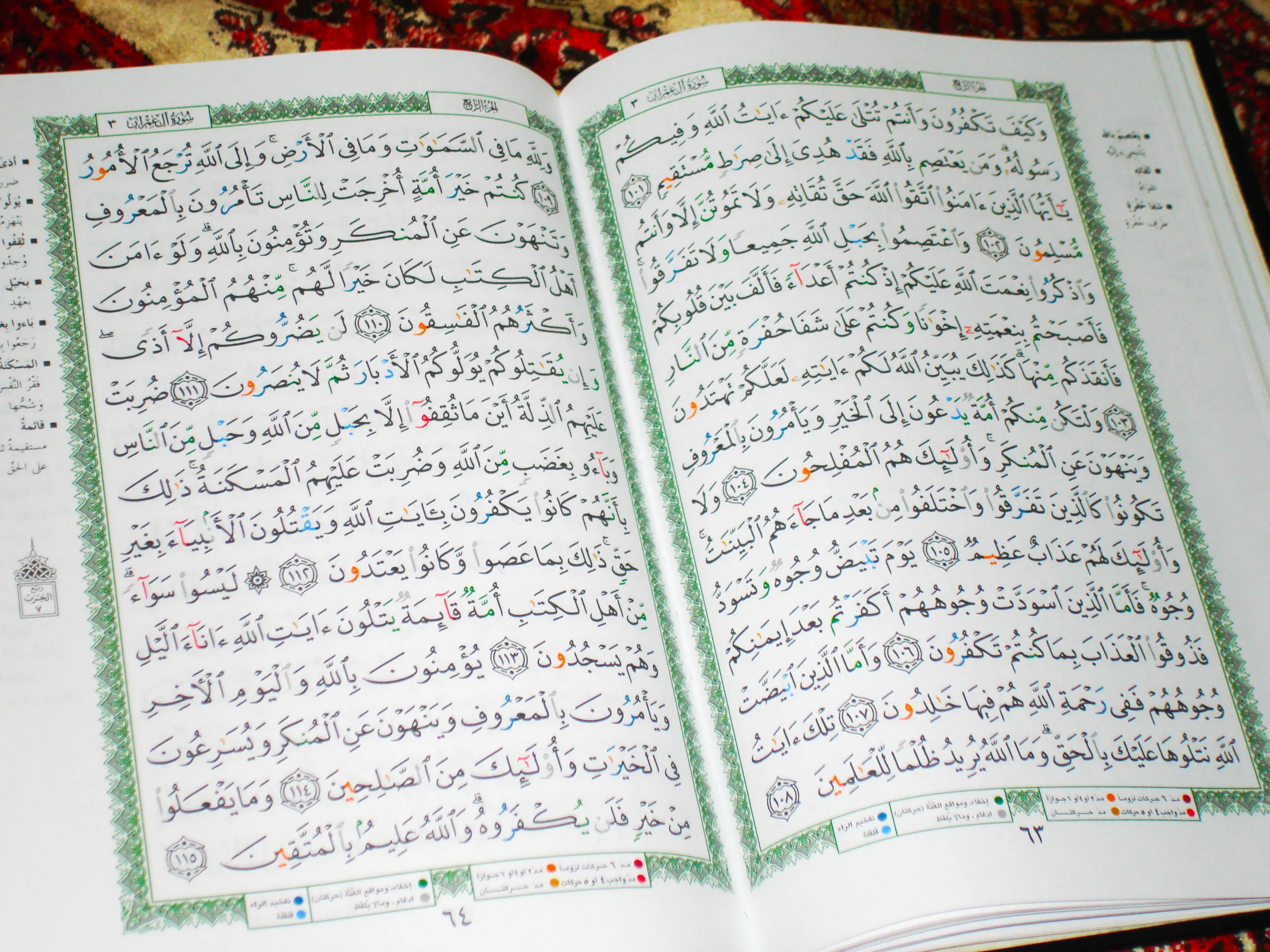
Umm al-Darda al-Sughra (the younger Umm al-Darda) is the name by which the biographical dictionaries know Hujayma, also written Juhayma, the daughter of Huyayy (or Hayy) of the Wassab clan of Himyar.12 She lived in Jerusalem and Damascus and was a wife of the Companion Abu al-Darda, whom she married after the death of the Prophet Muhammad (Peace Be Upon Him), according to Ali ibn al-Madini (d. 234/848–9), whom the biographer Ibn Hajar al-Asqalani (d. 852/1448–9) quotes.34 The sources count her among the Successors (tabi'un), the generation after the Companions, and Ibn Sam'i, whom the biographer al-Mizzi (d. 742/1341–2) quotes, places her in the second generation of the Successors of Syria.56
She learned the Quran in Abu al-Darda's household, and the biographers name among her teachers Salman al-Farisi, Abu Hurayra and Aisha, and among those who transmitted from her Jubayr ibn Nufayr, Makhul and Ibrahim ibn Abi Abla.12 Makhul called her a jurist (faqiha), and the biographer al-Dhahabi (d. 748/1347–8) heads his notice on her with the words al-sayyida, al-'alima, al-faqiha (the lady, the scholar, the jurist).782 When Abu al-Darda died, Mu'awiya ibn Abi Sufyan asked to marry her and she refused.95 Later reports show her in Jerusalem and Damascus in the company of Abd al-Malik ibn Marwan, and four of the biographical dictionaries record that she made the pilgrimage in 81 AH (700–701 CE).10111213 That is the last date at which the sources place her. Ibn Hibban (d. 354/965–6), quoted by Ibn Hajar, says that she spent six months of each year in Jerusalem and six in Damascus and that she died after 81.4
Abu al-Darda had a second wife of the same kunya, and the sources are careful to tell the two women apart. This article concerns the younger. Where the sources distinguish the two, or confuse them, that is stated once, in the section on her name and in the Historiographical Note.
The sources
The notices on her are in the biographical dictionaries and the histories of Damascus, and the later ones repeat the earlier. Ibn Asakir, the twelfth-century historian of Damascus (d. 571/1175–6), gives the longest, with the chains by which each report reached him.14 Al-Mizzi, in his Tahdhib al-kamal, a dictionary of the men and women who appear in the chains of the six canonical hadith collections, quotes Ibn Asakir for the reports that follow his opening statements on her, and his editor notes it.6 Al-Dhahabi, in the Siyar a'lam al-nubala', and Ibn Hajar, in the Tahdhib al-tahdhib, give shorter notices with many of the same reports.212 Ibn Abd al-Barr (d. 463/1070–71), in al-Isti'ab, and Ibn Hajar, in al-Isaba, discuss her in their dictionaries of the Companions, as one of the two women who bore the name.93 The TDV İslâm Ansiklopedisi has no entry of its own on her; its entry on her husband, by Abdullah Aydınlı, mentions her in the passages on his wives and on his pupils.5
The earlier authorities whom these books quote on her name and her standing include the hadith critics Ahmad ibn Hanbal (d. 241/855–6) and Yahya ibn Ma'in (d. 233/847–8), the Damascene historian Abu Zur'a al-Dimashqi (d. 281/894–5), Abu Mushir, whom Abu Zur'a quotes, Abu Ahmad al-Assal, whom al-Mizzi quotes, al-Kalabadhi (d. 398/1007–8) and al-Daraqutni (d. 385/995–6), and Ibn Hibban, whom Ibn Hajar quotes from his book of reliable narrators, al-Thiqat. They are reached here only through the later books that quote them.96154
The sources give no year of her birth, and one modern work gives a year of her death that the others do not (see the Historiographical Note). The only dated event is the pilgrimage of 81 AH, told below, with Ibn Hibban's statement that she died after it; the reports of her sayings and conduct are given by their narrators with no date.4111310
Her name and identity
Her name
The notices give her name as Hujayma bint Huyayy al-Wassabiyya. Ibn Abd al-Barr reports that Ahmad ibn Hanbal and Yahya ibn Ma'in gave it as Hujayma, and that others gave Juhayma, the daughter of an unnamed father, al-Wassabiyya; his own form is Hujayma bint Huyayy al-Wassabiyya.9 Al-Mizzi gives Hujayma, with Juhayma as a second form, daughter of Huyayy or of Hayy, and the nisba al-Awsabiyya or al-Wassabiyya, adding that Wassab is a clan of Himyar.1 Al-Dhahabi writes her as Hujayma al-Himyariyya al-Dimashqiyya, with Juhayma al-Awsabiyya as the second form.2 Ibn Sam'i, in al-Mizzi's quotation, calls her Hujayma bint Huyayy al-Ash'ariyya, of Awsab of Himyar.6 Al-Daraqutni, quoted by Ibn Asakir, writes the nisba al-Awsabiyya and identifies her as the Umm al-Darda whom Mu'awiya asked to marry after Abu al-Darda's death.15 This article uses Hujayma bint Huyayy al-Wassabiyya, with Juhayma as the variant.
Two women of the same name
Abu al-Darda had two wives who were each called Umm al-Darda. The TDV İslâm Ansiklopedisi says so directly: the elder (al-kubra) was a Companion and the younger (al-sughra) a Successor.5 Ali ibn al-Madini, as Ibn Hajar quotes him in al-Isaba, says that one of them saw the Prophet and was Khayra bint Abi Hadrad, and that the other married Abu al-Darda after the Prophet's death and was Hujayma al-Wassabiyya.3 Ibn Abd al-Barr reports that Ahmad ibn Hanbal and Yahya ibn Ma'in each named the elder as Khayra bint Abi Hadrad al-Aslami, and he writes that companionship belongs to the elder; of the younger he says that he knows of no report of hers that shows her to have been a Companion or to have narrated from the Prophet.169 Ibn Makula (d. 475/1082–3), in the same passage of al-Isaba, gives the elder as the one who had companionship and died before Abu al-Darda, and the younger as the one whom Mu'awiya asked to marry.3 Abu Mushir, according to Abu Zur'a al-Dimashqi, named the younger as Hujayma bint Huyayy al-Wassabiyya and the elder as Khayra bint Abi Hadrad, and Abu Ahmad al-Assal and al-Kalabadhi drew the same line.6
The same books also record that some authorities identified the two. The Historiographical Note sets out those reports. In the rest of the article, a report is told of the younger woman only where the source ties it to her: by her name or her father's, by a notice headed for her, or by the pupils and the places that the biographers give her. Reports in the collections and the dictionaries that name an Umm al-Darda with no epithet, and that nothing in their chain or setting assigns to her, are not told here.
In the household of Abu al-Darda
Abu al-Darda
Abu al-Darda was a man of Medina who became a Muslim after the battle of Badr; the Encyclopaedia of Islam, in the entry by A. Jeffery, records that when the Prophet established brotherhoods between the Emigrants and the people of Medina, Abu al-Darda was the brother chosen for Salman al-Farisi.17 The same entry states that he was sent to Damascus as a kadi and that he gathered groups in the mosque there to whom he taught the Quran, so that he became the founder of the Damascus school of Quran reading later headed by Ibn Amir. The TDV İslâm Ansiklopedisi adds that he began teaching his students after the dawn prayer, that his circles at times reached 1,600 people, and that among those who learned the Quran from him by arz, the pupil's recitation to the teacher, were his wife the younger Umm al-Darda, Atiyya ibn Qays al-Kilabi, Khalid ibn Ma'dan and Suwayd ibn Abd al-Aziz.5
The sources differ on the year of his death. The Encyclopaedia of Islam gives it as 32/652, "or thereabouts", at Damascus; the TDV İslâm Ansiklopedisi gives 32 (652) and adds that some reports give 31 (651).175
A girl in his house
The biographers record that she grew up in his household. Uthman ibn Abi Atika and Ibn Jabir say that Umm al-Darda was an orphan in Abu al-Darda's care. She went out with him in a hooded cloak (burnus) to pray in the rows of the men and sat in the circles of the Quran reciters, until Abu al-Darda told her one day to join the rows of the women.1881219 The report is in al-Mizzi, al-Dhahabi, Ibn Hajar and Ibn Asakir, and the printed texts differ in one word. Al-Dhahabi's text has the verb ta'allamu, so that she sat in the circles learning the Quran, and al-Mizzi's text has tu'allimu, so that she sat in them teaching it.818 Al-Dhahabi adds that she recited the Quran to Abu al-Darda while she was still a girl, and the TDV İslâm Ansiklopedisi lists her among his pupils in recitation.25
A different report, given below, has her parents give her to him in marriage. The notices set the two accounts side by side and neither carries a date.1820
Marriage, widowhood and the proposal of Mu'awiya
Al-Mizzi's notice names her as the wife Abu al-Darda left a widow and Mu'awiya asked to marry, and al-Dhahabi quotes Muhammad ibn Sulayman, a descendant of Abu al-Darda, for the name of that widow: Hujayma bint Hayy al-Awsabiyya.18
Two reports record exchanges between the spouses. Ibrahim ibn Adham said, in the report Baqiyya ibn al-Walid gave, that Abu al-Darda told Umm al-Darda that when she was angry he would seek her pleasure and when he was angry she should seek his, since otherwise they would soon be parted.1819 In a report from Maymun ibn Mihran, Abu al-Darda told her never to ask anyone for anything, and when she asked what she should do if she were in need, he told her to follow the harvesters, take up what fell from them, and thresh, grind and eat it.218
Her words at his death are given in two forms. In the report that Abu al-Zahiriyya gave from Jubayr ibn Nufayr, she said to Abu al-Darda that he had asked her of her parents in this world and they had married her to him, and that she now asked him of himself in the next. He told her not to marry after him. When Mu'awiya asked to marry her, she told him what had passed, and Mu'awiya answered that she should keep to fasting.20188 In the second report, from Luqman ibn Amir, she prayed that God would marry her to Abu al-Darda in Paradise, since he had married her in this world. Abu al-Darda said that if she wished that, and he was the first to die, she should not marry after him. When Mu'awiya asked to marry her after his death she answered that, God willing, she would marry no husband in this world until she married Abu al-Darda in Paradise.20187
Ibn Asakir gives further versions of the refusal. In one, which Hisham ibn Ammar had from Muhammad ibn Sulayman, she told Mu'awiya that she had heard Abu al-Darda say that he heard the Prophet say that a woman belongs to the last of her husbands, and that she had asked Abu al-Darda to ask God to make her his wife in Paradise. In a report from Abu al-Dahma she gave Mu'awiya as her reason a saying she had heard from Abu al-Darda that a woman belongs to the last of her husbands, and she told him she had asked Abu al-Darda whether he would accept her in Paradise if she strove in worship after his death and entered it, and that he had said yes. In a report from Atiyya ibn Qays she said she had heard Abu al-Darda say that a woman belongs to her last husband and that she preferred not to marry, and Mu'awiya sent to her to keep to fasting.2223 The versions agree on the refusal and on the saying that a woman belongs to the last of her husbands; only the report from Atiyya ibn Qays has Mu'awiya's advice to fast. They differ on whether the saying is given as Abu al-Darda's own words or as words of the Prophet that he relayed, which the Historiographical Note sets out.
Ibn Abd al-Barr, al-Daraqutni and the TDV İslâm Ansiklopedisi give the refusal as a fact about her, without the exchange, and the TDV İslâm Ansiklopedisi adds that she was known for her recitation of the Quran.9155
Learning and teaching
Her teachers
Al-Mizzi lists as her teachers Salman al-Farisi, Fadala ibn Ubayd al-Ansari, Ka'b ibn Asim al-Ash'ari, her husband Abu al-Darda, Abu Hurayra and Aisha, the Mother of the Believers.1 Al-Dhahabi gives the same list without Fadala, and says that she narrated a great deal of knowledge from her husband.2 Ibn Abd al-Barr, quoted above, and Ibn Asakir, whose words are in the Historiographical Note, both state that she is not known to have heard anything from the Prophet.923
Those who learned from her
Al-Dhahabi lists as having narrated from her Jubayr ibn Nufayr, Abu Qilaba al-Jarmi, Salim ibn Abi al-Ja'd, Raja ibn Haywa, Yunus ibn Maysara, Makhul, Ata al-Khaykharani, Isma'il ibn Ubayd Allah ibn Abi al-Muhajir, Zayd ibn Salim, Abu Hazim al-A'raj, Ibrahim ibn Abi Abla and Uthman ibn Hayyan al-Murri.2 Ibn Hajar's list adds Talha ibn Ubayd Allah ibn Kurayz, Abd Allah ibn Abi Zakariyya, Ya'la ibn Mamlak, Marzuq al-Taymi and Awn ibn Abd Allah ibn Utba.12 Al-Mizzi's list is longer still, and he notes of Jubayr ibn Nufayr al-Hadrami that he was older than she was.1
Three of the reports her pupils carried are in the library editions of the hadith collections. In the report that Khalid ibn Dihqan gave, Abd Allah ibn Abi Zakariyya, one of the pupils Ibn Hajar names, said that he heard Umm al-Darda say that she heard Abu al-Darda say that he heard the Messenger of Allah say: "Allah may forgive every sin, except for one who dies in a state of Shirk, or a believer who kills another believer deliberately" (Sunan Abi Dawud 4270). The edition grades the report sahih. Ibrahim ibn Abi Abla, who is in the lists of al-Dhahabi and al-Mizzi, is also the narrator of a report in Al-Adab al-Mufrad that his wife was ill and he went often to Umm al-Darda, who called for food for him each time, until one day she asked after his family and he told her they were well; she then said that she had called for food for him when he told her they were ill, and that since they were well she would not call for any for him. The edition gives the chain as authentic (Al-Adab al-Mufrad 513). The third report is the one about cursing, which belongs to her dealings with Abd al-Malik and is told below.1221
How she is described
Makhul said that she was a jurist, and al-Mizzi and Ibn Asakir add, in the account they give from him, that she sat in her prayers as a man sits.7824 Al-Kalabadhi calls her the jurist and Abu Ahmad al-Assal describes her as the Umm al-Darda from whom much hadith is transmitted.6 Al-Dhahabi, whose notice heads her as lady, scholar and jurist, says that she narrated a great deal of knowledge, lived a long life, and became known for her knowledge, her practice and her renunciation (zuhd).2
Her own words on learning are given in Ibn Asakir and al-Mizzi in two forms. Awn ibn Abd Allah ibn Utba said, in the report al-Awza'i gave through Jisr ibn al-Hasan, that those sitting with her told her they had wearied her, and she replied that she had sought worship in everything and had found nothing that healed her more than sitting with the scholars and discussing with them. In the report al-Mas'udi gave from Awn, the people used to come to her and remember God in her company, and when someone said to her that they might have wearied her she answered that she had sought worship in everything and had found nothing that healed her more than sitting with the people of remembrance (ahl al-dhikr).72425 Abd Rabbih ibn Sulayman ibn Zaytun said that among the words of wisdom she wrote for him on his tablet were: learn wisdom while young so as to act on it when old; and, in some versions, that every sower reaps what he has sown, good or evil.726
Other sayings are given by her pupils. She said that one of them asks God to provide for him although he knows that God does not rain a dinar or a dirham on him from the sky and provides for people through one another, so that whoever is given something should accept it, give it to a needy brother if he is rich, and use it for his need if he is poor.272829 When Uthman ibn Hayyan and others ate with her and left out the praise of God, she told them not to omit seasoning their food with the remembrance of God, since eating with praise is better than eating in silence.1330
In Jerusalem and Damascus
The women's worship
Yunus ibn Maysara and Isma'il ibn Ubayd Allah said that women used to worship with Umm al-Darda, and that when they were too weak to stand in prayer they held on to ropes.82728 Ibrahim ibn Abi Abla saw her sitting with the poor women of Jerusalem.28 Ibn Hibban, in Ibn Hajar's quotation, says that she lived six months of the year in Jerusalem and six in Damascus.4
Abd al-Malik ibn Marwan
The biographers place her in the company of Abd al-Malik ibn Marwan, though they do not date the meetings. Isma'il ibn Ubayd Allah said that Abd al-Malik was sitting at the Rock of Jerusalem with Umm al-Darda beside him, and that when the call to the sunset prayer was made he rose and she rose, leaning on him until he brought her into the mosque; she sat with the women and he went to the place of the prayer and led the people.1011 Yahya ibn Yahya al-Ghassani said that Abd al-Malik often sat beside her at the back of the mosque at Damascus.11
A report through Zayd ibn Aslam connects them in a different way. Sahih Muslim gives it in this form: Abd al-Malik ibn Marwan sent domestic goods for adornment to Umm al-Darda. One night he got up and called his servant, who was slow to answer, and he cursed him. The next morning Umm al-Darda said to him that she had heard him cursing his servant, and told him that she had heard Abu al-Darda say that the Messenger of Allah said: "Those who curse will not be intercessors or witnesses on the Day of Resurrection" (Sahih Muslim 2598). The edition of Sunan Abi Dawud gives the same words through Abu Hazim and Zayd ibn Aslam as "Those who curse (others) will not be intercessors nor witnesses", and grades the report sahih (Sunan Abi Dawud 4907). Ibn Asakir gives the report from Hafs ibn Maysara through Zayd, in a version in which Abd al-Malik sent to her and she was with him.10
The pilgrimage of 81
Abd Rabbih ibn Sulayman said that Umm al-Darda made the pilgrimage in 81 AH (700–701 CE), and the statement is repeated in al-Mizzi, al-Dhahabi, Ibn Hajar and Ibn Asakir.13111210 It is the last date the sources give for her. Ibn Hibban, as Ibn Hajar quotes him, writes that she died after 81.4 The modern biographical dictionary al-A'lam of Khayr al-Din al-Zirikli (d. 1396/1976) likewise heads her entry with her death as after 81 AH, after 700 CE.31 Khaled Abou El Fadl, writing in the Encyclopedia of Women & Islamic Cultures (2003), gives the year of her death as 81/701 and cites al-Zirikli for it.32 The sources give no place where she died or was buried.
Historiographical Note
Most of the sources distinguish two wives of Abu al-Darda called Umm al-Darda, and the one treated here is the younger.531662 They differ on the points below, and the article gives each version with its source.
One woman or two. Ibn Hajar, in al-Isaba, records that Ibn Manda (d. 395/1004–5) named Umm al-Darda as Khayra and added that she was also called Hujayma, and that Ibn al-Athir (d. 630/1232–3) answered him.3 The editor of al-Isti'ab quotes Ibn al-Athir's Usd al-ghaba on the same wording, which that note ascribes to Abu Nu'aym (d. 430/1038–9): Ibn al-Athir says the wording is an error, because its author took the two women for one, and that they are two, the elder Khayra, who had companionship, and the younger Hujayma al-Wassabiyya.9 The two books therefore name different authors for the wording, and agree in giving Ibn al-Athir's objection. Abu Mushir is reported both ways. Al-Isaba gives him as saying that the two were one woman, and the same sentence goes on to say that this was an error.3 Al-Mizzi, through Abu Zur'a al-Dimashqi, al-Dhahabi, Ibn Hajar in the Tahdhib al-tahdhib and Ibn Asakir give him as naming the two separately: Hujayma bint Huyayy al-Wassabiyya, and the elder, Khayra bint Abi Hadrad.621233 Ella Landau-Tasseron, who translated the volume of the History of al-Tabari (d. 310/922–3) on the Companions and Successors, writes in a note on its entry for Umm al-Darda that the sources confuse two women of the same name.34 The article follows the distinction the TDV entry, Ali ibn al-Madini, Ibn Abd al-Barr, Ibn Makula and the others draw, and takes no side on the reports of Ibn Manda or on al-Isaba's version of Abu Mushir.
Three of the narrators from her. Al-Mizzi lists Safwan ibn Abd Allah ibn Safwan, Maymun ibn Mihran and Zayd ibn Aslam among those who narrated from the younger Umm al-Darda, while Ibn Abd al-Barr names all three among those who narrated from the elder.19
Her name. The sources give Hujayma and Juhayma, Huyayy and Hayy, and the nisbas al-Wassabiyya, al-Awsabiyya, al-Himyariyya and al-Ash'ariyya; the section on her name sets them out.
How she came to Abu al-Darda's household. One report, from Uthman ibn Abi Atika and Ibn Jabir, makes her an orphan in his care; another, from Jubayr ibn Nufayr, has her say at his death that he had asked her parents for her and they had married her to him.1881920 The printed texts of the first report differ by the vocalisation of one verb: al-Dhahabi's has her learning the Quran in the reciters' circles, al-Mizzi's has her teaching it, and Ibn Asakir's has the unvocalised form that either reading fits.81819
The saying in the refusal of Mu'awiya. In the versions of Mu'awiya's proposal, the saying that a woman belongs to the last of her husbands is given in three ways: as words Abu al-Darda relayed from the Prophet (Muhammad ibn Sulayman's report to Hisham ibn Ammar, and the report of Abu Ya'la al-Mawsili from Maymun ibn Mihran); as Abu al-Darda's own words (the reports of Abu al-Dahma and of Atiyya ibn Qays); and, in one chain from Maymun ibn Mihran, as words she herself heard from the Prophet.222321 Ibn Asakir says of the last that it is an error, because Umm al-Darda heard nothing from the Prophet.23 Ibn Abd al-Barr says the same in substance, in the words given in the section on her name.9
Her dates. The sources give no year of her birth. The latest dated event is the pilgrimage of 81 AH (700–701 CE), and Ibn Hibban, quoted by Ibn Hajar, says that she died after 81.4 Al-Zirikli's al-A'lam gives her death as after 81 AH, after 700 CE, and the note to its entry records the pilgrimage of 81.31 The Encyclopedia of Women & Islamic Cultures gives her death as 81/701 and cites al-Zirikli for it.32 The Period at the head of this article covers both versions: 700 CE or later, 81 AH or later.
See also
- Mu'awiya ibn Abi Sufyan — the man who asked to marry her after Abu al-Darda's death
- Salman al-Farisi — Abu al-Darda's brother in the pairing of the Emigrants and the people of Medina, and one of her teachers
- Jerusalem — where she lived for half of each year, according to Ibn Hibban
- Hadith — the literature in which her reports are collected
- Umayyad Caliphate — the period in which the biographers place her later life
References
Citations
Footnotes
-
Al-Mizzi, Tahdhib al-kamal, ed. Bashshar Awwad Ma'ruf (Beirut: Mu'assasat al-Risala), xxxv, 352, no. 7974 — her name and nisba, her teachers and the pupils who transmitted from her, and the report that Mu'awiya asked to marry her; https://shamela.ws/book/3722/18952, register entry 4, shamela.ws. ↩ ↩2 ↩3 ↩4 ↩5 ↩6 ↩7 ↩8
-
Al-Dhahabi, Siyar a'lam al-nubala', ed. Shu'ayb al-Arna'ut et al. (Beirut: Mu'assasat al-Risala), iv, 277, no. 100 — the heading and description of her, her teachers, her pupils and Abu Mushir's distinction of the two women; https://shamela.ws/book/10906/3430, register entry 4, shamela.ws. ↩ ↩2 ↩3 ↩4 ↩5 ↩6 ↩7 ↩8 ↩9 ↩10 ↩11 ↩12
-
Ibn Hajar al-Asqalani, al-Isaba fi tamyiz al-Sahaba, viii, 124 — Ibn Manda's naming of Umm al-Darda and Ibn al-Athir's objection, Ali ibn al-Madini's account of the two wives, the report of Abu Mushir, and Ibn Makula's statement; https://shamela.ws/book/9767/4037, register entry 4, shamela.ws. ↩ ↩2 ↩3 ↩4 ↩5 ↩6 ↩7
-
Ibn Hajar al-Asqalani, Tahdhib al-tahdhib, xii, 467 — Ibn Hibban's statement that she spent six months of each year in Jerusalem and six in Damascus and died after 81; https://shamela.ws/book/3310/5702, register entry 4, shamela.ws. ↩ ↩2 ↩3 ↩4 ↩5 ↩6 ↩7
-
Abdullah Aydınlı, 'EBÛ'd-DERDÂ', TDV İslâm Ansiklopedisi, vol. 10 (1994), pp. 310–311 — the two wives named Umm al-Darda, the younger's refusal of Mu'awiya, her learning of the Quran from Abu al-Darda, his teaching circles and his death; https://islamansiklopedisi.org.tr/ebud-derda, register entry 2, islamansiklopedisi.org.tr. ↩ ↩2 ↩3 ↩4 ↩5 ↩6 ↩7 ↩8 ↩9
-
Al-Mizzi, Tahdhib al-kamal, ed. Bashshar Awwad Ma'ruf (Beirut: Mu'assasat al-Risala), xxxv, 353, no. 7974 — Ibn Sam'i's placing of her, the statements of Abu Mushir, Abu Ahmad al-Assal and al-Kalabadhi on the two women, and the editor's note that the reports that follow are taken from Ibn Asakir; https://shamela.ws/book/3722/18953, register entry 4, shamela.ws. ↩ ↩2 ↩3 ↩4 ↩5 ↩6 ↩7 ↩8
-
Al-Mizzi, Tahdhib al-kamal, ed. Bashshar Awwad Ma'ruf (Beirut: Mu'assasat al-Risala), xxxv, 355, no. 7974 — her answer to Mu'awiya in the report from Luqman ibn Amir, Makhul's statement, Awn ibn Abd Allah's reports of her sayings on sitting with scholars and with the people of remembrance, and her note on his tablet for Abd Rabbih ibn Sulayman; https://shamela.ws/book/3722/18955, register entry 4, shamela.ws. ↩ ↩2 ↩3 ↩4 ↩5
-
Al-Dhahabi, Siyar a'lam al-nubala', ed. Shu'ayb al-Arna'ut et al. (Beirut: Mu'assasat al-Risala), iv, 278, no. 100 — the reports of her girlhood, of her words at Abu al-Darda's death and of Mu'awiya's proposal, Muhammad ibn Sulayman's name for the widow, Makhul's statement, the women who worshipped with her, and Abu al-Darda's counsel to her; https://shamela.ws/book/10906/3431, register entry 4, shamela.ws. ↩ ↩2 ↩3 ↩4 ↩5 ↩6 ↩7 ↩8 ↩9 ↩10
-
Ibn Abd al-Barr, al-Isti'ab, iv, 1935 — the names of the younger Umm al-Darda, the statement that companionship belongs to the elder, the younger's refusal of Mu'awiya, the list of those who narrated from the elder, and the editor's note quoting Ibn al-Athir's Usd al-ghaba; https://shamela.ws/book/12288/1922, register entry 4, shamela.ws. ↩ ↩2 ↩3 ↩4 ↩5 ↩6 ↩7 ↩8 ↩9 ↩10
-
Ibn Asakir, Tarikh madinat Dimashq, lxx, 164 — her words to Abd al-Malik and the report through Zayd ibn Aslam, Abd al-Malik at the Rock of Jerusalem, and the pilgrimage of 81; https://shamela.ws/book/71/31637, register entry 4, shamela.ws. ↩ ↩2 ↩3 ↩4 ↩5
-
Al-Dhahabi, Siyar a'lam al-nubala', ed. Shu'ayb al-Arna'ut et al. (Beirut: Mu'assasat al-Risala), iv, 279, no. 100 — Abd al-Malik at the Rock of Jerusalem and in the mosque of Damascus, and the pilgrimage of 81; https://shamela.ws/book/10906/3432, register entry 4, shamela.ws. ↩ ↩2 ↩3 ↩4 ↩5
-
Ibn Hajar al-Asqalani, Tahdhib al-tahdhib (Hyderabad), xii, 466, no. 2943 — her pupils, Ibn Sam'i's placing of her, the statements of Abu Mushir and Abu Ahmad al-Assal, the reports of her girlhood, her words at Abu al-Darda's death and Mu'awiya's proposal, and the pilgrimage of 81; https://shamela.ws/book/3310/5701, register entry 4, shamela.ws. ↩ ↩2 ↩3 ↩4 ↩5 ↩6 ↩7
-
Al-Mizzi, Tahdhib al-kamal, ed. Bashshar Awwad Ma'ruf (Beirut: Mu'assasat al-Risala), xxxv, 357, no. 7974 — her saying on seasoning food with the remembrance of God, and Abd Rabbih ibn Sulayman's statement that she made the pilgrimage in 81; https://shamela.ws/book/3722/18957, register entry 4, shamela.ws. ↩ ↩2 ↩3 ↩4
-
Ibn Asakir, Tarikh madinat Dimashq, lxx, 148 — the opening of the notice and the statements of the earlier critics on her name; https://shamela.ws/book/71/31621, register entry 4, shamela.ws. ↩
-
Ibn Asakir, Tarikh madinat Dimashq, lxx, 150 — Abu Ahmad al-Assal's, al-Daraqutni's and al-Kalabadhi's statements; https://shamela.ws/book/71/31623, register entry 4, shamela.ws. ↩ ↩2 ↩3
-
Ibn Abd al-Barr, al-Isti'ab fi ma'rifat al-ashab, ed. Ali Muhammad al-Bajawi (Cairo: Maktabat Nahdat Misr, 1960), iv, 1934, no. 4150 — Ahmad ibn Hanbal's and Yahya ibn Ma'in's naming of the elder Umm al-Darda; https://shamela.ws/book/12288/1921, register entry 4, shamela.ws. ↩ ↩2
-
A. Jeffery, 'Abu 'l-Darda'', The Encyclopaedia of Islam, new edition, vol. 1 — Abu al-Darda's conversion, his brotherhood with Salman, his post as kadi at Damascus, his teaching of the Quran and his death. ↩ ↩2
-
Al-Mizzi, Tahdhib al-kamal, ed. Bashshar Awwad Ma'ruf (Beirut: Mu'assasat al-Risala), xxxv, 354, no. 7974 — the report of her girlhood in Abu al-Darda's household, Ibrahim ibn Adham's report of the saying between the spouses, her words to Abu al-Darda at his death, Mu'awiya's proposal and the report from Luqman ibn Amir; https://shamela.ws/book/3722/18954, register entry 4, shamela.ws. ↩ ↩2 ↩3 ↩4 ↩5 ↩6 ↩7 ↩8
-
Ibn Asakir, Tarikh madinat Dimashq, lxx, 151 — the report of her girlhood in Abu al-Darda's household, and Ibrahim ibn Adham's report of the saying between the spouses; https://shamela.ws/book/71/31624, register entry 4, shamela.ws. ↩ ↩2 ↩3 ↩4
-
Ibn Asakir, Tarikh madinat Dimashq, lxx, 152 — her words to Abu al-Darda at his death, and Mu'awiya's proposal in the report from Luqman ibn Amir; https://shamela.ws/book/71/31625, register entry 4, shamela.ws. ↩ ↩2 ↩3 ↩4
-
Ibn Asakir, Tarikh madinat Dimashq, lxx, 155 — the versions of Abu Ya'la and al-Abbas ibn Salih, and Abu al-Darda's counsel to her to gather what the harvesters leave; https://shamela.ws/book/71/31628, register entry 4, shamela.ws. ↩ ↩2
-
Ibn Asakir, Tarikh madinat Dimashq, lxx, 153 — Mu'awiya's proposal in the reports from Muhammad ibn Sulayman and Abu al-Dahma; https://shamela.ws/book/71/31626, register entry 4, shamela.ws. ↩ ↩2
-
Ibn Asakir, Tarikh madinat Dimashq, lxx, 154 — Mu'awiya's proposal in the reports from Atiyya ibn Qays and Maymun ibn Mihran, and Ibn Asakir's remark on the Maymun chain; https://shamela.ws/book/71/31627, register entry 4, shamela.ws. ↩ ↩2 ↩3 ↩4
-
Ibn Asakir, Tarikh madinat Dimashq, lxx, 156 — Makhul's statement and Awn ibn Abd Allah's report of her words on sitting with the scholars; https://shamela.ws/book/71/31629, register entry 4, shamela.ws. ↩ ↩2
-
Ibn Asakir, Tarikh madinat Dimashq, lxx, 157 — Awn ibn Abd Allah's report of her words on sitting with the people of remembrance; https://shamela.ws/book/71/31630, register entry 4, shamela.ws. ↩
-
Ibn Asakir, Tarikh madinat Dimashq, lxx, 158 — her note on Abd Rabbih ibn Sulayman's tablet; https://shamela.ws/book/71/31631, register entry 4, shamela.ws. ↩
-
Al-Mizzi, Tahdhib al-kamal, ed. Bashshar Awwad Ma'ruf (Beirut: Mu'assasat al-Risala), xxxv, 356, no. 7974 — the women who worshipped with her, and her sayings on provision; https://shamela.ws/book/3722/18956, register entry 4, shamela.ws. ↩ ↩2
-
Ibn Asakir, Tarikh madinat Dimashq, lxx, 159 — the women who worshipped with her, her sitting with the poor women of Jerusalem, and her saying on provision; https://shamela.ws/book/71/31632, register entry 4, shamela.ws. ↩ ↩2 ↩3
-
Ibn Asakir, Tarikh madinat Dimashq, lxx, 160 — her saying on provision, as Uthman ibn Hayyan gave it; https://shamela.ws/book/71/31633, register entry 4, shamela.ws. ↩
-
Ibn Asakir, Tarikh madinat Dimashq, lxx, 163 — her saying on seasoning food with the remembrance of God; https://shamela.ws/book/71/31636, register entry 4, shamela.ws. ↩
-
Khayr al-Din al-Zirikli, al-A'lam, 15th printing (Dar al-'Ilm lil-Malayin, 2002), viii, 77 — the heading of her entry, giving her death as after 81 AH (after 700 CE), and the note recording her pilgrimage of 81; https://shamela.ws/book/12286/7210, register entry 4, shamela.ws. ↩ ↩2
-
Khaled Abou El Fadl, 'Legal and Jurisprudential Literature: 9th to 15th Century', Encyclopedia of Women & Islamic Cultures, vol. 1, Methodologies, Paradigms and Sources, general editor Suad Joseph (Leiden: Brill, 2003) — the year of her death given as 81/701, citing al-Zirikli, al-A'lam, 8:77. ↩ ↩2
-
Ibn Asakir, Tarikh madinat Dimashq, lxx, 149 — Abu Mushir's and Ahmad ibn Hanbal's statements on the two women; https://shamela.ws/book/71/31622, register entry 4, shamela.ws. ↩
-
Al-Tabari, The History of al-Tabari, vol. 39, Biographies of the Prophet's Companions and Their Successors, translated by Ella Landau-Tasseron (Albany: State University of New York Press, 1998), p. 205 (Leiden iii 2473), the entry on Umm al-Darda, and the translator's note 888 on the confusion of two women of the same name; https://archive.org/details/tabarivolume39, register entry 12, archive.org. ↩
Sources
Works in the approved library. Cited by title and author, and by the entry used.
- Bearman, P. J., et al., eds. The Encyclopaedia of Islam, new (second) edition — A. Jeffery, 'Abu 'l-Darda'' (vol. 1).
- Muslim ibn al-Hajjaj. Sahih Muslim, Darussalam English edition.
- Abu Dawud. Sunan Abi Dawud, Darussalam English edition.
- Al-Bukhari. Al-Adab al-Mufrad: Prophetic Morals and Etiquettes. With commentary based on the rulings and comments of Muhammad Naasiruddeen al-Albaanee and others; compiled by Abu Naasir Ibrahim Abdur-Rauf. Petaling Jaya: Dakwah Corner Publications.
- Joseph, Suad, general editor. Encyclopedia of Women & Islamic Cultures, vol. 1, Methodologies, Paradigms and Sources. Leiden: Brill, 2003 — Khaled Abou El Fadl, 'Legal and Jurisprudential Literature: 9th to 15th Century'.
Classical works read at Shamela (register entry 4, shamela.ws).
- Ibn Asakir. Tarikh madinat Dimashq, vol. 70.
- Al-Mizzi. Tahdhib al-kamal fi asma' al-rijal, edited by Bashshar Awwad Ma'ruf, vol. 35. Beirut: Mu'assasat al-Risala.
- Al-Dhahabi. Siyar a'lam al-nubala', edited by Shu'ayb al-Arna'ut et al., vol. 4. Beirut: Mu'assasat al-Risala.
- Ibn Hajar al-Asqalani. Tahdhib al-tahdhib, vol. 12. Hyderabad.
- Ibn Hajar al-Asqalani. Al-Isaba fi tamyiz al-Sahaba, vol. 8.
- Ibn Abd al-Barr. Al-Isti'ab fi ma'rifat al-ashab, edited by Ali Muhammad al-Bajawi, vol. 4. Cairo: Maktabat Nahdat Misr, 1960.
A modern work read at Shamela (register entry 4, shamela.ws).
- Al-Zirikli, Khayr al-Din. Al-A'lam, vol. 8. 15th printing. Dar al-'Ilm lil-Malayin, 2002.
Read at archive.org (register entry 12, archive.org).
- Al-Tabari. The History of al-Tabari, vol. 39: Biographies of the Prophet's Companions and Their Successors, translated by Ella Landau-Tasseron. Albany: State University of New York Press, 1998.
Encyclopaedia entry read at the TDV (register entry 2, islamansiklopedisi.org.tr).
- Aydınlı, Abdullah. 'Ebû'd-Derdâ'. TDV İslâm Ansiklopedisi, vol. 10. 1994.
Further reading
Offered to the reader for further study. Nothing in this article rests on the works below beyond what the sources above record of them.
- Abu Zur'a al-Dimashqi. Tarikh — cited by al-Mizzi and Ibn Asakir for the statements of Abu Mushir on the two women.
- Ibn Hibban. Al-Thiqat — the book in which, as Ibn Hajar quotes it, he gives her residence in Jerusalem and Damascus and says she died after 81.
- Ibn al-Athir. Usd al-ghaba — the dictionary of the Companions that the editor of al-Isti'ab quotes on the confusion of the two women.
External links
Approved sources only, each with its number on the Register of Approved External Web Sources.
- Ebû'd-Derdâ — the TDV İslâm Ansiklopedisi, register entry 2, islamansiklopedisi.org.tr: the entry on her husband, in Turkish
- Al-Dhahabi, Siyar a'lam al-nubala', the notice on Umm al-Darda al-Sughra — register entry 4, shamela.ws: in Arabic
- Ibn Asakir, Tarikh madinat Dimashq, the notice on Hujayma bint Huyayy — register entry 4, shamela.ws: in Arabic
- Al-Tabari, The History of al-Tabari, vol. 39 — register entry 12, archive.org: the translation of the biographical supplement
Mentioned In
1 article references this topic
More from Umayyad Caliphate
Al-Aqsa Mosque: The Farthest Sanctuary
Al-Aqsa Mosque in Jerusalem is the third holiest site in Islam, central to the Night Journey (Isra and Miraj) of Prophet Muhammad, and a symbol of Islamic heritage and Palestinian identity for over 1,300 years.
The Dome of the Rock
Comprehensive history of the Dome of the Rock, one of Islam's most iconic monuments and the oldest surviving Islamic building, built in Jerusalem in 691 CE
Umayyad Caliphate
The Umayyad Caliphate (661-750 CE) was the first major Islamic dynasty, ruling from Damascus and expanding the Islamic empire from Spain to Central Asia through unprecedented territorial growth and administrative innovation.
Battle of Karbala
The Battle of Karbala (680 CE) was a confrontation in which Husayn ibn Ali, grandson of Prophet Muhammad, was killed with his companions by Umayyad forces near the Euphrates. It became one of the most consequential events in Islamic history, shaping the development of Shia Islam.