Musa ibn Nusayr: Governor and Conqueror of the Western Islamic World
Musa ibn Nusayr (c. 640-716 CE) was the Umayyad governor of North Africa who completed the conquest of the Maghreb, authorized Tariq ibn Ziyad's crossing into Spain, and personally led the second wave of the conquest of the Iberian Peninsula.
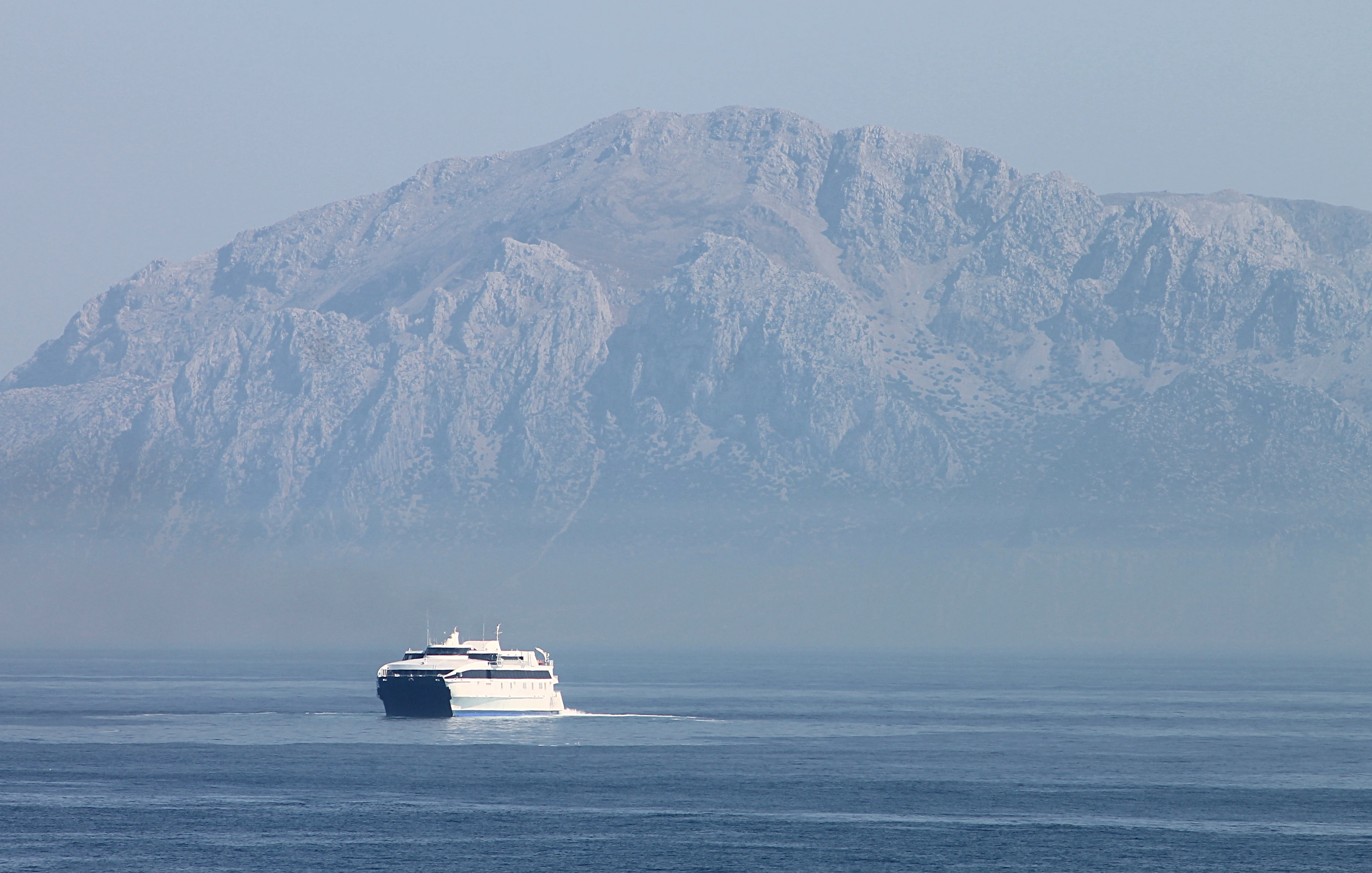
Musa ibn Nusayr (c. 640-716 CE / c. 19-97 AH) was the Umayyad governor of North Africa (Ifriqiya and the Maghreb) who completed the Muslim conquest of the western Mediterranean coastline, authorized and supported Tariq ibn Ziyad's epoch-making crossing into Spain in 711 CE, and personally led the second wave of the Iberian conquest in 712 CE. His governorship (c. 698-714 CE) saw the final pacification of Berber resistance in Morocco, the establishment of Muslim naval power in the western Mediterranean, and the destruction of the Visigothic kingdom — achievements that made possible the creation of Al-Andalus and that extended the Umayyad Caliphate to its greatest western extent.
Musa's career ended in disgrace: recalled to Damascus by the new caliph Sulayman ibn Abd al-Malik (who resented that Musa had served his predecessor al-Walid too loyally), he was stripped of his wealth, humiliated, and died in obscurity. This fall — from the conqueror of the western world to a disgraced prisoner — is one of the recurring tragedies of the Umayyad period, in which the empire's most capable servants were frequently destroyed by court politics.
Early Career and Appointment
Origins
Musa ibn Nusayr's origins are debated in the sources. Most accounts describe him as an Arab of the Banu Lakhm (a Yemeni Arab tribe that had settled in Syria), though some traditions give him a non-Arab (possibly Persian or Greek) ancestry with his father Nusayr being a freed slave or client (mawla). His early career was spent in the eastern Islamic world, where he served in various military and administrative capacities before being appointed to North Africa.
Governor of Ifriqiya
Musa was appointed governor of North Africa around 698 CE (79 AH) by the caliph Abd al-Malik ibn Marwan (or by the powerful governor of Egypt, Abd al-Aziz ibn Marwan). He inherited a situation that was still not fully consolidated: while the eastern Maghreb (Ifriqiya/Tunisia) was securely under Muslim control from the base at Qayrawan (founded by Uqba ibn Nafi), the western Maghreb (modern Morocco) remained contested, with Berber resistance continuing under various leaders.
The Completion of the North African Conquest
Pacification of the Maghreb
Musa's most important achievement before Spain was the final pacification of the western Maghreb. Building on the work of his predecessors (Uqba ibn Nafi, Hasan ibn al-Nu'man), Musa conducted a series of campaigns that brought the remaining Berber populations of Morocco under Muslim authority. His approach combined military force against those who resisted with the conversion and incorporation of Berber populations into the Muslim military system, so that Berber converts became the bulk of his army, and the appointment of Berber subordinates to govern their own peoples under Muslim authority — including Tariq ibn Ziyad, whom Musa appointed as governor of Tangier.
By approximately 709-710 CE, Musa controlled the entire North African coast from the Egyptian border to the Atlantic — the first time a single authority had held all of the Maghreb since the Roman Empire.
Naval Development
Musa also developed Muslim naval power in the western Mediterranean, building a fleet that could contest Byzantine maritime dominance. This naval capability was essential for the subsequent conquest of Spain (the crossing of the strait required ships) and for the security of the North African coastline against Byzantine raids. The naval infrastructure Musa created would later support Muslim maritime activity across the western Mediterranean for centuries.
The Conquest of Spain
Authorizing Tariq's Crossing
In 711 CE, Musa authorized his subordinate Tariq ibn Ziyad to cross the Strait of Gibraltar with approximately 7,000 Berber fighters. The degree of Musa's involvement in planning the operation is debated: some sources suggest he authorized only a raid (and that Tariq exceeded his orders by conquering the entire peninsula); others suggest that the full conquest was planned from the beginning and that Musa's subsequent crossing was always part of the strategy.
Whatever the original plan, Tariq's extraordinary success — destroying the Visigothic army at Guadalete and overrunning most of southern and central Spain within months — created a situation that demanded Musa's personal attention.
Musa's Own Crossing (712 CE)
In June 712 CE (Ramadan 93 AH), Musa crossed into Spain himself with a larger army of approximately 18,000 men — predominantly Arabs (in contrast to Tariq's predominantly Berber force). He took a different route through the peninsula, capturing cities that Tariq had bypassed: Seville (Ishbiliyya), one of the largest cities in Iberia; Mérida (Marida), the former Roman capital of Lusitania, which resisted and required a prolonged siege; and other cities of western Spain, extending Muslim control into areas Tariq had not reached.
The Meeting with Tariq
When Musa and Tariq met (reportedly at Toledo or Talavera), the encounter was marked by tension. The sources describe Musa as jealous of his subordinate's success and resentful that Tariq had gained glory that Musa felt should have been his. Some accounts record Musa striking Tariq or confiscating his spoils. The precise nature of their interaction remains debated, but the pattern — a superior resentful of his subordinate's achievement — is consistent across the sources.
Together, the two continued the conquest northward, and by 714 CE Muslim forces had crossed the Pyrenees into southern France. The peninsula was substantially under Muslim control, and the foundations of Al-Andalus were laid.
The Recall and Disgrace
Summoned to Damascus
In 714 CE, both Musa and Tariq were recalled to Damascus by the Umayyad caliph. The recall came during the transition from al-Walid I (who was dying) to his brother Sulayman. Musa reportedly delayed his departure, hoping al-Walid would die before his arrival (so that he could present his conquests to the new caliph). But the timing worked against him: al-Walid died before Musa reached Damascus, and Sulayman — who bore a grudge against Musa for having served al-Walid too eagerly — received him with hostility.
Disgrace and Death
Sulayman stripped Musa of his wealth — the enormous spoils he had accumulated from the Spanish conquest — humiliated him publicly, and may have imprisoned or fined him. Musa spent his final years in poverty and obscurity, dying around 716-717 CE (97-98 AH). The location and circumstances of his death are disputed: some sources place it in the Hejaz (possibly Medina), others in Damascus.
The fall of Musa — from the conqueror of an entire civilization to a disgraced pauper — exemplifies the precariousness of power under the Umayyad system, where even the most successful commanders could be destroyed by a change of caliph. His fate paralleled that of other successful Umayyad servants (Muhammad ibn al-Qasim, Qutayba ibn Muslim) who were punished by Sulayman for their association with al-Walid.
Legacy
Musa ibn Nusayr's legacy is inseparable from the creation of Al-Andalus. While Tariq ibn Ziyad led the initial crossing and won the decisive battle, it was Musa who created the conditions that made the crossing possible — by completing the conquest of the Maghreb, by developing the naval infrastructure, by appointing and training Tariq, and by following up with the larger Arab army that consolidated the conquest. The civilization of Islamic Spain — with its mosques, its scholars, its poetry, and its convivencia — owes its existence to the joint achievement of Musa and Tariq, whatever personal tensions existed between them.
The Completion of the Maghreb: A Decade of Campaigns
The Western Berber Campaigns (698-710 CE)
When Musa arrived in North Africa as governor around 698 CE, the eastern portions (Ifriqiya/Tunisia) were secure but the western Maghreb (modern Algeria and Morocco) remained contested. The final resistance of the legendary Berber queen al-Kahina had recently been broken by Musa's predecessor Hasan ibn al-Nu'man, but the region remained unsettled and many Berber communities had not yet been incorporated into the Muslim administrative system.
Over approximately twelve years (698-710 CE), Musa conducted a systematic series of campaigns that brought the entire Maghreb under effective Muslim control. He subdued remaining pockets of resistance in central and western Algeria and pushed into the Atlas Mountains, the mountainous spine of Morocco that had sheltered Berber communities from all previous invaders. He reached the Atlantic coast, extending Muslim authority to the westernmost point of the African continent, and established garrisons, appointed governors, and created the administrative infrastructure that would sustain Muslim rule in the region.
Most significantly, Musa adopted a policy of incorporating Berber converts into his military system rather than simply subjugating them. Berber men who accepted Islam were recruited into the army, trained in Muslim military methods, and given the opportunity to participate in further expansion. This policy created the Berber Muslim army that would conquer Spain — a force motivated by both religious zeal and the desire for the material rewards of conquest.
The Training of Tariq
Musa's appointment of Tariq ibn Ziyad as governor of Tangier was itself a significant act of policy. By placing a Berber convert in charge of the empire's westernmost position — directly facing the Iberian Peninsula — Musa demonstrated confidence in his Berber recruits and created the leadership structure that would make the Spanish conquest possible. Tariq's appointment was not merely administrative but strategic: it placed the right man in the right position at the right time.
The relationship between Musa and Tariq — mentor and protégé, superior and subordinate — was the partnership that produced the conquest of Spain. Musa provided the strategic vision, the resources, the authorization, and the follow-up force; Tariq provided the tactical brilliance, the personal courage, and the Berber soldiers who actually crossed the strait and fought the battles. The tension between them (documented in the sources as jealousy on Musa's part) does not negate the reality that the conquest was their joint achievement.
The Campaign in Spain (712-714 CE)
Musa's Personal Contribution
When Musa crossed into Spain in 712 CE with his Arab army, he was not merely following Tariq's path but extending the conquest in directions Tariq had not taken. His campaign was complementary rather than duplicative. Seville (Ishbiliyya), one of the largest and most important cities of the peninsula, which Tariq had bypassed in his rush northward, was captured after a brief siege and became one of the major centers of Muslim Spain. Mérida (Marida), the former Roman capital of Lusitania in modern Extremadura, proved the most difficult single objective of the entire Spanish campaign, its strong Roman walls — the best-preserved in Iberia — requiring a prolonged siege of several months before the city surrendered. The western regions, areas of modern Portugal and western Spain that Tariq's eastern-focused advance had not reached, were also brought under control.
Together, Musa and Tariq's combined operations (711-714 CE) brought approximately 90% of the Iberian Peninsula under Muslim control within three years — an achievement comparable in speed and scale to the original Arab conquests of Syria and Iraq.
The March Toward France
Before their recall, the combined Muslim forces had pushed beyond the Pyrenees into southern France (called Gaul or Ifranja in the Arabic sources). These were raids rather than permanent conquests, but they demonstrated the extraordinary momentum of the Muslim advance and raised the question — never fully tested — of whether the conquest might have continued into the heart of Europe had it not been halted by the recall of both commanders to Damascus.
The subsequent Battle of Tours/Poitiers (732 CE) — fought twenty years after Musa's recall, by subsequent Muslim commanders — is often cited as the moment that halted the Muslim advance into Europe. But the strategic decision to halt the conquest was effectively made when Musa and Tariq were recalled in 714 CE: the new commanders who replaced them were less ambitious and less capable, and the expansion north of the Pyrenees never achieved the momentum of the initial conquest.
The Treasure of Spain: What Musa Carried to Damascus
The Spoils of Conquest
When Musa departed Spain for Damascus in 714 CE, he carried with him one of the largest collections of spoils ever assembled from a single campaign. The sources describe his caravan as carrying gold and silver from the Visigothic royal treasury at Toledo, precious gems and jeweled objects, the legendary "Table of Solomon" — a large emerald or jeweled table that the Visigoths had kept as a sacred relic — thousands of captives including members of the Visigothic royal family, and fine textiles, weapons, and other luxury goods.
The value of these spoils was so vast that it became one of the issues in Musa's later disgrace: the caliph Sulayman accused him of withholding treasure that should have been sent to the caliphal treasury rather than kept for himself. Whether Musa actually embezzled from the spoils or whether this accusation was a pretext for politically motivated punishment remains debated.
The Fall from Power: A Detailed Account
The Political Context
Musa's recall and disgrace must be understood within the specific political context of the Umayyad succession crisis of 714-715 CE. Al-Walid I (Musa's patron) was dying, and his brother Sulayman was preparing to succeed him. Sulayman bore grudges against several of al-Walid's most capable servants — particularly those associated with the powerful governor al-Hajjaj (who had backed al-Walid's attempt to change the succession in favor of his son rather than his brother).
Musa, as al-Walid's appointee who had served loyally throughout his reign, was caught in this dynastic struggle. The timing of his recall — during the transition between caliphs — placed him in an impossible position: arriving in Damascus during the change of power, carrying enormous spoils that the new caliph both coveted and resented. Sulayman's treatment of Musa was thus not merely personal but political: a demonstration to the empire's other governors and commanders that loyalty to the previous regime would be punished.
The Humiliation
The sources describe Musa's disgrace in vivid terms: stripped of his wealth, publicly humiliated, made to stand in the sun as punishment, and reduced from one of the empire's most powerful men to a pauper. Whether all these details are historical or whether some are literary embellishment (designed to illustrate the fickleness of worldly power), the general pattern is clear: total reversal of fortune, from conqueror to prisoner.
Musa's son Abd al-Aziz — whom Musa had left as governor of Spain — was assassinated (possibly on Sulayman's orders) around the same time. The destruction of the family's power was comprehensive: father disgraced, son killed, wealth confiscated, and the achievements of a lifetime attributed to others or simply erased from official recognition.
The Moral of the Story
In the Islamic literary tradition, Musa's fall was often used as an illustration of the vanity of worldly power — a reminder that no amount of military achievement could protect a man from the arbitrary cruelty of those above him, and that true security lay only in faith and in God's reward rather than in the favor of princes. His story — alongside those of other fallen commanders — served as a warning to ambitious men: that the empire they served could destroy them as easily as it elevated them.
Musa's Administrative Achievements
The Organization of North Africa
Beyond his military conquests, Musa ibn Nusayr's most lasting contribution was the administrative organization of North Africa as an integral province of the Umayyad state. When he arrived, the region was a patchwork of military outposts and uncoordinated garrisons; when he left, it was a functioning province with a network of garrison cities and administrative centers, a system of appointed governors for each sub-region, revenue collection mechanisms that funded both local government and tribute to Damascus, a military recruitment system that incorporated Berber converts into the caliphal army, and secured trade routes along which commerce was facilitated across the Maghreb.
This administrative infrastructure — less dramatic than military conquest but more consequential in the long term — was what made the western Islamic world viable as a permanent entity rather than a temporary military occupation. The cities, the routes, the institutions, and the systems Musa established endured long after his personal rule ended, providing the framework within which Al-Andalus, the Maghreb, and eventually sub-Saharan African Islam would develop.
Naval Power in the Western Mediterranean
Musa's development of naval capabilities in the western Mediterranean was a strategic achievement of lasting significance. Before his governorship, Muslim naval power was concentrated in the eastern Mediterranean (based primarily in Egypt and Syria). Musa established shipyards on the North African coast, trained crews, and built a fleet capable of controlling the western sea lanes.
This naval capability served multiple purposes. It protected the North African coast from Byzantine raids, since the Byzantines still held naval bases in the central Mediterranean; it facilitated the transport of troops and supplies for the Spanish campaign, whose crossing of the strait required ships; it enabled the subsequent Muslim raids on the Mediterranean islands of Sardinia, Corsica, Sicily, and the Balearics; and it supported trade and communication between North Africa and Spain.
The western Mediterranean fleet that Musa created would remain a significant factor in the region's geopolitics for centuries — supporting the independent Umayyad emirate of Cordoba, facilitating the Aghlabid conquest of Sicily (827 CE), and enabling the maritime commerce that enriched the western Islamic world.
The Joint Achievement: Musa and Tariq
Complementary Contributions
The conquest of Spain was not the achievement of either Musa or Tariq alone but their joint accomplishment — a partnership in which each contributed what the other could not provide:
Tariq provided the initial crossing and the decisive victory at Guadalete, the Berber fighters who formed the army's core, the tactical brilliance that made the rapid advance possible, and the personal courage that inspired his troops. Musa provided the strategic vision that authorized and planned the invasion, the Berber military system that recruited and trained Tariq's soldiers, the naval infrastructure that made the crossing possible, the larger Arab army that consolidated the conquest, and the administrative framework that turned military victory into permanent governance.
Without Musa, there would have been no invasion of Spain (he authorized it, equipped it, and supported it). Without Tariq, the invasion might not have succeeded (his tactical genius won the decisive battle). The tragedy is that the partnership was poisoned by jealousy and ended in the shared disgrace of both men — recalled, humiliated, and erased from the history of the land they had conquered together.
The Division of Credit
The question of who deserves more credit for the conquest — Musa or Tariq — has been debated across the centuries. Arab nationalist historiography tended to emphasize Musa (the Arab governor who directed the enterprise); Berber/Amazigh historiography emphasized Tariq (the Berber commander who actually fought the battle); and modern historians generally acknowledge both contributions as essential and complementary.
The Islamic tradition itself offers no definitive ranking: both men are honored as servants of God who expanded the dar al-Islam into new territory, and both are remembered with sympathy for the disgrace that ended their careers. Their joint achievement — the creation of Al-Andalus — outlived both of them by eight centuries, which is perhaps the most appropriate tribute to their shared accomplishment.
Musa's Sons and Their Fates
Abd al-Aziz ibn Musa: Governor of Al-Andalus
When Musa departed Spain for Damascus in 714 CE, he left his son Abd al-Aziz ibn Musa as the governor of the newly conquered territory. Abd al-Aziz proved a capable administrator — he extended Muslim control over additional areas, established the administrative capital at Seville, and reportedly married Egilona (the widow of the Visigothic king Roderic), symbolically uniting the old and new orders.
However, Abd al-Aziz's fate was as tragic as his father's. In 716 CE, he was assassinated — reportedly on orders from the caliph Sulayman (or at the instigation of the army, which suspected him of converting to Christianity under his wife's influence). His head was sent to Damascus and shown to his father Musa, who was already in disgrace. The sources record that when shown his son's severed head, the aged Musa said: "May God curse whoever killed him. I know that he was a good Muslim and a warrior in the path of God."
Other Sons
Musa had other sons who served in various capacities during and after the conquest, but none achieved the prominence of Abd al-Aziz, and most suffered from the general disgrace that attached to the family after Sulayman's accession. The destruction of Musa's family — father disgraced, eldest son assassinated, wealth confiscated — represented the complete reversal of a family that had been among the most powerful in the western Islamic world.
The Significance of the Berber Military System
Musa's Creation of a Berber Army
One of Musa's most consequential achievements — often overlooked in favor of the more dramatic military campaigns — was his creation of an effective Berber Muslim military system in North Africa. When he arrived as governor, the Berber populations were either hostile (resisting Muslim rule) or recently subdued (recently conquered but not yet integrated). By the time he authorized the crossing into Spain, he had transformed these populations into a trained, motivated, and effective military force — the army that actually conquered the Iberian Peninsula.
This transformation involved several elements. Mass conversion — encouraging, and sometimes compelling, Berber acceptance of Islam — transformed them from potential enemies into co-religionists, while military training incorporated Berber recruits into the Arab military system, teaching them tactics, organization, and discipline while preserving their own martial strengths, particularly horsemanship and mobile warfare. The appointment of Berber officers promoted capable converts to positions of command, of which Tariq ibn Ziyad's appointment as governor of Tangier was the most significant, and the integration of tribal structures worked with existing Berber tribal organization rather than against it, incorporating tribes as units rather than breaking them up.
The army that crossed into Spain in 711 CE was the product of this decade-long process: a force of Berber warriors who had been recruited, converted, trained, and organized under Musa's governorship. Without this preparatory work — less dramatic than the conquest itself but absolutely essential to it — the crossing would never have been possible.
The Legacy of Berber Military Power
The Berber military system that Musa created did not end with the conquest of Spain — it continued to develop and to shape the history of the western Islamic world for centuries. The Berber soldiers who settled in Spain became an important component of the Andalusian military, and their periodic revolts against Arab domination shaped Andalusian politics. The Berber dynasties that eventually arose in North Africa — the Almoravids and the Almohads — were direct descendants, in military and organizational terms, of the Berber Muslim military tradition that Musa had initiated, and the Marinids, Hafsids, and Zayyanids who ruled the Maghreb in the later medieval period drew on the same martial tradition. The Berber warriors who crossed the Sahara to spread Islam into West Africa carried with them a military culture that Musa's system had helped to shape.
In this sense, Musa's greatest achievement was not the conquest of Spain per se but the creation of the military-religious framework that made the western Islamic world possible — a framework in which Berber populations were not merely subjects of Arab empire but active agents of Islamic expansion, contributing their own military prowess to the spread of the faith.
Historiographical Note
Musa in the Arabic Sources
The Arabic historical sources treat Musa with a mixture of respect (for his military achievements) and sympathy (for his tragic fall). The accounts in Ibn Abd al-Hakam, al-Tabari, and al-Maqqari preserve detailed narratives of his campaigns and his disgrace, presenting him as a man of genuine accomplishment destroyed by the arbitrariness of political power.
The tension between Musa and Tariq — which the sources record but do not always resolve — reflects the broader historiographical challenge of attributing credit for a shared achievement. Medieval Arab historians tended to give Musa more credit (he was the senior commander and the Arab); medieval and modern Berber/Amazigh historians have emphasized Tariq's contribution. The truth, as modern scholarship recognizes, is that the conquest was a genuine partnership — however unequal and however marked by personal friction.
Modern Assessment
Modern historians (Hugh Kennedy, Roger Collins, Brian Catlos) generally assess Musa as a capable administrator and organizer rather than a great tactical commander. His personal military contribution to the Spanish conquest (the capture of Mérida and Seville) was significant but less dramatic than Tariq's destruction of the Visigothic army at Guadalete. His greater achievement lay in the organizational work that preceded the conquest: the pacification of the Maghreb, the creation of the Berber army, the development of naval infrastructure, and the strategic decision to authorize the crossing.
This assessment places Musa in a similar category to al-Walid ibn Abd al-Malik — as an organizer and enabler rather than a front-line warrior. Both men created the conditions for conquest without personally leading the decisive battles; both appointed the commanders who actually won the victories; and both were more administrators than warriors. Their legacy lies in what they made possible rather than in what they personally achieved on the battlefield.
The Siege of Mérida: Musa's Most Difficult Campaign
The Roman Fortress
Mérida (Marida in Arabic) — the former Roman capital of Lusitania, in modern Extremadura, Spain — proved the most difficult single military objective of the entire Spanish conquest. Unlike most Iberian cities that surrendered quickly after Guadalete, Mérida resisted: its inhabitants (predominantly Christian) chose to fight rather than submit, relying on the city's exceptional Roman fortifications — walls, towers, and a fortified bridge over the Guadiana River that were among the best-preserved Roman military architecture in Western Europe.
The siege lasted several months (the sources disagree on the exact duration — some say weeks, others say up to a year). During this period, Musa employed siege engines such as catapults and battering rams against the walls, a blockade to prevent supplies from reaching the city, negotiation with factions within the city who favored surrender, and escalade — attempts to scale the walls — that were initially repelled.
The city eventually surrendered through negotiation — reportedly after a particularly costly attempt by the defenders to break the siege failed. The terms of surrender allowed the inhabitants to retain their property and worship but required the surrender of the fortifications, the payment of tribute, and the recognition of Muslim authority.
The Significance of Mérida
The capture of Mérida was significant for several reasons. It demonstrated that Muslim forces could reduce strongly fortified positions rather than merely overwhelming undefended cities or winning pitched battles in the open field; it secured the western portion of the peninsula, modern Portugal and Extremadura, that Tariq's eastern advance had not reached; it established Mérida as a Muslim-held city that would anchor the western frontier of Al-Andalus for centuries; and it showed Musa's personal military capability, not merely organizing others' campaigns but personally directing a difficult siege to successful completion.
Musa's Vision: What Might Have Been
The Continental Ambition
The sources record that before his recall, Musa had conceived of pushing beyond the Pyrenees into France — possibly even reaching Damascus overland through European territory. This vision — whether seriously entertained or merely a boast — captures the extraordinary ambition of the moment: a general who had just conquered an entire European peninsula envisioning the continuation of Muslim advance into the heart of Christendom.
Whether this continental vision was realistic is debatable. The Muslim army had been campaigning continuously for three years, its supply lines stretched back across the Pyrenees and the entire width of Spain to the Strait of Gibraltar, and the Frankish kingdoms to the north (unlike the collapsing Visigothic state) were robust and capable of organized resistance. The subsequent Battle of Tours/Poitiers (732 CE) — fought by later Muslim commanders against the Franks — suggested that further advance into Europe would have been contested seriously.
But the recall of Musa and Tariq in 714 CE meant that this question was never tested by the men most capable of testing it. The campaign's momentum was broken by court politics rather than by military failure, and the question of what might have been achieved had Musa and Tariq been left in command remains one of the great counterfactual speculations of medieval history.
The Lost Decade
The period 714-720 CE — immediately following Musa's recall — saw a series of less capable governors struggle to maintain what he and Tariq had conquered. Without the strategic vision and personal authority that Musa had provided, the Muslim administration of Spain became fragmented, uncertain, and occasionally chaotic. The Berber-Arab tensions that Musa had managed (however imperfectly) erupted into open conflicts; the frontier stalled; and the consolidation of Al-Andalus proceeded more slowly than it might have under more decisive leadership.
This "lost decade" underscores Musa's importance: he was not merely a figurehead but an active, capable administrator whose personal direction had held the western enterprise together. Without him, the enterprise did not collapse (Al-Andalus survived and eventually flourished), but it lost momentum and coherence in ways that delayed the full consolidation of Islamic Spain by at least a generation.
The Parallel with Other Umayyad Commanders
A Pattern of Brilliance and Disgrace
Musa's fate — extraordinary achievement followed by arbitrary disgrace — was not unique but part of a recurring pattern in the Umayyad caliphal system. Other commanders who achieved great things under one caliph and were destroyed by the next include Muhammad ibn al-Qasim, who conquered Sindh at seventeen and was recalled and killed at twenty; Qutayba ibn Muslim, who conquered Central Asia and, attempting to rebel rather than accept recall, was killed by his own troops; and Tariq ibn Ziyad, who conquered Spain and was recalled before disappearing into obscurity.
This pattern reveals a structural weakness in the Umayyad system: the caliphate could produce brilliant commanders and spectacular conquests, but it could not provide them with institutional protection against the personal vendettas of new caliphs. Each succession was potentially a death sentence for the previous regime's servants, creating an atmosphere of insecurity that eventually undermined the state's ability to retain talented administrators.
The Abbasid dynasty that replaced the Umayyads in 750 CE would partially solve this problem (through a more centralized bureaucracy and a more stable succession system), but the Umayyad pattern — brilliance at the frontiers, arbitrariness at the center — remained one of the defining features of the dynasty's history. Musa's story, alongside those of his contemporaries, illustrates this pattern with painful clarity.
Musa's Place in the History of Al-Andalus
The Founding Generation
In the history of Al-Andalus, Musa ibn Nusayr belongs to the founding generation — the small group of men (alongside Tariq and the first appointed governors) who created the Islamic presence in the Iberian Peninsula. While subsequent figures — the Umayyad emirs, the scholars of Córdoba, the builders of the Alhambra — are more celebrated, they all built upon foundations that Musa and Tariq had laid.
The civilization that grew from their conquest produced eight centuries of Islamic governance (711-1492 CE), one of the medieval world's greatest scholarly traditions, architectural masterpieces that remain among humanity's finest buildings, a model of interfaith coexistence — however imperfect — that has inspired modern pluralist movements, and the transmission of Greek philosophy to medieval Europe through Arabic translation.
All of this — the entire eight-century experiment of Islamic Spain — began with the strategic decisions of two men: Musa, who authorized, planned, and supported the invasion from North Africa, and Tariq, who executed it on the ground in Spain. Their joint achievement created one of the most significant cultural encounters in human history: the meeting of Islamic and Christian European civilizations on the Iberian Peninsula, with all its consequences for the subsequent development of both.
The Irony of Forgetting
One of the ironies of Musa's story is that the civilization he helped create largely forgot him. The Andalusian historical and literary tradition — which celebrated its poets, its philosophers, its builders, and its rulers — had relatively little to say about the men who made it all possible. Musa appears in the histories of the conquest itself, but not in the cultural memory of the civilization that grew from that conquest. The Great Mosque of Córdoba does not bear his name; the scholars of Al-Andalus did not commemorate him; and the population that lived for eight centuries under Islamic rule in Spain rarely invoked his memory.
This forgetting reflects a broader pattern: founding military achievements are often overshadowed by the cultural achievements they make possible. We remember Athens for Plato and Aristotle, not for the generals who established Athenian power. We remember Baghdad for al-Khwarizmi and Ibn Sina, not for the Abbasid generals who conquered the territory. And we remember Al-Andalus for Ibn Rushd and the Alhambra, not for Musa and Tariq — the men without whom none of it would have existed.
This is perhaps the ultimate tribute to a conqueror: that the world he created was so rich, so productive, and so memorable in its own right that it eclipsed the memory of its creator. Musa ibn Nusayr's greatest achievement was not a battle or a siege but a possibility — the opening of Western Europe to Islamic civilization. What others did with that possibility is remembered; that he created it is sometimes forgotten. But history, properly understood, traces the chain of causation back to its origins — and the origin of Al-Andalus lies with Musa and Tariq, standing on the African shore of the strait, looking north toward a continent that was about to change forever. Their joint vision, their complementary skills, and their shared willingness to risk everything on a single bold venture produced one of the most consequential military operations in human history — and a civilization that enriched the world for eight hundred years.
The Governance of Spain Under Musa
Administrative Arrangements (712-714 CE)
During his two years in Spain (712-714 CE), Musa established the initial administrative framework of Islamic Iberia. He made Seville (Ishbiliyya) his initial administrative center, though Córdoba would later become the capital under subsequent governors, and divided the conquered territory into districts, each with an appointed governor often drawn from the Arab military elite who accompanied him. He established a tax system collecting kharaj (land tax) from the agricultural population and jizya from the Christian and Jewish communities who retained their faith, and placed military garrisons in the major cities — Arab troops in the rich south and Berber troops in the less fertile northern frontier zones, a division that would later generate resentment. Muslim coins began to be struck in Spain, replacing Visigothic currency and symbolizing the transfer of sovereignty.
These arrangements were provisional — they would be modified substantially by subsequent governors — but they established the principle that Spain would be governed as an integrated province of the Umayyad Caliphate, not merely occupied by an army. The transition from military conquest to civilian administration is one of the most challenging phases of any conquest, and Musa's two years in Spain were devoted as much to this transition as to further military operations.
The Treatment of the Population
Musa's treatment of Spain's conquered population followed the standard patterns of Umayyad governance elsewhere. Christians who submitted without fighting retained their property, their churches, and their internal governance under the dhimmi system, paying jizya and acknowledging Muslim political authority but otherwise left to their existing way of life, while Christians who had resisted militarily, such as the defenders of Mérida, lost property and political rights proportional to the resistance they had offered, though they were not enslaved en masse. Jews, who had actively assisted the conquest, were rewarded with the restoration of rights they had lost under Visigothic legislation, and Jewish communities were given responsibility for garrisoning certain cities, freeing Muslim troops for the advance northward. Visigothic nobles who submitted were allowed to retain their lands and titles in many cases, though they were now subordinate to Muslim authority.
This relatively tolerant approach — characteristic of the Umayyad expansion generally — was pragmatic: a small conquering army could not govern millions through terror alone. The dhimmi system provided a framework for stable governance that served both parties' interests: the Muslim rulers received revenue and political authority; the conquered populations received peace, protection, and the preservation of their religious and cultural life.
The Sources for Musa's Life: Problems and Perspectives
Arabic Sources
The Arabic sources for Musa's career include Ibn Abd al-Hakam (d. 871 CE), whose Futuh Misr wa al-Maghrib wa al-Andalus is the earliest comprehensive Arabic account of the North African and Spanish conquests, written approximately 150 years after the events; al-Tabari (d. 923 CE), whose Tarikh al-Rusul wa al-Muluk is the most comprehensive general history and incorporates earlier accounts with varying levels of reliability; al-Maqqari (d. 1632 CE), whose Nafh al-Tib is a late compilation that preserves material from earlier, now-lost sources about Al-Andalus; and al-Baladhuri (d. 892 CE), whose Futuh al-Buldan is a focused history of the Islamic conquests.
These sources agree on the broad outlines — Musa's governorship, the crossing into Spain, the tension with Tariq, the recall and disgrace — but differ significantly on details: the exact chronology, the specific terms of particular negotiations, and the precise nature of Musa's relationship with the caliph.
The Lacuna Problem
A significant challenge in studying Musa's career is the lacuna problem — the gap between the events (c. 698-716 CE) and the earliest surviving accounts (c. 860-870 CE). This gap of 150+ years means that all our information has been filtered through multiple generations of oral transmission and written compilation, during which errors, embellishments, and politically motivated distortions may have been introduced.
The Abbasid period (during which most of our sources were written) had an interest in portraying the Umayyads negatively — and Musa's disgrace fit this narrative perfectly (it could be presented as evidence of Umayyad ingratitude and political dysfunction). Conversely, pro-Umayyad or pro-Andalusian sources may have embellished Musa's achievements. The modern historian must navigate between these tendencies, accepting the broad narrative while remaining cautious about specific details.
Musa's Personal Qualities
What the Sources Tell Us
The classical Arabic sources provide some information about Musa's personal character, though much of this must be treated cautiously, as it may reflect idealized or hostile portrayals rather than historical observation. He was described as administratively capable, able to manage the complex logistics of governing North Africa while simultaneously planning the Spanish invasion, and reported to be personally brave, willing to lead from the front during the siege of Mérida and other operations in Spain. He was characterized as jealous of subordinates, particularly of Tariq's success, which he reportedly found difficult to accept with grace, and as ambitious, potentially overly so, in that his grand visions such as reaching Damascus overland through Europe may have exceeded practical possibility. He was also noted for personal piety: despite the Umayyad dynasty's general reputation for worldliness, Musa himself was reportedly attentive to prayer and religious observance.
These characteristics — capability, bravery, jealousy, ambition, and piety — paint the portrait of a complex man rather than a one-dimensional hero or villain. He was competent enough to organize the most ambitious conquest in western Islamic history, yet human enough to be undone by jealousy toward a subordinate and by the political machinations of a new caliph. His story is ultimately one of human achievement and human limitation — of extraordinary accomplishment brought down by equally extraordinary vulnerability to the political forces that governed the Umayyad world.
The North African Legacy: What Musa Left Behind
The Infrastructure of Islamic North Africa
When Musa departed North Africa for Spain in 712 CE, he left behind an organized provincial administration that would survive his personal fall and continue to function under subsequent governors. Qayrawan, founded by Uqba ibn Nafi but developed under Musa, remained the capital — a functioning city with its Great Mosque, its garrison, its markets, and its scholarly community — supported by a network of garrison cities across the Maghreb, including Tangier where Tariq had governed, Tlemcen, Volubilis, and other points that anchored Muslim presence. Revenue collection systems generated the income needed to maintain the army and fund further expansion, and a converted Berber population was increasingly integrated into the Islamic world, praying in mosques, observing Islamic law, and serving in the Muslim military.
This infrastructure — which Musa had spent approximately fifteen years (698-712 CE) building — proved robust enough to survive both his personal disgrace and the political disruptions that followed. When Sulayman recalled and disgraced Musa, North Africa did not collapse or revolt (as it had after Uqba's death in 683 CE). The institutions, the garrisons, the converted populations, and the administrative systems remained in place and continued to function. This durability — the fact that the province survived its builder's removal — testifies to the quality of Musa's organizational work.
The Berber Contribution to Western Islam
The Berber Muslim military system that Musa created — transforming North Africa's indigenous warriors into soldiers of Islam — was one of the most consequential institutional innovations of the early Islamic period. The Berber Muslim armies that Musa trained and organized did not disappear after his recall — they continued to serve under subsequent governors and eventually became the dominant military force of the western Islamic world.
The subsequent history of the western Mediterranean — the Berber dynasties (Almoravids, Almohads, Marinids), the Berber contribution to the defense of Al-Andalus, the Berber-led spread of Islam into sub-Saharan Africa — all built upon the foundation that Musa had laid. He was not merely a conqueror but a state-builder — a man who created the military and administrative institutions through which the western Islamic world would operate for centuries after his death.
The Spanish Campaign: Tactical Analysis
The Siege of Mérida
The siege of Mérida (Marida) — Musa's most prolonged and difficult military operation in Spain — deserves detailed attention as an illustration of his personal military capability:
The challenge: Mérida possessed the strongest fortifications of any city in the Iberian Peninsula. Its Roman walls — massive stone structures with towers at regular intervals — had been maintained by the Visigoths and were effectively impregnable to simple assault. The city's garrison was determined to resist, and its supplies were sufficient for a prolonged defense.
Musa's approach: He surrounded the city, cut off external supplies, and settled in for a blockade. He attempted several assaults on the walls but was repelled. He employed siege engines (catapults) to damage the defenses, but the Roman masonry resisted bombardment more effectively than the mud-brick fortifications of North African cities.
The breakthrough: After several months (the sources vary on the exact duration — from several weeks to nearly a year), the defenders attempted a sortie — a breakout attack designed to lift the siege by destroying the besieging army's camp. The sortie was defeated, and its failure demoralized the defenders. Negotiations followed, and the city surrendered on terms: the garrison was allowed to leave; the remaining population accepted Muslim authority and dhimmi status; and the city's fortifications were turned over to Musa's forces.
The significance: The capture of Mérida demonstrated that Musa could succeed at the most demanding type of military operation — the prolonged siege of a strongly fortified city. This was important because it showed that Muslim power in Spain was not limited to open-field cavalry victories (like Guadalete) but could reduce even the strongest positions given sufficient time and resources.
The Strategic Division of Labor
The overall Spanish campaign (711-714 CE) demonstrated an effective strategic division of labor between Musa and Tariq. Tariq operated in the east and center, advancing up the Guadalquivir, through the central Meseta to Toledo, and toward the northeast, while Musa operated in the west, capturing Seville, Mérida, and the western regions of modern Portugal and Extremadura.
Together, their two-pronged advance covered the peninsula from both directions simultaneously, giving the Visigoths no safe area to regroup. This was probably not a pre-planned pincer movement (the sources suggest tension rather than coordination between the two), but its effect was the same: the peninsula was enveloped from east and west at the same time, and resistance was squeezed into an ever-shrinking area in the north.
Musa in Islamic Historical Memory
A Figure of Ambivalence
In Islamic historical memory, Musa occupies an ambivalent position — neither universally celebrated (like Khalid ibn al-Walid or Saladin) nor universally condemned. His achievements are acknowledged (the conquest of Spain was obviously significant), but his personal flaws (jealousy toward Tariq, possible arrogance) and his tragic end (disgrace and poverty) prevent the uncomplicated hero-worship that other commanders receive.
This ambivalence reflects the complexity of his actual character and situation: he was a capable man who accomplished great things but who also displayed human weaknesses (jealousy, pride, overreach), and who was ultimately destroyed not by his enemies but by the political system he served. His story doesn't lend itself to simple moral lessons — it is too messy, too contingent, and too marked by the arbitrary exercise of power for easy moralizing.
The Lesson of the Fall
For later Islamic writers, Musa's fall from power served as a literary and moral example — a demonstration of the impermanence of worldly success and the danger of depending on the favor of rulers. His story was cited alongside other fallen commanders (Barmakids under Harun al-Rashid, viziers under various sultans) as evidence that no human achievement is secure against political misfortune — and that the only lasting security lies in service to God rather than in service to kings.
This moral — that worldly power is unreliable and that only divine reward endures — is a recurring theme in Islamic ethical literature. Musa's story exemplifies it perfectly: the conqueror of nations reduced to beggary, the master of armies stripped of everything, the builder of empires remembered primarily for his fall rather than his rise. The lesson the Islamic tradition drew was consistent: trust God, not princes; seek eternal reward, not worldly honor; and remember that no human can guarantee another human's fate.
The North African Governorship: A Decade of Achievement (698-712 CE)
The Scale of the Administrative Challenge
Musa's governorship of North Africa (c. 698-712 CE) — the period before the Spanish conquest — was itself an achievement of the first order, often overshadowed by the more dramatic events in Spain. During these fourteen years, he managed a province that stretched approximately 3,000 kilometers from the Egyptian border to the Atlantic coast — a territory larger than Western Europe, inhabited by diverse populations, crossed by multiple mountain ranges, and plagued by intermittent Berber resistance.
The administrative challenges were considerable. Distance was the first: the province was so vast that communication between its eastern and western extremities took weeks by horse, making centralized governance difficult and requiring trust in local subordinates. Diversity was the second, since the population included settled Arab colonists, recently converted Berbers, unconverted Berbers still practicing indigenous religions, remnant Christian communities, and small Jewish populations in the cities, each with different needs and different relationships to Muslim authority. Security was a constant concern, as periodic Berber revolts — smaller than the great uprisings of Kusayla and al-Kahina but still significant — required continual military attention, and revenue was the fourth: generating the tax income needed to maintain the army, fund the Spanish expedition, and remit tribute to Damascus from a territory whose economic base was primarily pastoral and agricultural rather than commercial.
That Musa managed all this while simultaneously planning and executing the Spanish conquest testifies to his administrative capacity — his ability to delegate effectively, to manage multiple priorities, and to sustain complex operations across enormous distances.
The Development of Tangier
Musa's development of Tangier as a forward naval and military base — and his appointment of Tariq ibn Ziyad as its governor — was one of his most consequential decisions. Tangier, at the northernmost point of Africa facing the Strait of Gibraltar, was the natural launching point for any operation against Spain. By developing it as a base — building or assembling ships, stationing troops, establishing supply depots — Musa created the logistical infrastructure that made the crossing possible.
The choice of Tariq as Tangier's governor was equally significant: it placed a Berber Muslim commander of proven ability at the geographic point from which the crossing would be launched. This was not merely an administrative appointment but a strategic positioning — putting the right man in the right place for the operation that Musa was already planning.
Musa and the Western Mediterranean
Naval Operations
Musa's development of naval power in the western Mediterranean extended beyond the specific ships needed for the Strait crossing. His naval program had several dimensions. Muslim naval forces from North Africa conducted raids against the Balearic Islands, Sardinia, and other Byzantine-held territories in the western Mediterranean, while coastal defense protected the North African coast from Byzantine naval raids, since the Byzantines still maintained a powerful fleet in the central Mediterranean from their base in Sicily. The fleet also protected and facilitated the commercial shipping that connected North African ports to the wider Mediterranean economy, and it maintained strategic communication between the western and eastern portions of the North African coast, supplementing the overland routes.
This naval dimension of Musa's governorship — less celebrated than his land campaigns but equally important — transformed the western Mediterranean from a Byzantine lake into a contested waterway in which Muslim naval power could operate. The subsequent Muslim conquest of Sicily (827 CE, under the Aghlabid dynasty), the Muslim raids on the Italian and French coasts, and the centuries of Muslim maritime activity in the western Mediterranean all built upon the naval infrastructure that Musa had established.
The Commercial Dimension
The North African conquests were not merely military — they had a significant commercial dimension. The territories Musa governed included the trans-Saharan trade routes that connected the Mediterranean to West African gold and salt, the coastal shipping lanes that carried goods between North African ports and the wider Mediterranean, and the agricultural hinterland of Tunisia, one of the most productive agricultural regions in the Mediterranean, producing grain, olives, and wine for export.
Musa's administrative success depended in part on his management of these commercial networks — ensuring that trade flowed, that taxes were collected fairly, and that the economic infrastructure continued to function despite the disruptions of recent conquest. The revenue these commercial activities generated funded both the military operations (including the Spanish expedition) and the tribute payments to Damascus that maintained the province's relationship with the caliphal center.
Musa's Age and Experience
A Career of Four Decades
Unlike the youthful Muhammad ibn al-Qasim (who conquered Sindh at seventeen) or Tariq ibn Ziyad (whose age is uncertain but who was probably in his forties), Musa was an experienced senior administrator by the time of the Spanish conquest — a man in his sixties or seventies who had spent decades in military and governmental service before undertaking his greatest campaign. His career spanned approximately forty years of active service, from early military commands in the eastern Islamic world to his culminating achievement in the west.
This experience — accumulated over four decades of progressively more responsible positions — was what made Musa's governorship of North Africa so effective. He was not a young adventurer improvising solutions to unfamiliar problems but a seasoned professional applying lessons learned across a lifetime of service. His decisions about how to organize the Berber army, how to develop naval infrastructure, how to manage the logistics of the Spanish crossing, and how to administer conquered territory all reflected the accumulated wisdom of decades of practice.
The contrast with Tariq (who was younger and more daring but less experienced in administration) explains both the complementarity of their partnership and the tension between them: Musa's experience gave him the organizational capability to create the conditions for conquest, while Tariq's youth gave him the audacity to exploit those conditions with maximum aggression. The partnership of age and youth, experience and daring, organization and audacity was what produced the conquest of Spain — neither man alone could have achieved what both together accomplished.
The Final Years: Old Age and Disgrace
Musa's fall from power came in his old age — he was reportedly in his seventies when recalled and disgraced by Sulayman. The image of an elderly man, weakened by years of campaigning in harsh climates, stripped of his wealth and publicly humiliated, adds a particular poignancy to his story. He had given the best decades of his life to the empire's service — conquering vast territories, organizing entire provinces, training armies, and building institutions — and his reward was poverty and contempt.
Some sources record that Musa was reduced to begging in the streets of Damascus or Medina in his final years — a detail that, whether literally true or literary embellishment, captures the completeness of his reversal. The conqueror of the western world, the builder of navies, the governor of provinces stretching from the Sahara to the Pyrenees — ending his days as a pauper in someone else's city. The lesson the Islamic tradition drew was not merely political (don't trust princes) but spiritual (worldly achievement is inherently unstable, and only God's reward endures).
His death — probably around 716-717 CE, at approximately seventy-five years of age — went unmarked by the state he had served. No mosque was built over his grave; no city bore his name; no memorial preserved his memory in physical form. His legacy lived on in the civilization he had helped create (Al-Andalus) and in the administrative structures he had built (the organized province of North Africa), but the man himself disappeared into the obscurity that the Umayyad system's political ruthlessness imposed on its fallen servants.
The Western Islamic World: Musa's Enduring Creation
From Musa to the Present
The western Islamic world that Musa helped to create — encompassing North Africa, Al-Andalus, and eventually sub-Saharan West Africa — has endured as a coherent cultural and religious zone for thirteen centuries. While Al-Andalus was eventually lost to the Reconquista (1492 CE), the North African heartland that Musa organized has remained continuously Muslim from his governorship to the present day. The countries of the modern Maghreb (Morocco, Algeria, Tunisia, Libya) — home to over 100 million Muslims — trace their Islamic character directly to the conquests that Musa completed in the early eighth century.
The cultural unity of the western Islamic world — expressed in shared adherence to the Maliki school of law, shared use of Arabic as the language of learning and religion, shared architectural traditions, and shared historical memory — has its institutional origins in the period of Musa's governorship. He did not merely conquer territory; he created the administrative and cultural infrastructure within which a distinctive western Islamic civilization could develop. The Maghrebi identity that distinguishes the western Islamic world from the eastern (Iraqi, Persian, Central Asian) Islamic world has its roots in the particular trajectory that Musa's conquests and administration set in motion.
In this sense, Musa's legacy is not merely historical but living — present in the daily religious practice, legal traditions, and cultural identity of over a hundred million people who inhabit the lands he governed. His name may be largely forgotten by those who live within his creation, but the creation itself endures — the most permanent and consequential achievement of a man whose personal fate was the opposite of permanence.
References and Further Reading
Primary Islamic Sources
- Quran, Surah al-Anfal (8:60) — "And prepare against them whatever you are able of power and of steeds of war" — the verse invoked in classical accounts of the westward campaigns Musa directed.
- Quran, Surah an-Nisa (4:58) — "Indeed, Allah commands you to render trusts to whom they are due and when you judge between people to judge with justice" — the standard of accountability in office against which governors such as Musa were measured.
- Sahih al-Bukhari, Kitab al-Jihad wa al-Siyar (Book of Jihad and Expeditions) — traditions on the conduct of campaigns and the division of spoils, the legal framework within which Musa's handling of the Andalusi treasure was later judged.
- Sahih Muslim, Kitab al-Imarah (Book of Government) — hadith on the appointment, obedience and dismissal of governors, directly relevant to Musa's recall by Caliph al-Walid I and his disgrace under Sulayman.
- Transitional bilingual Latin-Arabic coinage struck in Ifriqiya and al-Andalus (c. 93–98 AH / 711–716 CE) — material primary evidence of the administrative apparatus established during and immediately after Musa's governorship.
Classical Islamic Sources
- Ibn Abd al-Hakam. Futuh Misr wa al-Maghrib wa al-Andalus. [9th century CE]
- Al-Tabari. Tarikh al-Rusul wa al-Muluk. [c. 915 CE]
- Al-Maqqari. Nafh al-Tib min Ghusn al-Andalus al-Ratib. [17th century CE]
- Ibn al-Athir. Al-Kamil fi al-Tarikh. [c. 1231 CE]
Academic and Scholarly Sources
- Kennedy, Hugh. Muslim Spain and Portugal: A Political History of al-Andalus. London: Longman, 1996.
- Kennedy, Hugh. The Great Arab Conquests. London: Weidenfeld and Nicolson, 2007.
- Collins, Roger. The Arab Conquest of Spain, 710-797. Oxford: Blackwell, 1989.
- Abun-Nasr, Jamil M. A History of the Maghrib in the Islamic Period. Cambridge: Cambridge University Press, 1987.
Further Reading
- Catlos, Brian A. Kingdoms of Faith: A New History of Islamic Spain. New York: Basic Books, 2018.
- Fletcher, Richard. Moorish Spain. Berkeley: University of California Press, 1992.
Mentioned In
9 articles reference this topic
More from Umayyad Caliphate
The Battle of Tours - Turning Point in European History
The Battle of Tours (732 CE) between Charles Martel's Frankish forces and the Umayyad army halted Muslim expansion into Western Europe, marking a decisive turning point that shaped the continent's political and religious landscape for centuries.
Umayyad Caliphate
The Umayyad Caliphate (661-750 CE) was the first major Islamic dynasty, ruling from Damascus and expanding the Islamic empire from Spain to Central Asia through unprecedented territorial growth and administrative innovation.
Al-Aqsa Mosque: The Farthest Sanctuary
Al-Aqsa Mosque in Jerusalem is the third holiest site in Islam, central to the Night Journey (Isra and Miraj) of Prophet Muhammad, and a symbol of Islamic heritage and Palestinian identity for over 1,300 years.
Battle of Karbala
The Battle of Karbala (680 CE) was a confrontation in which Husayn ibn Ali, grandson of Prophet Muhammad, was killed with his companions by Umayyad forces near the Euphrates. It became one of the most consequential events in Islamic history, shaping the development of Shia Islam.