Al-Walid ibn Abd al-Malik: Builder of an Empire
Al-Walid ibn Abd al-Malik (c. 668-715 CE) was the Umayyad caliph under whose reign the Islamic empire reached its greatest territorial extent — with simultaneous conquests in Spain, North Africa, Central Asia, and India — and who built some of Islam's greatest architectural monuments.
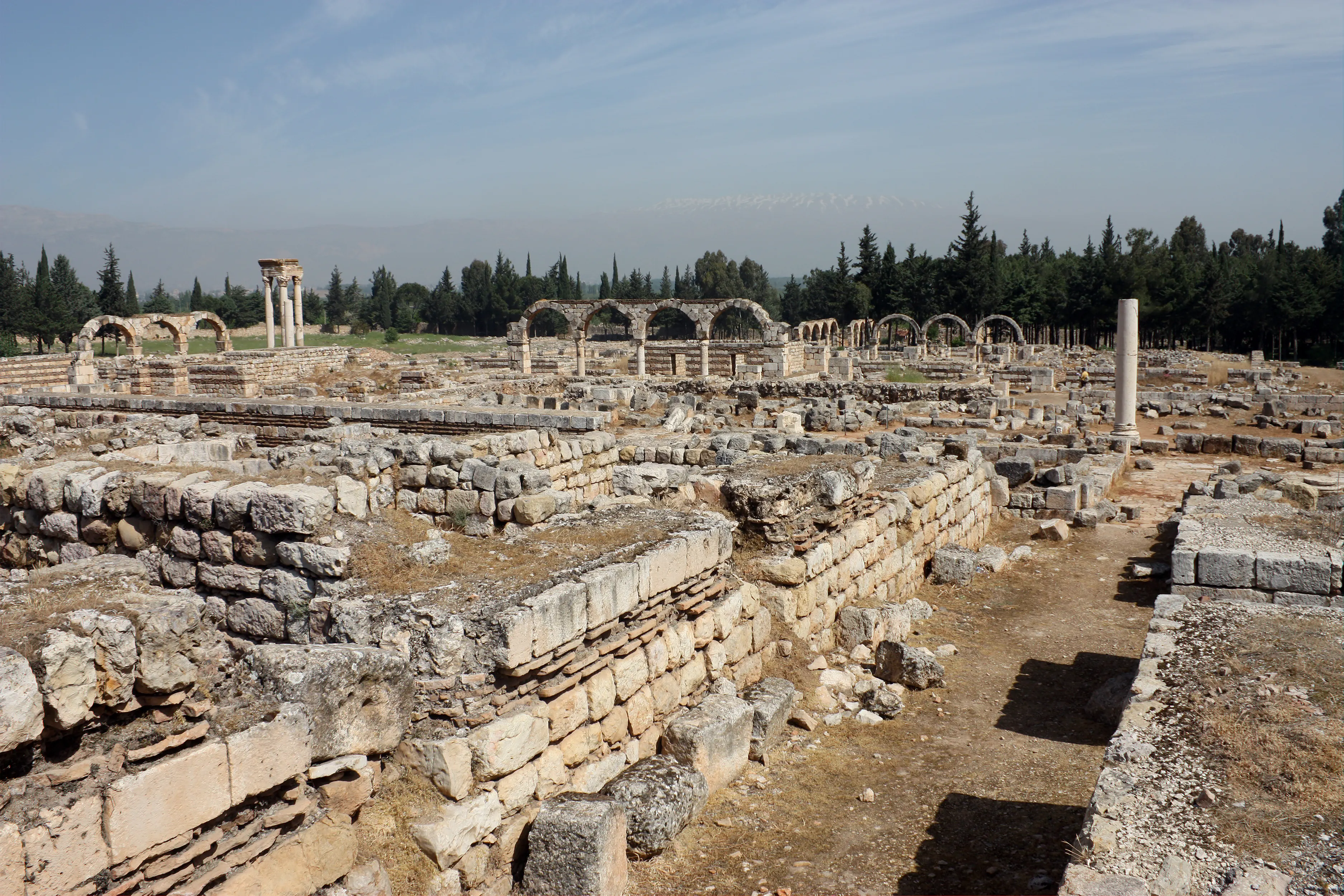
Al-Walid ibn Abd al-Malik ibn Marwan (c. 668-715 CE / c. 49-96 AH) was the sixth Umayyad caliph, ruling from 705 to 715 CE (86-96 AH), under whose reign the Islamic empire reached its greatest territorial extent in history. His decade-long caliphate saw simultaneous military expansion on multiple fronts — Tariq ibn Ziyad and Musa ibn Nusayr conquering Spain in the west, Muhammad ibn al-Qasim conquering Sindh in the east, and Qutayba ibn Muslim conquering Transoxiana (Central Asia) in the northeast — while al-Walid simultaneously undertook the most ambitious architectural program of the early Islamic period, constructing and renovating mosques that remain landmarks of Islamic civilization.
His reign represents the zenith of Umayyad power — the moment when the caliphate's borders stretched from the Atlantic coast of Morocco to the Indus River in Pakistan, from the Aral Sea in Central Asia to the deserts of Arabia. No subsequent Islamic empire would rule so vast and contiguous a territory. Yet al-Walid himself is remembered less as a military commander (he did not personally lead campaigns) than as the administrator and patron who made the expansion possible — the caliph who appointed the right commanders, provided the resources, and simultaneously built the monuments that gave the empire its cultural identity.
The Umayyad Context
The Marwanid Dynasty
Al-Walid belonged to the Marwanid branch of the Umayyad family — the branch descended from Marwan ibn al-Hakam (caliph 684-685 CE) that had seized power during the Second Fitna (civil war) and restored Umayyad rule after it seemed lost. His father, Abd al-Malik ibn Marwan (caliph 685-705 CE), was one of the most capable rulers in Islamic history — the man who reunified the empire after the Second Fitna, defeated the rival caliphate of Abdullah ibn al-Zubayr in Mecca, Arabized the administration, introduced a standard Islamic coinage, and built the Dome of the Rock in Jerusalem.
Al-Walid inherited from his father a unified, stable, and powerful empire — one that had resolved its internal conflicts and was ready to expand. The administrative reforms of Abd al-Malik (Arabic as the language of state, Islamic coinage, a professional bureaucracy) had created an efficient governing machine, and al-Walid's task was to direct that machine toward expansion abroad and monumental construction at home.
Accession to the Caliphate
Al-Walid became caliph upon his father's death in October 705 CE (Shawwal 86 AH). The succession was smooth — Abd al-Malik had designated al-Walid as his heir, and there was no challenge to his authority. He was approximately thirty-seven years old at his accession — a mature man with experience in governance (he had served as his father's representative in various capacities) and with the confidence that came from being groomed for power.
The Great Conquests of Al-Walid's Reign
The Western Front: Spain and the Maghreb
The most famous conquests of al-Walid's reign were those in the far west. Under his authority, Musa ibn Nusayr completed the conquest of the western Maghreb (Morocco), bringing the entire North African coast under Muslim control. His subordinate Tariq ibn Ziyad crossed into Spain in 711 CE and destroyed the Visigothic kingdom at the Battle of Guadalete, after which Musa himself crossed into Spain in 712 CE with a larger army, capturing additional cities and extending Muslim control over most of the peninsula. By 714 CE, Muslim forces had crossed the Pyrenees and conducted raids into southern France.
The conquest of Spain was accomplished during al-Walid's reign by commanders he had appointed (or whose appointments he had ratified), using resources and troops that his administration provided. While he did not direct the campaigns in detail (the distance from Damascus to Spain made real-time command impossible), the strategic decision to authorize the crossing and to support it with resources was his.
The Eastern Front: Sindh and India
Simultaneously with the conquest of Spain, al-Walid authorized the conquest of Sindh (the lower Indus River valley, in modern Pakistan) under the young commander Muhammad ibn al-Qasim. This campaign, launched in 711 CE — the same year as Tariq's crossing into Spain — brought Islam to the Indian subcontinent for the first time as a governing power. Ibn al-Qasim conquered the cities of Debal, Multan, and others, establishing Muslim authority over a large and wealthy region.
The Northeastern Front: Central Asia
On the northeastern frontier, al-Walid's governor of Khorasan, Qutayba ibn Muslim, conducted a series of campaigns that brought the great cities of Transoxiana under Muslim control — Bukhara, Samarkand, Khwarezm, and Ferghana. These conquests opened Central Asia to Islam and laid the groundwork for the Islamic civilization that would flourish in the region for centuries — producing scholars like al-Bukhari and al-Khwarizmi.
The Simultaneous Character of Expansion
What made al-Walid's reign extraordinary was the simultaneity of these conquests. In a single decade, the empire expanded in three directions at once — west (Spain), east (India), and northeast (Central Asia) — achieving on all three fronts simultaneously. This required not only military capability but administrative capacity: the ability to recruit, equip, and supply multiple armies operating thousands of kilometers apart, while maintaining internal stability and funding a massive construction program. Al-Walid's caliphate demonstrated the Umayyad state's organizational maturity — its ability to project power across vast distances and to sustain multiple campaigns without overstretching its resources.
The Great Building Program
The Umayyad Mosque of Damascus
Al-Walid's most celebrated architectural achievement was the construction of the Great Mosque of Damascus (the Umayyad Mosque), completed around 715 CE. Built on the site of the ancient Temple of Jupiter (which had been converted into the Cathedral of St. John the Baptist under Christianity), the mosque was one of the largest and most lavishly decorated buildings in the medieval world.
The mosque featured a vast prayer hall with three aisles and an innovative transept that created a T-shaped plan, influencing subsequent mosque design. Its elaborate gold and glass mosaics depicting paradise gardens, cities, and trees remain some of the finest surviving examples of Umayyad decorative art. A treasury building — the domed structure on columns in the courtyard — stood alongside three minarets that were among the earliest in Islamic architecture.
The Umayyad Mosque of Damascus became one of the most influential buildings in Islamic architectural history — its plan, its decorative vocabulary, and its scale inspired mosques across the medieval Islamic world.
Expansion of the Prophet's Mosque
Al-Walid also undertook the most significant expansion of Al-Masjid al-Nabawi in Medina since the time of the Rashidun caliphs. His reconstruction (706-710 CE) incorporated the Prophet's tomb, in Aisha's chamber, within the mosque structure for the first time, introduced marble columns imported from Egypt, added mosaics and elaborate decoration, and built the first minarets in the Prophet's Mosque, significantly increasing the prayer area.
This expansion transformed the Prophet's Mosque from a relatively simple Rashidun-era structure into a monument worthy of the empire's capital status — though it also generated controversy for its perceived departure from the mosque's original simplicity.
Expansion of Masjid al-Haram
Al-Walid similarly expanded Masjid al-Haram in Mecca, adding marble columns, mosaics, and other decorative elements to the mosque surrounding the Kaaba.
Character and Governance
Administrative Ability
Al-Walid is described in the sources as a competent administrator rather than a military genius or religious scholar. His strength lay in the selection of personnel — choosing capable governors and military commanders and giving them the resources and autonomy to achieve results. His appointments included some of the most successful administrators and generals of the Umayyad period: al-Hajjaj ibn Yusuf (who governed Iraq and the east with iron efficiency), Musa ibn Nusayr (who organized the North African and Spanish conquests), Qutayba ibn Muslim (who conquered Central Asia), and Muhammad ibn al-Qasim (who conquered Sindh).
Social Policies
Al-Walid is credited with several progressive social policies unusual for his era. He established hospitals and provided for the chronically ill, provided stipends for the disabled and those unable to work, assigned servants to the blind to guide them, and improved road infrastructure across the empire.
These social welfare measures, while not unprecedented in Islamic governance, were implemented on a scale that the sources particularly note, suggesting that al-Walid had a genuine concern for the welfare of his subjects that went beyond the minimum expected of a ruler.
Death and Legacy
Death in Damascus (715 CE)
Al-Walid died in Damascus in February 715 CE (Jumada al-Akhira 96 AH) at approximately forty-seven years of age. His death was reportedly from natural causes (possibly a stomach illness). He was succeeded by his brother Sulayman ibn Abd al-Malik, whose reign saw a reversal of several of al-Walid's policies — including the recall and punishment of some of al-Walid's most successful commanders (Musa ibn Nusayr, Muhammad ibn al-Qasim, and Qutayba ibn Muslim all suffered under Sulayman's rule).
Historical Significance
Al-Walid's reign represents the apex of Umayyad power — the moment when the Islamic empire was the largest contiguous political entity on earth and when its cultural ambitions matched its territorial reach. His combination of military expansion (through capable subordinates) and monumental construction (expressing the empire's cultural confidence) created a legacy that shaped both the physical landscape of the Islamic world (his buildings) and its political geography (his conquests).
The territory conquered during his reign — Spain, Sindh, Central Asia — remained part of the Islamic world permanently (in the case of Central Asia and the Indian subcontinent) or for centuries (in the case of Spain). The mosques he built or expanded — Damascus, Medina, Mecca — remain standing and in use today, more than thirteen centuries later. Few rulers in Islamic history can claim such a comprehensive and enduring legacy.
The Umayyad Mosque of Damascus: Al-Walid's Masterpiece
Conception and Execution
The Great Mosque of Damascus (the Umayyad Mosque) is al-Walid's most celebrated architectural achievement and one of the most important buildings in the history of Islamic architecture. Built between 706 and 715 CE on the site of the ancient Temple of Jupiter (later converted into the Cathedral of St. John the Baptist), the mosque was conceived as a statement of Islamic civilizational confidence — a building that would rival and surpass the great churches of Christendom (particularly the Hagia Sophia in Constantinople) and that would demonstrate that Islam could produce architecture of the highest order.
The construction was enormously expensive — consuming seven years of Syria's tax revenue, according to some accounts. Al-Walid employed craftsmen from across the empire and from beyond it: Byzantine mosaicists, Egyptian stoneworkers, Persian artisans, and local Syrian builders. The result was a synthesis of multiple traditions — Roman/Byzantine structural engineering, Islamic spatial concepts, and a decorative program that drew on diverse artistic traditions while creating something distinctly new.
Architectural Innovations
The Umayyad Mosque introduced several architectural features that would become standard in subsequent mosque design. The transept — a raised section of the prayer hall perpendicular to the qibla wall — created a T-shaped plan that emphasized the area in front of the mihrab, a feature later adopted in mosques across the western Islamic world. The treasury dome (Qubbat al-Khazna), a domed structure on columns in the courtyard, was used to store the community's treasury and raised on columns to prevent theft, and similar structures appeared in subsequent mosques. Its monumental minarets, while not the first in Islamic architecture, were among the first to be conceived as integral architectural elements rather than afterthoughts. Finally, the elaborate mosaic decoration — depicting paradise gardens, rivers, and idealized cities without human figures — established a decorative vocabulary that Islamic architecture would draw upon for centuries.
The Mosaics
The mosque's gold and glass mosaics are among the finest surviving examples of Umayyad decorative art. They depict landscapes of rivers, trees, and mountains rendered in naturalistic but idealized form; architecture in the shape of elaborate buildings, possibly representing the cities of the Islamic world or the palaces of Paradise; and gardens of lush vegetation suggesting the Quranic gardens of reward. The absence of human or animal figures in these mosaics demonstrates the early development of Islamic aniconism in monumental art — the preference for geometric, vegetal, and architectural decoration over figurative representation that would become characteristic of Islamic sacred art.
Al-Walid's Commanders: The Men Who Built the Empire
Al-Hajjaj ibn Yusuf al-Thaqafi
The most powerful figure under al-Walid (and his father before him) was al-Hajjaj ibn Yusuf — the governor of Iraq and the eastern provinces, who ruled approximately half the empire from his base in Wasit. Al-Hajjaj was a figure of extraordinary capability and equal ruthlessness: he suppressed revolts, organized the bureaucracy, reformed the coinage, and directed the eastern military campaigns (including the conquest of Sindh under Muhammad ibn al-Qasim and the Central Asian campaigns under Qutayba).
Al-Hajjaj's death in 714 CE — shortly before al-Walid's own death in 715 CE — meant that the two most capable administrators of the Umayyad state departed within months of each other, leaving the empire to less competent successors.
Musa ibn Nusayr and Tariq ibn Ziyad
In the west, Musa ibn Nusayr served as al-Walid's governor of North Africa and directed the conquest of Spain through his subordinate Tariq ibn Ziyad. The relationship between Damascus and the western frontier was one of distant oversight rather than direct command — the distances involved (over 4,000 km from Damascus to Spain) made real-time direction impossible. Al-Walid's role was to appoint capable men, provide resources and authorization, and trust them to achieve results independently.
Qutayba ibn Muslim
On the northeastern frontier, Qutayba ibn Muslim served as al-Walid's governor of Khorasan and commander of the Central Asian campaigns. Qutayba's conquest of Bukhara, Samarkand, Khwarezm, and other cities of Transoxiana opened Central Asia to Islam — creating the conditions for the extraordinary Islamic civilization that would flourish in the region and that would produce scholars like al-Bukhari, Ibn Sina, and al-Biruni.
The Scale of the Empire Under Al-Walid
Geographic Extent
At its maximum extent under al-Walid, the Umayyad Caliphate stretched in the west from the Atlantic coast of Morocco and Portugal (and, after 711, the Iberian Peninsula up to the Pyrenees); in the east to the Indus River in modern Pakistan and to Transoxiana (the Fergana Valley in modern Uzbekistan/Kyrgyzstan); in the north to the Caucasus Mountains, Armenia, and the borders of the Byzantine Empire in Anatolia; and in the south to the Saharan fringes, Yemen, and Oman.
This territory — stretching approximately 10,000 kilometers from east to west and encompassing portions of three continents (Europe, Africa, Asia) — was the largest contiguous empire the world had seen since the Roman Empire at its height, and it surpassed Rome in east-west extent. The administrative challenge of governing such an expanse — with seventh/eighth-century communication technology (horse messengers and sailing ships) — was immense, and the fact that al-Walid maintained reasonable coherence across this territory for a decade testifies to the efficiency of the Umayyad administrative system his father had built.
Population and Diversity
The empire under al-Walid governed an extraordinarily diverse population: Arabs, Persians, Berbers, Copts, Syrians, Visigoths, Sindhi Hindus, Central Asian Buddhists, Jews, Christians of multiple denominations, Zoroastrians, and others. The Muslim ruling elite was a minority in most of its territories — governance depended on the cooperation (or at least the acquiescence) of non-Muslim majorities who were managed through the dhimmi system.
This diversity — and the challenge of governing it — was both the empire's greatest strength (it could draw on the knowledge, skills, and labor of multiple civilizations) and its greatest vulnerability (the potential for revolt was ever-present if governance failed to provide adequate justice and security). Al-Walid's decade of expansion was possible precisely because the diverse populations of the empire remained sufficiently content (or sufficiently suppressed) to allow resources to be directed outward rather than consumed in internal conflict.
Al-Walid and the Religious Scholars
The Relationship with the Ulama
Al-Walid's relationship with the religious scholars (ulama) of his time was complex. The Umayyad dynasty was not universally beloved by the scholarly community — many scholars regarded the Umayyads as worldly rulers who prioritized political power over religious devotion, and the memory of their conflicts with the Ahl al-Bayt (particularly the Battle of Karbala under Yazid) cast a shadow over their religious legitimacy.
However, al-Walid's building program — his expansion of the holy mosques in Mecca, Medina, and Jerusalem, and his construction of the Damascus mosque — demonstrated a commitment to Islamic religious life that earned some degree of scholarly approval. A ruler who built mosques, expanded the sacred precincts, and provided for pilgrims could not be easily dismissed as irreligious, whatever other criticisms might be leveled at his dynasty.
The Economic Foundation of Al-Walid's Achievements
Revenue and Resources
Al-Walid's simultaneous military expansion and monumental construction required enormous financial resources — and he had them. The Umayyad fiscal system, reformed by his father Abd al-Malik, generated vast revenues from several sources. Land tax (kharaj) came from the agricultural territories of Iraq, Egypt, Syria, and Persia — the most productive farmlands in the medieval world — while poll tax (jizya) came from the non-Muslim populations of the empire: Christians, Jews, Zoroastrians, and others who paid for their protection. Trade taxes were levied on the commercial networks that crossed the empire, the spoils of conquest (ghana'im) yielded the one-fifth share (khums) that went to the state treasury, and revenue from state-owned properties — mines, estates, and commercial enterprises operated by the caliphal government — added further income.
The empire's total annual revenue under al-Walid is difficult to estimate with precision (the sources give fragmentary and sometimes contradictory figures), but it was clearly enormous — sufficient to fund simultaneous military operations on three fronts while also constructing the most expensive building project in the Islamic world (the Damascus mosque, which consumed seven years of Syria's provincial revenue).
The Cost of the Building Program
The Umayyad Mosque of Damascus alone reportedly cost an enormous sum — various figures are given in the sources, but all agree that it was unprecedentedly expensive. Al-Walid's response to criticism of the expense was characteristically direct: he argued that the Muslim community deserved places of worship that rivaled or exceeded the great churches of Christendom, and that investing in sacred architecture was a legitimate use of public funds.
The expansion of the Prophet's Mosque in Medina was similarly expensive, requiring the purchase and demolition of surrounding properties, the importation of materials (marble from Egypt, teak from distant sources), and the employment of skilled craftsmen from across the empire. Al-Walid bore these costs as an investment in the empire's religious legitimacy — demonstrating the Umayyad dynasty's commitment to Islam's holiest sites.
Al-Walid's Internal Policies
Infrastructure Development
Beyond military expansion and mosque construction, al-Walid invested in infrastructure that served the empire's internal needs. He improved the highway system connecting the empire's major cities, facilitating both military movement and commercial traffic, and maintained and expanded the postal system (barid), the communications network that allowed the caliph to monitor distant provinces and receive intelligence from his governors. He supported irrigation for agricultural development, particularly in the rich farmlands of Iraq and Syria, and undertook urban development through the construction of palaces, administrative buildings, and public facilities in Damascus and other Umayyad cities.
Social Welfare Measures
The sources credit al-Walid with social welfare policies that were progressive for his era. He established hospitals (bimaristans) — medical facilities for the sick, including provisions for those with chronic illness and disability — and supported the disabled by assigning servants to guide the blind and to assist those unable to care for themselves. He provided stipends for the poor through regular distributions from the public treasury, and offered educational support through the patronage of scholars and the encouragement of learning.
These policies — while not unique to al-Walid (earlier caliphs had also provided for the poor and the sick) — were reportedly implemented on a scale that the sources particularly note, suggesting genuine administrative concern for social welfare alongside the more dramatic achievements of military expansion and architectural construction.
The Succession Question and Legacy
The Attempt to Change the Succession
One of the most politically significant episodes of al-Walid's reign was his reported attempt to change the line of succession. Under the arrangement established by his father Abd al-Malik, the caliphate was to pass first to al-Walid and then to his brother Sulayman. Al-Walid reportedly wished to bypass Sulayman in favor of his own son — to establish direct father-to-son succession rather than following the brother-to-brother pattern.
This attempt (which was supported by al-Hajjaj ibn Yusuf, the powerful governor of Iraq) was ultimately unsuccessful — al-Walid died before he could formalize the change, and Sulayman succeeded him as planned. But the episode explains much of what followed: Sulayman's animosity toward those who had served al-Walid (particularly those associated with the succession attempt) — including Musa ibn Nusayr, Muhammad ibn al-Qasim, and Qutayba ibn Muslim — all of whom were recalled, disgraced, or killed under Sulayman's rule.
The Reversal Under Sulayman
The accession of Sulayman ibn Abd al-Malik in 715 CE brought a dramatic reversal of al-Walid's policies and personnel. Musa ibn Nusayr was recalled from Spain, stripped of his wealth, and disgraced; Muhammad ibn al-Qasim was recalled from Sindh, imprisoned, and killed; and Qutayba ibn Muslim, the conqueror of Central Asia, attempted to rebel rather than submit to recall and was killed by his own troops. The expansionist momentum of al-Walid's reign was halted on all fronts.
This pattern of reversal — a new caliph systematically punishing his predecessor's most successful servants — was one of the structural weaknesses of the Umayyad system. It meant that the empire's most capable administrators and commanders could never feel secure, and that each change of caliph brought disruption, purges, and the loss of institutional memory. Al-Walid's reign was the empire's zenith; the reversals under Sulayman marked the beginning of the decline that would eventually produce the Abbasid revolution.
Historiographical Note
Al-Walid in the Islamic Sources
The Islamic historical tradition treats al-Walid with a degree of respect tempered by the general ambivalence that Sunni scholarship directs at the Umayyad dynasty as a whole. His building of mosques and his expansion of the holy places earn praise; his military achievements are acknowledged; but the broader critique of Umayyad worldliness and political ruthlessness is never entirely absent.
Al-Tabari, the most comprehensive early historian, presents al-Walid's reign factually without extensive moral commentary — allowing the reader to draw conclusions from the events themselves. Later historians (Ibn al-Athir, Ibn Kathir, al-Dhahabi) follow the same general approach: acknowledging al-Walid's achievements while situating them within the broader Umayyad narrative of power, wealth, and eventual collapse.
Modern Historical Assessment
Modern historians generally assess al-Walid positively as an effective administrator rather than a great thinker or religious figure. Hugh Kennedy, G.R. Hawting, and other specialists on the Umayyad period credit him with maintaining the empire's stability, choosing capable subordinates, and directing resources effectively toward both expansion and construction. His reign is treated as the culmination of the Umayyad project — the moment when everything came together (stable administration, capable commanders, abundant revenue, confident cultural ambition) to produce the empire's greatest achievements.
The comparison sometimes drawn between al-Walid and other "builder-caliphs" (particularly the Abbasid caliph al-Mansur, who built Baghdad) is apt: both were more administrators than warriors, more organizers than innovators, more patrons than creators. Their greatness lay not in personal brilliance but in the ability to direct the efforts of others — to select, appoint, equip, and trust the commanders and craftsmen who actually did the fighting and the building.
The Umayyad Empire at Its Maximum: A Geographic Survey
The Western Frontier
Under al-Walid, the empire's western frontier advanced from the coast of Morocco across the Strait of Gibraltar and deep into the Iberian Peninsula. By 714 CE, Muslim forces had conquered virtually all of the Iberian Peninsula south of the Cantabrian Mountains, crossed the Pyrenees and conducted raids into southern Gaul (France), established garrison cities throughout Spain (Córdoba, Seville, Toledo, Mérida, Zaragoza), and created the administrative framework of what would become Al-Andalus.
The western frontier represented the empire's most dramatic single territorial gain under al-Walid — the addition of an entire European peninsula to the Muslim world, accomplished in approximately three years (711-714 CE).
The Eastern Frontier
Simultaneously, the eastern frontier advanced from the borders of Persia deep into the Indian subcontinent. Muhammad ibn al-Qasim conquered Sindh (the lower Indus Valley), capturing Debal, Multan, and all major cities between them. Muslim authority was established over a Hindu-Buddhist population for the first time, setting precedents for centuries of subsequent Muslim governance in India, and the conquest opened trade routes between the Islamic world and the Indian Ocean basin through the port of Debal.
The Northeastern Frontier
The third axis of expansion ran northeast from Persia into Central Asia. Qutayba ibn Muslim conquered Bukhara (709 CE), Samarkand (712 CE), Khwarezm, and the Ferghana Valley, bringing some of the richest and most cultured cities of the ancient Silk Road under Muslim rule. The region would later produce many of the greatest scholars of the Islamic Golden Age, among them al-Bukhari, Ibn Sina, al-Khwarizmi, and al-Biruni.
The Byzantine Frontier
Along the northern frontier, al-Walid maintained continuous pressure on the Byzantine Empire. Annual summer raids (sa'ifa) into Anatolia kept the Byzantines on the defensive while Muslim forces held strategic positions in the Taurus Mountain passes. Preparation was underway for what would become the great siege of Constantinople (717-718 CE, under Sulayman's caliphate), and the Caucasus frontier of Armenia and Azerbaijan was consolidated.
Al-Walid and the Cultural Identity of the Umayyad State
Architecture as Ideology
Al-Walid's building program was not merely construction for its own sake — it was architecture as ideology. The Umayyad Mosque of Damascus, the expansion of the Prophet's Mosque, and the renovation of Masjid al-Haram were statements about the nature of the Islamic state: that Islam was a civilization capable of producing architecture equal or superior to anything Christendom or Persia had produced; that the Muslim community deserved places of worship worthy of its God and its Prophet; that the Umayyad dynasty was the legitimate custodian of Islam's sacred heritage; and that the caliphal state could mobilize resources, coordinate craftsmen, and execute projects on a scale that demonstrated organizational maturity.
The Damascus mosque in particular was designed to rival the nearby Church of St. John (whose site it partially occupied) and the distant Hagia Sophia in Constantinople — to demonstrate that Islam could match and exceed Christian architectural achievement. Its gold mosaics, its soaring arcades, and its vast scale were arguments made in stone and glass rather than in words: arguments about the legitimacy, confidence, and cultural ambition of the Islamic state.
The Arabization Program
Al-Walid continued his father's program of Arabization — making Arabic the language of administration throughout the empire (replacing Greek in Syria and Egypt, Persian in Iraq and Iran, and Coptic in lower-level Egyptian administration). This process, begun under Abd al-Malik, was largely completed during al-Walid's reign, creating a unified administrative language that bound the empire together and that facilitated the transmission of Islamic learning across its diverse territories.
The adoption of Arabic as the universal language of administration — combined with the increasingly Arabic character of the coinage, the public inscriptions, and the official correspondence — transformed the Umayyad state from an Arab-ruled but linguistically diverse empire into a genuinely Arabic-speaking polity. This linguistic unification was one of the essential preconditions for the cultural flourishing of the Islamic Golden Age: without a shared language of learning and administration, the intellectual achievements of the Abbasid period would have been impossible.
The End of an Era
Al-Walid's Death and Its Immediate Consequences
Al-Walid died in February 715 CE (Jumada II, 96 AH) — reportedly from a stomach ailment. His death at approximately forty-seven was not unexpected (he had been ill for some time), but its consequences were profound. The transition to his brother Sulayman brought the recall and punishment of al-Walid's most successful commanders, the halting of military expansion on most fronts, a shift in policy that prioritized the failed siege of Constantinople over the more successful western and eastern campaigns, and the beginning of a period of instability that would eventually weaken the Umayyad state beyond recovery.
Al-Walid's reign — a decade of expansion, construction, and confidence — thus represents not merely a high point but a turning point: the moment after which the Umayyad trajectory bent from ascent toward decline. The empire was never larger than under al-Walid; it was never more ambitious; and it was never more successful. Everything that followed — though it included achievements of its own — was in some sense a retreat from the comprehensive success of his decade.
The Legacy of Al-Walid's Buildings
Structures That Survive
The most remarkable aspect of al-Walid's architectural legacy is that his major buildings still stand and still function more than thirteen centuries after their construction. The Umayyad Mosque of Damascus remains the principal mosque of Damascus, the fourth holiest mosque in some Islamic reckonings, and one of the most visited religious sites in the Muslim world; despite fires, earthquakes, and wars — including damage during the Syrian Civil War after 2011 — the mosque has been continuously maintained and repaired, and its mosaics, though partially damaged and restored over the centuries, remain among the finest examples of Umayyad art. Al-Masjid al-Nabawi in Medina, while expanded enormously beyond al-Walid's reconstruction, still contains elements of his building within the modern structure, and the incorporation of the Prophet's tomb into the mosque complex that al-Walid effected remains the permanent arrangement thirteen centuries later. Masjid al-Haram in Mecca was similarly expanded far beyond al-Walid's contribution, but his expansion was one of the foundational layers of the complex that now surrounds the Kaaba.
These surviving structures make al-Walid one of the very few rulers in world history whose physical constructions are still in daily use over a millennium after his death. The Damascus mosque in particular — where the daily prayers, the Friday sermon, and the Ramadan worship continue uninterrupted — represents a living connection between al-Walid's caliphate and the present moment.
Influence on Islamic Architecture
Al-Walid's buildings — particularly the Umayyad Mosque of Damascus — influenced the subsequent development of Islamic architecture across multiple dimensions. As a building type, the monumental mosque was shown to be not merely a functional prayer space but a statement of civilizational confidence, a building that rivaled the greatest churches and temples of other traditions in scale, beauty, and technical sophistication. The gold and glass mosaics of the Damascus mosque established a decorative vocabulary of paradise gardens, idealized landscapes, and architectural fantasies that would be echoed in subsequent Umayyad and early Abbasid buildings. Al-Walid's practice of building on top of earlier sacred sites — the Temple of Jupiter in Damascus, the incorporation of Aisha's chamber in Medina — established a pattern of palimpsest architecture, building new sacred structures over old ones rather than starting from blank ground. And while al-Walid did not invent the minaret, his buildings were among the first to treat minarets as integral architectural elements rather than afterthoughts, establishing their role as visual landmarks that define the urban skyline.
Al-Walid in Comparative Historical Context
Among the Great Builder-Rulers
Al-Walid belongs to a select group of rulers in world history who are remembered primarily for what they built as much as (or more than) for what they conquered. This group includes Justinian (Byzantine Emperor, r. 527-565 CE), builder of the Hagia Sophia and reconqueror of the western Mediterranean, who like al-Walid combined military expansion with architectural patronage; Sulayman the Magnificent (Ottoman sultan, r. 1520-1566 CE), whose architect Sinan produced masterpieces across the Ottoman Empire while the sultan expanded its territories; Shah Jahan (Mughal emperor, r. 1628-1658 CE), builder of the Taj Mahal and the Red Fort, whose architectural legacy defines an era; and al-Mansur (Abbasid caliph, r. 754-775 CE), founder of Baghdad, the round city that became the Islamic world's greatest metropolis.
Like these figures, al-Walid understood that buildings communicate power — that a dynasty's legitimacy is expressed not only through military victories (which are temporary) but through architectural monuments (which endure). The Umayyad Mosque of Damascus communicates the confidence and ambition of its builder more eloquently than any military campaign, and it continues to do so thirteen centuries after al-Walid's death.
The Paradox of the Umayyad Legacy
Al-Walid's reign encapsulates the central paradox of the Umayyad dynasty: a regime that achieved extraordinary things — military expansion, architectural construction, administrative organization — yet that was ultimately overthrown and condemned by the Islamic tradition that inherited its achievements. The Abbasid revolution of 750 CE portrayed the Umayyads as irreligious, oppressive, and illegitimate — yet the Abbasids built their own caliphate on the territorial, administrative, and cultural foundations that the Umayyads (and al-Walid in particular) had established. The mosques al-Walid built were maintained and expanded by the Abbasids; the territories he conquered remained part of the Islamic world; and the administrative systems he inherited from his father were adapted rather than abolished.
Al-Walid's personal legacy thus exists in a strange space between achievement and condemnation — honored for what he built and what he conquered, yet associated with a dynasty that subsequent Islamic historiography treated with ambivalence at best and hostility at worst. Modern historians have been more balanced in their assessment, recognizing the Umayyad achievement without whitewashing its failures — and placing al-Walid at the center of that achievement as the ruler under whom it reached its fullest expression.
Al-Walid and the Byzantine Frontier
Continuous Warfare
While the conquests of Spain, Sindh, and Central Asia have attracted the most historical attention, al-Walid's reign also saw continuous military activity on the empire's longest and most established frontier — the border with the Byzantine Empire in Anatolia (modern Turkey). The Umayyads maintained a policy of annual summer raids (sa'ifa) into Byzantine territory — campaigns that served to keep the Byzantines on the defensive, to gather spoils, and to maintain the military readiness of the Syrian army that was the Umayyad state's core military force.
Under al-Walid, these campaigns were intensified and directed toward a larger strategic objective: the conquest of Constantinople — the Byzantine capital whose walls had resisted the first Arab siege in 674-678 CE. Al-Walid's father Abd al-Malik had been too focused on internal consolidation to attempt Constantinople, but al-Walid — with the empire now stable and expanding on all other fronts — began assembling the resources for a renewed assault.
The actual siege of Constantinople (717-718 CE) would occur under al-Walid's successor Sulayman — and it would fail catastrophically, ending with the destruction of the Muslim fleet and army by Greek fire, Bulgarian attacks, and a terrible winter. But the preparations for this siege — the assembly of naval forces, the stockpiling of supplies, the strategic positioning of armies — were largely undertaken during al-Walid's reign. The failure of the siege is thus partly attributable to Sulayman's execution (al-Walid had been preparing for years; Sulayman launched prematurely), though the fundamental military challenge of Constantinople's triple walls and Greek fire would likely have defeated any medieval army regardless of timing.
The Taurus Mountain Frontier
The day-to-day reality of the Byzantine frontier during al-Walid's reign was the Taurus Mountain line — a formidable natural barrier that separated the Muslim-held lowlands of Syria and the Jazira from the Byzantine-held highlands of Anatolia. Muslim armies regularly crossed this barrier in summer (when the passes were open) to raid Byzantine territory, and Byzantine forces occasionally counter-raided Muslim territory in the reverse direction.
This frontier — one of the most enduring military borders in the medieval world (it persisted from the seventh century until the Seljuk breakthrough at the Battle of Manzikert in 1071 CE) — consumed significant military resources. The Syrian armies that guarded it were the best-trained and best-equipped forces in the Umayyad state, and their maintenance required a substantial proportion of the empire's revenue. Al-Walid's ability to simultaneously maintain this frontier while expanding on three other fronts testifies to the empire's enormous resource base and its administrative efficiency.
The Daily Governance of the Empire
Al-Walid's Personal Style
The sources provide some insight into al-Walid's personal approach to governance, though these accounts must be treated with the usual caution about medieval biographical writing. He reportedly held regular audience sessions (majlis) at which he heard petitions, resolved disputes, and received reports from his governors, maintaining the accessibility that the Arabian tradition expected of rulers. He was described as generous with stipends and rewards, distributing largesse to soldiers, scholars, and the poor in ways that maintained loyalty and social stability, and he delegated extensively, trusting his governors — al-Hajjaj in the east and Musa in the west — with broad authority rather than micromanaging from Damascus. He was described as personally pious, regular in prayer, attentive to Islamic observances, and concerned, at least publicly, with the religious dimensions of his rule. He reportedly had a speech impediment, described in some sources as a lisp or stammer, that did not prevent him from governing effectively but that was noted by contemporaries.
The Role of Al-Hajjaj
The most significant single figure in al-Walid's administration — more important in many ways than the caliph himself for the day-to-day governance of the eastern empire — was al-Hajjaj ibn Yusuf al-Thaqafi, the governor of Iraq and the eastern provinces. Al-Hajjaj was arguably the most capable administrator the Umayyad state ever produced: a man of terrifying efficiency who suppressed revolts, reorganized the bureaucracy, reformed the tax system, supervised the eastern conquests, and maintained iron order across half the empire.
Al-Hajjaj's relationship with al-Walid was one of mutual dependence: the caliph needed al-Hajjaj to manage the complex eastern territories; al-Hajjaj needed the caliph's authorization and political backing to sustain his harsh methods. Their partnership — which lasted until al-Hajjaj's death in 714 CE — was the administrative foundation of al-Walid's reign: it freed the caliph to focus on the western territories, on the building program, and on the broader strategic vision while al-Hajjaj handled the daily operations of half the empire.
The eastern conquests under al-Walid — Sindh, Central Asia, parts of India — were all directed by al-Hajjaj rather than by al-Walid personally. Muhammad ibn al-Qasim was al-Hajjaj's kinsman and appointee; Qutayba ibn Muslim was al-Hajjaj's governor. The decisions about where to strike, how many troops to commit, and what objectives to pursue were made in Wasit (al-Hajjaj's Iraqi capital) rather than in Damascus. Al-Walid's role was to authorize and to not interfere — to trust his eastern viceroy and to let him operate.
The Empire's Cultural Production Under Al-Walid
Arabic Poetry
The Umayyad period — and al-Walid's reign in particular — was a golden age of Arabic poetry. The great Umayyad poets (Jarir, al-Farazdaq, al-Akhtal) produced some of the finest Arabic verse ever written during this period, operating within a courtly system of patronage that rewarded poetic excellence with financial support and social prestige.
Al-Walid himself was reportedly a patron of poetry — though the sources suggest that his personal cultural interests were more architectural than literary. Nevertheless, the poets flourished under his rule, and the cultural confidence of the era — expressed architecturally in the Damascus mosque and militarily in the conquests — also manifested in a literary tradition of extraordinary richness and vitality.
Administrative and Religious Literature
Al-Walid's reign also saw the development of early Arabic prose literature — particularly in the domains of administration (manuals for governors and officials), religion (early hadith collections and legal opinions), and history (the first systematic attempts to record the Islamic conquests and the Prophet's biography). While the great works of Arabic prose — al-Tabari's history, al-Bukhari's hadith collection — would come later (under the Abbasids), the Umayyad period laid the foundations by establishing Arabic as the universal language of administration and by creating the institutional framework (courts, mosques, schools) within which literary production could flourish.
The Umayyad Desert Palaces
Architecture Beyond the Mosques
While al-Walid is best known for his religious architecture (the mosques of Damascus, Medina, and Mecca), his reign also saw the construction of several desert palaces (qusur) in the Syrian and Jordanian steppe — elaborate complexes that combined residential, agricultural, and recreational functions. These palaces — some of which survive as archaeological sites today — reveal aspects of Umayyad court culture that the religious architecture does not. Qusayr Amra, in modern Jordan, is a small bath house decorated with extraordinary frescoes depicting hunting scenes, bathing women, and portraits of conquered rulers — imagery that challenges the assumption of early Islamic aniconism and reveals a court culture of considerable sophistication and artistic freedom. Khirbat al-Mafjar, near Jericho, is a large palatial complex with elaborate stone and stucco decoration, often attributed to al-Walid's successor but possibly begun during his reign, while Qasr al-Hayr al-Sharqi and al-Gharbi, in the Syrian desert, are fortified agricultural estates that demonstrate the Umayyad investment in developing desert lands through irrigation.
While scholars debate which of these structures were built specifically under al-Walid (some may date to his father or his successors), they collectively represent the Umayyad aesthetic at its height — an art that freely combined Islamic, Byzantine, Sasanian, and late antique elements into something new. The frescoes, mosaics, and sculptural decorations of these palaces show that Umayyad court culture was far more diverse and visually rich than the austere impression left by the mosques alone.
The Court Culture of Damascus
Al-Walid's court in Damascus was one of the richest and most cosmopolitan in the medieval world. The caliphal palace (known as the Khadra' or Green Palace, now lost) was the center of an administration that governed territories from Spain to Central Asia, and its court attracted a wide range of people. Poets came from across the Arab world, competing for patronage and prestige through the composition of praise-poems (madh) for the caliph, and scholars — including early hadith transmitters, jurists, and grammarians — began to systematize Arabic linguistic and religious sciences. Craftsmen such as architects, mosaicists, metalworkers, and textile producers executed the caliph's building program; diplomats arrived as envoys from the Byzantine Empire, from Central Asian kingdoms, and from other polities that maintained relations with the caliphate; and military commanders reported from distant fronts, received orders, and were rewarded for their conquests.
This court — combining military power, artistic patronage, religious authority, and administrative efficiency — represented the Umayyad state at its most confident and capable. Al-Walid presided over it as the central figure: the man from whom authority flowed and to whom all reports returned.
The Religious Architecture in Detail
The Mosaics of the Damascus Mosque: Iconography and Meaning
The gold and glass mosaics of the Umayyad Mosque of Damascus — the best-preserved examples of Umayyad decorative art — have been the subject of extensive scholarly analysis. They depict idealized landscapes of rivers flowing between trees and mountains, suggesting the Quranic descriptions of Paradise (janna) with its flowing rivers, shade-giving trees, and eternal greenery. They also depict architectural fantasies — elaborate buildings such as palaces, villas, and pavilions rendered in careful detail but not corresponding to any identifiable real structures, which may represent the mansions of Paradise, the cities of the Islamic empire, or simply the artistic imagination of the mosaicists. In strict contrast to the Qusayr Amra frescoes, which freely depict living beings, the Damascus mosaics contain no human or animal figures, observing a complete prohibition on figural representation and suggesting that while the Umayyad court permitted figurative art in secular settings, it excluded it from sacred architecture.
The interpretation of these mosaics has generated scholarly debate. The Paradise interpretation holds that the landscapes represent the gardens of Paradise promised to the faithful, a visual reminder of the reward awaiting believers. The empire interpretation holds that the buildings and landscapes represent the cities and territories of the Umayyad caliphate, a visual celebration of the empire's extent and prosperity. The replacement interpretation holds that the natural imagery replaced the Christian figural imagery — saints and biblical scenes — that had decorated the site when it was a church, maintaining the decorative function while changing the theological content.
All three interpretations may be simultaneously valid — the mosaics can function as representations of Paradise, celebrations of empire, and deliberate replacements of Christian imagery without contradiction between these readings.
Al-Walid's Impact on Islamic Civilization
The Foundations of the Golden Age
Al-Walid's reign (705-715 CE) laid the territorial, administrative, and cultural foundations upon which the subsequent Islamic Golden Age would be built. The territories he conquered (Spain, Central Asia, Sindh) would become major centers of Islamic learning and culture. The administrative systems he maintained (Arabized bureaucracy, efficient taxation, reliable communications) would be inherited by the Abbasids and developed into the infrastructure that supported the Golden Age's intellectual production. And the cultural confidence his building program expressed — the conviction that Islamic civilization could rival and exceed any other — would animate the scholarly and artistic ambitions of subsequent centuries.
The connection between al-Walid's decade of expansion and the Abbasid Golden Age (roughly 750-1250 CE) is not direct — the Abbasids overthrew the Umayyads and repudiated their legitimacy — but it is structural. The Abbasids inherited the territory al-Walid had conquered or consolidated, the administrative systems his father had created and he had maintained, the cultural precedent that Islamic civilization should express itself in monumental architecture, literary production, and scholarly endeavor, and the revenue streams that the expanded empire generated.
Without al-Walid's decade — the decade in which the empire reached its maximum extent and its cultural ambitions reached their fullest Umayyad expression — the Abbasid Golden Age would have lacked much of its territorial, institutional, and cultural foundation.
The Coinage and Currency of Al-Walid's Empire
The Islamic Gold Dinar
Al-Walid inherited from his father Abd al-Malik a reformed Islamic coinage — gold dinars and silver dirhams bearing purely Islamic inscriptions (Quranic verses, the shahada, the caliph's name) rather than the adapted Byzantine or Sasanian imagery that earlier Islamic coins had used. This coinage reform — one of Abd al-Malik's most significant innovations — expressed in tangible, everyday form the Islamic state's independence from its predecessors and its confidence in its own identity.
Under al-Walid, this coinage was produced in enormous quantities — necessary to lubricate the commerce of an empire that stretched from Spain to Central Asia. The gold dinars struck in al-Walid's name circulated far beyond the empire's borders: they have been found in archaeological excavations in Scandinavia, in India, and in sub-Saharan Africa — testimony to the reach of Umayyad trade networks and the trustworthiness of Umayyad currency.
The coins themselves are documents of history: those struck in specific provinces record the names of governors, allowing historians to reconstruct the administrative personnel of al-Walid's empire. Coins struck in newly conquered territories (particularly in Sindh and Transoxiana) document the establishment of Muslim governance and the extension of the caliphal monetary system to the empire's farthest reaches.
Economic Integration
The unified currency system that al-Walid maintained — consistent gold and silver coins accepted throughout the empire — facilitated economic integration across the caliphate's enormous territory. A merchant in Córdoba could use the same dinar accepted in Baghdad or Bukhara; a soldier paid in Sindh received the same coin as one paid in Damascus. This monetary unity — combined with the Arabization of administration and the shared legal framework of Islamic commercial law — created one of the most integrated economic zones the medieval world had seen.
The revenues this integrated economy generated were what funded al-Walid's simultaneous military expansion and architectural construction. Without the fiscal capacity of a unified empire — the ability to collect taxes across multiple provinces and to direct those resources toward caliphal priorities — neither the conquest of Spain nor the building of the Damascus mosque would have been possible.
Al-Walid and the Non-Muslim Communities
The Dhimmi System Under Al-Walid
The non-Muslim communities of al-Walid's empire — Christians (of multiple denominations), Jews, Zoroastrians, Buddhists, and Hindus — lived under the dhimmi system that had been established during the early conquests. Under this system, non-Muslims received protection of their persons, property, and worship in exchange for payment of jizya (poll tax) and acknowledgment of Muslim political authority.
Al-Walid's reign saw no systematic persecution of non-Muslim communities — the sources record no major anti-Christian or anti-Jewish campaigns, and the empire's non-Muslim populations generally maintained their positions in commerce, administration, and intellectual life. Christian scribes continued to serve in the bureaucracy (though the Arabization process was gradually displacing them). Jewish merchants continued to operate in the empire's commercial networks. Zoroastrian landowners in Persia continued to manage their estates.
However, the social pressure toward conversion increased during this period. The prestige of the ruling Muslim elite, the economic advantages of Muslim status (exemption from jizya), the social opportunities available to Muslims but not to dhimmis — all created incentives for conversion that would gradually transform the empire's demographics over the following centuries. The mass conversion of the conquered populations — which would eventually make the empire's territories overwhelmingly Muslim — was a slow, voluntary, centuries-long process that was well underway during al-Walid's reign but far from complete.
The Christian Communities of Syria
Syria — al-Walid's home province and the heartland of the Umayyad state — remained majority Christian during his reign. The great churches of Damascus (including the Church of St. John the Baptist, which al-Walid incorporated into his mosque) served large congregations; the Melkite, Jacobite, and Nestorian church hierarchies maintained their institutional structures; and Christian monasteries continued to function as centers of learning and spiritual life.
Al-Walid's relationship with Syria's Christian communities was pragmatic: he needed their skills (particularly in administration and in the crafts that his building program required), their revenue (the jizya they paid), and their acquiescence (social stability in the empire's heartland). The construction of the Umayyad Mosque of Damascus — on a site that had previously housed a church — was the most symbolically charged interaction between al-Walid and the Christian community, but it was an exception rather than a pattern: the general policy was coexistence rather than confrontation.
The Succession and the Problem of Dynastic Politics
Al-Walid's Family
Al-Walid fathered several sons, the most prominent of whom were al-Walid ibn al-Walid, who held various positions but did not achieve the caliphate; Abd al-Aziz ibn al-Walid, who briefly became caliph in 744 CE during the chaotic final years of the Umayyad dynasty; and Ibrahim ibn al-Walid, who also briefly held the caliphate in 744 CE.
None of al-Walid's sons achieved the sustained rule that their father had enjoyed — the decade of stability and achievement that characterized his reign was never replicated by any of his direct descendants. The Umayyad caliphate passed instead to al-Walid's brothers (Sulayman, then Yazid II, then Hisham) and their descendants, each struggling with problems that al-Walid had not faced.
The Structural Problem of Umayyad Succession
Al-Walid's failed attempt to change the succession (designating his son over his brother Sulayman) highlighted a fundamental instability in the Umayyad system. Unlike later Islamic dynasties (which generally followed father-to-son succession) or the Rashidun caliphate (which used consultation), the Umayyad system oscillated between brother-to-brother and father-to-son patterns — creating constant tension between the reigning caliph (who wanted his son to succeed) and the designated heir (typically a brother, who wanted to preserve his own claim).
This structural instability — never resolved by the Umayyads — contributed to the dynasty's eventual fall. Each succession brought the possibility of conflict, purges, and the destruction of the previous regime's supporters. Al-Walid's decade of stability was exceptional precisely because it was bookended by smooth successions (from his father, and to his brother) — but the very smoothness of his own succession masked the underlying tensions that would erupt under his successors.
Al-Walid and the Concept of Islamic Kingship
From Caliphate to Monarchy
Al-Walid's reign represents an advanced stage in the transformation of the Islamic caliphate from its origins as a consultative institution (under the Rashidun) into a hereditary monarchy (under the Umayyads). This transformation — begun by Muawiyah's designation of Yazid and continued by Abd al-Malik's establishment of the Marwanid succession — was fully mature by al-Walid's time: he ascended to the caliphate by hereditary right (designated by his father), he ruled as an absolute monarch (making decisions without meaningful consultation with the community), and he attempted to determine the succession after him (though this attempt failed).
The Islamic scholarly tradition has debated the legitimacy of this monarchical model. The Sunni mainstream eventually accepted Umayyad rule as legitimate (if not ideal), while the Shia tradition continued to regard it as usurpation. But regardless of one's theological position, the practical reality of al-Walid's caliphate was monarchy: hereditary succession, absolute authority, and the concentration of power in a single ruling family.
Al-Walid himself appears to have been comfortable with this monarchical role — he built palaces, maintained a court, patronized poets, and exercised power without apparent anxiety about its theological legitimacy. His building program — particularly the Umayyad Mosque of Damascus — can be read as an assertion of royal authority as much as of religious devotion: a statement that the caliph was not merely a tribal chief or a religious leader but a king whose power was expressed through monumental architecture, military conquest, and cultural patronage.
The Legacy for Islamic Political Thought
Al-Walid's reign — with its combination of effective governance, territorial expansion, and architectural confidence — became a reference point for later Islamic discussions about the nature of political power. Those who argued for strong central government could point to al-Walid's achievements as evidence that concentrated power, used well, could produce extraordinary results. Those who argued for consultation and scholarly oversight could point to the Umayyad system's vulnerabilities — its arbitrary treatment of commanders, its succession crises, its eventual overthrow — as evidence that monarchical power without institutional checks was ultimately unstable.
The debate continues in Islamic political thought to the present day — and al-Walid's decade of glory, followed by the Umayyad dynasty's collapse within thirty-five years of his death, provides ammunition to both sides of the argument.
References and Further Reading
Primary Islamic Sources
- Sahih al-Bukhari — traditions relevant to the expansion of the Prophet's Mosque
- Sahih Muslim — traditions on the merit of building mosques
Classical Islamic Sources
- Al-Tabari, Muhammad ibn Jarir. Tarikh al-Rusul wa al-Muluk. Leiden: Brill, 1879-1901. [c. 915 CE]
- Al-Baladhuri, Ahmad ibn Yahya. Futuh al-Buldan. [c. 892 CE]
- Ibn al-Athir. Al-Kamil fi al-Tarikh. [c. 1231 CE]
- Al-Mas'udi. Muruj al-Dhahab. [c. 947 CE]
- Ibn Kathir, Ismail. Al-Bidaya wa al-Nihaya. [c. 1373 CE]
Academic and Scholarly Sources
- Hawting, G.R. The First Dynasty of Islam: The Umayyad Caliphate AD 661-750. London: Routledge, 2000.
- Kennedy, Hugh. The Prophet and the Age of the Caliphates. London: Routledge, 2004.
- Creswell, K.A.C. Early Muslim Architecture. Oxford: Clarendon Press, 1932-1940.
- Bloom, Jonathan M. Minaret: Symbol of Islam. Oxford: Oxford University Press, 2013.
Further Reading
- Kennedy, Hugh. The Great Arab Conquests. London: Weidenfeld and Nicolson, 2007.
- Donner, Fred M. The Early Islamic Conquests. Princeton: Princeton University Press, 1981.
- Hillenbrand, Robert. Islamic Architecture. Edinburgh: Edinburgh University Press, 1994.
Mentioned In
10 articles reference this topic
More from Umayyad Caliphate
Al-Aqsa Mosque: The Farthest Sanctuary
Al-Aqsa Mosque in Jerusalem is the third holiest site in Islam, central to the Night Journey (Isra and Miraj) of Prophet Muhammad, and a symbol of Islamic heritage and Palestinian identity for over 1,300 years.
The Battle of Tours - Turning Point in European History
The Battle of Tours (732 CE) between Charles Martel's Frankish forces and the Umayyad army halted Muslim expansion into Western Europe, marking a decisive turning point that shaped the continent's political and religious landscape for centuries.
The Dome of the Rock
Comprehensive history of the Dome of the Rock, one of Islam's most iconic monuments and the oldest surviving Islamic building, built in Jerusalem in 691 CE
Umayyad Caliphate
The Umayyad Caliphate (661-750 CE) was the first major Islamic dynasty, ruling from Damascus and expanding the Islamic empire from Spain to Central Asia through unprecedented territorial growth and administrative innovation.