Fatimid Caliphate (909-1171 CE)
A major Shia Islamic caliphate (909-1171 CE) that ruled North Africa, Egypt, and parts of the Middle East. Founded by the Ismaili Shia dynasty claiming descent from Fatimah, the Fatimids established a powerful empire centered in Cairo rivaling the Abbasid and Umayyad caliphates.
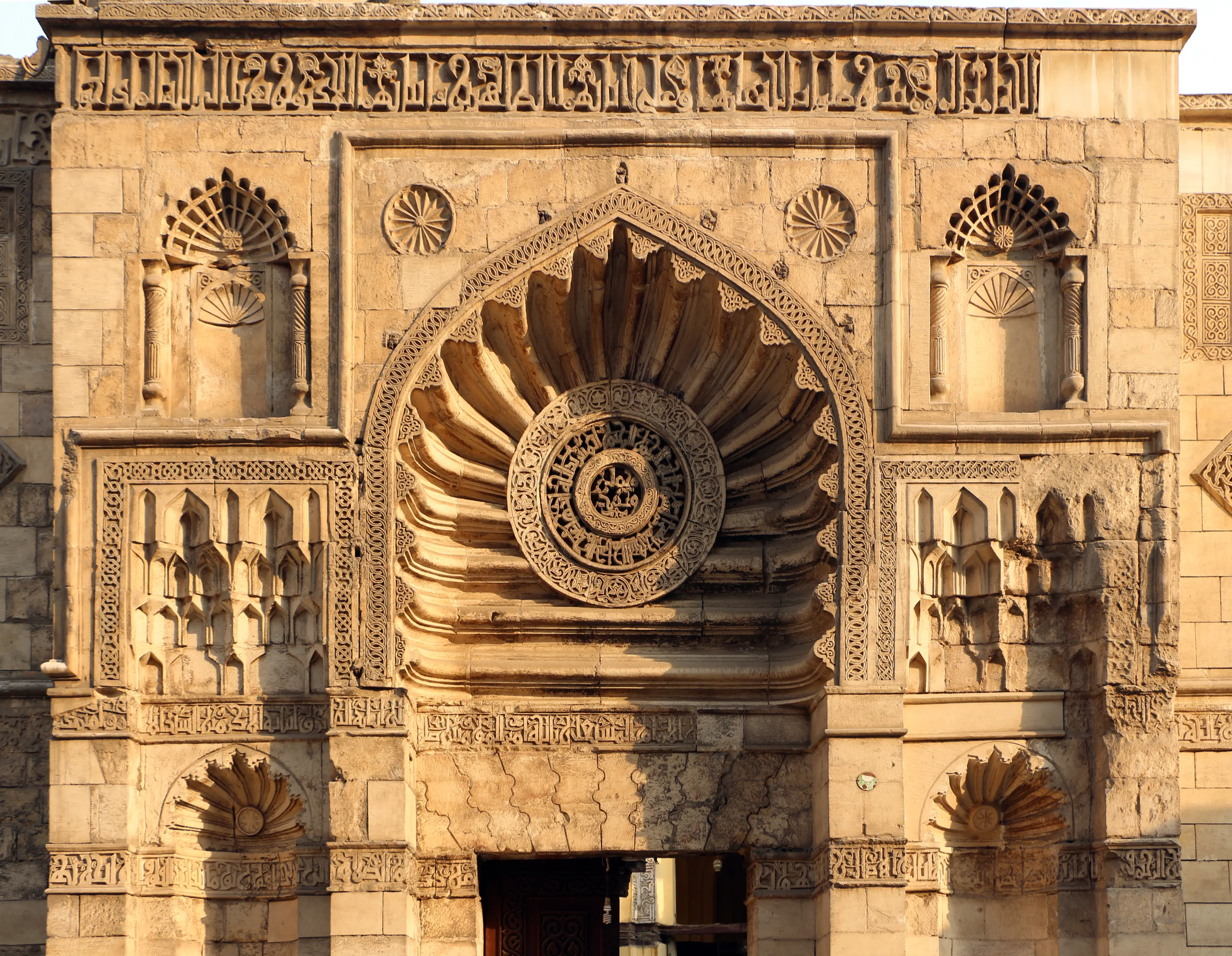
The Fatimid Caliphate was one of the most significant Shia Islamic dynasties in history, ruling over a vast empire that included North Africa, Egypt, Sicily, and parts of the Middle East from 909 to 1171 CE. Founded by the Ismaili Shia community and claiming direct descent from Fatimah, the daughter of Prophet Muhammad, the Fatimids established themselves as rivals to both the Sunni Abbasid Caliphate in Baghdad and the Umayyad Caliphate in Córdoba. Their empire, centered first in Mahdia (Tunisia) and later in Cairo, became a major center of Islamic learning, trade, and culture during the medieval period.
Origins and Ismaili Background
Ismaili Shia Doctrine
The Fatimids emerged from the Ismaili branch of Shia Islam, whose theology rested on several distinctive foundations. Central to it was the doctrine of the imamate, the belief in divinely appointed Imams drawn from the lineage of Ali. The Ismaili split arose from the recognition of Ismail ibn Jafar as the rightful seventh Imam, a point on which Ismailis diverged from other Shia. Ismaili tradition also held that certain Imams were concealed, working through representatives, and it placed particular emphasis on esoteric knowledge, the hidden meanings understood to lie within religious texts.
These beliefs carried significant political implications. Ismaili teaching rejected the legitimacy of both the Abbasid and Umayyad caliphates and, in its revolutionary form, called for the overthrow of the existing Sunni order. It was animated by messianic expectations centered on the coming of the Mahdi, the awaited "guided one," and by a universal mission whose stated goal was the establishment of Ismaili rule throughout the Islamic world.
Ismaili religious practice reflected the movement's clandestine early history and its layered approach to knowledge. Adherents practiced taqiyya, the concealment of their true beliefs when circumstances required it, and organized the da'wa, the missionary activity through which Ismaili doctrine was spread. Religious knowledge was imparted through a hierarchical system of initiation levels, and scriptural understanding relied heavily on allegorical interpretation, a symbolic reading of Quranic texts.
Early Ismaili Movement
In its pre-Fatimid development, the Ismaili movement operated as an underground organization, a secret network of missionaries and supporters. Its geographic spread reached from Yemen to North Africa, and its social appeal drew heavily on marginalized and oppressed groups. Throughout this period it stood in political opposition to Abbasid authority, which it sought to challenge and ultimately supplant.
Several key figures shaped the movement in these early years. Abdullah al-Mahdi became the founder of the Fatimid dynasty, while Abu Abdullah al-Shii served as chief missionary in North Africa, laying the groundwork for the dynasty's rise. Hamdan Qarmat led the related Qarmatian movement, and Ubayd Allah emerged as an early Fatimid leader claiming the status of Mahdi.
Foundation in North Africa (909-969 CE)
Conquest of Ifriqiya
The Fatimid state emerged through a successful revolution in North Africa, built above all on an alliance with the Kutama Berber confederation. This tribal support gave the movement its military strength, as Berber warriors formed the core of the Fatimid army. The alliance was rooted in local grievances, particularly Berber opposition to Abbasid-appointed governors, and was reinforced by the religious appeal of the Ismaili message, which resonated among the Berber communities.
The overthrow of the Aghlabids in 909 CE followed. The declining power of this Sunni dynasty in Tunisia left it vulnerable, and a systematic military campaign conquered the cities of North Africa one after another. The capture of Kairouan brought a major Islamic center under Fatimid control, and the foundation of Mahdia established a new Fatimid capital.
The young state faced early challenges from several directions. Kharijite resistance came from the Ibadi communities, Sunni opposition arose among orthodox Islamic scholars, and tribal conflicts required the careful management of diverse Berber interests. The costs of conquest and administration, meanwhile, brought considerable economic disruption.
Abdullah al-Mahdi (909-934 CE)
The first Fatimid caliph established the dynasty's foundations, resting his authority on a set of far-reaching claims. He declared himself the Mahdi, the awaited guided one, and asserted a genealogical legitimacy through descent from Fatimah and Ali. On this basis he claimed a religious authority that directly challenged the legitimacy of the Abbasid caliphate, and he embraced a universal mission whose stated aim was the conquest of the entire Islamic world.
His administrative organization gave the new state its form. He established Mahdia as a fortified capital city, adapted existing administrative systems to Fatimid needs, integrated Berber and Arab forces into a unified military organization, and pursued an economic policy centered on controlling the Mediterranean trade routes.
Al-Mahdi also made repeated attempts at expansion. His Egyptian campaigns were multiple but unsuccessful attempts to conquer Egypt, while naval expeditions carried Fatimid operations to Sicily. He extended Fatimid control westward across the Maghreb and opened diplomatic relations through contacts with the Byzantine Empire.
Al-Qaim (934-946 CE) and Al-Mansur (946-953 CE)
The second and third Fatimid caliphs consolidated North African rule. Their internal consolidation involved the careful management of Berber relations, balancing tribal alliances and conflicts, alongside a religious policy that promoted Ismaili doctrine. They pursued economic development by encouraging trade and agriculture and fostered urban growth in Mahdia and other cities.
External challenges pressed on them from several quarters. The Umayyad rivalry brought competition with the caliphate of Córdoba, relations with the Byzantines involved complex diplomatic and military interactions, and Abbasid opposition sustained a continued hostility from Baghdad. Local resistance, meanwhile, took the form of ongoing opposition from Sunni populations.
Military developments accompanied these efforts. The Fatimids developed a Mediterranean fleet to project naval power, constructed a system of defensive fortresses, created a professional army of regular forces, and refined advanced techniques of siege warfare for capturing cities.
Al-Muizz (953-975 CE): The Conqueror of Egypt
The fourth Fatimid caliph, al-Muizz li-Din Allah, achieved what his predecessors had attempted multiple times but failed to accomplish: the conquest of Egypt. His reign marked the transformation of the Fatimids from a North African regional power into a major Islamic empire capable of challenging the Abbasid Caliphate itself. Al-Muizz was not merely a military conqueror but a sophisticated statesman who understood that lasting success required careful preparation, skilled leadership, and wise governance.
The conquest of Egypt had been a Fatimid obsession since the dynasty's founding. Egypt's strategic position controlling trade routes between the Mediterranean and the Red Sea, its agricultural wealth from the Nile valley, and its religious significance as home to important Islamic centers made it an irresistible prize. Previous Fatimid caliphs had launched multiple expeditions to conquer Egypt, but all had failed due to various combinations of military setbacks, logistical difficulties, and the resilience of Egyptian resistance. Al-Muizz learned from these failures and spent years preparing for a campaign that would succeed where others had failed.
The preparation for the Egyptian conquest was meticulous and comprehensive. Al-Muizz strengthened the Fatimid military, ensuring that his forces were well-trained, well-equipped, and adequately supplied for a major campaign. He gathered intelligence about conditions in Egypt, learning about the weaknesses of the ruling Ikhshidid dynasty and the discontent among various segments of Egyptian society. He accumulated the financial resources necessary to sustain a prolonged military operation and to reward his soldiers and supporters. He also engaged in diplomatic preparation, establishing contacts with potential allies within Egypt and neutralizing potential opponents who might interfere with his plans.
In 969 CE, al-Muizz entrusted the conquest to his most capable general, Jawhar al-Siqilli, a Greek or Sicilian convert to Islam whose military genius and administrative skills made him the ideal commander for this crucial mission. Jawhar led a well-prepared army of approximately 100,000 men, including Kutama Berber cavalry, infantry, and support troops, eastward from Tunisia toward Egypt. The campaign proceeded with remarkable smoothness, as the Ikhshidid dynasty, weakened by internal conflicts and external pressures, proved unable to mount effective resistance. The Fatimid army entered Fustat, the existing Egyptian capital, in July 969 CE, and Jawhar quickly established Fatimid control over the country.
The conquest of Egypt was achieved with relatively little bloodshed, a testament to both Fatimid military superiority and Jawhar's diplomatic skills. Rather than treating Egypt as conquered territory to be plundered, Jawhar implemented a policy of conciliation and continuity. He assured the Egyptian population, predominantly Sunni Muslims with significant Christian and Jewish minorities, that they would be treated fairly and that their religious practices would be respected. He retained many existing administrative officials and systems, making the transition to Fatimid rule as smooth as possible. He also took immediate steps to establish the foundations of Fatimid power in Egypt, including the construction of a new capital city that would become one of the medieval world's greatest urban centers.
The foundation of Cairo (al-Qahirah, "The Victorious") in 969 CE was one of the most significant urban planning achievements of the medieval period. Jawhar selected a site north of Fustat, the existing capital, where he could build a new city designed specifically to serve as the seat of Fatimid power. The city was laid out according to a careful plan, with a great palace complex at its center, surrounded by administrative buildings, mosques, markets, and residential quarters. The construction of Cairo was not merely a practical necessity but also a symbolic statement of Fatimid power and ambition, a physical manifestation of their claim to be the rightful leaders of the Islamic world.
Al-Muizz himself arrived in Egypt in 973 CE, making a triumphal entry into his new capital. His arrival marked the definitive shift of the Fatimid center of gravity from North Africa to Egypt. Cairo would remain the Fatimid capital for the rest of the dynasty's existence, and Egypt would be the foundation of Fatimid power and wealth. The conquest of Egypt transformed the Fatimids from a regional North African dynasty into a major Islamic empire, positioning them as serious rivals to the Abbasid Caliphate in Baghdad and establishing them as major players in the complex politics of the medieval Islamic world.
The Egyptian Period (969-1171 CE)
Cairo as Imperial Capital
The establishment of Cairo marked the beginning of the Fatimid golden age and created one of the medieval world's most magnificent cities. Al-Qahirah al-Muizziyah ("The Victorious City of al-Muizz") was designed from its inception to be more than merely a capital; it was conceived as a physical manifestation of Fatimid power, religious authority, and cultural sophistication. The city's layout reflected both practical administrative needs and symbolic religious and political meanings, creating an urban space that would shape Egyptian and Islamic history for centuries to come.
The heart of Cairo was the great palace complex, an enormous architectural ensemble that served as the residence of the Fatimid caliphs and the center of governmental administration. The palace complex actually consisted of two main palaces, the Eastern Palace and the Western Palace, connected by gardens and courtyards and surrounded by walls that separated the caliphal residence from the rest of the city. These palaces were legendary for their magnificence, with contemporary accounts describing halls decorated with gold and precious stones, elaborate fountains and gardens, vast libraries containing hundreds of thousands of volumes, and treasuries filled with unimaginable wealth. The palace complex was not merely a residence but a self-contained city within the city, housing thousands of people including the caliph's family, court officials, servants, guards, and craftsmen.
The construction of Al-Azhar Mosque, begun in 970 CE and completed in 972 CE, represented another crucial element of Cairo's foundation. The mosque's name, meaning "The Radiant" or "The Flourishing," reflected Fatimid aspirations for their new capital and their religious mission. Al-Azhar was designed to serve multiple functions: it was a congregational mosque where the Friday prayers were held, a center for Ismaili religious instruction and missionary training, and a symbol of Fatimid religious authority. The mosque's architecture combined elements from various Islamic architectural traditions, creating a distinctive Fatimid style that would influence subsequent Islamic architecture throughout the region.
Within a few years of its foundation, Al-Azhar evolved from a mosque into a comprehensive educational institution, becoming what many scholars consider the world's oldest continuously operating university. The transformation of Al-Azhar into an educational center reflected the Fatimid commitment to learning and their understanding that religious and political authority required intellectual legitimacy. The institution attracted scholars from throughout the Islamic world, offering instruction in Ismaili theology, Islamic law, Arabic language and literature, philosophy, mathematics, astronomy, and medicine. Students received not only education but also stipends, room, and board, making advanced learning accessible to talented individuals regardless of their economic circumstances.
The educational mission of Al-Azhar was intimately connected to the Fatimid da'wa, the missionary activity aimed at spreading Ismaili doctrine throughout the Islamic world. The institution trained missionaries who would be sent to various regions to propagate Ismaili beliefs and establish communities loyal to the Fatimid caliphate. These missionaries were educated in sophisticated theological arguments, trained in methods of persuasion and debate, and prepared to operate in diverse cultural and political contexts. The success of Fatimid missionary activity, which established lasting Ismaili communities from Yemen to India, owed much to the systematic training provided at Al-Azhar and other Fatimid educational institutions.
Cairo's commercial districts quickly developed into major centers of international trade, taking advantage of Egypt's strategic position at the crossroads of Mediterranean and Indian Ocean commerce. The city's markets offered goods from throughout the known world: spices from India and Southeast Asia, silk from China, ivory and gold from Africa, timber and metals from Europe, and locally produced textiles, metalwork, and ceramics. The Fatimid government actively encouraged trade, providing security for merchants, maintaining roads and ports, and establishing commercial treaties with various powers. The wealth generated by this commerce funded the Fatimid court's magnificence, supported the military, and financed the cultural and architectural achievements that made Cairo one of the medieval world's great cities.
The city's population grew rapidly, attracting people from throughout the Fatimid empire and beyond. Cairo became a cosmopolitan metropolis where Arabs, Berbers, Turks, Armenians, Greeks, and others lived and worked together. The city's religious diversity was equally remarkable, with Ismaili Shias, Sunni Muslims, Coptic Christians, and Jews all maintaining their communities and religious institutions. This diversity was managed through a combination of Fatimid tolerance, administrative pragmatism, and the millet-like system that allowed religious communities considerable autonomy in managing their internal affairs. The result was a vibrant, dynamic urban culture that combined elements from various traditions while developing its own distinctive character.
Al-Aziz (975-996 CE): The Height of Fatimid Power
Al-Aziz's reign marked the zenith of Fatimid influence. His territorial expansion carried Fatimid power well beyond Egypt: Syrian campaigns brought the conquest of Damascus and southern Syria, control of Palestine followed with the occupation of Jerusalem and the coastal cities, relations with the Byzantines involved complex diplomatic and military interactions, and Fatimid influence in Arabia extended authority over the Hijaz and the holy cities.
His reign was also distinguished by administrative excellence. Bureaucratic efficiency rested on a sophisticated governmental organization, a policy of religious tolerance accommodated the Sunni and Christian populations, economic prosperity reached the peak of Fatimid commercial success, and generous cultural patronage supported scholars, artists, and architects.
Military achievements underpinned these successes. A professional army provided well-organized and disciplined forces, naval supremacy secured dominance in the Eastern Mediterranean, a network of strategic fortresses defended the empire, and technological innovation supplied advanced military equipment and techniques.
Al-Hakim (996-1021 CE): The Controversial Caliph
Al-Hakim bi-Amr Allah remains one of the most enigmatic and controversial figures in Islamic history. Ascending to the throne at the age of eleven after his father al-Aziz's death in 996 CE, al-Hakim's twenty-five-year reign was marked by brilliant administrative achievements, erratic religious policies, and actions that continue to puzzle historians. His personality combined genuine piety and intellectual curiosity with unpredictable behavior that alternated between tolerance and persecution, making him a figure who defied simple categorization.
During his early years, al-Hakim was under the regency of various officials, but as he matured, he increasingly asserted his personal authority and developed distinctive approaches to governance and religious policy. He was known for his ascetic personal habits, often wearing simple clothing and riding a donkey rather than displaying the elaborate ceremonial trappings typical of caliphs. He frequently rode through Cairo at night, observing the city and its inhabitants, and was accessible to ordinary people in ways unusual for a ruler of his status. This personal style endeared him to some segments of the population while alarming the court elite who found his behavior unpredictable and threatening to established hierarchies.
Al-Hakim's religious policies were extraordinarily complex and seemingly contradictory. As an Ismaili Shia caliph ruling over a predominantly Sunni population, he faced the perpetual challenge of maintaining his religious identity while governing effectively. At times, he enforced strict Ismaili practices and restricted Sunni religious observances, closing Sunni mosques and prohibiting certain Sunni rituals. At other times, he showed remarkable tolerance, allowing Sunnis considerable freedom in their religious practices. His treatment of Christians and Jews followed a similar pattern of alternating tolerance and persecution that has led historians to debate whether his policies reflected a coherent strategy or personal instability.
The most notorious act of al-Hakim's reign was the destruction of the Church of the Holy Sepulchre in Jerusalem in 1009 CE, one of Christianity's holiest sites. This act shocked the Christian world and contributed to the deteriorating relations between the Islamic world and Christian Europe that would eventually lead to the Crusades. The motivations for this destruction remain debated: some historians suggest it was a response to Byzantine persecution of Muslims, others point to al-Hakim's increasingly erratic religious views, while still others see it as a calculated political act designed to assert Fatimid authority. Whatever the motivation, the destruction had lasting consequences, damaging Fatimid relations with Christian powers and contributing to the religious tensions that characterized the medieval Mediterranean world.
Al-Hakim also imposed various social and economic regulations that struck contemporaries as bizarre and oppressive. He prohibited the consumption of certain vegetables, banned the making of women's shoes (apparently to prevent women from leaving their homes), restricted the hours when markets could operate, and issued numerous other decrees regulating daily life in minute detail. Some of these regulations were enforced strictly, while others were ignored or quickly rescinded. Modern historians have struggled to find coherent patterns in these edicts, with some suggesting they reflected al-Hakim's genuine concern for public morality and social order, while others see them as evidence of mental instability or as experiments in social control.
The most controversial aspect of al-Hakim's reign was the emergence of claims about his divinity. A group of his followers, led by figures like Hamza ibn Ali and Muhammad al-Darazi, began proclaiming that al-Hakim was a divine incarnation, the manifestation of God on earth. These claims, which were completely contrary to Islamic monotheism and even to Ismaili doctrine, horrified orthodox Muslims and created a crisis within the Fatimid state. Al-Hakim's own attitude toward these claims remains unclear: he sometimes seemed to encourage them, at other times he punished those who made them, and his true beliefs remain a mystery. These divine claims would eventually lead to the emergence of the Druze religion, a distinct faith that continues to exist today in Lebanon, Syria, and Israel, whose adherents believe that al-Hakim was indeed a divine manifestation.
In 1021 CE, al-Hakim disappeared during one of his nocturnal rides in the Muqattam Hills outside Cairo. His bloodstained clothes were found, but his body was never recovered. The circumstances of his disappearance have been the subject of endless speculation: was he murdered by opponents who found his policies intolerable? Did he stage his own disappearance to escape the burdens of rule? Did he suffer an accident? The mystery has never been solved, and different groups have interpreted his disappearance according to their own beliefs. The Druze believe he went into occultation and will return at the end of time, while most historians assume he was assassinated, though by whom and for what specific reason remains uncertain.
Al-Zahir (1021-1036 CE) and Al-Mustansir (1036-1094 CE)
Al-Zahir's brief reign focused on restoring stability after his father's controversial rule and mysterious disappearance. He reversed many of al-Hakim's more extreme policies, rebuilt the Church of the Holy Sepulchre, and pursued a policy of religious reconciliation that eased tensions with both the Sunni majority and non-Muslim communities. His reign, though short, was marked by relative prosperity and stability, setting the stage for his son's extraordinarily long rule.
Al-Mustansir bi-llah ascended to the throne in 1036 CE at the age of seven and would rule for fifty-eight years, one of the longest reigns in Islamic history. His reign can be divided into two distinct periods: an early era of prosperity and power, followed by a later period of crisis and decline that nearly destroyed the Fatimid state. The contrast between these two periods illustrates both the heights the Fatimids achieved and the fragility of medieval Islamic states when faced with military, economic, and political challenges.
During the first three decades of al-Mustansir's reign, the Fatimid Caliphate reached perhaps its greatest extent and influence. Fatimid authority extended from North Africa through Egypt and into Syria and Palestine, with the holy cities of Mecca and Medina acknowledging Fatimid suzerainty. Cairo flourished as one of the medieval world's great cities, its markets filled with goods from throughout the known world, its mosques and palaces displaying architectural magnificence, and its scholars and poets producing works that enriched Islamic civilization. The Fatimid treasury was legendary for its wealth, containing treasures accumulated over generations of successful rule and profitable trade.
However, beginning in the 1060s, the Fatimid state entered a period of crisis that threatened its very existence. The crisis had multiple causes, but at its heart was a conflict between different military factions within the Fatimid army. The Fatimid military had long been composed of diverse elements: Berber troops from North Africa, Turkish slave soldiers, Sudanese infantry, and various other groups. These different factions had distinct identities, interests, and loyalties, and the Fatimid government had managed to balance them against each other to maintain control. However, in the 1060s, this balance collapsed, and the different military factions began fighting each other for control of the state and its resources.
The conflict between Turkish and Sudanese troops was particularly destructive. The Turkish cavalry, who had been recruited as slave soldiers and had risen to positions of power and influence, clashed with the Sudanese infantry over pay, privileges, and political influence. These military conflicts devastated Cairo and the surrounding regions, with different factions looting the city, destroying property, and terrorizing the population. The fighting disrupted agriculture and trade, leading to economic collapse and famine. The Fatimid treasury, once legendary for its wealth, was depleted as different military commanders seized its contents to pay their troops.
The crisis reached its nadir in the late 1060s and early 1070s, when Egypt experienced a severe famine exacerbated by low Nile floods and the disruption of agriculture caused by military conflicts. Contemporary accounts describe horrific scenes of starvation, with people reduced to eating dogs, cats, and even resorting to cannibalism. The population of Cairo declined dramatically as people fled the city or died of hunger and disease. The great Fatimid palaces were looted, their treasures dispersed, and their libraries destroyed. The caliphate seemed on the verge of complete collapse, with al-Mustansir reduced to a powerless figurehead unable to control the military factions fighting in his name.
Salvation came from an unexpected source: Badr al-Jamali, an Armenian general who had been serving as governor of Acre in Palestine. In 1074 CE, al-Mustansir invited Badr al-Jamali to come to Cairo and restore order, granting him extraordinary powers as both vizier and commander of the armed forces. Badr al-Jamali arrived with a loyal Armenian army and ruthlessly suppressed the warring factions, executing rebellious commanders and establishing firm military control. He reorganized the government, reformed the financial system, restored agricultural production, and rebuilt the military on a more stable foundation. His success in restoring order and prosperity earned him the title "Amir al-Juyush" (Commander of the Armies) and made him effectively the ruler of Egypt, with the caliph retaining religious authority but little political power.
Badr al-Jamali's rule marked a fundamental transformation in the nature of Fatimid government. From this point forward, real power would rest with military commanders who held the position of vizier, while the caliphs became increasingly ceremonial figures. This pattern of military dominance would continue until the end of the Fatimid dynasty, with powerful viziers from military backgrounds effectively ruling Egypt while maintaining the fiction of caliphal authority. Badr al-Jamali also left a lasting architectural legacy, constructing the massive stone gates and walls that still stand in Cairo today, including the famous Bab al-Futuh, Bab al-Nasr, and Bab Zuweila, which rank among the finest examples of medieval Islamic military architecture.
Government and Administration
Caliphal Authority
The religious leadership of the Fatimid caliph combined political and religious authority in a single figure, the Imam-Caliph. According to Ismaili doctrine, his leadership was divinely appointed and divinely guided, and it was accompanied by a theological concept of caliphal infallibility and a claim to esoteric knowledge, an exclusive access to hidden religious truths.
The political structure vested the caliph, in theory, with absolute and unlimited authority. Elaborate court ceremony surrounded him with protocols emphasizing his dignity, a succession system provided for hereditary transmission within the Fatimid family, and his religious legitimacy rested on genealogical claims of descent.
In administrative terms, the caliph bore ultimate responsibility for policy formation and governmental decisions, held supreme military command over the armed forces, served as the final arbiter of judicial authority in legal disputes, and provided religious guidance as leader of the Ismaili community.
Governmental Structure
The central administration was headed by the vizier (wazir), the chief minister and head of government. Beneath him operated the diwan system of specialized governmental departments, a body of court officials filling various ceremonial and administrative positions, and a palace administration charged with managing the royal household.
Several key departments carried out the work of government. The Diwan al-Majlis was the department of sessions and audiences, the Diwan al-Insha served as the chancery and correspondence department, the Diwan al-Jaysh handled military administration, and the Diwan al-Kharaj managed tax collection and financial administration.
Provincial government extended this structure across the empire. Governors, or walis, were regional administrators appointed by the caliph, supported by local officials who administered districts and cities, military commanders who provided regional military leadership, and religious officials in the form of Ismaili missionaries and judges.
Legal System
Fatimid law drew on several sources. Ismaili jurisprudence provided distinctive Shia legal interpretations, caliphal decrees supplied laws issued directly by the Fatimid caliphs, traditional practices allowed for the accommodation of local customs, and administrative regulations established governmental rules and procedures.
The court system operated on several levels. The caliphal court held supreme judicial authority, regional courts served as provincial and local judicial institutions, commercial courts specialized in trade disputes, and religious courts functioned as Ismaili legal institutions.
A range of legal officials staffed this system. The chief judge, the Qadi al-Qudat, was the supreme judicial officer, regional judges served in provincial and local courts, legal scholars comprised the Ismaili jurists and legal experts, and various court personnel carried out administrative and procedural duties.
Economic Foundations
Trade and Commerce
The Fatimid economy was built on extensive commercial networks, made possible above all by the empire's strategic position. Control of the Eastern Mediterranean gave the Fatimids dominance over its trade, command of the Red Sea routes let them control the flow of goods between the Indian Ocean and the Mediterranean, the Nile served as an artery for internal transportation, and control of the caravan routes secured the overland trade.
Several cities served as major commercial centers. Cairo was the great hub of international trade, Alexandria an important Mediterranean port, Fustat a commercial and industrial center, and Damietta a trading port of the Nile Delta.
The goods that passed through these markets were varied. Luxury items included spices, silk, precious stones, and perfumes; agricultural products encompassed grain, sugar, and flax; manufactured goods ranged across textiles, metalwork, and ceramics; and raw materials such as timber, metals, and other resources were traded in quantity.
Commercial practice was sophisticated. Advanced financial institutions provided banking systems, credit mechanisms took the form of letters of credit and commercial loans, currency circulated as gold dinars and silver dirhams, and market regulation controlled weights, measures, and prices.
Agricultural System
Fatimid agriculture rested on the Nile. A sophisticated irrigation system provided careful water management, crop rotation ensured efficient agricultural practices, various forms of land tenure governed ownership and cultivation, and advanced farming techniques constituted the agricultural technology of the period.
The land yielded a wide range of products. Grain crops included wheat, barley, and other cereals; cash crops encompassed sugar cane, flax, and cotton; a diverse horticultural production supplied fruits and vegetables; and livestock included cattle, sheep, and poultry.
Rural administration organized this productivity. Land surveys maintained detailed records of agricultural land, tax assessment provided a systematic evaluation of productivity, irrigation management kept the water systems in repair, and rural security protected the agricultural areas.
Industrial Production
The textile industry was a mainstay of Fatimid manufacturing. It encompassed high-quality silk weaving, the production of various cotton fabrics, linen manufacturing drawn from flax cultivation, and a dyeing industry that employed sophisticated coloring techniques.
Metalwork and crafts flourished alongside textiles. Gold and silver work produced luxury metalwork and jewelry, bronze production supplied a range of implements and decorations, the ceramic industry turned out pottery and decorative ceramics, and glassmaking yielded high-quality glass.
Shipbuilding was a further pillar of the economy. Fatimid yards constructed naval vessels, including warships, alongside merchant ships built for trade. This work drew on advanced shipbuilding techniques and technological innovation, supported by repair facilities that maintained both the naval and commercial fleets.
Cultural and Intellectual Achievements
Al-Azhar University
Al-Azhar was established in 970 CE, shortly after the founding of Cairo. Its educational mission made it a center of Ismaili learning and scholarship, its building held considerable architectural significance as an important example of Fatimid architecture, and its scholarly tradition gave rise to distinctive intellectual traditions.
Its academic programs were broad. They included religious studies in Ismaili theology and jurisprudence, Arabic literature encompassing poetry, prose, and linguistic studies, philosophy drawn from the Islamic philosophical traditions, and the sciences of mathematics, astronomy, and medicine.
The institution supported a substantial scholarly community. Its faculty comprised distinguished scholars and teachers, its students were drawn from throughout the Islamic world, its library held an extensive collection of manuscripts and books, and its work fostered original research and intellectual development.
Architecture and Art
Fatimid architecture produced a series of innovations. Mosque design developed a distinctive Fatimid style, palace architecture yielded elaborate royal residences, fortification advanced the techniques of military architecture, and urban planning gave rise to sophisticated city design.
Artistic achievements were equally notable. Calligraphy developed distinctive Fatimid styles, the decorative arts favored elaborate ornamentation and design, the textile arts produced high-quality fabric and decoration, and metalwork employed sophisticated techniques.
A number of notable buildings survive as testaments to this period. The Al-Azhar Mosque stands as a premier example of Fatimid architecture, the Al-Hakim Mosque represents monumental mosque construction, the Fatimid palaces were elaborate royal complexes, and the city gates preserve impressive fortification architecture.
Literature and Learning
Literary development under the Fatimids took several forms. Arabic poetry flourished in distinctive Fatimid traditions, religious literature produced Ismaili theological and devotional works, historical writing yielded chronicles and biographical works, and scientific literature included works on mathematics, astronomy, and medicine.
Scholarly achievements ranged across many fields. Theological development advanced Ismaili doctrine, legal scholarship elaborated Ismaili jurisprudence, philosophical works contributed to Islamic philosophy, and scientific research brought advances in various scientific fields.
These pursuits were sustained by a network of educational institutions. The Dar al-Hikma, or House of Knowledge, served as a center for advanced learning, extensive libraries held collections of manuscripts and books, schools operated throughout the empire, and scholarly networks maintained connections with scholars across the Islamic world.
Religious Policy and Da'wa
Ismaili Missionary Activity
The da'wa was carefully organized. It rested on a hierarchical structure of missionary ranks, supported by training programs that educated missionaries in Ismaili doctrine. Its geographic reach extended throughout the Islamic world, and in hostile territories it operated through secret networks that conducted covert operations.
The missionaries employed a range of methods. They relied on intellectual appeal through sophisticated theological arguments, offered social services in the form of assistance to converts, mounted political opposition to existing Sunni authorities, and practiced cultural adaptation by accommodating local conditions.
Regional missions took distinct forms in different lands. In Yemen the movement established a strong Ismaili presence and political influence, in Syria it combined missionary activity with political involvement, in Iran it operated through underground missionary networks, and in India it founded lasting Ismaili communities.
Religious Tolerance
The Christian communities generally received tolerant treatment, particularly the Coptic Christians, the largest Christian group. Christians took part in government through administrative participation, enjoyed the religious freedom to practice their faith, and benefited from the architectural preservation and protection of their religious buildings.
The Jewish communities were similarly accommodated. Jews achieved economic integration through participation in commerce and administration, exercised religious autonomy and self-governance in religious matters, made scholarly contributions to intellectual life, and saw their communal authorities recognized under a system of community leadership.
The Sunni Muslims, though ruled by an Ismaili Shia dynasty, formed the majority population and were accommodated as such. They were permitted their religious practices and observances, took part in intellectual life through scholarly participation, and held administrative roles within the government.
Decline and Fall (1094-1171 CE)
The Great Schism (1094 CE)
The succession crisis after al-Mustansir's death divided the Ismaili community. The dispute pitted two claimants against each other, Nizar and al-Musta'li. The powerful vizier al-Afdal intervened in support of al-Musta'li, and Nizar's rebellion, a failed attempt to claim the throne, ended in his defeat. The result was a lasting division within the Ismaili movement.
The consequences of the schism endured well beyond the Fatimid state. The Nizari branch formed a separate Ismaili community supporting the line of Nizar, while the Musta'li branch remained the Fatimid-supported community. The Nizaris established a militant organization known to their opponents as the Assassins, and the whole affair left the Fatimids with weakened authority and reduced religious legitimacy.
Military Weakness
Internal problems steadily eroded Fatimid power. Vizier dominance meant that effective rule passed to military commanders, caliphal weakness reduced the caliph to a figurehead, military revolts brought continued conflicts between different military groups, and economic decline brought reduced revenues and financial difficulties.
External pressures compounded these troubles. The Crusader states applied European military pressure in Syria and Palestine, Seljuk expansion brought Turkish pressure from the east, the rise of the Ayyubids reflected the growing power of Saladin's family, and naval challenges culminated in the loss of Mediterranean naval supremacy.
The Crusades and Fatimid Response
The arrival of the First Crusade in the Levant in 1097 CE presented the Fatimids with both a crisis and an opportunity. The Crusaders, responding to Pope Urban II's call for a holy war to liberate Jerusalem from Muslim rule, arrived at a time when the Fatimids had recently recaptured Jerusalem from the Seljuk Turks. The Fatimids initially viewed the Crusaders as potential allies against their Seljuk enemies, and there were even tentative diplomatic contacts between Fatimid representatives and Crusader leaders. However, these hopes for cooperation quickly evaporated as it became clear that the Crusaders intended to conquer and hold territories for themselves rather than simply weaken the Seljuks.
The Crusader conquest of Jerusalem in July 1099 CE was a catastrophic blow to Fatimid prestige and power. The city had been under Fatimid control for less than a year when the Crusaders besieged and captured it, massacring much of its Muslim and Jewish population in an orgy of violence that shocked the medieval world. For the Fatimids, the loss of Jerusalem was not merely a military defeat but a profound religious and political humiliation. As the self-proclaimed leaders of the Islamic world and guardians of Islam's holy sites, their inability to protect Jerusalem undermined their claims to caliphal authority and exposed their military weakness.
The Fatimid response to the Crusader threat was hampered by multiple factors. The dynasty was still recovering from the crisis of the 1060s-1070s, and real power rested with military viziers rather than the caliphs. The Fatimid military, though still formidable, was no longer the disciplined force it had been in earlier centuries. Moreover, the Fatimids faced the strategic dilemma of fighting on multiple fronts: against the Crusaders in Palestine, against the Seljuks in Syria, and against various local powers who sought to exploit Fatimid weakness. This multi-front conflict stretched Fatimid resources and prevented them from concentrating their forces against any single enemy.
The Fatimids launched several military campaigns to recapture Jerusalem and drive the Crusaders from Palestine, but all failed. A major Fatimid army was defeated by the Crusaders at the Battle of Ascalon in August 1099, just weeks after Jerusalem's fall. Subsequent campaigns in 1101, 1102, and 1105 also ended in failure, with Fatimid forces unable to overcome the Crusaders' superior heavy cavalry and defensive fortifications. These defeats further weakened Fatimid prestige and encouraged local rulers in Syria and Palestine to assert their independence or seek accommodation with the Crusaders.
The establishment of Crusader states in the Levant—the Kingdom of Jerusalem, the County of Tripoli, the Principality of Antioch, and the County of Edessa—fundamentally altered the political landscape of the eastern Mediterranean. The Fatimids found themselves confined largely to Egypt, with only tenuous control over parts of the Palestinian coast. The Crusader presence disrupted traditional trade routes, threatened Egyptian security, and provided a rallying point for Sunni opposition to Fatimid rule. The Fatimids' inability to effectively resist the Crusaders contributed to the perception that they were weak and that their Ismaili Shia ideology was insufficient to unite Muslims against the Christian threat.
Paradoxically, the Crusades also led to periods of cooperation and coexistence between the Fatimids and Crusaders. Both sides recognized that total victory was impossible and that accommodation might serve their interests better than constant warfare. The Fatimids and Crusaders engaged in trade, exchanged embassies, and sometimes formed tactical alliances against common enemies, particularly the Seljuks. These pragmatic relationships scandalized religious purists on both sides but reflected the complex realities of medieval Mediterranean politics, where religious ideology often took second place to practical considerations of power and profit.
Saladin and the End of Fatimid Rule
The final chapter of Fatimid history is inextricably linked with the rise of Salah al-Din Yusuf ibn Ayyub, known in the West as Saladin, one of Islamic history's most celebrated figures. Saladin was a Kurdish military commander whose family had entered Fatimid service during the struggles against the Crusaders. His uncle, Shirkuh, was a general serving the Zengid ruler Nur al-Din of Syria, and both uncle and nephew participated in military campaigns in Egypt during the 1160s, when the Fatimid caliphate had become a prize fought over by various powers seeking to control Egypt's wealth and strategic position.
The Fatimid caliphate in its final years was a shadow of its former glory. Real power rested with competing viziers who used the caliph as a figurehead while they struggled for control of the government and military. The caliphs themselves, isolated in their palaces and deprived of real authority, had become ceremonial figures whose main function was to provide religious legitimacy to whoever controlled the vizierate. This political weakness made Egypt vulnerable to external intervention, and both the Crusaders and the Zengids of Syria sought to dominate or conquer the country.
In 1169 CE, after a series of military campaigns in Egypt, Shirkuh was appointed vizier by the Fatimid caliph al-Adid, the last of the Fatimid line. When Shirkuh died just two months later, Saladin, then only thirty-one years old, succeeded his uncle as vizier. This appointment would prove fatal to the Fatimid dynasty. Saladin was a devout Sunni Muslim who viewed the Ismaili Fatimid caliphate as heretical and illegitimate. However, he moved carefully, consolidating his power gradually while maintaining the fiction of serving the Fatimid caliph and his nominal overlord, Nur al-Din of Syria.
Over the next two years, Saladin systematically dismantled Fatimid power while building his own authority. He replaced Fatimid officials with his own supporters, reorganized the military to ensure its loyalty to him rather than the caliph, and established control over Egypt's financial resources. He suppressed opposition ruthlessly, crushing a revolt by Fatimid loyalists and eliminating potential rivals. All of this was done while ostensibly serving as the caliph's vizier, but everyone understood that Saladin was the real ruler of Egypt and that the caliph was powerless to resist him.
The final act came in September 1171 CE. The Fatimid caliph al-Adid lay dying in his palace, isolated and abandoned by all but a few loyal servants. Saladin, recognizing that the moment had come to end the Fatimid caliphate officially, ordered that the Friday sermon (khutba) in Cairo's mosques be delivered in the name of the Abbasid caliph in Baghdad rather than the Fatimid caliph. This act, seemingly simple, was revolutionary: it meant that Egypt now recognized the Sunni Abbasid caliphate as the legitimate authority in Islam, ending the Fatimid claim to the caliphate that had lasted for 262 years. When al-Adid died a few days later, Saladin did not appoint a successor. The Fatimid Caliphate simply ceased to exist, replaced by Saladin's Ayyubid dynasty.
The transition from Fatimid to Ayyubid rule was remarkably smooth, testament to how thoroughly Saladin had prepared and how weak the Fatimids had become. There was no significant resistance, no popular uprising in defense of the Fatimid caliphs, no military revolt by Fatimid loyalists. The Ismaili da'wa organization was suppressed, Ismaili religious practices were prohibited, and Egypt returned to Sunni orthodoxy. The great Fatimid palaces were abandoned or converted to other uses, their treasures dispersed, and their libraries scattered. Al-Azhar, which had been founded as an Ismaili institution, was eventually transformed into a center of Sunni learning, the role it maintains to this day. The Fatimid Caliphate, which had once rivaled the Abbasids and controlled much of the Islamic world, disappeared with barely a whisper, leaving behind only architectural monuments and historical memories.
Legacy and Historical Significance
Political Legacy
As a caliphal alternative, the Fatimids offered a distinct model of Islamic political authority. They demonstrated a viable form of Shia legitimacy, provided a model of multi-religious governance for ruling diverse populations, introduced administrative innovation through sophisticated governmental institutions, and contributed to medieval diplomatic traditions through their diplomatic practices.
The Fatimids provided a successful model of Shia governance that rivaled the Abbasid Caliphate and demonstrated that Islamic political authority could take multiple forms. Their administrative systems influenced subsequent dynasties including the Ayyubid Dynasty and Mamluk Sultanate that succeeded them in Egypt.
Their regional influence was wide. They left a lasting impact on the Maghrebi societies of North Africa, brought fundamental changes to Egyptian society, exerted a significant influence on Levantine history through their involvement in Syria, and stood as a major player in medieval Mediterranean politics.
Religious and Cultural Impact
The Fatimid period saw significant Ismaili development. It brought a sophisticated theological advancement of Ismaili doctrine, established missionary networks that founded Ismaili communities across the world, created educational institutions as centers of learning, and produced an extensive corpus of Ismaili religious literature.
Its intellectual contributions were broad. The legacy of Al-Azhar endures in the continuing influence of a premier Islamic university, Fatimid scholars contributed to the wider scholarly traditions of Islam, they advanced Islamic philosophical thought through philosophical development, and they made contributions to medieval Islamic science.
Architectural and Artistic Heritage
The Fatimids left a rich heritage of architectural monuments. The architecture of Cairo preserves a distinctive Fatimid style, their mosque design influenced the broader development of Islamic architecture, their urban planning contributed to medieval city planning, and their fortification architecture advanced military architectural techniques.
Their artistic traditions were equally influential. The decorative arts developed distinctive Fatimid styles, calligraphic development contributed to Arabic calligraphy, the textile arts produced high-quality fabric and design, and metalwork traditions employed sophisticated techniques.
Society and Daily Life in Fatimid Egypt
Life in Fatimid Egypt, particularly in Cairo, reflected the cosmopolitan character of an empire that brought together diverse peoples, religions, and cultures. The Fatimid capital was a city of remarkable contrasts, where immense wealth and grinding poverty existed side by side, where different religious communities maintained their distinct identities while participating in a shared urban culture, and where the ceremonial splendor of the caliphal court coexisted with the bustling commerce of the markets and the simple piety of neighborhood mosques.
The social structure of Fatimid society was complex and fluid, more so than in many medieval societies. At the apex stood the caliph and the royal family, surrounded by a court of officials, scholars, and servants. Below them were the military and administrative elite, including the viziers, generals, provincial governors, and high-ranking bureaucrats who actually ran the empire. The merchant class, particularly those involved in long-distance trade, could accumulate considerable wealth and influence, though they lacked the formal political power of the military and administrative elite. Artisans, organized into guilds, formed a respectable middle class, while peasant farmers, laborers, and servants made up the majority of the population.
What made Fatimid society distinctive was the relative openness of social boundaries and the opportunities for advancement based on merit rather than birth. The Fatimid system, like other Islamic states, employed many people of slave origin in military and administrative positions, and talented individuals could rise from humble origins to positions of great power and wealth. Christians and Jews could and did serve in high governmental positions, managing finances, serving as physicians, and acting as diplomatic intermediaries. This social mobility, while limited by modern standards, was remarkable for the medieval period and contributed to the dynamism of Fatimid society.
Women in Fatimid society enjoyed more rights and opportunities than in many contemporary societies, though they still faced significant restrictions. Elite women, particularly those of the royal family, could wield considerable political influence, as demonstrated by the power of various queen mothers and princesses who shaped policy and controlled patronage networks. Women could own and manage property independently, engage in business transactions, endow charitable foundations, and inherit wealth according to Islamic law. The Fatimid court employed numerous women in various capacities, and some women achieved fame as poets, scholars, and patrons of learning. However, women's public roles were limited, and most women's lives centered on the household and family.
Daily life in Cairo revolved around the rhythms of Islamic religious observance, commercial activity, and social interaction. The day began with the call to prayer at dawn, and the five daily prayers structured the rhythm of work and rest. The markets opened early, with merchants and craftsmen setting up their stalls and workshops. The city's numerous bathhouses (hammams) served not only hygienic functions but also important social roles, providing spaces where people could relax, socialize, and conduct business in a more informal setting than the markets or mosques. Coffeehouses, though they would become more prominent in later centuries, were beginning to appear as social gathering places.
Food and cuisine in Fatimid Egypt reflected the empire's diverse population and extensive trade networks. The basic diet of ordinary people centered on bread, vegetables, legumes, and occasional meat, supplemented by fruits, nuts, and dairy products. The wealthy enjoyed a much more varied and elaborate cuisine, with dishes incorporating spices from India, rice from various regions, fine meats, and elaborate sweets. Fatimid court banquets were legendary for their extravagance, featuring dozens of courses and exotic delicacies from throughout the known world. The Fatimid period saw the development of distinctive Egyptian culinary traditions that combined Arab, Persian, and local Egyptian elements.
Religious festivals and celebrations punctuated the calendar and provided occasions for public display, social gathering, and communal identity. The Fatimids, as Ismaili Shias, celebrated festivals that were distinctive to their tradition, including the birthday of Ali ibn Abi Talib and various commemorations of Ismaili Imams. However, they also observed festivals celebrated by all Muslims, such as Eid al-Fitr and Eid al-Adha, and they allowed Christians and Jews to celebrate their own religious holidays. These festivals often involved public processions, special prayers, charitable distributions, and various forms of entertainment, creating a rich ceremonial calendar that reinforced both religious identity and social cohesion.
The Fatimid court developed elaborate ceremonial practices that emphasized the caliph's exalted status and religious authority. Public appearances by the caliph were carefully choreographed spectacles, with the ruler appearing in magnificent robes, surrounded by guards and officials, and receiving the homage of subjects and foreign ambassadors. These ceremonies served multiple purposes: they demonstrated the caliph's power and legitimacy, they provided entertainment and spectacle for the population, and they reinforced the hierarchical social order. The Fatimid ceremonial system influenced subsequent Islamic dynasties and contributed to the development of elaborate court protocols throughout the medieval Islamic world.
Economic and Social Influence
The Fatimids exerted a lasting influence through their commercial networks. Their control of trade routes facilitated international commerce, their banking practices established advanced financial institutions and practices, their industrial development contributed to medieval industrial production, and their urban development spurred the growth of major commercial centers.
Their social innovations were also significant. Their religious tolerance offered a model for multi-religious societies, their educational opportunities expanded learning beyond the elite, their openness to social mobility created opportunities for advancement through merit, and their cultural synthesis integrated diverse cultural traditions.
Comparison with Contemporary Caliphates
Versus Abbasid Caliphate
The religious differences between the two caliphates were fundamental. They diverged in sectarian identity, setting Shia against Sunni Islamic authority, and in theological approach, contrasting an esoteric with an orthodox interpretation of Islam. Their caliphal claims were mutually exclusive, each asserting its own legitimacy against the other, and their religious practices differed in Ismaili as against Sunni ritual and belief.
Their political contrasts were equally marked. Their territorial bases lay in Egypt and North Africa on one side and Iraq and Iran on the other, their administrative systems set Fatimid innovations against Abbasid traditions, their military organizations differed in structure and recruitment, and their economic focus divided between Mediterranean trade and overland Asian commerce.
Versus Umayyad Caliphate of Córdoba
The two caliphates differed considerably in geographic scope. Their territorial extent set North Africa and Egypt against the Iberian Peninsula, their cultural context contrasted an Arab-Berber with an Arab-Hispanic synthesis, their economic base divided the Eastern from the Western Mediterranean, and their political challenges pitted the Crusades and the Ayyubids against the Christian Reconquista.
Their religious policies also diverged, though not in every respect. Their sectarian approach set Ismaili Shia against Sunni orthodoxy, while their treatment of minorities was similar, both showing tolerance for Christians and Jews. They differed in the basis of religious authority, the Fatimid caliphal claims contrasting with the emirate-to-caliphate evolution at Córdoba, and in their approach to expansion, the active Fatimid da'wa contrasting with the more defensive consolidation of Córdoba.
Conclusion
The Fatimid Caliphate represents one of the most significant chapters in Islamic history, demonstrating the political and cultural potential of Shia Islam during the medieval period. For over two and a half centuries, the Fatimids created and maintained a powerful empire that rivaled the great Sunni caliphates of their time, establishing themselves as a major force in Mediterranean and Middle Eastern politics.
The Fatimid achievement was remarkable in several respects. They successfully established a Shia alternative to Sunni political authority, creating a sophisticated governmental system that effectively governed diverse populations across North Africa and Egypt. Their capital, Cairo, became one of the medieval world's great cities, rivaling Baghdad and Córdoba in its magnificence and cultural achievements.
The Fatimids' religious tolerance and administrative pragmatism allowed them to govern successfully over predominantly Sunni populations while maintaining their Ismaili identity and mission. This balance between ideological commitment and practical governance provides important lessons about the possibilities and challenges of sectarian rule in diverse societies.
Culturally and intellectually, the Fatimid period was extraordinarily productive. The establishment of Al-Azhar University created an institution that continues to be one of the Islamic world's most important centers of learning. Fatimid patronage of scholarship, architecture, and the arts produced achievements that enriched Islamic civilization and influenced subsequent developments throughout the Muslim world.
Economically, the Fatimids demonstrated the importance of controlling key trade routes and commercial centers. Their strategic position allowed them to dominate Mediterranean commerce and accumulate the wealth necessary to maintain their empire and support their cultural achievements. The Fatimid economic model influenced subsequent Islamic states and contributed to the development of medieval commercial practices.
The Fatimid missionary system (da'wa) created lasting Ismaili communities that survive to this day, particularly in South Asia, Central Asia, and East Africa. This demonstrates the enduring impact of Fatimid religious and cultural influence beyond their political boundaries and temporal existence.
The decline and fall of the Fatimid Caliphate illustrates the challenges facing medieval Islamic states: succession disputes, military pressures, economic difficulties, and the rise of new political forces. The Fatimid experience with the Crusades also highlights the complex interactions between Islamic and Christian civilizations during the medieval period.
The Fatimid legacy continues to influence contemporary discussions about Islamic governance, religious diversity, and the relationship between political authority and religious identity. Their example demonstrates that Islamic civilization has historically encompassed diverse theological and political traditions, challenging simplistic narratives about Islamic unity and orthodoxy.
Today, the Fatimid Caliphate is remembered as a golden age of Shia Islam, a period when Ismaili communities achieved political power and cultural prominence. Their architectural monuments in Cairo, their contributions to Islamic scholarship, and their model of tolerant governance continue to inspire and inform contemporary Muslim societies.
The Fatimid Caliphate stands as a testament to the diversity and richness of Islamic civilization, demonstrating that the Islamic tradition has historically encompassed multiple approaches to governance, theology, and cultural expression. Their legacy reminds us that Islamic history is not monolithic but rather comprises diverse traditions and experiences that have contributed to the richness of human civilization.
References and Further Reading
Primary Islamic Sources
- Al-Qadi al-Nu'man. Iftitah al-Da'wa (Commencement of the Fatimid Mission). Translated by Hamid Haji. London: I.B. Tauris, 2006. [Original c. 974 CE]
- Al-Qadi al-Nu'man. Da'a'im al-Islam (Pillars of Islam — Fatimid legal code). Cairo: Dar al-Ma'arif, 1951. [Original c. 960 CE]
- Al-Maqrizi, Ahmad ibn Ali. Itti'az al-Hunafa bi-Akhbar al-A'immah al-Fatimiyyin al-Khulafa (History of the Fatimid Caliphs). Cairo: Lajnat Ihya al-Turath al-Islami, 1967. [Original c. 1440 CE]
- Nasir-i Khusraw. Safarnama (Book of Travels), sections on Fatimid Cairo. Translated by W.M. Thackston. Albany: SUNY Press, 1986. [Original c. 1052 CE]
- Idris Imad al-Din. Uyun al-Akhbar wa Funun al-Athar (Sources of Information and Branches of Traces). Damascus: Institut français de Damas, 1973. [Original c. 1468 CE]
Classical Islamic Sources
- Ibn Khallikan, Ahmad. Wafayat al-A'yan, biographies of Fatimid-era figures. Beirut: Dar Sadir, 1970. [Original c. 1274 CE]
- Al-Maqrizi, Ahmad ibn Ali. Al-Mawa'iz wa al-I'tibar (Khitat), sections on Fatimid Cairo. Cairo: Bulaq Press, 1853. [Original c. 1440 CE]
- Ibn al-Athir, Ali ibn Muhammad. Al-Kamil fi al-Tarikh, sections on the Fatimid period. Beirut: Dar Sadir, 1979. [Original c. 1231 CE]
Academic and Scholarly Sources
- Halm, Heinz. The Empire of the Mahdi: The Rise of the Fatimids. Translated by Michael Bonner. Leiden: Brill, 1996.
- Halm, Heinz. The Fatimids and Their Traditions of Learning. London: I.B. Tauris, 1997.
- Brett, Michael. The Rise of the Fatimids: The World of the Mediterranean and the Middle East in the Tenth Century CE. Leiden: Brill, 2001.
- Walker, Paul E. Exploring an Islamic Empire: Fatimid History and Its Sources. London: I.B. Tauris, 2002.
- Lev, Yaacov. State and Society in Fatimid Egypt. Leiden: Brill, 1991.
- Sanders, Paula. Ritual, Politics, and the City in Fatimid Cairo. Albany: SUNY Press, 1994.
- Daftary, Farhad. The Isma'ilis: Their History and Doctrines. 2nd ed. Cambridge: Cambridge University Press, 2007.
Further Reading
- Bloom, Jonathan M. Arts of the City Victorious: Islamic Art and Architecture in Fatimid North Africa and Egypt. New Haven: Yale University Press, 2007.
- Bierman, Irene A. Writing Signs: The Fatimid Public Text. Berkeley: University of California Press, 1998.
- Cortese, Delia, and Simonetta Calderini. Women and the Fatimids in the World of Islam. Edinburgh: Edinburgh University Press, 2006.
- Kennedy, Hugh. The Prophet and the Age of the Caliphates. 3rd ed. London: Routledge, 2016.
- Sitt al-Mulk — the Fatimid princess who governed as regent
Mentioned In
30 articles reference this topic
and 18 more articles
More from Medieval Islamic World
Al-Suyuti
Jalal al-Din al-Suyuti (1445-1505 CE) was an Egyptian scholar of the late Mamluk period and the most prolific author in Islamic literature. His Al-Itqan remains the standard classical survey of the Qur'anic sciences, and his Tadrib al-Rawi a principal manual of hadith method.
Arwa al-Sulayhi: The Noble Queen of Yemen
Arwa al-Sulayhi (1048-1138 CE) was one of the most powerful female rulers in Islamic history, governing Yemen for over five decades. Known for her political wisdom and administrative skill, she transformed Yemen into a prosperous state.
Battle of Hattin - Saladin's Decisive Victory
The decisive battle of July 4, 1187 CE, where Saladin's forces crushed the Crusader armies near Hattin in Palestine. This pivotal victory led to the recapture of Jerusalem and marked the beginning of the end of Crusader dominance in the Holy Land.
Baybars - The Lion of Egypt and Scourge of the Crusaders
Baybars I (c. 1223-1277 CE) was the fourth Mamluk sultan of Egypt and Syria, one of Islamic history's most formidable military commanders. Rising from slavery to become sultan, he defeated the Mongols, expelled the Crusaders from the Levant, and established the Mamluk Sultanate as a major power.