Prophet Yahya عَلَيْهِ ٱلسَّلَامُ (John the Baptist)
Prophet Yahya (John the Baptist), son of Zakariya, was granted wisdom as a child, confirmed the Word of God (Jesus), and was martyred for speaking truth to a corrupt ruler — embodying ascetic devotion, moral courage, and prophetic integrity.
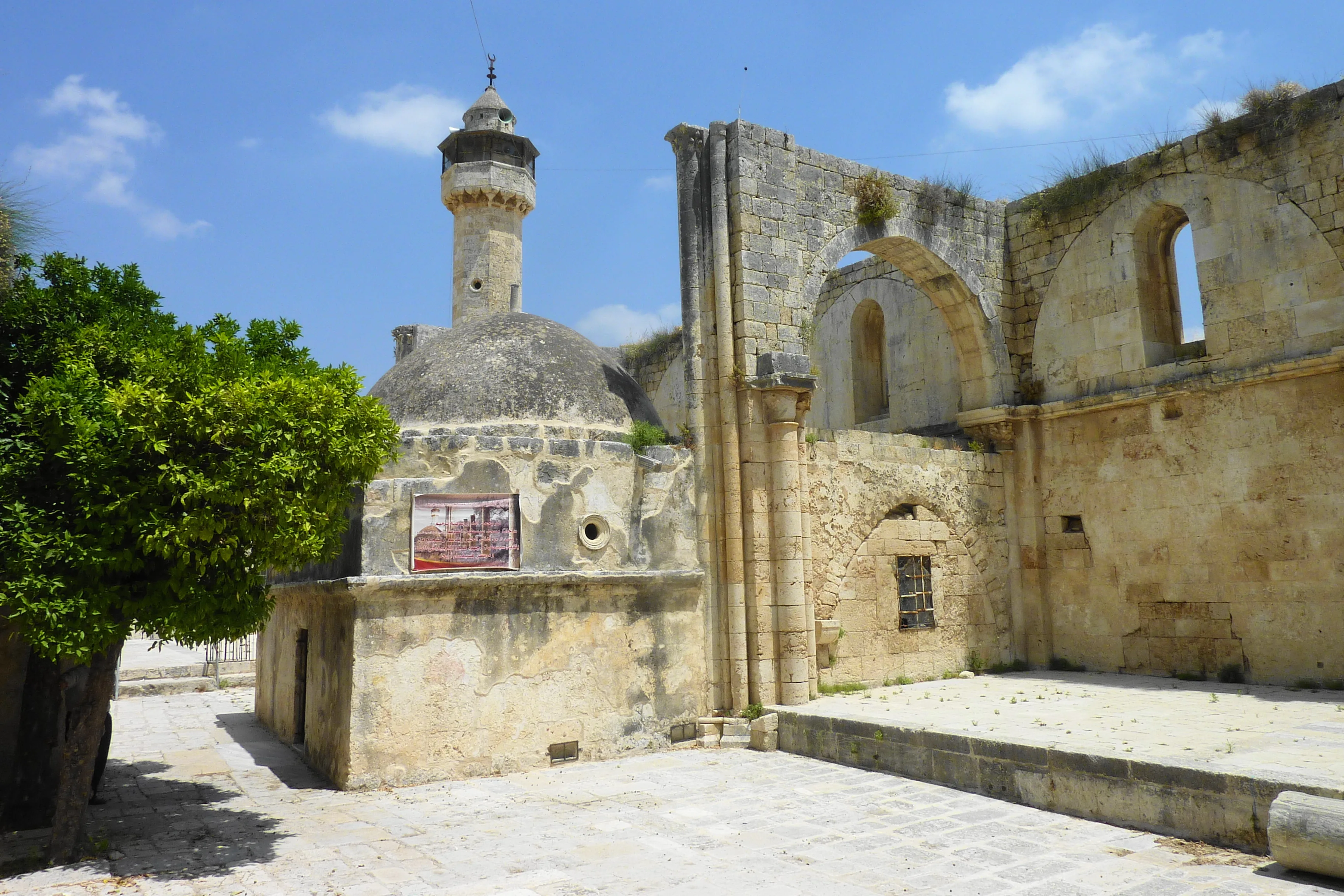
Yahya ibn Zakariya (John the Baptist), peace be upon him, occupies a distinctive and honoured position among the prophets of Islam. The son of the aged Prophet Zakariya (Zechariah) and a maternal relative of Prophet Isa (Jesus), Yahya stands at the intersection of two prophetic missions — the culmination of the long Israelite prophetic tradition and the immediate herald of the Messiah's advent. The Quran mentions him by name five times across four surahs (Quran 3:39, 6:85, 19:7, 19:12, 21:90), and each mention illuminates a different facet of his extraordinary character: his miraculous birth to elderly parents, his reception of wisdom in childhood, his confirmation of Isa as a "Word from Allah," and the divine peace that envelops his birth, death, and resurrection.
The Quranic portrait of Yahya is remarkable for its concentration of virtues within a brief textual space. He is described as sayyid (noble leader), hasur (chaste and self-restrained), and nabiyy (prophet) in a single verse (Quran 3:39). Surah Maryam devotes an extended passage to him, declaring that he was given hukm (wisdom, judgment, and authority in religious matters) while still a child (Quran 19:12) — a distinction shared with very few prophets in the Quranic narrative. He is further characterised by hananan (tenderness and compassion), zakatan (spiritual purity), and taqwa (God-consciousness), while being dutiful to his parents and free from arrogance and disobedience (Quran 19:13-14). The passage concludes with the extraordinary formula of divine peace: "And peace be upon him the day he was born, and the day he dies, and the day he is raised alive" (Quran 19:15) — a benediction bestowed in the Quran only upon Yahya and Isa.
Yahya's significance extends beyond his individual virtues. He represents the last prophetic voice of the Israelite tradition before the advent of Isa, serving as the bridge between the Mosaic covenant and the Messianic mission. His role as the one who "confirms a Word from Allah" (Quran 3:39) — that is, who testifies to the truth of Isa's prophetic identity — places him at one of the most critical junctures in salvation history. He prepared the spiritual ground, called his people to repentance, and publicly acknowledged the divine origin of Isa's mission, thereby completing his own prophetic mandate with integrity and courage.
The manner of Yahya's death further distinguishes him among the prophets. Islamic tradition, supported by historical sources, records that he was martyred for speaking truth to the corrupt ruler Herod Antipas, who had contracted an unlawful marriage. Yahya's refusal to remain silent in the face of moral corruption, even when silence would have preserved his life, establishes him as one of Islam's paramount models of moral courage. The Quran's repeated condemnation of those who "kill the prophets unjustly" (Quran 2:61, 3:21, 3:112) encompasses Yahya's martyrdom within a broader pattern of Israelite rejection of divine guidance — a pattern that the Quran presents as both historical tragedy and moral warning.
This article examines Yahya's life, character, mission, and legacy as presented in the Quran, the Prophetic traditions (ahadith), classical Islamic scholarship, and the broader historical record. His story connects intimately with those of his father Zakariya, his cousin Isa, and the long prophetic lineage stretching back through Musa and Ibrahim — a chain of divine guidance that would reach its culmination in the mission of Prophet Muhammad, peace be upon them all.
The Historical Context
Palestine Under Roman Rule
The world into which Yahya was born was one of profound political subjugation and spiritual crisis. Palestine in the first century BCE had come under Roman dominion following Pompey's conquest of Jerusalem in 63 BCE, ending the brief period of Hasmonean independence that had followed the Maccabean revolt. The Romans initially governed through client kings — the Herodian dynasty — whose legitimacy was contested by much of the Israelite population. Herod the Great (r. 37–4 BCE), an Idumean by origin and therefore regarded by many Jews as a foreigner, ruled with brutal efficiency, constructing magnificent buildings including the renovation of the Second Temple while simultaneously suppressing dissent through violence and intimidation.
Upon Herod the Great's death in approximately 4 BCE, his kingdom was divided among three of his sons. Herod Antipas received the tetrarchy of Galilee and Perea — the very regions where Yahya would conduct his prophetic mission. Antipas ruled from approximately 4 BCE to 39 CE, making him the political authority throughout the active period of both Yahya's and Isa's ministries. His rule was characterised by political cunning (Isa reportedly called him "that fox"), cultural accommodation to Roman tastes, and moral laxity that would ultimately bring him into fatal conflict with Yahya.
The Roman presence manifested not only through the Herodian client rulers but also through direct Roman governance in Judea itself, where a series of procurators — culminating in the notorious Pontius Pilate (26–36 CE) — administered justice and collected taxes on behalf of Rome. The burden of double taxation (Roman tribute and Temple dues), combined with the cultural insensitivity of pagan rulers governing a fiercely monotheistic population, created a volatile political atmosphere marked by periodic uprisings and increasingly radical messianic expectations.
The Spiritual Decline of the Israelite Community
The political crisis was mirrored by a deep spiritual malaise within the Israelite community. The Temple in Jerusalem — the physical and spiritual centre of Israelite worship — had become, in the eyes of many devout believers, a symbol of corruption rather than holiness. The office of High Priest, which was supposed to descend through the Aaronic line by divine appointment, had become a political position bought and sold under Herodian and Roman patronage. The Sadducees, the priestly aristocracy who controlled the Temple apparatus, were widely regarded as collaborators with Rome who had sacrificed spiritual authenticity for political survival.
Against this backdrop, various reformist and separatist movements arose among the Israelites. The Pharisees emphasised legal observance and oral tradition, seeking to maintain Jewish identity through meticulous adherence to the Law. The Essenes withdrew from mainstream society entirely, establishing ascetic communities in the Judean wilderness (the community at Qumran being the most archaeologically documented) where they practised ritual purity, shared possessions, and awaited divine intervention. The Zealots advocated armed resistance against Rome, seeing political liberation as inseparable from religious redemption.
It was into this fractured religious landscape — where the Temple priesthood was corrupted, the populace was divided between competing visions of faithfulness, and the sense of divine abandonment was pervasive — that Yahya emerged as a prophetic voice. His call to repentance, his practice of purification rituals, his ascetic lifestyle, and his location in the wilderness all spoke directly to the spiritual hunger of his contemporaries. He offered neither armed revolt nor political accommodation nor monastic withdrawal, but rather a direct call to return to the foundational covenant between God and His people — the essential message of every prophet.
The Messianic Expectation
Perhaps the most powerful spiritual undercurrent of the era was the widespread expectation of a Messiah — a divinely appointed deliverer who would restore Israel's fortunes, purify the Temple, defeat the enemies of God's people, and inaugurate an age of justice and peace. This expectation drew upon numerous passages in the Torah and the Prophets, particularly the prophecies of Isaiah, Daniel, and Malachi. The figure of the Messiah was variously conceived: as a Davidic king who would restore political sovereignty, as a priestly figure who would purify worship, or as a transcendent "Son of Man" who would appear with divine authority.
The expectation was intensified by the calculation of prophetic time periods, particularly those derived from the Book of Daniel, which many believed pointed to their own generation as the appointed time. Numerous claimants arose in this period — prophetic figures, revolutionary leaders, and self-proclaimed messiahs — each drawing followers who hoped that the long-awaited deliverance was finally at hand. The Romans, aware of the political implications of messianic movements, suppressed them ruthlessly.
Within this context, Yahya's proclamation that the "Word from Allah" was at hand — that the Messiah's arrival was imminent — was not merely a theological statement but a claim with enormous political and social implications. His confirmation of Isa as that promised figure placed both prophets at the centre of the most charged expectations of their age. The Islamic understanding of this dynamic emphasises that both Yahya and Isa were genuine prophets sent by Allah, that their missions were complementary rather than competitive, and that the true Messianic hope was spiritual rather than political — a restoration of authentic worship and moral life rather than mere political independence.
The Miraculous Birth of Yahya
Zakariya's Supplication
The story of Yahya's birth is inseparable from that of his father Zakariya, and the Quran presents the two narratives as intertwined expressions of divine grace. Zakariya was a prophet and priest who served in the Temple at Jerusalem, a righteous man advanced in years whose wife was barren. The Quran captures the pathos of his situation with characteristic economy: he was old, his bones had grown feeble, his hair had turned white, and he had never been disappointed in supplicating his Lord (Quran 19:4). Despite a lifetime of faithful service, he lacked the one thing his heart most desired — a son who would continue his prophetic legacy and protect the spiritual heritage of the house of Ya'qub (Jacob) after his death.
The immediate occasion of Zakariya's supplication, as recorded in Surah Al-Imran, was his observation of the miraculous provision that Allah granted to Maryam (Mary), the mother of Isa, who was under his guardianship. "Every time Zakariya entered upon her in the prayer chamber, he found with her provision. He said, 'O Maryam, from where is this [coming] to you?' She said, 'It is from Allah. Indeed, Allah provides for whom He wills without account'" (Quran 3:37). If Allah could provide miraculous sustenance to this young woman, Zakariya reasoned, then surely He could also grant a child to elderly parents. "At that, Zakariya called upon his Lord, saying, 'My Lord, grant me from Yourself a good offspring. Indeed, You are the Hearer of supplication'" (Quran 3:38).
In Surah Maryam, the supplication is presented in fuller detail. Zakariya expressed his fear that his relatives (mawali) who would inherit responsibility for guiding the Israelites after his death were not spiritually qualified for this task. He prayed for a son who would "inherit from me and inherit from the family of Ya'qub" — not material inheritance (for prophets leave no material wealth, as the hadith establishes), but the inheritance of knowledge, wisdom, and prophetic mission (Quran 19:5-6). This prayer reveals that Zakariya's desire for a son was not merely personal but rooted in his concern for the spiritual continuity of his people. He sought not just any child, but a prophet — one divinely prepared to carry the burden of guidance.
The Angelic Announcement
Allah's response came with a specificity that astonished even the supplicating prophet. "Then the angels called him while he was standing in prayer in the chamber: 'Indeed, Allah gives you good tidings of Yahya, confirming a Word from Allah, and [who will be] a noble leader (sayyid), chaste (hasur), and a prophet from among the righteous'" (Quran 3:39). In Surah Maryam, the announcement is even more remarkable: "O Zakariya, indeed We give you good tidings of a boy whose name will be Yahya. We have not assigned to any before him that name" (Quran 19:7).
Several extraordinary elements distinguish this divine announcement. First, the child is named by Allah Himself — the name Yahya (meaning "He lives" or "He gives life") is divinely designated rather than chosen by the parents. This divine naming signifies the special status of the child and the particular mission he is to fulfil. The classical exegete al-Tabari explains that the name indicates that Allah would give life to faith through him, while other scholars connect it to the fact that Allah gave him a life of righteousness from beginning to end.
Second, the Quran states that "We have not assigned to any before him that name" (lam naj'al lahu min qablu samiyya) (Quran 19:7). The exegetes differ on the precise meaning: some understand it as indicating that no one before him had borne this particular name, while others interpret samiyya as "equal" or "namesake," meaning that no one before him had achieved his particular combination of qualities. Either interpretation underscores the uniqueness of Yahya's station.
Third, the announcement comes laden with descriptions of the child's future character and role. He will be sayyid — a noble leader among his people. He will be hasur — exercising complete mastery over his desires. He will be a prophet (nabiyy) from among the righteous (min al-salihin). And, most significantly, he will be one "confirming a Word from Allah" — a reference to his role in testifying to the divine origin of Isa's mission.
Zakariya's Astonishment and the Sign
Despite having prayed for precisely this blessing, Zakariya was overwhelmed by the magnitude of Allah's response. "He said, 'My Lord, how will I have a boy when my wife has been barren and I have reached extreme old age?'" (Quran 19:8). This is not an expression of doubt but of astonishment — the natural human response to being told that the impossible will occur. The angel's reply is definitive: "Thus [it will be]; your Lord says, 'It is easy for Me, for I created you before, while you were nothing'" (Quran 19:9). The One who created existence from non-existence can certainly create life where biological capacity has expired.
Zakariya then requested a sign (ayah) — not from doubt, but to mark the beginning of the miracle's unfolding. Allah granted him a sign of remarkable character: "Your sign is that you will not speak to the people for three nights, [being] sound" (Quran 19:10). In Surah Al-Imran, the duration is specified as three days (Quran 3:41). His inability to speak was not caused by illness or disability — he remained physically sound (sawiyya) — but was a divinely imposed silence. During this period, he communicated with his people only through gestures, instructing them to glorify Allah morning and evening.
This imposed silence served multiple functions. It was a sign confirming the truth of the angelic announcement. It was a form of worship — a forced withdrawal from human speech that directed Zakariya's entire being toward divine contemplation. And it was a preparation: just as the ground must be silent before the seed sprouts, Zakariya's world was hushed in anticipation of the miraculous life about to enter it.
Theological Significance of the Miraculous Birth
The miraculous birth of Yahya to elderly parents who had been unable to conceive throughout their married life carries profound theological significance in the Islamic framework. It demonstrates Allah's absolute sovereignty over natural processes — that biological laws, while normally operative, remain entirely subject to divine will. The Quran draws an explicit parallel between Yahya's birth and the creation of Adam: "Indeed, the example of Isa to Allah is like that of Adam. He created him from dust; then He said to him, 'Be,' and he was" (Quran 3:59). While this verse refers specifically to Isa, the principle it establishes — that Allah creates as He wills, unconstrained by the usual mechanisms — applies equally to Yahya's conception by aged parents.
The parallel with Ibrahim and Sarah's miraculous conception of Is'haq (Isaac) in advanced age is also instructive. The Quran records Ibrahim's similar astonishment: "He said, 'Have you given me good tidings although old age has come upon me? Then of what [wonder] do you inform me?'" (Quran 15:54). The pattern is consistent: Allah tests His servants with prolonged deprivation, accepts their patient supplication, and then grants His blessing in ways that transcend natural expectation. The waiting itself becomes a form of worship, and the miracle, when it comes, strengthens faith not only in the immediate recipients but in all subsequent generations who learn of it.
The birth of Yahya thus serves as a "sign" (ayah) in the broader Quranic sense — not merely an event but a pointer toward divine truth. It teaches that no situation is hopeless before Allah, that patience in supplication is rewarded, and that divine timing often differs from human expectation. These themes resonate throughout the Quranic narrative and form a central element of Islamic theology regarding providence and trust in God (tawakkul).
The Quranic Description of Yahya's Character
"Take the Scripture with Determination"
The Quranic characterisation of Yahya reaches its fullest expression in Surah Maryam, verses 12-15, which constitute one of the most concentrated portraits of prophetic virtue in the entire Quran. The passage opens with a divine command that establishes the foundation of Yahya's identity: "O Yahya, take the Scripture with determination" (ya Yahya khudh al-kitaba bi-quwwah) (Quran 19:12). This imperative, addressed directly to the young Yahya, commands him to receive, study, embody, and implement the divine revelation — the Torah — with quwwah, a word that encompasses strength, seriousness, determination, and wholehearted commitment.
The classical exegetes elaborate extensively on this command. Al-Qurtubi explains that quwwah here means with earnestness and diligence, not treating the Scripture as a matter of casual engagement but as the defining purpose of one's existence. Ibn Kathir relates traditions that even as a young boy, Yahya was so absorbed in study, prayer, and reflection that other children would invite him to play and he would respond, "I was not created for play." This is not presented as abnormal rigidity but as the natural orientation of a soul created for a prophetic mission — the gravitational pull of divine purpose asserting itself from the earliest age.
The verse continues: "And We gave him judgment (hukm) while yet a boy (sabiyy)" (Quran 19:12). The word hukm encompasses wisdom, sound judgment, understanding of divine law, and the authority to interpret and apply it. That this was granted to Yahya while still a sabiyy — a child who has not yet reached puberty — is extraordinary. The exegetes note that this does not mean Yahya began his public prophetic mission in childhood, but rather that the interior qualities of wisdom, discernment, and spiritual understanding were present in him from his earliest years. He was, as it were, a prophet in formation from birth — his entire developmental trajectory oriented toward the mission he would later publicly fulfil.
The Five Qualities of Yahya
Following the command to take the Scripture with determination and the confirmation of his early wisdom, the Quran enumerates five specific qualities that constitute Yahya's moral and spiritual identity. Each deserves careful consideration:
Hananan min ladunna — "And [We gave him] compassion from Us" (Quran 19:13). The word hananan derives from a root connoting tenderness, affection, and deep emotional warmth. It is compassion that flows from the heart, not merely dutiful kindness but genuine empathy and love. The qualification "from Us" (min ladunna) indicates that this was not merely a natural temperament but a divinely bestowed quality — Allah Himself placed tenderness in Yahya's heart as a prophetic attribute. This is significant because it establishes compassion as central to prophetic character. The prophet who speaks hard truths to power, who demands repentance and threatens divine judgment, is not a cold or harsh figure but one whose severity proceeds from profound love. Yahya's fearless confrontation with Herod was not the aggression of an angry zealot but the anguish of a compassionate soul who cannot bear to see human beings — even rulers — destroy themselves through sin.
Zakatan — "And purity" (Quran 19:13). The word zakat in this context does not refer to the obligatory alms but to inner purification — freedom from spiritual pollution, moral contamination, and base desires. Yahya's purity was comprehensive: purity of intention (acting solely for Allah's pleasure), purity of conduct (freedom from sin and moral compromise), purity of speech (saying only what is true and beneficial), and purity of heart (freedom from envy, malice, and worldly attachment). The classical scholars note that this quality connects to his designation as hasur (chaste) in Surah Al-Imran — his purity encompassed the mastery of physical desire within a broader framework of spiritual integrity.
Wa kana taqiyyan — "And he was God-fearing" (Quran 19:13). Taqwa — consciousness of Allah that produces both love and reverent awe — is the fundamental quality of every believer, but in Yahya it reached a prophetic intensity. His awareness of Allah's presence was not periodic or contextual but constant and all-encompassing. The muttaqi lives as though Allah is always watching (which, of course, He is), and this awareness shapes every thought, word, and deed. In Yahya, this quality manifested as the total orientation of his life toward worship, service, and obedience. The traditions record that he wept so frequently from the intensity of his God-consciousness that tears left visible marks on his cheeks — not from sadness but from the overwhelming awareness of divine majesty and human frailty before it.
Wa barran bi-walidayhi — "And dutiful to his parents" (Quran 19:14). Despite being a prophet with a divine mission, Yahya remained devoted to his elderly parents — honouring them, caring for them, and treating them with gentleness. This quality is emphasised because it demonstrates that prophetic authority does not abrogate human relationships. Yahya's obedience to Allah did not make him dismissive of his parents; rather, it intensified his devotion to them, since honouring parents is itself a divine command. The placement of this quality in the list also reminds readers that spiritual elevation and worldly duties are not in conflict — the truly righteous person fulfils both domains with excellence.
Wa lam yakun jabbaran 'asiyyan — "And he was not a tyrant or disobedient" (Quran 19:14). This negation is as revealing as the positive qualities. Despite being given authority (hukm), wisdom, and prophetic status from childhood, Yahya never became arrogant, domineering, or rebellious. The word jabbar in this context connotes someone who uses power oppressively, who imposes his will on others through force rather than persuasion, who treats fellow human beings as beneath him. The word 'asiyy denotes disobedience toward Allah. Yahya was free from both: he wielded his prophetic authority with humility and remained perfectly obedient to divine command throughout his life. This quality stands in implicit contrast to the tyrants and oppressors who would eventually martyr him — men who were precisely jabbar and 'asiyy, using power for self-gratification and defying divine moral law.
The Formula of Divine Peace
The character portrait concludes with what is perhaps the most exalted honour bestowed upon any individual in the Quran: "And peace be upon him the day he was born, and the day he dies, and the day he is raised alive" (Quran 19:15). This triple benediction — encompassing birth, death, and resurrection — indicates divine protection and honour at every stage of existence. It is remarkable that in the entire Quran, this formula appears in only two places: here for Yahya, and in verse 19:33 where Isa pronounces it upon himself. No other prophet receives this specific formulation, suggesting a unique parallel between the two cousins — both of whom were born miraculously, both of whom suffered at the hands of those they sought to guide, and both of whom are affirmed in their honour before Allah.
The scholars note that "peace on the day he was born" indicates that Yahya entered the world under divine protection — free from the touch of Satan that, according to a hadith in al-Bukhari, affects other newborns, with the exception of Maryam and Isa. "Peace on the day he dies" affirms that even his martyrdom — violent and unjust as it was — did not diminish his standing before Allah; rather, it elevated him. And "peace on the day he is raised alive" guarantees his honour in the Hereafter, on the Day when all humans will face their Lord. These three moments — birth, death, and resurrection — represent the three most vulnerable and potentially fearful transitions in any existence, and Allah's peace encompasses all three for Yahya.
Comparison with Other Prophetic Portraits
The concentration of virtues ascribed to Yahya in such a brief passage is unusual in the Quran. While other prophets are praised at various points throughout the text, few receive such a comprehensive and systematic character portrait in a single location. Ibrahim is praised extensively but his qualities are distributed across numerous surahs and contexts. Musa is the most frequently mentioned prophet, but his character emerges through narrative rather than through concentrated description. Yahya's portrait in Surah Maryam 12-15 functions almost as a spiritual curriculum vitae — a complete statement of his qualifications for the prophetic office.
This concentrated portrait may reflect the fact that, unlike prophets whose lives are narrated at length (Ibrahim, Musa, Yusuf), Yahya's story in the Quran is relatively brief. What the text lacks in narrative detail, it compensates for in descriptive intensity. Every word in Yahya's portrait carries theological weight, and the classical exegetes devoted extensive commentary to unpacking the implications of each term. The result is that despite having relatively few verses dedicated to him, Yahya emerges as one of the most fully realised moral personalities in the Quranic text.
"Confirming a Word from Allah" — The Relationship with Isa
The Quranic Designation
Among the most theologically significant descriptions of Yahya in the Quran is his designation as "confirming a Word from Allah" (musaddiqan bi-kalimatin min Allah) (Quran 3:39). This phrase establishes Yahya's relationship to Isa as fundamental to his prophetic identity — not incidental but essential. The "Word from Allah" (kalimah min Allah) is a reference to Isa, who is described elsewhere in the Quran as "a Word from Him, whose name will be the Messiah, Isa, son of Maryam" (Quran 3:45). Isa is called a "Word" because he was created by the divine command "Be" (kun) without a human father — his existence proceeds directly from Allah's creative word.
Yahya's role as musaddiq (one who confirms, validates, and testifies to the truth of) this "Word" places him in a unique prophetic position. He is not merely a predecessor of Isa in chronological terms but an active participant in establishing Isa's prophetic credentials. His public acknowledgment of Isa's divine mission served to prepare the Israelite community for Isa's message and to provide independent prophetic testimony to Isa's authenticity. In Islamic theology, this is understood as part of Allah's merciful provision for the Israelites — sending not one but two prophets in close succession, the first testifying to the second, so that those who wished to accept guidance would have every reason to do so.
The Meaning of Isa as "Word from Allah"
The Quranic designation of Isa as a "Word from Allah" has been the subject of extensive theological discussion in Islamic scholarship. It is important to note that this title does not carry the same implications as the Christian Logos theology articulated in the Gospel of John. In Islamic understanding, Isa is called a "Word" because his creation was effected directly by the divine command — "When He decrees a matter, He only says to it, 'Be,' and it is" (Quran 3:47). He is a word from Allah (min Allah), not the Word of Allah in an ontological or hypostatic sense. He is a created being, albeit one created in an extraordinary manner, just as Adam was created without either parent.
Yahya's role in confirming this "Word" thus encompasses confirming the miraculous nature of Isa's birth, the divine origin of his mission, and the authenticity of his prophetic claim. This is a weighty responsibility, for it requires Yahya to recognise in his own cousin the fulfilment of messianic prophecy and to publicly declare this recognition — an act that could have been complicated by personal rivalry, family dynamics, or the simple human difficulty of acknowledging extraordinary status in someone one has known from childhood. That Yahya performed this role without hesitation or jealousy testifies to the purity of his prophetic character.
The Chronological Relationship
Islamic tradition, consistent with other historical sources, indicates that Yahya was slightly older than Isa — perhaps by approximately six months. The Quranic narrative suggests close chronological proximity: Zakariya receives the announcement of Yahya's birth in the context of his interactions with Maryam (Quran 3:37-39), and the announcement of Isa's birth to Maryam follows shortly after in the same surah (Quran 3:45-47). In Surah Maryam, the accounts of Yahya (19:2-15) and Isa (19:16-35) are placed in immediate sequence, reinforcing their interconnection.
Yahya began his public ministry before Isa, calling the Israelites to repentance and purification in the Jordan Valley. When Isa subsequently appeared, Yahya's testimony served to direct his own followers toward Isa's message. This chronological arrangement was not accidental but divinely planned — Yahya's preparatory mission created the spiritual conditions necessary for Isa's teaching to be received. He was, in Islamic understanding, the herald who announced the arrival of the Messiah and then stepped aside to allow the greater mission to unfold.
The Family Connection
Islamic tradition, drawing upon various reports, indicates that Yahya's mother (referred to in some traditions as Ishba' or Elizabeth) was related to Maryam, the mother of Isa. The precise nature of this relationship is described variously — as sisters, as maternal aunt and niece, or as cousins — but the essential point is that the two families were connected by blood. This connection meant that Yahya and Isa were not merely fellow prophets but kinsmen, and their mothers shared the experience of miraculous divine intervention in their pregnancies (Zakariya's wife conceiving in old age; Maryam conceiving without a husband).
The family connection adds a personal dimension to Yahya's confirmation of Isa. He was not testifying to a stranger but to someone he had likely known from childhood, someone whose family circumstances he understood intimately. His testimony therefore carried the weight of personal knowledge combined with prophetic insight — he knew both the human Isa and the divinely appointed Messiah, and his confirmation bridged both dimensions.
Complementarity of Their Missions
The missions of Yahya and Isa, while distinct, were complementary in their objectives. Yahya's mission was primarily preparatory: calling the Israelites to repentance, purifying them through ritual washing, warning them of divine judgment, and redirecting their attention from external ritual to inner moral transformation. His message was essentially conservative in the best sense — a return to the authentic spirit of the Torah, stripped of the accretions, corruptions, and hypocrisies that had accumulated over centuries of institutional religion.
Isa's mission, while building upon this foundation, went further. He brought new revelation (the Injil, or Gospel), performed extraordinary miracles as signs of his divine authority, challenged the religious establishment with even greater directness, and introduced teachings that, while rooted in the Torah, represented a fresh articulation of divine mercy. Yahya prepared the ground; Isa planted the seed. Yahya called for repentance; Isa offered the redemption toward which repentance points. Together, they represented Allah's final comprehensive attempt to guide the Israelites before the prophetic torch would pass to another branch of Ibrahim's family — the Ishmaelite line that would produce Prophet Muhammad.
The Purification Tradition
Yahya is historically associated with the practice of ritual immersion or washing as a symbol of repentance and spiritual cleansing — a practice from which his designation "the Baptist" derives in Christian tradition. In Islamic understanding, this practice was not an innovation by Yahya but a continuation and revitalisation of the purification rituals already present in Mosaic law. The Torah prescribed various ablutions for ritual purity, and Yahya's contribution was to transform these from mechanical legal observances into acts of genuine spiritual renewal.
The Islamic concept of wudu (ablution before prayer) and ghusl (full ritual washing) resonates with Yahya's emphasis on purification, though the specific forms differ. The underlying principle is shared: that the outward act of washing symbolises and facilitates an inner cleansing, that physical purity and spiritual purity are connected, and that approaching the divine requires preparation of both body and soul. Yahya's emphasis on purification thus places him within a continuum of prophetic teaching about the relationship between exterior practice and interior reality — a continuum that reaches its fullest articulation in Islamic fiqh and tasawwuf.
Yahya's Prophetic Mission
The Call to Repentance and Righteousness
Yahya's prophetic mission was characterised by an urgent call to moral and spiritual renewal. Operating in the Jordan Valley and the wilderness regions of Palestine, he summoned the Israelites to return to the authentic worship of the One God — to abandon hypocrisy, to practice justice, to care for the poor, and to prepare themselves for the divine judgment that was approaching. His message was not new in content — it echoed the calls of every Israelite prophet from Musa onward — but it was delivered with a freshness, intensity, and personal authority that drew large crowds from throughout the region.
The Quran does not detail the specific content of Yahya's preaching, but the command to "take the Scripture with determination" (Quran 19:12) indicates that his message was rooted in the Torah and its authentic interpretation. He called people back to what the Torah actually demanded: not merely outward observance of ritual law, but the inner transformation that the law was meant to produce. Righteousness (birr), justice ('adl), compassion (rahmah), and sincere worship ('ibadah) — these were the themes of his preaching, the same themes that run through the prophetic tradition from Adam to Muhammad.
The urgency of Yahya's message derived from his knowledge that the "Word from Allah" — the Messiah, Isa — was about to appear. He understood his own mission as preparatory: he was clearing the spiritual ground, removing the debris of centuries of institutional corruption and popular neglect, so that when the Messiah came, hearts would be ready to receive his message. This gave his preaching an eschatological edge — a sense that time was short, that the opportunity for repentance would not last forever, that the divine dispensation was about to shift in ways that would leave the unrepentant without excuse.
The Jordan Valley: Geography and Ministry
Yahya's choice of the Jordan Valley as the primary location for his ministry was both practical and symbolic. Practically, the Jordan River provided the water necessary for the purification rituals that were central to his practice. The river flows from the Sea of Galilee southward to the Dead Sea, passing through a fertile valley that could sustain the crowds who gathered to hear him. The wilderness character of the region — sparse, austere, removed from urban centres — reflected and reinforced his ascetic message. Those who sought him out had to leave the comfort of their cities and towns, making a physical journey that symbolised the spiritual journey of repentance.
Symbolically, the Jordan carried deep associations in Israelite memory. It was the river that the Children of Israel crossed under Yusha' (Joshua) when entering the Promised Land after forty years in the wilderness — the boundary between wandering and arrival, between exile and inheritance. Yahya's baptism in the Jordan thus evoked this foundational moment: just as the Israelites had to cross the Jordan to enter their physical inheritance, so his contemporaries had to pass through the waters of repentance to claim their spiritual inheritance. The geography itself preached.
Confrontation with the Religious Establishment
Yahya's message brought him into inevitable conflict with the religious establishment of his time. The Sadducean priesthood, comfortable in their political arrangements with Rome and their control of the Temple revenues, saw in Yahya's call for authentic righteousness an implicit rebuke of their own compromises. The Pharisees, whose emphasis on legal minutiae sometimes obscured the broader ethical demands of the Torah, may have felt challenged by Yahya's insistence on the spirit rather than merely the letter of the law.
However, it was not primarily the religious establishment that would destroy Yahya. His most dangerous confrontation was with political power — specifically with Herod Antipas, the tetrarch of Galilee. This confrontation arose not from political agitation on Yahya's part but from his prophetic duty to declare moral truth regardless of its audience. When Herod contracted an unlawful marriage to Herodias, the wife of his own brother Philip, Yahya declared publicly that this union violated the Torah's prohibition of marrying one's brother's wife (a prohibition found in Leviticus 18:16 and 20:21). This was not a political challenge but a moral one — yet in a world where rulers claimed absolute authority over their subjects' speech, moral truth-telling became the most dangerous form of political dissent.
His Followers and Disciples
Yahya attracted a substantial following during his ministry. People came from Jerusalem, from the surrounding Judean countryside, and from Galilee to hear him preach and to undergo the purification ritual in the Jordan. His followers were diverse: ordinary people seeking spiritual renewal, soldiers asking how to live righteously, tax collectors wishing to reform their corrupt practices, and even members of the religious establishment who, whatever their institutional commitments, recognised the authentic prophetic authority in Yahya's voice.
Some of these followers became dedicated disciples — a close circle who adopted Yahya's ascetic lifestyle, learned from his teaching, and continued to identify with his mission even after his death. Historical sources indicate that communities of "Yahya's disciples" persisted for decades after his execution, and some scholars believe that the Mandaean religious community of southern Iraq preserves, in modified form, elements of Yahya's original teaching and practice. Within the Quranic narrative, Yahya's followers represent those among the Israelites who were responsive to prophetic guidance — who, when a messenger came to them, listened and obeyed rather than rejecting and persecuting.
Asceticism as Prophetic Model
One of Yahya's most distinctive characteristics was his rigorous asceticism — his voluntary renunciation of worldly comfort in pursuit of spiritual clarity and closeness to Allah. Islamic tradition records that he dressed in garments of camel hair or coarse wool rather than fine linen, that he ate the simplest food available in the wilderness — locusts, wild herbs, and honey — and that he spent his nights in prayer and supplication rather than in sleep. His appearance was that of one who had completely disengaged from worldly concerns: lean, intense, marked by constant worship.
This asceticism was not an end in itself but a means of prophetic preparation and witness. By rejecting worldly luxury, Yahya demonstrated that the prophet's authority derives from God alone, not from wealth, social position, or political power. His poverty was a form of freedom — freedom from the obligations and compromises that wealth creates, freedom from the fear of loss that possessions generate, freedom to speak truth without concern for material consequences. When he confronted Herod's immorality, he did so as a man with nothing to lose in worldly terms — and everything to gain in spiritual terms.
The Islamic tradition of zuhd (asceticism, detachment from worldly things) finds one of its earliest and most powerful exemplars in Yahya. While Islam does not demand the extreme renunciation practised by Yahya (the Quran affirms the permissibility of worldly enjoyments within divine limits), it does honour the principle that animates asceticism: the recognition that this world is temporary, that attachment to material things can corrupt the heart, and that spiritual clarity often requires material simplicity. Yahya's example remains a powerful corrective to materialism and spiritual complacency in every age.
The Impact on the Israelite Community
Yahya's ministry, though cut short by martyrdom, had a significant impact on the Israelite community of his time. He revitalised popular piety, drawing people away from passive reliance on institutional religion and toward active personal engagement with divine commandments. He created a movement of spiritual renewal that outlasted his physical life and provided the immediate context for Isa's mission. He demonstrated that prophetic authority was alive — that God had not abandoned His people to the care of corrupt priests and compromising scholars, but continued to send living voices of guidance.
The crowds that gathered around Yahya testified to a hunger for authentic spiritual leadership that the institutional structures of the time could not satisfy. People recognised in Yahya something they could not find in the Temple establishment: genuineness, courage, consistency between teaching and practice, and the unmistakable mark of divine authorization. His impact was such that even Herod Antipas, who would ultimately order his execution, is reported to have been fascinated by his teaching and reluctant to harm him — until political pressure and personal vindictiveness made martyrdom inevitable.
The Martyrdom of Yahya
The Circumstances of His Death
The martyrdom of Yahya represents one of the most poignant episodes in the history of prophethood — the execution of a righteous servant of Allah by a corrupt ruler whose conscience Yahya had disturbed. Islamic tradition, corroborated by multiple historical sources, records that Yahya's death resulted from his public condemnation of Herod Antipas's marriage to Herodias. This marriage was unlawful on multiple grounds: Herodias was the wife of Herod's half-brother Philip, whom she had divorced; and in some accounts, she was also Herod's niece. The Torah explicitly prohibited a man from marrying his brother's wife (except in the specific case of levirate marriage, which did not apply here), and Yahya, as a prophet commanded to uphold divine law, could not remain silent before this flagrant violation.
Yahya's denunciation was not a single private remark but a sustained public declaration. He told Herod plainly that his marriage was not lawful, that he was living in sin, and that divine law applied to rulers no less than to common people. This was the essence of prophetic witness: the insistence that moral truth is objective, universal, and binding regardless of the power or status of the person who violates it. Yahya did not seek political revolution or Herod's overthrow — he sought Herod's repentance. But for a ruler accustomed to absolute deference, even this purely moral challenge was intolerable.
The Demand for Execution
Herodias, the subject of Yahya's condemnation, bore him particular malice. Her anger was not merely at being publicly shamed but at the implication that her marriage was illegitimate and her position as queen unlawful. She sought Yahya's death but was initially unable to achieve it because Herod, despite his anger, feared Yahya's popularity and perhaps even feared divine retribution. The Islamic historical tradition records that Herodias eventually manipulated the situation to obtain Yahya's execution — in some accounts through a plot involving her daughter, in others through relentless pressure on Herod until he yielded.
The execution itself was carried out by beheading. Yahya's head was presented — according to the traditional account — on a platter, a detail that underscores the grotesque contrast between prophetic dignity and worldly brutality. The man whose tongue had proclaimed divine truth was silenced by the sword of a man whose tongue served only appetite and power. Yet the Quran's assurance of "peace upon him the day he dies" (Quran 19:15) transforms this apparent defeat into a divine victory: Yahya's death was not the triumph of Herod but the completion of Yahya's mission. He lived as a prophet and died as a martyr (shahid), and both conditions represent the highest stations a human being can attain.
The Theological Significance of Prophetic Martyrdom
Yahya's martyrdom is situated within a broader Quranic theme: the pattern of prophetic rejection and killing that marked the history of the Israelites. The Quran addresses this pattern repeatedly and with severity: "They were struck with humiliation and poverty and returned with anger from Allah [upon them]. That was because they [repeatedly] disbelieved in the signs of Allah and killed the prophets without right. That was because they disobeyed and were [habitually] transgressing" (Quran 2:61). Again: "Those who disbelieve in the signs of Allah and kill the prophets without right and kill those who order justice from among the people — give them tidings of a painful punishment" (Quran 3:21).
These verses do not attribute collective guilt to all Israelites (many believed and were righteous), but they identify a pattern of institutional and popular resistance to prophetic guidance that recurred throughout Israelite history. Yahya's death was not an isolated crime but the continuation of a pattern that included the persecution and killing of numerous prophets before him. The Quran presents this pattern as one of the reasons for the transfer of prophetic responsibility from the Israelite line to the Ishmaelite line — not as punishment for an ethnicity, but as the natural consequence of institutional rejection of divine guidance.
For Islamic theology more broadly, Yahya's martyrdom illustrates several principles. First, that faithfulness to God does not guarantee worldly safety — the most righteous servants may suffer the most at human hands. Second, that divine "peace" is not equivalent to physical protection but to spiritual integrity and eternal honour. Third, that speaking truth to power is among the highest forms of worship, even when — especially when — it carries mortal risk. The hadith "The best jihad is a word of truth before a tyrannical ruler" (Abu Dawud, al-Tirmidhi) finds its most dramatic pre-Islamic illustration in Yahya's confrontation with Herod.
"Peace Upon Him... The Day He Dies"
The Quranic affirmation of divine peace upon Yahya at the moment of death (Quran 19:15) carries multiple layers of meaning. On one level, it assures that Yahya experienced no spiritual terror or abandonment at death — that despite the violence of his execution, his soul departed in a state of divine tranquility. On another level, it declares that his death was honoured by Allah — that martyrdom for truth is not tragedy but triumph in the divine reckoning. On yet another level, it serves as a rebuke to his killers: they imagined they were silencing an irritant, but in reality they were elevating a saint.
The hadith traditions add further details to the aftermath of Yahya's martyrdom. A report preserved by several classical historians states that when Nebuchadnezzar later destroyed Jerusalem (an event that occurred centuries earlier in actual chronology, though some Islamic historians conflate it with the Roman destruction of 70 CE), his soldiers discovered Yahya's blood still bubbling fresh upon the ground, refusing to dry — as though the earth itself testified against the injustice of his killing. Other traditions associate the discovery of Yahya's head with the construction of the Umayyad Mosque in Damascus during the caliphate of al-Walid ibn Abd al-Malik, though the historical verification of such accounts is uncertain.
The Quran's Condemnation of Killing Prophets
The killing of Yahya is encompassed within the Quran's repeated and emphatic condemnation of those who killed the prophets of God. "Indeed, those who disbelieve in the signs of Allah and kill the prophets without right and kill those who order justice from among the people — give them tidings of a painful punishment" (Quran 3:21). "That is because they [repeatedly] disbelieved in the signs of Allah and killed the prophets without right" (Quran 3:112). "They have been put under humiliation [by Allah] wherever they are overtaken... That is because they used to disbelieve in the signs of Allah and kill the prophets without right" (Quran 3:112).
These verses establish that killing a prophet is among the gravest of all sins — a crime against God Himself, who sent the prophet as a mercy and a guide. Those who commit such acts do not merely harm a human being; they reject divine guidance and attempt to silence the voice of God on earth. The severity of the Quran's language reflects the magnitude of the crime. Yahya, as one of the prophets so killed, stands as both a victim of this pattern and a witness against those who perpetuated it. His blood, in the Islamic understanding, testifies on the Day of Judgment against those who shed it and against the broader culture of prophetic rejection that made his death possible.
Yahya in Islamic Theology
His Station Among the Prophets
Yahya holds a distinguished station within the Islamic prophetic hierarchy. He is mentioned by name in the Quran, which by itself elevates him above the many prophets who are acknowledged generally but not individually identified. He is listed among the righteous in Surah Al-An'am: "And Zakariya and Yahya and Isa and Ilyas — all were of the righteous" (Quran 6:85) — placed in company with other prophets of the highest rank. His inclusion in this particular grouping (with his father Zakariya, his cousin Isa, and the prophet Ilyas/Elijah) reflects a thematic connection: all four were prophets who suffered persecution or martyrdom for their faithfulness to divine truth.
The hadith literature further clarifies Yahya's station. In the famous account of the Isra' wa al-Mi'raj (the Night Journey and Ascension) recorded in Sahih al-Bukhari and Sahih Muslim, Prophet Muhammad describes meeting various prophets in different levels of heaven during his miraculous ascent. He encountered Yahya and Isa together in the second heaven. When Muhammad greeted them, they responded with warmth, welcoming him as a righteous brother and prophet. The placement of Yahya in the second heaven — above the first heaven where Adam was encountered — indicates an elevated spiritual rank, while his companionship with Isa in the same heaven reflects the inseparability of their missions.
"Sayyid, Hasur, Nabi" — Noble, Chaste, Prophet
The triple designation of Yahya in Surah Al-Imran as sayyid (noble leader), hasur (chaste/self-restrained), and nabiyy (prophet) (Quran 3:39) has generated extensive theological discussion. The term sayyid establishes Yahya as a leader — not merely in political terms but in moral and spiritual authority. He is one to whom people look for guidance, whose judgment is trusted, and whose example inspires emulation. Prophet Muhammad is reported to have said, "Every prophet is a sayyid (leader) of his people," and Yahya fulfilled this role with distinction during his brief ministry.
The term hasur has received particularly careful attention from scholars. Its root meaning relates to self-restraint, confinement, or holding back. The majority of classical exegetes understand it as referring to Yahya's celibacy or extreme chastity — that he restrained himself from marriage and sexual relations entirely, devoting himself wholly to worship and his prophetic mission. This interpretation is supported by a hadith in which Prophet Muhammad reportedly said, "Every son of Adam will meet Allah having committed a sin, except Yahya ibn Zakariya" — indicating an extraordinary degree of moral purity.
However, some scholars note that celibacy is generally not encouraged in Islam (Prophet Muhammad explicitly said, "Marriage is my sunnah, and whoever turns away from my sunnah is not of me"), and they interpret hasur differently — as indicating mastery over desires rather than their complete suppression, or as referring specifically to the absence of blameworthy desire rather than the absence of marriage. Others reconcile the positions by noting that Yahya lived under a different shari'ah (divine law) than that given to Muhammad, and what was appropriate for his particular mission and context was not necessarily normative for the Muslim community. The theological point remains: Yahya exemplified complete control over the lower self (nafs), subordinating every desire to divine service.
His Place in the Prophetic Chain
Yahya's position in the prophetic chain is theologically significant. He connects the great Israelite prophetic tradition — stretching from Ibrahim through Is'haq, Ya'qub, Yusuf, Musa, Dawud, Sulayman, and the numerous prophets who followed — to its culmination in Isa. He is, in a sense, the final "normal" prophet of the Israelite line (Isa, while Israelite, occupies a unique position due to his miraculous birth and his eschatological role). After Yahya and Isa, the prophetic mission would pass to the Ishmaelite branch of Ibrahim's family, culminating in Muhammad — the seal of all prophets.
This positioning makes Yahya a crucial figure in the Islamic understanding of prophetic history. He represents the continuity of divine guidance — the demonstration that from Ibrahim's time to Muhammad's, Allah never left humanity without prophetic leadership. Each prophet confirmed those who came before and prepared for those who would come after. Yahya confirmed Isa; Isa foretold Muhammad; and Muhammad confirmed them all. This chain of mutual testimony forms the backbone of Islamic prophetology and demonstrates the unity of the divine message across centuries and peoples.
The Night Journey Encounter
The hadith describing Prophet Muhammad's encounter with Yahya during the Mi'raj (Ascension) provides additional theological information. In the narration recorded by al-Bukhari, Jibril (Gabriel) accompanied Muhammad through the heavens, and at each level they were greeted by a different prophet. At the second heaven, they encountered Yahya and Isa together. Jibril identified them, and Muhammad offered his greetings (salam). They responded: "Welcome, righteous brother and righteous prophet!" (Marhaban bi al-akh al-salih wa al-nabi al-salih).
This encounter affirms the brotherhood of prophets across time — that despite living centuries apart, Muhammad and Yahya shared a fundamental kinship rooted in their common mission, their common Lord, and their common submission to divine will. The warmth of the greeting indicates that there is no rivalry or hierarchy of jealousy among prophets — each recognises and honours the others' stations. For the Muslim community, this hadith establishes Yahya as a figure of reverence and spiritual connection — one whose legacy is not confined to a distant historical past but remains alive in the Islamic spiritual present.
Yahya's Character: Asceticism, Compassion, and Courage
The Ascetic Tradition and Its Roots in Yahya's Example
The Islamic intellectual tradition recognises Yahya as one of the earliest and most influential exemplars of zuhd — the conscious detachment from worldly matters in pursuit of spiritual proximity to Allah. While asceticism in Islam differs significantly from the extreme renunciation found in some other traditions (Islam affirms the permissibility of worldly enjoyment within divine limits), the principle of preferring the eternal over the temporal, the spiritual over the material, finds powerful expression in Yahya's life.
Classical Islamic sources preserve numerous traditions about Yahya's ascetic practices. He is described as wearing garments of hair or coarse fibre rather than fine cloth, eating only what the wilderness provided (plants, locusts, and wild honey), sleeping on the bare ground or in caves, and spending his nights in continuous prayer and weeping before Allah. His body grew thin from fasting and vigil, and his face bore the marks of constant tears. These descriptions are not presented as curiosities or extremes but as the natural expressions of a soul overwhelmed by divine awareness — one for whom the attractions of the material world had simply faded to insignificance before the overwhelming reality of God.
The later development of Sufi asceticism drew explicitly upon Yahya's example. Early Muslim ascetics like Hasan al-Basri (d. 110 AH / 728 CE), Ibrahim ibn Adham (d. 161 AH / 778 CE), and Rabi'a al-Adawiyya (d. 185 AH / 801 CE) are described in terms that echo the traditions about Yahya: continuous weeping, night vigils, renunciation of worldly comfort, and absorption in divine love. While these Sufi masters followed the shari'ah of Muhammad rather than the specific practices of Yahya, they recognised in his example a spiritual archetype that transcended the particulars of law and spoke to the universal human capacity for God-consciousness.
Weeping and Devotion
One of the most frequently mentioned characteristics of Yahya in Islamic devotional literature is his weeping — his constant tears before Allah. This weeping was not emotional instability or depressive melancholy but a spiritual state: the overflow of a heart saturated with awareness of divine majesty, human frailty, and the gap between what Allah deserves and what His servants offer. The traditions record that Yahya wept so much that tears left permanent grooves on his cheeks, and that the people around him were moved to tears simply by seeing his state of devotion.
Islamic scholars distinguish between different types of weeping. There is the weeping of fear (khawf) — fear of divine punishment and one's own unworthiness. There is the weeping of longing (shawq) — the ache of the heart that knows its Lord but cannot yet be fully united with Him. There is the weeping of awe (hayba) — the overwhelming response to divine greatness. And there is the weeping of love (hubb) — the tears that flow when the heart is filled beyond capacity with love for Allah. The traditions about Yahya suggest that his weeping encompassed all these dimensions — a comprehensive spiritual response to the totality of divine reality.
Gentleness Combined with Fearless Truth-Telling
Perhaps the most instructive aspect of Yahya's character for contemporary Muslims is the combination of two qualities that the world often regards as incompatible: extraordinary gentleness (hananan) and fearless truth-telling. He was the tenderest of men — compassionate toward the poor, gentle with the weak, sensitive to human suffering, and moved to tears by the awareness of others' spiritual danger. And yet this same tender soul confronted one of the most powerful men in Palestine, telling him to his face that his marriage was unlawful and his lifestyle sinful.
This combination reveals something fundamental about prophetic character: that true compassion and true courage are not opposites but expressions of the same underlying love. Yahya confronted Herod precisely because he cared about Herod's soul — because the hananan that moved him to tears at human frailty also moved him to speak truth that might save the ruler from divine punishment. His severity was an expression of his mercy: he would rather endure Herod's anger than allow Herod to continue in sin unchallenged.
This model challenges two common distortions of religious character. The first is the distortion of "gentleness" into weakness — the idea that kindness means never confronting, never challenging, never risking discomfort. Yahya's life demonstrates that authentic kindness sometimes requires the hardest truths. The second is the distortion of "prophetic boldness" into harshness — the idea that speaking truth means being aggressive, combative, or contemptuous of those one addresses. Yahya spoke truth without becoming a jabbar — without becoming arrogant or oppressive. His firmness was rooted in humility before God, not in superiority over men.
Treatment of the Poor and Marginalised
The traditions consistently describe Yahya as one whose particular concern was for the poor, the outcast, and the marginalised. His ministry in the wilderness was, by its very location and character, accessible to those whom the Temple establishment excluded or exploited. The Jordan Valley was not the Temple Mount — one did not need wealth, social standing, or priestly approval to approach Yahya and receive his guidance. His ascetic lifestyle itself was a form of solidarity with the poor: by choosing poverty voluntarily, he shared the condition of those who were poor involuntarily, eliminating any barrier of class between prophet and people.
This concern for the marginalised reflects a consistent prophetic principle in Islam: that authentic religion lifts up the oppressed rather than reinforcing existing hierarchies of power and privilege. The Quran repeatedly links faith with care for the poor: "Have you seen the one who denies the Recompense? For that is the one who drives away the orphan and does not encourage the feeding of the poor" (Quran 107:1-3). Yahya's ministry embodied this principle, demonstrating that prophetic authority is exercised not by dominating others but by serving them — by making divine guidance accessible to all regardless of social position.
The Legacy of Yahya's Disciples
The Continuation of His Movement
Yahya's execution did not extinguish the movement he had founded. His disciples — those who had adopted his message of repentance, undergone his purification ritual, and committed themselves to his ascetic vision of faithful living — continued to exist as an identifiable community for decades after his death. These followers preserved his teachings, maintained the practices he had instituted, and transmitted his memory to subsequent generations. Their persistence testifies to the depth of Yahya's impact: he had not merely attracted crowds but had formed committed disciples whose lives were permanently transformed by his prophetic example.
The relationship between Yahya's continuing disciples and the emerging community of Isa's followers represents one of the more complex dynamics of first-century Palestine. Some of Yahya's followers accepted Isa's mission, recognising in it the fulfilment of what Yahya himself had announced. Others, however, maintained their primary loyalty to Yahya and his specific teachings, forming communities that existed in parallel with — and sometimes in tension with — the followers of Isa. Historical sources record encounters between these groups well into the middle of the first century CE, suggesting that the transition from Yahya's preparatory mission to Isa's fuller revelation was not instantaneous but unfolded gradually over a generation.
Islamic scholarship views this dynamic through the lens of prophetic succession: each prophet's followers are expected to accept the next prophet when he appears, since all prophets bring the same essential message from the same God. Those of Yahya's followers who accepted Isa were fulfilling the logic of Yahya's own mission — he had come to confirm the Word from Allah, and accepting that Word was the natural conclusion of faithfully following Yahya himself. Those who resisted this transition were, in the Islamic understanding, clinging to the letter of Yahya's teaching while neglecting its spirit and ultimate purpose.
The Mandaean Tradition
Of particular historical interest is the Mandaean religious community, which has survived to the present day primarily in southern Iraq and the Iranian province of Khuzestan. The Mandaeans venerate Yahya (whom they call Yahia Yuhana) as their principal prophet, ranking him above all other prophetic figures. Their sacred texts, composed in Mandaic (a dialect of Eastern Aramaic), preserve traditions about Yahya's teaching and practice that, while filtered through centuries of independent theological development, may reflect elements of the original movement.
The Mandaean emphasis on ritual immersion in flowing water (masbuta) as a central religious practice clearly connects to Yahya's historical ministry of purification in the Jordan River. Their priesthood, their ascetic ideals, their emphasis on moral purity, and their dualistic cosmology all bear marks of an origin in the religious milieu of first-century Palestine, even if their subsequent development has carried them far from anything Yahya himself would have recognised. For the student of Islamic history, the Mandaean tradition serves as a reminder that Yahya's historical impact extended far beyond what the Quranic text directly narrates — that he was a figure of enormous significance whose legacy shaped religious communities for millennia.
Yahya in Comparative Religion
In the Jewish Tradition
The Jewish tradition does not preserve a direct parallel to Yahya/John the Baptist as a named prophetic figure, since the canonical Hebrew scriptures close with Malachi (or Chronicles, depending on the ordering) well before the first century CE. However, the broader concept of a prophetic forerunner who would prepare the way for divine redemption is deeply rooted in Jewish scripture. The prophet Malachi declares: "Behold, I will send you Elijah the prophet before the great and awesome Day of the Lord comes" (Malachi 4:5). This expectation of a preparatory prophetic figure — one who would call the people to repentance before the divine visitation — forms the theological background against which Yahya's mission must be understood.
The Jewish tradition also provides the broader context of prophetic martyrdom within which Yahya's death finds its meaning. The Hebrew scriptures and Jewish tradition preserve accounts of prophets being persecuted and killed for speaking truth to power — Isaiah (traditionally believed to have been sawn in half by King Manasseh), Zechariah son of Jehoiada (stoned in the Temple court by order of King Joash), and Uriah son of Shemaiah (killed by King Jehoiakim). Yahya's martyrdom at the hands of Herod Antipas continues this pattern, confirming the Quranic observation that the Israelites had a recurring pattern of killing their prophets.
Additionally, the Mandaean religious community — a gnostic sect that has survived to the present day primarily in Iraq and Iran — venerates Yahya (whom they call Yahia Yuhana) as their chief prophet, ranking him above both Moses and Jesus. While their theology differs substantially from Islam, their preservation of Yahya's memory as a central religious figure testifies to the historical impact of his mission and the persistence of his legacy in the religious landscape of the Near East.
In the Christian Tradition
Christianity preserves the most detailed historical account of Yahya's life and ministry, presenting him as "John the Baptist" — the forerunner of Jesus Christ who prepared the way for the Messiah's appearance. The four Gospels all record his ministry of baptism in the Jordan, his call to repentance, his identification of Jesus as the expected one, and his martyrdom at Herod's hands. The Gospel of Luke provides the most detailed birth narrative, recording the angelic announcement to his father Zechariah in the Temple and the miraculous conception by his elderly parents — details that correspond closely to the Quranic account.
The theological interpretation of Yahya's role in Christianity, however, differs in significant ways from the Islamic understanding. In Christian theology, John the Baptist is primarily understood as the "Forerunner" — one whose significance derives almost entirely from his relationship to Jesus. He is "the voice crying in the wilderness, 'Prepare the way of the Lord'" (Matthew 3:3), and his own mission is essentially subordinate to and preparatory for Christ's. The Gospel of John records him saying of Jesus, "He must increase, but I must decrease" (John 3:30) — a statement of deliberate self-diminishment before the greater figure.
Islam, by contrast, honours Yahya as a prophet in his own right — one with an independent divine mission, independent virtues, and independent standing before Allah. While his role as "confirmer of a Word from Allah" connects him to Isa's mission, this does not reduce him to a mere herald or subordinate. The Quran describes his character, praises his virtues, pronounces peace upon him, and assigns him an honoured place among the righteous — all in terms that establish his independent prophetic dignity. He is not merely the one who pointed to Isa; he is himself a recipient of divine wisdom, a bearer of divine peace, and a model of divine service.
The Islamic Distinctive
The Islamic presentation of Yahya preserves what might be called a balanced middle position between undervaluing his prophetic status (as certain Christian interpretations arguably do) and overvaluing his historical role relative to other prophets. In Islam, Yahya is neither merely a "forerunner" nor a supreme religious authority, but a noble prophet with specific qualities, a specific mission, and a specific relationship to the broader prophetic chain.
Several distinctive elements characterise the Islamic understanding. First, Yahya's prophetic status is affirmed unambiguously — he is not merely a holy man or a reformer but a nabiyy, a prophet receiving divine communication and charged with a divine mission. Second, his character portrait in the Quran is uniquely detailed and concentrated, suggesting that Allah wished to preserve Yahya's moral example with particular care. Third, the "peace formula" of Quran 19:15 — shared only with Isa (19:33) — establishes a unique parallel between the two prophets that transcends the forerunner/messiah framework and places them as spiritual equals in divine honour. Fourth, the Islamic tradition preserves Yahya's story within the broader context of the prophetic chain from Adam to Muhammad, giving it cosmic rather than merely local significance.
Yahya in Islamic Intellectual History
In Sufi Literature
The Sufi tradition has found in Yahya one of its most compelling spiritual archetypes. His asceticism, his constant weeping, his absorption in divine worship, and his detachment from worldly concerns all resonate deeply with Sufi ideals of fana' (annihilation of the ego in God) and zuhd (renunciation of the world). Classical Sufi texts frequently invoke Yahya's example when discussing the stations of the spiritual path, particularly the stations of fear (khawf), hope (raja'), and love (mahabba).
Abu Hamid al-Ghazali (d. 505 AH / 1111 CE), in his monumental Ihya' 'Ulum al-Din (Revival of the Religious Sciences), cites traditions about Yahya in his chapters on weeping, asceticism, and fear of God. He presents Yahya as an example of the soul that has reached such intimate awareness of divine reality that worldly pleasures become literally tasteless — not through forced suppression but through natural eclipse by a greater joy. Farid al-Din Attar (d. circa 618 AH / 1221 CE), in his Tadhkirat al-Awliya' (Memorial of the Saints), invokes Yahya's tears as a model for the genuine seeker's response to divine awareness.
The Sufi concept of uns (intimacy with God) also finds expression in Yahya's life. Despite the severity of his asceticism, the Quranic description emphasises hananan — warmth, tenderness, emotional depth. This suggests that Yahya's relationship with Allah was not one of cold fear alone but of intimate love — the tears of one who knows and loves the Divine and feels the ache of separation that characterises life in the material world. This interpretation has been particularly influential in the love-mysticism ('ishq) tradition of Persian Sufism.
In Islamic Ethics: Speaking Truth to Power
Beyond the mystical tradition, Islamic ethical thought has drawn upon Yahya's example as a model of moral courage in the face of political tyranny. The hadith "The best jihad is a word of truth before a tyrannical ruler" (afdal al-jihad kalimatu haqqin 'inda sultanin ja'ir) (Abu Dawud, al-Tirmidhi, al-Nasa'i) finds its most dramatic prophetic illustration in Yahya's confrontation with Herod. The Islamic tradition of nasiha (sincere counsel) — the duty to advise and correct those in authority — looks to Yahya as a foundational precedent.
Throughout Islamic history, scholars who confronted unjust rulers explicitly invoked Yahya's precedent. Imam Ahmad ibn Hanbal (d. 241 AH / 855 CE), who endured imprisonment and torture during the Mihna (Inquisition) rather than accept the Mu'tazilite doctrine of the created Quran, was compared to Yahya in his willingness to suffer for truth. Imam al-Husayn ibn Ali (d. 61 AH / 680 CE), the grandson of Prophet Muhammad who was martyred at Karbala for refusing to accept Yazid's illegitimate rule, is also compared to Yahya in the Shia tradition — both being prophetic figures who chose death over silence before injustice.
In Islamic Art and Culture
The material culture of Islam preserves several traditions associated with Yahya. The most famous is the Umayyad Mosque (al-Jami' al-Umawi) in Damascus, Syria, which contains a shrine believed to house the head of Yahya. This shrine, located within the mosque's prayer hall, has been a site of visitation and veneration for centuries. The mosque itself — built during the reign of Caliph al-Walid ibn Abd al-Malik (705-715 CE) on the site of a former church dedicated to John the Baptist, which was itself built on the site of a Roman temple — represents the layers of religious memory that surround Yahya's legacy.
Other locations associated with Yahya include sites along the Jordan River where his ministry of purification is traditionally believed to have occurred, the fortress of Machaerus in present-day Jordan (identified as the location of his imprisonment and execution), and various locations in the Palestinian territories where Islamic tradition places events from his life. The Dome of Yahya within the Al-Aqsa Mosque compound in Jerusalem further connects his memory to the holiest sites of Islam.
In Islamic calligraphy and manuscript illumination, Yahya's name appears in genealogical charts of the prophets, in illustrated manuscripts of Qisas al-Anbiya' (Stories of the Prophets), and in decorative programs of mosques and shrines. While human depiction is avoided in keeping with Islamic artistic principles (particularly for prophetic figures), his legacy is preserved through textual and architectural commemoration.
Conclusion
The life of Prophet Yahya ibn Zakariya, peace be upon him, presents a portrait of prophetic excellence that is remarkable in its completeness, its intensity, and its enduring relevance. Born miraculously to aged parents through divine intervention, named by Allah Himself with a name never before given, granted wisdom and spiritual authority from childhood, characterised by an extraordinary combination of tenderness and courage, asceticism and compassion, humility and authority — Yahya embodies the prophetic ideal in concentrated form.
His mission, though brief in historical terms, accomplished its divinely appointed purpose. He called the Israelites to repentance, prepared the spiritual ground for Isa's mission, publicly confirmed the messianic identity of the "Word from Allah," and maintained his moral witness even unto death. His martyrdom, far from negating his mission, completed it — demonstrating that faithfulness to divine truth is not measured by worldly outcomes but by the soul's unwavering commitment to its Lord's command, regardless of human consequences. In dying for the truth he proclaimed, Yahya achieved the highest possible testimony to the sincerity of his faith — laying down his life rather than withdrawing a single word of what Allah had commanded him to say.
The Quran's portrait of Yahya — five mentions by name, a concentrated character description of extraordinary richness, and the unique honour of the triple peace formula — records his asceticism, courage, compassion, purity, and complete devotion. Each of his Quranic qualities — hananan, zakatan, taqiyyan, barran — represents a dimension of the prophetic excellence the Quran attributes to him.
In the prophetic chain that stretches from Adam to Muhammad, Yahya occupies a position of unique significance — standing at the juncture between the Israelite prophetic tradition and the Messianic mission, connecting the Torah to the Injil, and preparing the way for the final universal message that would come through Prophet Muhammad. His life, his character, and his death all testify to the unity of the divine message across time: that there is no god but Allah, that righteousness is the purpose of human existence, that truth must be spoken regardless of cost, and that divine peace awaits those who live and die in faithful service to their Creator.
The Quran's triple peace upon Yahya — at birth, at death, and at resurrection — encompasses the totality of human experience and sanctifies each transition as a moment of divine presence. In this, Yahya's story is not merely the account of an ancient prophet but a living affirmation that those who devote themselves wholly to Allah's service are never abandoned, never defeated, and never forgotten — not in this world, not at the moment of death, and not in the eternal life to come.
May the peace and blessings of Allah be upon Yahya ibn Zakariya, upon his father Zakariya, upon his cousin Isa, and upon all the prophets and messengers of Allah — from Adam to Muhammad. And may their examples continue to illuminate the path of guidance for humanity until the Day of Judgment.
References and Further Reading
Primary Islamic Sources
- Quran, Surah Al-Imran (3:37-41) — the prayer of Zakariya and the angelic announcement of Yahya's birth, cited inline as (Quran 3:38-41)
- Quran, Surah Al-Imran (3:39) — Yahya described as sayyid, hasur, nabiyy, and confirming a Word from Allah
- Quran, Surah Maryam (19:2-15) — the complete narrative of Zakariya's supplication and Yahya's character description
- Quran, Surah Al-Anbiya (21:89-90) — the granting of Yahya as divine blessing to Zakariya
- Quran, Surah Al-An'am (6:85) — Yahya listed among the righteous prophets
- Quran, Surah Al-Baqarah (2:61) and Surah Al-Imran (3:21, 3:112, 3:181) — condemnation of the killing of prophets
- Sahih al-Bukhari, Book of the Prophets (Kitab al-Anbiya') and Book of the Beginning of Creation — the Night Journey (Isra') narrations describing Muhammad's meeting with Yahya in the second heaven
- Sahih Muslim, Book of Faith (Kitab al-Iman), hadith on the Night Journey — corroborating narration of the Mi'raj encounter
- Sunan Abu Dawud, Kitab al-Malahim — hadith on the best jihad being a word of truth before a tyrannical ruler
- Jami' al-Tirmidhi, Kitab al-Fitan — traditions relating to prophetic martyrdom and speaking truth to power
Classical Islamic Sources
- Ibn Kathir, Ismail ibn Umar. Al-Bidaya wa al-Nihaya (The Beginning and the End). Damascus, 14th century CE. — Comprehensive historical account of Yahya's life, ministry, and martyrdom within the broader framework of prophetic history.
- Ibn Kathir, Ismail ibn Umar. Qisas al-Anbiya' (Stories of the Prophets). Damascus, 14th century CE. — Dedicated chapter on Yahya incorporating Quranic exegesis and hadith traditions.
- Al-Tabari, Muhammad ibn Jarir. Tarikh al-Rusul wa al-Muluk (History of the Prophets and Kings). Baghdad, 10th century CE. — Historical chronicle containing detailed accounts of Yahya's birth, mission, and death.
- Al-Tabari, Muhammad ibn Jarir. Jami' al-Bayan 'an Ta'wil Ay al-Quran (Comprehensive Exposition on the Interpretation of Quranic Verses). Baghdad, 10th century CE. — Extensive exegetical commentary on all Quranic passages relating to Yahya.
- Al-Qurtubi, Muhammad ibn Ahmad. Al-Jami' li-Ahkam al-Quran (The Comprehensive Reference for Quranic Rulings). Córdoba, 13th century CE. — Detailed legal and theological exegesis of Yahya's character qualities and their implications.
- Al-Tha'labi, Ahmad ibn Muhammad. 'Ara'is al-Majalis fi Qisas al-Anbiya' (Lives of the Prophets). Nishapur, 11th century CE. — Narrative compilation of prophetic stories with extensive traditional material on Yahya.
- Al-Ghazali, Abu Hamid. Ihya' 'Ulum al-Din (Revival of the Religious Sciences). Baghdad, 12th century CE. — References to Yahya as model of asceticism, weeping, and fear of God in the context of spiritual ethics.
Academic and Scholarly Sources
- Wheeler, Brannon M. Prophets in the Quran: An Introduction to the Quran and Muslim Exegesis. London: Continuum, 2002. — Academic study of Quranic prophetic narratives including detailed analysis of the Yahya passages.
- Tottoli, Roberto. Biblical Prophets in the Quran and Muslim Literature. Richmond: Curzon Press, 2002. — Comparative study of biblical prophets as they appear in Islamic sources, with substantial coverage of John the Baptist/Yahya.
- Stowasser, Barbara Freyer. Women in the Quran, Traditions, and Interpretation. Oxford: Oxford University Press, 1994. — Relevant for the discussion of the family connections between Yahya, Isa, and their mothers.
- Webb, Peter. "John the Baptist in Islamic Tradition." In The Oxford Handbook of the Abrahamic Religions, edited by Adam Silverstein and Guy Stroumsa. Oxford: Oxford University Press, 2015. — Scholarly overview of Yahya's place in Islamic thought.
- Khalidi, Tarif. The Muslim Jesus: Sayings and Stories in Islamic Literature. Cambridge: Harvard University Press, 2001. — Contains material on the relationship between Yahya and Isa in Islamic literary tradition.
- Schöller, Marco. "John the Baptist." In Encyclopaedia of the Quran, edited by Jane Dammen McAuliffe. Leiden: Brill, 2001-2006. — Authoritative encyclopaedia entry surveying the Quranic treatment of Yahya with full scholarly apparatus.
- Busse, Heribert. "John the Baptist and Jesus in the Quran." In Islam and Its Past: Jahiliyya, Late Antiquity, and the Quran, edited by Carol Bakhos and Michael Cook. Oxford: Oxford University Press, 2017. — Analysis of the Quranic presentation of the Yahya-Isa relationship in its historical context.
Further Reading
- Al-Kisa'i, Muhammad ibn Abdullah. Tales of the Prophets (Qisas al-Anbiya'). Translated by Wheeler M. Thackston. Chicago: Great Books of the Islamic World, 1997. — Classical collection of prophetic narratives with traditional material on Yahya's life and death.
- Firestone, Reuven. Journeys in Holy Lands: The Evolution of the Abraham-Ishmael Legends in Islamic Exegesis. Albany: State University of New York Press, 1990. — Relevant background on the Abrahamic prophetic chain within which Yahya is situated.
- Milstein, Rachel. "Futuh al-Haramayn: Illustrations of Mecca and Medina and the Prophets." In Islamic Art and Architecture, vol. 4, 2005. — Relevant for understanding the artistic and cultural commemoration of prophetic figures in Islamic tradition.
- Elad, Amikam. Medieval Jerusalem and Islamic Worship: Holy Places, Ceremonies, Pilgrimage. Leiden: Brill, 1995. — Contains material on the Yahya shrine traditions in Jerusalem and Damascus.
- Mourad, Suleiman A. "On the Quranic Stories about Mary and Jesus." Bulletin of the Royal Institute for Inter-Faith Studies 1, no. 2 (1999): 13-24. — Scholarly analysis of the interconnected Quranic narratives of Maryam, Isa, Zakariya, and Yahya.
Mentioned In
9 articles reference this topic
More from Age of the Prophets
Asiya bint Muzahim - Wife of Pharaoh
Asiya bint Muzahim, wife of Pharaoh during Prophet Musa's time, is revered in Islam as a model of faith. She secretly embraced belief in Allah and chose martyrdom over renouncing it, and the Qur'an preserves her prayer for a house in Paradise.
Maryam bint Imran (Mary, Mother of Jesus)
Maryam bint Imran (Mary), mother of Prophet Isa (Jesus), holds a uniquely exalted place in Islam as the only woman named in the Quran. Revered for her purity, devotion, and the miraculous virgin birth of Jesus, she is regarded as one of the greatest women and a model of faith.
Prophet Adam عَلَيْهِ ٱلسَّلَامُ
The first human being and the first Prophet in Islam, created by Allah as His khalifah (vicegerent) on Earth. Father of humanity, Adam's story encompasses creation, paradise, the fall, repentance, and the beginning of human civilization.
Prophet al-Yasa عَلَيْهِ ٱلسَّلَامُ (Elisha)
Known as Al-Yasa in Arabic, Elisha was the successor of Prophet Elijah, blessed with a double portion of his spirit and known for numerous miracles of healing, provision, and resurrection during his ministry to Israel.