Siraj-ud-Daulah: The Last Independent Nawab of Bengal
Siraj-ud-Daulah (c. 1729-1757) was the last independent Nawab of Bengal, whose brief reign ended in defeat at Plassey after his commander Mir Jafar defected to the British East India Company. His death in 1757 opened Bengal, the wealthiest Mughal province, to British rule.
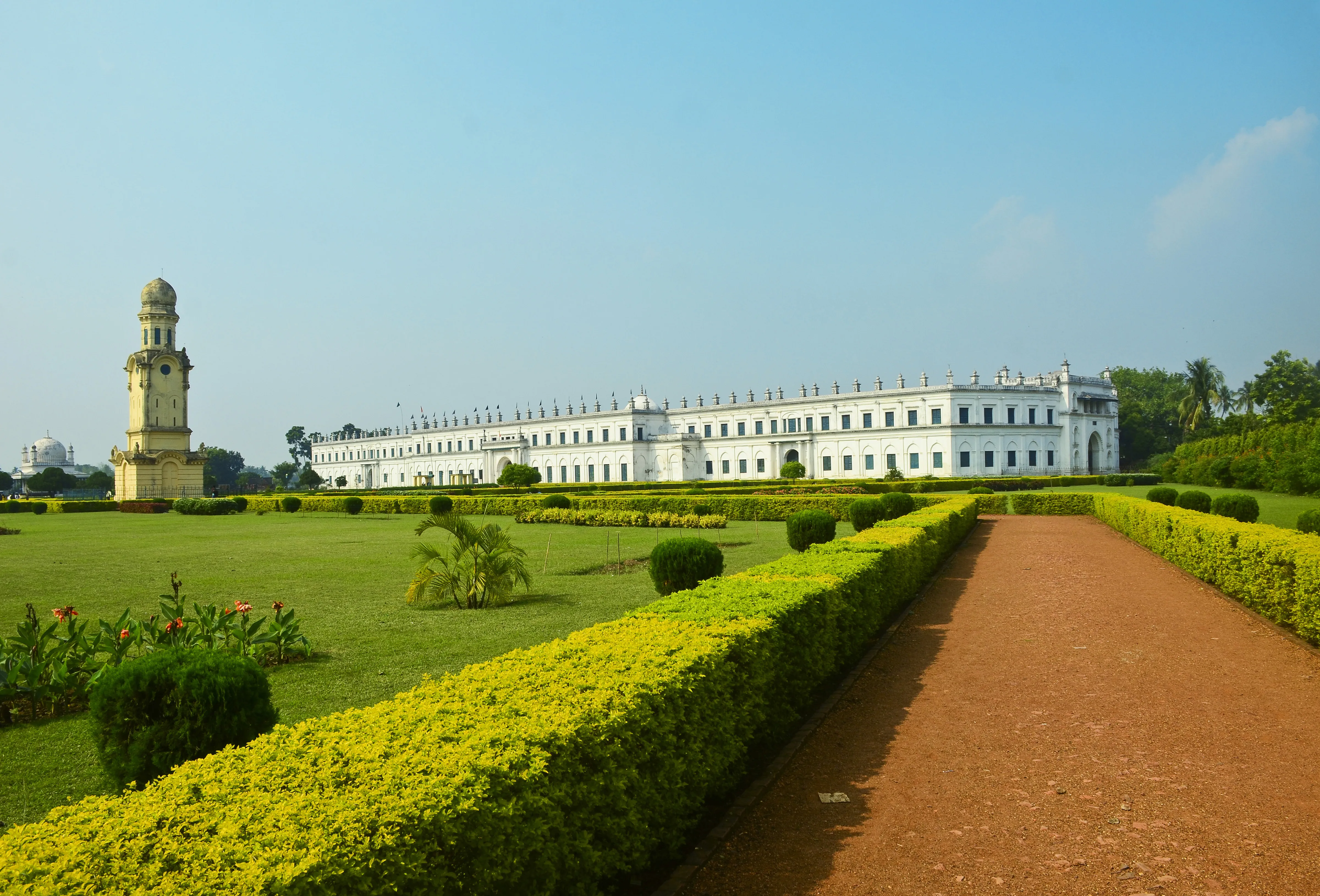
Siraj-ud-Daulah was the Nawab of Bengal from 1756 until his defeat and death in 1757, ruling under the nominal suzerainty of the Mughal emperor Alamgir II. His brief reign is remembered chiefly for two events that together decided the future of the Indian subcontinent: the Black Hole of Calcutta, in which a number of British captives died after his capture of the East India Company's fort in June 1756, and the Battle of Plassey a year later, in which he was defeated after his own commander-in-chief, Mir Jafar, defected to the British side. His death in 1757 ended Bengal's status as an independent Mughal province and opened the way to a century of British territorial expansion across the subcontinent.
Bengal Before Siraj-ud-Daulah
Bengal had been annexed to the Mughal Empire under Akbar in 1576, and remained a Mughal province until the nawabi period that began in the early eighteenth century, when Murshid Quli Khan — a convert to Islam of Brahmin origin who rose through Mughal service to become governor of Bengal, Bihar and Orissa in 1705 — combined the two senior provincial offices of subedar and diwan in a single hand and moved the provincial capital from Dhaka to the city that came to bear his own name, Murshidabad. From Murshid Quli Khan's time until Siraj-ud-Daulah's death, this combined office, carrying the honorific nawab, governed Bengal with a large degree of practical autonomy from Delhi, even as it continued to acknowledge Mughal sovereignty in name.
Siraj-ud-Daulah's maternal grandfather, Alivardi Khan, held this position in the years before Siraj-ud-Daulah's own succession, ruling as nawab over what was, by contemporary account, the wealthiest province of the Mughal Empire. It was under Alivardi Khan's rule, and in the years immediately following, that European trading companies — the British and French East India Companies chief among them — expanded their fortified trading posts along the Bengal coast, at Calcutta and Chandernagore respectively, under commercial privileges originally granted by the Mughal court.
Succession
Siraj-ud-Daulah became Nawab of Bengal on the death of his grandfather Alivardi Khan in 1756. His succession was contested within his own family, most seriously by his cousin Shaukat Jang, governor of Purnea, who rose in open rebellion against him that same year; the revolt was put down, though the Diyanet/TDV İslâm Ansiklopedisi's biographical entry on the chronicler Ghulam Hussain Khan — who had served in Shaukat Jang's own household — records that men associated with the defeated side had reason to fear reprisal once it failed. The deeper and ultimately more consequential dispute concerned the British East India Company's fortification of Calcutta, undertaken without Siraj-ud-Daulah's permission and in support of one of his rivals, Rajballabh.
The Capture of Calcutta and the Black Hole
Siraj-ud-Daulah repeatedly demanded that the British cease fortifying Calcutta, and when the Company's governor continued to defy him, he marched on the city, capturing the English trading post at Kasimbazar along the way. He reached Calcutta shortly afterward; on 16 June 1756 the governor, most of his staff, and a number of British residents fled Fort William, the Company's fortification in the city, for the safety of ships anchored in the harbour. The fort, defended only weakly by those who remained, surrendered on 20 June.
That same night occurred the episode known as the Black Hole of Calcutta. British prisoners taken in the fort's capture — accounts vary between 146 and 64 in number — were confined in a room measuring some eighteen feet by fourteen, with only two small windows, where twenty-one survived until morning. The survivors were released on Siraj-ud-Daulah's own order. The Diyanet/TDV İslâm Ansiklopedisi's entry on Calcutta records the capture of Fort William in 1756 and Siraj-ud-Daulah's renaming of the city Alinagar, without independently detailing the Black Hole incident itself; the fullest connected account of the episode, including the disputed numbers of prisoners and survivors, rests on British East India Company records and later British historiography, and this article reports the figures as they are transmitted in those sources, with the variance in the numbers noted rather than resolved.
Calcutta was retaken by Robert Clive and Admiral Charles Watson on 2 January 1757.
The Road to Plassey
In March 1757 the British captured the French trading post of Chandernagore, strengthening their position in Bengal, and shortly afterward entered into a secret arrangement with Mir Jafar, Siraj-ud-Daulah's own commander-in-chief, to overthrow the Nawab. The conspiracy also drew in Siraj-ud-Daulah's general Rai Durlabh and the influential banking family known as the Jagat Seths. Having alienated the province's Hindu financiers and elements of his own army, Siraj-ud-Daulah met Clive's forces at Plassey (Palashi) on 23 June 1757. Clive commanded some 3,000 men against a Bengal force of roughly 50,000, but prevailed through Mir Jafar's defection and the political manoeuvring of the Jagat Seths rather than through force of arms alone.
The consequences of the battle were set out with unusual clarity by a contemporary who lived through them: Ghulam Hussain Khan, a Delhi-born chronicler settled in Bihar, who later wrote of the period in his history Siyar al-Muta'akhkhirin, as discussed in the Diyanet/TDV İslâm Ansiklopedisi's entry on him. Ghulam Hussain Khan's own position illustrates from the inside how Siraj-ud-Daulah's brief rule touched the province's notable families independently of the battle's outcome for the British and the Company: he served Shaukat Jang, the governor of Purnea and Siraj-ud-Daulah's own cousin and rival claimant to the Bengal nizamat, and when Shaukat Jang rose in open rebellion against Siraj-ud-Daulah in 1756, Ghulam Hussain Khan, fearing the consequences to himself once the revolt was suppressed, took refuge with relatives at Benares. He returned to Bihar only in 1757, after Plassey had changed the province's masters, and it was from this same vantage — a career made and interrupted by the factional politics of Siraj-ud-Daulah's short reign — that he later composed his account of it.
The Diyanet/TDV İslâm Ansiklopedisi's entries on Bengal, Murshidabad and the nawab title all converge in treating Plassey as the decisive turning point: Bengal's Mughal-era governance under the nawabi system, running from Murshid Quli Khan to Siraj-ud-Daulah, is recorded as ending with his death in 1757, after which the British installed Mir Jafar as nawab under their own effective control and, within two decades, moved the provincial seat of administration from Murshidabad to Calcutta itself.
Death
After his defeat, Siraj-ud-Daulah fled to Murshidabad, the Bengal capital, but was captured shortly afterward and executed. According to some accounts, he was put to death at Mir Jafar's palace in Murshidabad, at a gateway that came afterward to be known as Namak Haram Deorhi, the "Traitor's Gate" — a name and tradition reported here as it is transmitted, rather than as an independently verified detail of the execution itself.
Aftermath
The British East India Company's installation of Mir Jafar as a compliant Nawab in place of Siraj-ud-Daulah gave the Company effective control over the administration and finances of Bengal, Bihar and Orissa while preserving the outward forms of Nawabi and Mughal authority — the same pattern of formal continuity concealing a real transfer of power that later marked the Company's relations with the Mughal court at Delhi itself. Warren Hastings, appointed governor of Bengal in 1772, formally transferred the seat of administration from Murshidabad to Calcutta the following year, by which point the office of Nawab retained no independent function. Despite the brevity and the ultimate failure of his reign, Siraj-ud-Daulah is remembered as an early figure of resistance to the establishment of British colonial power in India.
Historiographical Note
No dedicated biographical entry for Siraj-ud-Daulah was found in the Diyanet/TDV İslâm Ansiklopedisi under any of the Turkish transliterations of his name; the Turkish encyclopaedia's coverage of him is distributed instead across its articles on Bengal, Bangladesh, Calcutta, Murshidabad, the nawab title, and the contemporary chronicler Ghulam Hussain Khan, and it is from this distributed material — together with Britannica's dedicated biographical entry — that this article has been assembled. The number of prisoners held in the Black Hole of Calcutta, and the number who survived the night, are given differently across the British sources that record the episode; this article follows Britannica's own presentation of the range (146 or 64 confined, 21 surviving) rather than asserting a single figure the sources do not agree on. The account of Siraj-ud-Daulah's execution at "Namak Haram Deorhi" is likewise transmitted as tradition ("according to some accounts") rather than as an established fact, and is reported here on the same basis.
References and Further Reading
Primary Islamic Sources
- Ghulam Hussain Khan Tabatabai. Siyar al-Muta'akhkhirin — the eyewitness Persian chronicle of these years, as discussed in the Diyanet/TDV İslâm Ansiklopedisi's entry on its author, cited below; not independently consulted for this article.
Academic and Scholarly Sources
- Yazıcı, Tahsin. "GULÂM HÜSEYİN HAN." TDV İslâm Ansiklopedisi. Istanbul: Türkiye Diyanet Vakfı İslâm Araştırmaları Merkezi, 1996, vol. 14. [approved external source: islamansiklopedisi.org.tr]
- Özcan, Azmi. "BENGAL." TDV İslâm Ansiklopedisi. Istanbul: Türkiye Diyanet Vakfı İslâm Araştırmaları Merkezi, 1992, vol. 5. [approved external source: islamansiklopedisi.org.tr]
- Özcan, Azmi. "MÜRŞİDÂBÂD." TDV İslâm Ansiklopedisi. Istanbul: Türkiye Diyanet Vakfı İslâm Araştırmaları Merkezi, 2006, vol. 32. [approved external source: islamansiklopedisi.org.tr]
- Özcan, Azmi. "NEVVÂB." TDV İslâm Ansiklopedisi. Istanbul: Türkiye Diyanet Vakfı İslâm Araştırmaları Merkezi, 2007, vol. 33. [approved external source: islamansiklopedisi.org.tr]
- Rizvi, Seyyid Athar Abbas. "KALKÜTA." TDV İslâm Ansiklopedisi. Istanbul: Türkiye Diyanet Vakfı İslâm Araştırmaları Merkezi, 2001, vol. 24. [approved external source: islamansiklopedisi.org.tr]
- Britannica. Entry on Siraj-ud-Daulah. [approved external source: britannica.com]
Further Reading
- Nehru, Jawaharlal. The Discovery of India. New York: John Day, 1946. [approved PDF library:
sources/study/] — on the wider context of the East India Company's rise to territorial power in this period - Marshall, P.J. Bengal: The British Bridgehead: Eastern India, 1740-1828. Cambridge: Cambridge University Press, 1987. — for the reader's further research; not consulted for this article.
- Chaudhury, Sushil. The Prelude to Empire: Plassey Revolution of 1757. New Delhi: Manohar, 2000. — for the reader's further research; not consulted for this article.
Mentioned In
1 article references this topic