Zaynab bint Muhammad
The eldest daughter of Prophet Muhammad (Peace Be Upon Him) and Khadijah. Her husband Abu al-As refused Qurayshi pressure to divorce her, and she stayed in Mecca after her sisters migrated. Her mother's necklace ransomed him after Badr; she reached Medina only after being attacked on the road.
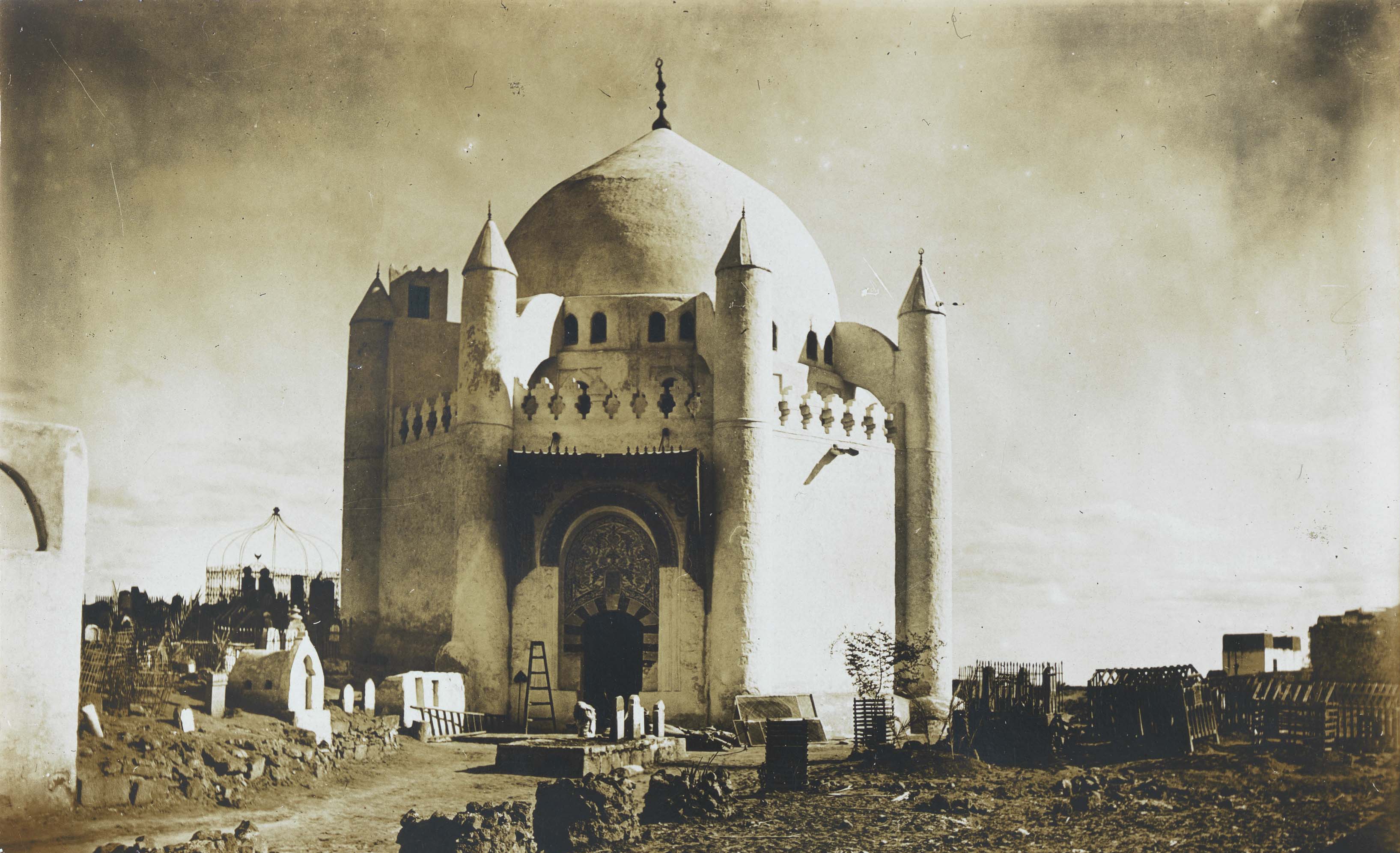
Zaynab bint Muhammad was the eldest daughter of Prophet Muhammad (Peace Be Upon Him) and Khadijah bint Khuwaylid. Her life spans the Meccan years and the first eight years at Medina, and it is defined by a situation none of her sisters faced in the same form: for years she was a Muslim married to a man who was not, living in the city where hostility to her father's message was concentrated on her own family.
Her story is also the one in which that hostility touched the Prophet's family most directly. She was the last of his children to leave Mecca, she left it only after a promise extracted from a prisoner of war, and she was attacked on the road as she went.
Birth and Household
Zaynab was born at Mecca ten years before her father was called to prophethood, into a household of settled prosperity: Khadijah was a merchant of independent means and the family held a respected position within the Quraysh. Golden Stories of Sayyida Khadijah names her as the eldest of the daughters and records that she became the particular focus of her parents' attention after the death of her elder brother al-Qasim in childhood.
Her sisters were Ruqayyah, Umm Kulthum and Fatimah. Two brothers, al-Qasim and Abdullah, died young. The family as a whole is treated in the article on the children of the Prophet.
Marriage to Abu al-As ibn al-Rabi
When Zaynab was about ten, her maternal aunt Halah bint Khuwaylid proposed that she marry Halah's son, Abu al-As ibn al-Rabi. It was the first proposal made for her, and Golden Stories notes that a girl was customarily betrothed at about that age in that society.
Abu al-As was therefore Zaynab's maternal cousin, and he was related to her father on both sides. On the paternal side the two men shared the ancestor Abd Manaf: Abu al-As was son of Rabi, son of Abd al-Uzza, son of Abd Shams, son of Abd Manaf, son of Qusayy. On the maternal side his descent through Halah bint Khuwaylid joined the Prophet's line at Qusayy ibn Kilab. The marriage was thus an alliance between close kin, arranged well before the revelation.
He was a trader of substance among the Quraysh, and Golden Stories records that he was regarded at Mecca as an unusually honest and trustworthy man. Khadijah knew her nephew's character and reputation, and having consulted the Prophet she accepted the proposal without hesitation.
At the wedding Khadijah gave her daughter, among other gifts, a necklace of Yemeni carnelian — most probably her own. Zaynab kept it carefully. That necklace becomes the hinge of the whole later narrative.
A marriage divided by belief
Abu al-As was away on a trading journey when the Prophet announced his mission, and returned to find Mecca altered. Zaynab had accepted Islam along with her mother and her sisters. Golden Stories cites al-Zurqani's observation that the Prophet's daughters are often left out of the lists of the earliest converts even though they responded at once, and quotes a report from Aisha, transmitted by al-Tabarani, that when God honoured His Prophet with prophethood, Khadijah and his daughters responded immediately.
When Zaynab told her husband that she had become a Muslim, he left the house without a word. She hoped that a man of his evident sense would accept the message, and she tried to persuade him. His answer, as Golden Stories records it, is worth setting out because it explains a marriage that lasted years across the divide: he did not doubt the truth of what Muhammad claimed, but he feared that people would say he had abandoned the religion of his forefathers for his wife's sake. He accepted Islam years later.
The refusal to divorce her
When the Quraysh found that no scheme of theirs would turn the Prophet from his preaching, they tried to disturb him at home. They approached his sons-in-law and offered them any woman of Mecca they chose if they would divorce his daughters.
At that time Zaynab was married to Abu al-As, while Ruqayyah and Umm Kulthum were betrothed to two sons of Abu Lahab — marriages, Golden Stories notes, that had not been consummated because the girls were still minors. Abu Lahab's sons agreed to the proposal readily. Abu al-As refused it outright, saying that he would not give up his loyal wife for any woman of the Quraysh.
The Prophet did not forget it. Years later at Medina, when Ali ibn Abi Talib considered taking a second wife, the daughter of Abu Jahl, alongside Fatimah, the Prophet spoke of Abu al-As from the pulpit: he had married his daughter to Abu al-As ibn al-Rabi, and Abu al-As had treated them in a manner deserving praise, being truthful and keeping his word. He added that Fatimah was as a part of his own body and that he could not bear her suffering, and that the daughters of God's Messenger and the daughters of His enemy could not be joined to the same man. Ali gave up the intention. Golden Stories cites the sermon from Ibn Majah.
The Years Alone at Mecca
The Muslims left Mecca in stages — first to Abyssinia, then in numbers to Medina, and at last the Prophet himself with Abu Bakr. Zaynab did not go. Khadijah had died some years before, her sisters had migrated, and she remained in her husband's house in the city her father had left. Golden Stories records plainly what that meant: her only company was her two children, and although her husband loved her he was still not a Muslim, and she wished she could be near her father and her sisters.
One episode from the Meccan years survives in which she appears directly, and it is the only scene of its kind. Harith ibn Harith al-Ghamidi related that he came to Mecca with his father and found a crowd pressing around a man they called a prophet, who was calling people to the oneness of God while they denied him and looked ready to do him harm. The gathering lasted until noon. Then a young woman came up in evident haste, so hurried that she had not covered herself properly, carrying a cup of water and a cloth. The man drank, wiped his face and hands, and said to her: "My child, cover your chest with your mantle, and do not fear for your father." On asking, Harith learned that she was Zaynab, the Prophet's daughter. Golden Stories cites the report from al-Tabarani's al-Mu'jam al-Kabir.
Badr, and the Ransom of the Necklace
In Ramadan of 2 AH the Meccans marched on Medina, and Abu al-As went with them. The armies met at Badr, the Meccans were defeated, and some seventy of their men were killed and about seventy taken prisoner. Abu al-As was among the captives; Golden Stories names Abdullah ibn Jubayr as the man who took him.
The captives were brought to Medina, where the Prophet instructed his Companions to treat them well. Golden Stories draws out what that instruction cost. Dates were abundant and cheap at Medina, while wheat and barley had to be imported and were dear; the Companions ate the dates themselves and gave their prisoners the bread. Abu al-As saw this at first hand, and it impressed him. He had known the Prophet before his call, and on this account his long hesitation had been a matter of tribal loyalty rather than of doubt.
Umar ibn al-Khattab held that the captives of Badr should be put to death, as was then the custom. The Prophet chose to accept ransom instead — between one thousand and three thousand dirhams a man — in the hope that some of those released might one day accept Islam, and because the payments would strengthen the young community materially.
Abu al-As, though a wealthy man, did not have the means to pay on that occasion, and sent word to Zaynab to raise it. She could not raise enough. So she sent her mother's carnelian necklace to Medina with the Meccan party carrying the ransoms.
When the Prophet saw the necklace, Golden Stories records that the memory of Khadijah came over him and he wept, and he put it to his Companions that if they thought it right they should release Zaynab's prisoner and return her necklace to her as well. They agreed at once. But he took a promise from Abu al-As before letting him go: that on reaching Mecca he would send Zaynab to Medina. Golden Stories cites the account from Abu Dawud.
The Journey to Medina
Abu al-As kept his word and told Zaynab to prepare as soon as he was home. The difficulty was the city itself. Only a month had passed since Badr; the Meccans were still absorbing their losses, their poets were mourning the dead and calling for vengeance, and it was unsafe for a Muslim from Medina to enter Mecca or for a Meccan Muslim to leave it openly. The Prophet therefore sent Zayd ibn Harithah and a man of the Ansar to wait for her at Batn Ya'jaj, some thirteen kilometres outside the city.
Hind bint Utbah, the wife of Abu Sufyan ibn Harb, offered to help Zaynab with her preparations. Zaynab did not take up the offer.
Abu al-As asked his brother Kinanah ibn Rabi to take her out to the rendezvous. Zaynab travelled in a howdah on camel-back, as women of noble family did — a covering that marked their standing and discouraged interference — with her daughter Umamah beside her. Kinanah took his bow and arrows and rode a second camel. They set out at noon, when the heat kept most of Mecca indoors, which Golden Stories suggests was chosen to avoid attention.
The attack at Dhi Tuwa
Just outside Mecca, at Dhi Tuwa, the two camels were intercepted by a group of Meccans led by Habbar ibn al-Aswad. They ringed Zaynab's camel and Habbar struck at it with a spear. The camel threw her and she fell to the ground. Zaynab was pregnant, and the fall caused her to miscarry.
Kinanah set an arrow to his bow and warned them that he would shoot any man who came nearer, and they drew back. Abu Sufyan then arrived and talked him down. His argument was about appearances rather than about Zaynab: a daughter of Muhammad leaving Mecca openly in daylight, so soon after Badr, would be read as a humiliation, and people would say the Quraysh were beaten men who could not even stop their women walking out. Let Kinanah take her home, he said, and bring her out quietly by night once the talk had died down. Kinanah judged this prudent and agreed.
Hind bint Utbah condemned the attack, though she was among the Prophet's most committed opponents. Golden Stories records that she denounced Habbar and his companions in verse as men who were rough and swaggering in peacetime and useless when there was fighting to be done, and who had turned instead on a woman trying to reach her father.
The second attempt
A few days later, when the incident had stopped being discussed, Zaynab and Kinanah left Mecca in the middle of the night. They met Zayd and the Ansari at Batn Ya'jaj; Kinanah turned back for Mecca, and Zaynab went on to Medina with her escort, where her father and her family received her.
The Prophet was grieved at what had been done to her on the road, and gave orders that Habbar was to be killed wherever he was found. Golden Stories pairs this with a report from Abu Hurayrah in which the Prophet had first directed that certain men be burned and then countermanded it before the party set out, saying that none but God may punish by fire, and that if they found the men they were simply to kill them.
At Medina
Zaynab was now separated from her husband but restored to her father and her sisters, with her two children.
Umamah was particularly dear to the Prophet. The best-known report concerning her is in Sahih al-Bukhari, in the Book of Prayer, in the chapter on carrying a small girl during the prayer: Abu Qatada al-Ansari narrated that the Prophet was praying while carrying Umamah, daughter of Zaynab, daughter of God's Messenger — the Sahih adds that her father was al-As ibn Rabi ibn Abd Shams — and that when he prostrated he set her down, and when he stood he took her up again. The same report appears in Sahih Muslim. It is cited in the legal literature on carrying a child in prayer, and more widely as an illustration of the Prophet's manner with children.
Her brother Ali ibn Abi al-As is less clearly attested, and the sources disagree. Most of the biographers hold that he died as a boy. Others have him living into adulthood, riding with the Prophet at the conquest of Mecca and dying later at the battle of Yarmuk; Golden Stories attributes that account to Ibn Hajar's al-Isabah, and notes elsewhere that historians differ over how long he was with his grandfather. This article reports the disagreement rather than choosing between the two.
Abu al-As accepted Islam some years afterwards and came to Medina, and Zaynab returned to him as his wife. Golden Stories records that he had not been able to put her out of his mind in the intervening years, and composed verses remembering her when his trading route to Syria brought him past Medina. He died in 12 AH, during the caliphate of Abu Bakr.
Death
Zaynab died at Medina in 8 AH, in her father's lifetime.
Assessment
Zaynab's place in the history rests on a position rather than an achievement. She was a Muslim married to a man of the opposing faction, in a small city where that opposition was aimed at her own family, and she held that position for years without any complaint being recorded from her or any accusation being made against her by either side. What made her marriage historically consequential was her husband's refusal to end it under pressure, and the Prophet's public acknowledgement of that refusal years later when it bore on Fatimah.
Two things about her are unusually well documented for a woman of that generation: the necklace, which is the reason her name appears in the account of the Badr ransoms, and the attack on the road, which is the reason it appears in the record of Meccan hostility. Both are episodes in which she acted or was acted upon; neither preserves her words.
What the sources do not give is her own account of any of it — her reasoning during the years at Mecca, or what she made of her separation from her father, or her husband's long refusal. No statement is reliably transmitted from her. The one occasion on which she is quoted at all is her father's reply to her, not her speech to him. Material that supplies her inner life is later embellishment, and this article does not carry it.
Historiographical Note
Almost everything above descends through the sira literature, and the strongest single report is the exception. The account of Umamah carried during the prayer is in both Sahih al-Bukhari and Sahih Muslim on the authority of Abu Qatada al-Ansari, and it is the only element of Zaynab's story that rests on the canonical hadith collections. Everything else — the necklace, the ransom, the escort to Batn Ya'jaj, the attack at Dhi Tuwa — comes from the biographical tradition, principally Ibn Hisham's recension of Ibn Ishaq, from which Golden Stories of Sayyida Khadijah takes it with citations. That material is far richer in narrative detail than the hadith collections and the standing of its individual reports varies more widely, which is why the sourcing is named in the text rather than left implicit.
Three points are left open.
Her seniority among the daughters is given here as eldest, on the authority of Golden Stories, which also dates her birth to ten years before the beginning of revelation. The early sources are not uniform on the order of the four births, and a reader will meet other arrangements elsewhere. No age is stated for her at any later point, since every such figure depends on the order rather than on independent evidence.
The fate of her son Ali is genuinely disputed, as set out above, and the disagreement is reported rather than resolved.
Her age and the date of her marriage rest on the same foundation as her seniority. Golden Stories gives her as about ten at the time of the proposal and describes that as the ordinary age in that society; the article gives the figure with its source attached rather than as an established fact.
References and Further Reading
Primary Islamic Sources
- Sahih al-Bukhari, Volume 1, no. 516, Book of Prayer, chapter on carrying a small girl on the neck during the prayer — Abu Qatada al-Ansari's narration of the Prophet praying while carrying Umamah, daughter of Zaynab, with Umamah's paternal descent given as al-As ibn Rabi ibn Abd Shams
- Sahih Muslim, no. 543 — the same report on the authority of Abu Qatadah, cited here from Golden Stories of Sayyida Khadijah
- Al-Tabarani, al-Mu'jam al-Kabir — Harith ibn Harith al-Ghamidi's account of Zaynab bringing water and a cloth to her father at Mecca, and the Prophet's words to her; and Aisha's report that Khadijah and the Prophet's daughters responded to his call immediately. Both cited here from Golden Stories
- Abu Dawud, al-Sunan — the release of Abu al-As and the return of the necklace, with the promise taken from him to send Zaynab to Medina. Cited here from Golden Stories
- Ibn Majah, al-Sunan — the Prophet's sermon recalling Abu al-As's conduct, delivered when Ali considered marrying the daughter of Abu Jahl. Cited here from Golden Stories
- Qur'an, Surah al-Masad 111 — the denunciation of Abu Lahab, whose sons had been betrothed to Zaynab's sisters
Classical Islamic Sources
- Ibn Hisham, al-Sirah al-Nabawiyyah, recension of the Sirah of Ibn Ishaq — the Quraysh approach to the Prophet's sons-in-law, Hind's offer of help, the attack at Dhi Tuwa, Abu Sufyan's intervention and Hind's verses of condemnation, and the second departure by night. Cited here from Golden Stories
- Ibn al-Athir, Usd al-Ghabah — Khadijah's wedding gift of the Yemeni carnelian necklace. Cited here from Golden Stories
- Ibn Hajar al-Asqalani, al-Isabah fi Tamyiz al-Sahabah — the account in which Ali ibn Abi al-As lives into adulthood and dies at Yarmuk. Cited here from Golden Stories
- Ibn Kathir, Al-Sira al-Nabawiyya — consulted on Abu al-As and the Meccan setting
- Al-Zurqani — the observation that the Prophet's daughters are frequently omitted from lists of the earliest converts although they accepted his call at once. Cited here from Golden Stories
Academic and Scholarly Sources
- Golden Stories of Sayyida Khadijah — the principal source for this article throughout, and the work through which the classical citations above were consulted: Zaynab's birth and seniority, the marriage and the lineage of Abu al-As on both sides, the necklace, Abu al-As's stated reason for withholding assent, the Qurayshi pressure and his refusal, the years alone at Mecca, Badr and the treatment of the captives, the ransom, the escort and the attack on the road, and the disagreement over her son
- The Sealed Nectar (Ar-Raheeq Al-Makhtum) by Safi-ur-Rahman al-Mubarakpuri — consulted for the Badr narrative, the disposal of the captives and the chronology of the Meccan years
Further Reading
- The article on the children of the Prophet — the family as a whole, and the difficulties in ordering the births
- Khadijah bint Khuwaylid — her mother, and the origin of the necklace
- Ruqayyah bint Muhammad and Umm Kulthum bint Muhammad — her sisters, whose betrothals to the sons of Abu Lahab ended as hers did not
- Battle of Badr — the engagement at which Abu al-As was captured
Mentioned In
6 articles reference this topic
More from Prophetic Era
Battle of Badr - The First Great Victory
The first major military victory of the Muslim community on March 13, 624 CE, where 313 Muslims defeated a much larger Meccan army. This decisive battle established the military credibility of the Islamic state and marked the beginning of Islamic expansion.
Conquest of Mecca
The conquest of Mecca in 630 CE (8 AH) was the decisive event of the Prophetic era. After eight years of exile, Prophet Muhammad led ten thousand Muslims into the city, declared a general amnesty, purified the Kaaba of its idols, and transformed the Arabian political landscape.
Great Mosque of Mecca: The Sacred Sanctuary
The Great Mosque of Mecca (Masjid al-Haram) is Islam's holiest site, housing the Kaaba and serving as the focal point for the Hajj pilgrimage and daily prayers for Muslims worldwide.
Mecca (Makkah)
The holiest city in Islam, birthplace of Prophet Muhammad, and site of the Kaaba. Located in Saudi Arabia's Hejaz region, it is the destination of the annual Hajj pilgrimage and the direction of prayer for Muslims worldwide.