Ruqayyah bint Muhammad
A daughter of Prophet Muhammad (Peace Be Upon Him) and Khadijah. Released from a childhood betrothal to a son of Abu Lahab, she married Uthman ibn Affan and was the only one of the Prophet's daughters to migrate to Abyssinia. She died of smallpox as news of Badr reached Medina.
Ruqayyah bint Muhammad was a daughter of Prophet Muhammad (Peace Be Upon Him) and Khadijah bint Khuwaylid. Of the four daughters she is the one whose life was most directly shaped by the politics of the Meccan opposition: she was betrothed as a child into the household that would become her father's fiercest enemy, released from that engagement by a Qur'anic revelation, and then married to a man whose standing in the community made the match itself a statement.
She was also the only one of the Prophet's daughters to make the migration to Abyssinia, and she died at Medina in the week of Badr, before her father returned from the battlefield.
Birth and Family
Golden Stories of Sayyida Khadijah places Ruqayyah's birth at Mecca three years after that of her elder sister Zaynab, and seven years before her father was called to prophethood.
Her sisters were Zaynab, Umm Kulthum and Fatimah; her brothers al-Qasim and Abdullah died in childhood. The family as a whole is treated in the article on the children of the Prophet.
The Betrothal to a Son of Abu Lahab
The house next to Khadijah's belonged to Abu Lahab, whose given name was Abd al-Uzza and who was the Prophet's paternal uncle. Golden Stories records that before the call to prophethood he was much attached to his nephew. He had two sons, Utbah and Utaybah.
A delegation of Banu Hashim elders came with Abu Talib to put a proposal. Zaynab had been married on the maternal side of the family, to a son of Khadijah's sister; the paternal kin, they argued, were no less entitled to make an offer. They asked for the two remaining elder daughters, and specifically that Abu Lahab's sons Utbah and Utaybah should marry Ruqayyah and Umm Kulthum.
The Prophet said he valued the connection but wanted time, and consulted Khadijah. Her hesitation, as Golden Stories gives it, was not about the young men but about their mother. Umm Jamil — her given name was Arwa, and she was the daughter of Harb ibn Umayyah and the sister of Abu Sufyan — would become her daughters' mother-in-law, and she had a reputation at Mecca for a sharp tongue and a taste for setting people against one another. She is the woman the Qur'an would later name hammalat al-hatab, the carrier of firewood, in the sura denouncing her husband, an idiom for one who carries malicious talk from person to person so as to kindle enmity between them.
Weighing that against the claim of the paternal kin, and against the fact that their eldest had married on the maternal side, the parents accepted. Ruqayyah was betrothed to Utbah and Umm Kulthum to Utaybah. Neither marriage was consummated: Golden Stories records, on the authority of Ibn al-Athir, that the girls were still living in their parents' house when their father announced his mission.
The four daughters and the call
When the Prophet received his commission at the age of forty, his daughters accepted it at once. Golden Stories cites Ibn Sa'd for the point that the four daughters, together with Khadijah, were the first to respond to his call.
The ending of the engagement
When Surah al-Masad was revealed, denouncing Abu Lahab and his wife, the family repudiated the connection. Abu Lahab's sons were, on the account in Golden Stories, also offered inducements by the Quraysh — any woman of Mecca they wished — as part of a wider attempt to wound the Prophet through his household; unlike Zaynab's husband Abu al-As, who refused outright, they agreed readily. Utbah gave up Ruqayyah and Utaybah gave up Umm Kulthum.
Golden Stories records that Abu Lahab and Umm Jamil expected the repudiation to humiliate the family, and observes that it did not work out so.
Marriage to Uthman ibn Affan
Uthman ibn Affan proposed for Ruqayyah after the engagement ended, and was accepted.
He was a man of the Banu Umayyah, a wealthy trader, and — as Golden Stories puts it — among the most eligible unmarried men in Mecca. He had come to Islam early, persuaded by Abu Bakr. As-Sallabi's biography of him treats this marriage, and the later marriage to Umm Kulthum, as the origin of the epithet by which he is known in the tradition: Dhun-Noorayn, the possessor of two lights.
Golden Stories cites a report of al-Tabarani, from Abdullah ibn Abbas, in which the Prophet said that God had made known to him by revelation that he should marry his beloved daughter to Uthman ibn Affan.
The Meccans did not attend the wedding. Golden Stories records that they turned instead to plotting against Uthman, without success. Of the marriage itself it reports that the two were well matched and became known in the city for the conduct of their life together, citing al-Baladhuri for the judgement that people spoke of them as the finest couple among mankind.
The Migration to Abyssinia
As the persecution at Mecca intensified, a group of Muslims left for Abyssinia, and Ruqayyah went with her husband — the only one of the Prophet's daughters to make that journey.
Golden Stories describes a departure made in secret: the party left Mecca under cover of night to avoid attention and travelled to the port of Shu'aybah. The Meccans learned of the attempt and sent men after Uthman and Ruqayyah, but the two were already away.
The migrants were beyond the reach of the Quraysh and able to practise their religion openly. Ruqayyah was young at the time, and Golden Stories records that although she was happy with her husband her thoughts were constantly with her parents. When she returned she learned that her mother had died.
The sources have her and Uthman among those who migrated to Abyssinia a second time, returning to Mecca some years later; and then leaving home a third time, when the community moved to Medina. Golden Stories notes that this last migration was made individually or in small groups rather than as a body.
Her Son Abdullah
At Medina, Ruqayyah and Uthman had a son, whom they named Abdullah, and Ruqayyah was afterwards called Umm Abdullah in the Arab manner. Golden Stories cites Ibn Kathir for the birth, and records that they had no children after him.
Abdullah died as a small boy. Golden Stories, citing Ibn Sa'd, gives the cause: at the age of six a cock struck its beak into one of his eyes; his face swelled, the infection spread, and he died of it in Jumada al-Ula of 4 AH. His grandfather led the funeral prayer and Uthman buried him.
Illness, Badr and Death
Shortly before Badr, Ruqayyah contracted smallpox. Every treatment then available was tried and her condition continued to worsen.
The decision to march out against the Meccans was announced while she was ill, and the community, Uthman among them, began to prepare. As her condition deteriorated the Prophet told Uthman to remain at Medina and care for her. Golden Stories records the difficulty this created for him: he was troubled at the thought of losing the reward of the battle. The Prophet reassured him that he would have the reward of those who fought, and a share of the spoils besides — a point for which Golden Stories cites Sahih al-Bukhari.
Uthman stayed. When the Muslims won at Badr the Prophet sent Zayd ibn Harithah ahead to Medina with the news, and Golden Stories, citing Ibn Kathir, records that Ruqayyah was being buried as Zayd arrived. She was twenty-one.
At her grave
The Prophet was grieved when the news reached him, and those present saw tears in his eyes. On returning to Medina he visited her grave and asked God's forgiveness and mercy for her. Golden Stories preserves, from Ibn Sa'd, the words he spoke there: that Uthman ibn Ma'zun had already gone to God, and that she was now joining him.
Uthman ibn Ma'zun was the Prophet's foster brother, and the first of the Muslims to die after the migration to Medina — which is what gives the sentence its force. She was being commended to the company of the community's first dead.
Assessment
Ruqayyah's life is documented almost entirely through the men around her: the uncle whose enmity ended her first engagement, the husband whose standing the marriage confirmed, the father whose grief at her grave the sources record. She left no reported speech.
What is preserved is nonetheless a coherent shape. She was released from a betrothal by revelation, married into a match the tradition holds was itself divinely directed, twice crossed the sea to Abyssinia, buried a small son, and died young of an epidemic disease in the same week as the community's first victory. Two of those events — the migration and the death at Badr — put her in the narrative of the community rather than only in the record of a family.
Historiographical Note
The evidence for Ruqayyah is thinner than for her sister Zaynab and comes almost wholly from the sira and tabaqat literature — Ibn Sa'd, Ibn Kathir, Ibn al-Athir, al-Baladhuri, al-Tabarani — reaching this article through Golden Stories of Sayyida Khadijah, which cites them. Only one element rests on the canonical collections: the Prophet's assurance to Uthman about the reward and the share of the spoils, which Golden Stories refers to Sahih al-Bukhari.
Two points should be read with that in mind.
The report that the marriage to Uthman was directed by revelation comes from al-Tabarani rather than from the two Sahihs, and it is reported here as what that source transmits from Ibn Abbas. It is a claim of a kind that invites care, and the article states its provenance rather than presenting it as an undisputed fact.
The dates and ages — birth three years after Zaynab and seven years before the call, death at twenty-one — rest on the same chain. They are internally consistent, but they depend on an ordering of the four births that the earliest sources do not agree on, and a reader will meet other figures elsewhere.
Nothing is transmitted from Ruqayyah in her own words. Accounts that give her speeches or interior reflection are later elaboration, and this article does not carry them.
References and Further Reading
Primary Islamic Sources
- Qur'an, Surah al-Masad 111 — the denunciation of Abu Lahab and of his wife as hammalat al-hatab, the revelation that ended Ruqayyah's betrothal to his son
- Sahih al-Bukhari, no. 3130 — the Prophet's assurance to Uthman that in remaining at Medina to care for his wife he would have the reward of those who fought at Badr and a share of the spoils; cited here from Golden Stories of Sayyida Khadijah
- Al-Tabarani, al-Mu'jam al-Awsat — the report from Abdullah ibn Abbas that the Prophet was directed by revelation to marry his daughter to Uthman ibn Affan; cited here from Golden Stories
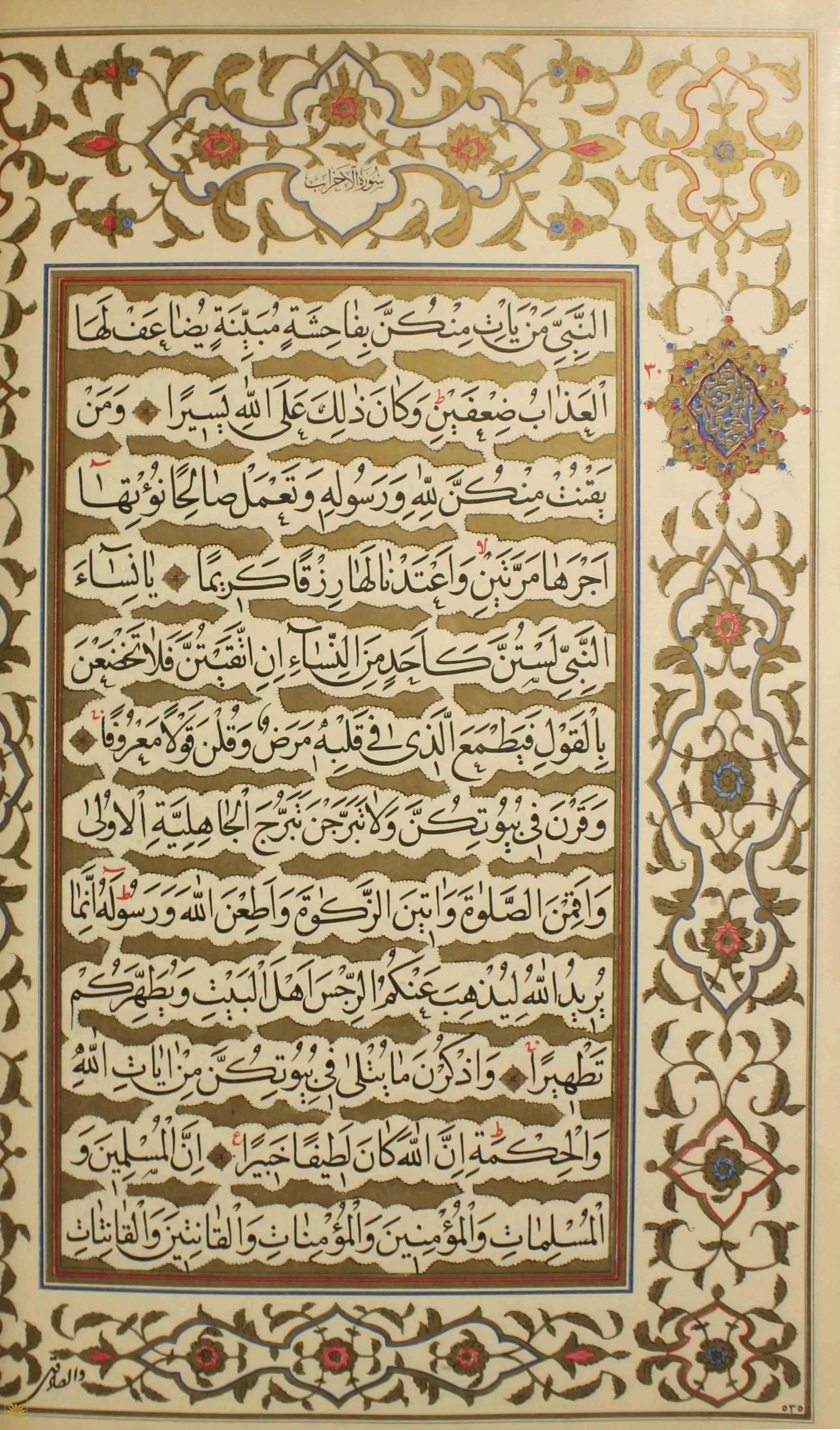
- Qur'an, Surah al-Ahzab 33:59 — addressed in part to the Prophet's daughters
Classical Islamic Sources
- Ibn Sa'd, Kitab al-Tabaqat al-Kubra — the four daughters among the first to accept the call; the Prophet's words at Ruqayyah's grave; and the death of her son Abdullah. Cited here from Golden Stories
- Ibn Kathir, al-Sira al-Nabawiyya — the birth of Abdullah, and Ruqayyah's burial as Zayd ibn Harithah arrived with news of Badr. Cited here from Golden Stories
- Ibn al-Athir, Usd al-Ghabah — that the betrothals to Abu Lahab's sons were never consummated and the girls remained in their parents' house. Cited here from Golden Stories
- Al-Baladhuri, Jumal min Ansab al-Ashraf — the reputation of Uthman and Ruqayyah as a couple at Mecca. Cited here from Golden Stories
- Ibn Abd al-Barr, al-Isti'ab fi Ma'rifat al-Ashab — Uthman ibn Ma'zun as the Prophet's foster brother and the first Muslim to die after the migration. Cited here from Golden Stories
Academic and Scholarly Sources
- Golden Stories of Sayyida Khadijah — the principal source for this article throughout, and the work through which the classical citations above were consulted
- As-Sallabi, Ali Muhammad. The Biography of 'Uthman Ibn 'Affan: Dhun-Noorayn, translated by Nasir Khattab — Uthman's standing among the Quraysh, his early acceptance of Islam, and the derivation of the epithet Dhun-Noorayn from his marriage to two of the Prophet's daughters
- The Sealed Nectar (Ar-Raheeq Al-Makhtum) by Safi-ur-Rahman al-Mubarakpuri — the migrations to Abyssinia, the Meccan persecution, and the chronology of Badr
Further Reading
- The article on the children of the Prophet — the family as a whole, and the difficulty of ordering the four births
- Umm Kulthum bint Muhammad — her sister, betrothed to the other son of Abu Lahab, and married to Uthman after Ruqayyah's death
- Zaynab bint Muhammad — her eldest sister, whose marriage survived the same Qurayshi pressure
- Uthman ibn Affan — her husband, and the third caliph
- Battle of Badr — the engagement during which she died
Mentioned In
8 articles reference this topic
More from Prophetic Era
Battle of Badr - The First Great Victory
The first major military victory of the Muslim community on March 13, 624 CE, where 313 Muslims defeated a much larger Meccan army. This decisive battle established the military credibility of the Islamic state and marked the beginning of Islamic expansion.
Conquest of Mecca
The conquest of Mecca in 630 CE (8 AH) was the decisive event of the Prophetic era. After eight years of exile, Prophet Muhammad led ten thousand Muslims into the city, declared a general amnesty, purified the Kaaba of its idols, and transformed the Arabian political landscape.
Great Mosque of Mecca: The Sacred Sanctuary
The Great Mosque of Mecca (Masjid al-Haram) is Islam's holiest site, housing the Kaaba and serving as the focal point for the Hajj pilgrimage and daily prayers for Muslims worldwide.
Mecca (Makkah)
The holiest city in Islam, birthplace of Prophet Muhammad, and site of the Kaaba. Located in Saudi Arabia's Hejaz region, it is the destination of the annual Hajj pilgrimage and the direction of prayer for Muslims worldwide.