Abdul Qadir Gilani
Abdul Qadir Gilani (c. 1077-1166 CE) was a Hanbali jurist and preacher of Baghdad whose sermons drew large audiences and whose works combine legal instruction with spiritual counsel. The Qadiriyya order was organised around his memory by his sons after his death.
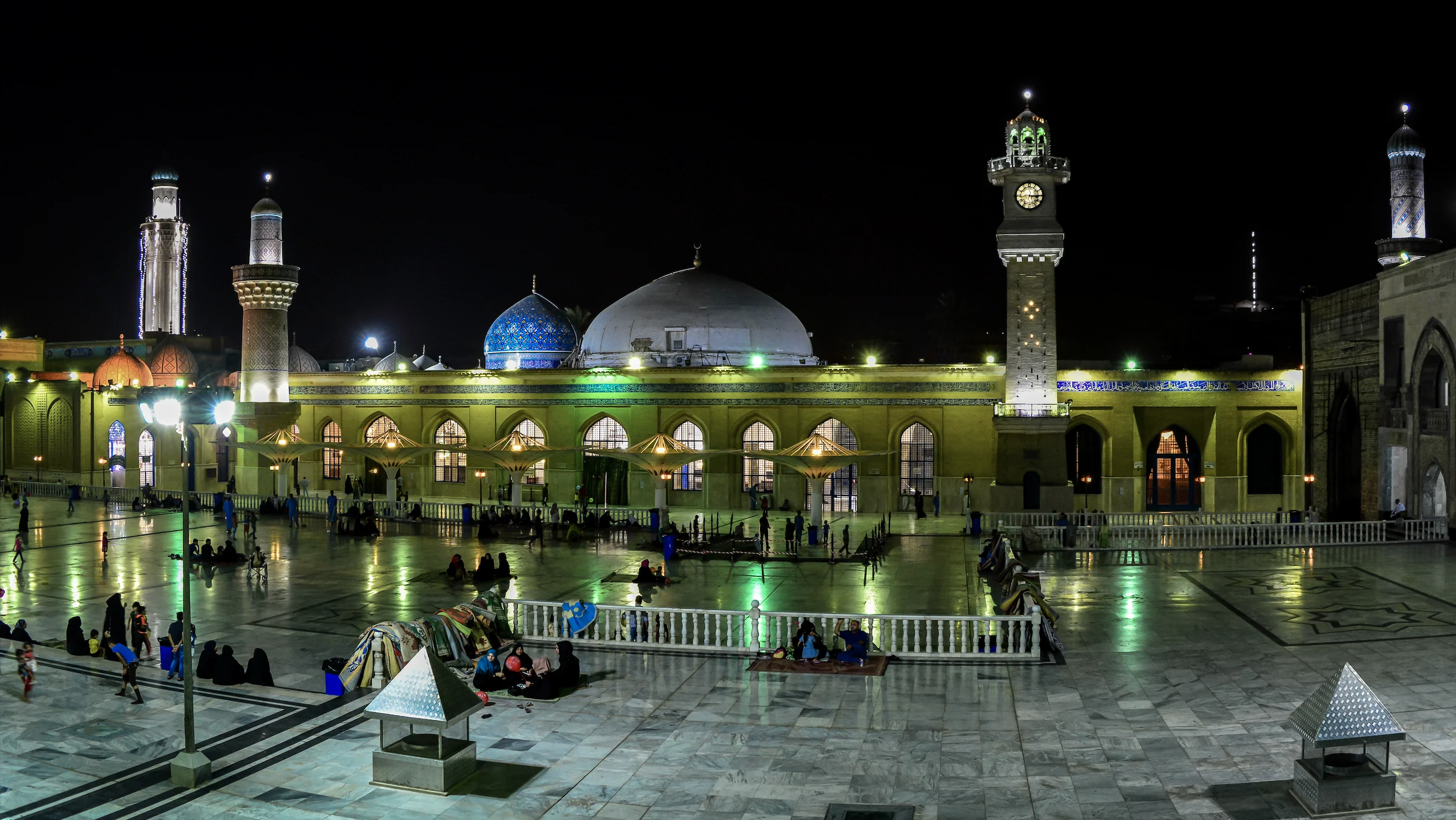
Abdul Qadir Gilani (c. 1077–1166 CE / c. 470–561 AH) was a jurist of the Hanbali school and a preacher in Baghdad whose public sermons attracted unusually large audiences in the middle decades of the twelfth century. His surviving writings combine instruction in Islamic law with counsel on the discipline of the inner life, and the order that bears his name — the Qadiriyya — became one of the most widely diffused Sufi organisations in the Muslim world, present from West Africa to Southeast Asia.
Writing about him requires an unusual degree of care about sources, and the reason should be stated at the outset. Within a generation of his death Abdul Qadir became the subject of a devotional literature of extraordinary volume, in which he is credited with miracles, cosmic rank, and continuing intervention in the affairs of the living. That literature is historically significant in its own right — it tells us a great deal about how sainthood was understood in later Islamic societies — but it is not a record of his life. The earliest of it was composed by his own son. The French historian Jacqueline Chabbi established in a foundational 1973 study that the historically recoverable Abdul Qadir is a considerably more modest figure than the one the hagiography presents: a respected Hanbali preacher and teacher, not the institutional founder of a worldwide order.
This article accordingly separates three things. What the early biographical sources support is presented as history. What his own surviving works say is presented as his teaching. What the devotional tradition added is identified as the devotional tradition, and described rather than asserted.
Origins and Early Life
Birth and Family
Abdul Qadir was born in 470 AH, corresponding to 1077 or 1078 CE. The early sources place his birth in Gilan, the province on the south-western shore of the Caspian from which his name derives, and modern reference scholarship — the Encyclopaedia Iranica and the Encyclopaedia of Islam among it — accepts this. A fifteenth-century account by the historian Ibn Taghribirdi (d. 1470) placing his birth at Jil in Iraq is doubted, and Chabbi questioned it directly.
The details of his family background are uncertain, and the little that is reasonably firm points in a consistent direction. His father, or on some accounts his grandfather, was known by the nickname Jangi Dost — a Persian name, not an Arab one. His nisba is territorial rather than tribal. And during his years in Baghdad he was called ajami, non-Arab, which Bruce Lawrence takes to reflect his speaking Persian alongside Arabic. Arabic, the language of all his surviving work, was therefore acquired rather than native.
That matters for the best-known claim about his ancestry. The devotional literature traces his descent to the Prophet Muhammad through Hasan ibn Ali on his father's side and Husayn ibn Ali on his mother's, making him a sayyid twice over. This genealogy appears in the hagiographies rather than in the earliest biographical notices, and it is the hagiographers who constructed the chain. It cannot be treated as established fact, and it sits awkwardly beside the Persian family nickname and the label ajami that his Baghdad contemporaries applied to him. It is worth noting what such a claim accomplished: descent from the Prophet's family conferred authority in the environment in which the Qadiriyya was expanding, and lineages of this kind were frequently supplied for figures who came to be venerated. The claim is recorded here as part of his later reputation, not as a fact about his parentage.
Departure for Baghdad
Abdul Qadir left Gilan for Baghdad as a young man, conventionally in his late teens and dated by the sources to around 1095 CE. Baghdad was still the intellectual centre of the Sunni world, and the journey he made was a common one: provincial students travelled to the capital because that is where the leading teachers and the endowed colleges were.
There is a coincidence of dates here that is worth registering, not because the two men met — there is no evidence they did — but because it locates him. The year usually given for his arrival is the year al-Ghazali abandoned the Nizamiyya and left the city. Abdul Qadir thus entered a Baghdad that had just lost its most celebrated teacher over the question of whether religious learning pursued under state patronage could be spiritually sound, and he entered it not at the Nizamiyya but at a small Hanbali college. The settlement al-Ghazali was then working out in retreat — that the disciplines of the inner life are the interior dimension of legal obligation rather than an alternative to it — is substantially the position Abdul Qadir would preach in that city three decades later, reached from the other end, out of Hanbali traditionalism rather than out of a crisis about philosophy.
He arrived without means. The early notices describe a long period of poverty, and this is one of the more credible details in his biography, since it is unflattering and serves no devotional purpose. A widely repeated story in which the young Abdul Qadir, questioned by bandits on the road, truthfully declares the money he is carrying and so converts them, belongs to the didactic literature and is not found in the earliest sources; it is a teaching story about truthfulness rather than a report of an event.
Studies and Scholarly Formation
In Baghdad Abdul Qadir studied the standard curriculum of the Sunni sciences. His principal teacher in law was Abu Sa'd al-Mukharrimi, a Hanbali jurist who maintained a small college in the eastern part of the city, and it was Hanbali jurisprudence in which Abdul Qadir was formed and in which he taught for the rest of his life. This affiliation matters for understanding him. The Hanbali school was the most textually conservative of the four Sunni schools, and it was in this period frequently hostile to speculative theology and to the more extravagant claims made on behalf of mystics. That a figure later venerated as the supreme saint of Sufism was a working Hanbali jurist is not a paradox to be explained away; it is the central fact about him, and it explains the character of his teaching, which is insistently grounded in law and prophetic practice.
He also studied hadith, Qur'anic exegesis, and Arabic letters, and received licences to transmit hadith. In the discipline of the inner life his guide was Hammad ibn Muslim al-Dabbas, a Baghdad Sufi of the older, unaffiliated type — a teacher with disciples rather than the head of an organisation, since organised orders in the later sense did not yet exist.
The sources describe a long period of withdrawal, ascetic practice, and solitude before he began to teach publicly. The duration given varies considerably between accounts, with figures of up to twenty-five years appearing in the later literature, and no reliable figure can be established. That there was such a period, and that it preceded his public career by a long interval, is agreed.
The Baghdad Years
Teaching and Preaching
Abdul Qadir's public career began late. Around 1127 CE, when he was approximately fifty, he took over al-Mukharrimi's college and began to teach and preach in his own name. The college was subsequently enlarged, and a hostel (ribat) was attached to it for students and visitors from outside the city.
What distinguished him was not scholarly innovation — his legal positions were conventionally Hanbali — but the effect of his preaching. The sources are consistent that his sermons drew crowds far beyond the usual audience for a jurist's lectures, that they attracted people across the social range including the poor and the unlettered, and that they were transcribed by those present. The transcripts are the reason we can say anything specific about his teaching at all.
The substance of the sermons, as the transcripts preserve them, is exhortatory rather than technical. He addresses the diseases of the heart — pride, envy, greed, hypocrisy, and the appetite for reputation — and prescribes remedies in the form of specific disciplines. He returns repeatedly to sincerity of intention, to reliance on God, and to the futility of religious observance performed for the sake of standing among people. The tone is direct and frequently severe, including towards the scholars and officials in his audience.
Position Under the Abbasids
Abdul Qadir's Baghdad was the Baghdad of the later Abbasid caliphate, in which the caliph retained religious prestige while real power lay with Seljuk military authority. Preachers who commanded large popular audiences were consequently figures of some political consequence, and the sources record him criticising the conduct of officials from the pulpit. He held no state office and appears to have sought none. This distance from government is consistent across the accounts and is part of the basis of his reputation.
The Hanbali school he belonged to gave that popular constituency its shape. Of the four Sunni schools it was the one with the deepest roots among ordinary Baghdadis rather than among administrators, and its preachers could mobilise crowds in a way that made successive caliphs treat them as worth cultivating. The clearest illustration comes from the generation after him: Ibn al-Jawzi (1116–1201), also a Baghdad Hanbali and also a popular preacher, drew crowds across the city under the patronage of the caliph al-Mustadi and became one of its most influential figures on that basis. Ibn al-Jawzi is also, for the same reason, the most valuable witness to Abdul Qadir. He was writing in Baghdad within living memory of the man, in the same school, in the same profession, and he was sharply critical of what he judged to be excess in popular religion — so his chronicle al-Muntazam records Abdul Qadir from a standpoint with no devotional stake in inflating him.
Writings
Three works can be attributed to him with reasonable confidence, and the nature of each should be distinguished, since only one is a book he composed.
Al-Ghunya li-Talibi Tariq al-Haqq ("Sufficient Provision for Seekers of the Path of Truth") is a composed work and the fullest statement of his teaching. Its structure is itself the argument: it begins with the law — ritual purity, prayer, fasting, alms, pilgrimage — and with creed, and only then turns to the disciplines of the inner life. The ordering asserts that spiritual practice presupposes and does not replace legal obligation, which is the consistent position of everything reliably attributed to him.
Al-Fath al-Rabbani ("The Sublime Revelation") is a collection of sixty-two sermons delivered in his college and transcribed by hearers. It is a record of oral teaching rather than a book, and it reads as such.
Futuh al-Ghayb ("Revelations of the Unseen") is a collection of seventy-eight short discourses, compiled after his death by his son Abd al-Razzaq. Its content is consistent with the sermons, but its transmission is at one remove from him.
Futuh al-Ghayb has an afterlife that bears directly on how Abdul Qadir should be read, and it is routinely overlooked. Ibn Taymiyya — the fiercest critic of speculative Sufism in the Islamic tradition, and the man whose attack on Ibn Arabi set the terms of that dispute for centuries — wrote a commentary on it, Sharh Futuh al-Ghayb, running to roughly a hundred pages. He did not write it to refute the book. He treats Abdul Qadir as a Hanbali of his own school and endorses the path the discourses describe, on the express condition that the requirements of the revealed law are kept; the upright among the Sufis, on his account, are those who hold to that primacy, as the early masters did.
The significance is not that Ibn Taymiyya's approval settles anything, but that the two figures modern readers treat as opposites — the Hanbali literalist and the patron saint of Sufism — were not opposed at all on the evidence of what each actually wrote. It is the strongest external confirmation available that the teaching in Abdul Qadir's own texts is what this article describes it as being: law-grounded spiritual instruction, not the metaphysics later attached to his name.
A number of further works circulate under his name, of which the most widely translated is Sirr al-Asrar ("The Secret of Secrets"). Its attribution to him is doubted by scholars, and its metaphysical vocabulary differs from that of the works securely attributed to him. It is not used as evidence of his teaching in this article. This kind of accretion is a general problem with figures who become objects of veneration: works are attributed to them because attribution confers authority, and the attribution then circulates.
Teaching
Because the sermons and al-Ghunya survive, his teaching can be described from his own words rather than from what was later said about him.
Its foundation is the sufficiency of the revealed sources. The Qur'an and the prophetic Sunnah establish both the obligations of the believer and the standard against which any spiritual claim is measured; an experience or a state that conflicts with them is to be rejected rather than privileged. This is a Hanbali position, and Abdul Qadir holds it without qualification. It is also the reason his teaching was acceptable to scholars who were otherwise suspicious of mystics, and part of the reason the Qadiriyya was later able to spread without provoking the resistance that met more speculative currents.
On that foundation he builds a practical programme. Its elements are the remembrance of God (dhikr); scrupulous performance of the obligations; self-examination and the daily accounting of one's own conduct; struggle against the appetites and against the self's demand for recognition; and service to others as the form that religious devotion takes in ordinary life.
The theme most closely associated with him is reliance on God (tawakkul). His treatment of it is notably unsentimental: reliance does not mean the abandonment of effort or of the ordinary means of subsistence, but the removal of anxiety about outcomes, on the ground that provision and its withholding are alike from God. He returns often to contentment with what is given, and to the spiritual damage done by the pursuit of more.
Love of God occupies a real but bounded place in his teaching. He does not develop it into a metaphysics, as Ibn Arabi later would, nor make it the sole idiom of the spiritual life as in the verses attributed to Rabia al-Adawiyya. For Abdul Qadir it is the disposition that makes obedience willing rather than grudging.
The Qadiriyya
Formation
The Qadiriyya is conventionally described as having been founded by Abdul Qadir Gilani. The description requires correction, and Britannica accordingly calls him the order's traditional founder.
Abdul Qadir taught disciples, prescribed practices, and left a college and a hostel. What he did not do was establish an order in the later institutional sense — with an initiatory chain, a rule, a hierarchy of deputies, and an organisation capable of reproducing itself across regions. Britannica's assessment is that the practices he prescribed may have been intended only for his immediate circle, and that it was his sons who broadened that circle into an order and promoted its spread into North Africa, Central Asia, and India. His son Abd al-Razzaq succeeded him as head of the college; another son, Abd al-Aziz, is associated with its extension. Abd al-Razzaq also composed a hagiography of his father, so the organisation of the order and the elaboration of his sainthood proceeded together and were carried out by the same family.
Recognising this does not diminish him. It relocates the achievement: what spread across the Muslim world was a tradition built in his name by successors, drawing authority from a reputation his own conduct and preaching had earned.
Diffusion
The Qadiriyya's expansion was gradual and reached its widest extent well after the twelfth century. It became established in Iraq and Syria first, then across Egypt and the Maghreb, and it acquired a substantial following in the Indian subcontinent, where it was among the principal orders. It reached West Africa, where it was of considerable social and later political importance, and East Africa and the Horn; and it spread through Central Asia and into Southeast Asia, where in the nineteenth century it combined with another order in the composite Qadiriyya wa Naqshbandiyya introduced through Mecca.
Two features assisted this diffusion. The first is doctrinal: the Qadiriyya developed no distinctive teaching outside mainstream Sunni Islam, which made it acceptable to scholars and adaptable to local settings. The second is organisational looseness: it functioned as a widely dispersed set of local lodges acknowledging a common name and lineage rather than as a centralised body, which allowed it to establish itself in very different societies without requiring uniformity.
Later Life, Death and Shrine
Abdul Qadir continued teaching until his death in Baghdad in 1166 CE (561 AH), in his late eighties. He was buried in his own college, and his tomb became — and remains — one of the principal shrines of the Islamic world.
He left a large family, and his sons continued his teaching and organised the order. Figures for the number of his children circulate widely, the commonest being forty-nine; these appear in the later literature and are not established by the early sources, and no number is asserted here.
The Shrine as an Institution
The building history of the shrine is worth following, because it shows the cult of Abdul Qadir being underwritten by state power rather than merely by popular devotion, and it shows which states chose to do the underwriting.
The tomb stood in a quarter of eastern Baghdad that came to be called Bab al-Shaykh — the Shaykh's Gate — after him, a naming that indicates how thoroughly his memory had absorbed the district. During the Safavid occupation of Baghdad in the early sixteenth century the shrine is reported to have suffered destruction; the accounts of this come from a period of sustained Ottoman-Safavid confessional conflict, in which each side's chroniclers had reasons to record the other's treatment of contested sanctuaries, and the detail is therefore reported here rather than asserted. What is securely documented is what followed. After the Ottoman conquest of the city in 1534, Sultan Suleiman I had a dome raised over the tomb and a complex built around it comprising a mosque, a madrasa, and kitchens for the distribution of food. The architectural documentation of the site records subsequent Ottoman renovations in 1638, 1709, 1865, and 1903, and restorations by the Iraqi Directorate of Awqaf in 1970–76 and 1982–84.
The pattern is instructive on two counts. First, the Ottoman investment was not incidental: a Sunni empire consolidating a newly conquered Iraq against a Shia rival had a direct interest in monumentalising the tomb of the figure who had become the great Sunni saint of Baghdad, and the endowment of a mosque, a college, and a soup kitchen around the grave converted a place of visitation into a working religious and charitable institution. Second, the sequence of renovations across four centuries records continuous significance rather than a single burst of patronage. The shrine was maintained because it was used.
This is the material counterpart to the textual history traced earlier in this article. The devotional literature raised Abdul Qadir to the rank of supreme saint; imperial patronage gave that status a physical centre, in the city where he had actually taught, and one that continued to function long after the intellectual environment that produced him had disappeared.
The Devotional Tradition
A substantial body of material about Abdul Qadir consists of miracle accounts (karamat) and claims about his rank in a hierarchy of saints. This material requires description, because it is historically important and because the reader will encounter it; it does not warrant assertion.
The honorifics attached to him are the clearest expression of it. Muhyi al-Din ("reviver of religion") is attested early. Ghawth al-Azam ("the supreme helper") and Sultan al-Awliya ("sultan of the saints") place him at the summit of a graded cosmic hierarchy of saints, with the qutb or axis at its head — a scheme elaborated in Sufi metaphysical writing after his lifetime and not found in his own works. These titles express the estimation of later devotees. They are not descriptions of an office he held or a status the early sources record.
The miracle literature credits him with healing, knowledge of hidden and future events, intervention to rescue people at a distance, and power over natural phenomena. Its principal vehicle can be named. Bahjat al-Asrar fi ba'd Manaqib Abd al-Qadir ("The Joy of Secrets, concerning some of the Virtues of Abd al-Qadir"), a compilation attributed to Nur al-Din Ali al-Shattanufi (d. 1314), is the work that established him as the greatest of the saints and did more than any other text to carry his cult beyond Baghdad. Two things about it should be held in view. It postdates his death by roughly a century and a half, so it is not a record of his lifetime by any standard; and the attribution to al-Shattanufi is itself qualified in the scholarly literature. Its narratives are frequently given with chains of transmission, which lends them the outward form of hadith reporting without supplying the scrutiny that the hadith critics applied to chains.
Material of this kind accumulated over subsequent centuries and remains in wide circulation. Nothing in the works reliably attributed to Abdul Qadir makes such claims on his own behalf, and his recorded teaching runs in the opposite direction, treating preoccupation with spiritual states and displays as itself a disease of the self. None of this material is presented as historical fact in this article.
The further development, in which Abdul Qadir is understood to intercede for petitioners and to act in the world after his death, is a matter of theological dispute within Islam rather than of history. Practices at his shrine and at those of other saints have been defended by many scholars and rejected by others, notably in the Hanbali tradition to which he himself belonged and later in the reformist currents of the eighteenth and nineteenth centuries. The encyclopaedia records that the dispute exists and does not adjudicate it.
Historiographical Note
The source problem in this subject is severe enough to be worth setting out in one place, since almost every disagreement about Abdul Qadir reduces to it.
The material divides by distance from him. Closest are his own texts: al-Ghunya, which he composed, and the sermon transcripts of al-Fath al-Rabbani, taken down by hearers. Next are the biographical notices of Baghdad scholars — Ibn al-Jawzi in the generation after him, then al-Dhahabi, Ibn Kathir and Ibn Rajab al-Hanbali in the fourteenth century — which are brief, sober, and place him within the Hanbali school. Then comes Futuh al-Ghayb, compiled by his son. Then, at a remove of some 150 years, the manaqib literature of which Bahjat al-Asrar is the chief example, in which the miracle accounts and the claims of cosmic rank are concentrated. Finally there is a body of works attributed to him but doubted, Sirr al-Asrar the most translated among them.
The problem is that the popular image of Abdul Qadir is drawn overwhelmingly from the two most distant layers, and the scholarly image from the two nearest — which is why accounts of him can differ so completely while both cite sources. Jacqueline Chabbi's 1973 study is the point at which this was set out systematically, and the position it established is now the mainstream one in academic scholarship: the recoverable figure is a conventional Hanbali scholar and preacher who was raised to the rank of supreme saint posthumously.
Two cautions follow, and they run in opposite directions. The critical scholarship does not show that the devotional literature is worthless; it shows that it is evidence about the centuries that produced it rather than about the twelfth. And the sobriety of the early notices does not make Abdul Qadir a minor figure; a preacher who filled Baghdad and whose transcribed sermons were still being copied and commented on by Ibn Taymiyya a century and a half later was plainly formidable. What the sources will not support is the specific content of the cult.
Assessment
Two figures bear the name Abdul Qadir Gilani, and the distinction between them is the substance of his historical interest.
The first is a Hanbali jurist of twelfth-century Baghdad: a provincial student who arrived poor, studied law and hadith, withdrew for a long period of ascetic discipline, and from about the age of fifty preached to large audiences on sincerity, self-examination, and reliance on God, grounding every claim in the Qur'an and the Sunnah and holding no office under the state. This figure is recoverable from the early biographical notices and, more directly, from the sermons his hearers wrote down and the manual he composed.
The second is the supreme saint of the devotional imagination, of cosmic rank and continuing power, whose construction began with his son and continued for centuries across a very wide geography. This figure is a fact about Islamic religious history rather than about the twelfth century, and is studied as such.
The connection between them is that the first made the second possible. A reputation for integrity, independence from power, and insistence that spiritual claims be measured against revealed law is what allowed a movement in his name to spread across the Muslim world without meeting the resistance that greeted more speculative forms of mysticism. That the Qadiriyya developed no doctrine at odds with mainstream Sunni Islam is a direct inheritance from the Hanbali jurist at its origin.
References and Further Reading
Primary Islamic Sources
- Quran, Surah Al-Baqarah (2:152) — the command to remember God, the scriptural basis of dhikr as Abdul Qadir prescribes it
- Quran, Surah Al-Talaq (65:2-3) — provision for those who rely upon God, the verses underlying his teaching on tawakkul
- Quran, Surah Al-Shams (91:7-10) — the purification of the soul and its corruption, the framework of his treatment of the diseases of the heart
- Quran, Surah Al-Imran (3:31) — obedience to the Prophet as the condition of the love of God, the verse expressing his subordination of spiritual states to prophetic practice
- Abdul Qadir Gilani. Al-Ghunya li-Talibi Tariq al-Haqq. His principal composed work, treating law and creed before the disciplines of the inner life.
- Abdul Qadir Gilani. Al-Fath al-Rabbani wa al-Fayd al-Rahmani. Sixty-two sermons delivered at his college in Baghdad and transcribed by those present.
- Futuh al-Ghayb. Seventy-eight discourses, compiled after his death by his son Abd al-Razzaq; a record at one remove from him.
Classical Islamic Sources
- Ibn Rajab al-Hanbali. Dhayl Tabaqat al-Hanabila. [14th century CE]. The principal Hanbali biographical notice, placing him within the school in which he was trained and taught.
- Ibn al-Jawzi. Al-Muntazam. [12th century CE]. A near-contemporary Baghdad chronicle by a fellow Hanbali and fellow popular preacher, valuable precisely because it predates the developed hagiography and because its author was critical of excess in popular religion.
- Ibn Taymiyya. Sharh Futuh al-Ghayb. [14th century CE]. Commentary of roughly a hundred pages on Abdul Qadir's discourses, endorsing the path they describe conditional on the primacy of the revealed law. The most significant single piece of evidence for how his teaching was received within the Hanbali tradition.
- Al-Shattanufi, Nur al-Din Ali (attributed). Bahjat al-Asrar fi ba'd Manaqib Abd al-Qadir. [early 14th century CE]. The principal compilation of miracle accounts and the chief vehicle of his cult beyond Baghdad. Cited here as the source of the devotional tradition, not as a historical record; it postdates his death by roughly 150 years and its attribution is itself qualified.
- Al-Dhahabi. Siyar A'lam al-Nubala'. [14th century CE]. Biographical entry with attention to his standing as a transmitter of hadith.
- Ibn Kathir. Al-Bidayah wa'l-Nihayah. [14th century CE]. Notice of his death and reputation in Baghdad.
Academic and Scholarly Sources
- Chabbi, Jacqueline. "'Abd al-Kadir al-Djilani: personnage historique." Studia Islamica 38 (1973). The foundational critical study distinguishing the historical figure from the hagiographical construction; essential for any serious treatment of the subject.
- Trimingham, J. Spencer. The Sufi Orders in Islam. Oxford: Oxford University Press, 1971. Standard account of how Sufi orders formed as institutions, including the Qadiriyya's development after Abdul Qadir's death.
- Schimmel, Annemarie. Mystical Dimensions of Islam. Chapel Hill: University of North Carolina Press, 1975. Places him within the broader development of Islamic mysticism.
- Braune, W. "Abd al-Kadir al-Djilani." In The Encyclopaedia of Islam, 2nd edition. Leiden: Brill. Reference article with the source-critical apparatus.
- "Abd al-Qader Jilani." Encyclopaedia Iranica. Reference article on his Persian origins and Hanbali formation, describing him as the eponymous rather than the organisational founder of the Qadiri order.
- Lawrence, Bruce B. Studies on Abdul Qadir Gilani and the Qadiriyya in South Asia. On his designation as ajami in Baghdad and the bilingual Persian-Arabic character of his formation.
- Encyclopaedia Britannica, entries on "Abd al-Qadir al-Jilani" and "Qadiriyyah." Concise treatments identifying him as the order's traditional founder and attributing its organisation to his sons.
- Bruinessen, Martin van. "Shaykh Abd al-Qadir al-Jilani and the Qadiriyya in Indonesia." Journal of the History of Sufism. Case study of the order's adaptation in Southeast Asia and of the composite Qadiriyya wa Naqshbandiyya.
- "Jami' 'Abd al-Qadir al-Jaylani." Archnet, Aga Khan Documentation Center, Massachusetts Institute of Technology. Architectural documentation of the shrine complex, recording the Ottoman construction of 1534 and the sequence of later renovations and restorations.
Further Reading
- Karamustafa, Ahmet T. Sufism: The Formative Period. Edinburgh: Edinburgh University Press, 2007. On the transition from unaffiliated teachers with disciples to organised orders, the process that produced the Qadiriyya.
- Knysh, Alexander. Islamic Mysticism: A Short History. Leiden: Brill, 2000. Survey with a critical treatment of the sources for early Sufi biography.
- Green, Nile. Sufism: A Global History. Chichester: Wiley-Blackwell, 2012. On the diffusion of the orders and the social functions of saints' shrines.
Mentioned In
6 articles reference this topic
More from Abbasid Caliphate
Abbasid Caliphate
The third major Islamic caliphate (750–1258 CE), centered in Baghdad. It presided over the Islamic Golden Age, with landmark advances in science, philosophy, literature, and the arts, forging a cosmopolitan empire that blended Greek, Persian, Indian, and Arab traditions.
Baghdad
Baghdad, founded in 762 CE by Caliph al-Mansur, served as the capital of the Abbasid Caliphate and became the intellectual, cultural, and economic center of the Islamic world during the Islamic Golden Age, reaching a population of over one million before its destruction by the Mongols in 1258 CE.
Islamic Urban Planning and City Development
How cities were laid out in the Islamic world from the eighth century onward, with the congregational mosque and market at the centre, streets graded from public to private, and courtyard houses built for seclusion. Baghdad, Cordoba, Cairo and Istanbul show the pattern at scale.
The Mihna
The Mihna (833–849 CE) was an inquisition begun by Caliph al-Ma'mun to enforce the Mu'tazilite doctrine that the Quran was created. Its failure, symbolized by Ahmad ibn Hanbal's resistance, established the independence of religious scholarship from political authority.