The Sufi Orders in South Asian Islam
Four Sufi orders shaped religious life in the Indian subcontinent: the Chishti, Naqshbandi, Qadiri and Suhrawardi. This article traces how they functioned there in the eighteenth and nineteenth centuries, and how initiation into several orders at once weakened the identity of each.
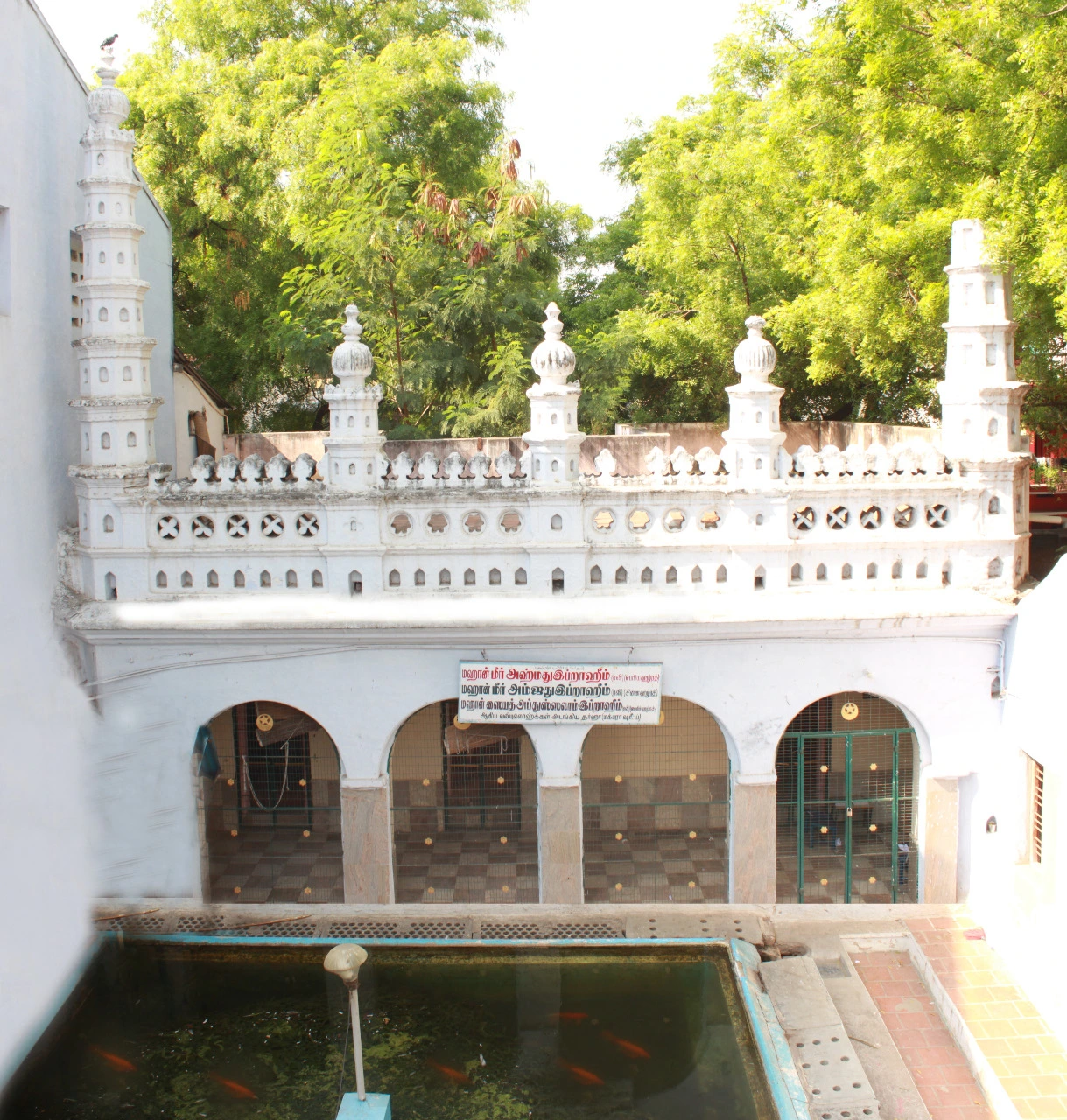
Four Sufi orders came to dominate religious life in the Indian subcontinent: the Chishti, the Naqshbandi, the Qadiri and the Suhrawardi. Each traced its practice through a chain of masters reaching back to the Prophet Muhammad, each cultivated its own disciplines of remembrance and its own relation to political power, and together they supplied much of the framework within which Islam was taught, transmitted and lived across the subcontinent for centuries.
Scope of this article. The account below concerns how these orders functioned in India, principally in the eighteenth and nineteenth centuries, and it rests on a single scholarly source — Barbara Metcalf's study of Islamic revival in British India, which treats the orders as they bore on the religious movements of that period. That source does not narrate the origins of the orders or the lives of their founders, and this article therefore does not either. Readers seeking the founder of the Qadiri order will find him treated separately in the article on Abd al-Qadir al-Jilani. What is offered here is the Indian history of the orders in the period when they most directly shaped the movements that still define South Asian Islam.
The Vocabulary of the Orders
Sufi practice in India carried a technical vocabulary, and several of its terms recur throughout this article and the related ones.
A silsilah is the chain of all Sufis who share spiritual descent from a common founder; a tariqah is the mystical way, and specifically any one of the Sufi brotherhoods or orders — groupings of Sufis with a common silsilah and a common form of remembrance. A pir is a Sufi master able to lead disciples on the mystical way, also called murshid, a guide, or shaikh. Bai'at is the vow of allegiance by which a disciple attaches himself to a pir. Khilafat is successorship to a pir, carrying permission to initiate disciples of one's own, and a khalifah is one who has received it.
A khanaqah is a building for Sufi activities, where remembrance is observed and where one or more masters live, entertain travelling Sufis and teach their disciples. Barakat is the blessing, holiness or spiritual power inherent in a saint. A sajjadah nishin is the successor to the leadership of a pir, and in practice often the custodian of his tomb. Urs — literally "marriage," signifying the saint's union with God at death — denotes both that death and the festival commemorating its anniversary at the tomb.
Among the disciplines and their effects: suluk is the particular path of conduct taught by a Sufi; tasawwur-i shaikh is meditation by the disciple upon the image of his master; tawajjuh is the concentrated attention directed at a follower by a master, which influences him decisively; tasarruf is the dramatic expenditure of a master's energy upon a disciple to change his behaviour; karamat is a miracle performed by a saint. Sama denotes the musical sessions held to induce spiritual ecstasy, and qawwali the singing and playing that formed part of such devotional exercises. A qutb — the polar star, a centre around which things revolve — is the term for the Sufi held to be the most advanced of his age.
Sufis and Scholars
The relation between the two kinds of Muslim religious authority is the necessary background to everything that follows. Metcalf draws the distinction and immediately qualifies it: on one side the Sufis, who engaged in meditative disciplines and sought direct knowledge of religious truths; on the other the ulama, who knew the scholarly traditions of the faith. These categories, she writes, usually overlapped, and a man was known as Sufi or alim on the basis of which of the two kinds of interdependent knowledge he emphasised.
In the eastern Islamic world the two had tended to occupy different social positions, and this was the case in India: the Sufis often emerged as local intermediaries with newly conquered and converted peoples, while the ulama appeared as officials for legal and charitable matters at the courts. In the thirteenth and fourteenth centuries the Sufis were the dominant religious figures — teaching, writing, and mediating between their followers and the government and between rival claimants to political power. Under the Mughals, from 1526, their role was somewhat eclipsed and that of the ulama became more dominant.
The shrine-based masters
By the eighteenth century a distinct form of Sufi authority had become established, grounded in inheritance rather than attainment. The religious leadership profited from the decline of central authority in that century, Metcalf writes, and this was true not only of the ulama but also of the Sufi masters of the medieval shrines, who mediated among their followers, between them and political authorities, and between the believer and God. Of these custodians she observes that, not necessarily pious themselves, they derived their authority from the barakah or charisma inherent in the tomb and lineage of their saintly forebear.
In Sind the Sufi families were among the largest landholders of the region and had long acted as local intermediaries to political powers, and the decline of the empire saw them ever more dominant. But the same period also produced religious creativity of a different kind, and in each area, Metcalf notes, movements of revitalisation endowed the masters with religious charisma of their own in addition to the authority derived from the shrine itself.
The convergence of the two roles
The most consequential development of the period was the merging of the two kinds of authority. Increasingly in post-Mughal India, Metcalf argues, the pattern of religious leadership was to become one in which the institutional distinction of alim and Sufi mystic was substantially blurred. Scholarly families came to be initiated in more than one mystic order and greatly valued mystical experience, and Sufi bonds strengthened such families, whose members would often be bound by common allegiance to a single master.
Her summary of the outcome is that the characteristic religious specialist of the nineteenth century, whether based in khanaqah or madrasa, was at once alim and shaikh. Reformers such as Ahmad Sirhindi and Shah Waliullah had so strengthened the scholarly emphasis on the Law that the distinction between the ulama and what she calls the orthodox Sufi effectively ceased to hold.
The Chishti Order
The Chishti order traced its chain to Muin al-Din of Ajmer, who died in 1236, and divided into two branches, the Nizamiyyah and the Sabiriyyah. Its great shrines — that of Muin al-Din at Ajmer and of Nizam al-Din at Delhi — were among the principal centres of devotion in India, and Metcalf records that the most extravagant observances of the period were held at such tombs.
The eighteenth-century revival in the Punjab
The order's most significant development in the period was a revival in the Punjab, which Metcalf presents as a religious response to political collapse: a revitalisation of the Nizamiyyah branch of the Chishti order as a major response to the decay of the imperial institutions. Its mechanism was preaching. Disciples of the Delhi master Shah Kalimullah Jahanabadi, who died in 1729, effectively preached the necessity of adherence to the basic requirements of the religious law, denying that the intercession of the saints of the shrines was sufficient for leading a truly religious life.
The pre-eminent Chishti of the eighteenth century in the Punjab was Khwajah Nur Muhammad, who died in 1790 and who exercised great influence over the ruler of Bahawalpur. He also played a political role, taking the field against the Sikhs at the end of the century and inspiring the local Muslim population to join him in resistance — an illustration of a tension Metcalf leaves standing, since the same masters who preached adherence to the Law continued, as locally based aristocrats, to work through political leaders.
The significance she attaches to the revival is twofold. First, its emphasis on teaching the basic doctrines and requirements of the faith was to be shared by the popularly based ulama of the following century, both groups leaving aside the theological and philosophical questions that had occupied earlier religious leaders; the Punjabi Chishtis came to be known for their teaching of the Law, the subject par excellence of the ulama. Second, and more strikingly, she credits them with preservation: the masters not only filled a political void but — at least in the case of the Chishtis — acted to preserve the religious tradition.
Aloofness from the state
The order carried a particular reputation, and it was a reputation that later reformers valued. The Deobandis, Metcalf writes, especially valued the reputation of the Chishtis for being aloof from the state and for basing their influence on individual spirituality alone. Rashid Ahmad Gangohi told exemplary tales of his own Chishti forebear Abdul Quddus Gangohi, who died in 1537 — his poverty and simplicity, his voiced remembrance that lasted the entire day, and his disregard for the officials of the king. Gangohi was descended from him in twelve generations and revived his khanaqah, which had lain deserted for three hundred years.
The Chishti connection ran deep in the Deobandi movement. Allegiance to the Chishti order predominated at the school at Deoband, and the disciples of Hajji Imdadullah, the Sufi guide of the movement's founders, represented the leadership of the Chishti Sabiri branch in the late nineteenth century.
The Naqshbandi Order
The Naqshbandi order traced its chain to Baha al-Din Naqshband, who died in 1389. Its distinctive branch in India was the Mujaddidi, which took its initiation from Shaikh Ahmad Sirhindi, called the renewer of the second millennium.
Introduction into India, and Sirhindi
The order was introduced into India primarily through the teaching of Khwajah Baqi Billah, who lived from 1563 to 1603 and whose disciples included Sirhindi and the hadith scholar Abdul Haqq Dihlawi.
Shaikh Ahmad Sirhindi, who lived from 1564 to 1624, was born into a scholarly family in the Punjab. He travelled to the capital, frequented the court and cultivated relations with prominent nobles, some of whom became his disciples, and corresponded extensively with disciples, students and political leaders including the emperor. Summoned to the court of Jahangir, his views gave offence and he was imprisoned for a year; later he again found favour and received royal patronage. Metcalf reads his strategy as deliberate: his goal was to gain an audience for his intellectual and religious interpretations, and to that end he lent his prestige and dignity to the support of patrons who in turn furthered his concerns.
His doctrinal position is the one for which he is chiefly remembered. Opposition in India to the doctrine of the unity of being, wahdat al-wujud, was associated with the early Naqshbandis and above all with Sirhindi, who held that the experience of that unity did not represent an understanding of the ultimate nature of reality but was merely a perception of unity superseded by perceptions belonging to higher stages of spiritual advancement. His own position is associated with the phrase wahdat al-shuhud, the unity of witness.
The eighteenth-century Naqshbandis of Delhi
Among the leading mystics of eighteenth-century Delhi were three Naqshbandis: Mirza Mazhar Jan-i Janan, who lived from 1700 to 1780, the poet Mir Dard, who lived from 1721 to 1785, and Shah Waliullah. Jan-i Janan and Dard were distinguished as poets as well as masters.
Metcalf records a doctrinal shift within the order in this generation. The arguments of Jan-i Janan and Shah Waliullah altered the previously dominant view of their order on the unity of being, while others continued to adhere to Sirhindi's position. Jan-i Janan's later years were given to opposing Shi'i practice, and he met his death in 1780 at the hand of an assassin.
Shah Ghulam Ali, who died in 1824, represented the Mujaddidi line at Delhi and was known for his commitment to sobriety in the Sufi path. He was considered even stricter than Shah Abdul Aziz in opposing customary practices, though he did not share Abdul Aziz's concern with reaching beyond the spiritual elite. It was from Shah Ghulam Ali that the father of Rashid Ahmad Gangohi took his spiritual training.
The order's reach extended well beyond the capital: there were prominent Naqshbandi leaders across northern India in the eighteenth century, and learned Naqshbandis at Thatta in Sind wrote commentaries on the Qur'an and hadith and opposed local customs such as ecstatic dancing among the tombs of the saints.
Reform, the Law, and silent remembrance
The order's influence on the ulama was in the direction of restraint. Metcalf's formulation is that it shaped the views of many ulama toward sobriety in spiritual experience and rigorous adherence to the religious Law. The scholars of Delhi, having no local base of the kind the shrine masters possessed, were particularly influenced by the Naqshbandi order to set a synthetic and unified standard of correct religious belief and practice for the ruling and religious elites.
Its most visible distinguishing discipline was its form of remembrance. Where Qadiri methods of dhikr, the repetition of the name of God, were characterised by strong rhythmic gestures and intonations, the Naqshbandi method was silent and immobile recitation. The Deobandis were clearly influenced by Naqshbandi practice in this respect, considering the silent form more valuable than the spoken, and Gangohi's relation to his disciples was described as Naqshbandi in style, emphasising the concentrated attention between master and individual disciple rather than between master and the whole body of followers.
More broadly, Metcalf identifies the whole orientation of the Deobandis toward reform and obedience to the Sunnah as one pre-eminently associated with the Naqshbandis. Above all, she writes, they placed themselves in the primarily Naqshbandi tradition of the family of Shah Waliullah, and they had ties to leading Sufis of that order — particularly to Shah Abdul Ghani Dihlawi, their common teacher of hadith at Delhi, who later emigrated to Medina.
The Qadiri Order
The Qadiri order traced its chain to Abd al-Qadir al-Jilani, who lived from 1078 to 1166. Metcalf's treatment of the order in India is thinner than that of the Chishti and Naqshbandi, and comes largely through its bearing on the movements she studies.
Its characteristic form of remembrance was vocal, with strong rhythmic gestures and intonations, in explicit contrast to the Naqshbandi practice of silence. Its founder held a place in Indian devotion unmatched by any other saint: he was, in Metcalf's phrase, the shaikh deemed most powerful, and observances were held on his behalf even away from his tomb. The most widespread of these was the giyarhwin, the commemoration of his death held on the eleventh of the month — many followers keeping not only the yearly anniversary but a monthly one.
Institutionally, the order's principal modern centre in India was the shrine at Marahrah, where the tomb of Shah Barkatullah, who died in 1729, became — according to the biographer of Ahmed Raza Khan — the most important centre of the Qadiri silsilah in India in the modern period. It was at Marahrah, at the hand of Shah Al-i Rasul, that Ahmed Raza Khan and his father were initiated into the orders and particularly into the Qadiri, and the Barelvi movement that grew from his teaching was Qadiri in affiliation.
The order was also a focus of the period's disagreements over devotional practice. Gangohi specifically forbade his followers to call upon Abd al-Qadir, and the Ahl-i Hadis particularly opposed the giyarhwin — while both nonetheless honoured the saint himself, some among the Ahl-i Hadis going so far as to claim him for their own position. Gangohi named him first among four figures of the past who had tried to effect reform.
The Suhrawardi Order
The Suhrawardi order was one of the four major orders current in India, and Hajji Imdadullah's initiations included it. But Metcalf's study offers very little on its Indian history, and the honest position is that it cannot be described here from this source. She names Shihab al-Din Suhrawardi among the great saints of the past whose memory the Deobandis kept alive, and Gangohi included him — alongside Abd al-Qadir al-Jilani, Ahmad Sirhindi and Sayyid Ahmad Barelwi — in a roll of those who had attempted reform. Beyond this the source supplies no Indian Suhrawardi figures, shrines or institutional history, and none is asserted.
A related point of interest is that when Metcalf does enumerate "the four major orders" for one sixteenth-century figure, the fourth she lists is not Suhrawardi but Firdausi, alongside Chishti, Qadiri and Suhrawardi — an indication that the conventional grouping of four was less fixed than later usage suggests.
The Nineteenth-Century Transformation
The most important change of the period was not doctrinal but structural, and it altered what belonging to an order meant.
In the early centuries in India, Metcalf writes, each order had been known for a distinct style of behaviour, a particular stance toward the government, and characteristic practices and disciplines. By the nineteenth century such differences were not clear.
The cause was the spread of initiation into several orders at once. Multiple initiation had long been practised, but apparently only by some of the spiritual elite: Sirhindi had received Qadiri as well as Naqshbandi initiation, and Abdul Quddus Gangohi initiation in four orders. In the nineteenth century, however, the practice of multiple initiation from a single master became widespread throughout the Islamic world. Hajji Imdadullah initiated his disciples in all the major orders then current in India — Chishti Sabiri and Chishti Nizami, Qadiri, Naqshbandi and Naqshbandi Mujaddidi, Suhrawardi and Quddusi.
Metcalf's analysis of the consequence is precise, and it cuts two ways. Multiple initiation, she writes, further weakened the separate character of each order, but strengthened the position of the individual religious leader — who now received the blessings not of one but of many chains of succession linking him through the great Muslims of the past back to the Prophet, and who commanded a wider range of techniques to suit different disciples. A single master might teach vocal Qadiri remembrance to one disciple and silent Naqshbandi recitation to another.
The practice was legitimated by a view of the disciplines themselves: such eclecticism was considered wholly legitimate, for the disciplines of the orders were regarded merely as means, with no importance in themselves. Asked to teach the Naqshbandi path, Gangohi replied that he taught the final instruction in which all the silsilahs merge.
What replaced order identity was personal attachment. The order as such, Metcalf concludes, did not define different religious styles so much as different spiritual networks — and those Sufi relationships were among the deepest and most abiding a person could have, helping to account for the sense of shared purpose that characterised each group of ulama. What mattered in choosing a master was not the order he represented, since he to some degree represented all, but the strength of the relation to him: an affinity of the heart. Metcalf records that one disciple asked which order his chosen guide followed only after seeking initiation, almost as an afterthought — it was not to the silsilah but to the man that he was drawn.
By the later nineteenth century the orders had come to correspond loosely to the emerging religious movements rather than the reverse. Metcalf's summary of the alignment is brief: the Deobandis were primarily Chishti, the Barelvis Qadiri, and the scholars of the Nadwatul Ulama Naqshbandi.
The blending described from inside
Metcalf's account of multiple initiation is analytical and external. Sayyid Mahboob Rizvi's history of Darul Uloom Deoband, written from within the tradition, describes the same phenomenon from the other side, and the two accounts fit together closely enough to be worth setting side by side.
That history treats the Chishtiyya and the Naqshbandiyya as the two orders most widely current in India, and it characterises them as contrasting in manner. The Chishti discipline it associates with intensity and outward expression — ecstatic state, audible utterance, emotional absorption. The Naqshbandi it associates with the opposite: concealment rather than display, silence and reticence, composure and forbearance. Between the two, it observes, there appears to be a relation of opposites, although the destination and purpose are one. Behind the contrast lies a difference already noted above in the practice of remembrance, vocal in the Chishti and Qadiri lines and silent in the Naqshbandi.
The history then makes the point that matters for this article: in certain figures the two were deliberately combined rather than held apart. It names Shah Abd al-Rahim and Sayyid Ahmad Shahid as men in whom a reciprocal influence of the two orders was established, producing what it calls a Naqshbandi-inflected Chishti quality. Of the Deoband tradition itself it claims that the Sufi orders were gathered into its method alongside the scholarly and juristic ones, so that an initiate might hold authorisation in several, and no adherent of any one of the four need stand outside it.
Rizvi's history also supplies a named instance of the practice Metcalf describes in general terms — a single master directing different disciples along different disciplines according to their aptitude. It records Maulana Habib al-Rahman saying of himself that after pledging allegiance to Rashid Ahmad Gangohi he made no progress under the Chishti discipline, and that Gangohi told him his share lay in the Naqshbandi order rather than the Chishti; set on that path, he progressed. The report is a devotional one in origin and is given here as the tradition's own account of itself, but it illustrates precisely the flexibility Metcalf identifies: the order was a means at the master's disposal, not a fixed identity imposed on the disciple.
Underlying all of this, in the seminary's own telling, was a deliberate refusal to treat the Law and the Sufi path as two separate roads. The history presents the joining of shari'ah and tariqa as the correction of a dualism that had opened between them, and as one of the things the institution existed to accomplish. That is the same convergence of alim and shaikh that Metcalf identifies as the defining feature of nineteenth-century religious leadership, stated as a purpose rather than observed as an outcome.
Devotion at the Shrines, and the Reformist Response
Shrine devotion was the form in which the orders touched most Muslims, and it became the principal object of nineteenth-century reformist criticism. The observance at issue above all was the urs, the death anniversary of a saint, which often lasted several days and involved rites such as the repetition of the Fatiha, the offering of money, the reading of the Qur'an in a single night, and the distribution of food.
The reformist objection was not to Sufism. Metcalf is emphatic that the earlier movement of Sayyid Ahmad Barelwi did not denounce Sufism, as did the contemporary movements in Arabia and in Bengal, but opposed what were held to be deviations from correct practice. That movement's list of condemned observances is nonetheless long, and indicates the range of what had grown up around the shrines: calling upon saints, apostles, imams, martyrs, angels and spirits; naming children after them; wearing their symbols; repeating a saint's name as a discipline; meditation upon the image of the master; prostration at shrines; and pilgrimages involving special dress, circumambulation, animal sacrifice, the burning of lights and the sanctifying of water.
The reformers' practical success was limited, and Metcalf says so plainly. The Deobandis were not notably influential in eliminating these observances, for even in his own town of Gangoh, Rashid Ahmad was unable — to his great anguish — to stop the celebration of his ancestor's urs.
Nor were the reformers of one mind on the underlying question of whether the dead can hear. Gangohi held that praying to a saint was shirk, admitted ambiguity about asking a saint to intercede, and himself doubted that the saints could hear prayers at all. Muhammad Yaqub Nanautawi believed the dead could hear and therefore intercede, but only if the believer were present at the grave. Muhammad Qasim Nanautawi also believed the dead could hear, but directed his followers merely to visit a grave, read a portion of the Qur'an, and offer its merit to the deceased.
A counter-tendency ran alongside the spread of multiple initiation: an emphasis, in the same period, on having a single spiritual guide. Although permissible, it was not common to maintain formal relations with several masters — one for instruction in remembrance, another for initiation, another for companionship. Initiation also frequently ran within families, one member of each generation serving as master to his relatives, and departures from that pattern could provoke protest.
References and Further Reading
Primary Islamic Sources
- The Qur'an — recited in shrine observance, and the first authority to which the reformist critics of that observance appealed
- Hadith — the standard against which nineteenth-century reformers measured customary devotional practice
- The silsilah traditions of the four orders — the chains of transmission by which each order traced its practice to the Prophet, and the basis of the authority claimed by every master within them
- The formula of bai'at — the vow of allegiance constituting the relation of disciple to master, and the instrument by which multiple initiation was conferred
Classical Islamic Sources
- Muin al-Din of Ajmer (d. 1236) — the figure to whom the Chishti chain of succession is traced
- Baha al-Din Naqshband (d. 1389) — the figure to whom the Naqshbandi chain is traced
- Abd al-Qadir al-Jilani (1078–1166) — founder of the Qadiri order and the most widely venerated saint in Indian devotion
- Shaikh Ahmad Sirhindi (1564–1624) — the Naqshbandi master called the renewer of the second millennium, whose critique of the doctrine of the unity of being defined the Mujaddidi branch
- Shah Kalimullah Jahanabadi (d. 1729) — the Delhi Chishti master whose disciples carried the eighteenth-century revival into the Punjab
- Abdul Quddus Gangohi (d. 1537) — the Chishti master initiated in four orders, whose khanaqah was revived three centuries later by his descendant Rashid Ahmad Gangohi
- Shah Waliullah (1703–1762) — Naqshbandi, and with Mirza Mazhar Jan-i Janan the author of a shift in his order's position on the unity of being
Academic and Scholarly Sources
- Metcalf, Barbara Daly. Islamic Revival in British India: Deoband, 1860-1900. Princeton: Princeton University Press. The principal source for this article: chapters I and II for the eighteenth- and early nineteenth-century relation of Sufis and ulama, the shrine-based masters, and the Chishti revival in the Punjab; the discussion of Sufi affiliation among the Deobandi ulama for multiple initiation, the contrast of vocal and silent remembrance, and the alignment of orders with movements; and the glossary for the technical vocabulary set out above. The work treats the orders as they bore upon the religious movements of British India and does not narrate their origins, which are accordingly not covered here.
- History of the Dar al-Ulum Deoband by Sayyid Mahboob Rizvi, translated by Murtaz Husain F. Quraishi — the seminary's own institutional history, consulted for the section on the blending of the orders described from inside the tradition: the standing of the Chishtiyya and Naqshbandiyya as the two most current orders in India and the contrast drawn between their manner, the combination of the two attributed to Shah Abd al-Rahim and Sayyid Ahmad Shahid, the gathering of all four orders into the Deoband method, the instance of Habib al-Rahman being directed from the Chishti to the Naqshbandi discipline, and the presentation of the joining of shari'ah and tariqa as a deliberate aim. The work is devotional in register, and its factual and descriptive content has been used while its evaluative language has been left aside.
Further Reading
- Nizami, K. A. "Chishtiyya," in the Encyclopaedia of Islam, second edition — the order's history from its origins, not covered by the source used here.
- Siddiqi, M. Zameeruddin. "The Resurgence of the Chishti Silsilah in the Punjab during the Eighteenth Century" (1970) — the study on which Metcalf draws for the Punjab revival.
- Friedmann, Yohanan. Shaikh Ahmad Sirhindi. Montreal, 1971 — the monograph Metcalf cites for Sirhindi's life and thought.
- Trimingham, J. Spencer. The Sufi Orders in Islam — for the orders' origins and their history outside the subcontinent.
- The articles on the Deobandi movement, the Barelvi movement and the Ahl-i Hadis — the three nineteenth-century movements whose Sufi affiliations are described above.
- Islam in Southeast Asia — the spread of Islam eastward through trade and Sufi networks
- The masters to whom these chains are traced: Mu'in al-Din Chishti and Nizamuddin Auliya of the Chishtiyya, Bahauddin Zakariya of the Suhrawardiyya in India, and Baha' al-Din Naqshband of the Naqshbandiyya
Mentioned In
14 articles reference this topic
and 2 more articles
More from South Asian Islam
Abul A'la Maududi
A journalist, Qur'anic commentator and political thinker who founded the Jamaat-e-Islami at Lahore in 1941. His six-volume Urdu commentary Tafhim al-Qur'an and his writings on the Islamic state were among the most widely circulated Muslim political works of the twentieth century.
Amir Khusraw: Poet of the Delhi Sultanate, 1253–1325
Amir Khusraw (1253–1325) was a Persian-language poet of Delhi who wrote at the courts of the Balbanid, Khalji and early Tughluq sultans, and a disciple of the Chishti shaykh Nizam al-Din Awliya.
Bahauddin Zakariya: The Suhrawardi Shaikh of Multan
Baha al-Din Zakariya (d. 1262 or 1265 CE) was sent from Baghdad to Multan by his master Umar Suhrawardi and, with Jalal al-Din Tabrizi, established the Suhrawardi order in the Indian subcontinent. The record of his life is thin, and this article says what it carries.
Mu'in al-Din Chishti: The Shaikh of Ajmer
Mu'in al-Din Hasan Sijzi (d. 1236 CE) settled at Ajmer in Rajasthan and is held by the Chishti order to be its founder in India. His shrine became the most visited Muslim sanctuary in the subcontinent, though the early record of his life is thinner than his fame suggests.