Ibn Kathir: Exegete and Historian of Mamluk Damascus
Ibn Kathir (c. 1300-1373) was a Shafi'i scholar of Mamluk Damascus whose commentary on the Quran and universal history became two of the most widely read works in Sunni Islam. He studied under al-Mizzi, al-Dhahabi and Ibn Taymiyya.
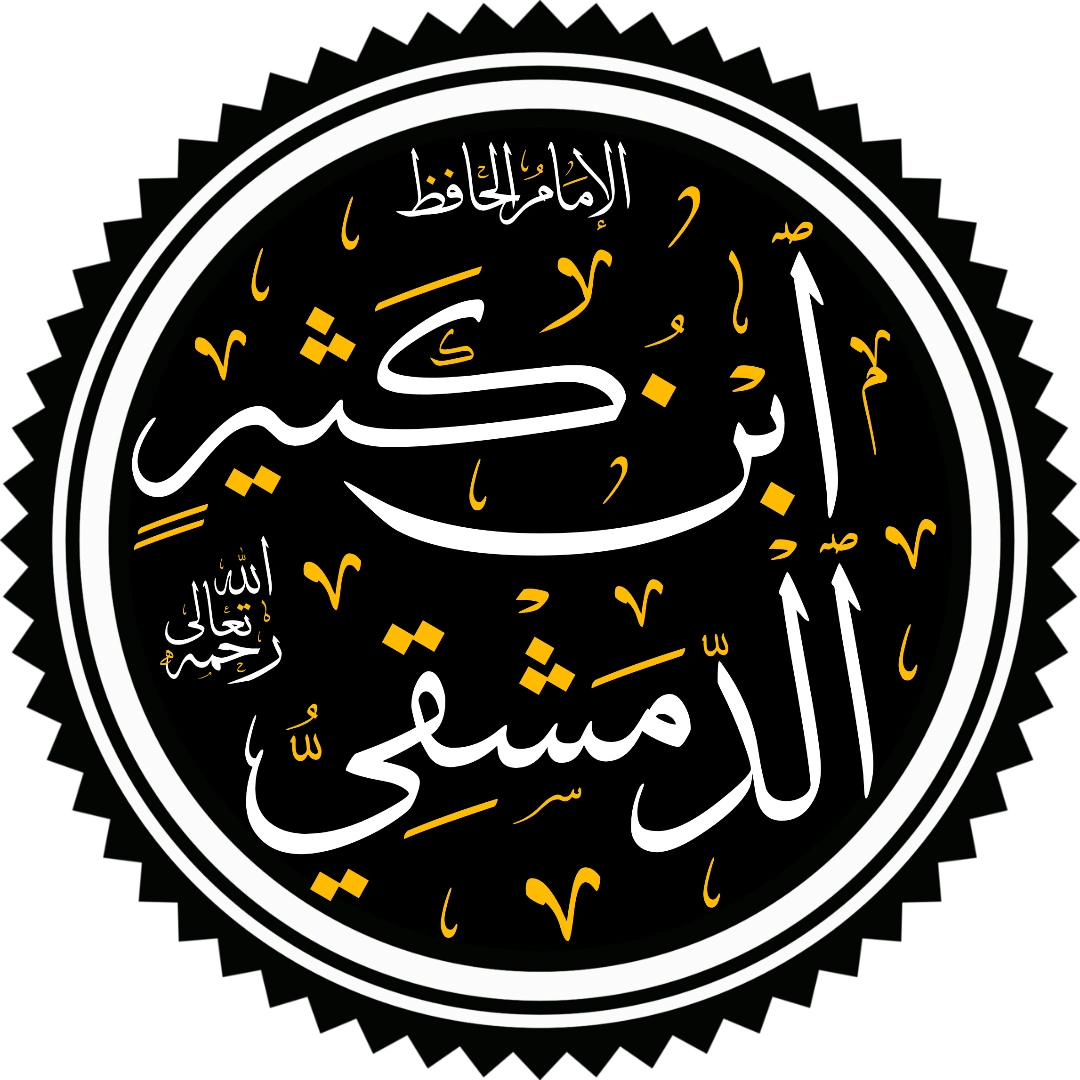
Abu al-Fida Imad al-Din Isma'il ibn Umar ibn Kathir al-Qurashi al-Dimashqi, who lived from about 1300 to 1373, was among the leading scholars of fourteenth-century Syria and the author of two works that have had an exceptionally long afterlife: a commentary on the Quran and a universal history from creation to his own century.
His position in Islamic intellectual history is a particular one. He was not an innovator in method, and he did not found a school or a movement. He was an exceptionally capable synthesiser working at the end of the great period of Damascene scholarship, who took the vast accumulated material of the Islamic sciences and produced from it works that were comprehensive, readable and usable. That combination explains why, six centuries later, his commentary is one of the most widely printed, translated and consulted Quranic commentaries in the Muslim world, and why his history remains a standard reference.
He studied with the most distinguished scholars of Mamluk Damascus, including the hadith master Jamal al-Din al-Mizzi, the historian and hadith critic al-Dhahabi, and — most consequentially for how he has been read — Ibn Taymiyya. He was a Shafi'i in law throughout his career, a point frequently confused because of that association.
One identification should be settled at the outset. This Ibn Kathir, the exegete and historian of Damascus, is a different person from Ibn Kathir al-Makki, one of the seven canonical transmitters of the Quranic readings, who lived in the eighth century. The two are regularly conflated in popular sources.
Origins and Upbringing
Ibn Kathir was born around 1300, in a village near Busra in the Hawran, the fertile plateau south of Damascus. His birth year is given as 700 of the Hijra by most authorities, with some variation, and the date is approximate.
His father, Umar, was a preacher and village imam who died when Ibn Kathir was a small child — the sources place the death when the boy was about three. He was brought to Damascus by an elder brother, Kamal al-Din, who took charge of his upbringing and his early education. The family carried the nisba al-Qurashi, indicating a claimed descent from the tribe of Quraysh, a lineage claim of the ordinary kind and one that cannot be verified.
The move to Damascus determined everything that followed. In the first half of the fourteenth century the city was the outstanding centre of religious learning in the Sunni world: a concentration of endowed colleges, hadith institutes, libraries and teaching mosques, supported by Mamluk patronage and staffed by a scholarly community of unusual density and distinction. A talented orphan from the Hawran arriving in that environment had access to teachers who would have been the leading authorities of any age.
Teachers and Formation
The teachers Ibn Kathir names, and the ones later biographers emphasise, indicate a formation in the traditionist sciences with a strong grounding in hadith criticism.
His principal teacher was Jamal al-Din Yusuf ibn al-Zaki al-Mizzi, the greatest hadith scholar of the period, whose Tahdhib al-Kamal systematised the biographical evaluation of hadith transmitters across the six canonical collections. Ibn Kathir studied with him for years, and the relationship became a family one: he married al-Mizzi's daughter. The technical apparatus of transmitter criticism that runs through Ibn Kathir's own work comes from this training.
He also studied with Shams al-Din al-Dhahabi, the other towering figure of Damascene hadith scholarship and himself a major historian and biographer, whose immense Siyar Alam al-Nubala and chronicle of Islamic history were models for the kind of work Ibn Kathir went on to produce.
He studied with Ibn Taymiyya, the Hanbali jurist and theologian whose life and work are described in the article devoted to him, and the intellectual affinity was real and lasting. Ibn Kathir absorbed Ibn Taymiyya's insistence on the priority of the Quran, the sound hadith and the understanding of the earliest generations, and his preference for interpretations grounded in transmitted evidence. The sources report that Ibn Kathir asked to be buried near his teacher, and that he was.
Two qualifications belong here, because the association has coloured how Ibn Kathir is read.
The first is legal. Ibn Kathir remained a Shafi'i, taught in Shafi'i institutions, and wrote a biographical dictionary of Shafi'i scholars. He did not follow Ibn Taymiyya into the Hanbali school, and the description of him as a Hanbali, which appears in some popular accounts, is a misidentification: his affiliation was Shafi'i throughout.
The second is intellectual. Ibn Kathir's career was one of teaching, preaching and writing, conducted within the institutions of the Mamluk religious establishment. His affinity with Ibn Taymiyya is one of method and emphasis — the shared commitment to transmitted evidence and the sources of the earliest generations — rather than of temperament or programme.
He held a succession of teaching and preaching posts in Damascus, including at the Umayyad Mosque and, after the death of Taqi al-Din al-Subki in 1355, the directorship of the Dar al-Hadith al-Ashrafiyya, the most prestigious hadith institute in the city — the same chair that al-Nawawi had held a century earlier.
The Commentary on the Quran
Tafsir al-Qur'an al-Azim, universally known as Tafsir Ibn Kathir, is the work on which his modern reputation principally rests.
Its method is traditionist, in the line running from al-Tabari four centuries earlier. Ibn Kathir explains the Quran first by the Quran itself, setting verse against verse; then by the hadith of the Prophet; then by the reported statements of the Companions and the Successors; and he attends throughout to the soundness of the transmissions he cites, applying the critical apparatus he had learned from al-Mizzi and al-Dhahabi. The pattern is visible from the opening of the work: in his treatment of al-Fatiha, the surah's names are established through an authentic hadith recorded by al-Tirmidhi and graded sound, and its place of revelation through the reports of the Companions Ibn Abbas, Qatada and Abu al-Aliya — the transmitted evidence set out first, and its grading stated, before the meaning is drawn from it.
What distinguishes it from al-Tabari's commentary, and accounts for its popularity, is selection and shape. Al-Tabari gives everything he has received; Ibn Kathir chooses, evaluates, comments on the reliability of reports, discards what he considers weak, and writes connected prose. The result is perhaps a third the bulk of the Jami al-Bayan and far more readable, while resting on the same kind of evidence.
Two features of his editorial policy are worth noting because they were deliberate and consequential.
He was sceptical of the Isra'iliyyat — the body of narrative material about earlier prophets and pre-Islamic history derived from Jewish and Christian tradition, which had entered the exegetical corpus in quantity. Ibn Kathir cites such material where it appears in his sources, and repeatedly warns against relying on it, distinguishing what is confirmed by Islamic sources from what is not. This scepticism is one of the clearest points of continuity with Ibn Taymiyya.
He was reserved about the speculative and figurative interpretation that had developed in the philosophical, theological and Sufi commentaries, preferring transmitted meaning and the plain sense of the Arabic. This is an editorial stance rather than an argument, and readers should understand that a great deal of the later exegetical tradition — including work of considerable sophistication — is simply absent from his commentary by choice.
Norman Calder's study comparing the exegetical method of al-Tabari and Ibn Kathir is the standard analysis of what changed between them, and Walid Saleh's work on the formation of the classical tafsir tradition situates Ibn Kathir within a broader Damascene traditionist project of which Ibn Taymiyya's circle was the centre.
The Universal History
Al-Bidaya wa al-Nihaya — "The Beginning and the End" — is a history of the world from creation to Ibn Kathir's own lifetime, followed by a treatment of the events of the end of time.
Its structure follows the established pattern of Islamic universal history. It opens with creation, the angels, and the prophets from Adam onward; proceeds through pre-Islamic Arabian and Near Eastern history; treats the life of the Prophet at length; and then becomes an annalistic chronicle, recording events year by year through the caliphates to the fourteenth century. The final section deals with eschatology — the signs of the Hour, the resurrection and the hereafter — drawn from Quranic and hadith material. That closing section is what gives the work its title and distinguishes it in conception from a straightforward chronicle: the frame is the whole span of created time, not the history of a state.
Two of its parts have circulated independently. The section on the Prophet's life was extracted and transmitted as a separate Sira, and remains one of the more widely used prophetic biographies. The eschatological section has likewise been published and read on its own.
As a historical source the work has to be assessed in two registers. For the periods before the thirteenth century it is a compilation, drawing on al-Tabari, on Ibn al-Athir, on al-Dhahabi and on the Damascene chronicle tradition, and its value lies in its arrangement and its occasional preservation of material rather than in independent testimony. For the late thirteenth and fourteenth centuries it is a contemporary or near-contemporary source of real importance, written by a well-informed member of the Damascene establishment, and it is regularly used by historians of the Mamluk period. Henri Laoust's study of Ibn Kathir as a historian remains the standard assessment of the work's character and limits.
The methodological difference from al-Tabari is the same one visible in the commentary. Ibn Kathir applies hadith criticism to historical reports, comments on the reliability of what he transmits, and is willing to reject material — a more critical procedure than mere compilation, and one that also means his selections reflect his own judgement and commitments in ways a reader should keep in view.
Other Works
Ibn Kathir's output was large and the following are the works of continuing significance.
Ikhtisar Ulum al-Hadith is an abridgement of Ibn al-Salah al-Shahrazuri's classic manual on the sciences of hadith, and it became a standard teaching text in the discipline — evidence of his standing as a technical hadith scholar rather than merely a populariser.
Jami al-Masanid wa al-Sunan was an ambitious project to combine the major hadith collections into a single work arranged by transmitting Companion.
Tabaqat al-Shafi'iyya is a biographical dictionary of Shafi'i scholars, and the clearest documentary evidence of his own school affiliation.
Al-Sira al-Nabawiyya, the life of the Prophet drawn from al-Bidaya wa al-Nihaya, has circulated as a work in its own right and has been translated into English in four volumes by Trevor Le Gassick. Its editor observes that this biography represents the fuller treatment of the Prophet's life to which Ibn Kathir himself refers in his commentary, and the work carries into the Sira the same method visible in the Tafsir: the reports are set down with attention to their chains of transmission and their standing, rather than woven into a continuous literary narrative. A work on the merits of the Quran completes the list of the writings that remained in circulation. Several other titles are attributed to him in the biographical literature and are lost or unverified, and attributions of that kind should be treated cautiously.
Public Life and the Plague
Ibn Kathir's career was not confined to teaching and writing, and two episodes place him more directly in the public life of Mamluk Damascus than the account of his scholarship alone suggests.
In 1341 he received his first official appointment, joining a scholarly commission convened to examine questions of doctrine — one of the bodies fourteenth-century Damascus periodically assembled to consider matters referred to it. His inclusion at a relatively early stage of his career indicates that his standing as a jurist competent to rule on questions of doctrine was recognised well before the major works that made his later reputation.
He also lived through, and recorded as an eyewitness, the arrival of the Black Death in Damascus in 1348. The final volume of al-Bidaya wa al-Nihaya, covering his own lifetime, shifts noticeably in character at this point: where the earlier material is compiled from written sources, his account of the plague years draws on direct observation, and it is regarded by modern historians of the epidemic as one of the more informative contemporary descriptions of how the disease struck a major Islamic city — the panic it caused, the disruption of ordinary religious and civic life, and, as some modern readings of the passage have emphasised, the way a shared catastrophe of that scale drew together communities that were at other times kept apart by status and sect. This portion of the chronicle is therefore read by historians for a different purpose than the rest of the work: not as a compilation of earlier authorities but as first-hand testimony from a named and identifiable witness.
Last Years and Death
The sources report that Ibn Kathir lost his sight toward the end of his life. He died in Damascus in February 1373, corresponding to Sha'ban 774 of the Hijra, aged about seventy-three, and was buried — according to the biographical tradition — in the cemetery outside the city where Ibn Taymiyya lay, in accordance with a wish he had expressed.
Historiographical Note
Ibn Kathir is well documented by the standards of medieval Muslim scholars, and the interpretative questions about him are modern rather than evidentiary.
His life is recorded in the biographical literature of the Mamluk period — in Ibn Hajar al-Asqalani's dictionary of fourteenth-century notables, in Ibn Qadi Shuhba, in al-Suyuti and in the Damascene chronicles — by writers close in time and often personally connected to his circle. The basic facts of his birth, his teachers, his appointments and his death are secure, with the usual imprecision about the birth year.
The interpretative question concerns his reception. Ibn Kathir's commentary has acquired, over the past century and a half, a prominence greater than it held in the medieval period: it is now among the most widely printed and translated of all Quranic commentaries and is often treated in contemporary Muslim discourse as a leading traditionist commentary. That prominence is connected with the modern revival of interest in Ibn Taymiyya and with a wider preference for transmission-based exegesis. Walid Saleh's work has examined how this reception developed and observes that in his own century Ibn Kathir was one respected scholar among several, and that commentaries of very different character were also widely studied.
Two points of clarification follow. Ibn Kathir's commentary reflects his own emphasis on transmitted meaning, and it is most accurately read as the work of that method rather than as a comprehensive survey of everything the tradition has understood a verse to mean. And the frequent modern description of him as a Hanbali, or as simply a follower of Ibn Taymiyya, is best corrected: he was a Shafi'i throughout, and his scholarship was his own.
Assessment
Ibn Kathir's achievement is one of synthesis and judgement rather than originality, and it has proved unusually durable.
By the fourteenth century the Islamic religious sciences had accumulated an immense quantity of material — exegetical reports, hadith with their transmitter criticism, historical narrative, biographical data — spread across works too large and too specialised for most readers. What Ibn Kathir did, in both his major books, was to master that material, apply consistent critical standards to it, discard what those standards excluded, and write the residue up as continuous prose that a competent reader could follow without a specialist's apparatus. It is editorial work of a high order, and it required both technical command of the sciences and a clear view of what he was trying to produce.
The commentary is the more consequential of the two. Its combination of traditionist evidence with critical evaluation and manageable length has made it, in the modern period, the most widely used Sunni commentary in the world, and it has shaped how very large numbers of Muslims read the Quran. Whether that influence is proportionate to its scholarly standing among the classical commentaries is a fair question, and the answer is probably that its accessibility has counted for as much as its rigour.
The history has been more useful to historians than to readers. As a compilation for early periods it is derivative; as a witness to the Mamluk fourteenth century it is valuable; and its eschatological frame, which was integral to its conception, is the part modern users generally ignore.
Two features of the work follow from its nature. Because Ibn Kathir selected, his works carry his judgements alongside his sources, and a reader is best served by reading the commentary as the product of a particular method and set of preferences rather than as a neutral digest of early exegesis. And because he was a synthesiser rather than a theorist, he left no single methodological statement comparable to Ibn Taymiyya's or Ibn Khaldun's, and his criteria are best drawn out from his practice across the two major works.
What he does represent, better than any other single figure, is the intellectual culture of Mamluk Damascus at its height: a scholarly community with unmatched command of the transmitted sciences, working in well-endowed institutions, producing works of enormous scope and technical control in the generation before the plague and the political disorder of the later fourteenth century reduced it. That culture is the substance of what the article on the Mamluk Sultanate describes as its intellectual achievement, and Ibn Kathir is its most widely read product.
References and Further Reading
Primary Islamic Sources
- Quran — the text of his commentary, and the first principle of his exegetical method, in which the Quran is explained by the Quran
- Quran, Surah Al-Imran (3:7) — on the clear and the ambiguous verses, the foundational text for the discipline of exegesis
- Quran, Surah al-Nisa (4:82) and Surah al-Nahl (16:44) — on reflection upon the revelation and its explanation, cited in the classical justification of tafsir
- Sahih al-Bukhari and Sahih Muslim, the books of Tafsir, Ilm and Fitan — the hadith material on interpretation, knowledge, and the signs of the end, all central to his two major works
- Ibn Kathir. Tafsir Ibn Kathir (Tafsir al-Qur'an al-Azim) — his commentary; the volumes on al-Fatiha and al-Baqarah in the approved library were consulted directly for the description of its method
- Ibn Kathir. Al-Sira al-Nabawiyya, trans. Trevor Le Gassick — the life of the Prophet drawn from al-Bidaya wa al-Nihaya; the four-volume translation in the approved library was consulted directly
- Ibn Kathir. Al-Bidaya wa al-Nihaya — his universal history, including the prophetic biography and the eschatological sections
- Ibn Kathir. Early Days: Stories of the Beginning of Creation and the Early Prophets (Darussalam) — the opening section of al-Bidaya wa al-Nihaya, from Adam to Yunus, consulted in the approved library
Classical Islamic Sources
- Ibn Kathir. Ikhtisar Ulum al-Hadith — his abridgement of Ibn al-Salah's manual on hadith methodology
- Ibn Kathir. Tabaqat al-Shafi'iyya — his biographical dictionary of Shafi'i scholars
- Al-Mizzi, Jamal al-Din. Tahdhib al-Kamal — the transmitter-criticism work of his principal teacher
- Al-Dhahabi, Shams al-Din. Siyar Alam al-Nubala and Tarikh al-Islam — the works of his other great teacher, and models for al-Bidaya
- Ibn Taymiyya. Muqaddima fi Usul al-Tafsir — his teacher's programmatic statement on exegetical method
- Ibn Hajar al-Asqalani. Al-Durar al-Kamina fi Ayan al-Mia al-Thamina [15th century] — the principal near-contemporary biographical notice
- Ibn Qadi Shuhba. Tabaqat al-Shafiiyya [15th century] — a further contemporary biographical source
- Ibn al-Salah al-Shahrazuri. Ulum al-Hadith — the manual Ibn Kathir abridged
Academic and Scholarly Sources
- Calder, Norman. "Tafsir from Tabari to Ibn Kathir: Problems in the Description of a Genre." In Approaches to the Qur'an, ed. G. R. Hawting and A. Shareef. London: Routledge, 1993. — the standard comparative analysis of his exegetical method
- Saleh, Walid A. The Formation of the Classical Tafsir Tradition. Leiden: Brill, 2004. — on the Damascene traditionist project and Ibn Kathir's modern reception
- Laoust, Henri. "Ibn Kathir historien." Arabica 2 (1955). — the standard study of al-Bidaya wa al-Nihaya
- Robinson, Chase F. Islamic Historiography. Cambridge: Cambridge University Press, 2003.
- Bori, Caterina. "Ibn Taymiyya wa-Jamaatuhu: Authority, Conflict and Consensus in Ibn Taymiyya's Circle." In Ibn Taymiyya and His Times, ed. Yossef Rapoport and Shahab Ahmed. Karachi: Oxford University Press, 2010. — on the circle in which Ibn Kathir was formed
- Chamberlain, Michael. Knowledge and Social Practice in Medieval Damascus, 1190–1350. Cambridge: Cambridge University Press, 1994. — on the institutions and career patterns of Damascene scholarship
- Berkey, Jonathan P. The Transmission of Knowledge in Medieval Cairo. Princeton: Princeton University Press, 1992.
- McAuliffe, Jane Dammen. Qur'anic Christians: An Analysis of Classical and Modern Exegesis. Cambridge: Cambridge University Press, 1991. — including analysis of Ibn Kathir's exegetical practice
Further Reading
- Rippin, Andrew, ed. Approaches to the History of the Interpretation of the Qur'an. Oxford: Clarendon Press, 1988.
- Rapoport, Yossef and Ahmed, Shahab, eds. Ibn Taymiyya and His Times. Karachi: Oxford University Press, 2010.
- Little, Donald P. History and Historiography of the Mamluks. London: Variorum, 1986.
- Irwin, Robert. The Middle East in the Middle Ages: The Early Mamluk Sultanate 1250–1382. London: Croom Helm, 1986.
- Görke, Andreas and Motzki, Harald, eds. Studies on the transmission and criticism of early Islamic narrative material.
Mentioned In
49 articles reference this topic
and 37 more articles
More from Medieval Islamic World
Battle of Ain Jalut: Turning Back the Mongol Tide
The 1260 CE battle where the Mamluk Sultanate defeated the Mongol Empire in the Jezreel Valley, marking the first major Mongol defeat and halting their westward expansion into the Islamic heartlands.
Islam in Southeast Asia
Islam reached Southeast Asia through Indian Ocean trade from the thirteenth century, spreading via Muslim merchants, Sufi teachers, and converting rulers. Today the region holds the world's largest Muslim population, with Indonesia home to more Muslims than any Arab country.
Mamluk Sultanate - The Slave Soldiers Who Became Kings
The Mamluk Sultanate (1250-1517 CE) was a powerful military state that ruled Egypt and Syria for nearly three centuries. Founded by former slave soldiers, the Mamluks defeated the Mongols at Ain Jalut, expelled the Crusaders, and presided over a cultural renaissance.
Ayyubid Dynasty - Saladin's Legacy and the Unification of the Muslim East
The Ayyubid Dynasty (1171-1260 CE) was founded by Saladin and ruled Egypt, Syria, and Yemen. The Ayyubids recaptured Jerusalem from the Crusaders, promoted Sunni Islam, and created a sophisticated state combining military power with cultural patronage.