Al-Suyuti
Jalal al-Din al-Suyuti (1445-1505 CE) was an Egyptian scholar of the late Mamluk period and the most prolific author in Islamic literature. His Al-Itqan remains the standard classical survey of the Qur'anic sciences, and his Tadrib al-Rawi a principal manual of hadith method.
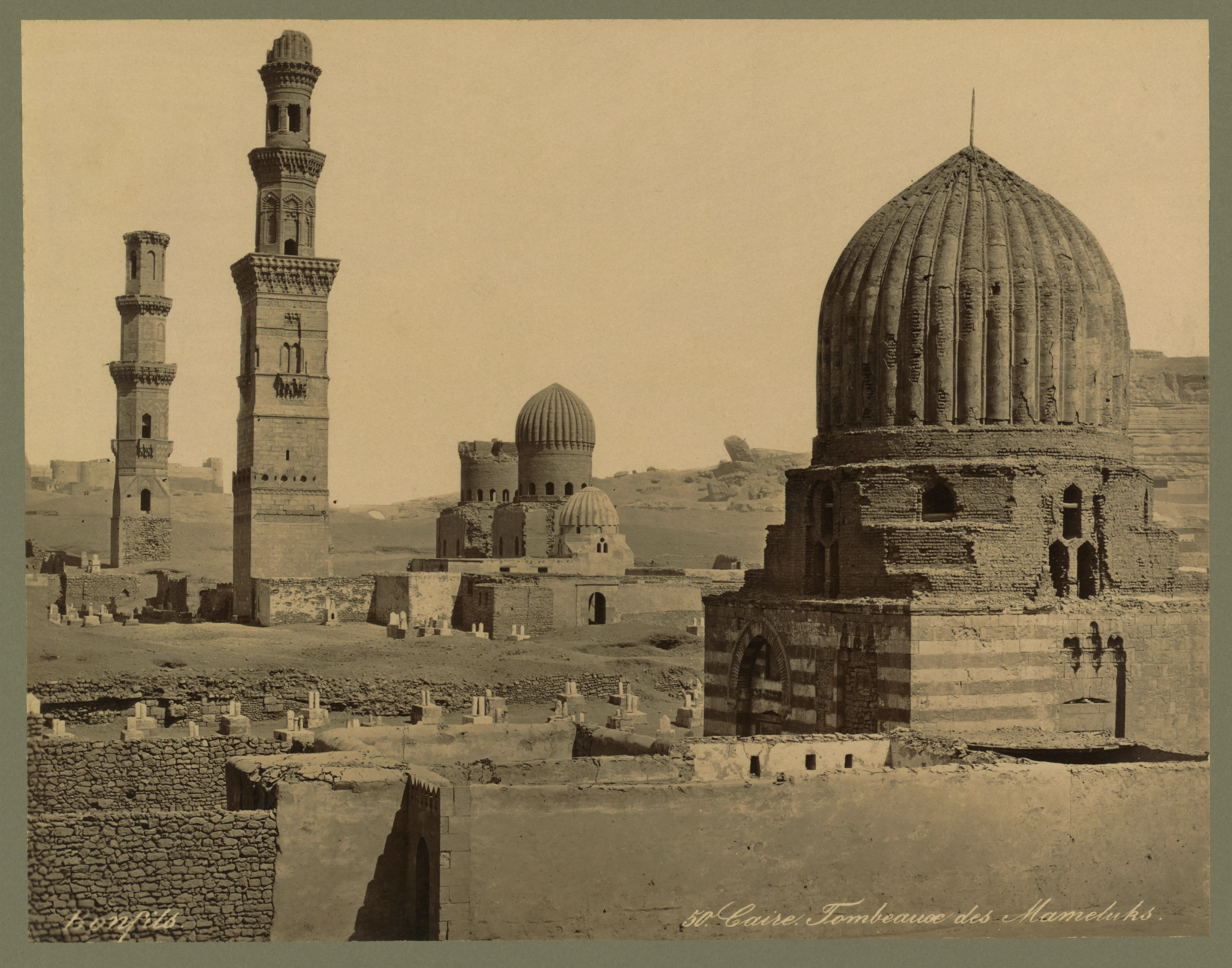
Jalal al-Din Abd al-Rahman ibn Abi Bakr al-Suyuti (1445–1505 CE / 849–911 AH) was an Egyptian scholar of the late Mamluk period and, by a wide margin, the most prolific author in Islamic literature. He wrote across nearly every discipline then cultivated — Qur'anic exegesis and the Qur'anic sciences, hadith and its methodology, Shafi'i jurisprudence and legal theory, grammar, rhetoric, lexicography, history, and more — and several of his works became and remain standard references.
Two of them bear directly on the subject of this collection. Al-Itqan fi Ulum al-Qur'an is the classical synthesis of the Qur'anic sciences: revelation, collection, arrangement, the readings, abrogation, the occasions of revelation, and the principles of interpretation, gathered into a single systematic survey that later scholarship has drawn on continuously. Tadrib al-Rawi, his commentary on al-Nawawi's abridgement of Ibn al-Salah, is one of the principal manuals of hadith criticism. Anyone working on the transmission history of either the Qur'an or the hadith encounters al-Suyuti almost immediately.
He was also a contentious figure in his own lifetime, and remains one in scholarly assessment. That is part of the subject rather than a distraction from it, and it is treated below rather than omitted.
Life
Cairo and Early Formation
Al-Suyuti was born in Cairo in 1445 CE (849 AH). The family name derives from Asyut in Upper Egypt, from which his forebears came; he described his family as being of non-Arab origin, and modern reference works generally give his descent as Persian. His father, Kamal al-Din, was a Shafi'i jurist who held teaching and judicial appointments in Cairo.
His father died when al-Suyuti was about six, and he was raised under guardianship. In his autobiographical writing he states that he had memorised the Qur'an before the age of eight. His education thereafter followed the standard Cairene curriculum of the period at an unusually high level: Qur'anic recitation and exegesis, hadith and its sciences, Shafi'i law and legal theory, and the linguistic disciplines. Cairo under the Mamluk Sultanate was at this point the leading centre of Sunni scholarship, with a dense network of endowed colleges and a scholarly establishment that had absorbed refugees and traditions from across the Islamic world after the Mongol destruction of Baghdad, and al-Suyuti had access to a very large number of teachers.
Teaching, Office, and Withdrawal
He began teaching and issuing legal opinions while young, and held a succession of appointments, including a teaching post in hadith at the Shaykhuniyya and later the superintendence of the Baybarsiyya, a major Sufi foundation. His tenure there ended in conflict: he attempted to reform the institution's practices and finances, the resident Sufis resisted, and the dispute escalated to the point of his removal.
This was characteristic. Al-Suyuti was repeatedly in conflict with contemporaries — over appointments, over scholarly precedence, and over his own claims about his standing. In his later years he withdrew from public teaching and from the company of the scholarly establishment, retiring to Rawda island on the Nile and devoting himself to writing. He died there in 1505 CE (911 AH).
The Scale of the Output
Al-Suyuti's productivity is the fact most often cited about him, and it needs stating accurately because the figures vary.
Estimates of his output run to approximately one thousand titles. Lower figures of five or six hundred also circulate. The variation has a straightforward explanation: much of what he produced consists of short treatises — some only a few pages — on narrowly defined questions, and different catalogues draw the line differently between an independent work, an epistle, and a section extracted from a larger book. Some titles attributed to him are also doubtful. What is not in doubt is that no other author in the Islamic scholarly tradition approaches this volume.
A related point about method is necessary for using him well. A substantial proportion of al-Suyuti's writing is compilation: he gathered, arranged, and abridged the work of predecessors, frequently with meticulous attribution and often preserving material from books that have since been lost. This is where much of his value lies, since he functions as a conduit for earlier scholarship that would otherwise be unavailable. It is also the basis of the criticism discussed below, which holds that his contribution was organisational rather than original.
Major Works
Al-Itqan fi Ulum al-Qur'an
Al-Itqan ("The Perfect Guide to the Sciences of the Qur'an") is his most consequential work for the study of the Qur'anic text. It surveys the whole field of the Qur'anic sciences in systematic divisions: the circumstances and chronology of revelation, the Meccan and Medinan classifications, the occasions of revelation (asbab al-nuzul), the collection and arrangement of the text, the variant readings and their transmission, abrogation, the unusual vocabulary, the rhetorical features, and the principles governing interpretation.
The organisation is what made it durable. Al-Suyuti divided the field into a large number of discrete topics — the count differs between manuscripts and editions, but it runs to some eighty divisions — each treated separately and in sequence. That structure turned a diffuse body of scholarship, scattered across commentaries and monographs, into something that could be consulted, taught, and argued with. The categories he used remain recognisably the categories in which the subject is taught today: the distinction between Meccan and Medinan revelation and the criteria for assigning a passage to either; the occasions of revelation and the limits of their interpretive value; the seven ahruf and the canonical readings; abrogation and the disputes about its scope; the unusual and foreign vocabulary; the clear and the ambiguous verses; and the conditions a person must satisfy before undertaking interpretation at all.
Its importance is twofold. It is a reference work of the first order in its own right, and it is a repository: al-Suyuti quotes extensively from earlier authorities on the Qur'anic sciences, including al-Zarkashi's al-Burhan and works no longer extant, so Al-Itqan transmits a body of earlier scholarship that would otherwise be lost. Where a classical position on a question of Qur'anic history is cited in modern literature without an accessible primary source, Al-Itqan is frequently the channel through which it survived. It is cited throughout the modern literature on the history of the Qur'anic text, by Muslim and non-Muslim scholars alike, and it is the standard classical point of entry to the material treated in the articles on the compilation and standardisation of the text.
Tadrib al-Rawi
Tadrib al-Rawi fi Sharh Taqrib al-Nawawi is a commentary on al-Nawawi's al-Taqrib, itself an abridgement of Ibn al-Salah's foundational manual of hadith science. It treats the classification of reports, the grading terminology, the criteria for evaluating transmitters, the categories of defect, and the technical vocabulary of the discipline. It remains in use as a teaching text and is among the works through which the methodology developed by scholars such as al-Bukhari was transmitted in systematic form.
Tafsir al-Jalalayn
Tafsir al-Jalalayn ("The Commentary of the Two Jalals") is the most widely read of the works bearing his name and among the most widely used Qur'anic commentaries in the Muslim world, valued for its brevity: it glosses the text concisely rather than discussing it at length.
Its authorship is joint and the division should be stated correctly, since it is often reported loosely. Jalal al-Din al-Mahalli (d. 1459) wrote the commentary on Surah al-Fatiha and on the surahs from al-Kahf to the end. He died before completing the remainder, and al-Suyuti supplied the commentary on the surahs from al-Baqarah to al-Isra, deliberately matching al-Mahalli's method and compression so the work would read as a single book.
Al-Durr al-Manthur and Other Works
Al-Durr al-Manthur fi al-Tafsir bi'l-Ma'thur is a commentary of an entirely different kind: a large collection of transmitted exegesis, assembling the reports from the Prophet, the Companions and the early generations bearing on each verse, with their chains. It is a principal source for tafsir bi'l-ma'thur — interpretation by transmitted report rather than by independent reasoning — and preserves a great deal of early material.
Among his other works, Husn al-Muhadara is a history of Egypt and Cairo, Tarikh al-Khulafa a history of the caliphs, and al-Tahadduth bi-Ni'mat Allah an autobiography, which is unusual for the period and is the source of much of what is known about his own life and self-understanding. He also wrote on grammar, rhetoric, lexicography, medicine, and the religious dimensions of astronomy.
Method and Working Practice
How al-Suyuti produced so much is a question worth answering, because the answer bears directly on the debate over the value of the output.
His method was archival rather than speculative. Cairo in the fifteenth century held the accumulated libraries of three centuries of Ayyubid and Mamluk endowment — mosque collections, madrasa libraries, and the private holdings of scholarly families — and al-Suyuti worked through them systematically. His procedure, visible in the structure of his books, was to gather every report bearing on a question, arrange the material under headings, indicate the chains of transmission and their reliability, and note where authorities disagreed.
This has two consequences that are easy to overlook. The first is preservation: a considerable number of earlier works survive only in the passages al-Suyuti quoted, and where his source has been lost his transcription is the text. Scholars reconstructing lost early exegesis and hadith criticism depend on him. The second is that the organising decisions were substantive. Choosing which reports belong under which heading, and in what order, is an interpretive act, and the arrangement of a work like al-Itqan embodies a view of how the Qur'anic sciences relate to one another that later scholarship largely adopted.
His command of the isnad apparatus was central to the method. He had studied with a large number of teachers and held certificates of transmission from many more, and he used these chains to establish his own authority to transmit the material he compiled. The biographical literature records his teachers in unusual detail, and he wrote about his own training and licences at length — a habit that has given historians an unusually clear picture of how a late Mamluk scholar was formed.
Cairo in the Late Mamluk Period
Al-Suyuti's career is inseparable from the particular conditions of the city he worked in, and those conditions explain both his productivity and his difficulties.
Mamluk Cairo was the largest city in the Islamic world and its most densely institutionalised centre of learning. Sultans and amirs had endowed mosques, colleges, hospitals and Sufi hospices on a very large scale, and each endowment carried salaried posts. A scholar's livelihood came from holding one or more of these appointments — a teaching chair, a preaching post, the direction of a hospice — and appointments were in the gift of the political authorities and their agents.
This created a scholarly class that was materially secure and politically dependent. Competition for posts was intense, patronage mattered, and disputes over appointments could be bitter and public. Al-Suyuti's conflicts, and his eventual withdrawal from institutional life to write in seclusion, belong to this setting rather than to a purely intellectual quarrel. His claim to have attained ijtihad was, among other things, a claim to a standing that the established hierarchy did not concede, and it was heard as such.
The period is also one in which scholarship in the central Islamic lands was turning toward synthesis and commentary rather than new construction — a shift long described as decline and now generally treated with more care, since the encyclopaedic works of these centuries preserved and organised an enormous inheritance and were the form in which most later Muslims received it. Al-Suyuti is the outstanding representative of that turn, and the argument about his originality is in part an argument about how to value the whole period.
Beyond the Qur'an and Hadith
The works discussed above are the ones on which his reputation principally rests, but the range of his subject matter was wider still, and two other fields deserve mention.
He wrote history. Tarikh al-Khulafa, his history of the caliphs, is a compact chronological treatment of the caliphate from Abu Bakr to his own century, and it has remained in use as a reference; this encyclopaedia's own bibliography lists it among the classical sources. Husn al-Muhadara is a history of Egypt and of Cairo, valuable for the Mamluk period he lived through and for the biographical detail it preserves on the scholars and officials of the city. He also produced biographical dictionaries of grammarians, exegetes and hadith scholars — the genre by which Islamic scholarship documented its own transmission — and these are among the standard reference works for the figures they cover.
He wrote on the Arabic language, on which he was a recognised authority, producing works on grammar, lexicography and rhetoric. And he wrote on subjects at the margins of the religious sciences, including a compilation of the medical material transmitted from the Prophet.
The breadth is part of the point about him. A scholar who could work competently across Qur'anic sciences, hadith criticism, jurisprudence, history, biography, grammar and rhetoric was drawing on the entire inherited apparatus of Islamic learning, and the ambition to survey all of it is what produced both the volume of the output and the resentment it attracted.
Controversy and Assessment
Al-Suyuti's reputation was disputed in his lifetime and the dispute has not closed. Presenting him without it would misrepresent both the man and the scholarship on him.
He held a high estimate of his own attainments and stated it publicly. He considered himself the most learned scholar of his age, claimed to have reached the rank of independent legal reasoning (ijtihad) at a time when most of the establishment held that rank to be effectively closed, and at one point proclaimed himself the mujaddid — the renewer — of his century. This last claim is frequently reported as though it were an honour conferred on him by later consensus. It was not: it was his own assertion, and it was among the things that made him controversial.
The effect, as the scholarly literature on him records, was to polarise his contemporaries into committed supporters and vehement opponents. His conflicts over institutional appointments were bound up with these claims, and his eventual withdrawal from public life followed from them.
The modern assessment is correspondingly divided, and the division concerns the nature of his achievement rather than its scale. One view holds that his work is essentially compilation — that he assembled and organised the scholarship of others with great skill but added comparatively little of his own, and that his self-assessment was therefore unwarranted. The other holds that the organisation was itself a substantial intellectual accomplishment, that his selection and arrangement embody real judgement, and that his preservation of otherwise lost material makes him indispensable regardless of how much was original. E.M. Sartain's study of 1975 remains the standard biographical treatment, and the question of how to value his contribution continues to be discussed.
What is not disputed is the practical outcome. Al-Itqan is still the classical survey of the Qur'anic sciences that scholars reach for first; Tadrib al-Rawi is still taught; Tafsir al-Jalalayn is still among the most widely read commentaries in the Muslim world; and al-Durr al-Manthur is still a principal source for transmitted exegesis. Whatever the verdict on his originality, the works have outlasted the argument about them.
References and Further Reading
Primary Islamic Sources
- Al-Suyuti, Jalal al-Din. Al-Itqan fi Ulum al-Qur'an (The Perfect Guide to the Sciences of the Qur'an). [Original c. 1500 CE]. The classical synthesis of the Qur'anic sciences and the standard point of entry to the history of the text.
- Al-Suyuti, Jalal al-Din. Tadrib al-Rawi fi Sharh Taqrib al-Nawawi. [Original c. 1500 CE]. Commentary on al-Nawawi's abridgement of Ibn al-Salah; a principal manual of hadith methodology.
- Al-Suyuti, Jalal al-Din. Al-Durr al-Manthur fi al-Tafsir bi'l-Ma'thur. [Original c. 1500 CE]. Large collection of transmitted exegesis with chains of narration.
- Al-Mahalli, Jalal al-Din, and Jalal al-Din al-Suyuti. Tafsir al-Jalalayn. [Completed c. 1480 CE]. Al-Mahalli on al-Fatiha and al-Kahf to al-Nas; al-Suyuti on al-Baqarah to al-Isra.
- Al-Suyuti, Jalal al-Din. Al-Tahadduth bi-Ni'mat Allah. [Original c. 1485 CE]. His autobiography, and the principal source for his own account of his life and claims.
- Al-Suyuti, Jalal al-Din. Husn al-Muhadara fi Tarikh Misr wa'l-Qahira. [Original c. 1500 CE]. History of Egypt and Cairo.
Classical Islamic Sources
- Al-Zarkashi, Badr al-Din. Al-Burhan fi Ulum al-Qur'an. [Original 14th century CE]. The earlier survey of the Qur'anic sciences on which al-Suyuti drew extensively in Al-Itqan.
- Ibn al-Salah al-Shahrazuri. Muqaddimah fi Ulum al-Hadith. [Original 13th century CE]. The foundational hadith manual standing behind Tadrib al-Rawi.
- Al-Nawawi, Yahya ibn Sharaf. Al-Taqrib wa'l-Taysir. [Original 13th century CE]. The abridgement of Ibn al-Salah that al-Suyuti commented upon.
- Al-Sha'rani, Abd al-Wahhab. Al-Tabaqat al-Kubra. [Original 16th century CE]. Near-contemporary biographical notice from within the Egyptian scholarly tradition.
- Ibn Iyas, Muhammad. Bada'i al-Zuhur fi Waqa'i al-Duhur. [Original 16th century CE]. Cairene chronicle covering the period of al-Suyuti's career and its institutional disputes.
Academic and Scholarly Sources
- Sartain, E.M. Jalal al-Din al-Suyuti: Biography and Background. Cambridge: Cambridge University Press, 1975. The standard scholarly biography, and the basis of most subsequent work on his life and the cataloguing of his output.
- Saleh, Marlis J. "Al-Suyuti and His Works: Their Place in Islamic Scholarship from Mamluk Times to the Present." Mamluk Studies Review 4 (2000). Assessment of his output and of the long-running controversy over the value of his contribution.
- Geoffroy, Éric. "Al-Suyuti." In The Encyclopaedia of Islam, 2nd edition. Leiden: Brill. Reference article covering his life, works, and reception.
- Encyclopaedia Britannica, entry on al-Suyuti. Concise treatment noting his controversial standing and his own proclamation as mujaddid.
- Berkey, Jonathan P. The Transmission of Knowledge in Medieval Cairo. Princeton: Princeton University Press, 1992. On the institutional world of Mamluk Cairo in which al-Suyuti taught and contended for appointments.
- Irwin, Robert. The Middle East in the Middle Ages: The Early Mamluk Sultanate. Carbondale: Southern Illinois University Press, 1986. Historical background to the period.
Further Reading
- Von Denffer, Ahmad. Ulum al-Qur'an: An Introduction to the Sciences of the Qur'an. Leicester: Islamic Foundation, 1983. Modern introduction organised along the lines al-Suyuti established.
- Rippin, Andrew, ed. The Qur'an: Formative Interpretation. Aldershot: Ashgate, 1999. Collected studies on the exegetical tradition al-Suyuti compiled.
- Brown, Jonathan A.C. Hadith: Muhammad's Legacy in the Medieval and Modern World. Oxford: Oneworld, 2009. Accessible account of the hadith methodology that Tadrib al-Rawi systematises.
Mentioned In
10 articles reference this topic
More from Medieval Islamic World
Ayyubid Dynasty - Saladin's Legacy and the Unification of the Muslim East
The Ayyubid Dynasty (1171-1260 CE) was founded by Saladin and ruled Egypt, Syria, and Yemen. The Ayyubids recaptured Jerusalem from the Crusaders, promoted Sunni Islam, and created a sophisticated state combining military power with cultural patronage.
Fatimid Caliphate (909-1171 CE)
A major Shia Islamic caliphate (909-1171 CE) that ruled North Africa, Egypt, and parts of the Middle East. Founded by the Ismaili Shia dynasty claiming descent from Fatimah, the Fatimids established a powerful empire centered in Cairo rivaling the Abbasid and Umayyad caliphates.
Islam in Southeast Asia
Islam reached Southeast Asia through Indian Ocean trade from the thirteenth century, spreading via Muslim merchants, Sufi teachers, and converting rulers. Today the region holds the world's largest Muslim population, with Indonesia home to more Muslims than any Arab country.
Mamluk Sultanate - The Slave Soldiers Who Became Kings
The Mamluk Sultanate (1250-1517 CE) was a powerful military state that ruled Egypt and Syria for nearly three centuries. Founded by former slave soldiers, the Mamluks defeated the Mongols at Ain Jalut, expelled the Crusaders, and presided over a cultural renaissance.