Rashid Rida: The Editor of al-Manar
Sayyid Muhammad Rashid Rida (1865-1935) was an Islamic scholar of Ottoman Syria who settled in Egypt and founded the journal al-Manar in 1898, editing it until his death. Through it he framed an intellectual response to the pressures of the modern world on Islamic learning.
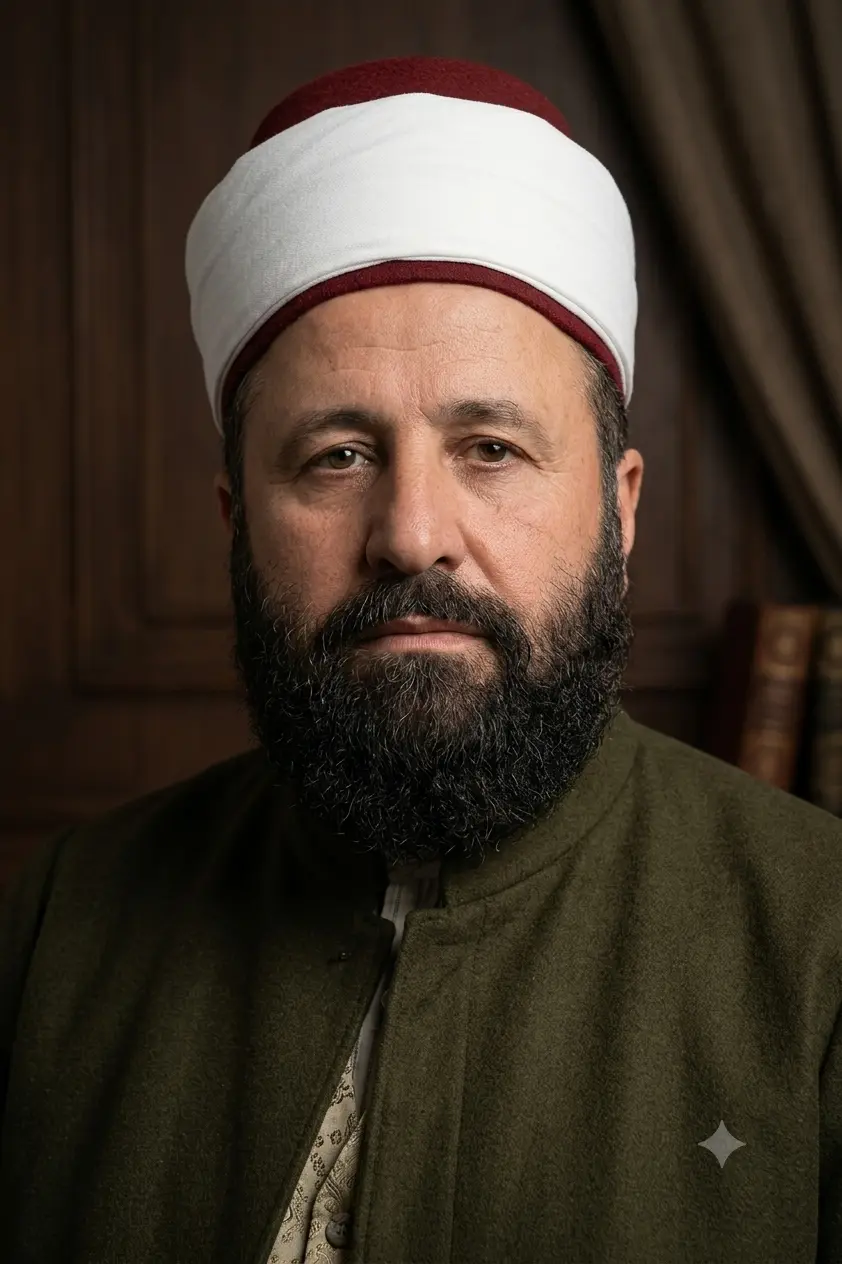
Sayyid Muhammad Rashid Rida (1865 – 1935 CE / 1282 – 1354 AH) was a scholar of Ottoman Syria who settled in Egypt and there founded the journal al-Manar, "The Lighthouse", editing it from 1898 until his death. Encyclopaedia Britannica gives his birth as 23 September 1865 at al-Qalamun in Ottoman Syria, now in Lebanon, and his death as 22 August 1935 in Egypt, and describes him as an Islamic scholar who formulated an intellectual response to the pressures the modern Western world was placing on traditional Islam.
That description is worth pausing on, because it identifies what he was rather than what he is often reduced to. Rida was not principally a jurist issuing rulings, nor a statesman, nor the founder of a movement bearing his name. He was an editor. The instrument of his influence was a periodical, and the reason his name recurs across a century of Islamic scholarship is that for thirty-seven years he ran the journal in which a great many of the period's arguments were conducted. Britannica notes that he founded al-Manar in 1898 and published it throughout his life, and that he took part in the political affairs of Syria and Egypt only to a limited extent. The centre of gravity was the press.
He is the third figure in a sequence the encyclopaedia already covers. Jamal al-Din al-Afghani supplied the pan-Islamic urgency; Muhammad Abduh supplied the theological and educational programme; Rida outlived them both and carried the programme into print, into Qur'anic commentary, and into the debates of the interwar years. His works were still being argued over decades after his death, and this article rests in part on two of those arguments — one in which a later scholar disputed his commentary, and one in which he intervened to defend somebody else.
The World Into Which He Wrote
The reform current Rida belonged to took shape in response to a specific situation, and the encyclopaedia's article on modern Islamic history treats it at length. Briefly: by the later nineteenth century the Ottoman state was under sustained European pressure, Egypt was under British occupation from 1882, and the institutions of Islamic learning faced a question they had not faced in that form before — whether the intellectual tradition they transmitted could answer the challenge that European power and European ideas now presented.
Two responses defined the current Rida joined. Al-Afghani argued for Muslim political solidarity against European encroachment. Abduh, his student, argued for reform from within the institutions of learning — for educational change, for the rational interpretation of the sources, and for the revival of ijtihad, independent legal reasoning, against the settled authority of the established schools. Rida attached himself to the second of these and became its most persistent publicist.
Origins and Education
Britannica places his birth at al-Qalamun in Ottoman Syria, territory that now lies within Lebanon, on 23 September 1865. Of his education it records something specific and worth stating plainly: he was educated according to the traditional forms of Muslim learning — the sciences of the Islamic religion and the Arabic language.
That matters for reading everything he later wrote. A man arguing that Islamic learning must answer modern conditions was not himself a product of a modern or European education. His formation was in the classical curriculum, and the philological confidence visible in his commentary work comes from that training. The approved sources consulted here record nothing further of his childhood, his family, or his teachers by name, and nothing is supplied in their place.
The honorific Sayyid in his name is a claim to descent from the Prophet's family. It appears in the form of his name used by Ma'ariful Qur'an, which cites him as Sayyid Rashid Rida. Such a claim is a statement of lineage rather than a verifiable fact at this distance, and it is reported here as part of how he was named.
Egypt and the Founding of al-Manar
The decisive move of his life was from Ottoman Syria to Egypt, and the decisive act was the founding of a journal. Britannica records that he founded al-Manar in 1898 and published it throughout his life.
The choice of instrument was itself an argument. A journal appears at intervals, addresses whoever will buy it, and can respond to events within weeks. It is not a madrasa, and it does not depend on an institutional appointment or a patron's favour. For a reformer who wanted to reach a readership beyond the circles of the established scholars, the periodical press was the obvious lever, and Rida pulled it for thirty-seven years. The title, "The Lighthouse", states the intention: a fixed light by which others might navigate.
The press attached to it, Matba'at al-Manar, became a publishing house in its own right. Muhammad Qasim Zaman's The Ulama in Contemporary Islam cites Rida's biography of his teacher — Ta'rikh al-ustadh al-imam al-shaykh Muhammad Abduh, "The History of the Master, the Imam, Shaykh Muhammad Abduh" — as published by Matba'at al-Manar at Cairo in 1931. So the journal's imprint was still issuing substantial works more than thirty years after its founding, and one of the most substantial was Rida's account of the man whose programme he had taken up. That book remains a principal source for Abduh's life, which is a fact about Rida's standing: the record of the teacher passes through the student.
Tafsir al-Manar
The commentary and the question of whose it is
The best-known work associated with the journal is the Qur'anic commentary known as Tafsir al-Manar, and the approved sources do not agree about whom to credit it to.
The Straight Path cites it straightforwardly as Rida's, referencing "Muhammad Rashid Rida, Tafsir al-manar" in the Cairo edition of 1990. Ma'ariful Qur'an, discussing a disputed passage, attributes it instead to Abduh — introducing the point as one on which "the well-known 'Alim of Egypt, Mufti 'Abduh" had erred, and locating the error "in his Tafsir Al-Manar". Both are approved sources and both are describing the same work.
The article does not resolve this, and the disagreement is not a defect in either source: the commentary originated in Abduh's teaching and was carried on in the journal Rida edited, so attribution to either man is intelligible. What can be said is that the work is inseparable from the journal, that both men's names attach to it in the literature, and that a reader meeting it credited to one or the other has not met an error.
The reading of Qur'an 5:5
The most substantive engagement with the commentary in the approved library is a disagreement, and it is worth setting out because it shows precisely what was at stake in this kind of exegesis.
Qur'an 5:5 declares the food of the People of the Book lawful for Muslims. Mufti Muhammad Shafi, in Ma'ariful Qur'an, records that Tafsir al-Manar took this in two directions he judged to be mistaken. The first was to widen the category "People of the Book" so far that it drew in others outside it, to the point where the Qur'an's own distinction between the People of the Book and those who are not would lose its force. The second, which he regarded as the graver, was to widen the sense of "the food of the People of the Book" to take in every kind of food.
The substance of the disagreement is a question about method, not merely about diet. A commentary that reads a Qur'anic category broadly, in the direction of accommodating conditions the text did not directly address, will reach different practical conclusions from one that reads the category narrowly and holds to the received position of the legal schools. Mufti Shafi treated the reading as departing from the Qur'an, the Sunnah and the consensus of the community, and referred readers to his own separate treatise on the subject for the fuller argument. Ma'ariful Qur'an belongs to the Deobandi Hanafi tradition, whose relation to reformist exegesis is discussed in the encyclopaedia's articles on the Deobandi movement and on Mufti Muhammad Shafi himself.
Two things follow, and the second is easily missed. The first is that Tafsir al-Manar's readings were contested by serious scholars on identifiable grounds. The second is that they were contested by scholars who also used the commentary. In a different volume of the same work, discussing the courage of the magicians who believed in Moses, Ma'ariful Qur'an cites Tafsir al-Manar without qualification for the proposition that faith in God and in the Hereafter is the deepest source of courage and endurance — a passage that reaches for the testimony of modern military opinion to make the point. A commentary is not dismissed because a particular reading in it is rejected.
A note on tarbiyah
The Straight Path cites Tafsir al-Manar on a point of vocabulary that indicates the commentary's range. Discussing divine providence, it distinguishes the nurturing of creation in its physical growth, tarbiyah khalqiyyah, from its nurturing towards knowledge and virtuous action, tarbiyah shar'iyyah, and references Rida's commentary for the distinction. The interest here is not the doctrine but the manner: a modern commentary being used, alongside al-Nasafi, al-Qurtubi, Abu Hayyan and al-Raghib al-Isfahani, as one authority among the classical authorities on what a Qur'anic word carries.
Al-Wahy al-Muhammadi and the Argument About Miracles
The controversy
The fullest appearance of Rida in the approved library is not as a commentator but as a participant in a public argument, and he appears there in his own voice.
In the 1930s Muhammad Husayn Haykal published a life of the Prophet which declined to recount the reports of miracles in the way the earlier biographies and hadith collections had done, on the ground that the Prophet had himself resisted being regarded as a worker of wonders. The book drew criticism from scholars of his own day, and Haykal recorded that criticism in his later editions rather than concealing it. The encyclopaedia's article on the Prophet Muhammad discusses this controversy in its Historiographical Note, since it bears directly on how the sources for the Prophet's life are to be handled.
Rida intervened on Haykal's side. Haykal's own text introduces him as "the late Muhammad Rashid Rida, editor of al-Manar", and quotes his answer to the critics at length:
"The most important objection which the Azharis and the Sufis raise against Haykal concerns the problem of the miracles. In my book, Al Wahy al Muhammadi, I have analyzed the problem from all aspects in the second chapter and the second section of the fifth chapter. I have established there that the Qur'an alone is the conclusive proof of the prophethood of Muhammad — may God's peace and blessing be upon him — as well as of the other prophets of their messages and prophecies regarding him. In our age it is impossible to prove any work of the Prophet except by the Qur'an. From its standpoint, supernatural events are ipso facto doubtful."
Several things are visible in that passage. Rida identifies his opponents precisely — the scholars of al-Azhar and the Sufis, two constituencies he was frequently at odds with. He does not argue the case afresh but refers the reader to specific chapters of his own book, which is the habit of a man who has already published on the question. And the position itself is stated without hedging: the Qur'an alone is the conclusive proof of prophethood, and in the present age no other kind of demonstration can carry the argument.
The book
Al-Wahy al-Muhammadi, "The Muhammadan Revelation", is the work he points to, and it appears independently elsewhere in the approved library. Ma'ariful Qur'an, surveying the literature written on the inimitability of the Qur'an — i'jaz al-Qur'an — lists it among the significant treatments, naming it alongside al-Razi's al-Tafsir al-Kabir, Qadi Iyad's al-Shifa, Mustafa Sadiq al-Rafi'i's I'jaz al-Qur'an and Shabbir Ahmad Usmani's work of the same title. Its placement in that company is a measure of how the book was received: as a serious contribution to a classical genre, by a tradition that disagreed with its author elsewhere.
The argument of the book, so far as Rida's own summary establishes it, is that the Qur'an is itself the standing evidence of the prophethood it announces, and that this is the form of proof available to the modern reader. It is a position with obvious appeal to a reformer: it grounds the case for Islam in a text anyone can examine rather than in reports whose transmission must first be established.
Other Writings
Beyond the journal, the commentary and Al-Wahy al-Muhammadi, the approved sources establish two further works.
Ta'rikh al-ustadh al-imam al-shaykh Muhammad Abduh, the biography of his teacher, was published in three volumes by Matba'at al-Manar at Cairo in 1931 and is cited by Zaman as a source for the reformist milieu.
Al-Hasan wa al-Husayn, on the Prophet's grandsons, is cited in Golden Stories of Sayyida Khadijah — which draws from it the exchange in which al-Hasan answered a questioner that the world is a prison for the believer, given what awaits him beyond it, and a paradise for the unbeliever on the same reasoning. That a work of Rida's is used in a devotional compilation about the Prophet's household is a small but real indication of the range of readerships his writing reached.
Politics
Britannica is careful on this point and the article follows it: Rida participated in the political affairs of Syria and Egypt to a limited extent. He was not a political leader, and the approved sources consulted here do not establish the offices, parties or campaigns that a fuller account would require.
What can be said is that the years he was writing through were politically decisive ones for the questions his journal existed to address. The Ottoman Empire into which he had been born as a subject came to an end during his lifetime, and the encyclopaedia treats that dissolution in its article on the fall of the Ottoman Empire. Al-Manar ran from 1898 to 1935 and therefore spanned it. A journal devoted to the condition of the Muslim community, published continuously across those decades, was reporting on and arguing about the collapse of the political order that community had lived under for four centuries.
Death and Legacy
Rida died in Egypt on 22 August 1935, on Britannica's dating, having edited al-Manar from 1898 until the end. Haykal, writing not long afterwards, refers to him as "the late Muhammad Rashid Rida, editor of al-Manar" — the epithet by which he was evidently known.
The clearest measure of his influence in the approved sources is indirect but telling: he is cited, decades after his death, by scholars in traditions that disagreed with him. Ma'ariful Qur'an, a Deobandi Hanafi commentary, rejects one of Tafsir al-Manar's readings and adopts another of its arguments. The Straight Path lists his commentary among the authorities on a Qur'anic term. Golden Stories of Sayyida Khadijah takes a report from his book on the Prophet's grandsons. Zaman's academic study of the ulama uses his biography of Abduh as a source and names Malcolm Kerr's Islamic Reform: The Political and Legal Theories of Muhammad Abduh and Rashid Rida as the standard treatment — a title which fixes the pairing by which he is usually studied.
For the encyclopaedia's purposes the point is narrower and firmer than any general claim about his importance. Rida's method was to argue in public, in print, continuously, for thirty-seven years, on the question of what Islamic learning owed to the conditions of the present. The argument outlasted him, and the works through which he made it were still being quoted, contested and used a century later. The wider reform current he belonged to is treated in the encyclopaedia's articles on modern Islamic history and on Islamic education in the modern era, and among the later figures who inherited its questions are Allama Iqbal and Abul Ala Maududi.
Historiographical Note
The evidence base for this article is narrow, and the shape of the narrowness determines what the article attempts.
What the library holds, and what it does not. A search of the project's PDF library across Rashid Rida, Rashīd Riḍā, Rashid Ridha, Muhammad Rashid, Tafsir al-Manar, Matba'at al-Manar, al-Wahy al-Muhammadi and al-Manar found him in seven books, and in every case as a citation rather than a subject. No book in the library narrates his life. What the library supplies is his bibliography, one substantial quotation in his own words from Haykal, one recorded disagreement over his commentary, and several instances of his work being used. The biographical spine — the dates, the birthplace, the character of his education, the founding of the journal, the limited political involvement — therefore rests on the Encyclopaedia Britannica entry, which is within the approved source base. Where the two bases overlap they agree; where the library is silent, Britannica is what the article stands on.
Consequences of that. Much that a full biography would contain is absent here and is absent deliberately. The approved sources consulted do not establish his parents, his teachers by name, the year he reached Egypt, the circumstances in which he met Abduh, the print run or readership of al-Manar, his positions on the caliphate after 1924, his relations with the reform currents of the Arabian Peninsula, or the manner of his death. A reader who has met claims on any of these elsewhere should not read their absence as denial; it means only that no approved source consulted here establishes them, and under the project's source policy an untraceable claim is omitted rather than asserted.
The authorship of Tafsir al-Manar. The approved library attributes the commentary inconsistently, as set out above: The Straight Path cites it as Rida's, Ma'ariful Qur'an as Abduh's. The article reports both and resolves neither. This is a genuine variance in the literature rather than an error in either book, and a reader should expect to meet the work under both names.
Handling the disagreement over Qur'an 5:5. Ma'ariful Qur'an's treatment of the commentary's reading is expressed in strong terms, and the strength of that expression has not been carried into this article. What is reported is the substance — which category was widened, in which direction, and on what grounds the reading was rejected — and the identity of the scholar who rejected it. Under the project's standards a documented scholarly disagreement is to be reported and a source's hostile framing is not to be reproduced, and those two requirements have been applied together here. The same source's approving use of the commentary elsewhere is reported alongside it, because reporting only the criticism would misrepresent how the work was actually treated.
The honorific. Sayyid, in the form of the name used by Ma'ariful Qur'an, asserts descent from the Prophet's family. The article records that he is so named and does not treat the descent as established.
Conclusion
Rashid Rida's life, as the approved sources record it, runs from a village in Ottoman Syria in 1865 to Egypt in 1935, and its centre is a journal. He was trained in the classical religious sciences and in Arabic, he attached himself to the reform programme of Muhammad Abduh, and in 1898 he founded al-Manar and edited it until he died thirty-seven years later.
What survives of him in the approved library is the shape of a working scholar rather than a monument: a commentary that later scholars quarried and quarrelled with, a book on the Qur'an as the standing proof of prophethood, a biography that became the record of his own teacher, a study of the Prophet's grandsons, and a press that kept issuing books into the 1930s. He appears in these sources arguing — for a reading of a verse, for a way of establishing prophethood, for a colleague under attack from al-Azhar and the Sufis.
That is a narrower portrait than the literature outside the approved base would supply, and it is the portrait the evidence here supports. On its own terms it is coherent: a man who believed the tradition he had been trained in could answer the conditions of his century, and who spent his working life putting that case into print where it could be read, disputed, and used.
References and Further Reading
Primary Islamic Sources
- Rida, Muhammad Rashid. Al-Wahy al-Muhammadi (The Muhammadan Revelation) — his treatment of prophethood and the inimitability of the Qur'an, and the work he cites in his own defence of Haykal. Not consulted directly; its argument is reported here from his summary of it in Haykal and from its listing in Ma'ariful Qur'an.
- Rida, Muhammad Rashid. Tafsir al-Manar — the Qur'anic commentary associated with the journal, cited in the approved library in the Cairo edition of 1990 and, elsewhere in that library, attributed to Muhammad Abduh.
- Rida, Muhammad Rashid. Ta'rikh al-ustadh al-imam al-shaykh Muhammad Abduh, 3 vols. Cairo: Matba'at al-Manar, 1931 — his biography of his teacher, and a principal source for Abduh's life.
- Rida, Muhammad Rashid. Al-Hasan wa al-Husayn — on the Prophet's grandsons, cited in the approved library for the report of al-Hasan on the world as a prison for the believer.
- Al-Manar (Cairo, 1898–1935) — the journal he founded and edited, and the vehicle of most of his published work.
- The Qur'an, Surah al-Ma'ida (5:5) — the verse on the lawfulness of the food of the People of the Book, over whose interpretation in Tafsir al-Manar the disagreement discussed above turns.
Classical Islamic Sources
- Qadi Iyad. Al-Shifa bi-Ta'rif Huquq al-Mustafa [12th century] — named in Ma'ariful Qur'an among the earlier works on the inimitability of the Qur'an alongside Rida's.
- Al-Razi, Fakhr al-Din. Al-Tafsir al-Kabir (Mafatih al-Ghayb) [c. 1200] — named in the same list.
- Al-Nasafi, Abdullah ibn Ahmad. Madarik al-Tanzil [c. 1310], and al-Qurtubi, Al-Jami' li-Ahkam al-Qur'an [c. 1273] — classical commentaries cited alongside Tafsir al-Manar in The Straight Path on the senses of tarbiyah.
- Abu Hayyan al-Andalusi. Al-Bahr al-Muhit [c. 1330] — cited in the same passage, and elsewhere in the approved library alongside Tafsir al-Manar.
- Al-Raghib al-Isfahani. Al-Mufradat fi Gharib al-Qur'an [11th century] — the classical lexicon of Qur'anic vocabulary drawn on in the same discussion.
Academic and Scholarly Sources
- Encyclopaedia Britannica, entry on Rashid Rida. https://www.britannica.com/biography/Rashid-Rida — for the birth on 23 September 1865 at al-Qalamun in Ottoman Syria, now in Lebanon; the death on 22 August 1935 in Egypt; the description of him as an Islamic scholar who formulated an intellectual response to the pressures of the modern Western world on traditional Islam; his education in the traditional forms of Muslim learning, the religious sciences and the Arabic language; the founding of al-Manar in 1898 and its publication throughout his life; and the limited extent of his participation in the political affairs of Syria and Egypt.
- Haykal, Muhammad Husayn. The Life of Muhammad. Translated by Isma'il Razi A. al-Faruqi. Consulted in the approved library — for Rida as "editor of al-Manar", for his intervention on Haykal's behalf in the controversy over the miracles, quoted at length in his own words, and for his reference to the second chapter and the fifth chapter of Al-Wahy al-Muhammadi.
- Shafi, Mufti Muhammad. Ma'ariful Qur'an, English edition. Consulted in the approved library — for the listing of Al-Wahy al-Muhammadi among the works on i'jaz al-Qur'an; for the citation of Tafsir al-Manar on faith as the source of courage and endurance; and for the recorded disagreement over the commentary's reading of Qur'an 5:5, including the attribution of the commentary there to Muhammad Abduh.
- Zaman, Muhammad Qasim. The Ulama in Contemporary Islam: Custodians of Change. Princeton: Princeton University Press. Consulted in the approved library — for Rida's Ta'rikh al-ustadh al-imam in the Matba'at al-Manar edition of 1931, and for Malcolm Kerr's study as the standard treatment of Abduh and Rida together.
- The Straight Path. Consulted in the approved library — for Tafsir al-Manar cited as Rida's own work on the distinction between tarbiyah khalqiyyah and tarbiyah shar'iyyah.
- Golden Stories of Sayyida Khadijah. Consulted in the approved library — for the citation of his al-Hasan wa al-Husayn.
Further Reading
- Kerr, Malcolm H. Islamic Reform: The Political and Legal Theories of Muhammad Abduh and Rashid Rida. Berkeley: University of California Press, 1966 — named in the approved library as the standard study of the two men together, and the obvious starting point for Rida's legal and political thought, which this article does not attempt.
- Hourani, Albert. Arabic Thought in the Liberal Age 1798–1939. Cambridge: Cambridge University Press, 1983 — the standard survey of the intellectual movement to which Rida belonged.
- Adams, Charles C. Islam and Modernism in Egypt. Oxford: Oxford University Press, 1933 — a contemporary account of the Abduh circle, published within Rida's lifetime.
- Zaman, Muhammad Qasim. Modern Islamic Thought in a Radical Age. Cambridge: Cambridge University Press, 2012 — on the later reception of the questions Rida's journal raised.
Mentioned In
4 articles reference this topic
More from Modern Era
Modern Islamic History (1800-2024)
Islamic history from 1800 to the present: the weakening of the Ottoman and other Muslim empires, the period of European colonial rule, the independence movements that followed, the founding of the modern Muslim states, and the changes since.
Aligarh Muslim University: From the Muhammadan Anglo-Oriental College to a Central University
Aligarh Muslim University grew out of the school founded by Syed Ahmad Khan in 1875, which became the Muhammadan Anglo-Oriental College in 1877 and a university by Act of the Indian legislature in 1920. It was the central institution of the Aligarh Movement.
Growth of Islamic Finance
Banking and financial services conducted according to Islamic law, which forbids interest and requires risk to be shared. From institutional beginnings in the 1960s the sector has grown into a multi-trillion-dollar industry serving Muslim and non-Muslim customers alike.
Hamdard Laboratories (India): From Unani Clinic to National Institution
Hamdard Laboratories (India) is a Unani pharmaceutical company and welfare institution founded in Old Delhi in 1906 by Hakeem Hafiz Abdul Majeed. Converted into a waqf in 1948 under his son Hakeem Abdul Hameed, it produces Rooh Afza and established Jamia Hamdard university in Delhi.