Jamal al-Din al-Afghani: The Revolutionary Pan-Islamist
Jamal al-Din al-Afghani (1838-1897 CE) was a revolutionary Islamic thinker and Pan-Islamist who advocated for Islamic unity, anti-colonialism, and reform. His ideas profoundly influenced modern Islamic political thought and inspired generations of reformers.
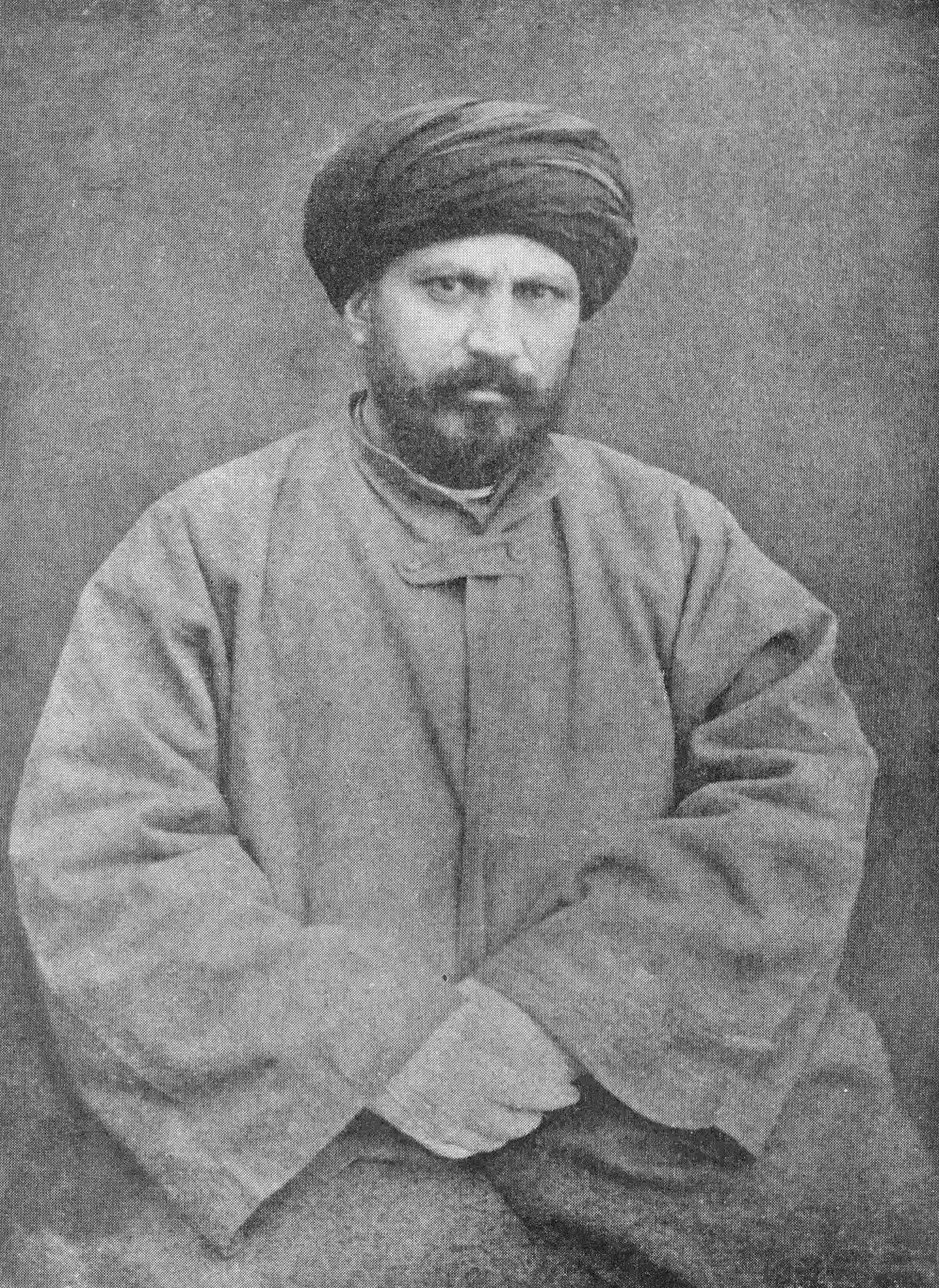
Jamal al-Din al-Afghani (1838-1897 CE) is among the most debated and influential figures in modern Islamic history. A political thinker, activist, and advocate for Pan-Islamic unity, he travelled across the Muslim world from India to Egypt, and from Istanbul to Paris, calling for Islamic solidarity against Western colonialism and for the revitalisation of Islamic civilisation. His forceful personality, his ideas, and his political activism shaped modern Islamic political thought and influenced later reformers, nationalists, and revolutionaries. His life was marked by controversy, exile, and constant movement, and historians continue to disagree over many of its central facts, but his effect on the Muslim world's response to colonialism and modernity is widely acknowledged.
Early Life and Mysterious Origins
The Question of Origins
Al-Afghani's origins are among the most disputed questions of modern Islamic history, beginning with his birthplace. He himself claimed to come from Afghanistan, which is the source of the name "al-Afghani." A substantial body of evidence, however, indicates that he was born in Asadabad in northwestern Iran. Many historians hold that his Afghan identity may have been adopted strategically, allowing him to move between Sunni and Shia contexts without being pinned to one side of that sectarian divide, and that this claimed identity served his Pan-Islamic political aims. The debate over his true origins has not been settled among scholars.
The details of his birth and family are similarly uncertain. He was born in 1838 CE (1254 AH), though the exact date is not known, most probably at Asadabad in northwestern Iran. His family is generally described as one with religious and scholarly traditions, and the available evidence points to a Shia Muslim background. He grew up during a period of intense European colonial expansion, a context that would shape his later concerns.
Education and Intellectual Formation
Al-Afghani received a comprehensive traditional Islamic education. It included memorisation and study of the Qur'an, training in hadith, fiqh, and theology, a deep grounding in the Persian literary tradition, mastery of classical Arabic, and study of Islamic philosophy and the rational sciences.
His intellectual influences were correspondingly broad. He studied the works of Islamic philosophers such as Ibn Sina, al-Farabi, and Ibn Rushd, was exposed to Sufi thought and practices, and was trained in Shia theological traditions. He was also aware of modern European ideas, and over these years developed a growing consciousness of the colonial threats facing Muslim societies.
His early travels widened this exposure further. He journeyed to India in his youth, performed the hajj and studied in the Hijaz, spent time in the Iraqi shrine cities of Najaf and Karbala, and lived in Afghanistan during his formative years. Through this movement he gained direct acquaintance with diverse Islamic traditions and with the varied political situations of the Muslim world.
Political Awakening and Early Activism
Witnessing Colonial Expansion
Al-Afghani encountered British colonial power at first hand in India. He lived through, or close to, the Indian Rebellion of 1857, and observed the impact of colonial rule on Muslims. These experiences taught him lessons about resistance and political organisation, prompted him to develop ideas about how colonial power might be countered, and led him to begin formulating Islamic responses to Western domination.
His time in Afghanistan deepened this political engagement. Serving as an advisor in Kabul, he became involved in Afghan political affairs, witnessed British threats to Afghan independence, and grew aware of Russian imperial expansion, coming to understand the country's strategic importance between the two empires.
Developing Political Philosophy
Out of these experiences al-Afghani's political philosophy began to take shape. Its central conviction was that Muslims had to unite to resist the colonial powers, transcending national and sectarian divisions in a broad Pan-Islamism, and offering active resistance to European imperialism. This was joined to a call for the revitalisation of Islamic civilisation and an insistence on the necessity of political activism and organisation.
The intellectual framework supporting these positions emphasised reason within Islamic thought, and a selective modernisation that would adopt useful Western technology while maintaining Islamic identity. He conceived of Islam as a political and social force, argued for the necessity of fundamental change, and stressed the need for strong, enlightened leadership.
The Egyptian Period (1871-1879)
Arrival in Cairo
Al-Afghani arrived in Egypt in 1871, at a time when the country was under the modernising rule of Khedive Ismail. He was drawn by Cairo's vibrant intellectual atmosphere, engaged with the scholars and students of al-Azhar, saw Egypt as a base from which his ideas could spread, and recognised the country's central position within the Arab world.
He built his influence largely through teaching. Establishing informal teaching circles, he attracted young Egyptian intellectuals, and it was in this setting that he met and mentored Muhammad Abduh. Through these circles he taught political and philosophical ideas, using his considerable personal charisma to inspire his students.
Intellectual Activities
His teaching ranged across Islamic philosophical traditions and rational approaches to theology, and extended into political theory, anti-colonial argument, and the case for Islamic reform and renewal. He also delivered public lectures on controversial philosophical and political subjects. These drew large audiences and had a profound effect on Egyptian intellectual life, building a devoted following among students, but they also caused concern among conservative scholars and within the government.
Political Involvement
Al-Afghani became increasingly active in politics. He joined and led a Masonic lodge, built political networks, fostered anti-British sentiment, and promoted the idea of constitutional government, and the authorities came to see him as a potentially revolutionary figure. This activism brought him into conflict with the state: he faced opposition from the conservative ulama, the government grew suspicious of his activities, and Khedive Ismail became concerned about his influence. Viewed as a political threat, he was expelled from Egypt in 1879.
The Indian Sojourn (1879-1882)
Return to India
After his expulsion from Egypt, al-Afghani went to India, settling for a period in Calcutta. There he lived under direct British colonial rule, engaged with the Indian Muslim community, and continued his intellectual and political work, producing important writings while observing the workings of British colonial administration.
It was during this period that he composed his best-known philosophical work, "The Refutation of the Materialists," directed against materialism and naturalism. Responding to Indian materialists — the so-called Neicheris — the work defended Islamic civilisation through sustained philosophical argument, and carried clear political implications beneath its philosophical surface.
Writings of the Indian Period
"The Refutation of the Materialists" attacked materialist philosophy and defended the social and political role of religion, arguing that religion is essential to civilisation and central to maintaining moral order. Beneath this argument lay an implicit political message about Islamic solidarity.
His political writings of these years articulated anti-colonial arguments and calls for Islamic unity. In them he analysed the causes of Muslim weakness, warned of the Western colonial threat, and called Muslims to action.
Paris and Al-Urwa al-Wuthqa (1883-1884)
Reunion with Muhammad Abduh
In Paris, al-Afghani was reunited with Muhammad Abduh, both men then being in exile from Egypt. They collaborated on political and intellectual projects, using Paris as a base from which to reach the Muslim world while operating within a European intellectual context, and taking advantage of the printing and publishing facilities available there.
Together they founded the influential journal Al-Urwa al-Wuthqa (The Firmest Bond). It appeared from March to October 1884, running to eighteen issues in Arabic. The journal promoted Pan-Islamic unity and carried strongly anti-colonial content, and although it was distributed across the Muslim world for only a short time, its influence far exceeded its brief period of publication.
Content and Themes
The journal addressed a set of major themes: it called for unity among all Muslims, attacked European imperialism, and singled out British colonial policies in particular, while advocating Islamic renewal and reform, encouraging political activism, and emphasising solidarity across sectarian lines.
These themes were pursued through specific subjects. The journal analysed the Egyptian situation under British occupation, discussed the position of Indian Muslims under British rule, addressed Ottoman weakness and the need for reform, supported the Mahdi movement in Sudan, examined French colonialism in North Africa, and advocated educational reform.
Its writing style combined passionate, emotional appeals with rational argument. It drew on Qur'anic and historical references, analysed contemporary events, and consistently ended in a call to action.
Impact and Legacy
Its immediate impact was considerable. Read across the Muslim world, it caused concern to the British authorities and was banned in British-controlled territories, where it then circulated underground, influencing Muslim intellectuals and activists.
Its longer-term influence was broader still. It inspired Pan-Islamic movements, shaped anti-colonial movements, contributed to Islamic modernist thought, helped shape political Islamic thought, and served as a source of inspiration for later revolutionaries.
The Ottoman Period (1892-1897)
Invitation to Istanbul
Al-Afghani was invited to Istanbul by Sultan Abdul Hamid II. The invitation fitted the Sultan's Pan-Islamic policy, and reflected his hope of using al-Afghani's influence for his own ends; al-Afghani was initially treated as an honoured guest, though both sides came to the arrangement with their own political calculations.
He arrived in Istanbul in 1892, receiving a royal reception, a generous stipend, and a residence — while each side held different expectations of what the relationship would achieve.
Life in Istanbul
In Istanbul al-Afghani participated in intellectual circles, engaged in political discussions, continued his writing, and maintained a correspondence across the Muslim world, while attempting to influence Ottoman policy. His relationship with the Sultan was cooperative at first, but tension developed over time as it became clear that the two men pursued different agendas. He was placed under surveillance, and his movement was increasingly restricted.
Final Years
His health declined in these years. Diagnosed with cancer, he received medical treatment but steadily worsened, continuing his intellectual work and his correspondence despite the illness.
He was also frustrated politically. Unable to influence Ottoman policy as he had hoped, and regarded with growing suspicion by the Sultan, he became increasingly isolated and disappointed with the Ottoman situation, leaving many of his goals unfulfilled.
Death
As the cancer progressed, al-Afghani died in Istanbul in March 1897, at approximately fifty-nine years of age. Some controversy has surrounded the circumstances of his death.
He was buried in Istanbul, and his body was later transferred to Afghanistan and reburied in Kabul, where he was honoured as a national hero and a memorial was established.
Political Philosophy and Ideas
Pan-Islamism
Pan-Islamism was al-Afghani's central political idea. He held that all Muslims must unite, overcoming national, ethnic, and sectarian divisions in the face of the common threat posed by Western colonialism, since unity would provide strength, and that this required political organisation.
In terms of implementation, he supported the idea of an Islamic caliphate, initially backing the Ottoman Sultan as caliph. He promoted solidarity among Muslim states, advocated coordinated action between them, and emphasised a shared Islamic identity.
Anti-Colonialism
His critique of colonialism exposed its economic exploitation and attacked its political domination, criticised cultural imperialism, and laid bare the divide-and-rule tactics used to sustain colonial power, always with a call for active resistance.
The strategies he proposed for resistance included political organisation, the use of education as a tool of resistance, and the pursuit of economic independence. He recognised the need for military strength and the value of diplomatic manoeuvring.
Islamic Reform
His vision of reform emphasised a rational interpretation of Islam and the revival of ijtihad, or independent reasoning. It called for the adoption of the modern sciences, for the reform of the educational system, and for broader social reform.
This was a selective modernisation. He argued for adopting Western technology and learning the Western sciences while maintaining Islamic identity and preserving cultural authenticity, seeking a balance between tradition and modernity.
Political Activism
His approach to activism had a revolutionary character. He advocated direct political action and supported revolutionary change where he judged it necessary, called for the building of political organisations, sought to mobilise the masses, and employed strategic political thinking.
His methods included journalism used for political ends, teaching treated as a political activity, the organisation of secret societies, the building of international networks, and the effective use of propaganda.
Intellectual Contributions
Philosophical Works
In philosophy, al-Afghani worked to revive the Islamic rationalist tradition and to reconcile philosophy with religion, developing a social and political philosophy, attacking materialist philosophy, and defending the social role of religion.
His major philosophical arguments held that religion is essential to civilisation, that it maintains the moral order, that it provides social cohesion, that it grounds political legitimacy, and that it preserves cultural identity.
Political Writings
His political writings turned repeatedly on a set of themes: a systematic critique of colonialism, a constant call for Islamic unity, the advocacy of comprehensive reform, an emphasis on educational reform, and a summons to political activism.
Their style was passionate and emotional, yet combined this passion with rational argument. He made complex ideas accessible, wrote with highly persuasive rhetoric, and consistently oriented his writing toward action.
Educational Philosophy
His educational vision advocated modern educational methods while maintaining Islamic content. It included the sciences and technology, promoted critical thinking, and aimed at the development of political awareness.
He implemented this vision through informal teaching circles and the mentoring of young intellectuals, through writing used for educational purposes, through public lectures, and through the force of his personal example.
Influence and Legacy
Immediate Disciples
Muhammad Abduh was al-Afghani's most famous student. Their close intellectual and personal relationship extended to their collaboration on Al-Urwa al-Wuthqa, and they shared a vision of Islamic reform, though Abduh eventually adopted a different approach of his own. Al-Afghani's influence on Abduh was lasting.
Beyond Abduh, al-Afghani influenced a generation of Egyptian intellectuals and inspired political activists. He mentored reformers across the Muslim world, and his ideas fed into nationalist movements and served as an inspiration for revolutionary movements.
Pan-Islamic Movement
As a source of inspiration, al-Afghani helped stimulate Pan-Islamic unity movements and influenced political organisations, shaping intellectual movements, inspiring anti-colonial movements, and promoting Islamic solidarity.
His practical impact was also visible: he influenced Ottoman Pan-Islamic policy, helped inspire later Muslim congresses and conferences, encouraged political alliances, and fostered solidarity movements. Later Pan-Islamic bodies, including the Organization of Islamic Cooperation, have been traced in part to the current of thought he helped set in motion.
Islamic Modernism
His contribution to Islamic modernism lay in promoting a rational approach to Islam and providing a methodology for reform, in engaging with modernity, and in offering an intellectual framework that inspired modernist movements.
His influence extended to later movements, including the Salafiyya movement and various modernist and reform movements, and he shaped intellectual trends whose effects can be traced into contemporary Islamic thought.
Political Islam
He also helped lay foundations for political Islam by legitimising political activism, supplying revolutionary thought and an anti-colonial framework, developing Islamic political thought, and emphasising action and organisation.
These foundations influenced later nationalist and revolutionary movements, contributed to Islamist thought, shaped anti-colonial struggles, and continue to influence contemporary activism.
Controversies and Criticisms
Religious Orthodoxy
Conservative critics accused al-Afghani of heterodox beliefs and criticised him for what they regarded as excessive rationalism. He was suspected of prioritising philosophy over revelation, accused of a crypto-secularism, and charged with religious innovation.
Questions of sect compounded these concerns. His probable Shia background prompted accusations that he was only pretending to be Sunni, and critics charged him with manipulating his sectarian identity. This in turn raised questions about the sincerity of his religious commitments and led to accusations of religious opportunism.
Political Methods
His political methods were also criticised. He was accused of conspiratorial methods and of political manipulation, charged with inconsistency and opportunism, and his strategies were questioned for their effectiveness.
His involvement in Freemasonry was a particular point of controversy. His participation in secret societies and his connections with Western organisations made him the subject of conspiracy theories, and much of the discussion of his Masonic involvement rested on misunderstanding.
Personal Character
Criticisms of his character accused him of excessive ego, of manipulating people, of personal inconsistency, and of personal ambition, and noted that he was constantly embroiled in controversy.
Those who defended him pointed to the historical context in which he worked, argued for the political necessity of his methods, cited evidence of his sincere commitment, emphasised his undeniable impact, and stressed the complexity of his character rather than reducing it to a single judgement.
Detailed Analysis of Revolutionary Methodology
Political Strategy and Tactics
Al-Afghani developed a comprehensive approach to political change that combined several strategies at once. He worked to build an intellectual foundation for change through education and writing, and to create networks of committed activists and intellectuals across the Muslim world. He formed strategic alliances with rulers, intellectuals, and popular movements, used journalism and publications to shape public opinion in a form of propaganda warfare, and organised secret societies and underground networks. He coordinated activities across national boundaries, and adapted his strategies with an opportunistic flexibility that responded to changing circumstances and opportunities.
This revolutionary strategy operated on multiple levels simultaneously. At the elite level he worked with rulers, high officials, and influential intellectuals; at the middle level he targeted the educated middle classes and emerging professionals; and at the popular level he attempted to reach and mobilise the masses. He also worked at the international level to build networks and solidarity, at the institutional level both within and against existing institutions, at the cultural level to challenge assumptions and promote new ideas, and at the religious level to draw on religious authority and legitimacy for political ends.
Several tactical innovations marked his work. He strategically manipulated his own identity to maximise his effectiveness, used Freemasonry as an organisational model and networking tool, and pioneered the use of journalism for political mobilisation. He treated education as a tool for raising political consciousness, grounded political arguments in religious authority, used his international mobility both to escape repression and to build networks, and leveraged his personal charisma for political influence.
Psychological Profile and Leadership Analysis
Al-Afghani was possessed of unusual charismatic qualities. Observers noted his personal magnetism and presence, his wide-ranging knowledge and intellect, and his powerful oratorical and persuasive abilities. He read people acutely, adapted with ease to different cultural contexts, thought in strategic and long-range terms, and was able to inspire devotion and commitment in his followers.
His personality was defined by a restless energy and drive for action, an insatiable intellectual curiosity, and a strong political ambition and desire for influence. He was willing to take significant personal and political risks, adapted readily to changing circumstances, pursued his goals with extraordinary persistence, and tended to generate controversy and opposition wherever he went.
His leadership style has been described in transformational terms: he inspired followers to set aside self-interest for a larger cause. He focused strongly on mentoring and developing disciples, built and maintained extensive networks, and led primarily through ideas and intellectual influence. His leadership was also revolutionary in that it challenged the existing order and promoted radical change; it operated across national and cultural boundaries; and it adapted its style to different contexts and audiences.
Comprehensive Analysis of Philosophical Contributions
In the sphere of Islamic political philosophy, al-Afghani asserted ultimate divine sovereignty while allowing for human agency, and developed a theory of the Islamic caliphate as a political institution. He advocated consultative (shura) governance, made justice the foundation of legitimate government, and supported popular participation in governance. He incorporated religious guidance into political decision-making and developed a theoretical framework against tyrannical rule.
His philosophy of history understood history as a cyclical rise and decline of civilisations, and idealised the Islamic golden age as a model for renewal. He analysed the causes of Islamic civilisation's decline while asserting the possibility of its revival, interpreted the Western challenge as a historical test, and viewed history within the framework of a divine plan and purpose while emphasising human agency and responsibility in bringing about historical change.
His epistemology emphasised rational knowledge and critical thinking, balanced against revealed knowledge. He supported the scientific method and empirical investigation, respected traditional wisdom while promoting innovation, and made use of comparative method in acquiring knowledge. He emphasised the practical application of knowledge and viewed knowledge as a tool for social transformation.
Economic Thought and Development Theory
Al-Afghani developed a sophisticated critique of colonial economics. He analysed the mechanisms of economic exploitation, criticised colonial resource extraction, and exposed colonial market manipulation. He understood debt as a tool of colonial control, analysed industrial dependence and underdevelopment, criticised colonial financial control mechanisms, and exposed unfair trade relationships.
Against this he set a set of Islamic economic principles. He emphasised economic justice and fair distribution, maintained the prohibition of usury (riba), and promoted the circulation of wealth in society. He stressed the social responsibility attached to wealth, defined the state's role in economic regulation, developed principles for international trade, and advocated economic independence and self-reliance.
His development strategy emphasised education as the key to development, and supported beneficial technology transfer, industrial development and modernisation, and agricultural reform and improvement. He recognised the importance of infrastructure, called for investment in human capital and skill development, and sought to balance development with cultural preservation.
Detailed Examination of Pan-Islamic Theory
Al-Afghani's Pan-Islamism rested on a considered theoretical foundation. He revived and modernised the concept of the global Muslim community (ummah) and developed a theory of Islamic solidarity transcending national boundaries. He identified common interests among Muslim peoples and recognised the shared threats they faced from colonial powers, emphasised cultural and religious unity, advocated political coordination among Muslim states, and developed a concept of collective defence.
In practical terms, he supported the revival of an effective caliphate, promoted cooperation among Muslim states, and encouraged popular Pan-Islamic movements. He worked to build intellectual networks across the Muslim world, advocated economic cooperation and trade, promoted educational exchange and cooperation, and supported cultural programmes and exchanges.
He was also aware of the challenges and obstacles standing in the way. These included the conflicting national interests of Muslim states, Sunni–Shia and other sectarian divisions, and the efforts of colonial powers to prevent unity. Disputes over leadership and authority, economic disparities among Muslim regions, cultural and linguistic differences, and the variety of political systems and structures all worked against the unity he sought.
Advanced Analysis of Anti-Colonial Thought
Al-Afghani's critique of colonialism was framed as a comprehensive analysis running across several dimensions. He examined its economic dimension in exploitation and underdevelopment, its political dimension in domination and loss of sovereignty, and its cultural dimension in cultural imperialism and the destruction of identity. He analysed its social dimension in disruption and transformation, its psychological dimension in the effects of colonialism on the mind, its religious dimension in attacks on beliefs and practices, and its educational dimension in colonial educational policies and their consequences.
From this analysis he developed a theory of resistance. He argued for the legitimacy of resistance to colonial rule and recognised that it could take multiple forms. He emphasised intellectual and cultural resistance, supported political resistance and organisation, advocated economic resistance and boycotts, used education as a form of resistance, and mobilised religious resources for the same end.
His liberation strategy accordingly emphasised raising consciousness about colonial exploitation and building unity among colonised peoples. It included building capacity for self-governance and development, forging international solidarity among the colonised, developing strategic plans for liberation, building institutions for post-colonial governance, and reviving indigenous culture and identity.
Educational Philosophy and Pedagogical Innovation
His educational philosophy was comprehensive in scope. It emphasised holistic human development and the promotion of critical thinking and analysis, aimed at developing political consciousness and awareness, and sought to strengthen cultural and religious identity. It also called for the acquisition of modern scientific and technical knowledge, the development of practical skills and competencies, and the training of future leaders and activists.
His pedagogical methods reflected these aims. He used questioning and dialogue in a Socratic manner, favoured learning through experience and practice, and provided intensive mentorship and personal guidance. He made use of group discussion and debate, applied knowledge to real-world problems, encouraged learning from different cultures and traditions, and connected learning to action and change.
The curriculum he envisaged combined the traditional Islamic sciences and scholarship with modern scientific and technical subjects. It included political theory and analysis, historical analysis and understanding, and philosophical thinking, alongside the study of multiple languages and communication and the practical skills needed for modern life and work.
Interfaith Relations and Comparative Religion
Al-Afghani's approach to other religions was complex. He was willing to cooperate with non-Muslims against common enemies and to engage in respectful dialogue where it was beneficial, and he identified common ground with other monotheistic religions. At the same time he maintained a defensive posture in guarding Islam against attacks from other religions, viewed the relationship as competitive though not necessarily hostile, adapted his approach to the political and social context, and made pragmatic calculations about interfaith relations.
His view of Christian–Muslim relations was similarly differentiated. He critiqued European Christian colonialism while taking a different approach to Eastern Christian communities. He opposed Christian missionary activities in Muslim lands, engaged in theological debate where necessary, considered political alliances where they might prove beneficial, supported beneficial cultural exchange, and advocated peaceful coexistence where it was possible.
In comparative religious analysis, he examined the social and political functions of religions and their role in building civilisation. He compared moral and ethical systems, analysed the political implications of religious beliefs, studied the historical development of religions, assessed the contemporary relevance of religious traditions, and considered the possibilities for religious reform and renewal.
Scientific and Technological Engagement
Al-Afghani's approach to science was carefully worked out. He argued for the compatibility of Islam and modern science, supported the rational investigation of the natural world, and endorsed the scientific method and empirical investigation. He advocated the adoption of beneficial technologies, sought to integrate scientific education with religious education, emphasised the practical application of scientific knowledge, and adapted that knowledge to the Islamic cultural context.
His specific scientific interests were wide. He was interested in astronomical knowledge and discoveries, supported modern medical knowledge and practice, and recognised the importance of mathematics. He advocated engineering and technical education, supported the study of the natural sciences, took an early interest in social scientific analysis, and emphasised the applied sciences and their practical applications.
He also reflected on the relationship between technology and society. He recognised the importance of military technology for defence and the importance of communication technologies, supported improvements in transportation, and advocated industrial development and agricultural technological improvement. He used available technologies for educational purposes and showed an early understanding of information and knowledge systems.
Cultural and Artistic Contributions
Al-Afghani developed a considered approach to cultural revival. He emphasised authentic cultural identity and a selective modernisation that would adopt beneficial modern elements while preserving that identity, and he used culture as a tool of resistance to colonialism. He worked to develop historical consciousness and pride, supported the revival of Islamic literary traditions, encouraged artistic expression and creativity, and supported beneficial cultural exchange and learning.
His literary influence was broad. He influenced the development of modern Arabic literature and contributed to Persian literary traditions, developed political literary expression, and pioneered modern journalistic writing. He also contributed to the philosophical literary tradition, influenced popular literary expression, and helped develop educational and pedagogical literature.
He built cultural networks to sustain this work. He formed intellectual and cultural circles, supported literary societies and organisations, and influenced cultural institutions and programmes. He built publishing and distribution networks, influenced educational and cultural institutions, established international cultural networks, and connected with popular cultural movements.
Psychological and Spiritual Dimensions
Al-Afghani's spiritual development was itself complex. He was exposed early to Sufi mysticism and spirituality, but developed a rational approach to spiritual questions, and he integrated his spirituality with political activism. He combined intellectual inquiry with spiritual seeking, emphasised the practical application of spiritual insight, developed a universal spiritual perspective, and used spirituality as a means of personal and social transformation.
His psychological resilience was marked. He managed adversity and setbacks with unusual ability, tolerated stress and pressure, and regulated his emotions effectively. He adapted psychologically to changing circumstances, persisted with extraordinary determination, tolerated risk and uncertainty, and recovered from failures and disappointments.
His spiritual leadership drew on this. He used spiritual authority for inspiration and motivation, provided moral leadership and guidance, and displayed a visionary spiritual and political capacity. He had a transformational impact on his followers and disciples, provided spiritual mentorship, developed an ethical framework for action, and connected action to a transcendent sense of purpose and meaning.
Contemporary Global Applications
Al-Afghani's ideas have been treated as relevant to contemporary anti-colonial struggles. His framework has been applied to neo-colonial analysis and to critiques of economic and cultural imperialism, and his resistance strategies, unity-building approaches, and consciousness-raising methods have been read as applicable to modern contexts, together with his concepts of international solidarity.
His influence has also been connected to Islamic political movements. He is cited as a foundational influence on political Islam and on contemporary revolutionary, reform, and unity movements, and as an influence on activist organisations, intellectual movements, and educational movements within the Muslim world.
His ideas have further been linked to questions of global governance and international relations. They have been read as relevant to South–South cooperation and to anti-hegemonic movements, to cultural diplomacy and soft power, and to international Islamic organisations. His approaches have also been connected to conflict resolution, peace building and reconciliation, and to global justice and human rights movements.
Conclusion: The Enduring Legacy of Revolutionary Pan-Islamism
Jamal al-Din al-Afghani is among the most debated and influential figures in modern Islamic history, and his ideas and activism significantly shaped the Muslim world's response to Western colonialism and the challenges of modernity. His life, marked by constant movement, exile, and controversy, embodied the struggles of the Islamic world in the nineteenth century as it grappled with colonial domination, internal decline, and the perceived need for comprehensive reform and renewal.
As a thinker and political activist, al-Afghani advanced a form of Islamic political consciousness that reached beyond the traditional boundaries of nation, ethnicity, and sect. His vision of Pan-Islamic unity, grounded in a shared religious identity and in common resistance to colonial domination, offered an alternative to both traditional Islamic political thought and the emerging nationalist ideologies of his day. His call for Islamic solidarity was taken up across the Muslim world and influenced later generations of activists, reformers, and revolutionaries who sought to revitalise Islamic civilisation and to achieve independence from colonial rule.
His intellectual contributions were as significant as his political activism. His philosophical works, and particularly his refutation of materialism, offered a defence of religion's role in civilisation and human society. His arguments against materialist philosophy and his emphasis on the social and political functions of religion supplied intellectual resources for Islamic revival and for resistance to secular Western ideologies, while his effort to bring together traditional Islamic thought and modern political and philosophical concepts opened new possibilities for Islamic engagement with modernity.
The partnership between al-Afghani and Muhammad Abduh is widely regarded as one of the most important intellectual collaborations in modern Islamic history. Their journal Al-Urwa al-Wuthqa, though published for less than a year, became a statement of Pan-Islamic unity and anti-colonial resistance that influenced Muslim intellectuals and activists across the world. Its calls for Islamic solidarity, its analysis of colonial exploitation, and its vision of Islamic renewal served as a reference point for later Islamic political movements and reform efforts.
His educational philosophy and pedagogical methods were unusual for their time. His emphasis on critical thinking, political consciousness, and the integration of traditional Islamic knowledge with the modern sciences influenced educational reform across the Muslim world. His informal teaching circles and his approach to mentorship produced a generation of disciples who carried his ideas forward and adapted them to their own circumstances.
His anti-colonial thought was wide-ranging, analysing the economic, political, cultural, and psychological dimensions of colonial domination. His understanding of colonialism as a total system of exploitation and control, and his development of multi-faceted resistance strategies, provided frameworks that remained in use long after his death. His emphasis on consciousness-raising, unity-building, and international solidarity influenced anti-colonial movements both in the Muslim world and beyond it.
The complexity and controversy surrounding al-Afghani's life and thought reflect the broader challenges facing the Islamic world in the modern era. His strategic manipulation of his own identity, his involvement in secret societies, his sometimes contradictory positions, and his controversial methods all reflected the difficult circumstances in which he operated and the limited options available to those who sought to challenge colonial domination and promote Islamic revival.
His legacy is contested and has been claimed by diverse groups across the political and ideological spectrum. Islamic modernists have seen in him a pioneer of rational Islamic thought and reform; political Islamists have viewed him as a founder of Islamic political activism and resistance; Pan-Islamists have regarded him as an architect of Islamic unity movements; and nationalists have claimed him as an early anti-colonial activist. This diversity of interpretation reflects both the range of his thought and the several dimensions of his influence.
In the contemporary world, al-Afghani's ideas continue to be discussed. His critique of imperialism and neo-colonialism has been read against ongoing struggles over economic and cultural domination. His vision of Islamic unity has been connected to organisations such as the Organization of Islamic Cooperation and to continuing efforts to build solidarity among Muslim nations and communities. His emphasis on education, consciousness-raising, and political activism has remained a point of reference for Muslim intellectuals and activists.
His understanding of the relationship between culture and politics, his observations on the psychology of colonialism and resistance, and his idea of an authentic modernisation that preserves cultural identity while embracing beneficial change have been treated as relevant to contemporary debates about globalisation, cultural preservation, and development. His methods of network-building, international coordination, and strategic communication have found new applications in the digital age.
Al-Afghani's life illustrates the influence that a single individual can exert through intellectual ability, charismatic leadership, and sustained commitment to a cause. His ability to mobilise people across cultural and national boundaries, his adaptation of his message to different audiences and contexts, and his persistence in the face of repeated setbacks have been read as instructive for later activists and reformers, even where his particular strategies remain open to criticism.
His vision of a united, strong, and independent Muslim world, free from colonial domination and renewed through comprehensive reform, has continued to be cited by those who seek to revitalise Islamic civilisation in the modern world. While his specific strategies and methods remain debated, his broader concerns — the argument for unity, the importance of education and consciousness-raising, and the case for the possibility of authentic Islamic renewal — have retained their interest.
The controversies surrounding his life and thought do not obscure his contributions to modern Islamic political thought or his part in awakening Muslim political consciousness. His willingness to challenge established orthodoxies, his readiness to confront powerful adversaries, and his commitment to the cause of Islamic revival, at considerable personal cost and risk, mark him as a figure of historical significance whose influence extends beyond his own time and place.
As the Muslim world continues to address questions of identity, authenticity, and modernisation in an increasingly globalised world, al-Afghani's example has been read as offering both inspiration and cautionary lessons. His success in building international networks and inspiring diverse movements has been cited as evidence of the potential of Islamic political activism and reform, while his failures and controversies have been taken as a reminder of the difficulties such efforts involve.
Jamal al-Din al-Afghani remains a significant figure in modern Islamic history, and his vision of Pan-Islamic unity, his anti-colonialism, and his call for comprehensive Islamic reform continue to inform debates about Islam's relationship with modernity, the role of political activism in Islamic renewal, and the possibilities for Islamic unity and solidarity. His life and work stand as a case study in the influence of ideas, the significance of committed leadership, and the persistence of the argument for justice, dignity, and renewal in the face of domination.
Whether he is viewed as a hero or a controversial figure, as a visionary or a manipulator, as a sincere believer or a political opportunist — and he has been described as each — his impact on modern Islamic thought and politics is widely acknowledged. His legacy continues to inform the work of those who seek to understand and address the struggles of the Islamic world in the modern era.
Historical Assessment and Scholarly Evaluation
Modern scholarship has reached several conclusions about al-Afghani's significance. He is recognised as a foundational figure in modern Islamic political thought, and the complexity and contradictions of his legacy are widely acknowledged. His historical impact is regarded as undeniable despite the controversy over his methods, his intellectual influence on subsequent generations as profound, and his innovation in Islamic political activism and organisation as notable. Scholars also point to his remarkable global reach and cross-cultural influence and to the continuing relevance of his ideas to contemporary debates and movements.
Scholars have also recognised his methodological innovations. These include his use of comparative method in analysing civilisations, his historical analysis and interpretation, and his strategic thinking about political change and organisation. They also note his international and cross-cultural perspective, his ability to synthesise diverse intellectual traditions, his focus on the practical application of ideas, and the adaptive methods he suited to different contexts.
His intellectual framework continues to be studied. It encompasses his revival and modernisation of the Islamic rationalist tradition, his development of an Islamic political theology, and his anti-colonial theoretical framework. It also includes his systematic Pan-Islamic ideology, his methodological approach to Islamic reform, his theoretical framework for revolutionary change, and his analysis of the role of culture in political and social change.
Comparative Analysis with Contemporary Figures
Comparison with other nineteenth-century Islamic reformers brings out al-Afghani's distinctive features. Against Muhammad Abduh's more gradualist and educational approach stood al-Afghani's revolutionary activism; where Sir Sayyid Ahmad Khan focused on the British-Indian context, al-Afghani took a global perspective; and where Namik Kemal was concerned with Ottoman constitutionalism, al-Afghani pursued a Pan-Islamic vision. Chiragh Ali's scholarly approach contrasted with al-Afghani's political activism, Sayyid Ameer Ali's historical methodology with al-Afghani's contemporary focus, Muhammad Iqbal's philosophical poetry with al-Afghani's political journalism, and Rashid Rida's later conservative turn with al-Afghani's more radical approach.
Comparison with global revolutionary figures of his era is equally instructive. Where Giuseppe Mazzini was an Italian nationalist, al-Afghani was a Pan-Islamist; where Sun Yat-sen was a Chinese republican, al-Afghani was an Islamic reformer; and where José Martí pursued Cuban independence, al-Afghani pursued Islamic liberation. Theodor Herzl's Jewish nationalism may be set against al-Afghani's Islamic unity, Mahatma Gandhi's non-violent resistance against al-Afghani's varied methods, Vladimir Lenin's Marxist revolution against al-Afghani's Islamic revolution, and Kemal Atatürk's secular nationalism against al-Afghani's religious nationalism.
Several characteristics set al-Afghani apart from his contemporaries. He grounded his political activism in religious authority, moved and networked internationally to an unusual degree, and adapted with remarkable facility to different cultural contexts. He exercised an exceptional charismatic leadership and personal influence, brought together traditional and modern ideas in a distinctive synthesis, combined strategic flexibility with tactical adaptation, and held to a genuinely global vision that transcended national boundaries.
Detailed Analysis of Writings and Publications
His philosophical writings demonstrate a considered body of thought. "The Refutation of the Materialists" offered a systematic critique of materialist philosophy, and his work extended into a religious epistemology, or theory of religious knowledge and its sources, and into a civilisation theory analysing the factors behind the rise and decline of civilisations. It also encompassed a moral philosophy grounded in religious principles, a political philosophy of legitimate government and resistance, a social philosophy of change and transformation, and a comparative treatment of different religious traditions and their social functions.
His political essays reveal his strategic thinking. They include a systematic analysis of colonial exploitation and resistance, a theoretical framework for Islamic unity and cooperation, and strategic reflection on political change and organisation. They also take in an analysis of international power dynamics, a critique of colonial economic exploitation, a theory of cultural resistance and identity preservation, and ideas about leadership and political organisation.
His journalistic work pioneered modern Islamic political journalism. Its centrepiece was the groundbreaking Pan-Islamic journal Al-Urwa al-Wuthqa, distinguished by an editorial style that was passionate yet analytical and by its analysis of contemporary events. In it he developed propaganda and persuasion techniques, maintained a global perspective on Muslim affairs, and placed a consistent emphasis on action and organisation, exercising a lasting influence on Islamic journalism.
Economic and Social Analysis
His economic critique of colonialism was detailed. He analysed the mechanisms of colonial economic exploitation and the systems of resource extraction, examined market manipulation and control, and recognised debt as a tool of colonial domination. He also examined industrial dependence and underdevelopment, analysed colonial financial control mechanisms, and criticised the unfair trade relationships imposed by colonial powers.
His understanding of social change was comprehensive. He assigned a central role to education in social transformation and stressed the importance of cultural factors, the role of religion in social organisation and change, and the impact of leadership. He also considered the international influences on social change, the economic foundations of social organisation, and the relationship between political structures and social change.
His approach to development was holistic. He emphasised human development and capacity building, the importance of strong institutions, and the safeguarding of indigenous heritage while pursuing modernisation. He took a strategic approach to technology transfer, treated investment in education as the foundation of development, stressed the importance of international cooperation, and set self-reliance and independence as the ultimate goal.
His impact on literature was significant. He influenced modern Arabic political and intellectual literature and contributed to Persian literary and intellectual traditions. He pioneered modern Islamic political literary expression, set standards for modern Arabic journalistic writing, and contributed to the Islamic philosophical literary tradition, while also influencing popular political and religious literature and developing an educational and consciousness-raising literature.
His role in cultural revival was multifaceted. He contributed to Islamic cultural revival and renewal, fostered a Pan-Islamic cultural consciousness, and helped create a culture of resistance to colonialism. He fostered an intellectual and scholarly culture, worked to transform Islamic political culture, helped create a culture of reform and modernisation, and contributed to the development of a global Islamic culture.
His approach to art and aesthetics was forward-looking. He supported Islamic artistic expression and creativity and encouraged diverse forms of cultural expression, advocated artistic education and appreciation, and sought to balance the preservation of cultural heritage with innovation and adaptation. He engaged with global aesthetic traditions, understood the importance of popular culture in political mobilisation, and promoted cultural dialogue and exchange across boundaries.
Environmental and Sustainability Insights
Al-Afghani has been credited with an early awareness of what would later be framed as environmental and sustainability concerns. He emphasised the idea of human stewardship of the natural world and advocated the responsible management of natural resources. He supported sustainable agricultural and economic practices, developed an environmental ethical framework based on Islamic principles, promoted the conservation and preservation of natural heritage, stressed the importance of ecological balance, and considered the impact of present actions on future generations.
These principles have been read as relevant to contemporary environmental challenges. His stewardship principles have been connected to responses to climate change, and his thought treated as a contribution to sustainable development theory and practice and to environmental justice discussions. His ideas have also been linked to the development and adoption of beneficial green technology, to conservation ethics and environmental philosophy, to environmental education initiatives, and to discussions of global environmental governance.
Technological and Scientific Engagement
Al-Afghani's approach to science and technology was carefully developed. He argued for the fundamental compatibility of Islam and modern science, championed empirical inquiry into the natural order as consistent with faith, and embraced observation, experimentation, and evidence-based reasoning. He advocated the adoption of beneficial technologies for Muslim societies, integrated scientific education with religious and cultural education, insisted that scientific knowledge serve tangible societal needs, and contextualised modern discoveries within Islamic intellectual traditions.
His engagement with particular scientific fields was wide-ranging. He was interested in astronomical knowledge and its implications, promoted the adoption of modern medical science for public health, and recognised the importance of mathematical knowledge and education. He advocated engineering and technical education for development, supported the study of the natural sciences and their applications, took an early interest in social scientific analysis and methodology, and emphasised the applied sciences and their practical benefits.
He also considered the social implications of technology. He recognised the importance of military technology for defence against colonialism and of communication technologies for organisation, and advocated improved infrastructure to enable economic and social connectivity. He supported industrial development and technological modernisation, encouraged the adoption of modern methods to boost agricultural productivity, used available technologies for educational and propaganda purposes, and showed an early understanding of information systems and knowledge dissemination.
Comprehensive Legacy Assessment
His most enduring contributions have been described in several terms. He is credited with awakening political consciousness among Muslims worldwide and with providing an intellectual framework for anti-colonial resistance. He articulated a vision of Islamic unity and solidarity, developed a methodology for Islamic reform and renewal, and pioneered international networking and organisation, while also theorising cultural resistance and identity preservation and inspiring movements for justice and liberation.
His ideas have continued to find application in contemporary contexts. They have been cited as an inspiration for social justice movements and as informing educational reform in Muslim countries, and they have provided models for political activism and organisation. They have further been treated as a contribution to international relations theory and practice, to cultural studies and identity research, to development studies and practice, and to peace and conflict studies.
His ideas have also been held to carry potential for addressing future challenges. They have been connected to concepts of global citizenship and responsibility, to intercultural dialogue and understanding, and to sustainable development initiatives. They have likewise been linked to the advancement of social justice, to educational innovation and reform, to democratic participation and engagement, and to international cooperation and solidarity.
Final Assessment: The Revolutionary Legacy
Al-Afghani's place in history rests on several achievements. He is regarded as a pioneer of modern Islamic political thought and activism who achieved unusual global influence across diverse Muslim societies. He articulated a vision of Islamic renewal and liberation, innovated methods of political organisation and mobilisation, and bridged traditional Islamic thought and modern political concepts. He created international networks that transcended national boundaries and left a legacy that has continued to motivate activists.
His impact on the Muslim world has been described as considerable. He is credited with raising political consciousness among Muslims worldwide, contributing to the formation of a modern Islamic political identity, and helping to create a culture of resistance to colonialism and oppression. He articulated a vision of Islamic unity and solidarity, provided a religious basis for political reform and activism, fostered an international perspective among Muslim intellectuals, and helped establish a tradition of Islamic political activism.
His ideas have been read as relevant to a range of contemporary challenges. His concepts of justice have been connected to global justice movements and his concern with identity preservation to the pressures of globalisation. His ideas about participation have been linked to democratic development, his vision of cross-border solidarity to multilateral engagement, and his educational thought to contemporary reform efforts, while his organisational methods and resistance strategies have been treated as applicable to modern social movements and struggles.
His work addressed universal themes that reach beyond religious and cultural boundaries. These include an emphasis on human dignity and worth, a commitment to social justice and equality, and the importance of preserving cultural identity. They also include the value of international solidarity and cooperation, the power of education for human empowerment, the right to political participation and self-determination, and the legitimacy of resistance to oppression and injustice.
His methodological contributions have continued to interest activists and scholars. They include his use of comparative method in analysing societies and cultures, his strategic approach to political change and organisation, and his techniques for building and maintaining international networks. They also include his methods for adapting messages to different cultural contexts, his approaches to synthesising traditional and modern ideas, his focus on the practical application of theoretical insights, and his emphasis on the importance of long-term vision in political activism.
The life and work of Jamal al-Din al-Afghani illustrate the influence of ideas, the significance of committed leadership, and the persistence of the argument for justice, dignity, and renewal. His vision of Pan-Islamic unity, his anti-colonialism, and his call for comprehensive Islamic reform have continued to be cited by those seeking to address the challenges facing Muslim societies and the wider world.
References and Further Reading
Primary Islamic Sources
- Quran, Surah Ar-Ra'd (13:11) — "Indeed, Allah will not change the condition of a people until they change what is in themselves." (Central to al-Afghani's reform philosophy)
- Al-Afghani, Jamal al-Din, and Muhammad Abduh. Al-Urwa al-Wuthqa (The Firmest Bond — Pan-Islamic journal). Paris, 1884.
- Al-Afghani, Jamal al-Din. Al-Radd ala al-Dahriyyin (Refutation of the Materialists). Translated by Nikki R. Keddie and Hamid Algar. Berkeley: University of California Press, 1968. [Original c. 1881 CE]
- Al-Afghani, Jamal al-Din. Collected articles and lectures published in Egyptian and Indian periodicals, 1870s–1890s.
Classical Islamic Sources
- Rashid Rida, Muhammad. Tarikh al-Ustadh al-Imam al-Shaykh Muhammad Abduh (biography including extensive material on al-Afghani). Cairo: al-Manar Press, 1931.
- Muhammad Abduh. Various writings documenting his relationship with al-Afghani.
Academic and Scholarly Sources
- Keddie, Nikki R. Sayyid Jamal ad-Din "al-Afghani": A Political Biography. Berkeley: University of California Press, 1972.
- Keddie, Nikki R. An Islamic Response to Imperialism: Political and Religious Writings of Sayyid Jamal ad-Din "al-Afghani." Berkeley: University of California Press, 1968.
- Hourani, Albert. Arabic Thought in the Liberal Age, 1798–1939. Cambridge: Cambridge University Press, 1983.
- Kurzman, Charles, ed. Modernist Islam, 1840–1940: A Sourcebook. Oxford: Oxford University Press, 2002.
- Esposito, John L. Islam: The Straight Path. 4th ed. Oxford: Oxford University Press, 2010.
- Haj, Samira. Reconfiguring Islamic Tradition: Reform, Rationality, and Modernity. Stanford: Stanford University Press, 2009.
Further Reading
- Cleveland, William L., and Martin Bunton. A History of the Modern Middle East. 6th ed. Boulder: Westview Press, 2016.
- Lapidus, Ira M. A History of Islamic Societies. 3rd ed. Cambridge: Cambridge University Press, 2014.
- Schulze, Reinhard. A Modern History of the Islamic World. London: I.B. Tauris, 2000.
- Dallal, Ahmad. Islam Without Europe: Traditions of Reform in Eighteenth-Century Islamic Thought. Chapel Hill: University of North Carolina Press, 2018.
Mentioned In
8 articles reference this topic
More from Modern Era
Modern Islamic History (1800-2024)
Islamic history from 1800 to the present: the weakening of the Ottoman and other Muslim empires, the period of European colonial rule, the independence movements that followed, the founding of the modern Muslim states, and the changes since.
Organization of Islamic Cooperation (OIC)
An intergovernmental body of 57 member states across four continents, second in size only to the United Nations. Founded in 1969 after the arson attack on the Al-Aqsa Mosque, it acts as a collective voice for its members on shared political and religious concerns.
Aligarh Muslim University: From the Muhammadan Anglo-Oriental College to a Central University
Aligarh Muslim University grew out of the school founded by Syed Ahmad Khan in 1875, which became the Muhammadan Anglo-Oriental College in 1877 and a university by Act of the Indian legislature in 1920. It was the central institution of the Aligarh Movement.
Growth of Islamic Finance
Banking and financial services conducted according to Islamic law, which forbids interest and requires risk to be shared. From institutional beginnings in the 1960s the sector has grown into a multi-trillion-dollar industry serving Muslim and non-Muslim customers alike.