Muhammad Abduh: Pioneer of Islamic Modernism
Muhammad Abduh (1849-1905 CE) was an Egyptian Islamic scholar and reformer who pioneered Islamic modernism. As Grand Mufti of Egypt, he reconciled Islamic teachings with modern thought and influenced generations of Muslim intellectuals.
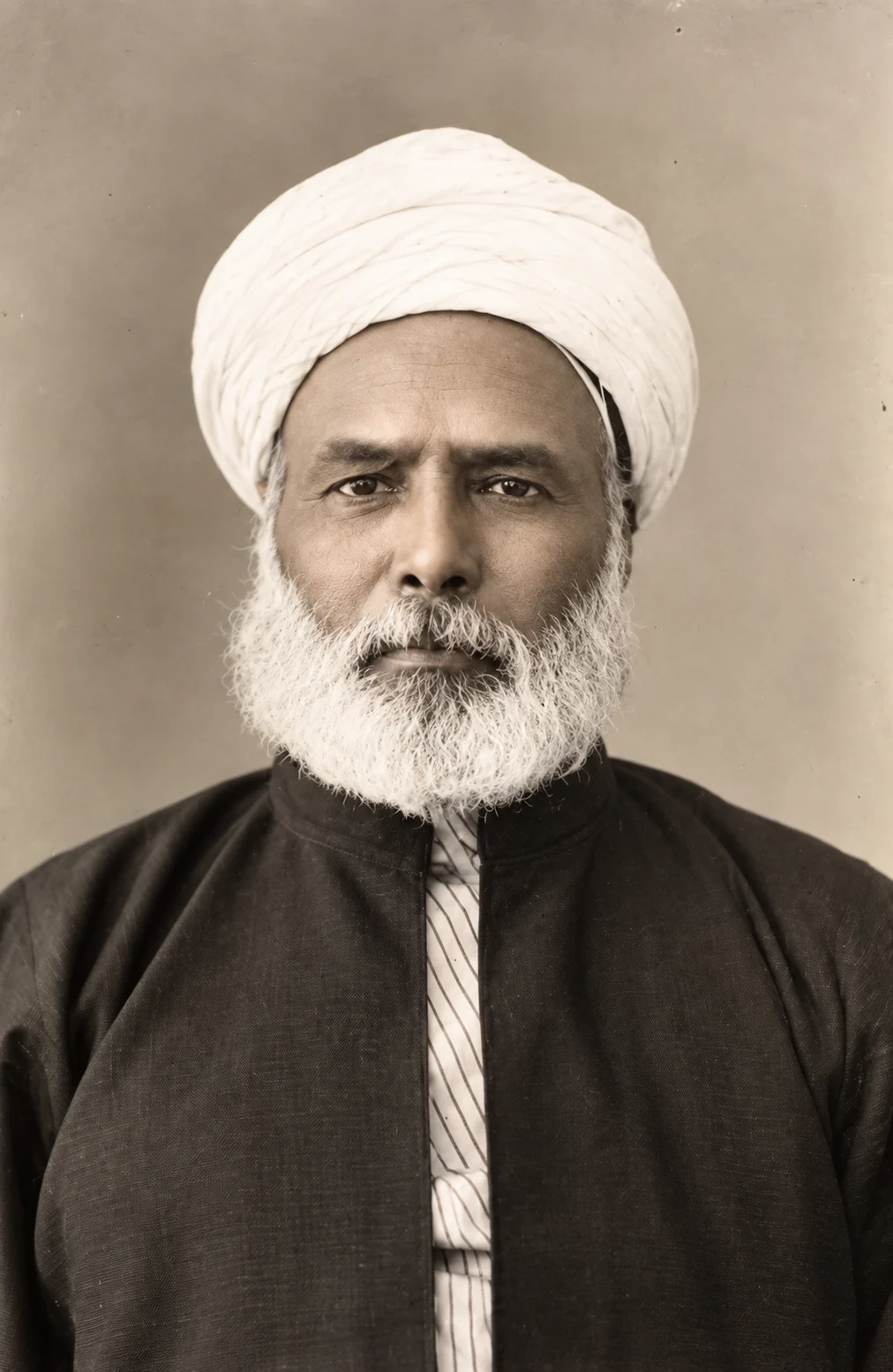
Muhammad Abduh (1849–1905 CE) was an Egyptian Islamic scholar and reformer who was among the founders of Islamic modernism, the intellectual movement that sought to reconcile Islamic teaching with modern thought. As Grand Mufti of Egypt and a leading scholar at Al-Azhar University, he argued for educational reform, for the rational interpretation of Islamic texts, and for the revival of ijtihad (independent reasoning). His Quranic commentary, Tafsir al-Manar, his theological writings, and his practical reforms influenced later generations of Muslim intellectuals and continue to figure in debates about Islam's relationship with modernity.
Early Life and Education
Birth and Family Background
Muhammad Abduh was born in 1849 CE (1265 AH) in the village of Mahallat Nasr in Beheira Governorate, in the Nile Delta of Lower Egypt. His family was of modest means and of both Turkish and Arab ancestry; his father was a small landowner and farmer, and his mother came from a family with scholarly traditions. He grew up in rural Egypt during a period of significant change.
Raised in traditional Egyptian village culture, Abduh began his Quranic education at a young age and memorized the Quran in his early years. His family expected him to pursue religious education, and his character was formed within rural Egyptian society.
Traditional Islamic Education
Abduh's formal education began in traditional institutions. At the local kuttab, or Quranic school, he completed his memorization of the Quran and learned Arabic grammar and language through the customary rote-learning methods of the time, methods with which he became frustrated.
He was then sent to Tanta for further religious education, studying at the Ahmadi Mosque and following the traditional Islamic curriculum. His dissatisfaction with the educational methods grew, and he temporarily abandoned his studies in frustration.
His uncle, Shaykh Darwish Khadr, influenced his return to study and introduced him to Sufism and to the spiritual dimensions of Islam. Abduh developed a renewed interest in Islamic studies, an intellectual awakening that moved him beyond rote learning toward a deeper understanding of the material.
Al-Azhar University
In 1866 Abduh enrolled at Al-Azhar University in Cairo, then the premier Islamic institution in the Sunni world. There he studied the traditional Islamic sciences: jurisprudence (fiqh) in the Maliki school, theology (kalam), the Arabic sciences of grammar, rhetoric and literature, and the study of Prophetic traditions (hadith).
During these years he developed his critical faculties, began to question traditional methods, and read beyond the standard curriculum. He took an interest in Islamic philosophy and began to formulate his own ideas about reform.
Meeting with Jamal al-Din al-Afghani
The Transformative Encounter
In 1871 Jamal al-Din al-Afghani arrived in Cairo. A charismatic and controversial figure, al-Afghani promoted Pan-Islamic unity and anti-colonialism, engaged with modern philosophical and political thought, advocated Islamic reform and renewal, and gathered around him a circle of young intellectuals.
Al-Afghani's ideas drew Abduh in, offering the intellectual stimulation he had sought. Through him Abduh was exposed to new perspectives on Islam and modernity, developed a political awareness, and formed a close mentor–student relationship with al-Afghani.
Intellectual Transformation
Under al-Afghani, Abduh learned to approach Islamic texts rationally and to apply critical analysis. He studied Islamic philosophy and theology in depth, engaged with modern sciences and thought, and worked to synthesize traditional and modern knowledge.
The relationship also brought a political awakening. Abduh developed a critique of colonialism, embraced ideas of Islamic unity, recognized the necessity of reform, began to engage in political life, and developed a broader social consciousness.
Early Career and Activism
Teaching and Writing
After completing his studies, Abduh began teaching at Al-Azhar, where he introduced new teaching methods, attracted dedicated students, and attempted to reform the curriculum, meeting resistance from conservative elements.
He also taught at Dar al-Ulum, a modern teacher-training school, where he sought to bridge traditional and modern education, introduced new pedagogical approaches, and influenced a new generation of teachers as he developed his own educational philosophy.
Alongside teaching, Abduh wrote for the newspaper Al-Ahram, engaging in public discourse, propagating his reform ideas, and offering social and political commentary, and in doing so established himself as a public intellectual.
Political Involvement
Abduh became involved in the Urabi Revolt (1879–1882), a nationalist movement against foreign control. He supported the movement's goals, engaged in political activity, and briefly served in the revolutionary government. The revolt was crushed by British intervention.
After its failure he was exiled from Egypt. He spent time in Beirut, Lebanon, and then joined al-Afghani in Paris, where the two collaborated on the journal Al-Urwa al-Wuthqa and advocated Pan-Islamic unity.
Exile Period (1882–1888)
In Beirut, Abduh taught at the Sultaniyya School and continued his writing and scholarship. The period gave him time to reflect on reform strategies, to develop his thought further, and to build intellectual networks.
Working closely with al-Afghani, he helped publish Al-Urwa al-Wuthqa and engaged in political activism. His exposure to European thought and society during these years contributed to his developing strategic thinking about reform.
Detailed Analysis of the Paris Period (1884–1888)
The collaboration with al-Afghani in Paris produced Al-Urwa al-Wuthqa (The Firmest Bond), one of the most widely circulated Islamic journals of the 19th century. Co-founded in 1884, the journal was edited jointly by Abduh and al-Afghani. It promoted pan-Islamic unity and solidarity, set out anti-colonial arguments, and reached Muslim intellectuals across the world. Its publication period was short, but its influence outlasted it.
Abduh's contributions to the journal addressed several themes: unity among Muslim nations, educational modernization, religious and spiritual renewal, political consciousness, Islamic cultural revival, scientific and technological advancement, and social issues and inequalities.
The Paris years were important for Abduh's intellectual development. He was exposed to European philosophical traditions, studied comparative religion and theology, engaged with modern political theory and the social sciences, and developed a historical and critical methodology. He gained an international perspective on Islamic questions and a more methodical approach to planning long-term reform.
He also built an international network of reformers during this period. He engaged with European intellectuals, connected with Muslim communities in Europe, established reform networks across the Muslim world, maintained scholarly correspondence, built connections with institutions, and laid the groundwork for later collaborations.
Psychological and Spiritual Dimensions
Abduh's personal course reflected wider themes of the modern Muslim experience. He navigated the tension between tradition and modernity, experienced spiritual struggle and growth, and challenged prevailing orthodoxy. He maintained a commitment to reform, made personal sacrifices for it, and, through these trials, integrated the various influences on his thought into a settled outlook.
Although his approach was rationalist, Abduh retained a connection to Islamic spirituality. His early exposure to Sufism came through his uncle; he maintained spiritual practices and devotions, incorporated mystical insights into his thought, and recognized spiritual authority alongside rational authority. He emphasized inner purification and moral development, retained a sense of divine connection and guidance, and sought to balance the rational and spiritual approaches.
In the face of adversity and opposition, Abduh drew on personal resilience. Contemporaries and later writers describe his capacity to manage stress, his social and interpersonal skills, his leadership, his adaptability to changing circumstances, and his persistence in pursuing reform.
Detailed Examination of Educational Reforms
Abduh's educational vision was broad. He emphasized the whole development of the person and prioritized moral and ethical character alongside intellectual rigour, practical skill, a sense of social responsibility, an awareness of the wider world, and a disposition toward lifelong learning.
His approach to curriculum was integrative. He sought to combine religious and secular subjects, to teach scientific method and critical analysis, to build historical consciousness, to promote cultural and literary literacy, to emphasize language and communication, and to focus on the practical applications of knowledge.
In teaching method he favoured student-centred learning and active participation, made use of questioning, discussion and debate, incorporated experiential learning, provided individual attention and mentoring, and encouraged collaborative work.
He also gave attention to assessment, favouring comprehensive and formative evaluation, performance-based and portfolio methods, peer assessment, and student self-reflection, all directed toward continuous improvement.
Advanced Analysis of Legal and Jurisprudential Thought
Abduh's approach to Islamic law was methodical. He set out a clear hierarchy of legal sources, emphasized contextual interpretation of texts, used historical and comparative analysis in legal reasoning, sought rational consistency, incorporated practical wisdom into legal decisions, and allowed for the progressive application of law.
His understanding of the higher objectives of Islamic law (maqasid al-shari'ah) covered the protection of life, of intellect, of progeny and family welfare, of property and economic justice, and of religion and religious practice, together with the priority of public interest and welfare and the promotion of social justice and equality.
He addressed a range of modern legal questions, including commercial and business law, international law, constitutional law, family law and personal status, criminal law and the justice system, administrative law, and early questions of environmental responsibility in legal terms.
He also argued for the reform of legal education, favouring a modernized curriculum, training in legal method and reasoning, the development of practical skills, an emphasis on legal ethics and professional responsibility, the inclusion of comparative law, an international perspective, and continuing legal education.
Comprehensive Analysis of Social Reform Vision
Abduh's positions on women's issues were, for his time and place, comparatively progressive. He advocated educational equality for women, supported their legal rights and protections, encouraged their economic participation, supported their political rights and participation, argued for their access to professional opportunities and social advancement, and recognized women's religious scholarship and authority.
His engagement with gender questions rested on a progressive reading of Quranic verses concerning women, drew on historical examples of prominent Muslim women, and set gender issues in their social and historical context. He advocated gradual but meaningful change, balanced reform with cultural sensitivity, drew international comparisons regarding the status of women, and set out a view of women's future role in society.
On family law, he argued for reform of marriage laws and procedures, the modernization of divorce laws and protections, attention to child custody and welfare, the securing of women's inheritance rights, protection against domestic violence, progressive positions on family planning, and a balancing of parental rights and responsibilities.
On economic and social justice, he addressed economic inequality and the distribution of wealth, the protection of workers' rights and interests, the development of social welfare and support systems, access to healthcare and its quality, housing and shelter needs, educational access across social classes, and sustainable economic development.
International Relations and Diplomatic Thought
Abduh developed a considered anti-colonial position. He emphasized cultural resistance to colonialism, educational independence and autonomy, economic self-reliance and development, movement toward political autonomy and self-governance, and the maintenance of intellectual independence. He counselled strategic patience in the anti-colonial struggle and the building of solidarity among colonized peoples.
His views on relations between nations favoured peaceful coexistence, mutual respect, beneficial cultural exchange, mutually beneficial economic cooperation, approaches to conflict resolution, the development of international law, and a concern for global justice and fairness.
His pan-Islamic vision emphasized unity among Muslim nations and communities, the identification of shared interests and common goals, collective action on common issues, cultural and intellectual solidarity, economic cooperation among Muslim countries, educational exchange and collaboration, and political coordination and consultation.
Scientific and Technological Engagement
Abduh held that science and religion were fundamentally compatible. He identified what he read as scientific insights in Quranic verses, encouraged rational investigation of the natural world, promoted scientific method and empirical inquiry, supported the adoption of beneficial technologies, welcomed medical advances and improvements in healthcare, and argued for integrating scientific education with religious education.
His specific engagements included the theory of evolution and natural selection, astronomy, modern medicine, mathematics, engineering, agricultural modernization, and industrial development.
He also considered technology's relationship to society, welcoming communication technologies, transportation improvements, and manufacturing and industrial development, taking an early interest in information and knowledge systems, supporting modern urban planning and infrastructure, and showing an early awareness of environmental impacts.
Philosophical and Theological Contributions
Abduh's theological work was philosophically engaged. He analyzed the divine attributes, addressed the problem of evil and divine justice (theodicy), took a nuanced position on free will and divine predestination, offered a philosophical defence of prophecy and revelation, adopted a rational approach to the afterlife and final judgment, developed a theory of religious knowledge, and engaged in comparative theology.
Methodologically, he revived and modernized rational theology (kalam), articulated Islamic theology through a modern intellectual vocabulary, employed logical analysis and argument, developed a systematic theological framework, used historical method in theological inquiry, drew comparisons across religious traditions, and focused on the practical application of theological insight.
He also retained the mystical and spiritual dimension. He recognized the importance of spiritual experience, emphasized divine love and mercy, promoted spiritual purification and development, acknowledged mystical knowledge and insight, supported beneficial spiritual practices, and stressed inner transformation and a sense of divine presence.
Legacy Assessment and Historical Impact
Abduh's influence was transmitted through a generation of students and followers. Among them were Rashid Rida, his best-known student, who continued and modified his work; Qasim Amin, the reformer associated with women's rights, influenced by Abduh's progressive ideas; the nationalist leader Sa'd Zaghlul; the philosopher Mustafa Abd al-Raziq, who developed Abduh's rational approach; the encyclopedist Muhammad Farid Wajdi, who popularized his ideas; the scholar Tantawi Jawhari, who applied his scientific outlook; and the liberal thinker Ahmad Lutfi al-Sayyid.
His institutional legacy included the long-term transformation of Al-Azhar University, a lasting effect on teacher training and education through Dar al-Ulum, influence on the development of the Egyptian legal system, and influence on educational institutions, publishing, research centres and Islamic studies programmes across the Muslim world and beyond.
He is also associated with a number of intellectual currents: the Islamic modernist movement, a rational form of Salafism, movements for educational and legal reform, early feminist reform, nationalist movements across the Muslim world, and initiatives in interfaith dialogue.
Comparative Analysis with Global Reform Movements
Abduh's work has been compared with Christian modernist movements of the period. Points of comparison include the Christian biblical criticism movement, developments in Christian rational theology, the social gospel's emphasis on social reform and justice, educational modernization, attempts to integrate science and religion, progressive interpretation, and institutional reform.
Comparisons have also been drawn with Jewish reform, including the Haskalah (Jewish Enlightenment) movement, rational approaches to Judaism, educational modernization, legal adaptation, cultural integration, progressive interpretation, and institutional development.
Similar parallels have been noted with the Hindu renaissance, including the Bengal Renaissance, rational approaches to tradition, social reform and modernization, educational development, cultural revival, religious reform, and nationalist and anti-colonial elements.
Detailed Analysis of Controversies and Debates
Abduh faced significant criticism during his lifetime. Opposition came from the traditional religious establishment, from more radical political activists, from secular modernists and liberals, and — in the form of suspicion — from colonial administrators. His reception among the general public was mixed, and he drew criticism from some Islamic scholars abroad and resistance from established institutions.
Several of his positions were themselves points of controversy: his fatwas on banking and interest, his progressive positions on women's rights and education, his integration of modern sciences with religious education, what critics viewed as accommodation with colonial authorities, his rational approach to religious texts, his modernization of traditional educational institutions, and his positions on interfaith relations.
Scholars have continued to debate his legacy. The debates concern the authenticity of his Islamic approach, the extent of Western intellectual influence on him, the effectiveness of his reform efforts, the validity of his interpretive methodology, the political implications of his thought, its contemporary relevance and application, and its ongoing historical assessment and reinterpretation.
Psychological Profile and Leadership Analysis
Writers on Abduh have noted his leadership qualities: an ability to envisage long-term change, strategic planning and implementation, willingness to challenge established orthodoxies, diplomatic and negotiating skills, an ability to communicate and persuade, adaptability, and persistence in the face of opposition.
The personal traits attributed to him include intellectual curiosity, moral integrity and consistent ethical standards, social awareness, deep religious commitment, sensitivity to cultural and social context, a broad international outlook, and an even temperament.
His manner of leading has been described as transformational and as collaborative and inclusive, with a strong emphasis on mentoring and developing others, on building lasting institutions, on gradual rather than revolutionary change, on building consensus and managing opposition, and on long-term rather than short-term aims.
Economic Thought and Development Theory
Abduh's economic thought emphasized the ethical dimension of economic activity, social justice and equitable distribution, an early concern for sustainable development, a focus on human development and capability, the importance of economic institutions, progressive positions on international trade, and approaches to financial systems and banking.
On development, he emphasized education as central, the building of strong institutions, investment in human capital and skills, beneficial technology transfer, a balance between development and cultural preservation, the maintenance of social cohesion during development, and an early awareness of environmental considerations.
His economic ideas have been related to later fields, including Islamic economics, development economics, institutional economics, behavioural economics, the social dimensions of economics, environmental economics, and the study of global economics.
Cultural and Artistic Contributions
Abduh's influence extended to literature and the arts. He is associated with the development of modern Arabic literature and an Islamic literary revival, with educational and pedagogical writing, with the modernization of religious literary expression, with modern Arabic journalistic writing, with standards for modern Islamic scholarly writing, and with popular religious and educational literature.
He is also linked to a broader cultural revival: of Islamic culture, Arab culture, and modern Egyptian cultural identity, of intellectual and scholarly culture, of educational and learning culture, and of a culture of reform and modernization.
On art and aesthetics, he held progressive positions regarding Islamic art, supported diverse forms of cultural expression, advocated artistic education and appreciation, sought to balance the preservation of cultural heritage with innovation, engaged with global aesthetic traditions, recognized the importance of popular culture, and promoted cultural dialogue and exchange.
Environmental and Sustainability Insights
Abduh is credited with an early awareness of what would later be framed as environmental concerns. He emphasized the concept of human stewardship of the natural world, advocated responsible resource management, supported sustainable agricultural and economic practices, developed an environmental ethical framework, promoted conservation and preservation, stressed the importance of ecological balance, and considered the impact of present actions on future generations.
His principles have since been related to modern environmental discussion, including responses to climate change, sustainable development theory, environmental justice, beneficial green technology, conservation ethics, environmental education, and global environmental governance.
Return to Egypt and Reform Work
Reconciliation and Return
In 1888 Abduh was permitted to return to Egypt. He adopted a more gradualist approach to reform, shifting his focus from politics toward education and religion, developing pragmatic strategies, engaging with the establishment, and concentrating on long-term cultural and educational change.
He was appointed a judge in the Native Courts, where he worked on legal reform, gained practical experience in the law, developed his judicial philosophy, and issued progressive legal rulings.
Educational Reform
Abduh worked to reform Al-Azhar, advocating the modernization of its curriculum, promoting new teaching methods, arguing for the inclusion of modern sciences, and pressing for administrative reform. He met strong resistance from conservatives.
His reform proposals included adding the rational sciences to the curriculum, teaching modern languages, incorporating mathematics and the natural sciences, reforming pedagogical methods, and modernizing the examination system.
At Dar al-Ulum he worked to improve teacher training, developed a modern curriculum, implemented his educational philosophy, trained teachers for modern schools, and left a lasting mark on Egyptian education.
Grand Mufti of Egypt
In 1899 Abduh was appointed Grand Mufti of Egypt, the highest religious position in the country, carrying the official authority to issue fatwas. He used the office as a platform for reform, influencing legal and religious matters and amplifying his public voice.
His fatwas addressed modern banking practices and the question of interest in a modern context, offered juristic opinions on engaging with contemporary organizational forms, took progressive positions on women's rights, and sought practical solutions to modern problems.
He also worked on judicial reform, seeking to reform the Shari'a court system, to modernize legal procedures, to improve the training of judges, to advance legal codification, and to improve the justice system overall.
Major Works and Intellectual Contributions
Tafsir al-Manar
Abduh's best-known work was his Quranic commentary, begun with his student Rashid Rida. It emphasized rational interpretation, addressed modern questions and issues, offered detailed linguistic and rhetorical analysis, and focused on practical guidance for Muslims of his own time.
Its method emphasized contextual understanding, the harmonization of reason and revelation, the compatibility of the Quran with science, the extraction of principles for social reform, and the avoidance of rigid literalism.
The commentary influenced Quranic interpretation across the Muslim world, provided a model for modern Quranic commentary, offered interpretive tools to modern Muslims, remained influential thereafter, and stimulated scholarly debate.
Risalat al-Tawhid (Theology of Unity)
His major theological treatise presented a rational Islamic theology in modern philosophical language. It explained the core Islamic beliefs, emphasized the role of reason in faith, and offered a defence of Islam against contemporary criticisms.
Its key themes included the explanation of tawhid (divine unity), a rational defence of prophecy, the questions of free will and determinism, the harmonization of revelation and reason, and the revival of the Islamic rationalist tradition.
The work shaped modern theological debate, was used in Islamic education, provided an intellectual defence of Islam, influenced modern Islamic theology, and served as a bridge between Islamic and Western thought.
Other Writings
Abduh's essays and articles addressed social reform, educational reform, progressive positions on women's rights, political and social commentary, and calls for religious renewal.
His legal writings included a collection of progressive fatwas, works on Islamic legal theory, advocacy of renewed ijtihad, proposals for legal reform, and contributions toward a modern fiqh.
Reform Philosophy and Methodology
Core Principles
On reason and revelation, Abduh asserted their compatibility. He advocated the rational interpretation of texts, argued that true reason cannot contradict revelation, promoted intellectual freedom, and encouraged critical thinking.
On ijtihad, he argued for the revival of independent reasoning and rejected the notion of a "closed gate of ijtihad," while insisting on scholarly competence as a prerequisite for it. He applied ijtihad to modern issues and promoted legal flexibility.
On maslaha, or public interest, he prioritized public welfare, applied principles according to context, considered social benefit, sought practical solutions, and issued progressive rulings.
Educational Philosophy
His reform principles favoured a holistic education, the integration of religious and secular knowledge, the promotion of critical thinking, an emphasis on practical skills, and the priority of moral education.
In pedagogy he emphasized understanding over memorization, active learning, the encouragement of questioning, a focus on practical application, and student-centred approaches.
Social Reform Vision
On women's rights, he advocated women's education, supported their legal rights, promoted their active engagement in public life, offered progressive interpretations of the relevant texts, and advocated family law reform.
On social justice more broadly, he addressed economic justice, promoted social equality, opposed colonialism, supported national development, and advocated social welfare.
Influence and Legacy
Immediate Impact
Within Egyptian society, Abduh's work contributed to the transformation of education, influenced the legal system, shaped public discourse, revitalized intellectual life, and helped modernize religious thought.
His students and followers included Rashid Rida, his best-known student; Qasim Amin, the reformer associated with women's rights; and the nationalist leader Sa'd Zaghlul, among a wider generation of reformers, forming an identifiable intellectual movement.
Broader Islamic World
Abduh is regarded as a founder of the Islamic modernist movement. He influenced reformers across the Muslim world, provided an intellectual framework and a model for reform, and remains influential today.
He is also associated with a rational form of the Salafiyya movement, which advocated a return to the original sources, promoted rational interpretation, and provided a reform methodology — a legacy subsequently claimed by diverse groups. He has been the subject of extensive scholarly research and occupies a central place in the study of modern Islamic intellectual history.
Controversies and Criticisms
Conservative Opposition
Traditional scholars accused Abduh of innovation (bid'ah), criticized him for what they saw as Western influence, regarded him as challenging traditional authority, raised theological objections, and offered strong resistance.
Specific issues included criticism of his tafsir methodology, controversy over some of his fatwas, opposition to his educational reforms, questioning of his rationalist approach, and criticism of his engagement with modernity.
Secular Criticisms
Some critics regarded his reforms as insufficient, viewing him as too conservative, criticizing the limited scope of his proposed change, questioning his ties to the establishment, objecting to his pragmatic compromises, and seeing his vision as incomplete.
Others charged him with political quietism, criticizing what they saw as his withdrawal from politics and his accommodation of colonial power, questioning his gradualism, arguing that he focused on the elite rather than the masses, and doubting the practical impact of his work.
Modern Debates
Contemporary disputes over interpretation include competing claims to his legacy by different groups, debates over his methodology, disputes over how to apply his ideas today, concerns about selective readings of his work, and debates over the need for a contextual understanding of it.
Personal Life and Character
Personal Qualities
Contemporaries described Abduh's intellectual traits as including a capable and wide-ranging intellect, extensive and varied learning, sharp critical thinking, an ability to synthesize ideas, and a willingness to challenge orthodoxy.
His character was noted for personal integrity, dedication to reform, patience in pursuing long-term goals, a pragmatic approach, and spiritual depth.
Relationships
Abduh kept his private life relatively private. His family supported his work; he faced personal challenges, sought to balance his work and family life, and made personal sacrifices.
Among his colleagues, he had a complex relationship with his mentor al-Afghani and a close one with his student Rashid Rida. He collaborated with fellow reformers, remained respectful even toward his opponents, and maintained international contacts.
Final Years and Death
Last Period
Despite declining health, Abduh continued to work. He fulfilled his responsibilities as Grand Mufti, continued his writing and scholarship, taught and mentored students, pursued his reform efforts, and served the public.
His health declined as he suffered from various ailments and was diagnosed with cancer. He continued working through his illness, and his final months were difficult ones for which he prepared himself spiritually.
Death and Legacy
Muhammad Abduh died on 11 July 1905 (1323 AH) in Alexandria, Egypt, at the age of 56, of cancer. His death was met with widespread public mourning and marked the end of an era.
He was buried in Cairo after a large funeral, with tributes from across the Muslim world. His legacy began to unfold, and his influence continued after his death.
In the immediate aftermath, his student Rashid Rida continued his work, the reform movement he was associated with carried on, his intellectual impact grew, debate over his legacy began, and the historical assessment of his life got under way.
Detailed Analysis of Major Works
Tafsir al-Manar: Revolutionary Quranic Commentary
Abduh's approach to Quranic interpretation departed markedly from traditional methods. It emphasized the historical and social context of revelation, offered detailed analysis of Arabic language and rhetoric, used reason in understanding the revelation, sought to demonstrate the Quran's compatibility with modern science, focused on practical guidance for contemporary Muslims, aimed to transcend sectarian interpretations, and drew universal principles from specific verses.
Its key interpretive principles included a focus on the higher objectives of Islamic law (maqasid al-shari'ah), an understanding of the gradual nature of Quranic revelation, a careful approach to abrogation (naskh), recognition of metaphorical and symbolic language, the identification of what he read as scientific insights in the verses, the extraction of principles for social and political reform, and the development of a framework for interfaith dialogue.
Abduh's commentary on particular verses offered readings on a number of subjects: the harmonization of the creation accounts with evolutionary theory, progressive interpretations of verses concerning women, principles of consultative governance, Islamic economic principles, the interpretation of verses concerning other religions, the Quran's themes of social justice, and early notions of environmental responsibility.
The commentary influenced Islamic scholarship by setting a model for modern Quranic commentary, stimulating scholarly debate across the Muslim world, influencing Islamic educational curricula, providing an intellectual foundation for reform movements, contributing to interfaith dialogue, becoming a subject of extensive academic study, and continuing to influence contemporary scholars.
Risalat al-Tawhid: Modern Islamic Theology
Abduh's theological treatise presented Islam in modern philosophical language. It revived Islamic rational theology (kalam), used contemporary philosophical terminology, presented a systematic theological framework, served an apologetic purpose in defending Islam against modern criticisms, functioned as an educational tool for modern Muslims, sought to bridge Islamic and Western thought, and addressed contemporary theological questions.
Its core theological themes included the analysis of divine unity (tawhid), a rational explanation of the divine attributes, a philosophical defence of prophecy, an account of the nature and purpose of revelation, the questions of free will and divine predestination, a rational approach to eschatological belief, and the epistemology of religious knowledge.
Methodologically, the work sought to demonstrate the complementarity of rational inquiry and scriptural guidance, employed natural theology arguments, offered a historical analysis of theological development, engaged with other religious traditions, maintained philosophical rigour, drew practical implications, and applied theology to contemporary issues.
The treatise influenced modern Islamic thought by helping transform theological education, equipping Muslims with rational arguments to address modern criticisms, inspiring a modernist theological current, influencing academic theological discourse, contributing to interfaith theological dialogue, shaping contemporary Islamic theology, and reaching Muslim intellectuals worldwide.
Legal and Jurisprudential Contributions
Abduh's fatwas addressed modern banking practices, the question of interest (riba) in a modern context, the permissibility of insurance as a form of risk management, guidance on modern institutions, progressive positions on women's legal rights, support for modern educational methods, and the adoption of beneficial modern technology.
His jurisprudential method emphasized the higher objectives of the law (maqasid), the contextual application of law, the priority of public interest (maslaha), the recognition of legal necessity (darura), the incorporation of beneficial custom (urf), a preference for gradual legal change, and the pursuit of practical legal solutions.
His vision for legal reform included support for legal codification, reform of the court system, improved training and qualifications for judges, the modernization of legal education, procedural reform, improved access to justice, and greater legal certainty and predictability.
Educational Philosophy and Pedagogical Innovation
Comprehensive Educational Vision
Abduh's educational philosophy integrated religious and secular knowledge, emphasized moral and character development, promoted critical thinking, included practical and vocational skills, taught scientific methodology, developed cultural and historical literacy, and sought to build a cosmopolitan outlook and cross-cultural understanding.
Its objectives were the formation of moral and ethical character, the development of intellectual capabilities, the building of practical competencies, the cultivation of social responsibility, the deepening of religious understanding, the strengthening of cultural identity, and preparation for participation in the wider world.
In method, it favoured active rather than passive learning, encouraged questioning and inquiry, used discussion and debate, emphasized practical application, provided individual attention to students, encouraged collaborative learning, and made use of experiential methods.
Al-Azhar Reform Initiatives
Abduh's efforts to modernize the Al-Azhar curriculum included the addition of mathematics, the natural sciences and medicine; the teaching of European languages; the addition of history and geography; the reintroduction of Islamic philosophy; the inclusion of comparative religion; the study of modern Arabic literature; and the introduction of social science subjects.
His administrative reforms concerned the modernization of examination and assessment, the improvement of faculty qualifications and training, the modernization of library resources and access, improved student services and support, the reform of financial management, the updating of governance and administrative structures, and the introduction of quality-assurance measures.
These reforms met resistance and other obstacles. Abduh faced strong conservative opposition and resistance from traditional faculty, dealt with student protests and unrest, managed political pressure from various quarters, and worked within financial constraints. He implemented reforms gradually and sought compromise solutions.
Teacher Training and Development
At the Dar al-Ulum teacher-training college, Abduh introduced modern pedagogical methods, integrated religious and secular subjects, provided practical teaching experience, supported ongoing professional development, encouraged educational research, connected education with community needs, and established quality standards for teachers.
His model of teacher preparation emphasized strong academic preparation, effective teaching skills, moral character and integrity, cultural competence and sensitivity, a capacity for innovation and creativity, educational leadership, and a disposition toward continuous intellectual growth.
Political Thought and Social Reform Vision
Political Philosophy
Abduh's political thought set out several principles of governance: consultative (shura) government, the rule of law and constitutional government, popular participation in governance, governmental accountability, justice as the foundation of legitimate government, a place for religious guidance in governance, and gradual political reform.
On constitutional questions he supported a constitutional monarchy for Egypt, the separation of governmental powers, the protection of individual rights and freedoms, religious freedom and tolerance, legal equality regardless of religion, a parliamentary system of government, and judicial independence.
His anti-colonial stance supported national independence, cultural resistance to colonialism, educational independence, indigenous economic development, movement toward political autonomy, and cultural and intellectual revival, and it counselled measured, long-term resistance rather than hasty confrontation.
Social Reform Agenda
Abduh's positions on women's issues included advocacy of women's right to education, support for their legal equality, the advancement of their access to economic opportunities and financial independence, support for their political rights, advocacy of family law reform, encouragement of their social participation, and recognition of their religious authority.
On economic justice he addressed wealth inequality, advocated social welfare systems, supported national economic development, sought to safeguard the dignity and welfare of workers in modern economies, promoted ethical business practices, supported reform of the financial system, and worked toward poverty alleviation.
On social modernization he supported modern healthcare development, modern urban planning, infrastructure development, public health measures, the development of social services, cultural and artistic development, and scientific and technological progress.
Intellectual Methodology and Hermeneutics
Rational Interpretation Framework
Abduh's interpretive method emphasized reading texts in their historical and social context, detailed linguistic and grammatical analysis, rational consistency in interpretation, a focus on practical relevance and application, an allowance for progressive understanding, a holistic approach to interpretation, and the use of comparative method.
On reason and revelation, he viewed the two as complementary, asserted that there was no real contradiction between them, promoted a rational approach to faith, advocated intellectual freedom in religious matters, encouraged critical inquiry and investigation, sought to demonstrate compatibility with science, and engaged with philosophical questions.
On ijtihad, he argued for the revival of independent legal reasoning, stressed the importance of trained jurists capable of renewed interpretation, applied ijtihad to contemporary issues, maintained methodological rigour, promoted collective scholarly effort, sought an institutional framework for it, and regarded ijtihad as a continuous process.
Comparative Religion and Interfaith Dialogue
Abduh's approach to other religions promoted respectful interfaith dialogue, sought common ground between religions, engaged in theological discussion, sought to understand the historical development of religions, advocated peaceful coexistence, promoted mutual learning and understanding, and adopted a global religious perspective.
On Christian–Muslim relations specifically, he engaged in theological dialogue, analyzed the historical relations between the two, promoted contemporary cooperation, identified shared moral and spiritual values, supported educational exchange, encouraged social collaboration, and contributed to peace-building efforts.
Global Impact and International Influence
Influence on Islamic Modernism Worldwide
Abduh's influence spread across the Muslim world: among reformers in the Arab countries, in modernist movements in India and Pakistan, in Islamic thought in Indonesia and Malaysia, among African Muslim intellectuals, in Central Asian Muslim communities, among Muslim communities in Europe, and in Muslim thought in the Americas.
That influence travelled through several channels. His students spread his ideas; he maintained international scholarly correspondence; his works were distributed internationally and translated into several languages; his ideas were discussed at international conferences; he had connections with international Islamic institutions; and he inspired reform movements in various places.
His ideas remain relevant to contemporary debates: central to current Islamic debates, influential in Islamic educational reform and legal reform, shaping contemporary theological discourse, contributing to interfaith dialogue, the subject of extensive international academic study, and present in policy discussions in Muslim countries.
Comparative Analysis with Other Reformers
Abduh has been compared with other 19th-century Islamic reformers: his mentor Jamal al-Din al-Afghani, whose political approach was more radical; the Indian reformer Sir Sayyid Ahmad Khan, with his educational focus; the Ottoman reformer Namik Kemal, with his constitutional thought; the Indian modernist Chiragh Ali, with his rational approach; the Indian scholar Sayyid Ameer Ali, with his historical methodology; the Egyptian reformer Qasim Amin, with his advocacy on women's rights; and his own student Rashid Rida, whose later thought took a more conservative turn.
Comparisons have also drawn out methodological differences: his gradualism against the radicalism of some reformers; his focus on education against a focus on political activism; his balancing of rational and traditional approaches; his focus on local reform against pan-Islamic activism; his work within institutions against calls for revolutionary change; his scholarly approach against popular mobilization; and his pragmatism against more idealistic visions.
Challenges and Criticisms in Modern Context
Contemporary Debates
Debate continues over Abduh's legacy in the tension between modernist and traditional readings. It concerns the authenticity of his approach, concerns about Western intellectual influence, the balance between tradition and modernization, questions about religious authority and interpretation, the maintenance of cultural identity while modernizing, the validity of his methodology, and its contemporary relevance.
His legacy is also read differently along a progressive–conservative divide: progressive Muslims claim it, conservative groups appropriate his ideas, and observers raise concerns about selective readings of his works, the need for a contextual understanding, historical accuracy in interpretation, the need for balanced assessment, and the continuing scholarly debate.
Modern Challenges
His thought has been brought to bear on the challenges of globalization: resistance to cultural homogenization, global economic inequality, the impact of technology on society, environmental challenges, the impact of social media on discourse, migration and diaspora issues, and questions of global governance.
His methodology has likewise been applied to current issues, including gender equality, human rights, discussions of democracy in Muslim contexts, the relationship between secularism and religion, religious and cultural pluralism, social justice, and environmental ethics.
Conclusion: The Enduring Legacy of Islamic Modernism
Muhammad Abduh is a significant figure in modern Islamic intellectual history, and his work in reconciling Islamic teaching with modern thought has continued to influence Muslim intellectuals, reformers and institutions. His rational approach to Islamic texts, his advocacy of educational reform, and his revival of ijtihad provided intellectual tools and methodological frameworks that remain relevant to Muslims addressing the challenges of modernity while maintaining their religious identity and values.
As Grand Mufti of Egypt and a leading scholar at Al-Azhar University, Abduh argued that Islamic reform should be rooted in a deep knowledge of Islamic sources while remaining open to the insights of reason and the demands of changing circumstances. His Tafsir al-Manar reshaped Quranic interpretation by emphasizing contextual understanding and practical application, while his Risalat al-Tawhid presented Islamic theology in modern philosophical language able to engage contemporary intellectual questions.
His educational philosophy, which emphasized the integration of religious and secular knowledge, critical thinking and moral character, continues to inform educational reform in Muslim countries. His vision of an education that prepares students for both spiritual and worldly life remains a reference point for Islamic educational institutions.
His progressive positions on women's rights, his approach to modern economic and social issues, and his advocacy of gradual but meaningful reform reflected the view that Islamic principles could address contemporary challenges without abandoning their essential character. His fatwas on banking, insurance and modern institutions illustrated how Islamic jurisprudence might adapt to modern circumstances while retaining its ethical foundations.
The interpretive framework Abduh developed — emphasizing reason, context, public interest and practical application — has continued to influence Islamic scholarship. His revival of ijtihad and his insistence that its gate had never closed provided a basis for continued efforts to address new challenges facing Muslim communities.
His influence extended beyond Egypt to reform movements across the Muslim world, from South Asia to Southeast Asia and from Africa to the Arab world, shaping generations of Muslim intellectuals, educators and reformers who sought to revitalize Islamic thought and practice. His students, particularly Rashid Rida, continued his work and helped ensure that his intellectual legacy endured.
Abduh's approach to interfaith dialogue, his emphasis on common human values, and his presentation of Islam as compatible with reason, science and social progress remain points of reference for Muslims seeking to engage with global questions while maintaining their religious identity.
The debates surrounding his legacy — between modernists and traditionalists, progressives and conservatives — reflect the continuing relevance of his thought, and the range of insights and applications drawn from it.
As Muslim communities continue to grapple with questions of tradition and modernity, authenticity and change, and religious identity and global citizenship, Abduh's work remains a resource. His argument that Muslims can engage with reason and modern knowledge and work for social reform while remaining faithful to Islamic principles offers both a point of orientation and practical guidance.
His legacy suggests that reform should be both rooted in tradition and responsive to contemporary needs, both intellectually rigorous and practically relevant, and both locally grounded and internationally aware. As a figure in the history of Islamic modernism, an advocate of educational reform, and a proponent of engagement between tradition and modernity, Muhammad Abduh's contributions have ensured that his influence continued to be felt after his lifetime, and his life and work remain a subject of study on the possibility of religious reform and the relevance of Islamic principles to modern questions.
References and Further Reading
Primary Islamic Sources
- Muhammad Abduh. Risalat al-Tawhid (Theology of Unity). Cairo: al-Matba'ah al-Amiriyyah, 1897.
- Muhammad Abduh. Tafsir al-Manar (Quranic commentary, completed by Rashid Rida). Cairo: Matba'at al-Manar, 1927–1935.
- Muhammad Abduh and Jamal al-Din al-Afghani. Al-Urwa al-Wuthqa (The Firmest Bond — journal). Paris, 1884.
- Rashid Rida, Muhammad. Tarikh al-Ustadh al-Imam al-Shaykh Muhammad Abduh (Biography of Abduh). 3 vols. Cairo: al-Manar Press, 1931.
Classical Islamic Sources
- Al-Ghazali, Abu Hamid. Ihya Ulum al-Din — Key intellectual influence on Abduh's reform thought. [Original c. 1097 CE]
- Ibn Taymiyyah, Ahmad. Majmu' al-Fatawa — Referenced by Abduh in his reform methodology. [Original c. 1320 CE]
Academic and Scholarly Sources
- Hourani, Albert. Arabic Thought in the Liberal Age, 1798–1939. Cambridge: Cambridge University Press, 1983.
- Adams, Charles C. Islam and Modernism in Egypt. London: Oxford University Press, 1933.
- Sedgwick, Mark. Muhammad Abduh. Oxford: Oneworld, 2010.
- Kerr, Malcolm H. Islamic Reform: The Political and Legal Theories of Muhammad Abduh and Rashid Rida. Berkeley: University of California Press, 1966.
- Kurzman, Charles, ed. Modernist Islam, 1840–1940: A Sourcebook. Oxford: Oxford University Press, 2002.
- Gesink, Indira Falk. Islamic Reform and Conservatism: Al-Azhar and the Evolution of Modern Sunni Islam. London: I.B. Tauris, 2010.
Further Reading
- Esposito, John L. Islam: The Straight Path. 4th ed. Oxford: Oxford University Press, 2010.
- Cleveland, William L., and Martin Bunton. A History of the Modern Middle East. 6th ed. Boulder: Westview Press, 2016.
- Lapidus, Ira M. A History of Islamic Societies. 3rd ed. Cambridge: Cambridge University Press, 2014.
- Dallal, Ahmad. Islam Without Europe. Chapel Hill: University of North Carolina Press, 2018.
Mentioned In
11 articles reference this topic
More from Modern Era
Islamic Education in the Modern Era
Islamic learning from the nineteenth century to the present. The classical pattern of mosque school, madrasa and scholarly circle met colonial and state education systems, producing reform, new Islamic universities, and lasting debate over how the two should meet.
Modern Islamic History (1800-2024)
Islamic history from 1800 to the present: the weakening of the Ottoman and other Muslim empires, the period of European colonial rule, the independence movements that followed, the founding of the modern Muslim states, and the changes since.
Aligarh Muslim University: From the Muhammadan Anglo-Oriental College to a Central University
Aligarh Muslim University grew out of the school founded by Syed Ahmad Khan in 1875, which became the Muhammadan Anglo-Oriental College in 1877 and a university by Act of the Indian legislature in 1920. It was the central institution of the Aligarh Movement.
Growth of Islamic Finance
Banking and financial services conducted according to Islamic law, which forbids interest and requires risk to be shared. From institutional beginnings in the 1960s the sector has grown into a multi-trillion-dollar industry serving Muslim and non-Muslim customers alike.