Nyai Ahmad Dahlan: Founder of Aisyiyah and Pioneer of Indonesian Women's Education
Nyai Ahmad Dahlan (born Siti Walidah, 1872-1946) was an Indonesian Islamic reformer who founded Aisyiyah, the women's wing of Muhammadiyah, pioneering girls' education and literacy programs across early twentieth-century Java and earning recognition as a National Hero of Indonesia.
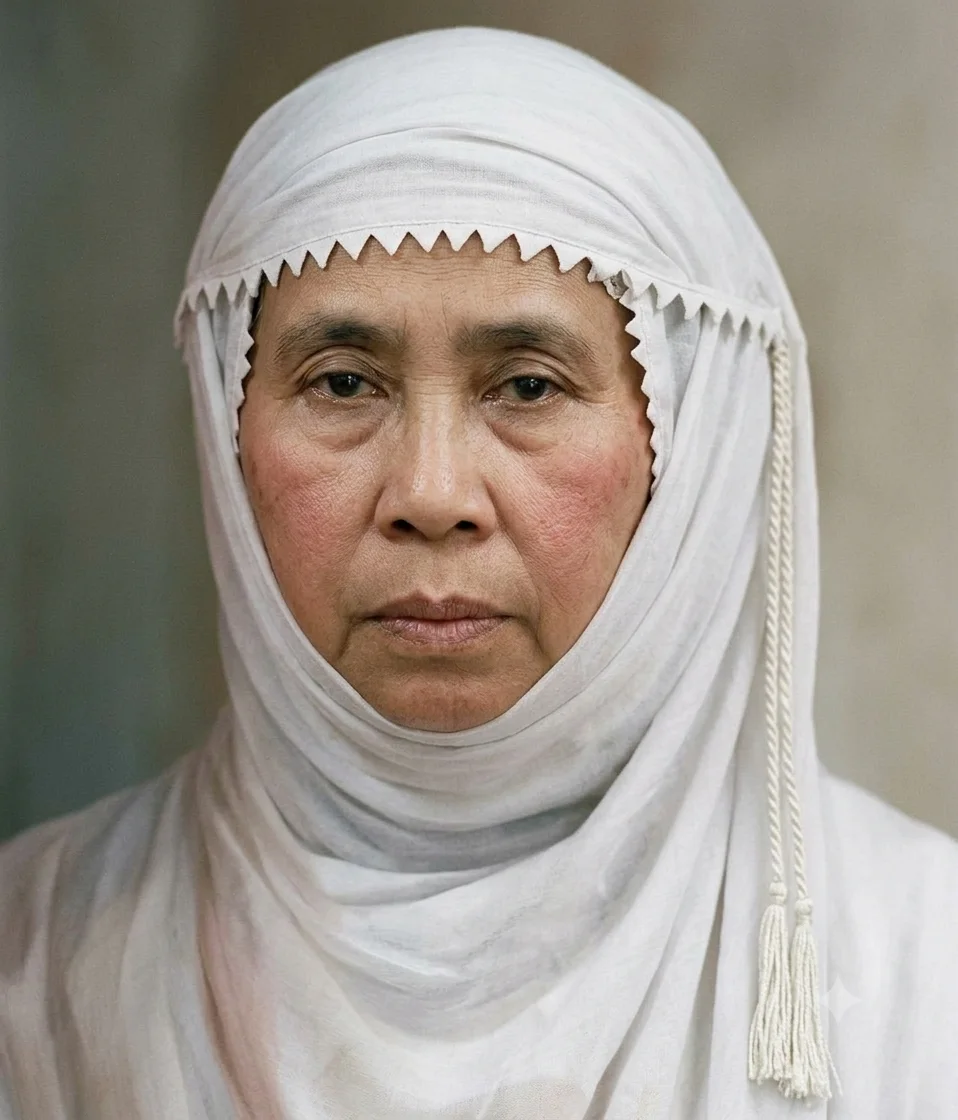
Nyai Ahmad Dahlan (1872 – 31 May 1946), born Siti Walidah, was an Indonesian Islamic reformer, educator, and women's rights advocate who founded and led Aisyiyah, the women's organizational wing of the Islamic reform movement Muhammadiyah, which her husband Kyai Haji Ahmad Dahlan had established in Yogyakarta in 1912. Through Aisyiyah, Nyai Ahmad Dahlan built an extensive network of girls' schools, literacy programs, and women's Islamic education initiatives across Java and, eventually, the wider Indonesian archipelago, becoming one of the most consequential figures in the modern history of women's education and religious leadership in Southeast Asian Islam. In recognition of her contributions, the Indonesian government formally declared her a National Hero of Indonesia in 1971, an honor that her husband Ahmad Dahlan had himself received a decade earlier, making them one of the relatively few married couples in Indonesian history to be jointly recognized with this highest national civilian distinction.
Nyai Ahmad Dahlan's life and work occupy a significant place in the broader history of Islamic reform movements in early twentieth-century Southeast Asia, a period in which reformist currents seeking to modernize Islamic education, challenge entrenched traditional religious authority structures, and respond to the pressures of Dutch colonial rule were reshaping religious and social life across the Dutch East Indies. Her specific contribution — the organization and formalization of a dedicated women's wing within the broader Muhammadiyah movement, dedicated to advancing women's religious education, literacy, and social welfare — established an institutional model whose influence would extend far beyond her own lifetime, as Aisyiyah grew into one of the largest and most enduring Muslim women's organizations in the world, continuing to operate schools, health clinics, and social welfare programs across Indonesia into the present day.
The broader historical context of Nyai Ahmad Dahlan's life and work was shaped by the specific religious and political conditions of the Dutch East Indies in the late nineteenth and early twentieth centuries, a period in which Java's Muslim population — the overwhelming majority of the island's inhabitants — lived under a colonial administration that, while generally avoiding direct interference in matters of Islamic religious practice, maintained an extensive and often intrusive system of surveillance and control over Islamic religious authorities and institutions, born of longstanding Dutch colonial anxiety regarding the potential for Islamic religious sentiment to fuel anti-colonial resistance. Within this broader colonial context, the emergence of organized Islamic reform movements such as Muhammadiyah, seeking to modernize Islamic education and religious practice while simultaneously building an institutional infrastructure of schools, health facilities, and social welfare programs largely independent of direct colonial government provision, represented a historically significant development in the religious and social history of the Indonesian archipelago, one whose implications extended well beyond matters of narrowly religious doctrine to encompass broader questions of social welfare provision, education, and, eventually, the cultivation of a nationalist political consciousness that would contribute to the eventual movement for Indonesian independence.
Early Life and Family Background
Siti Walidah was born in 1872 in the Kauman quarter of the city of Yogyakarta, a district of the city closely associated with the Sultanate of Yogyakarta and home to a concentrated community of religious scholars and officials connected to the sultanate's religious administration. She was the daughter of Kyai Haji Muhammad Fadli, an ulama (Islamic religious scholar) who held a position within the religious establishment of the Yogyakarta Sultanate, a court that, notwithstanding the overarching reality of Dutch colonial suzerainty over Java by this period, retained its own internal administrative and religious institutions, including recognized religious offices staffed by scholars such as Walidah's own father. Growing up within this religiously learned and socially connected milieu, Walidah received a thorough home education in various dimensions of Islamic learning, including instruction in Arabic and in the reading of the Quran, which she learned to read in the Jawi script — the Arabic-derived writing system historically used for the Malay language across much of maritime Southeast Asia, and a medium through which a substantial body of Islamic religious literature circulated among Muslim communities in the region who lacked full fluency in Arabic itself.
This combination of a religiously learned family background and access to a level of formal religious education relatively unusual for a girl of her generation and social context in late nineteenth-century Java provided Walidah with the intellectual and religious grounding that would later inform her own reformist activities, equipping her with sufficient independent facility in Quranic reading and Islamic textual sources to engage directly and substantively with religious material rather than depending entirely on secondhand religious instruction mediated through male relatives or religious authorities, an independent capacity for engagement with primary religious texts that would prove directly relevant to her later work leading Quranic study groups and developing religious education curricula for women through Aisyiyah.
Marriage to Ahmad Dahlan
Siti Walidah married her cousin, Ahmad Dahlan — born Muhammad Darwis, and a figure who would go on to found the influential Islamic reform organization Muhammadiyah in 1912 — in a marriage that, following the well-established pattern of cousin marriage common within the closely knit religious scholarly community of Kauman, connected two families already linked by shared religious learning and social standing within Yogyakarta's Islamic scholarly milieu. The couple had six children together over the course of their marriage. As her husband developed and expanded the Muhammadiyah movement in the years following its 1912 founding, Walidah accompanied him extensively in his travels across Java and beyond, undertaken in connection with his organizational and missionary (dakwah) activities on behalf of the new movement.
This period of accompanying her husband's reformist religious activities was not without personal danger: Ahmad Dahlan's reformist theological positions — which challenged, among other things, certain established local religious practices that he and his fellow reformists regarded as unwarranted accretions inconsistent with what they understood as authentic Islamic teaching grounded directly in the Quran and hadith rather than in received local custom or traditional scholarly interpretation — were regarded as controversial and, by some more theologically conservative segments of Javanese Muslim society, as outright threatening to established religious practice and authority. The sources record that, prior to a planned trip to the town of Banyuwangi in East Java, the couple received explicit death threats from conservative opponents of Ahmad Dahlan's reformist preaching in that region, an episode illustrating the genuine personal risk that both Ahmad Dahlan and, by extension, Walidah herself incurred through their public association with the reform movement in its earliest and most contested years.
Ahmad Dahlan's own theological formation, which underpinned the reform movement he and his wife jointly advanced, had been substantially shaped by his experience performing the hajj pilgrimage to Mecca at the age of fifteen and his subsequent extended residence in the Hejaz for approximately five years, during which he had direct exposure to the reformist currents then circulating within the broader Islamic scholarly world, including ideas associated with the Egyptian reformer Muhammad Abduh and the broader modernist Islamic reform movement that sought to reconcile Islamic teaching with contemporary intellectual and scientific developments while simultaneously calling for a return to what its proponents understood as the authentic, unadulterated teachings of the Quran and the practice of the Prophet ﷺ and his earliest companions, purged of what reformists regarded as later accretions of unwarranted local custom and philosophically or mystically inflected interpretation. Ahmad Dahlan founded Muhammadiyah in Yogyakarta in 1912 as the organizational vehicle for propagating this reformist vision within the specific religious and social context of Java, and Nyai Ahmad Dahlan's own subsequent work through Sopo Tresno and Aisyiyah represented, in significant part, the practical extension and application of this same reformist theological framework specifically to the religious education and social welfare of Javanese Muslim women, an application that her husband's own movement, in its early years, had not yet systematically developed on its own initiative.
Founding Sopo Tresno and the Path to Aisyiyah
In 1914, Nyai Ahmad Dahlan established a prayer and study group named Sopo Tresno — a Javanese phrase meaning "Who Loves" — within which she and her husband took turns leading sessions of collective Quranic reading and discussion of its meaning and application, a format that combined devotional recitation with substantive engagement with the text's content and implications, consistent with the broader reformist Muhammadiyah emphasis on direct engagement with scriptural sources (ijtihad, or independent scriptural interpretation) rather than exclusive reliance on received traditional interpretation (taqlid). Within this study group format, Nyai Ahmad Dahlan progressively directed increasing attention specifically toward Quranic passages addressing matters of particular relevance to women's lives and concerns, developing what amounted to an early curriculum of women-focused Quranic study and religious education within the broader Sopo Tresno framework.
Beyond its explicitly religious educational function, the Sopo Tresno group and the broader educational activities that Nyai Ahmad Dahlan and her husband conducted through it served an additional and, in the specific colonial context of early twentieth-century Java, significant social function: by teaching literacy — reading and writing — to the women and girls who participated in these study circles, the couple's efforts contributed to slowing the spread of Christian missionary influence that was being actively promoted through schools sponsored by the Dutch colonial government and by various Christian missionary organizations operating in Java during this period, offering an alternative avenue for girls' basic literacy education grounded explicitly in Islamic religious content and framework rather than in the colonial or missionary educational institutions that might otherwise have represented the only accessible option for girls seeking any form of formal education in many parts of rural and small-town Java at the time.
The formal transformation of this initial study group into a permanent, structured women's organization emerged from discussions that Nyai Ahmad Dahlan conducted with her husband and with several other senior figures within the developing Muhammadiyah movement, addressing the question of how best to institutionalize and expand the women's religious education and welfare activities that had grown out of the Sopo Tresno initiative. An initial proposal to name the new organization "Fatimah," after the Prophet's ﷺ daughter, was considered but ultimately set aside in favor of the name "Aisyiyah," derived from Aisha bint Abu Bakr, the wife of Prophet Muhammad ﷺ renowned within Islamic tradition for her extensive scholarly learning and her role as one of the most prolific transmitters of hadith and religious knowledge among the Prophet's companions — a naming choice that explicitly and deliberately positioned the new organization's mission within a framework of women's scholarly and religious authority modeled directly on one of the most learned women in the foundational history of Islam.
The Establishment and Growth of Aisyiyah
Aisyiyah was formally established on 22 April 1917, with Nyai Ahmad Dahlan serving as its founding head, and the organization was formally incorporated as a constituent part of the broader Muhammadiyah movement five years later, in 1922, cementing its institutional position as the recognized women's wing of what would become, over the following decades, one of the two largest Islamic mass organizations in Indonesia (alongside the more traditionally oriented Nahdlatul Ulama, founded in 1926). Through Aisyiyah, Nyai Ahmad Dahlan directed the establishment of girls' schools and residential dormitories across Java, alongside literacy programs and structured Islamic education curricula specifically designed for women and girls, building on and formalizing the educational approach she had initially developed through the earlier Sopo Tresno study group.
Nyai Ahmad Dahlan also used her position as Aisyiyah's leader to advocate publicly against the practice of forced marriage, a position that placed her organization's activities within a broader current of early twentieth-century reform addressing the social and legal status of women within Javanese and Indonesian Muslim society more generally. In a further reflection of her distinctive approach to questions of gender within an Islamic framework, and in explicit contrast to the more rigidly hierarchical gender norms characteristic of much of traditional Javanese social custom, Nyai Ahmad Dahlan articulated a vision of marriage in which women were understood as genuine partners (mitra) to their husbands rather than as subordinates, an argument she grounded in her own reading of Islamic textual sources regarding the mutual rights and responsibilities of spouses within marriage.
Aisyiyah's educational programs operated within the broader framework of Ahmad Dahlan's own distinctive educational philosophy, organized around what came to be known as the "Four Tenets" (Catur Pusat) of education: education received within the home, education received at formal school, education received through broader engagement with society, and education received at places of worship — a comprehensive framework that positioned formal schooling as only one component within a broader, integrated approach to religious and social formation, an approach that Aisyiyah's own network of schools and educational programs for women and girls was specifically designed to implement and reinforce. Nyai Ahmad Dahlan personally traveled to visit and support Aisyiyah's branches as they were established across various regions of Java, extending the reach of the organization's educational and religious activities considerably beyond its original base in Yogyakarta.
The specific educational curriculum that Aisyiyah developed under Nyai Ahmad Dahlan's leadership combined instruction in basic literacy — reading and writing in both Arabic script (for Quranic study) and the Latin-based script increasingly used for the Malay and Javanese languages under the influence of colonial-era printing and publishing — with structured religious instruction addressing Quranic recitation and interpretation, the fundamentals of Islamic jurisprudence and practice, and, reflecting Nyai Ahmad Dahlan's own particular thematic emphasis within her Quranic study, specific attention to religious teachings bearing directly on women's rights, responsibilities, and social roles within an Islamic framework. This curriculum represented a genuinely innovative synthesis for its time and place, combining an explicitly reformist theological orientation with a practical, systematically organized approach to women's mass literacy and religious education that had few close precedents within the existing landscape of Islamic education in Java, which had traditionally been organized around the pesantren (Islamic boarding school) system, an institution that, while making some provision for girls' religious education in certain instances, had not typically developed the kind of dedicated, systematically organized, and rapidly expanding women's educational network that Aisyiyah, under Nyai Ahmad Dahlan's direction, succeeded in establishing within a remarkably short span of years following its 1917 founding.
Comparative Context: Women's Reform Movements in the Colonial Muslim World
Nyai Ahmad Dahlan's work through Aisyiyah can be usefully situated alongside other contemporary movements for Muslim women's education and reform emerging across the colonial and semi-colonial Islamic world in the same general period. In British India, comparable currents of Muslim women's educational reform were being advanced by figures operating within different but related religious and political contexts, including through the broader modernist educational reform movement associated with institutions such as Aligarh Muslim University and the wider current of Islamic modernism influenced by figures such as Sayyid Ahmad Khan. In the Middle East, the Egyptian reformer Muhammad Abduh, whose broader theological framework had directly influenced Ahmad Dahlan's own religious formation during his residence in the Hejaz, likewise engaged with questions of women's education and social status as part of his broader project of Islamic modernist reform, contributing to a wider current of early twentieth-century Islamic reformist thought addressing women's roles that extended across multiple regions of the Islamic world during the same general period in which Nyai Ahmad Dahlan was developing her own practical educational initiatives in Java.
What distinguished Nyai Ahmad Dahlan's specific contribution within this broader comparative context was the combination of her own direct personal leadership of a mass women's organization — rather than operating primarily as an intellectual advocate or theorist of women's educational reform — with the practical institutional durability of the organization she founded, which, unlike many contemporary reform initiatives across the wider Islamic world that failed to survive the death of their founders or the subsequent upheavals of decolonization and independence, continued to grow and operate without interruption across the subsequent century, surviving Japanese occupation, the Indonesian independence struggle, and the extensive social and political transformations of Indonesia's subsequent history as an independent nation. This institutional durability, more than any single specific programmatic innovation, arguably represents Nyai Ahmad Dahlan's most historically significant and distinctive achievement relative to comparable contemporary reform movements addressing Muslim women's education and social status elsewhere in the early twentieth-century Islamic world.
Leadership Through Widowhood and War
Ahmad Dahlan died in 1923, after which Nyai Ahmad Dahlan continued to lead and expand both Muhammadiyah's broader activities and Aisyiyah specifically, demonstrating a capacity for sustained organizational leadership extending well beyond the initial period of the movement's founding under her husband's direct leadership. In 1926, she chaired the fifteenth Muhammadiyah Congress, held in Surabaya, becoming the first woman to chair a Muhammadiyah national congress — a landmark of institutional recognition for her leadership role within a movement whose broader membership and formal governance structures remained, in this period, predominantly male. This event received extensive coverage in the contemporary Indonesian press, including in newspapers such as Pewarta Surabaya and Sin Tit Po, publicity that contributed to attracting further prominent women to join Aisyiyah's ranks and to the establishment of additional Aisyiyah branches across other islands of the Indonesian archipelago beyond Java, extending the organization's geographic reach and membership base substantially during this period of her continued leadership.
Nyai Ahmad Dahlan continued to lead Aisyiyah until 1934, after which the organization's leadership passed to subsequent successors even as she remained a figure of continuing influence and moral authority within the broader Muhammadiyah movement. During the Japanese occupation of the Dutch East Indies (1942-1945), a period of severe hardship and dislocation across Indonesian society, Aisyiyah's formal activities were restricted under a Japanese military administrative order of September 1943 prohibiting the organization from conducting independent activities involving women. Notwithstanding this formal restriction, Nyai Ahmad Dahlan continued to work through the schools associated with the movement, and specifically worked to resist Japanese occupation policies requiring students to participate in rituals of sun worship (associated with Japanese Shinto religious practice) and to sing Japanese patriotic songs, resistance activities that placed her in a position of quiet but meaningful opposition to specific aspects of Japanese occupation policy even during a period when open organizational activity had been formally curtailed.
The Japanese occupation of the Dutch East Indies, following the rapid collapse of Dutch colonial administration in early 1942, introduced a new and in many respects more severe set of pressures on Indonesian religious and civic organizations than those the colonial Dutch administration itself had generally imposed, as Japanese occupation authorities sought to mobilize the Indonesian population, including its religious institutions and organizations, in direct support of the Japanese war effort, while simultaneously suppressing or tightly controlling any organizational activity, including women's religious and educational associations such as Aisyiyah, that might provide an independent basis for social organization outside Japanese-sanctioned channels. Nyai Ahmad Dahlan's continued, if necessarily more discreet, work through the Muhammadiyah educational network during this period — maintaining, so far as circumstances allowed, the religious content and character of the schools' curriculum against Japanese pressure to substitute Japanese nationalist and religious content — represented a significant, if quietly conducted, act of institutional and cultural preservation during one of the most disruptive periods in modern Indonesian history, helping to ensure that the educational infrastructure she and her husband had spent decades building did not simply collapse or become entirely repurposed to serve Japanese occupation objectives during the several years of Japanese rule.
During the subsequent Indonesian National Revolution (1945-1949), the armed and diplomatic struggle through which Indonesia secured its independence following the end of Japanese occupation and the attempted reassertion of Dutch colonial control, Nyai Ahmad Dahlan operated soup kitchens from her own home to support Indonesian soldiers engaged in the independence struggle, and actively promoted military service and participation in the revolutionary struggle among her former students, translating her decades of educational and organizational leadership into direct, practical support for the nationalist cause during Indonesia's most critical struggle for independence. She is also recorded as having participated in discussions regarding the course of the revolutionary struggle with prominent nationalist figures including General Sudirman, the founding commander of the Indonesian National Armed Forces, and President Sukarno, Indonesia's first president, reflecting the degree of respect and access to the highest levels of the nascent Indonesian nationalist leadership that her decades of religious and educational leadership had earned her by this final period of her life.
Death and Legacy
Nyai Ahmad Dahlan died at one o'clock in the afternoon (local time) on 31 May 1946 and was buried, four hours later, behind the Great Mosque of Kauman in Yogyakarta — the same religious and geographic milieu in which she had been born, raised, and had conducted the great majority of her decades of educational and organizational work. Her funeral was attended by senior representatives of the newly independent Indonesian government, including State Secretary Abdoel Gaffar Pringgodigdo and the Minister of Religion Rasyidi, an official governmental presence at her funeral that reflected the significant public standing she had achieved by the time of her death, only months after Indonesia's declaration of independence in August 1945.
On 10 November 1971, Nyai Ahmad Dahlan was formally declared a National Hero of Indonesia by President Suharto, under Presidential Decree Number 42/TK of 1971, an honor that her late husband Ahmad Dahlan had himself received a decade earlier, in 1961. The award was formally accepted on her behalf by her granddaughter, M. Wardan. In subsequent Indonesian historical memory and public commemoration, Nyai Ahmad Dahlan has frequently been discussed alongside other prominent Indonesian women recognized for their contributions to the nation's development and independence struggle, including the women's rights advocate Raden Ajeng Kartini and the armed independence fighters Cut Nyak Dhien and Cut Nyak Meutia, situating her specifically educational and religious-organizational form of contribution to Indonesian national development alongside these other, differently oriented but comparably celebrated, models of exemplary Indonesian womanhood.
The specific comparison frequently drawn between Nyai Ahmad Dahlan and Kartini — the aristocratic Javanese women's rights advocate whose posthumously published letters, Door Duisternis tot Licht (From Darkness to Light), had established her as one of the most celebrated symbols of Indonesian women's emancipation from the early twentieth century onward — is historically instructive, since it highlights two distinct, though not necessarily opposed, currents within the broader early twentieth-century movement for Indonesian women's advancement: Kartini's advocacy, shaped by her own aristocratic background and her engagement with contemporary European liberal and feminist thought communicated through her correspondence with Dutch friends, emphasized women's access to secular education and intellectual emancipation, articulated in terms that drew substantially on broader, internationally circulating discourses of women's rights; Nyai Ahmad Dahlan's own parallel but distinct project, by contrast, grounded its advocacy for women's literacy, education, and social dignity explicitly and primarily within an Islamic religious framework, drawing its authority and legitimacy from her own direct engagement with Quranic sources and Islamic religious argumentation rather than from imported secular or specifically Western feminist discourse. That both women have come to be jointly celebrated as foundational figures in the modern Indonesian history of women's advancement, despite these differing intellectual and religious frameworks, reflects the plural character of the broader currents that contributed to the modern transformation of Indonesian women's social and educational status during the final decades of Dutch colonial rule and the subsequent period of Indonesian independence.
Aisyiyah's Continuing Legacy
The organization Nyai Ahmad Dahlan founded in 1917 has continued to grow and operate continuously across the subsequent century, developing into one of the largest and most institutionally significant women's Islamic organizations anywhere in the world, with an extensive contemporary network of schools spanning early childhood through university-level education, health clinics and hospitals, orphanages, and various other social welfare institutions distributed across Indonesia's vast archipelago. Aisyiyah's continued operation and growth across more than a century since its founding, surviving the upheavals of Japanese occupation, the Indonesian independence struggle, and the subsequent decades of Indonesia's political and social development as an independent nation, represents one of the most enduring institutional legacies of any individual founder addressed within the broader history of Islamic reform movements in modern Southeast Asia.
Nyai Ahmad Dahlan's specific approach — combining rigorous engagement with Islamic textual sources, practical commitment to women's literacy and formal education, and an explicit theological grounding of women's dignity and partnership within marriage in her own reading of Quranic teaching — established a durable model for Islamic feminist and reformist activity within the specifically Indonesian and broader Southeast Asian Islamic context, a model that continues to inform the ongoing work of Aisyiyah and of the broader current of Indonesian Muslim women's religious and educational leadership that her pioneering organizational work helped to establish. Her life and legacy have subsequently been dramatized in Indonesian popular culture, including her portrayal by the actress Zaskia Adya Mecca in the 2010 film Sang Pencerah (The Enlightener), directed by Hanung Bramantyo, which addresses the founding of Muhammadiyah and features both Ahmad Dahlan and Nyai Ahmad Dahlan as central figures in its narrative of early twentieth-century Indonesian Islamic reform.
In the specifically contemporary period, Aisyiyah has developed into an organization whose scale and institutional sophistication would likely have exceeded even Nyai Ahmad Dahlan's own expectations at the time of the organization's modest 1917 founding as a formalization of the earlier Sopo Tresno study circle. The organization today operates an extensive network of educational institutions spanning kindergarten through university level — including Aisyiyah's own universities — alongside hospitals, maternal and child health clinics, orphanages, and various other social welfare institutions distributed across the Indonesian archipelago, engaging in public health initiatives, disaster relief work, and continued advocacy on issues affecting Indonesian Muslim women, maintaining an institutional continuity of mission that directly traces its lineage back to the specific educational and welfare priorities that Nyai Ahmad Dahlan herself established through her original Quranic study circle and its subsequent institutional formalization as Aisyiyah. Aisyiyah's continuing role within contemporary Indonesian civil society, functioning alongside its male-led parent organization Muhammadiyah as one of the largest and most institutionally significant Islamic mass organizations in the world's most populous Muslim-majority nation, stands as perhaps the single most consequential and enduring measure of Nyai Ahmad Dahlan's own historical significance, more than a century after she first began leading the small Quranic study circle from which this vast subsequent institutional edifice would ultimately grow.
Beyond Indonesia's own borders, Nyai Ahmad Dahlan and the broader Aisyiyah model she established have attracted increasing international scholarly attention as a significant case study within the broader comparative history of Islamic feminism and women's religious organizational leadership, offering researchers and practitioners in other Muslim-majority contexts a documented historical example of an explicitly Islamic, reformist, and institutionally durable model for advancing women's education, literacy, and social welfare — a model whose century-long track record of sustained institutional growth and continued relevance provides a substantive historical counterpoint to any assumption that women's religious leadership and organizational authority within an explicitly Islamic institutional framework represents either a historically novel phenomenon or one inherently constrained to marginal or short-lived expression within the broader landscape of modern Islamic religious and social history.
References and Further Reading
Primary Islamic Sources
- Quranic passages addressing women's rights, roles, and mutual marital partnership, as specifically studied and taught within the Sopo Tresno and subsequent Aisyiyah educational curricula developed by Nyai Ahmad Dahlan
- The "Four Tenets" (Catur Pusat) educational framework developed by Ahmad Dahlan and implemented through Aisyiyah's educational institutions, addressing home, school, societal, and religious dimensions of education
Classical Islamic Sources
- No classical-era Islamic sources apply directly to this twentieth-century historical figure; her life and work are documented primarily through Indonesian-language biographical and historical scholarship, contemporary press accounts, and institutional records of Muhammadiyah and Aisyiyah
Academic and Scholarly Sources
- Wahyudi, Jarot. "Nyai Ahmad Dahlan: Penggerak Perempuan Muhammadiyah" [Nyai Ahmad Dahlan: Mover of Muhammadiyah Women]. In Ulama Perempuan Indonesia [Indonesian Women Ulamas], edited by Jajat Burhanuddin, 39-67. Jakarta: Gramedia Pustaka Utama, 2002.
- Sudarmanto, Y.B. Jejak-Jejak Pahlawan dari Sultan Agung hingga Syekh Yusuf [The Footsteps of Heroes from Sultan Agung to Syekh Yusuf]. Jakarta: Grasindo, 1996.
- Komandoko, Gamal. Kisah 124 Pahlawan & Pejuang Nusantara [Stories of 124 Indonesian Heroes and Fighters]. Sleman: Pustaka Widyatama, 2006.
- Ajisaka, Arya, and Dewi Damayanti. Mengenal Pahlawan Indonesia [Knowing Indonesian Heroes]. Jakarta: Kawan Pustaka, 2010.
- Noer, Deliar. The Modernist Muslim Movement in Indonesia, 1900-1942. Singapore: Oxford University Press, 1973.
Further Reading
- Nakamura, Mitsuo. The Crescent Arises Over the Banyan Tree: A Study of the Muhammadiyah Movement in a Central Javanese Town. Yogyakarta: Gadjah Mada University Press, 1983.
- Van Doorn-Harder, Pieternella. Women Shaping Islam: Indonesian Women Reading the Qur'an. Urbana: University of Illinois Press, 2006.
- Alfian. Muhammadiyah: The Political Behavior of a Muslim Modernist Organization Under Dutch Colonialism. Yogyakarta: Gadjah Mada University Press, 1989.
Mentioned In
1 article references this topic
More from Modern Era
Aligarh Muslim University: From the Muhammadan Anglo-Oriental College to a Central University
Aligarh Muslim University grew out of the school founded by Syed Ahmad Khan in 1875, which became the Muhammadan Anglo-Oriental College in 1877 and a university by Act of the Indian legislature in 1920. It was the central institution of the Aligarh Movement.
Growth of Islamic Finance
Banking and financial services conducted according to Islamic law, which forbids interest and requires risk to be shared. From institutional beginnings in the 1960s the sector has grown into a multi-trillion-dollar industry serving Muslim and non-Muslim customers alike.
Hamdard Laboratories (India): From Unani Clinic to National Institution
Hamdard Laboratories (India) is a Unani pharmaceutical company and welfare institution founded in Old Delhi in 1906 by Hakeem Hafiz Abdul Majeed. Converted into a waqf in 1948 under his son Hakeem Abdul Hameed, it produces Rooh Afza and established Jamia Hamdard university in Delhi.
Islam in North America - Historical and Contemporary Overview
Islam has been present in North America for more than four centuries, beginning with enslaved West African Muslims. Some 3.45 million Muslims now live in the United States and 1.05 million in Canada, in communities formed by conversion and by immigration.