Hamdard Laboratories (India): From Unani Clinic to National Institution
Hamdard Laboratories (India) is a Unani pharmaceutical company and welfare institution founded in Old Delhi in 1906 by Hakeem Hafiz Abdul Majeed. Converted into a waqf in 1948 under his son Hakeem Abdul Hameed, it produces Rooh Afza and established Jamia Hamdard university in Delhi.
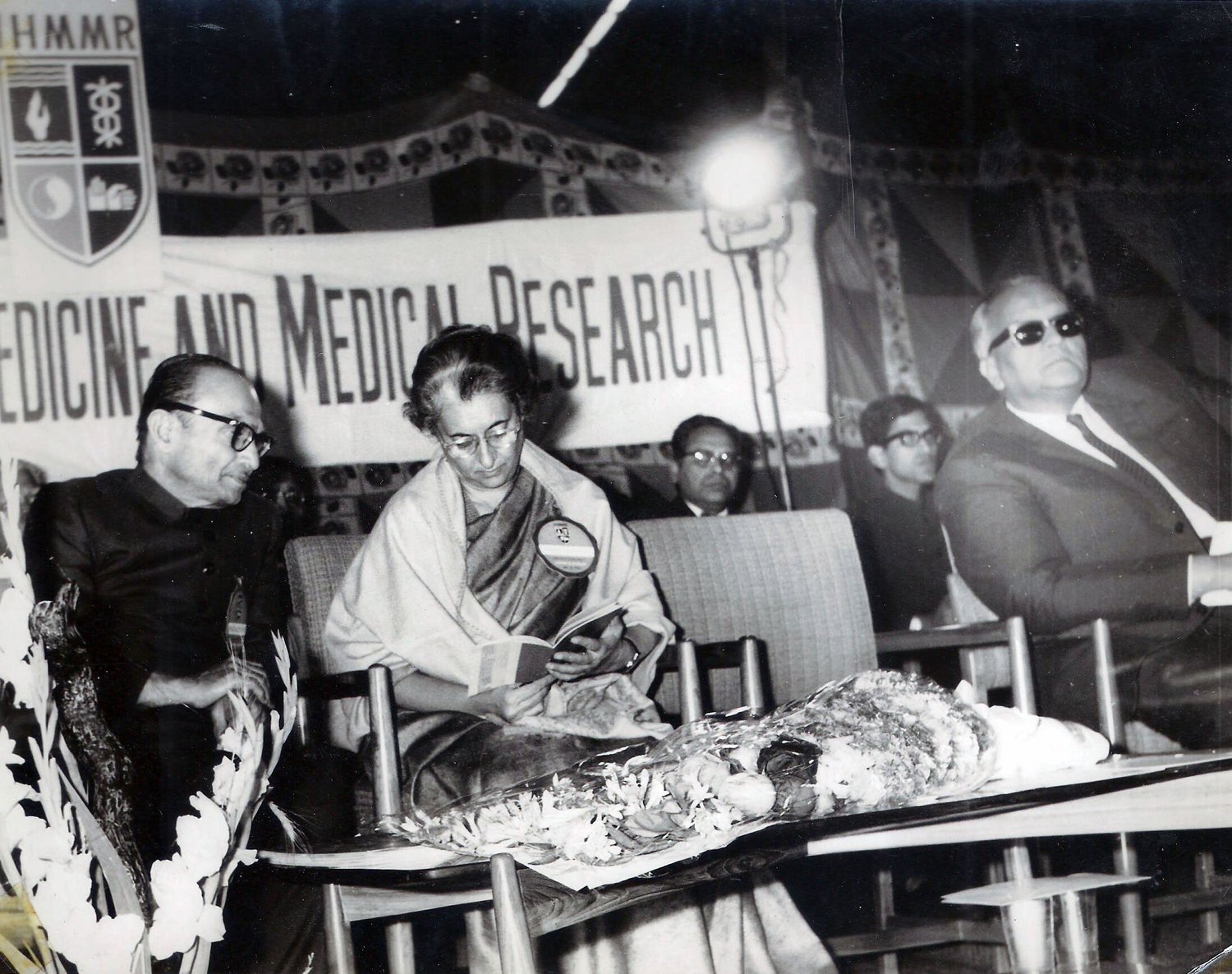
Hamdard Laboratories is an institution that traces its origin to a small Unani clinic established in the lanes of Old Delhi in 1906. Over the course of the twentieth century it grew into one of the Indian subcontinent's most significant producers of Unani (Greco-Arabic) medicines, was transformed from a commercial enterprise into a waqf (Islamic charitable endowment), and established an educational institution — Jamia Hamdard — that holds the status of a deemed university.
The institution's history spans the late colonial period, Partition, and the post-independence era. It was divided by Partition into Indian and Pakistani branches, both retaining the Hamdard name and the waqf structure, and both continuing to manufacture the products — above all Rooh Afza — that the founder had created.
Foundation and the Founder
Hakeem Hafiz Abdul Majeed (1883–1922)
Hamdard was founded in 1906 in Old Delhi by Hakeem Hafiz Abdul Majeed, a practitioner of Unani medicine. The institution's official history records that he established a small Unani clinic — a dawakhana — in "one of the by-lanes of historic Old Delhi," with the goal of easing the suffering of the sick through herbal medicines.
The name "Hamdard" is a Persian word meaning "companion in suffering" or "sympathiser with pain" (ham = companion, dard = pain/suffering). This etymology is confirmed across multiple institutional sources.
Hakeem Abdul Majeed came from a family that included herbal doctors. He was connected to the world of Unani practice in Delhi; institutional records indicate that he "joined the herbal pharmacy of the renowned Unani physician Hakim Ajmal Khan" — establishing a direct link between Hamdard's foundation and the most prominent Unani practitioner of the period.
Rooh Afza (1907)
In 1907, the year after the clinic's founding, Hakeem Abdul Majeed formulated Rooh Afza — a concentrated herbal drink whose name means "soul refresher" or "soul rejuvenator" in Urdu. The product was created in Ghaziabad (according to some accounts) or in the Delhi clinic, and was launched commercially from Old Delhi.
Rooh Afza became Hamdard's most famous product and one of the most widely consumed beverages in South Asia, particularly during Ramadan. It is still manufactured by the Indian, Pakistani, and Bangladeshi branches of the Hamdard family of companies. NDTV describes it as "India and Pakistan's beloved Iftar drink."
Early Death and Succession
Hakeem Abdul Majeed died in 1922 (Banglapedia gives the year and his lifespan as 1883–1922). He was succeeded by his wife, Rabia Begum, who kept the institution in existence with the support of their elder son, Hakeem Abdul Hameed. The official institutional history states: "his wife, Rabia Begum, with the support of her son, Hakeem Abdul Hameed, not only kept the institution in existence but also expanded it."
Growth Under the Second Generation
Hakeem Abdul Hameed (India)
As he matured, Hakeem Abdul Hameed took on full responsibility for Hamdard in India. He expanded the company from a pharmaceutical enterprise into a welfare organisation and, critically, transformed it into a waqf — a non-profit charitable trust — in 1948.
The conversion to waqf status means that Hamdard's profits are not distributed to shareholders but are directed to charitable purposes, principally health and education. This structure has been maintained since 1948 and defines the institution's character to the present.
Hakim Mohammed Said (Pakistan)
Hakeem Abdul Hameed's younger brother, Hakim Mohammed Said (1920–1998), established Hamdard in Pakistan in 1948 after Partition. He settled in Karachi with limited resources and built a separate branch of the enterprise. Banglapedia records that within a few years "the herbal medical products of Hamdard became household names" in Pakistan. Hakim Mohammed Said extended operations to East Pakistan (later Bangladesh) in 1956.
Hakim Mohammed Said was assassinated in Karachi in 1998. The Pakistan and Bangladesh branches continue to operate as separate waqf entities.
The Institutional Philosophy
The official history articulates the governing principle: "With a simple tenet that no one has ever become poor by giving, Hakeem Abdul Majeed let the whole world find compassion in him." The brothers "raised Hamdard from the status of a Unani pharmaceutical company to that of a welfare organization as well, and transformed it into a waqf or trust dedicated to the nation's health and education."
Pharmaceutical Work
Unani Medicine and Modernisation
Hamdard's pharmaceutical work has been directed toward the standardisation and modernisation of Unani formulations. The institution's official history records that challenges included "the variety of formulae given for one medicine in various pharmacopeias" and the absence of processing records. Hamdard undertook research to collect, standardise, and index recognised formulations, publishing the result as the Qarabadin-Hamdard (Hamdard Pharmacopoeia).
The institution also established research and development centres described in its official materials as "equipped with cutting-edge enabling technologies for research."
Product Range
Beyond Rooh Afza, Hamdard produces a range of Unani medicines and health products. The company's positioning is in relatively inexpensive Unani preparations accessible to a mass market — consistent with the dawakhana tradition from which it grew.
Educational Institution: Jamia Hamdard
Foundation and Development
In 1963 Hakeem Abdul Hameed founded the Hamdard Tibbi College in Delhi. In 1989 the institution was granted the status of a deemed-to-be university under the name Jamia Hamdard. The Jamia Hamdard brochure records that "even amidst the social and political turbulence of the 1947 partition, Hakeem Abdul Hameed remained committed to his dream of establishing a comprehensive center for education and research."
Jamia Hamdard offers programmes in pharmacy, medicine, nursing, sciences, social sciences, and Islamic studies. It represents the educational arm of the Hamdard waqf's commitment to directing profits toward learning.
The Waqf Structure
The transformation of Hamdard into a waqf in 1948 places it within a long Islamic tradition of charitable endowment. A waqf is an inalienable trust under Islamic law in which property or assets are dedicated permanently to a charitable purpose — historically mosques, hospitals, schools, and public facilities. Hamdard's adoption of this structure means that the institution operates as a commercial entity whose surplus serves public welfare rather than private enrichment.
This distinguishes it from both a conventional for-profit company and a pure charitable organisation: it manufactures and sells products in the market, but its legal structure prevents the extraction of profit by owners or shareholders. The educational and health activities it funds — Jamia Hamdard, research facilities — are the waqf's beneficiaries.
Partition and the Three Branches
Partition divided Hamdard into three eventually separate entities:
- Hamdard (India) — the parent company, continued in Delhi under Hakeem Abdul Hameed, operating as Hamdard (Wakf) Laboratories.
- Hamdard Pakistan — established in 1948 in Karachi by Hakim Mohammed Said, operating as Hamdard Laboratories (Waqf) Pakistan.
- Hamdard Bangladesh — extended to East Pakistan in 1956, continuing after 1971 as Hamdard Laboratories (Waqf) Bangladesh.
All three retain the waqf structure, manufacture Rooh Afza and other Unani products, and maintain educational and charitable activities. The shared origin and the shared product line make Hamdard one of the few commercial names that span the entire post-Partition subcontinent.
Historical Significance
Hamdard's significance lies in several dimensions:
In the history of Islamic medicine. It represents the survival and modernisation of the Unani tradition in the twentieth century — the transition from individual hakim practice to institutional pharmaceutical production.
In the history of Indian Muslim institution-building. The conversion to waqf status in 1948, the year after Partition, was a statement about the future of Muslim institutional life in India: that it would continue, that it would be self-sustaining through commerce, and that it would serve the community's welfare through education and health.
In the history of South Asian commerce. Rooh Afza, now over a century old, is one of the few consumer products to have been manufactured continuously across all three countries of the subcontinent since Partition.
Historiographical Note
The principal sources for this article are Hamdard India's own official website (hamdard.com), Jamia Hamdard's institutional publications, Banglapedia (the national encyclopaedia of Bangladesh, which covers the Hamdard network's subcontinental history), and journalism from NDTV and the Indian Express.
The institution's official history is the most detailed narrative available and is used accordingly, with the caveat that it is self-published institutional material that presents its subject favourably. Banglapedia provides independent confirmation of the key facts (founding date, founder, Partition division, and the establishment of the Pakistan and Bangladesh branches).
No academic monograph on Hamdard Laboratories has been identified. The history of Unani medicine in India more broadly is treated in Seema Alavi's Islam and Healing: Loss and Recovery of an Indo-Muslim Medical Tradition, 1600–1900 (Palgrave Macmillan, 2008), though that work's chronological scope ends before Hamdard's most significant period.
The connection between the founder and Hakim Ajmal Khan is recorded in institutional histories of the Hamdard network. It has not been independently verified from the accessible academic sources beyond that reference.
References and Further Reading
Primary Islamic Sources
- Quran, Surah Al-Isra (17:82) — "And We send down of the Quran that which is healing and mercy for the believers." (The scriptural basis for medicine as a religious duty)
- Quran, Surah Ash-Shu'ara (26:80) — "And when I am ill, it is He who cures me." (On divine healing and the hakim's role)
- Quran, Surah Al-Baqarah (2:261) — "The example of those who spend their wealth in the way of Allah is like a seed which grows seven spears." (On charitable giving; the theological basis of the waqf)
- Quran, Surah Al-Hashr (59:9) — "And those who, before them, had homes and had adopted the Faith — love those who emigrate to them." (On generosity and institutional service to the community)
- Sahih al-Bukhari, Book of Medicine (Kitab al-Tibb) — narrations on the obligation to seek treatment and the merit of healing (the hadith tradition undergirding Unani practice as religious service)
Classical Islamic Sources
- Ibn Sina (Avicenna). Al-Qanun fi al-Tibb (The Canon of Medicine). [Original 11th century CE — the foundational text of the Unani system that Hamdard carries forward]
- Al-Razi (Rhazes). Kitab al-Hawi fi al-Tibb. [Original 10th century CE — classical Unani pharmacology]
- Al-Biruni. Kitab al-Saydanah fi al-Tibb (Book of Pharmacy). [Original 11th century CE — Islamic pharmaceutical tradition]
- Shah Waliullah Dehlawi. Hujjat Allah al-Balighah. [Original 18th century CE — the Indian Islamic tradition of institutional service from which the Hamdard family's ethic descended]
Academic and Scholarly Sources
- Alavi, Seema. Islam and Healing: Loss and Recovery of an Indo-Muslim Medical Tradition, 1600–1900. New York: Palgrave Macmillan, 2008. [The standard academic treatment of the Unani tradition's institutional history in India]
- Banglapedia (National Encyclopedia of Bangladesh). "Hamdard." [Independent institutional source confirming the subcontinental history of the Hamdard network]
- Attewell, Guy N.A. Refiguring Unani Tibb: Plural Healing in Late Colonial India. New Delhi: Orient Longman, 2007. [On the modernisation of Unani practice in the period when Hamdard was established]
- Liebeskind, Claudia. "Unani Medicine of the Subcontinent." In Oriental Medicine: An Illustrated Guide. Ed. Jan Van Alphen and Anthony Aris. London: Serindia, 1995. [Survey of the tradition]
- Minault, Gail. Secluded Scholars: Women's Education and Muslim Social Reform in Colonial India. New Delhi: Oxford University Press, 1998. [On Muslim institutional reform in the period of Hamdard's founding]
Further Reading
- Hamdard India. Official institutional history. hamdard.com/about-us. [The most detailed narrative of the institution's founding and development]
- Jamia Hamdard. Institutional brochure and newsletter. jamiahamdard.ac.in. [On the educational institution established by the waqf]
- NDTV. "India And Pakistan's Beloved Iftar Drink Has A Legacy Behind It." April 2024. [On the history of Rooh Afza and its subcontinental significance]
- Indian Express. "Pincode 110001: Mughals, British and Unani — how a college in Delhi connects the dots." November 2022. [On the connection between Hakim Ajmal Khan, Unani medicine, and Delhi's institutional history]
Mentioned In
2 articles reference this topic