Anwar Shah Kashmiri
A Kashmiri scholar of hadith who rose to be chief teacher and shaykh al-hadith at Darul Uloom Deoband, and led it after 1915. His lectures became the Arabic commentaries Fayd al-Bari on Sahih al-Bukhari and al-Arf al-Shadhi on Jami al-Tirmidhi.
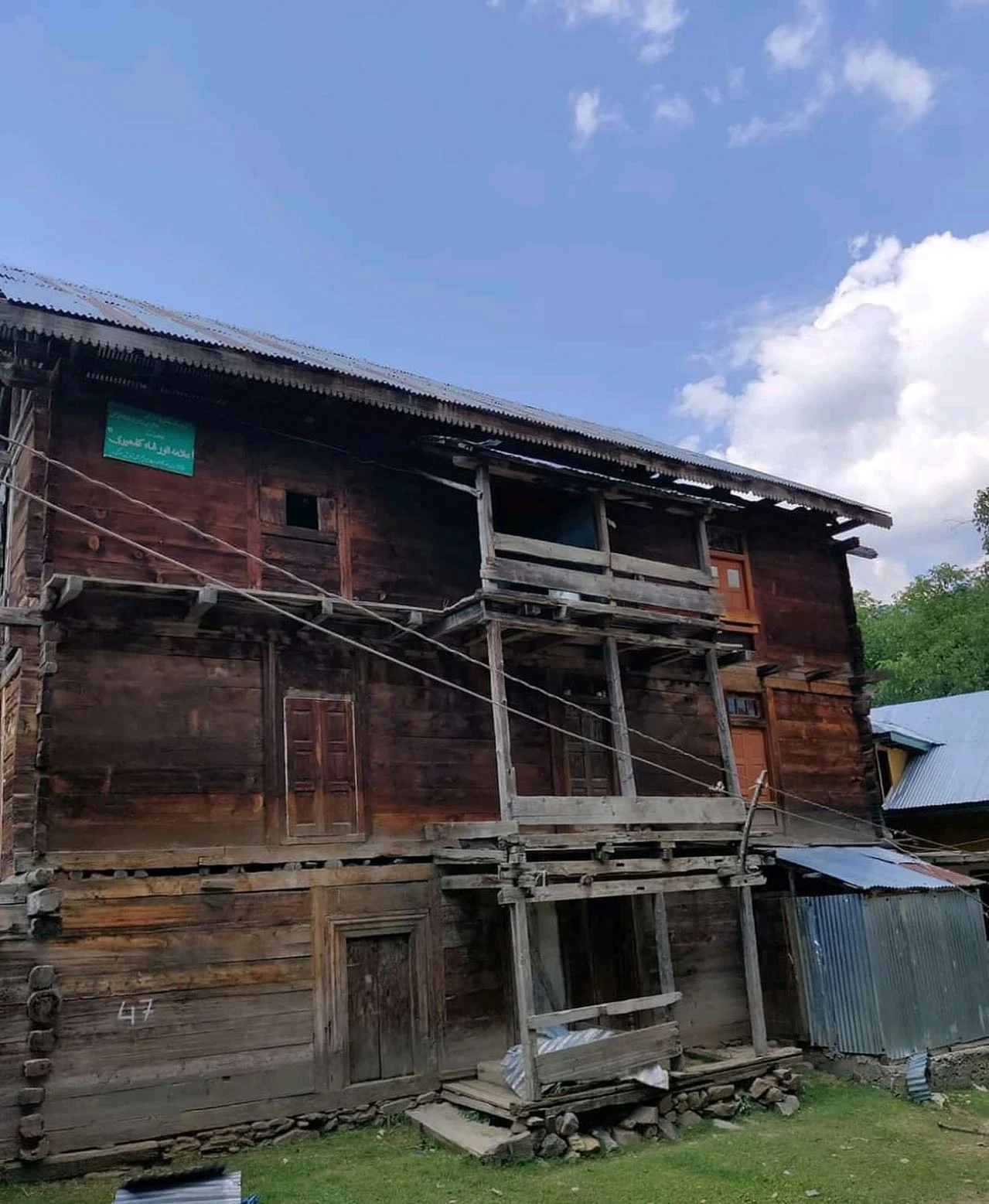
Muhammad Anwar Shah Kashmiri (26 November 1875 – 28 May 1933) was a scholar of hadith of the Deobandi tradition who rose to be chief teacher and shaykh al-hadith[a] at Darul Uloom Deoband, and who took charge of the seminary after his own teacher Mahmud Hasan Deobandi left India in 1915. Abdülhamit Birışık's entry on him in the TDV İslâm Ansiklopedisi counts him among the leading muhaddiths of the subcontinent and notes that he was known for the strength of his memory.1
He was born in Kashmir to a family that traced its migration from Baghdad, studied first with his father and then in the Hazara region, and came to Deoband as a student, graduating in 1896. After teaching in Delhi — where he founded the Madrasa-i Aminiyya — and in Kashmir, and after a period in the Hijaz working on manuscripts in the libraries of Medina, he returned to Deoband at his teacher's request and spent most of his career there. A disagreement with the seminary's other administrators took him away at the end of 1927 to the Jamia-i Islamiyya at Dabhel, near Surat, where he taught until 1931. Illness brought him back to Deoband, where he died and was buried in an orchard near the Idgah, as he had asked.
He published comparatively little himself. His two major Arabic works, the commentary Fayd al-Bari on Sahih al-Bukhari and al-Arf al-Shadhi on Jami al-Tirmidhi, were compiled by his students from his lectures, and the same is true of the Urdu commentaries that followed. This article draws on Birışık's encyclopaedia entry, on Yunoos Osman's doctoral study of his life and works, and on the institutional history of Darul Uloom Deoband by Sayyid Mahboob Rizvi, which survives in two separate printings used here as independent witnesses. The sources differ over several dates, and those differences are set out in the Historiographical Note.
Family and birth
Birışık gives his birth as 26 November 1875 at Vodvân in Kashmir, and traces his ancestors' migration from Baghdad to India, residing for a time at Multan and Lahore before settling in Kashmir.2 Osman gives the same birth date with its Hijri equivalent, 27 Shawwal 1292, and locates the village — which he spells Dudwan — near Kapwara in the valley of Lawlab.3
His father was Muazzam Shah, whom Birışık describes as a shaykh of the Suhrawardiyya order, citing the account of Muhammad Yusuf Banuri.4 Osman adds that the father was himself born in the district of Muzaffar Nagar, at a place called Kimaw; that many people in Kashmir received spiritual guidance from him; and that he died at the age of 115 and was buried at Wirnu in Kashmir. Osman records that Kashmiri's parents were practising Muslims and that he grew up in a religious household.5
Education
At home and in Kashmir
Both sources agree that his first teacher was his father. At five, on Osman's account, his father taught him the recitation of the Qur'an, and at seven instructed him in Persian. Having mastered Persian he studied Arabic grammar, fiqh and usul al-fiqh under Mawlana Ghulam Muhammad, whom Osman names more fully as Ghulam Muhammad Rasunipura, and Osman notes that he acquired a basic grounding in these subjects within two years.6
Osman preserves an anecdote from the father about the boy's memory and appetite for difficulty: while his son was working through the Mukhtasar al-Quduri, an abridged Hanafi manual of jurisprudence, he would put challenging questions of fiqh to his father which obliged the father to consult more substantial works in order to answer them.7
Hazara
In 1889, at about fourteen, Kashmiri left Kashmir for the Hazara region in search of higher Islamic learning, and studied there for about three years. Osman describes the separation from his parents as hard on the family, and Hazara as then regarded as a centre where higher Islamic education could be had, with a number of prominent scholars teaching the various branches of the Islamic sciences there. Birışık lists the subjects he took up in those years as usul al-fiqh, fiqh, astronomy, logic and philosophy.8 His thirst for learning was not satisfied there, Osman writes, and when his teachers told him about Darul Uloom Deoband he resolved to continue his studies at that institution.9
Darul Uloom Deoband
He arrived at Deoband in 1893 and graduated in 1896. Osman's account of his arrival is the fullest. In the seminary's early years there were no boarding facilities for students; Kashmiri knew nobody in the town, and so lodged in the Masjid Qadi, a mosque near the seminary, where he led the five daily prayers, cleaned the building and looked after its general affairs. It was while he was living there that one of the mosque's trustees, Qadi Ahmad Husayn, introduced him to Mahmud Hasan — the introduction through which he became the student of the scholar who would shape his career.10
At Darul Uloom, on Birışık's account, he read the principal books of hadith with Mahmud Hasan, then the seminary's chief teacher and later known as Shaykh al-Hind, together with Muhammad Ishaq Kashmiri and Khalil Ahmad Saharanpuri.11 Osman names his teachers as Mahmud al-Hasan, Khalil Ahmad Saharanpuri, Ishaq Amratsari and Ghulam Rasul, and adds details of each: Ghulam Rasul came from Hazara, completed his own studies at Deoband in 1885, was appointed to teach there in 1888, taught for thirty years and died at Deoband in 1918; Khalil Ahmad Saharanpuri was born in 1852 at Ametha in the United Provinces.12
Birışık adds that Kashmiri took hadith isnad and tasawwuf[b] from Rashid Ahmad Gangohi, and learned traditional medicine from Hakim Wasil Khan.13
Teaching career
Delhi and Kashmir
Kashmiri's first teaching post, Birışık writes, was at the Madrasa-i Abd al-Rabb in Delhi, and while he held it he founded the Madrasa-i Aminiyya and became its director, teaching hadith, tafsir and fiqh there.14 The same institution figures in the career of Mufti Kifayatullah Dehlawi, who led it afterwards.
In 1901 he went to Kashmir and established the Madrasa-i Fayz-i Amm for the work of reform and education.14
The Hijaz
Birışık dates the hajj to 1905, after which he stayed some months at Mecca and then at Medina worked on manuscripts in the library of Shaykh al-Islam Arif Hikmet and in the Mahmudiyya library. He received a hadith ijaza from Husayn al-Jisr al-Trabulusi.15
On his return he continued teaching at the Madrasa-i Fayz-i Amm for about two years. A lack of interest in the work, Birışık writes, led him to decide to settle in Medina instead; he abandoned that intention when his teacher Mahmud Hasan asked him to teach at Darul Uloom Deoband.16
Chief teacher and shaykh al-hadith
At Deoband he rose to the positions of chief teacher and shaykh al-hadith. After Mahmud Hasan left the country in 1915, in the course of the struggle against British rule, the administration of Darul Uloom Deoband fell entirely to Kashmiri on Birışık's account.17
He wanted to reform the institution — Birışık describes his aim as making it more active and more open to the newer sciences — but a disagreement arose between him and the other administrators. At the end of 1927 he left the seminary, together with some of the teachers and a number of students, and continued his work at the Jamia-i Islamiyya at Dabhel, in the Surat district, where he taught until 1931. He also established a scholarly council there for authorship and publication.18
Rizvi preserves a detail of his domestic life from this period and before it: the zest for learning was so dominant in him that for a long time the thought of marriage disturbed him, and he married at last only on the emphatic insistence of his elders, after which he began to take a salary.19
Students
Birışık names among his principal students Manazir Ahsan Gilani, Badr-i Alam Mirathi, Muhammad Idris Kandhlawi, Muhammad Shafi Deobandi and Muhammad Yusuf Banuri, citing Abd al-Rashid Arshad.20 Osman's study gives short notices of several of them: Mirathi was born at Bidayu in 1898, Ahmad Rida Bijnori in 1907, Gilani in 1892 at Ghilan in Bihar, and Banuri in 1908.21 Two of these students — Mirathi and Banuri — were the compilers of his best-known work.
Death and burial
Kashmiri died at Deoband on 28 May 1933, which Rizvi gives as the 3rd of Safar al-Muzaffar, 1352 AH. Rizvi records that after some years at Dabhel the intensity of his ailments compelled him to return to Deoband, the place he had made his home, and that he died there at the age of sixty — a figure reckoned in Hijri years, his birth falling in 1292 AH.22 The same account appears in the independent printing of that history.23
Osman names Mawlana Asghar Husayn as the one who performed the funeral prayer, and gives the fullest account of the burial. Kashmiri lies in an orchard on the outskirts of Deoband, close to the Idgah; Rizvi likewise records that the grave is situated near the Idgah.24 Osman records that it was Kashmiri's own last wish to be buried in that particular orchard, because it was there that he had often gone, and that the ground was purchased on the morning of his death. A room built of mud stood in the orchard, and it is near that room that he was buried; the place afterwards became a graveyard in which several other members of his family were buried, with a room given over to its caretaker.25
Method and standing
Reading and recall
Osman's study gathers what his contemporaries recorded of his scholarship, and the particulars are more informative than the general praise that surrounds them. He was taken as an authority on the Qur'an and hadith and as having a deep command of Arabic, and he visited most of the libraries of India and of the Arab countries to keep abreast of what was being published. Osman records, on the authority of Malfuzat-i Muhaddith Kashmiri, that he would work through two hundred pages of the Musnad of Ahmad ibn Hanbal in a day, and that in his hadith lectures he would quote from the Musnad without recourse to the written text. From Mas'ud Ahmad Qasimi's Sirat-i Anwar he records that Kashmiri read the whole of Fath al-Qadir, a commentary on the Hidaya, in twenty days and could afterwards discuss the questions it treats with ease.26
Osman records that it was common for the Indian ulama to cite Kashmiri's opinions in their own works, and gives as an instance that Shabbir Ahmad Usmani drew on them in two of his books — Fath al-Mulhim, his commentary on Sahih Muslim, and Fawa'id al-Qur'an — to support his own conclusions. Mawlana Habib al-Rahman, who died in 1929, is recorded as having called him a mobile library, and Muhammad Yusuf Banuri placed him among classical scholars of the standing of al-Ghazali, Ibn Hajar, Ibn Taymiyyah and al-Razi.27
Birışık describes Kashmiri as interested in fiqh as well as hadith, noting that he studied the principal works of the Hanafi school and also al-Shafi'i's al-Umm, and that in keeping with the tradition of his region he adhered to Hanafi fiqh.28
Several assessments by his contemporaries are recorded. Abd al-Fattah Abu Ghudda, in a work introducing six great jurists of the Muslim world of the twentieth century, placed Kashmiri first among them. The Ottoman Shaykh al-Islam Mustafa Sabri Efendi said that he preferred Kashmiri's treatise Darb al-khatam ala huduth al-alam to Sadr al-Din Shirazi's al-Asfar al-arba'a. Muhammad Zahid al-Kawthari spoke of him with praise. And Muhammad Iqbal consulted him on difficult questions of reason and philosophy, a point Birışık draws from Muhammad Azhar Shah and from Rizvi's history.29
Rizvi records a commendation by Ashraf Ali Thanvi, written of Kashmiri's Nafhat al-Anbar, which is reproduced here as the judgement of a named contemporary rather than as a description of the subject:30
According to me, among the many proofs of the truthfulness of Islam one is that of Hazrat Maulana Anwar Shah's existence; had there been any crookedness in Islam, Maulana Anwar Shah would have certainly renounced it.
Birışık's own assessment is that Kashmiri represented moderation within the Deobandi school and regarded differing views with tolerance, and he records that Kashmiri is said to have admired Ibn Taymiyyah, Ibn Hajar al-Asqalani and Muhyi al-Din Ibn al-Arabi, citing Abd al-Hayy al-Hasani.31
Sufi affiliation and poetry
Kashmiri never withdrew from the Sufi life. Besides the authorisation he had from his father, he held ijaza from Rashid Ahmad Gangohi and from Mahmud Hasan Deobandi, and he taught the litanies of the Chishtiyya, the Suhrawardiyya and the Naqshbandiyya according to the condition of the disciple before him. He was also occupied with poetry and literature, and is said to have composed more than fifteen thousand couplets.32
Character and household
Osman devotes a section of his study to Kashmiri's character, and records a number of particulars of his daily life. For many years his pay for teaching at Darul Uloom Deoband took the form of two meals a day, prepared in the principal's house and sent to him; Osman records that he neither complained of the food nor asked for anything particular. The detail sits alongside Rizvi's note that he began to take a salary only after his marriage. Osman records that he declined positions of leadership, that he treated rich and poor alike, and that anyone could see him without an appointment, his contemporaries turning to him for help with difficult religious questions. From the age of seven, Osman records, he would not handle religious texts without first performing wudu; and he is reported to have said that he counted himself the slave of anyone who had taught him so much as a single word.33
Osman cites Qari Muhammad Tayyib, in Nur al-Anwar, as observing that the practical application of many of the Prophet's sunnah could only be understood by watching Kashmiri put them into practice. Among the assessments Osman collects is one by Ata Allah Shah Bukhari, who, asked how he would describe him, answered that the caravan of the Companions had passed by and Kashmiri had been left behind.34
Osman describes him as of medium height and strong build, with a broad forehead and a thick beard.35
Children
Osman, writing in 2001, records five children, three sons and two daughters. The eldest daughter, Abidah Khatun, died at twenty-five at Bijnor, where she had married. The second daughter, Rashidah Khatun, married Sayyid Ahmad Rida of Bijnor — the student who compiled Kashmiri's Urdu commentary on Sahih al-Bukhari, Anwar al-Bari, so that the man who put that work together was also his son-in-law. Of the sons, Azhar Shah edited the periodical Dar al-Ulum Deoband; Muhammad Akbar died young; and the youngest, Anzar Shah, taught at the Waqf Dar al-Ulum at Deoband and wrote.36
Public affairs
Rizvi presents Kashmiri as holding it an obligation to foster a genuine Islamic life among the Muslims of India, and points to his presidential address at the eighth annual session of the Jamiat al-Ulama-e Hind, held at Peshawar, as evidence of that conviction.37 Birışık adds that at the Peshawar meeting of the Jamʿiyyat-i Ulama-i Hind he criticised British policy openly.38
In 1922, on news of Mustafa Kemal's successes in the war against the occupying powers, Kashmiri wrote an Arabic qasida in his praise; Birışık draws the detail from Banuri.39
The Qadiani question
Citing Abd al-Hayy al-Hasani, Birışık describes Kashmiri as following the movement begun by Ghulam Ahmad Qadiani closely and opposing it strongly, and as giving the last part of his life to its refutation, composing some ten works on the subject.40
On 25 August 1932, in the Bahawalpur case, he appeared as rapporteur and spoke over five days to establish that the movement fell outside Islam. The record of those proceedings was afterwards collected in three volumes as Muqaddima-i Mirzaiyya Bahawalpur – Rodad-i 1926–1935, edited by Hakim Muhammad Akbar and published at Lahore in 1988.41
Writings
Birışık's entry sets out the works, and the pattern across them is that the major ones were compiled by students from his teaching rather than written by him for publication.42
Osman records the institutional arrangement through which most of them reached print. The Majlis-i Ilmi, an academy founded by Mawlana Moosa Mia at Delhi in 1929, existed primarily to gather Kashmiri's manuscripts and publish them for a wider readership; Sayyid Ahmad Bijnori and Muhammad Yusuf Banuri were closely associated with it until it was moved to Karachi in 1946, after which Mawlana Tasnim, Banuri's son-in-law, headed it until his death.43
- Fayd al-Bari ala Sahih al-Bukhari (four volumes, Cairo, 1357 AH). His dictations in the lessons on Sahih al-Bukhari, written up by his students Badr-i Alam Mirathi and Muhammad Yusuf Banuri.
- al-Arf al-Shadhi ala Jami al-Tirmidhi, edited by Muhammad Chiragh and published at Deoband without date.
- Muqaddimat Anwar al-Bari (two volumes, Gujranwala, 1981) and Anwar al-Bari, an Urdu commentary on Sahih al-Bukhari (two volumes, Gujranwala, 1988). Both are his lessons put into book form by Ahmad Rida Bijnori.
- Dawat-i Hifz-i Iman (first part, Kanpur, 1351 AH; second part, Bijnor, 1351 AH).
- al-Nur al-Faiz ala nazim al-faraid (1355 AH, place of publication not given).
- Falsafat al-Izdiwaj (Peshawar, 1360 AH).
- Khatam al-Nabiyyin, translated by Muhammad Yusuf Ludhyanawi (Multan, 1398 AH).
- Aqidat al-Islam fi hayati Isa alayhi al-salam (Dabhel, 1961), on the question whether Jesus is now living, setting out the material in the Qur'an and the hadith sources together with the views of the scholars. It had appeared earlier, with explanatory additions and further topics, as Tahiyyat al-Islam hashiyat Aqidat al-Islam (Dabhel, 1932).
- Mushkilat al-Qur'an (Delhi, 1938; Multan, undated), explaining a hundred and ninety difficult verses across forty-eight suras, put into book form by Muhammad Yusuf Banuri.
Osman offers an assessment of that last work which is worth recording, since it bears on how it should be used. He identifies two limitations: that its use of Persian throughout makes it hard going for a reader without that language, and that it is not a commentary on the whole Qur'an at all but, as its title says, an attempt on those verses generally found difficult.44
Historiographical Note
Three dates
The two fullest sources on Kashmiri's life disagree over the two dates of his early career and over the day of his death. The dates given in this article are the owner's editorial decision of 17 October 2026, taken on the sources as they stand, and the readings of each source are recorded here.
| Event | TDV (Birışık) | Osman, Life and Works | Rizvi | This article |
|---|---|---|---|---|
| Left for Hazara | 1888 | 1887, aged thirteen | — | 1889, at about fourteen |
| Arrived at Deoband | 1891 | 1889 | — | 1893 |
| Death | 28 May 1933 | 27 May 1933 (Sunday 2 Safar 1352) | 3 Safar 1352 / 1933 | 28 May 1933 |
Two observations bear on the first two rows. The sources agree that about three years separated his departure for Hazara from his arrival at Deoband, and that he graduated in 1896, so the interval rather than the endpoints is what they hold in common. And Osman's own figures do not sit together: he gives the departure as 1887 and the age at departure as thirteen, which cannot both hold for a birth in November 1875. A departure in 1889 is consistent with the age he states.
Some sources are reported to date the arrival at Deoband to 1892 rather than 1893, on the Hijri reckoning of 1310 AH.
The death date is the one row where the sources can be reconciled. Rizvi's history gives the 3rd of Safar 1352, which corresponds to 28 May 1933 and so agrees with Birışık; Osman's 2 Safar and 27 May are a day earlier than both. The time of death is reported as the night of 28 May, passing into the first minutes of the 29th, which may be the origin of a one-day divergence in sources that reckon the day differently.
His age at death
Rizvi gives his age at death as sixty years. That is a count in Hijri years — from 1292 AH to 1352 AH — and is not inconsistent with the Common Era dates, which give fifty-seven.
The name of his birthplace and of a teacher
Two apparent discrepancies are matters of transliteration and of fuller information rather than of conflict. The village of his birth appears as Vodvân in Birışık's entry and as Dudwan in Osman's, which Osman places near Kapwara in the Lawlab valley. And a teacher whom Birışık names Muhammad Ishaq Kashmiri appears in Osman's fuller account of the Deoband teaching staff as Ishaq Amratsari.
See also
- Mahmud Hasan Deobandi — his teacher at Deoband, whose departure from India in 1915 left him in charge of the seminary
- The Deobandi movement — the tradition in which he taught and which he is described as representing in its moderate form
- Mufti Kifayatullah Dehlawi — who afterwards led the Madrasa-i Aminiyya that Kashmiri founded at Delhi
- Muhammad Idris Kandhlawi and Shabbir Ahmad Usmani — among his students, the second of whom drew on his opinions in Fath al-Mulhim
- Abd al-Fattah Abu Ghudda — who placed him first among six twentieth-century jurists
- Hadith and Muhammad al-Bukhari — the literature and the collection on which his two major works comment
- Sufi orders in South Asia — the Chishti, Suhrawardi and Naqshbandi affiliations he held and taught
Notes
Explanatory notes
- a. Shaykh al-hadith is the senior teaching post in a seminary of this tradition: the chair for the hadith collections, and in a Deobandi institution the position its curriculum is built towards. It is distinct from the rectorship, which is administrative; this article records Kashmiri holding the teaching chair and then taking on the administration as well after 1915. ↩
- b. Tasawwuf, commonly rendered Sufism in English, is the inward discipline of Islam, taught by a shaykh within one of the orders (tariqa). That he took it from the same teacher who gave him his hadith isnad is characteristic of the tradition described here, in which the inward and the outward sciences were studied together rather than separately. ↩
References
Citations
Footnotes
-
Birışık, "Keşmîrî", TDV İslâm Ansiklopedisi, vol. 25, pp. 327–329 — his standing among the muhaddiths of the subcontinent and his reputation for memory. ↩
-
Birışık, "Keşmîrî" — his birth on 26 November 1875 at Vodvân in Kashmir, and the family's migration from Baghdad by way of Multan and Lahore. ↩
-
Osman, Life and Works of ʿAllamah Muhammad Anwar Shah Kashmiri — the same birth date with its Hijri equivalent, 27 Shawwal 1292, and the village, spelled Dudwan, placed near Kapwara in the Lawlab valley. ↩
-
Birışık, "Keşmîrî" — his father Muazzam Shah as a shaykh of the Suhrawardiyya, on the account of Muhammad Yusuf Banuri. ↩
-
Osman, Life and Works — the father's birth at Kimaw in the district of Muzaffar Nagar, the guidance he gave in Kashmir, his death at the age of 115 and his burial at Wirnu, and the religious household in which Kashmiri grew up. ↩
-
Osman, Life and Works — the Qur'an at five and Persian at seven under his father, then Arabic grammar, fiqh and usul al-fiqh under Ghulam Muhammad Rasunipura, with a grounding acquired within two years. ↩
-
Osman, Life and Works — the father's anecdote of the questions put to him while his son worked through the Mukhtasar al-Quduri. ↩
-
Birışık, "Keşmîrî" — the subjects taken up in the Hazara years. ↩
-
Osman, Life and Works — the separation from his parents, Hazara's standing as a centre of higher Islamic learning, and his resolve to go on to Darul Uloom Deoband. ↩
-
Osman, Life and Works — the absence of boarding facilities, his lodging and duties at the Masjid Qadi, and his introduction to Mahmud Hasan by the trustee Qadi Ahmad Husayn. ↩
-
Birışık, "Keşmîrî" — the principal books of hadith read with Mahmud Hasan, Muhammad Ishaq Kashmiri and Khalil Ahmad Saharanpuri. ↩
-
Osman, Life and Works — his teachers named as Mahmud al-Hasan, Khalil Ahmad Saharanpuri, Ishaq Amratsari and Ghulam Rasul, with the particulars of each. ↩
-
Birışık, "Keşmîrî" — the hadith isnad and tasawwuf taken from Rashid Ahmad Gangohi, and traditional medicine from Hakim Wasil Khan. ↩
-
Birışık, "Keşmîrî" — his first post at the Madrasa-i Abd al-Rabb in Delhi, his founding and direction of the Madrasa-i Aminiyya, and the Madrasa-i Fayz-i Amm established in Kashmir in 1901. ↩ ↩2
-
Birışık, "Keşmîrî" — the hajj of 1905, the months at Mecca, the manuscript work in the Arif Hikmet and Mahmudiyya libraries at Medina, and the ijaza from Husayn al-Jisr al-Trabulusi. ↩
-
Birışık, "Keşmîrî" — the two further years at the Madrasa-i Fayz-i Amm, the intention to settle at Medina, and its abandonment at Mahmud Hasan's request. ↩
-
Birışık, "Keşmîrî" — his rise to chief teacher and shaykh al-hadith, and the administration of the seminary falling to him after Mahmud Hasan left India in 1915. ↩
-
Birışık, "Keşmîrî" — his aim of reform, the disagreement with the other administrators, the departure at the end of 1927, the teaching at the Jamia-i Islamiyya at Dabhel until 1931, and the scholarly council founded there. ↩
-
Rizvi, History of the Dar al-Ulum Deoband, vol. 2 — his long reluctance to marry, the insistence of his elders, and his taking a salary afterwards. ↩
-
Birışık, "Keşmîrî" — his principal students, named on the authority of Abd al-Rashid Arshad. ↩
-
Osman, Life and Works — the short notices of Mirathi, Ahmad Rida Bijnori, Gilani and Banuri. ↩
-
Rizvi, History of the Dar al-Ulum Deoband, vol. 2 — the return from Dabhel through illness, the death on the 3rd of Safar al-Muzaffar 1352, and the age of sixty reckoned in Hijri years. ↩
-
The History of Deoband, vol. 2 — the same account of the death and burial in an independent printing. ↩
-
Rizvi, History of the Dar al-Ulum Deoband, vol. 2 — the grave situated near the Idgah. ↩
-
Osman, Life and Works — the funeral prayer led by Asghar Husayn, the orchard on the outskirts of Deoband near the Idgah, Kashmiri's own wish to be buried there, the purchase of the ground on the morning of his death, the mud-built room beside the grave, and the family graveyard that grew up around it. ↩
-
Osman, Life and Works — his standing as an authority on the Qur'an and hadith, his visits to the libraries of India and the Arab countries, and, on the authority of Malfuzat-i Muhaddith Kashmiri and of Qasimi's Sirat-i Anwar, his reading of the Musnad and of Fath al-Qadir. ↩
-
Osman, Life and Works — the citation of his opinions by the Indian ulama, Shabbir Ahmad Usmani's use of them in Fath al-Mulhim and Fawa'id al-Qur'an, and the assessments of Habib al-Rahman and Muhammad Yusuf Banuri. ↩
-
Birışık, "Keşmîrî" — his interest in fiqh, his reading of the principal Hanafi works and of al-Shafi'i's al-Umm, and his adherence to the Hanafi school. ↩
-
Birışık, "Keşmîrî" — the assessments of Abd al-Fattah Abu Ghudda, Mustafa Sabri Efendi and Muhammad Zahid al-Kawthari, and Muhammad Iqbal's consultation of him, drawn there from Muhammad Azhar Shah and from Rizvi's history. ↩
-
Rizvi, History of the Dar al-Ulum Deoband, vol. 2 — Ashraf Ali Thanvi's commendation, written of Kashmiri's Nafhat al-Anbar and quoted here as Rizvi gives it. ↩
-
Birışık, "Keşmîrî" — his moderation within the Deobandi school and his admiration of Ibn Taymiyyah, Ibn Hajar al-Asqalani and Ibn al-Arabi, on the authority of Abd al-Hayy al-Hasani. ↩
-
Birışık, "Keşmîrî" — the authorisations held from his father, Rashid Ahmad Gangohi and Mahmud Hasan, the litanies of the three orders, and his verse. ↩
-
Osman, Life and Works — the two daily meals in place of pay, his declining positions of leadership, his accessibility, his performing wudu before handling religious texts from the age of seven, and his saying about those who had taught him. ↩
-
Osman, Life and Works — Qari Muhammad Tayyib's observation in Nur al-Anwar, and Ata Allah Shah Bukhari's answer about the caravan of the Companions. ↩
-
Osman, Life and Works — his description of Kashmiri's build and appearance. ↩
-
Osman, Life and Works — his five children and what became of each. ↩
-
Rizvi, History of the Dar al-Ulum Deoband, vol. 2 — his presidential address to the eighth annual session of the Jamiat al-Ulama-e Hind at Peshawar. ↩
-
Birışık, "Keşmîrî" — his open criticism of British policy at the Peshawar meeting. ↩
-
Birışık, "Keşmîrî" — the Arabic qasida of 1922 in praise of Mustafa Kemal, drawn there from Banuri. ↩
-
Birışık, "Keşmîrî" — his close attention to and strong opposition to the movement begun by Ghulam Ahmad Qadiani, and the works he composed against it, on the authority of Abd al-Hayy al-Hasani. ↩
-
Birışık, "Keşmîrî" — his appearance as rapporteur in the Bahawalpur case from 25 August 1932, the five days of argument, and the three-volume record published at Lahore in 1988. ↩
-
Birışık, "Keşmîrî" — the list of his works with their editions, and the pattern of compilation from his teaching. ↩
-
Osman, Life and Works — the Majlis-i Ilmi founded by Moosa Mia at Delhi in 1929, its purpose, the men associated with it, and its removal to Karachi in 1946. ↩
-
Osman, Life and Works — his assessment of the limitations of Mushkilat al-Qur'an. ↩
Sources
Primary Islamic sources. His own works, as compiled and published by his students.
- Muhammad Anwar Shah Kashmiri, Fayd al-Bari ala Sahih al-Bukhari — compiled by Badr-i Alam Mirathi and Muhammad Yusuf Banuri, 4 volumes, Cairo, 1357 AH.
- Muhammad Anwar Shah Kashmiri, al-Arf al-Shadhi ala Jami al-Tirmidhi — edited by Muhammad Chiragh, Deoband.
- Anwar al-Bari, Urdu commentary on Sahih al-Bukhari — compiled by Ahmad Rida Bijnori, 2 volumes, Gujranwala, 1988.
- Muhammad Anwar Shah Kashmiri, Mushkilat al-Qur'an — compiled by Muhammad Yusuf Banuri, Delhi, 1938.
- Muqaddima-i Mirzaiyya Bahawalpur – Rodad-i 1926–1935 — edited by Hakim Muhammad Akbar, 3 volumes, Lahore, 1988; the record of the Bahawalpur proceedings of 1932.
Academic and scholarly sources.
- Abdülhamit Birışık, "Keşmîrî", TDV İslâm Ansiklopedisi, volume 25. Ankara, 2022, pp. 327–329.
- Yunoos Osman, Life and Works of ʿAllamah Muhammad Anwar Shah Kashmiri, D.Phil thesis, School of Religion and Culture, University of Durban-Westville, December 2001.
- Sayyid Mahboob Rizvi, History of the Dar al-Ulum Deoband, Volume 2, translated by Murtaz Husain F. Quraishi.
- The History of Deoband, Volume 2 — an independent printing of the same biographical material, used here as a second witness to the date of death and the burial place.
- Barbara Daly Metcalf, Islamic Revival in British India: Deoband, 1860–1900 — consulted for the institutional setting of Darul Uloom Deoband and the scholarly tradition in which he was formed. No particular claim in this article rests on it alone.
Works cited at second hand. The following were not consulted directly. Each is used only as Osman's study or Birışık's entry quotes it, and they are listed so that the chain of attribution can be followed.
- Malfuzat-i Muhaddith Kashmiri — for his reading of the Musnad of Ahmad ibn Hanbal, as Osman cites it.
- Mas'ud Ahmad Qasimi, Sirat-i Anwar — for his reading of Fath al-Qadir, as Osman cites it.
- Qari Muhammad Tayyib, Nur al-Anwar — for the observation on the Prophet's sunnah in practice, as Osman cites it.
- Abd al-Hayy al-Hasani, Nuzhat al-Khawatir, volume 8 — for his position on the Qadiani movement and his admiration of earlier scholars, as Birışık cites it.
- Abd al-Rashid Arshad — for the list of his principal students, as Birışık cites it.
Further reading
Offered to the reader for further study. Nothing in this article rests on the works below.
- Naqsh-i-Dawam — cited by Osman for the family background and the early years at Deoband.
- Abd al-Rahman Arshad, Bis Bare Musalman. Karachi: Maktab-i-Rashidiyah, 1975.
- Abd al-Fattah Abu Ghudda's study of six jurists of the twentieth-century Muslim world, in which Kashmiri is placed first.
External links
Approved sources only, each with its number on the Register of Approved External Web Sources.
- Keşmîrî — the TDV İslâm Ansiklopedisi, register entry 2: Abdülhamit Birışık's entry, on which much of this article's chronology rests
- Life and Works of ʿAllamah Muhammad Anwar Shah Kashmiri — archive.org, register entry 12: Yunoos Osman's doctoral study, the fullest account of his life consulted here
Mentioned In
9 articles reference this topic
More from South Asian Islam
Darul Uloom Deoband: The Seminary and the School of Thought
Darul Uloom Deoband is an Islamic seminary founded in northern India in 1866 or 1867 and the origin of the Deobandi school of thought. Its innovation was institutional: it carried the traditional religious sciences in the form of a modern school funded by public subscription.
The Deobandi Movement
A school of Sunni thought and practice that grew from the seminary founded at Deoband in northern India in 1866 or 1867. Its scholars combined the roles of jurist and Sufi guide, built a madrasa funded by public subscription, and made hadith the centre of religious education.
The Tablighi Jamaat
A movement of lay religious preaching founded by Muhammad Ilyas Kandhlawi in the Mewat region of northern India in the 1920s. Built on short preaching tours undertaken by ordinary Muslims, it grew from one rural district into a presence across much of the Muslim world.
Ahmed Raza Khan Barelvi and the Barelvi Movement
Ahmed Raza Khan of Bareilly (1856-1921) was an Indian Hanafi jurist, Sufi of the Qadiri order and prolific writer whose defence of the veneration due to the Prophet and the saints gave rise to the movement known as Barelvi, whose adherents call themselves the ulama of the Ahl-i Sunnat wa Jamaat.