Ibn Hisham
Ibn Hisham (d. 218 AH / 833 CE) was a historian and philologist of Basra and Fustat who produced the recension of Ibn Ishaq's biography of Prophet Muhammad. It is the oldest life of the Prophet to survive complete, and the channel through which Ibn Ishaq's lost original reached later writers.
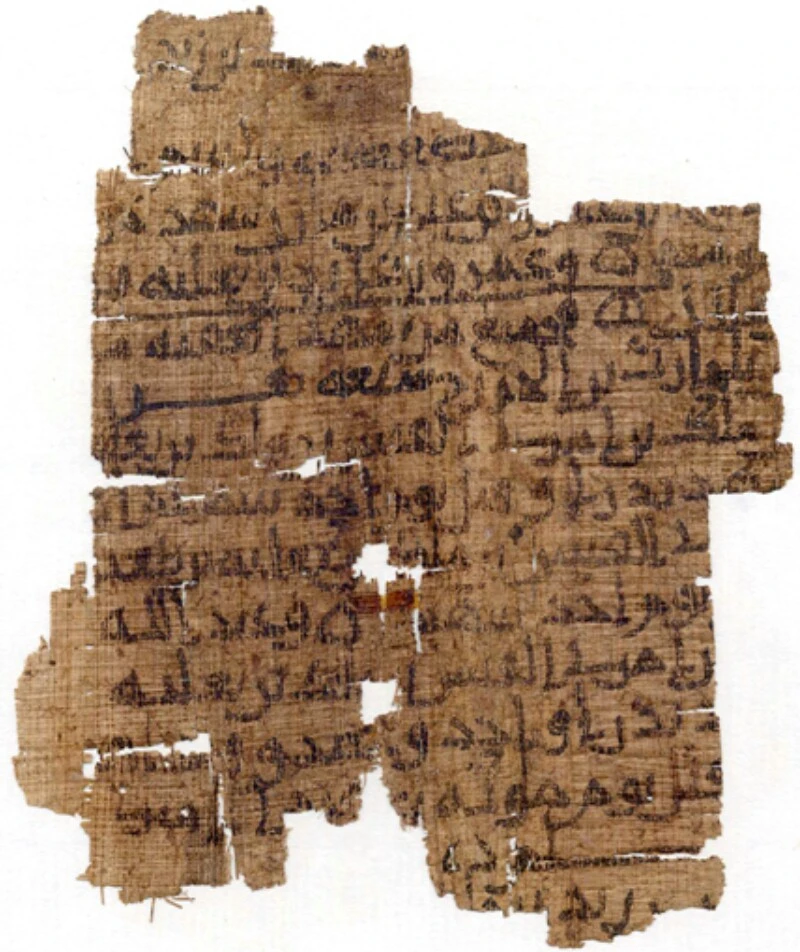
Abu Muhammad Jamal al-Din Abd al-Malik ibn Hisham ibn Ayyub al-Himyari al-Ma'afiri (Arabic: أبو محمد عبد الملك ابن هشام بن أيوب الحميري), known simply as Ibn Hisham (d. 13 Rabi al-Akhir 218 AH / 8 May 833 CE), was a historian, philologist and genealogist of Basra and Fustat. He is known for one work: the recension of Ibn Ishaq's biography of Prophet Muhammad ﷺ, which circulated under his own name as al-Sira al-Nabawiyya or Sirat Ibn Hisham.
The significance of that single book is difficult to overstate. Ibn Ishaq's original has not survived: none of the copies transmitted by his various students has come down complete, and the assessment recorded in the approved library is that the work, "though lost in its entirety, has been immortalised in the wonderful, extant abridgement of it, by Ibn Hisham." What Ibn Hisham produced is therefore the oldest biography of the Prophet to survive as a whole book, and the channel through which the earliest connected narrative of his life reached every later writer — al-Waqidi, Ibn Sa'd, al-Tabari, Ibn Kathir and, through them, the whole subsequent tradition.
He is also, unusually for a figure of such consequence, almost invisible as a person. The Diyanet İslâm Ansiklopedisi states the position plainly: although the sources introduce him as a scholar of history, akhbar, genealogy, poetry, grammar and lexicography, no information survives about his teachers, his other opinions, or most of his activity. What can be reconstructed of him comes largely from the book itself — from the several hundred places where he breaks into Ibn Ishaq's text to correct, explain, add or refuse.
Name, Origins and Career
Lineage
His nisba al-Himyari points to Yemen, and the Diyanet entry records that many sources place him in the Ma'afir branch of the Himyar tribe. Al-Dhahabi reports otherwise. Drawing on the now-lost Tarikh Misr of Abu Sa'id ibn Yunus, he holds that Ibn Hisham belonged to the Sadus branch of the tribe of Dhuhl, and the same is noted by al-Suyuti. The two accounts are not reconciled in the sources, and the Himyari nisba by which he is universally known is the one the tradition settled on.
He should not be confused with two later scholars of the same name, and the confusion is old enough that the approved library keeps both apart within a single bibliography. Ibn Hisham al-Ansari (d. 761/1360) was the Egyptian grammarian, author of Mughni al-Labib, Qatr al-Nada and Shudhur al-Dhahab; The Sealed Nectar lists his commentary separately from the Sira, with his dates given as 708–761 AH. The Diyanet encyclopaedia likewise carries three distinct entries under the name — the subject of this article, Ibn Hisham al-Lakhmi the philologist, and Ibn Hisham al-Nahwi the grammarian. A fourth figure sometimes confused with him is the genealogist Hisham ibn Muhammad al-Kalbi, whose name reverses the order of the same two elements.
Basra, Egypt and Fustat
He was born in Basra and completed his education there. That formation shows in his work rather than in any account of his studies: the philological authorities he cites when explaining a difficult word — Abu Ubayda Ma'mar ibn al-Muthanna, Yunus ibn Habib, Khalaf al-Ahmar, Abu Zayd al-Ansari, al-Hasan al-Basri — are the scholars of Basra, and his reputation as a grammarian, lexicographer and authority on poetry is the reputation of a man trained among them.
At some point he moved to Egypt, and he lived in Fustat for the rest of his life. When he left Basra, and whether he travelled to other centres of learning before settling, is not known. The Diyanet entry supplies one fixed point by inference: since he met the great Egyptian jurist Layth ibn Sa'd, who died in 175/791, he must have reached Egypt before that date. He must also have travelled to Kufa or Baghdad at some stage, since that is where he would have heard the Sira from the teacher who transmitted it to him.
Al-Shafi'i on his learning
The one glimpse of him in company comes from al-Dhahabi's Tarikh al-Islam, and it concerns al-Shafi'i. In Egypt the two men held conversations on Arabic poetry. Ibn Hisham had at first been unwilling to meet him; having met him, he recognised his depth in language, poetry and genealogy and spoke of him with praise afterwards. Al-Shafi'i's judgement ran in the other direction: he described Ibn Hisham as an authority (hujja) in language and as a scholar well trained in Arabic.
That exchange is the best evidence of how he was regarded in his own lifetime — not as a historian, which is what posterity made of him, but as a philologist whose command of poetry and of the rare word was worth a jurist's time.
The Recension of Ibn Ishaq
What he was working from
Muhammad ibn Ishaq ibn Yasar al-Madani (d. 150 or 151 AH) had composed the work known as Kitab al-Mubtada' wa'l-Mab'ath wa'l-Maghazi — the beginning, the mission and the campaigns — which is also called simply Sirat Ibn Ishaq. The assessment in the approved library is that he is "unquestionably the principal authority" on sira and maghazi literature and that every writer after him depended on his work; that most of the chains of narration he gives are also found in the authentic hadith collections; and that, like al-Bukhari and Muslim after him, he travelled widely to verify them.
Ibn Ishaq taught the book rather than publishing it, and it passed to his students in differing forms. Ibn Hisham took as his base the copy of Ziyad ibn Abdullah al-Bakka'i, one of Ibn Ishaq's best-known transmitters, in the version famous as the Kufi-Baghdadi recension. That chain is quoted in full in the Tafsir of Ibn Kathir, where an account of the expedition to Nakhla — the episode behind Quran 2:217 — is introduced as coming from "Abd al-Malik ibn Hisham, who compiled the Sirah, related that Ziyad ibn Abdullah al-Bakka'i said that Muhammad ibn Ishaq ibn Yasar al-Madani wrote in his book on the Sirah". Three names, in that order, stand between the reader and the earliest continuous life of the Prophet.
What he removed, and why he said so
Ibn Hisham did not present the book as Ibn Ishaq's unaltered text, and he did not leave his editorial principles to be guessed at. In his own preface he sets out four classes of material he has left out:
- matters not touched on in the Qur'an and having no connection with the Prophet;
- poems attributed to poets of no standing;
- certain expressions he judged indelicate or offensive;
- reports which his teacher al-Bakka'i did not find reliable.
Each of those principles can be watched operating in the text. Where Ibn Ishaq gives a poem from the years of the Meccan boycott, Ibn Hisham notes simply: "We have omitted one verse from this poem." Where the poetic exchange after Uhud runs on, he states: "We have omitted three verses from the ending of the above poem since I found them obscene." The declarations are brief, but they are declarations: the reader is told that something is missing and why, which is a different practice from silent excision.
The fourth principle is the historically weightiest, because it means the recension carries a layer of source-criticism inherited from al-Bakka'i and applied before the text reached anyone else. What Ibn Hisham transmits has already been filtered once on grounds of reliability.
What he added, and how it can be identified
His additions are as characteristic as his omissions, and he marked every one of them. Wherever he speaks in his own voice he opens with the formula "qala Ibn Hisham" — "Ibn Hisham said" — so that his matter can be separated from Ibn Ishaq's at a glance. It is a simple device and an exacting one, and it is the reason the recension can still serve as evidence for the older text beneath it.
Because Ibn Kathir's Al-Sira al-Nabawiyya quotes the two men alongside each other throughout, the pattern of those interventions can be observed directly in the approved library, where they number well over a hundred. They fall into consistent kinds, and together they amount to a working method rather than a scatter of notes.
Lexicography. He explains the rare and difficult words (gharib) in the verses, hadiths and poems the book contains, and he explains them as a philologist does, by citing poetry as evidence and naming his authorities. On the ababil of Surah al-Fil he notes that the word means groups and that the Arabs used no singular form for it that he knew of; on the sijjil of the same passage he reports that "Yunus the grammarian and Abu Ubayda told him" the Arabs used it to mean very solid. Explaining jalal he observes that it can apply to great matters or small, that here it means small, and cites a verse of Imru' al-Qays to prove it. He glosses abhar as the artery attached to the heart, and a rare bird-name as a kind of bird inclining to black. On nadih he gives his own definition — a camel that carries water to irrigate date palms — and then records that Abu Ubayda disagreed, taking it to mean the emptying of a bucket. For this material he drew on the Basran masters: Abu Ubayda Ma'mar ibn al-Muthanna above all, and also Yunus ibn Habib, Abu Muhriz Khalaf al-Ahmar, Abu Zayd al-Ansari and al-Hasan al-Basri.
Criticism of poetry and its attribution. This is his most distinctive contribution, and it is more than tidying. He subjects the verse in the Sira to the kind of scrutiny the hadith scholars applied to reports, and he records the results even when they are negative. Of one poem he writes that "most authorities on poetry deny that this poem is to be attributed to Sa'd"; of another, that "most scholars of poetry refute attribution of this poem to Hassan". Of a set of verses he says flatly: "I never met any scholar of poetry who knew these verses." Elsewhere he separates the sound from the doubtful within a single poem — "these seem to me the verses of this poem that are genuine, but some scholars expert in poetry reject most of them" — and on another he notes which lines he found authentic. He records rival attributions, names the transmitters from whom he had a poem, and preserves variant readings. At one point he observes that Ibn Ishaq quoted a poem without giving any chain of transmission at all — a remark that shows him reading his own base text with a critic's eye.
Systematic supplements. Two classes of information he added so consistently that they read as a deliberate programme. The first is administrative: for expedition after expedition he records who was left in command of Medina while the Prophet was absent — Sa'd ibn Ubada, Abu Salama ibn Abd al-Asad, Uthman, Ibn Umm Maktum, Numayla ibn Abdullah al-Laythi, Muhammad ibn Maslama, Siba' ibn Urfuta — a detail Ibn Ishaq's narrative had passed over, and one that turns the campaigns into the record of a functioning government. The second is military: he supplies the battle cries of the Muslim contingents, noting that at Khaybar the watchword was "Ya Mansur! Amit! Amit!" and that at the conquest of Mecca, Hunayn and Ta'if the Muhajirun called "O tribe of Abd al-Rahman!" while the Khazraj and the Aws each had their own.
Genealogy. The opening books trace the descent of the Arabs and of Quraysh, and here he intervenes constantly, supplying names Ibn Ishaq omitted — a daughter of Fihr named Jandala, a further son of Ghalib named Qays — and occasionally contradicting him. On the descent of al-Nadr ibn Kinana he disagrees with Ibn Ishaq outright over the identity of al-Nadr's mother. He also states the rule by which the name Quraysh is applied: anyone born in the line of al-Nadr is a Qurayshite and anyone not so born is not, though some place the dividing line at Fihr ibn Malik instead.
Correction of fact, with his own chains. He is willing to set his information against Ibn Ishaq's. On who killed Suwayd ibn al-Samit he gives one account and Ibn Kathir notes the divergence — "this is what Ibn Hisham said, but according to Ibn Ishaq it was Mu'adh ibn Afra'". He corrects the roll of those present at Badr, identifies which captor took which prisoner in three successive notes, and explains that the Companion known as Dhu al-Shimalayn was really named Umayr and acquired the nickname because he was left-handed. In one instance he intervenes to defend men's reputations: of three men Ibn Ishaq had grouped among the hypocrites, he states that they fought at Badr and were not hypocrites, "or so I have been told by a scholar whom I trust."
That phrase matters. His additions are not bare assertions: he transmits them with chains of his own — "Abu Ubayda related to me, quoting other scholars learned in the early military engagements"; "Khallad ibn Qurra and other sheikhs of Bakr ibn Wa'il told me, from certain scholars"; "more than one scholar related to me". He was a transmitter in his own right, not a copyist, and some of what is in the book is in it on his authority alone.
Restraint, stated as a principle. The clearest single statement of his editorial mind concerns a long pre-Islamic war he declined to narrate in full:
"The account of the sacrilegious war is very long, longer than I have recounted. But I have been deterred from recounting it because it would have interrupted the telling of the biography of the Messenger of God."
That is the first of his four omission principles put into a sentence: the book is a life of the Prophet, and material that does not serve that purpose is cut however interesting it may be.
Extension beyond his base text. He was also prepared to fill gaps. "There were other expeditions to which Ibn Ishaq did not refer here," he notes, before supplying them; of the force under Usama ibn Zayd he observes that "this was the last expedition dispatched by the Messenger of God." At points he carries the story past the Prophet's death — recording that a man pardoned at the conquest afterwards became a good Muslim and was appointed governor by Umar and again by Uthman, and transmitting, from Abu Ubayda, the account of how most of the Meccans considered abandoning Islam when the Prophet died until Suhayl ibn Amr held them.
Reception and Standing
The judgement of the classical authorities
The book came in time to be known by the name of its editor rather than its author — Sirat Ibn Hisham, or Tahdhib Ibn Hisham. The Diyanet entry lists the scholars who pronounced it the soundest and best of the works on the Prophet's life: al-Qifti, al-Dhahabi, Ibn Kathir, Ibn al-Imad, Ibn Khallikan and al-Sakhawi. That is a consensus running from the seventh Islamic century to the ninth, and it is the reason the recension became the base text of the tradition rather than one witness among several.
Its transmission out of Egypt ran mainly through Egyptian students, of whom the Diyanet entry names Muhammad ibn al-Hasan al-Qattan, Abd al-Rahim ibn Abdullah al-Barqi and his brother Ahmad al-Barqi.
How later scholars actually used it
The consensus on the book's standing did not translate into uncritical citation, and the approved library shows precisely how the balance was struck. The abridged Tafsir Ibn Kathir cites Sirah Ibn Hisham by volume and page at a number of points in the commentary — and at three of them the editors append an assessment of the particular report: that the story "as narrated here is not authentic"; that a narration "is not authentic due to one of the narrators being unknown"; that another "is an unauthentic narration."
The distinction those notes draw is the one the tradition settled on. Ibn Hisham's recension is the standard reference for the narrative of the Prophet's life; the standing of any individual report within it is still judged on its chain, exactly as a hadith would be. The book is treated as the indispensable record of what the earliest sira contained, not as a collection carrying blanket authenticity — a position Ibn Kathir himself adopted, and which the layered handling of sira material described in the benchmark account of the Prophet's life reflects.
Haykal illustrates the same discipline from the other direction. Discussing a widely repeated story about the Meccan goddesses, he records that Ibn Ishaq reported it and judged it a fabrication, and that Ibn Kathir declined to include it at all for fear the uninstructed would take it for truth. Critical judgement was being exercised at every stage of the chain, including by the author whose text Ibn Hisham was transmitting.
Place among the sira authorities
The bibliographical survey in the approved library sets out the hierarchy of the early authorities in order, and it begins with Ibn Hisham's abridgement of Ibn Ishaq. After it come al-Waqidi's Maghazi, described as the second most authoritative work on the sira; Ibn Sa'd's Tabaqat al-Kubra in nine volumes, by al-Waqidi's student and secretary; al-Ya'qubi, valued for sermons of the Prophet preserved nowhere else; al-Baladhuri, for the texts of the Prophet's agreements with particular groups; al-Tabari, in the world history Tarikh al-Umam wa'l-Muluk; and al-Mas'udi. Every one of them stands downstream of the text Ibn Hisham preserved.
The Afterlife of the Book
Few works in Islamic literature have accumulated so dense an apparatus, and its extent is itself a measure of the book's place.
Commentaries
Four commentaries were written on the Sira, three of which have been printed. The most extensive is al-Rawd al-Unuf fi Sharh al-Sira al-Nabawiyya li-Ibn Hisham by the Andalusian traditionist Abd al-Rahman ibn Abdullah al-Suhayli (d. 581/1185) — a work cited repeatedly in the library's own edition of Ibn Kathir, and itself abridged twice, once by al-Dhahabi. Wazir al-Maghribi (d. 418/1027) produced a fresh and sound transmission of the text with brief but valuable notes. A second Andalusian, Abu Dharr al-Khushani, wrote a commentary devoted to the rare words in it. The commentary of Badr al-Din al-Ayni, Kashf al-Litham, has not survived.
European scholarship engaged with this apparatus early: Paul Brönnle examined the commentators on the Sira in a Halle doctoral thesis of 1895 and edited al-Khushani's glossary, and Arthur Schaade published separately the commentary of al-Suhayli and al-Khushani on the poems concerning Uhud.
Abridgements, versifications and translations
The work was abridged repeatedly — among the notable abridgements those of Ibrahim al-Murahhal al-Shafi'i (611/1214), Imad al-Din al-Wasiti (711/1311) and, in modern times, Abd al-Salam Muhammad Harun's Tahdhib Sirat Ibn Hisham. It was also turned into verse by several poets, one of whom, Ibn al-Shahid al-Tilimsani, produced a rendering of more than ten thousand lines.
It was translated into Persian for the Atabeg Sa'd ibn Zangi in the early thirteenth century and again later; into Turkish first by Ayyub ibn Khalil of Aydın, who presented it to the future Murad III in 986/1578; into German by Gustav Weil as Das Leben Mohammed's nach Mohammed Ibn Ishak bearbeitet von Abd el-Malik Ibn Hischam (Stuttgart, 1864); and into Urdu at Lahore in 1971. The English version by Alfred Guillaume, published at Oxford in 1955 as The Life of Muhammad: A Translation of Ibn Ishaq's Sirat Rasul Allah, is the form in which the work is most often met in English; Haykal's bibliography enters it under Ibn Hisham's name, and the library's edition of Ibn Kathir cross-references Guillaume's pages throughout.
The printing history begins at Bulaq in 1259 AH, in three volumes. Ferdinand Wüstenfeld produced the first critical edition at Göttingen in 1858–1860, and the twentieth century brought a series of others, of which the four-volume Cairo edition of Mustafa al-Saqqa, Ibrahim al-Abyari and Abd al-Hafiz Shalabi (1355/1936, reissued 1375/1955) is the most widely cited; the approved library's own bibliographies use that edition and the Beirut printing of Dar Ihya al-Turath al-Arabi.
Other Works Attributed to Him
Beyond the Sira, two titles are associated with his name, and neither is straightforward.
Kitab al-Tijan fi Muluk Himyar — also given as al-Tijan li-Ma'rifat Muluk al-Zaman fi Akhbar Qahtan — is a book on the kings of Himyar. The attribution is qualified in two ways: it is held that the work is Wahb ibn Munabbih's and that Ibn Hisham was its transmitter rather than its author; and the Diyanet entry's assessment of its contents is that it consists of South Arabian folk material worked up into legend and mixed with biblical narrative, so that it has no historical value. It was published under Ibn Hisham's name by Fritz Krenkow at Hyderabad in 1347/1928 and again at Cairo in 1996. The book that al-Suyuti and Katib Çelebi ascribe to him as Ansab Himyar wa Mulukuha is probably the same work. Whatever its standing as history, the attribution fits the man: a Yemeni nisba, a reputation in genealogy, and a book on the Himyarite kings.
A treatise explaining the rare words in the poems of the Sira, Kitab fi Sharh ma Waqa'a fi Ash'ar al-Siyar min al-Gharib, is claimed for him by al-Suhayli and in Kashf al-Zunun. No other source mentions it, and it does not survive. Whether it was a separate book or simply the philological matter already embedded in the recension cannot be established.
Death
He died at Fustat on 13 Rabi al-Akhir 218 AH (8 May 833 CE). Some sources give 213 (828) instead, among them al-Suhayli and Kashf al-Zunun; al-Dhahabi holds that 218 is correct and that the earlier date arose from an error of al-Suhayli's. The later date is the one generally accepted.
His contribution was narrow and decisive. The one indispensable book about the Prophet's life existed, when he came to it, only in the divergent copies of a dead teacher's students; he made of one of those copies a text that could be transmitted, taught, commented upon and relied on, and marked his own hand in it so plainly that the older layer beneath remains legible. Ibn Ishaq's original was lost all the same. What survived, and what every later account of the Prophet's life draws upon, is the version Ibn Hisham left at Fustat.
References and Further Reading
Primary Islamic Sources
- Ibn Hisham, Abd al-Malik. al-Sira al-Nabawiyya (Sirat Ibn Hisham) — the work itself, and the source of his own statements of editorial principle in its preface and of the interventions marked qala Ibn Hisham throughout.
- Quran, Surah al-Baqara (2:217) — the verse in whose commentary Ibn Kathir quotes the recension's chain of transmission in full.
- Tafsir Ibn Kathir, on Quran 2:217 — the chain given as Abd al-Malik ibn Hisham, from Ziyad ibn Abdullah al-Bakka'i, from Muhammad ibn Ishaq ibn Yasar al-Madani.
- Tafsir Ibn Kathir, on Surah al-Anfal, Surah Ibrahim, Surah al-Hijr and Surah al-Tur — the citations of Sirah Ibn Hisham by volume and page, three of them with the editors' assessment that the report cited is not authentic.
Classical Islamic Sources
- Ibn Ishaq, Muhammad ibn Ishaq ibn Yasar al-Madani. Kitab al-Mubtada' wa'l-Mab'ath wa'l-Maghazi — the work of which Ibn Hisham's is the recension, no complete copy of which survives independently.
- Ibn Kathir, Ismail ibn Umar. Al-Sira al-Nabawiyya, trans. Trevor Le Gassick. Consulted in the approved library — the fullest witness available here to how the recension reads in use, quoting Ibn Ishaq and Ibn Hisham side by side, including the genealogical additions and disagreements and the declared omissions from the poems.
- Al-Suhayli, Abd al-Rahman ibn Abdullah. al-Rawd al-Unuf fi Sharh al-Sira al-Nabawiyya li-Ibn Hisham — the most extensive classical commentary on the work, cited throughout the library's edition of Ibn Kathir.
- Al-Dhahabi, Siyar A'lam al-Nubala and Tarikh al-Islam; Ibn Khallikan, Wafayat al-A'yan; al-Qifti, Inbah al-Ruwat; al-Suyuti, Bughyat al-Wu'at; Ibn al-Imad, Shadharat al-Dhahab; Ibn Kathir, al-Bidaya wa'l-Nihaya; Ibn Khayr, Fahrasa; Katib Çelebi, Kashf al-Zunun — the biographical and bibliographical notices on which the account of his life, his lineage, his death date and the works attributed to him rests; cited here through the Diyanet entry rather than consulted directly.
- Wahb ibn Munabbih — the authority to whom Kitab al-Tijan fi Muluk Himyar is more properly ascribed, with Ibn Hisham as its transmitter.
Academic and Scholarly Sources
- FAYDA, Mustafa. "İBN HİŞÂM." TDV İslâm Ansiklopedisi. Istanbul: Türkiye Diyanet Vakfı. https://islamansiklopedisi.org.tr/ibn-hisam — the only dedicated encyclopaedia treatment consulted, and the principal source for his name, origins, career, editorial method, the reception of the work and its bibliographical afterlife.
- Akram, A. I. Sword of Allah: Khalid bin Al-Waleed, His Life and Campaigns — the bibliographical assessment of Ibn Hisham's abridgement as the form in which Ibn Ishaq's lost work survives, and the ordered survey of the early sira authorities.
- The Muslim Conquest of Persia — the same assessment and survey.
- Al-Mubarakpuri, Safi-ur-Rahman. Ar-Raheeq al-Makhtum (The Sealed Nectar) — the bibliography entry giving his full name and the variant death dates, and distinguishing him from Ibn Hisham al-Ansari.
- Haykal, Muhammad Husayn. The Life of Muhammad, trans. Isma'il Razi A. al-Faruqi — the discussion of critical method in the handling of sira reports, and the bibliography entry for the Oxford translation of the recension.
- Guillaume, Alfred, trans. The Life of Muhammad: A Translation of Ibn Ishaq's Sirat Rasul Allah. Oxford: Oxford University Press, 1955. The standard English rendering of the recension, and the form in which Ibn Hisham's text is most often consulted in English.
- Wüstenfeld, Ferdinand, ed. Das Leben Muhammed's nach Muhammed Ibn Ishâk bearbeitet von Abd el-Malik Ibn Hischâm. Göttingen, 1858–1860. The first critical edition.
- Brönnle, Paul. Die Commentatoren des Ibn Ishaq und ihre Scholien. Halle, 1895 — the study of the commentary tradition on the recension.
Further Reading
- Al-Saqqa, Mustafa, Ibrahim al-Abyari and Abd al-Hafiz Shalabi, eds. al-Sira al-Nabawiyya li-Ibn Hisham. 4 vols. Cairo, 1355/1936; 2nd edn 1375/1955. The most widely cited modern critical edition, and the one the approved library's bibliographies use.
- Harun, Abd al-Salam Muhammad. Tahdhib Sirat Ibn Hisham. Cairo, 1955. The best-known modern abridgement.
- Robinson, Chase F. Islamic Historiography. Cambridge: Cambridge University Press, 2003. For the formation of the sira and maghazi genres and the transmission of texts by teaching rather than publication.
- Rubin, Uri. The Eye of the Beholder: The Life of Muhammad as Viewed by the Early Muslims. Princeton: Darwin Press, 1995. For the early biographical material and the recensions through which it reached later compilers.
Mentioned In
18 articles reference this topic
and 6 more articles