Muhammad bin Tughluq: The Scholar Sultan and His Failed Projects
Muhammad bin Tughluq (r. 1325-1351) ruled the Delhi Sultanate at its greatest extent and presided over its fragmentation. An unusually learned sultan, he attempted a second capital at Daulatabad, a token coinage, and agricultural reform, and the failures cost him his empire's cohesion.
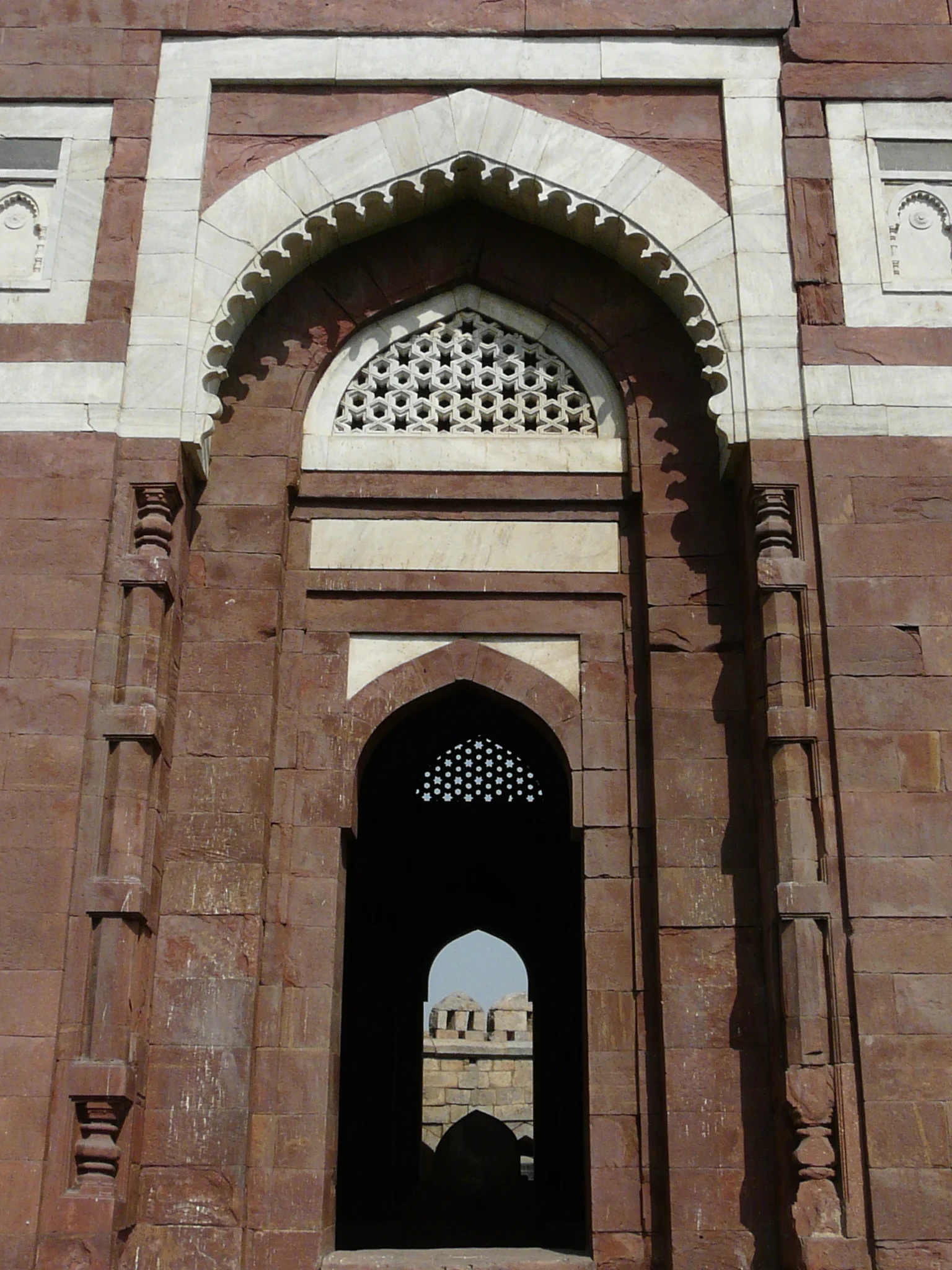
Muhammad bin Tughluq ruled the Delhi Sultanate from February 1325 until his death in March 1351, the longest reign of his dynasty and the one in which the sultanate reached both its greatest territorial extent and the beginning of its irreversible decline. He was, on the testimony of hostile and friendly witnesses alike, the most highly educated man ever to occupy the throne of Delhi: trained in Arabic and Persian letters, logic, philosophy, medicine, mathematics and astronomy, a capable prose stylist, and willing to argue with scholars on their own ground.
He is also remembered for a series of large administrative projects that failed — the transfer of the court to Daulatabad in the Deccan, a token coinage of base metal, an expedition to Khurasan that was raised and disbanded without marching, a campaign into the Himalaya that was destroyed by the terrain, and a revenue increase in the Doab that coincided with famine. By the end of his reign Bengal, Ma'bar in the far south, and the Deccan had broken away, and the Bahmani Sultanate and the kingdom of Vijayanagara had been founded in territory he had governed.
The combination has attracted a great deal of colourful characterisation, from the medieval chroniclers who condemned him to the modern historians who have called him a visionary born too early or a brilliant man without judgement. This article sets out what the sources establish, treats the projects as the administrative problems their designers understood them to be, and separates the record from the reputation. The framing question, which the assessment returns to, is not whether he was mad or wise but why an intelligent ruler with an exceptionally capable inheritance lost control of it.
Prince and Heir
He was born Fakhr al-Din Jauna, the eldest son of Ghazi Malik, the frontier commander who became sultan in 1320 as Ghiyath al-Din Tughluq. His date of birth is not recorded.
His formation was military and administrative rather than courtly, and it took place on the northwestern frontier where his father held the governorship of Dipalpur — the command facing the Mongol invasion routes. He was with his father in the march on Delhi in 1320 that overthrew Khusrau Khan and founded the dynasty, and he was given the title Ulugh Khan and a position of first importance in the new regime.
The Deccan was his apprenticeship. In 1321 his father sent him south against the Kakatiya kingdom of Warangal. The first expedition failed amid rumours that the sultan had died and a breakdown of discipline in the camp; he returned, was sent again in 1323, and succeeded. Warangal was taken, its ruler captured, and Telangana annexed outright rather than left tributary. He was thus the general who had personally brought the Deccan under the sultanate's direct administration, and had seen at first hand how far it was from Delhi and how difficult it would be to hold. This experience is essential background to the decision he made four years later.
His father was killed in February 1325 when a wooden pavilion collapsed on him at Afghanpur, near Delhi. Ibn Battuta, who arrived in India nine years later, recorded an allegation that Muhammad had engineered the collapse. The claim cannot be verified, the earlier and most detailed narrative source does not endorse it, and Muhammad's own brother died in the same accident. It is discussed in the article on his father; it is a reported allegation and not an established fact, and it should not be used to characterise the man.
He was enthroned within days, taking the regnal name Muhammad Shah.
Learning and Temperament
The sources agree on his education to an unusual degree, and the agreement is worth weight because it comes from writers who disliked him.
Ziya al-Din Barani, whose Tarikh-i Firuz Shahi is the most severe indictment of the reign, describes a sultan deeply read in the rational sciences — logic, philosophy, medicine, astronomy, mathematics — with a command of Arabic and Persian, a good hand, and a taste for disputation with scholars. Ibn Battuta, who served him for some eight years as judge of Delhi, gives a comparable picture and adds direct observation of his conduct of business.
Two features of that education mattered politically. The first is that his interests ran toward the rationalist disciplines that the more conservative religious scholars regarded with suspicion, and he was willing to argue with the ulama rather than defer to them. The second is that he applied a theoretical and systematising cast of mind to problems of government, reasoning from first principles toward comprehensive solutions. Several of his projects make good sense as ideas and failed in execution at scale — a pattern consistent with a mind more at home with the design of a system than with the friction of implementing it.
On temperament the sources are also consistent, and the picture is uncomfortable. He was extraordinarily generous, giving on a scale that impressed even visitors accustomed to royal display, and he was capable of extreme severity, with a readiness to use exemplary punishment against officials, rebels, and religious figures who defied him. Barani sets the gifts and the killings side by side deliberately. Ibn Battuta, who benefited from the generosity and witnessed the punishments, does the same. Both were writing within conventions in which a ruler's character explained events, and the vividness of their portraits should not be mistaken for analysis; but the substance — that this was a ruler whose favour and whose anger were both delivered without restraint — is attested from more than one direction.
The Empire at Its Greatest Extent
By the early 1330s the sultanate governed, at least nominally, more of the Indian subcontinent than any state had controlled since the Mauryas: from Sindh and the Punjab across the Ganges plain to Bengal, through Gujarat and Malwa, over the Deccan plateau, and south to Ma'bar around Madurai. The administration was organised in some two dozen provinces.
Nominal is the operative word, and the gap between the map and the reality is the structural fact of the reign. The sultanate had no means of moving armies or information quickly enough to govern the south from Delhi. A summons or an order took months to reach Madurai. A provincial governor with troops, revenue and distance had every practical inducement to become independent, and no realistic prospect of being prevented. Alauddin Khalji had recognised this and preferred to extract tribute from southern kingdoms rather than administer them. Muhammad's father had abandoned that restraint at Warangal, and Muhammad inherited the consequences: an empire whose extremities could not be held with the instruments available.
Almost everything that follows — the second capital, the fiscal experiments, the revolts — is a response to, or a symptom of, that single problem.
The Nobility, Service, and the Politics of Rank
One of the most consequential features of the reign has nothing to do with capitals or coinage, and it is central to why the sources treat Muhammad as they do: he recruited his governing class on principles the existing élite found intolerable.
The nobility of the Delhi Sultanate had been formed by successive waves of arrivals from the northwest — Turks, Afghans, Persians, and men of Mongol descent — together with Indian Muslim families and converts. By the 1320s it had developed a strong sense of its own entitlement to office, expressed in the language of birth that Barani's treatise on statecraft sets out as a theory of divinely ordered rank.
Muhammad appointed on other grounds. The sources complain, in detail and with feeling, that he raised men of low birth and obscure origin to high command and high administrative office: the lists Barani supplies include men described as the sons of artisans, musicians, gardeners, cooks and slaves. He also recruited heavily from abroad, drawing scholars, soldiers and administrators from Iran, Khurasan, Egypt, Syria and Central Asia — the class the sources call the aizza, the honoured ones — and gave them precedence, stipends and offices. Ibn Battuta, himself a beneficiary of exactly this policy, describes the scale of the generosity with which foreign arrivals were received.
The reasoning behind it is not stated in the sources but is not hard to reconstruct. A ruler who appoints from outside the established élite gets officials who depend on him rather than on their families, and a ruler recruiting internationally gets administrative and military expertise from the wider Islamic world along with prestige. It is the same logic that produced the Andalusi Umayyads' reliance on clients and the Ottoman use of the palace household.
The costs were substantial and largely unanticipated. It antagonised the existing nobility permanently, which mattered because they still held commands and provinces. The foreign recruits had no roots in India, no attachment to the sultanate beyond their stipends, and — as the events of the 1330s showed — no reason to remain loyal in a crisis; several of the provincial revolts were led by men the sultan had promoted. And it turned the writing of the reign's history over to men who regarded the appointments as an offence against the order of the world, which is a considerable part of why the reign reads as it does.
The amiran-i sada — the "commanders of a hundred", the officer corps of the provinces, many of them foreign recruits and many of them transplanted to the Deccan during the Daulatabad episode — are the sharpest illustration. They were the instrument of the sultan's control over the south, and they were the men who destroyed it: their revolt in the mid-1340s produced the Bahmani Sultanate and the permanent loss of the Deccan.
Administration and the Attempt at System
Beneath the celebrated projects lay a sustained effort to make the sultanate a systematically administered state, and it is the least discussed aspect of the reign.
The sultanate at its greatest extent was organised in roughly two dozen provinces, each under a governor with military and fiscal responsibilities, subdivided into districts and below them into the revenue circles that dealt directly with villages. The apparatus was inherited from the Khaljis and Muhammad's father, and Muhammad attempted to extend and regularise it across territory that had previously been held as tributary or governed loosely.
Two initiatives indicate the ambition. The first was a comprehensive revenue register: an attempt to record the assessed revenue of the whole empire province by province, which would have given the central government for the first time a systematic picture of what it could expect to collect. The second was the standardisation of assessment procedure across regions with utterly different agricultural conditions, from the irrigated Doab to the Deccan plateau to the deltaic east.
Both ran into the same obstacle that defeated the other projects: the gap between what could be designed at Delhi and what could be executed by officials several weeks' travel away, in territories whose conditions the centre did not understand. A uniform assessment applied to a region it did not fit produced either an uncollectable demand or a windfall for local officials, and the sources describe both.
The postal and intelligence system, the dak, was maintained and extended, and Ibn Battuta's description of it — relays of runners and horses carrying messages and even goods across enormous distances — is one of the most vivid passages in his account and among the best evidence for the sultanate's administrative reach. It is also the measure of the reign's central problem: the fastest communication available still took weeks to reach the south, which is why a governor in Ma'bar who decided to declare independence could not be prevented, only punished afterwards, if at all.
Two other administrative features deserve mention. Muhammad maintained a very large standing army, paid in cash, which was the foundation of his early campaigns and the principal drain on the treasury; the disbanded Khurasan expedition shows what such a force cost even when it did not fight. And he took an interest in the judicial system and in the appointment of judges, while also — as the sources record with disapproval — reserving to himself a broad discretion in punishment that operated outside the courts.
Daulatabad
Around 1327 Muhammad designated Devagiri in the Deccan as a capital, renamed it Daulatabad, and required the court, the administration, and much of the religious and cultural élite of Delhi to move there.
The strategic reasoning was sound and is generally accepted as such. Devagiri sat near the centre of the enlarged empire rather than at its northern edge, within reach of both the newly annexed Deccan and the older northern provinces, and a court there could supervise the south in a way a court at Delhi could not. Delhi's exposure to Mongol incursion from the northwest may also have been a consideration. It was not a whim: it was an attempt to solve the problem of distance by moving the centre.
The execution was the failure. The sources describe compulsion applied to the population of Delhi on a large scale, a journey of some 1,100 kilometres undertaken by families with their households, deaths on the road, and a capital emptied of its inhabitants. Ibn Battuta, arriving after the reversal, describes a Delhi still notably depopulated. Barani's account is bitter and detailed.
Two qualifications are needed. What the evidence best supports is the compulsory transfer of the political, administrative and religious élite — nobles, officials, scholars, Sufi shaykhs and their establishments — together with the service population attached to them, rather than the wholesale deportation of every inhabitant of a large city, which the sultanate had no capacity to organise. And the medieval accounts are written to condemn, with the emptiness of Delhi serving as a moral image. That said, the coercion, the suffering on the road, and the serious damage to Delhi are attested by independent witnesses and should not be minimised. Making a city's élite move a thousand kilometres by order was a brutal act whatever its administrative logic.
By about 1335 the project was abandoned and the court returned north. Daulatabad remained an important provincial centre, and its massive hill fortress survives; but the sultanate had spent enormous resources and a great deal of goodwill to end where it began. Worse, it had concentrated in the Deccan a body of officials and soldiers with local roots and grievances — the men who would found the Bahmani state a decade later.
The Token Coinage
Around 1330 Muhammad issued coins of brass and copper to circulate at the value of the silver tanka.
The measure is often presented as an eccentricity, and it was not. Token currency — money whose face value exceeds the value of its metal, resting on the authority of the issuing state — was a known instrument. Yuan China operated a paper currency on this principle, and the Ilkhanid ruler Gaykhatu had attempted a paper issue in Iran in 1294. There was, moreover, a real problem to solve: silver was scarce, the demands on the treasury were enormous, and the reign had just absorbed the cost of the Daulatabad transfer and the disbanded Khurasan army. Issuing a fiduciary coinage was a rational response to a shortage of specie, and the principle it rested on is the one all modern currency rests on.
It failed on a specific technical point. The state could not control production. Silver and gold coinage was protected by the difficulty and cost of counterfeiting precious metal; a brass token whose value came from a stamp could be imitated by any competent metalworker, and the sultanate had no means of detecting or suppressing imitation across a subcontinent. Forgery became general, the sources describing private minting on a wide scale. The tokens lost credibility, prices in them collapsed, and the currency ceased to function.
Muhammad then compounded the loss honourably and expensively: the government undertook to redeem the tokens in gold and silver. Holders — including, inevitably, holders of forgeries — presented them, and the treasury paid out. Ibn Battuta reports that heaps of the withdrawn coins were still lying at Tughluqabad years afterwards. The episode cost the state a great deal of bullion and cost the sultan a great deal of confidence.
Irfan Habib's work on the medieval Indian economy treats the experiment as a serious monetary intervention defeated by the absence of the administrative and technical capacity a token currency requires. That is the appropriate verdict: the concept was defensible, the state that attempted it was not equipped to sustain it, and the sultan did not anticipate the counterfeiting problem that any modern treasury would identify first.
Khurasan and Qarachil
Two military projects failed in ways that damaged the reign badly.
Around 1329 a very large army was recruited and paid for a projected expedition to Khurasan and the lands beyond the northwestern passes. The political context was the fragmentation of Mongol power in Iran and Central Asia, which appeared to offer an opening. Barani gives a figure of some 370,000 men, a number that should be treated as conventional rather than counted. The expedition never marched. The plan was abandoned — the sources are not clear on why, and shifting circumstances in Central Asia are the likeliest explanation — and the army was disbanded after having been maintained for about a year. The financial loss was very large and produced nothing.
Around 1337 or 1338 a force was sent into the Himalayan foothills against Qarachil, in the Kumaon–Garhwal region. The objective is not entirely clear from the sources; a punitive campaign against hill chiefs, possibly with an eye to the routes toward Tibet, is the usual reading. The army advanced, met terrain and weather it was not equipped for, suffered from disease, and was attacked in the passes. It was effectively destroyed, with only a remnant returning. As a military disaster it was comparable to the Khurasan episode as a fiscal one.
Both failures show the same pattern as the civil projects: ambitious conception, inadequate assessment of practical constraints, and a very large bill.
Famine, the Doab, and Agricultural Reform
The most damaging episode of the reign was fiscal and agrarian, and it is the one where the human cost was greatest.
At some point in the 1330s the revenue demand was increased in the Ganga–Yamuna Doab, the richest and most closely administered agricultural region of the sultanate and the core of its tax base. The increase coincided with the onset of a severe and prolonged drought and famine that afflicted northern India for several years. The result was catastrophic: cultivators unable to pay and unable to eat abandoned their villages, revenue officials attempted to collect by force, and the countryside around the capital was substantially depopulated. Barani and Ibn Battuta both describe famine conditions in and around Delhi in grim terms.
The sequence of cause and effect matters. The sources present the increase as the trigger and are written to indict the sultan; the drought was not his doing. What is fairly attributable to the government is the decision to raise the demand on the most heavily assessed region of the empire, the failure to suspend collection when the harvest failed, and the use of coercion against a starving population. That is a serious charge and the evidence supports it.
The response, when it came, was substantial and is often omitted from accounts that treat the reign as simply destructive. The government instituted relief and rehabilitation: advances and loans to cultivators for seed, cattle and the digging of wells, and remissions of revenue. A new department was created — the diwan-i kohi, an office of agriculture — charged with bringing waste and abandoned land under cultivation, organised as a state-directed programme with allotted land, appointed supervisors and advanced capital.
The programme ran for some years and largely failed. The reasons reported and inferred include the diversion of funds by officials, land chosen for reclamation that was unsuitable, and the general difficulty of directing agricultural improvement from a central office. The attempt is nonetheless significant. A state department for agricultural development, capitalised from the treasury, was an unusual conception for a fourteenth-century government, and it indicates a ruler who recognised the failure and tried to repair it rather than one indifferent to it.
The Buildings of the Reign
The reign left a physical record, and it is worth setting out because it corrects the impression of a period of pure destruction.
At Delhi, Muhammad founded a new walled city, Jahanpanah, joining and extending the existing settlements — the fourth of Delhi's historic cities in the conventional reckoning — and undertook fortification work whose remains survive in stretches of wall and gateways. The austere Tughluq idiom established by his father's fortress at Tughluqabad continued: massive rubble masonry, sloping battered walls, minimal ornament, and an emphasis on defensive mass that Anthony Welch and Howard Crane's study of Tughluq building treats as a coherent architectural programme rather than mere plainness.
At Daulatabad the hill fortress of Devagiri was extensively refortified and remains one of the most formidable defensive works in India, with its concentric walls, its scarped rock face and its tunnel approach. The city below was laid out with walls, gates, a congregational mosque and water supply, and although the transfer of the court was abandoned, Daulatabad continued as the principal centre of the Deccan and became the capital of the Bahmani state's early period.
The reign also saw the construction of water works, including reservoirs and embankments intended to extend cultivation, which belong with the agricultural programme described above.
Two observations follow. The building record indicates a government with real resources and real organising capacity for much of the reign, which is inconsistent with accounts that present it as continuous collapse from 1327 onward. And the fortifications at both capitals point to the same strategic preoccupation as his father's: an empire whose wealth lay in the plains and whose danger came from beyond its northwestern frontier and from its own overextended provinces.
The Loss of the Empire
From the mid-1330s the sultanate began to come apart, and by Muhammad's death the losses were beyond recovery.
Ma'bar, the far southern province around Madurai, declared independence in about 1334–35 under its governor, and became a separate sultanate. An expedition sent to recover it was halted by an outbreak of disease in the army, and the sultan himself fell seriously ill; the province was never regained. In the south, meanwhile, the kingdom of Vijayanagara was established in the 1330s in territory the sultanate had claimed, and grew into the dominant power of peninsular India for the next two centuries.
Bengal broke away in 1338, its distance and its river geography making reconquest impractical. Sindh and Gujarat saw revolts, some of them serious enough to require the sultan's personal presence.
The decisive loss was the Deccan. The amiran-i sada — the "commanders of a hundred", the officer corps of the Deccan provinces, many of them men transplanted during the Daulatabad episode — rebelled in the mid-1340s. Attempts to suppress them failed, and in 1347 Hasan, known as Hasan Gangu, was proclaimed sultan in the Deccan as Ala al-Din Bahman Shah, founding the Bahmani Sultanate. The Deccan that Muhammad had personally conquered as a prince, and for whose sake he had moved his court a thousand kilometres, was permanently lost.
The pattern in each case combined distance, the local power of governors and garrisons, and the erosion of the sultan's authority by fiscal crisis and failed projects. Peter Jackson's political and military history sets out how the mechanics of provincial revolt worked and why the sultanate's instruments were unequal to them.
Legitimacy, the Cairo Caliphate, and the Religious Classes
Muhammad's relations with the religious establishment deteriorated across the reign, and this affected both his government and his reputation.
Two issues drove it. The first was his insistence that Sufi shaykhs and scholars accept appointments in the state's service. Many refused on principle: the Chishti tradition in particular held that spiritual authority required independence from the court, and the sultan's demand struck at a core commitment. He treated refusal as insubordination, and the sources report punishments including executions of religious figures. Whatever the details — and they come from writers with a stake in the quarrel — the breach with the Sufi establishment was real and it cost him the support of the most influential moral constituency in the sultanate.
The second was the erosion of his standing after the failures of the 1330s. From about 1340 he sought legitimation from an external source: recognition from the Abbasid caliph in Cairo, the titular successor of the Baghdad line, whose office had been maintained under Mamluk protection since the destruction of Baghdad in 1258. Muhammad had his own name removed from the coinage in favour of the caliph's, sought and received investiture, and welcomed an envoy bearing robes of honour.
The step is revealing. A sultan whose predecessors had ruled on the strength of conquest and effective power was appealing to a caliph with no armies and no territory, in Cairo, for a formal sanction. It is the act of a ruler whose practical authority was in question and who was reaching for a legitimacy that did not depend on success. The article on the Abbasid caliphate describes what that institution had become by this date.
Ibn Battuta's career at this court illustrates both the opportunities and the hazards. He arrived in 1334, was appointed judge of Delhi, held the post for some eight years on a generous stipend, fell under suspicion through his association with a shaykh who had offended the sultan, and was eventually dispatched in 1342 as ambassador to the Yuan court of China — a mission that miscarried before it reached its destination. His Rihla is the fullest outside account of the reign and of the sultan's manner of governing.
Death and Succession
Muhammad spent his last years campaigning to hold what remained. In 1351 he was in Sindh, pursuing operations against a rebel named Taghi, when he fell ill; he died on 20 March 1351 near Thatta.
He left no son who succeeded him. His cousin Firuz Shah Tughluq was raised to the throne by the army in the field, and reigned until 1388. Firuz's policy was in almost every respect a repudiation of his predecessor's: he abandoned the attempt to recover the Deccan, Bengal and the south, conciliated the religious establishment and the nobility, made grants where Muhammad had confiscated, and concentrated on irrigation, building and administration within a reduced territory. The sultanate survived another half-century in that diminished form before Timur's raid on Delhi in 1398, described in the article on Timur, destroyed what was left of its power.
Historiographical Note
Few reigns in Indian history have been more strongly coloured by their sources, and the shape of the evidence has to be understood before the man can be assessed.
Barani's Tarikh-i Firuz Shahi, completed around 1357, is the principal narrative and a sustained indictment. Barani wrote under Firuz Shah, whose legitimacy rested partly on being everything Muhammad was not; he held a political theory in which social hierarchy was divinely ordained and the rationalist disciplines were dangerous; he had been at Muhammad's court and had lost position afterwards; and his history is explicitly didactic, shaping episodes to yield lessons for rulers. His account of the projects is the source of almost all the detail about them, and it is written to demonstrate that they were bound to fail.
Ibn Battuta's Rihla is an eyewitness for the years 1334 to 1342, which makes it invaluable, and it is also a traveller's book: dependent on hearsay for what he did not see, fond of the remarkable, and shaped by his own experience of favour followed by danger. His portrait of the sultan as both the most generous and the most bloodthirsty of men is a literary construction as well as a report.
Isami's Futuh al-Salatin, a verse history completed in 1350, was written at the Bahmani court — in the state that had just seceded — and is correspondingly hostile. Later compilations such as Sirhindi's fifteenth-century chronicle and Firishta's seventeenth-century history transmit and harden the tradition.
There is no surviving source sympathetic to the reign, and no administrative archive. Everything known about the token coinage, the Daulatabad transfer, the Doab increase and the diwan-i kohi comes through writers committed to the view that the sultan was the cause of the sultanate's misfortunes.
Modern historiography has worked mainly on re-reading this material. Agha Mahdi Husain's study, published in 1938, argued for a capable and misunderstood ruler and went too far in rehabilitation. A durable popular formula, originating in later historiography rather than in the sources, casts him as a gifted man without judgement — an epigram that has been repeated widely and explains nothing. Recent work, including Peter Jackson's political history, Irfan Habib's economic analysis, and Richard Eaton's survey of the Persianate period, has moved away from character-based accounts toward structural ones: the sultanate had expanded beyond the reach of its communications, its fiscal base, and its administrative technique, and the reign is where that limit was reached. On this reading the projects are attempts to solve a real and possibly insoluble problem, and their failure is at least as much institutional as personal.
Specific cautions: army sizes in Barani are conventional and very large; the depopulation of Delhi is a moralised image resting on real but unquantifiable coercion; the chronology of the Doab increase relative to the famine is not precisely fixed; and the reports of executions of religious figures come from parties to the quarrel.
Assessment
Muhammad bin Tughluq presided over the largest empire in the subcontinent and left it broken, and the reasons are more instructive than the epigrams applied to him.
The abilities were real. He was the best-educated ruler the sultanate produced, an experienced field commander who had conquered Telangana as a prince, and a ruler capable of conceiving reforms — a fiduciary coinage, a relocated administrative centre, a state department for agricultural development — that were not eccentric but addressed genuine structural problems with instruments other governments of the period would not have attempted. That he recognised the Doab disaster and instituted relief and reclamation counts in his favour, as does his decision to redeem the failed tokens at the treasury's expense rather than repudiate them.
The failures share a single character, and it is not stupidity. Every one of the major projects was defeated at the point of implementation by a constraint the design had not accounted for: the token coinage by the state's inability to prevent counterfeiting; the Daulatabad transfer by the human and logistical cost of moving an élite a thousand kilometres and the political consequences of concentrating disaffected officers in the Deccan; the Khurasan expedition by the fiscal cost of maintaining an army for a plan that was abandoned; the Qarachil campaign by mountain terrain; the diwan-i kohi by the difficulty of directing cultivation from a central office through officials with their own interests. This is the signature of a systematising intelligence operating without adequate feedback — reasoning to a correct conclusion about what should be done and misjudging what could be done.
Two further faults are properly personal. The severity was excessive by the standards of his own time as well as ours, and it was counterproductive: punishing officials, rebels and religious figures without restraint destroyed the trust that a state governing at that distance depended on absolutely. And the demand that Sufi shaykhs take office, pressed against principled refusal, alienated the one constituency whose moral authority might have sustained him through the failures. A ruler in fiscal crisis who has also broken with the religious establishment has no reserves.
Against all this must be set the structural case, which is strong. The sultanate that Muhammad inherited was already too large for its communications, its revenue system and its administrative technique. No fourteenth-century government could rule Madurai from Delhi. The Deccan annexation had been carried out before he came to the throne, and the tributary arrangements that Alauddin Khalji preferred were probably the only sustainable policy — a judgement Firuz Shah Tughluq acted on by abandoning the south entirely, and the sultanate survived by contracting. On that reading the fragmentation of the empire was overdetermined, Muhammad accelerated it by his methods rather than causing it by his errors, and the projects were rational attempts at an insoluble problem.
The fairest verdict holds both. The empire was going to shrink; the manner of its shrinking, the human cost in the Doab and on the road to Daulatabad, and the loss of the political and religious consent that might have cushioned the contraction were his responsibility. The Delhi Sultanate never again governed the Deccan, the states that emerged from his reign — Bahmani, Vijayanagara, Madurai, independent Bengal — shaped the politics of the subcontinent for the next two centuries, and the unification of most of India under one Muslim dynasty was not attempted again until the Mughals, with better resources and a longer patience.
References and Further Reading
Primary Islamic Sources
- Quran, Surah al-Nisa (4:58–59) — on rendering trusts, judging with justice, and obedience to those in authority; the scriptural framework of the sultanate's theory of rule
- Quran, Surah Al-Imran (3:26) — on the granting and withdrawal of sovereignty, invoked in the chronicles at the loss of provinces
- Quran, Surah al-Hadid (57:25) — on the balance and the establishment of justice, the basis of the ideal of the just ruler against which Barani measured this reign
- Quran, Surah al-Shura (42:38) — on consultation, a text cited in the juristic criticism of rulers who acted without counsel
- Sahih al-Bukhari, Kitab al-Ahkam, and Sahih Muslim, Kitab al-Imarah — the prophetic material on the accountability of rulers, oppression in taxation, and the limits of obedience
- The letters of investiture from the Abbasid caliph in Cairo, and the coinage bearing the caliph's name, as primary evidence of the legitimation policy after 1340
Classical Islamic Sources
- Barani, Ziya al-Din. Tarikh-i Firuz Shahi. [c. 1357] — the principal narrative source, and a sustained indictment of the reign
- Barani, Ziya al-Din. Fatawa-i Jahandari. [14th century] — Barani's treatise on kingship, indispensable for understanding the assumptions behind his history
- Ibn Battuta. Rihla (Travels). [c. 1355] — eyewitness testimony for 1334–1342, when the author served as judge of Delhi
- Isami, Abd al-Malik. Futuh al-Salatin. [1350] — a verse history written at the newly independent Bahmani court
- Sirhindi, Yahya bin Ahmad. Tarikh-i Mubarak Shahi. [15th century]
- Afif, Shams al-Din Siraj. Tarikh-i Firuz Shahi. [late 14th century] — on the succeeding reign, valuable for the reaction against Muhammad's policies
- Firishta, Muhammad Qasim. Tarikh-i Firishta. [c. 1606] — a later compilation transmitting the established tradition
Academic and Scholarly Sources
- Jackson, Peter. The Delhi Sultanate: A Political and Military History. Cambridge: Cambridge University Press, 1999. — the standard modern political account
- Habib, Irfan. Economic History of Medieval India, 1200–1500. New Delhi: Pearson Longman, 2011. — the essential analysis of the token coinage and the agrarian crisis
- Husain, Agha Mahdi. The Rise and Fall of Muhammad bin Tughluq. London: Luzac, 1938. — the classic attempt at rehabilitation, to be read critically
- Eaton, Richard M. India in the Persianate Age, 1000–1765. London: Allen Lane, 2019. — for the structural reading of sultanate overextension
- Habib, Mohammad and Nizami, Khaliq Ahmad, eds. A Comprehensive History of India, Vol. V: The Delhi Sultanate. New Delhi: People's Publishing House, 1970.
- Digby, Simon. "The Broach Coin-Hoard as Evidence of the Import of Valuta across the Arabian Sea." Journal of the Royal Asiatic Society (1980). — on monetary conditions
- Auer, Blain. Symbols of Authority in Medieval Islam: History, Religion and Muslim Legitimacy in the Delhi Sultanate. London: I.B. Tauris, 2012. — on the Cairo caliphal investiture
- Kumar, Sunil. The Present in Delhi's Pasts. New Delhi: Three Essays Collective, 2002.
- Hardy, Peter. Historians of Medieval India: Studies in Indo-Muslim Historical Writing. London: Luzac, 1960. — the standard study of Barani's methods and purposes
Further Reading
- Asher, Catherine B. and Talbot, Cynthia. India Before Europe. Cambridge: Cambridge University Press, 2006.
- Welch, Anthony and Crane, Howard. "The Tughluqs: Master Builders of the Delhi Sultanate." Muqarnas 1 (1983).
- Rizvi, Saiyid Athar Abbas. A History of Sufism in India. 2 vols. New Delhi: Munshiram Manoharlal, 1978. — on the conflict with the Chishti establishment
- Dunn, Ross E. The Adventures of Ibn Battuta: A Muslim Traveler of the Fourteenth Century. Berkeley: University of California Press, 1986.
- Sherwani, Haroon Khan. The Bahmanis of the Deccan. New Delhi: Munshiram Manoharlal, 1985. — on the state that emerged from the Deccan revolt
Mentioned In
7 articles reference this topic
More from South Asian Islam
Delhi Sultanate: Islamic Rule in Medieval India
The Delhi Sultanate (1206-1526 CE) was a series of five successive Islamic dynasties that ruled northern India for over three centuries, establishing Muslim political power in the subcontinent, creating a unique Indo-Islamic culture, and leaving an enduring architectural and administrative legacy.
Ahmed Raza Khan Barelvi and the Barelvi Movement
Ahmed Raza Khan of Bareilly (1856-1921) was an Indian Hanafi jurist, Sufi of the Qadiri order and prolific writer whose defence of the veneration due to the Prophet and the saints gave rise to the movement known as Barelvi, whose adherents call themselves the ulama of the Ahl-i Sunnat wa Jamaat.
Darul Uloom Deoband: The Seminary and the School of Thought
Darul Uloom Deoband is an Islamic seminary founded in northern India in 1866 or 1867 and the origin of the Deobandi school of thought. Its innovation was institutional: it carried the traditional religious sciences in the form of a modern school funded by public subscription.
The Ahl-i Hadis Movement
A nineteenth-century Indian Sunni movement that set aside the authority of the historic schools of law in favour of direct recourse to the Qur'an and hadith. Led by scholars at Delhi and Bhopal, it was marked by its manner of prayer and an austere standard of interpretation.