Syed Mahmud: Nationalist, Legislator, and Founder of Jamia Millia Islamia
Syed Mahmud (1889-1971) was an Indian barrister and Congress leader from Bihar, a member of the Foundation Committee of Jamia Millia Islamia in 1920, General Secretary of the All India Congress Committee, Education Minister of Bihar, and Union Minister of State for External Affairs.
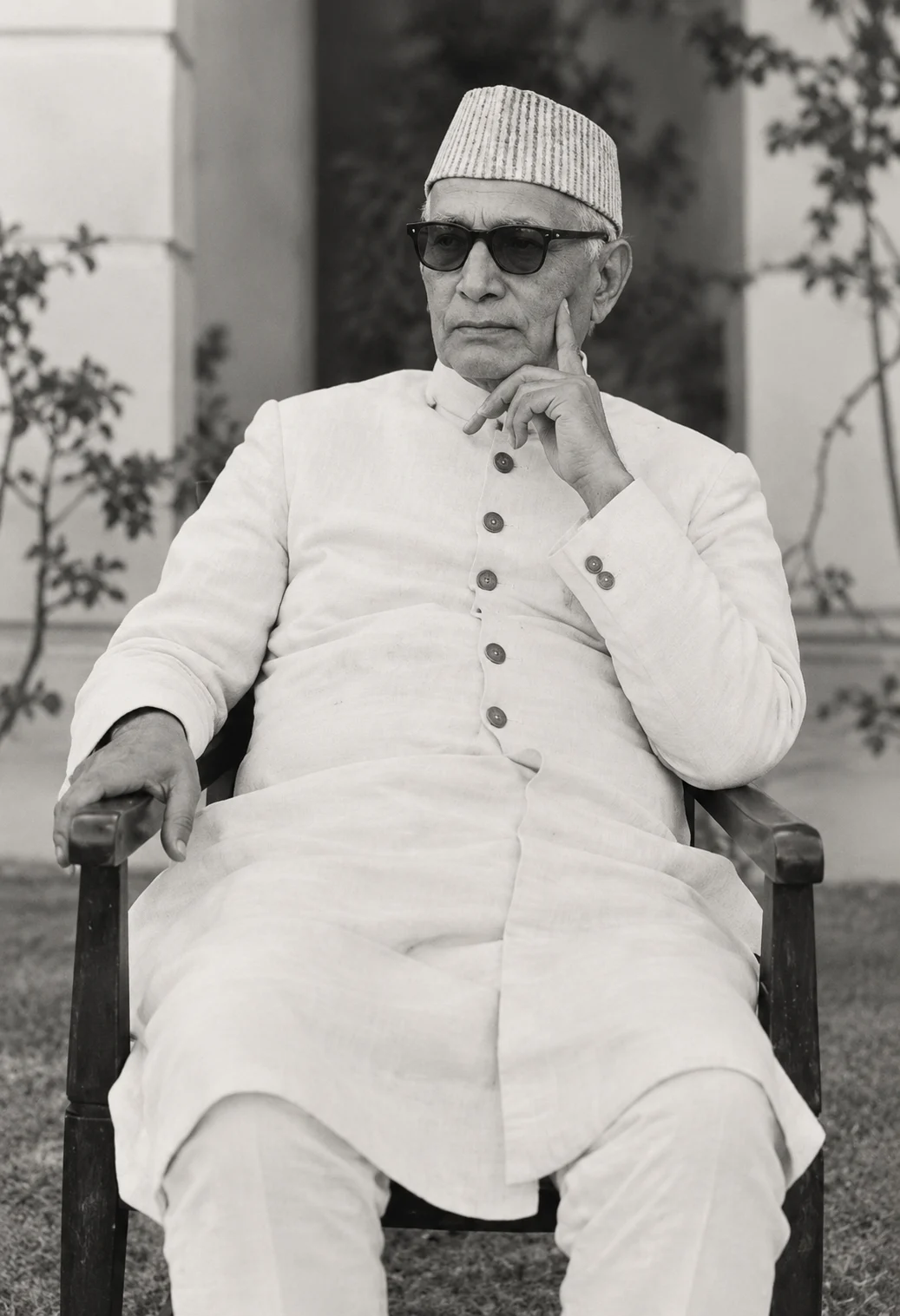
This article concerns Syed Mahmud (1889–1971), the Bihar politician, Congress leader, and member of the Foundation Committee of Jamia Millia Islamia. He is not to be confused with Justice Syed Mahmood (1850–1903), the son of Sir Syed Ahmed Khan and a judge of the Allahabad High Court.
Syed Mahmud's career spans the full arc of the Indian independence movement from its early constitutional phase through to the first decade of the Republic. He was present at the founding of Jamia Millia Islamia in 1920, at the Lucknow Pact of 1916, in the Khilafat agitation, in the Civil Disobedience movement, in the Quit India resolution, and in the first governments of independent India. He was General Secretary of the All India Congress Committee from 1929 to 1936, a cabinet minister in Bihar from 1937, and a Union Minister of State for External Affairs who represented India at the Bandung Conference of 1955.
His significance lies not in any single dramatic act but in the sustained presence of a Muslim nationalist at or near the centre of Congress politics across four decades — from his student days at Aligarh through to the Republic's early diplomatic engagements.
Early Life and Education
Birth and Family
Syed Mahmud was born in 1889 at Syedpur Bhitri in Ghazipur district of the United Provinces (now Uttar Pradesh). His father was Moulvi Mohamed Omar. The family background placed him within the Muslim service gentry of eastern Uttar Pradesh — the same region that produced Husain Ahmad Madani and Mukhtar Ahmed Ansari.
Aligarh and Expulsion
Mahmud was educated at Aligarh Muslim University. During his time there he became involved in student political activities and attended the 1905 session of the Indian National Congress. Along with fellow student Saifuddin Kitchlew (later a prominent Congress leader in the Punjab), Mahmud was among the Muslim students who opposed the pro-British loyalties of the All India Muslim League and were drawn instead to the nationalist Congress.
He was expelled from Aligarh for his political activities — a significant fact, since Aligarh under Sir Syed's legacy was oriented toward loyalty to the British, and expulsion for nationalism marked a rupture with that tradition.
England: Cambridge and Lincoln's Inn
After expulsion Mahmud travelled to England, where he studied law at Cambridge University and then at Lincoln's Inn to qualify as a barrister. In 1909, while in London, he came into contact with Mahatma Gandhi and Jawaharlal Nehru. In 1912 he obtained a doctorate from Germany. He returned to India and from 1913 began legal practice in Patna under the guidance of Mazharul Haq, a senior Bihar barrister and Congress leader. In 1915 he married Mazharul Haq's niece, further cementing his position in Bihar's nationalist Muslim professional class.
Role in the Foundation of Jamia Millia Islamia
Syed Mahmud was a member of the Foundation Committee of Jamia Millia Islamia, established at Aligarh on 29 October 1920. This is confirmed by JMI's own institutional records, cited in a 2012 Urdu-language publication (Qawmi Taleemi Tehreek, by Shamsur Rahman Mohsini, published by Maktaba Jamia) and referenced in a JMI PhD thesis on Mahmud's political career.
His presence on the Foundation Committee places him alongside Mohammad Ali Jauhar, Hakim Ajmal Khan, Mukhtar Ahmed Ansari, Abdul Majid Khwaja, Zakir Husain, Maulana Azad, and Mahmud Hasan Deobandi in the group that launched India's most significant nationalist Muslim educational institution.
Political Career
The Lucknow Pact and Early Congress Work
Syed Mahmud was one of the young Muslim leaders who played a role in crafting the 1916 Lucknow Pact between the Congress and the Muslim League. He participated in the Indian Home Rule movement in 1916 and subsequently in the Non-Cooperation and Khilafat movements.
The Khilafat Movement and Published Work
His 1921 book The Khilafat and England, published from Patna and available on Archive.org, is a primary source for understanding how Indian Muslim nationalists framed the Khilafat question in relation to British foreign policy. It demonstrates Mahmud's engagement with the international dimensions of the movement.
General Secretary of the AICC
In 1923 Mahmud was elected Deputy General Secretary of the All India Congress Committee alongside Jawaharlal Nehru — an association that developed into a close lifelong friendship. Nehru later signed as witness at the marriage of Mahmud's daughter.
In 1929, together with Mukhtar Ahmed Ansari, Mahmud formed the Muslim Nationalist Party within the Congress. He became General Secretary of the AICC and served in that capacity until 1936.
Imprisonment
In 1930 Mahmud was imprisoned in Naini Jail, Allahabad, along with Motilal Nehru and Jawaharlal Nehru during the Civil Disobedience movement.
Minister of Education, Bihar (1937–1939)
After the Congress victory in the 1937 provincial elections, Mahmud was considered a leading candidate for Chief Minister of Bihar but was passed over in favour of Sri Krishna Sinha. He joined Sinha's cabinet as Minister for Education, Development and Planning, and was accorded third place in the cabinet.
As Education Minister his emphasis was on providing primary education to the largest possible number, revising curricula, appointing Urdu teachers at Patna University, and raising the proportion of Muslims in government employment and local bodies. To address Hindi-Urdu tensions he launched a bilingual newspaper called Raushni. He also published A Plan of Provincial Reconstruction (1939), which addressed rural indebtedness, agricultural finance, public health, education, and human resources in Bihar.
The Quit India Episode
In August 1942 Mahmud was a member of the Congress Working Committee that endorsed the Quit India resolution. He was imprisoned with the other leaders at Ahmednagar Fort. In October 1944 the government unexpectedly released him alone. Abul Kalam Azad records the episode in India Wins Freedom (Orient Longman, 1959/2003):
Azad relates that "nine other members of the Working Committee were brought to Ahmednagar with me," and that when the government released Mahmud, his fellow detainees were surprised. Mahmud initially implied he did not know why he had been freed. The British then released to the press a letter Mahmud had written to the Viceroy denying that he had participated in the meetings where the Quit India Resolution was passed. Azad records that "when we read the letter in Ahmednagar jail, all of us felt angry and humiliated."
Mahmud subsequently met with Gandhi, acknowledged his mistake, and apologised. Azad confirms that his standing with the nationalist movement recovered in the succeeding years.
This episode must be recorded because it is documented in one of the most authoritative sources on the period (Azad's own account), and because omitting it would violate the neutrality standard. It represents the one significant failure of Mahmud's political career, and the sources are explicit about it.
Post-Independence Career
From 1946 to 1952 Mahmud served as Minister for Transport, Industries and Agriculture in Bihar. He was elected to the first Lok Sabha from East Champaran and to the second from Gopalganj, both in Bihar.
From 7 December 1954 to 17 April 1957 he was Union Minister of State for External Affairs. He represented India at the Bandung Conference (1955), where the principles of Panchsheel (the Five Principles of Peaceful Coexistence) were articulated. He resigned the ministry due to failing eyesight.
In 1949 he published Hindu Muslim Accord, a book celebrating the composite Ganga-Jamuni culture of India.
Death and Legacy
Syed Mahmud died in 1971, aged approximately eighty-two. The precise date and circumstances are not recorded in the accessible sources.
His legacy is institutional and political rather than intellectual. He did not produce a body of theological or philosophical work comparable to Iqbal's or Madani's, and no scholarly biography of him exists in English. His significance lies in having sustained a Muslim nationalist presence within the Congress across its most consequential decades, from the Khilafat years through to the Republic, and in his membership of the Foundation Committee that created Jamia Millia Islamia.
Historiographical Note
The principal sources for this article are: Abul Kalam Azad's India Wins Freedom (the authoritative first-person Congress account of the Quit India period), JMI's own institutional records confirming Foundation Committee membership, the biographical sketch from the National Informatics Centre's First Lok Sabha records, Mohammad Sajjad's article in the Bihar Times (a reputable regional publication), and Mahmud's own published work The Khilafat and England (1921, available on Archive.org).
Aggregated reference sources were used as finding aids to locate the authoritative sources cited above. No claim in this article rests on any aggregator alone.
The Quit India letter episode rests solely on Azad's account in India Wins Freedom, which is both an authoritative first-person source and a partisan one (Azad was among those who remained imprisoned). It is reported here as Azad records it, attributed to him, and without independent corroboration.
No full-length scholarly biography of Syed Mahmud has been identified in English. A JMI PhD thesis on his career (by Meher Fatima Husain, 2013) exists but has not been consulted directly.
References and Further Reading
Primary Islamic Sources
- Quran, Surah Al-Hujurat (49:13) — "O mankind, indeed We have created you from male and female and made you peoples and tribes that you may know one another." (The verse central to the Indian nationalist Muslim tradition's case for composite nationality)
- Quran, Surah Al-Ma'idah (5:8) — "Be just; that is nearer to righteousness." (On the duty of justice in governance, relevant to Mahmud's career as an education minister)
- Quran, Surah Al-Baqarah (2:286) — "Allah does not burden a soul beyond that it can bear." (Invoked in the context of national struggle and sacrifice)
- Quran, Surah Ash-Shura (42:38) — "And those who have responded to their Lord and established prayer and whose affair is [determined by] consultation among themselves." (The principle of consultation in governance)
Classical Islamic Sources
- Shah Waliullah Dehlawi. Hujjat Allah al-Balighah. [Original 18th century CE — the Indian Islamic reform tradition within which Mahmud's generation was formed]
- Jamal al-Din al-Afghani. Al-Urwa al-Wuthqa. Paris, 1884. [Pan-Islamic political thought that framed the Khilafat movement in which Mahmud participated]
- Al-Mawardi, Abu al-Hasan. Al-Ahkam al-Sultaniyyah. [Original 11th century CE — on the caliphate and political authority; the background to the Khilafat question]
- Muhammad Abduh. Risalat al-Tawhid. Cairo, 1897. [The modernist theology that influenced the generation of Muslim reformers to which Mahmud belonged]
Academic and Scholarly Sources
- Azad, Abul Kalam. India Wins Freedom: An Autobiographical Narrative. New Delhi: Orient Longman, 2003 [first published 1959]. [The authoritative first-person account of Congress politics 1940–1947; documents the Quit India episode and Mahmud's role]
- Minault, Gail. The Khilafat Movement: Religious Symbolism and Political Mobilization in India. New York: Columbia University Press, 1982. [The standard account of the movement in which Mahmud's political career began]
- Hardy, Peter. The Muslims of British India. Cambridge: Cambridge University Press, 1972. [General context of Muslim nationalist politics]
- Sajjad, Mohammad. Muslim Politics in Bihar: Changing Contours. New Delhi: Routledge, 2014. [On Muslim political leadership in Bihar, Mahmud's primary constituency]
- Husain, Meher Fatima. PhD thesis on Syed Mahmud. Jamia Millia Islamia, Department of History, 2013. [The only known doctoral study of Mahmud; not consulted directly]
Further Reading
- Mahmud, Syed. The Khilafat and England. Patna: Mohemed Imtyaz, 1921. [Mahmud's own published work on the Khilafat question; available on Archive.org]
- Mahmud, Syed. Hindu Muslim Accord. 1949. [On composite Indian culture after Partition]
- Mahmud, Syed. A Plan of Provincial Reconstruction. 1939. [On development, education, and governance in Bihar]
- Jamia Millia Islamia. Institutional records confirming Foundation Committee membership. jmi.ac.in.
- National Informatics Centre. "Biographical Sketch of First Lok Sabha." [Confirms his constituency of East Champaran]
Mentioned In
1 article references this topic