Mahmud Hasan Deobandi
The first student of Darul Uloom Deoband, afterwards its chief teacher and rector, known by the title Shaykh al-Hind. He organised the Silken Letters scheme of 1916 against British rule, was interned at Malta for three years, and opened Jamia Millia Islamia on his return.
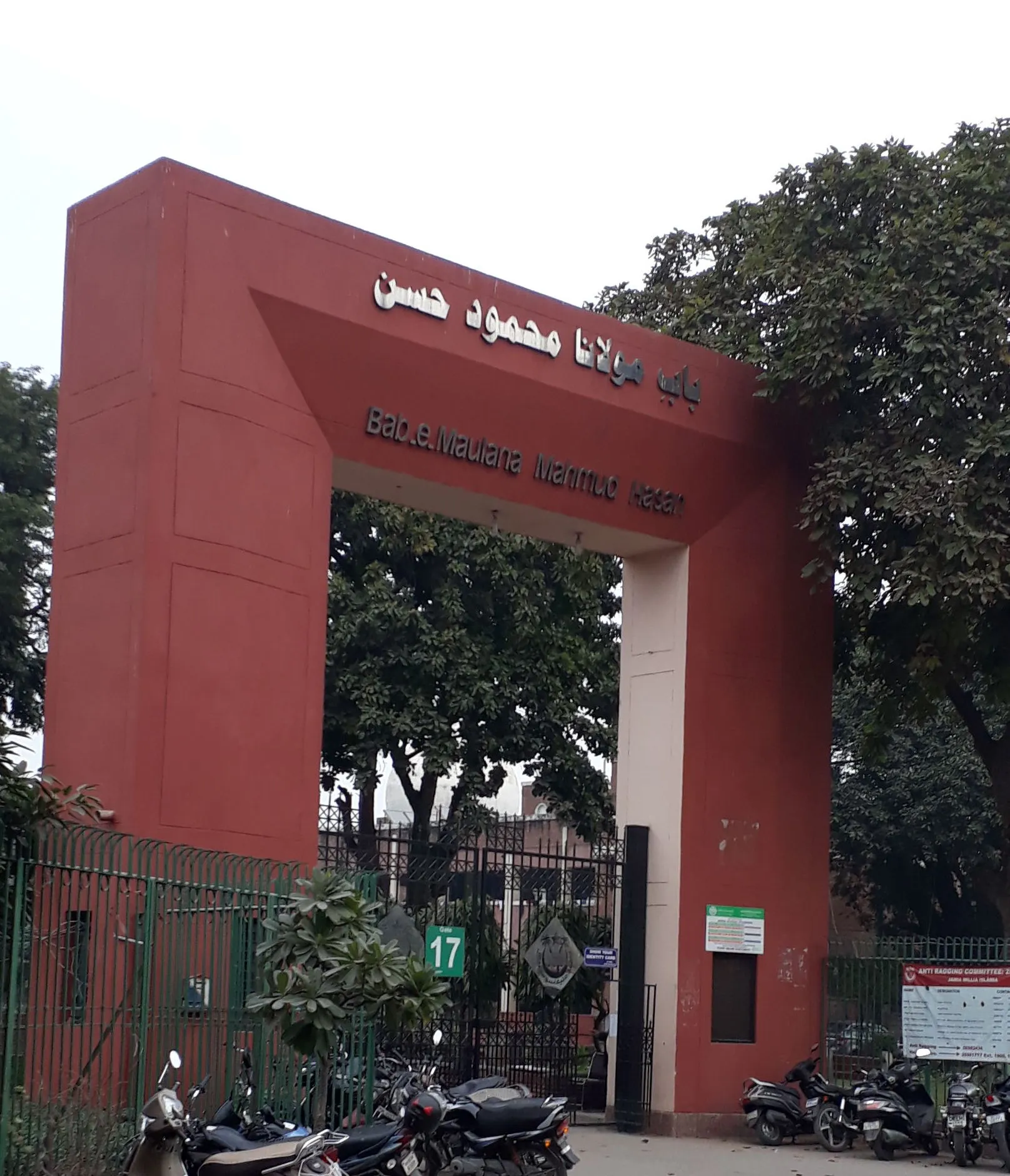
Mahmud Hasan Deobandi (1851–30 November 1920), known by the title Shaykh al-Hind,[a] was the first student enrolled at Darul Uloom Deoband and afterwards its chief teacher and rector. Abdülhamit Birışık's entry on him in the TDV İslâm Ansiklopedisi records that under his direction the seminary expanded considerably and its reputation spread beyond India, drawing students from Afghanistan, Turkistan, Bukhara, Yemen and Indonesia.1
He was born at Bareilly in the United Provinces and taught at Deoband, with interruptions, for some four decades. From about 1909 he turned to organised opposition to British rule, and in 1916 he was at the centre of the scheme known in Indian political history as the Silken Letters, which sought to raise the frontier tribes and to secure Ottoman and Afghan support against the British in India. He was arrested at Mecca in October 1916, handed to the British, and interned at Malta for about three years. Returning to India in March 1920, he gave his support to the Khilafat Committee, opened the new university Jamia Millia Islamia in October of that year, and issued a fatwa severing relations with the British government which some five hundred scholars then signed. He died a month later.
His scholarly work was chiefly in hadith and in Qur'anic translation. His Urdu rendering of the Qur'an, Mudih al-Furqan, was begun in 1909 and finished during his internment at Malta; the exegetical glosses he started afterwards were left incomplete at his death and were continued by his student Shabbir Ahmad Usmani as Tafsir-i Usmani. This article draws on Birışık's encyclopaedia entry, on the institutional history of Darul Uloom Deoband by Sayyid Mahboob Rizvi — which survives in two separate printings used here as independent witnesses — on a further history of the seminary, and on the Encyclopaedia of Islam for the Silken Letters as they appear in the wider historiography.
Family and early years
Birışık records that Mahmud Hasan was born at Bareilly, a town of the United Provinces.2 His first teachers were his own family: his father Zulfiqar Ali, who was known for works on the Arabic language and on pre-Islamic poetry, and his uncle Mehtab Ali, together with other teachers of the district.
The first student of Deoband
The madrasa at Deoband was founded in 1866, and Mahmud Hasan was its first student. Birışık records the fact plainly, and the seminary's own histories treat it as a point of institutional pride: one of them observes that the first student later became Shaykh al-Hind.3 The institution he entered is the subject of Barbara Metcalf's study of the Deobandi revival, which sets out the curriculum and the scholarly tradition in which he was formed.4
Birışık records that in 1875 he was taken on as a teacher at the same madrasa, and that he taught there over many years with intervals.5
The hajj of 1877 and the authorisations
On the pilgrimage he made in 1877, Birışık records, Mahmud Hasan received hadith from the muhaddith[b] Abd al-Ghani Mujaddidi, one of the scholars who had emigrated from India to the Hijaz, and took lessons in tasawwuf[c] and the khilafat[d] of the Chishti order from Imdadullah Thanawi.6
Chief teacher and rector
He returned to his duties at the madrasa, and Birışık records that he became chief teacher in 1888 and, on the death of his own teacher Rashid Ahmad Gangohi, rector in 1905.7
The expansion of the seminary under his direction is the point Birışık emphasises. Students began arriving from Afghanistan, Turkistan, Bukhara, Yemen and Indonesia, and the institution's standing came to extend well beyond the region that had produced it.
Institution-building and the question of English education
Birışık records three initiatives in which Mahmud Hasan used students he had trained personally.8
In 1909 he had them found the Jamʿiyyat al-Ansar, with the object of creating unity among the ulama. In 1913 he had them establish the Nazarat al-Maʿarif al-Qur'aniyya, intended to protect the young from what he judged the damaging religious effects of the British educational system.
The third is the most striking, because it cuts against the assumption that the Deobandi scholars simply turned their backs on English education. In order to reduce the difference of method and of outlook between the Western-style schools and the classical madrasas, Mahmud Hasan had an agreement signed for the exchange of teachers and students between the Mohammadan Anglo-Oriental High School at Aligarh and Darul Uloom Deoband.9 His later break with Aligarh, described below, was over its politics rather than over its curriculum.
The turn to political opposition
The Ottoman wars
Birışık records that during the Ottoman wars in Tripoli and the Balkans, between 1911 and 1913, Mahmud Hasan temporarily closed Darul Uloom Deoband and called on Muslims — his colleagues and students first of all — to assist the Ottomans.10 Birışık observes that the occasion also served as an opportunity to weaken British authority in India.
To carry on this work more conveniently he settled at Delhi.
Yaghistan and the mission to Afghanistan
Birışık records that he had students he trusted establish a military camp at Yaghistan, on the Afghan frontier — a region whose name the Encyclopaedia of Islam glosses as "the land of the rebels".11 Rizvi's history records that his writings and speeches created great fervour among the people of Yaghistan, and describes the ranks held in the organisation there.12
In 1915 he sent his student Ubaydullah Sindhi to Afghanistan to seek political support and to make the necessary arrangements. Birışık records that Sindhi conducted diplomatic work there and became the minister responsible for India in the government formed in exile.13
The Hijaz, 1915
Mahmud Hasan went on pilgrimage a second time in 1915. Birışık records that at Mecca he met the governor of the Hijaz, Ghalib Pasha, and at Medina the Ottoman Minister of War, Enver Pasha, and the Minister of the Navy, Cemal Pasha.14 He wished to travel on from the Hijaz to Yaghistan, where the fighters were, but could not: the Russians had closed the routes.
The Silken Letters
The scheme is known in Indian political history as the Silken Letters, and in Urdu as the Tahreek-e-Reshmi Rumaal. Rizvi's history gives the fullest account available in the approved sources, and does so by quoting the British government's own: paragraph 164 of the report of the Rowlatt Committee, which was appointed as political unrest in India grew. What follows is that account as Rizvi reproduces it, together with his own narrative around it.
Rizvi records that Mahmud Hasan sent Muhammad Mian Mansoor Ansari to preach jihad among the independent tribes and himself set out for the Hijaz to obtain Turkish assistance, at a time when the British were at war with Germany.15
The Rowlatt report, as Rizvi quotes it, states that the events of the Silken Letters were discovered in August 1916, and describes the plan as one framed in India to create disturbance on the north-western frontier on the one hand and to support it with a rising of the Indian Muslims on the other, so bringing British rule to an end.16 Ubaydullah crossed the north-western frontier in August 1915 with three companions; the report notes that he had formerly been a Sikh and had become a Muslim, and that he had taken his religious education at Deoband. It names Mahmud Hasan — "who had been a principal of this institution for a long time" — as the most considerable of those whom Ubaydullah had influenced, and records that secret meetings were held at Mahmud Hasan's house, in which men from the north-western frontier are said to have taken part. On 8 September 1915 Mahmud Hasan left India for the Hijaz. The aim of both men, on the report's account, was to procure an attack on India from outside and a rising within it at the same time.
Ubaydullah reached Kabul, where he met the Turco-German mission. His Deobandi associate Muhammad Mian, who had travelled to the Hijaz with Mahmud Hasan, returned in 1916 carrying a proclamation of jihad that Mahmud Hasan had obtained from Ghalib Pasha, the Turkish commander in the Hijaz. That document is known as the Ghalib Nama, and Muhammad Mian distributed copies of it in India and among the frontier tribes.
Ubaydullah and his companions drew up a plan for a provisional government to take effect on the dissolution of British rule. Letters were sent to the governor of Russian Turkestan and to the Tsar, asking them to part company with Britain and to help end British rule in India; these carried the signature of Raja Mahendra Pratap, and Rizvi records that the letter to the Tsar was written on a gold tablet.17
The letters that give the episode its name were written on yellow silk. On 9 July 1916 Ubaydullah wrote to Mahmud Hasan, enclosing a letter from Muhammad Mian Ansari which spoke of the circulation of the Ghalib Nama, of the proposed provisional government, and of an army to be called Hizb Allah and raised in India; Mahmud Hasan was asked to lay all of it before the Ottoman government. The plan for that army, set out in Ubaydullah's letter, placed its centre at Medina with Mahmud Hasan himself as commander-in-chief, and secondary centres under local commanders at Constantinople, Tehran and Kabul, Ubaydullah commanding at Kabul; the list named three patrons, twelve generals and a number of senior officers.
The letters came into the hands of the British government, and the report records that on the strength of what they contained Mahmud Hasan and four companions were apprehended, that they were then war prisoners under British surveillance, and that Ghalib Pasha was a prisoner too, having admitted signing the document put before him by Mahmud Hasan's party.
Rizvi adds that the Shaykh al-Hind, despite his age, undertook the journey to the Hijaz in 1333 AH / 1915, settled certain matters in meetings with Ghalib Pasha and with Enver Pasha, and wished to travel on from the Hijaz by way of Baghdad and Baluchistan to the independent territory.18
The history published as Darul Uloom Deoband heads its account of the episode Tahreek-e-Reshmi Rumaal and gives the date inscribed on the silk letter as 8 or 9 Ramadan 1334, corresponding to 9 or 10 July 1916 — which agrees with the date of 9 July 1916 that Rizvi's quotation gives for Ubaydullah's letter.19 The Encyclopaedia of Islam refers to the episode in its own narrative as the "Silk Letter Conspiracy", describing its object as raising the frontier tribes.
Arrest and internment at Malta
Birışık records that Mahmud Hasan was arrested at Mecca in October 1916, during the revolt of the Sharif of Mecca, Husayn, against the Ottoman state.20 The ground given was that he had not signed the fatwa issued in order to lend the revolt a religious character; Birışık's assessment is that the real reason was his active part in the activity directed against the British.
He was handed to the British with three companions, taken to the camp for war prisoners at Cairo, and from there to Malta, arriving on 21 February 1917. When the news reached India there were demonstrations against the British government demanding his release, which did not move it. He was held at Malta for about three years and was sent back to India with his three companions on 12 March 1920.
The last year
Birışık records that despite his age and the warnings of the British government, Mahmud Hasan travelled to various cities on his return and spoke publicly against British rule.21
- In November 1919 he announced his support for the Khilafat Committee, and at one of its meetings that body conferred on him the title Shaykh al-Hind, by which he has since been known.
- When Aligarh College would not abandon its pro-British policy, he supported the proposal for a new university, and on 29 October 1920 he performed the opening of Jamia Millia Islamia.
- Speaking at Aligarh against the British government, he was asked a question and in answer issued a fatwa severing all relations with it.
- At the second meeting of the Jamʿiyyat-i Ulama-i Hind, founded in 1919 and held from 19 to 21 November 1920, he declared in his address that the British were the greatest enemy of Islam and of the Muslims. At the close of that meeting the fatwa he had given at Aligarh was signed by about five hundred scholars and published as the joint fatwa of that body.
He died on 30 November 1920, nine days after that meeting. His body was taken from Delhi to Deoband and buried there.
Students
Birışık records that during his teaching at Darul Uloom Deoband Mahmud Hasan took a particular interest in certain students, who went on to make substantial contributions to Muslim life in India.22 Among those he names are Anwar Shah Kashmiri, Ashraf Ali Thanawi, Ubaydullah Sindhi, Sanaullah Amritsari, Shabbir Ahmad Usmani, Kifayatullah Dehlawi, Husain Ahmad Madani, Muhammad Ilyas Kandhlawi, Sayyid Muhammad Mian and Ahmad Ali Lahori.
Two of these connections bear directly on his own work. Kifayatullah Dehlawi wrote a treatise about him, the Risala-i Shaykh al-Hind (Delhi, 1918), composed while his teacher was interned at Malta. And Shabbir Ahmad Usmani completed the Qur'anic commentary that Mahmud Hasan left unfinished.
Writings
Birışık's entry sets out the works. They fall into three groups: juristic defence of the Hanafi position, textual work on the hadith collections, and the Qur'an translation with which his name is most associated.
Juristic works
- Adilla-i Kamila, written in answer to the Ahl-i Hadith scholar Muhammad Husayn Batalvi, who had argued that certain positions of the Hanafi school had no proof in the Qur'an and the Sunnah (Deoband, 1875–1877). Mahmud Hasan afterwards wrote Izah al-Adilla to answer the questions subsequently raised on the same subject (Meerut, 1299 AH / 1882; Deoband, 1330 AH / 1912).
- Juhd al-Muqill fi tanzih al-muʿizz wa'l-muzill and Ahsan al-Qura fi tawdih awthaq al-urwa.
Work on the hadith collections
- Tashih Abi Dawud. Birışık records that Mahmud Hasan examined the printed and manuscript copies of the Sunan of Abu Dawud and produced a corrected text.23 The work is in Arabic and was published at Delhi in 1318 AH (1900).
- al-Nur al-Sari ala Sahih al-Bukhari, his lessons on Sahih al-Bukhari written down by Mushtaq Ahmad Punjabi and published in 1963.
- al-Abwab wa'l-Tarajim li-Sahih al-Bukhari, al-Fayd al-Jari li-sharh Sahih al-Bukhari and al-Ward al-Shadhi ala Jami al-Tirmidhi.
- Hashiyat Mukhtasar al-Maʿani, a gloss on the work of Saʿd al-Din al-Taftazani and on two of its commentaries, printed at Delhi in 1344 AH (1925) and many times afterwards at Delhi and Karachi.
Mudih al-Furqan and Tafsir-i Usmani
His Urdu translation of the Qur'an, Mudih al-Furqan, was begun in 1909 and completed at Malta in July 1918, and first printed at Bijnor in 1920. Birışık describes it as a fresh arrangement — with some omissions, additions and simplifications — of the Urdu translation of Shah Abd al-Qadir Dihlawi, Mudih al-Qur'an. It has been printed many times in India and Pakistan.
On finishing the translation Mahmud Hasan began to write exegetical glosses on it and died before completing them. The glosses from Surat al-Nisa onwards were written by Shabbir Ahmad Usmani and published as Tafsir-i Usmani (Bijnor, 1925). Birışık records that the Afghan state had a Qur'an translation prepared on the basis of Mudih al-Furqan and published it together with a Persian translation of Tafsir-i Usmani, and that the translation and commentary were printed in very large numbers and distributed under the programme begun by King Fahd for printing Qur'an translations in various languages (Medina, 1989).24
Poetry
- Kulliyyat-i Shaykh al-Hind, containing his Persian and Urdu qasidas, elegies, panegyrics and chronogram verses, published by his student Asghar Husain at Deoband in 1340 AH (1922) and afterwards republished with an introduction by Abu Salman Shahjahanpuri (Karachi, 1994).
- Ifadat-i Mahmud.
Historiographical Note
The title Shaykh al-Hind
The title by which he is universally known was conferred late in his life. Birışık dates it to a meeting of the Khilafat Committee after November 1919, so that the name attaches to the last year of a career of some fifty years. The seminary's own histories use it retrospectively of his whole life, which is the usual practice and is followed here only where the context is the period after 1919.
The Silken Letters
The episode is named differently by the sources consulted, and the variation is worth recording because it affects what a reader will find elsewhere. Rizvi's history calls the documents the Silken Letters, noting that this is the name they bear in the political history of India. The history published as Darul Uloom Deoband heads its account Tahreek-e-Reshmi Rumaal and gives the English as the Silk Letter Conspiracy. The Encyclopaedia of Islam likewise uses "Silk Letter Conspiracy", and in one place "Silk Letters Conspiracy". Birışık's entry describes the activity — the Yaghistan camp, the mission to Afghanistan, the meetings in the Hijaz — without applying any of these names to it.
The number of companions arrested
Birışık records that Mahmud Hasan was handed to the British with three companions and sent back to India with three. The Rowlatt report, as Rizvi quotes it, records that Mahmud Hasan and four of his companions were apprehended. The difference is not resolved here; it may turn on whether the man who carried the Ghalib Nama back to India is counted among them.
The date of the letter
The date inscribed on the silk letter is given in the history published as Darul Uloom Deoband as 8 or 9 Ramadan 1334, corresponding to 9 or 10 July 1916. The alternative given in that source is reproduced here rather than resolved, since the source itself offers both.
See also
- The Deobandi movement — the seminary he entered as its first student and afterwards led, and the tradition formed around it
- Shabbir Ahmad Usmani — the student who continued his Qur'anic glosses as Tafsir-i Usmani
- Kifayatullah Dehlawi — the student who wrote the Risala-i Shaykh al-Hind about him during his internment
- Anwar Shah Kashmiri — among the students Birışık names, and afterwards chief teacher at Deoband himself
- Husain Ahmad Madani — interned at Malta with him, and the author of the memoir Naqsh-i Hayat
- Jamia Millia Islamia — the university he opened on 29 October 1920
- Aligarh Muslim University — the institution with which he arranged an exchange of teachers and students, and whose policy he later opposed
Notes
Explanatory notes
- a. Shaykh al-Hind is the title by which he is known in the Deobandi tradition and under which he is most often cited. Birışık's entry treats it with the events that followed his return from Malta in March 1920, alongside his support for the Khilafat Committee and the opening of Jamia Millia Islamia. ↩
- b. A muhaddith is a scholar of hadith — one qualified in the transmission and criticism of the reports of the Prophet's words and practice, as distinct from a jurist, whose field is the law derived from them. The distinction matters in this article because the Deobandi seminary's senior chair was in hadith rather than in law. ↩
- c. Tasawwuf, commonly rendered Sufism in English, is the inward discipline of Islam, taught by a shaykh within one of the orders (tariqa). In the tradition this article describes it was pursued alongside the outward sciences of hadith and law rather than apart from them, which is why it stands in the same sentence as his study of hadith. ↩
- d. Khilafat in this sentence is the Sufi sense of the word — the succession a shaykh confers within his own order, here the Chishtiyya — and not the Khilafat Movement of 1919–24, which this article discusses below and which concerned the Ottoman caliphate. The two senses share a root and little else, and because this article uses both, the sense is worth fixing here. ↩
References
Citations
Footnotes
-
Birışık, "Mahmûd Hasan Diyûbendî", TDV İslâm Ansiklopedisi, vol. 27, pp. 366–367 — the expansion of the seminary under his direction and the countries from which students came. ↩
-
Birışık, "Mahmûd Hasan Diyûbendî" — his birth at Bareilly in the United Provinces. ↩
-
Darul Uloom Deoband — his standing as the first student enrolled at the seminary, and the observation that the first student later became Shaykh al-Hind. ↩
-
Metcalf, Islamic Revival in British India: Deoband, 1860–1900 — the founding and curriculum of the seminary and the scholarly tradition in which he was formed. ↩
-
Birışık, "Mahmûd Hasan Diyûbendî" — his appointment as a teacher at the madrasa in 1875, and his teaching there over many years with intervals. ↩
-
Birışık, "Mahmûd Hasan Diyûbendî" — the hajj of 1877, the authorisations received from Abd al-Ghani al-Mujaddidi, and the lessons in tasawwuf and the Chishti khilafat taken from Imdadullah Thanawi. ↩
-
Birışık, "Mahmûd Hasan Diyûbendî" — his appointment as chief teacher in 1888 and as rector in 1905 on the death of Rashid Ahmad Gangohi. ↩
-
Birışık, "Mahmûd Hasan Diyûbendî" — the three initiatives of 1909 and 1913 carried out through students he had trained personally. ↩
-
Birışık, "Mahmûd Hasan Diyûbendî" — the agreement for the exchange of teachers and students between the Mohammadan Anglo-Oriental High School at Aligarh and Darul Uloom Deoband. ↩
-
Birışık, "Mahmûd Hasan Diyûbendî" — the temporary closure of Darul Uloom Deoband during the Ottoman wars of 1911 to 1913 and his call for assistance to the Ottomans. ↩
-
The Encyclopaedia of Islam, New Edition, vol. 11, the entry on Yaghistan — the gloss of the name as "the land of the rebels". ↩
-
Rizvi, History of the Dar al-Ulum Deoband, vol. 2 — the effect of his writings and speeches among the people of Yaghistan, and the ranks held in the organisation there. ↩
-
Birışık, "Mahmûd Hasan Diyûbendî" — Ubaydullah Sindhi's mission to Kabul, his diplomatic work there, and his office as the minister responsible for India in the government formed in exile. ↩
-
Birışık, "Mahmûd Hasan Diyûbendî" — the meetings of 1915 with Ghalib Pasha at Mecca and with Enver Pasha and Cemal Pasha at Medina. ↩
-
Rizvi, History of the Dar al-Ulum Deoband, vol. 2 — the mission of Muhammad Mian Mansoor Ansari to the independent tribes, and his own departure for the Hijaz to seek Turkish assistance. ↩
-
Report of the Rowlatt (Sedition) Committee, paragraph 164, as quoted verbatim in Rizvi, History of the Dar al-Ulum Deoband, vol. 2 — the two-part plan of a frontier disturbance supported by a rising of the Indian Muslims. ↩
-
Report of the Rowlatt (Sedition) Committee, paragraph 164, as quoted in Rizvi, History of the Dar al-Ulum Deoband, vol. 2 — the provisional government, the signature of Raja Mahendra Pratap, and the letters to Russian Turkestan and to the Tsar; Rizvi adds that the letter to the Tsar was written on a gold tablet. ↩
-
Rizvi, History of the Dar al-Ulum Deoband, vol. 2 — Ubaydullah Sindhi's letter reporting the meetings with Ghalib Pasha and Enver Pasha and the intended route onward by way of Baghdad and Baluchistan. ↩
-
Darul Uloom Deoband — the date inscribed on the silk letter, given there as 8 or 9 Ramadan 1334, corresponding to 9 or 10 July 1916; compared with the date of 9 July 1916 that Rizvi's quotation gives for Ubaydullah's letter. ↩
-
Birışık, "Mahmûd Hasan Diyûbendî" — his arrest at Mecca in October 1916 during the revolt of the Sharif Husayn against the Ottoman state. ↩
-
Birışık, "Mahmûd Hasan Diyûbendî" — his travels and public speaking against British rule after his return in March 1920, the Khilafat Committee and the title Shaykh al-Hind, the opening of Jamia Millia Islamia, the fatwa given at Aligarh, the second meeting of the Jamʿiyyat-i Ulama-i Hind, and his death on 30 November 1920. ↩
-
Birışık, "Mahmûd Hasan Diyûbendî" — the students in whom he took a particular interest, named there. ↩
-
Birışık, "Mahmûd Hasan Diyûbendî" — his collation of the printed and manuscript copies of the Sunan of Abu Dawud and the corrected text produced from them. ↩
-
Birışık, "Mahmûd Hasan Diyûbendî" — Mudih al-Furqan and its printing and distribution under the programme begun by King Fahd for printing Qur'an translations in various languages, Medina, 1989. ↩
Sources
Primary Islamic sources. His own works, and the treatise written about him by one of his students.
- Mahmud Hasan Deobandi, Mudih al-Furqan — his Urdu translation of the Qur'an, begun 1909 and completed at Malta in 1918, first printed Bijnor, 1920.
- Tafsir-i Usmani — the exegetical glosses on Mudih al-Furqan, left incomplete by Mahmud Hasan and continued from Surat al-Nisa by Shabbir Ahmad Usmani, Bijnor, 1925.
- Mahmud Hasan Deobandi, Tashih Abi Dawud — Delhi, 1318 AH / 1900.
- Mahmud Hasan Deobandi, Adilla-i Kamila — Deoband, 1875–1877; with Izah al-Adilla, Meerut, 1882 and Deoband, 1912.
- al-Nur al-Sari ala Sahih al-Bukhari — his lessons on Sahih al-Bukhari, recorded by Mushtaq Ahmad Punjabi, 1963.
- Kulliyyat-i Shaykh al-Hind — his collected Persian and Urdu verse, published by Asghar Husain, Deoband, 1340 AH / 1922.
- Kifayatullah Dehlawi, Risala-i Shaykh al-Hind — Delhi, 1918; written about him during his internment.
Academic and scholarly sources.
- Abdülhamit Birışık, "Mahmûd Hasan Diyûbendî", TDV İslâm Ansiklopedisi, volume 27. Ankara, 2003, pp. 366–367.
- Sayyid Mahboob Rizvi, History of the Dar al-Ulum Deoband, Volume 2, translated by Murtaz Husain F. Quraishi.
- The History of Deoband, Volume 2 — an independent printing of the same material, used here as a second witness to the account of the Silken Letters.
- Darul Uloom Deoband — a further history of the seminary.
- The Encyclopaedia of Islam, New Edition — volumes 7 and 12 for the Silk Letter Conspiracy, volume 11 for Yaghistan.
- Barbara Daly Metcalf, Islamic Revival in British India: Deoband, 1860–1900.
Official records, cited at second hand. The Rowlatt report was not consulted directly; it is used only as Rizvi's history quotes it, and is listed so that the chain of attribution can be followed.
- Report of the Rowlatt (Sedition) Committee, paragraph 164 — the British government's own account of the Silken Letters, quoted verbatim in Rizvi's history.
Further reading
Offered to the reader for further study. Nothing in this article rests on the works below.
- Husain Ahmad Madani, Naqsh-i Hayat — the memoir of a student who was interned at Malta with him.
- Yunoos Osman, Life and Works of ʿAllamah Muhammad Anwar Shah Kashmiri, D.Phil thesis, University of Durban-Westville, 2001 — carries an account of Mahmud Hasan as a teacher at Deoband and of the circle around him.
External links
Approved sources only, each with its number on the Register of Approved External Web Sources.
- Mahmûd Hasan Diyûbendî — the TDV İslâm Ansiklopedisi, register entry 2: Abdülhamit Birışık's entry, on which most of this article's chronology rests
Mentioned In
12 articles reference this topic
More from South Asian Islam
Darul Uloom Deoband: The Seminary and the School of Thought
Darul Uloom Deoband is an Islamic seminary founded in northern India in 1866 or 1867 and the origin of the Deobandi school of thought. Its innovation was institutional: it carried the traditional religious sciences in the form of a modern school funded by public subscription.
The Deobandi Movement
A school of Sunni thought and practice that grew from the seminary founded at Deoband in northern India in 1866 or 1867. Its scholars combined the roles of jurist and Sufi guide, built a madrasa funded by public subscription, and made hadith the centre of religious education.
The Tablighi Jamaat
A movement of lay religious preaching founded by Muhammad Ilyas Kandhlawi in the Mewat region of northern India in the 1920s. Built on short preaching tours undertaken by ordinary Muslims, it grew from one rural district into a presence across much of the Muslim world.
Ahmed Raza Khan Barelvi and the Barelvi Movement
Ahmed Raza Khan of Bareilly (1856-1921) was an Indian Hanafi jurist, Sufi of the Qadiri order and prolific writer whose defence of the veneration due to the Prophet and the saints gave rise to the movement known as Barelvi, whose adherents call themselves the ulama of the Ahl-i Sunnat wa Jamaat.