Hakim Ajmal Khan: Physician, Nationalist, and Champion of Indigenous Medicine
Hakim Ajmal Khan (1863-1927) was an Indian physician and nationalist who founded the Ayurvedic and Unani Tibbia College in Delhi, was the first Chancellor of Jamia Millia Islamia, and presided over the Indian National Congress in 1921. A Unani practitioner from a family of court physicians.
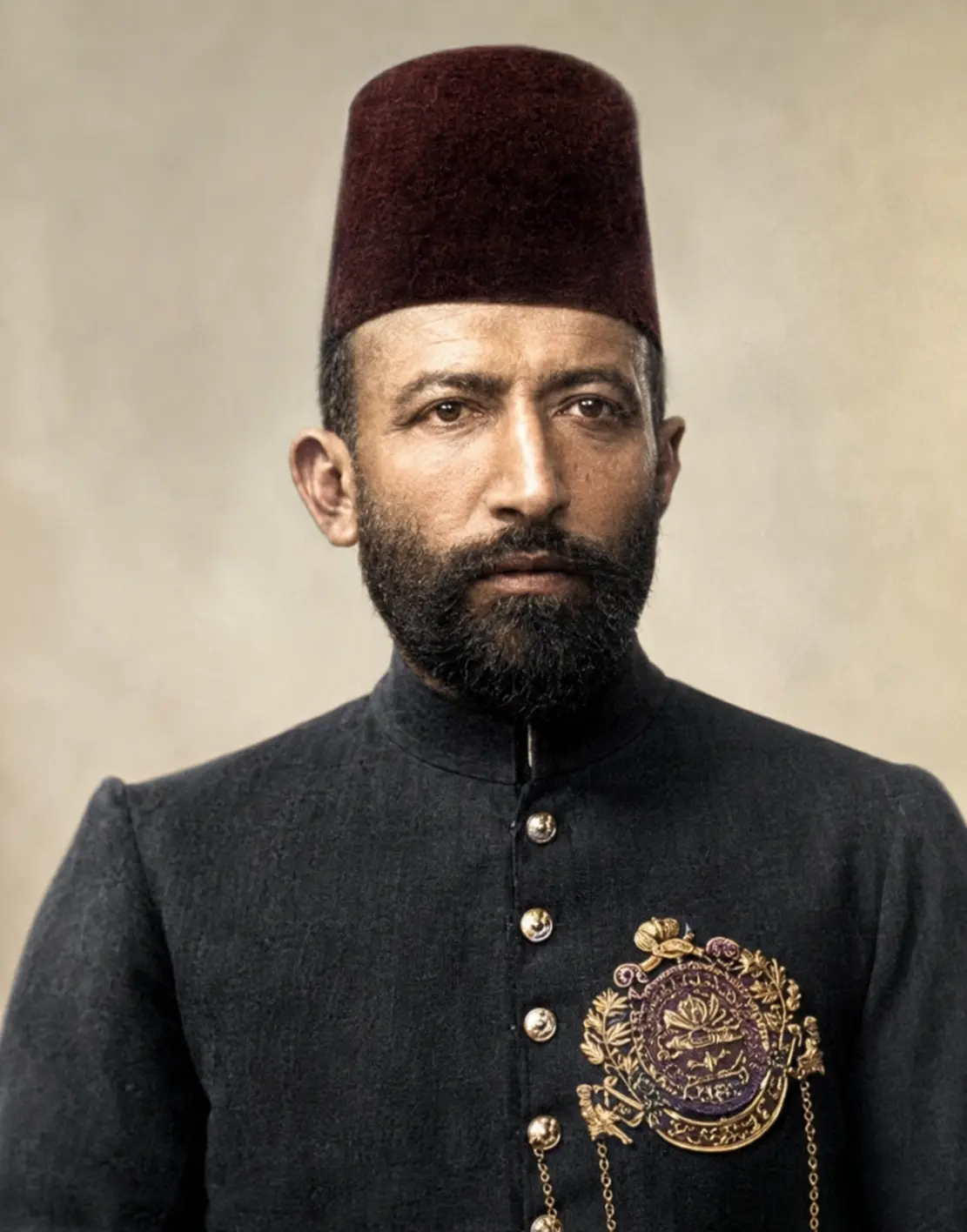
Hakim Ajmal Khan's career brought together two causes that are not often associated: the revival and modernisation of traditional Indian medicine, and the movement for Indian independence from British rule. He was, by profession and family tradition, a practitioner of Unani medicine — the Greco-Arabic medical system that had served the Mughal court and continued to serve millions of Indians into the twentieth century. He was also, by the final decade of his life, one of the most prominent Muslim figures in the Indian National Congress, presiding over its session in 1921, serving as the first Chancellor of Jamia Millia Islamia, and working alongside Gandhi, the Ali brothers, and Abul Kalam Azad in the Non-Cooperation and Khilafat movements.
The combination mattered. His standing as a physician — one who served the Nawab of Rampur, who was acknowledged by the colonial government itself with the title Haziq-ul-Mulk, and whose family had practised medicine since the reign of Akbar — gave him an authority in Muslim India that a politician alone could not have commanded. When he renounced his British title in 1920 and threw that authority behind the Congress, it carried a weight that political conversion alone could not have supplied.
Family and Early Life
The Sharif Manzil Physicians
The INC's institutional record of its past presidents states that the ancestors of Hakim Ajmal Khan came to India in the company of Babur, the first Mughal emperor. During the reign of Akbar the family took up the medical profession, and from that point forward produced a succession of Unani physicians who served the Mughal court and its successor states.
By the nineteenth century the family was established at Sharif Manzil in Delhi, and the household maintained a family newspaper, the Urdu weekly Akmal-ul-Akhbar, which had been founded sometime between 1865 and 1870.
Birth and Education
Hakim Ajmal Khan was born in Delhi. The birth year is reported differently by different sources: the INC's own institutional page gives 1863; some academic papers give 1868. The discrepancy has not been resolved in the accessible sources. This article follows the INC's institutional record for the earlier date.
His education, according to the INC account, followed "the system of the time": he first committed the Quran to memory, then studied the traditional Islamic sciences, and then studied medicine in his own house — the family home being itself a centre of medical training. He did not attend a Western-style institution.
Medical Career
Court Physician at Rampur
After establishing himself in the family profession, Hakim Ajmal Khan was appointed chief physician to the Nawab of Rampur in 1892, a position he held until 1902. The appointment placed him within the tradition of princely patronage that had sustained Unani practice since the Mughal period, and it gave him the financial independence and social standing to pursue the institutional projects that followed.
During his decade at Rampur, according to the INC account, he became interested in the educational movement started by Syed Ahmed Khan and was appointed one of the trustees of the Aligarh College. This involvement indicates that his concern for Muslim institutional advancement predated his entry into active politics by more than a decade. He later resigned from the Aligarh trusteeship during the Non-Cooperation movement, when the authorities of Aligarh Muslim University refused to participate — a personal enactment of the same transition from loyalism to nationalism that defined his broader political career.
The Family Newspaper: Akmal-ul-Akhbar
The Ajmal Khan family maintained an Urdu weekly newspaper, Akmal-ul-Akhbar, which had been founded sometime between 1865 and 1870 and survived into the early twentieth century. JMI's Premchand Archives exhibition (February 2018) displayed images of this newspaper alongside the Hakim's speeches and poetry collection. In his thirties, Hakim Ajmal Khan began writing short political notes in the paper — the INC account identifies this as his first engagement with political issues, oriented initially toward Muslim rather than broader nationalist politics.
The Tibbia College
Hakim Ajmal Khan's most significant institutional contribution to medicine was the transformation of his family's existing Tibbiya School into the Ayurvedic and Unani Tibbia College in Delhi. The Delhi government's official history of the institution records that the foundation stone was laid by Lord Hardinge, the Viceroy of India, on 29 March 1916, and that the college was inaugurated by Mahatma Gandhi on 13 February 1921.
The college, situated in Karol Bagh, Delhi, combined instruction in the Unani (Greco-Arabic) and Ayurvedic systems with modern methods of research. Hakim Ajmal Khan added a research department and a section for teaching midwifery, and he encouraged upper-class women to take up the profession. The Indian Express reports that the college arose from the friendship between Hakim Ajmal Khan and Lord Hardinge, connecting Mughal-era medical traditions with British institutional patronage.
The college continues to operate under the Delhi government, offering bachelor's and master's degrees in Ayurvedic and Unani medicine. The Delhi government's official page confirms that after independence it was managed under the Tibbia College Act of 1952.
The British government recognised his services to medicine by conferring the title Haziq-ul-Mulk (Healer of the Nation) in 1907.
Defence of Indigenous Medicine
Around 1910 the Government of India proposed to withdraw professional recognition from Hakims and Vaids — practitioners of Unani and Ayurvedic medicine respectively. Hakim Ajmal Khan regarded this as an attempt to eliminate the Indian medicinal systems. The INC account records that he "organized the Hakims and Veds to protest against the proposed bill." This was his first significant political action, and it established a pattern that would recur: the defence of Indian institutions against colonial policy led him, step by step, from professional advocacy into nationalist politics.
Political Career
Early Political Involvement
In his thirties Hakim Ajmal Khan began political commentary through short notes in the family weekly Akmal-ul-Akhbar. The INC account describes his early political career as oriented more toward Muslim politics than toward the broader nationalist movement.
The Shimla Deputation and the Muslim League, 1906
In 1906 Hakim Ajmal Khan was included in the Muslim deputation that met the Viceroy at Shimla to present a memorandum on behalf of the community regarding political representation. He also participated in the meeting at Dacca (Dhaka) called to organise a Muslim political party. The INC account records that he "seconded the move, and the Muslim League was thus born."
Connection to Syed Ahmed Khan and Aligarh
During his years at Rampur, Hakim Ajmal Khan became interested in the educational movement started by Sir Syed Ahmad Khan and was appointed a trustee of the Aligarh College. He later resigned from this position during the Non-Cooperation Movement when the authorities of Aligarh Muslim University refused to participate.
The Turn to National Politics
The INC account traces his transition from "loyal politics" to "national politics" across the second decade of the twentieth century. Several events accelerated it.
First, around 1910, the Government of India proposed to withdraw professional recognition from Hakims and Vaids. Hakim Ajmal Khan saw in this an attempt to eliminate the Indian medicinal systems and organised the practitioners to resist the bill. This was his first significant political action outside Muslim communal politics.
Second, Italy's attack on Ottoman Tripoli provoked resentment among Indian Muslims at British indifference. Hakim Ajmal Khan threw himself into the agitation.
Third, the First World War brought mass arrests of Muslim leaders. Hakim Ajmal Khan had been helping the government's war effort, but the arrests of his colleagues forced him to withdraw his support.
In 1917 he came to Gandhi and the Congress leadership. The INC account states: "The association transformed the 'loyal' Ajmal Khan, into the 'rebel' Ajmal Khan." He renounced his British title of Haziq-ul-Mulk in 1920. The Indian public conferred on him the title Masih-ul-Mulk (Messiah of the Nation), by which he remained known thereafter.
The renunciation of a British title was a significant public act in 1920. It placed him alongside the Ali brothers, Motilal Nehru, and others who gave up honours as part of the Non-Cooperation movement, and it constituted a formal declaration that a man who had served the Nawab of Rampur, sat on the Aligarh board, and received a government title now regarded British authority as illegitimate.
Congress President, 1921
At the Ahmedabad session of the Indian National Congress in 1921, Hakim Ajmal Khan was elected President in place of the previously elected C.R. Das, who had been arrested before the session began. His presidential address, preserved in the INC's institutional record, declared: "The spirit of non-cooperation pervades throughout the country and there is no true Indian heart even in the remotest corner of this great country which is not filled with the spirit of cheerful suffering and sacrifice to attain Swaraj and see the Punjab and the Khilafat wrongs redressed."
Hindu-Muslim Unity
Hakim Ajmal Khan was notable for his commitment to inter-communal co-operation. He is recorded as the only Muslim to have chaired a session of the Hindu Mahasabha — a fact that indicates the breadth of his acceptance across communal boundaries in the pre-Partition political landscape. He worked closely with Mohammad Ali Jauhar and Shaukat Ali in the Khilafat Movement, and with Gandhi and Motilal Nehru in the Congress.
Jamia Millia Islamia
Hakim Ajmal Khan was one of the founders of Jamia Millia Islamia, established at Aligarh on 29 October 1920 as a nationalist educational institution rejecting British colonial education. He served as the university's first Chancellor from 1920 until his death in 1927.
JMI's institutional pages confirm his founding role and his chancellorship. After his death he was succeeded as Chancellor by Mukhtar Ahmed Ansari, who held the office until 1936.
The connection between Jamia and the Tibbia College is personal: Hakim Ajmal Khan was simultaneously building a nationalist medical institution and a nationalist university, and both reflected the same conviction that Indian institutions should serve Indian purposes rather than colonial ones.
Death and Legacy
Hakim Ajmal Khan died on 29 December 1927 in Delhi. The INC account attributes his death to heart trouble. He was sixty-four years old (on the 1863 birth date).
The Hindu, in a 2015 article titled "The amazing Hakim Sahib," records that "over the years, since his death in 1927, people seem to have forgotten the great hakim whose lasting legacy is the Unani Tibbia College in Karol Bagh." JMI held a symposium on his works in 2015, and in 2018 the university's Premchand Archives and Literary Centre mounted a fortnight-long exhibition to mark his 150th birth anniversary, displaying a copy of his Urdu poetry collection Dewan-e-Shaida (published 1926), his speeches, and images of the family newspaper.
His institutional legacies are:
- Jamia Millia Islamia — now a central university of the Indian Republic
- Ayurvedic and Unani Tibbia College — now a Delhi government institution offering degrees in traditional medicine
- The broader recognition of Unani and Ayurvedic medicine in Indian public health policy
His political legacy lies in the period when he was active: the years 1917–1927, during which the Congress, the Khilafat committee, and the Muslim League were still capable of finding common ground, and during which a Muslim hakim could preside over the Congress and chair a session of the Hindu Mahasabha without contradiction. That moment did not last, but while it lasted, Hakim Ajmal Khan was one of its principal figures.
Historiographical Note
The principal sources for this article are the Indian National Congress's own institutional page on its past presidents, JMI's institutional pages, the Delhi government's official history of the Tibbia College, and reporting in The Hindu and the Indian Express.
The birth year presents a discrepancy: the INC gives 1863, while the IJIRT academic paper and some reference compilations give 1868. JMI's 2018 exhibition was framed as marking the "150th birth anniversary," which — if held in February 2018 — implies 1868 rather than 1863. This article notes the discrepancy and follows the INC's institutional record, while acknowledging that the later date has support.
No full-length scholarly biography of Hakim Ajmal Khan in English has been identified in the accessible sources. The INC's page, while detailed, is a party document and presents its subject favourably. The academic paper in IJIRT provides additional detail but is not published in a peer-reviewed journal of the first rank.
References and Further Reading
Primary Islamic Sources
- Quran, Surah Al-Isra (17:82) — "And We send down of the Quran that which is healing and mercy for the believers." (The Quranic basis for medicine as a form of service; the intellectual context within which Unani practice was understood as religiously meritorious)
- Quran, Surah Ash-Shu'ara (26:80) — "And when I am ill, it is He who cures me." (On healing as divine; the framework within which the Hakim's art was practised)
- Quran, Surah Al-Hujurat (49:13) — "O mankind, indeed We have created you from male and female and made you peoples and tribes that you may know one another." (The verse invoked in the Indian nationalist Muslim tradition's case for Hindu-Muslim unity, central to Hakim Ajmal Khan's politics)
- Quran, Surah Al-Ma'idah (5:2) — "And cooperate in righteousness and piety." (The scriptural basis for co-operation across communal lines)
Classical Islamic Sources
- Ibn Sina (Avicenna). Al-Qanun fi al-Tibb (The Canon of Medicine). [Original 11th century CE — the foundational text of the Unani medical system in which Hakim Ajmal Khan was trained and which his Tibbia College taught]
- Al-Razi (Rhazes). Kitab al-Hawi fi al-Tibb (The Comprehensive Book of Medicine). [Original 10th century CE — classical Islamic medical authority within the Unani tradition]
- Shah Waliullah Dehlawi. Hujjat Allah al-Balighah. [Original 18th century CE — the Indian Islamic reform tradition within which the Delhi Muslim elite of Hakim Ajmal Khan's generation was formed]
- Sir Sayyid Ahmad Khan. Educational writings and the Aligarh Movement. [The immediate intellectual context: Hakim Ajmal Khan was a trustee of Aligarh before turning to Congress politics]
Academic and Scholarly Sources
- IJIRT (International Journal of Innovative Research in Technology). "Hakim Ajmal Khan (1868–1927): A Pioneer of Unani Medicine, Educational Reform, and Indian Nationalism." [Academic paper treating his medical, educational, and political contributions]
- Minault, Gail. The Khilafat Movement: Religious Symbolism and Political Mobilization in India. New York: Columbia University Press, 1982. [The standard account of the movement in which Hakim Ajmal Khan was a leading figure]
- Hardy, Peter. The Muslims of British India. Cambridge: Cambridge University Press, 1972. [General political context]
- Metcalf, Barbara D. Islamic Revival in British India: Deoband, 1860–1900. Princeton: Princeton University Press, 1982. [Comparative context of Muslim reform movements]
- Alavi, Seema. Islam and Healing: Loss and Recovery of an Indo-Muslim Medical Tradition, 1600–1900. New York: Palgrave Macmillan, 2008. [On the history of Unani medicine in India, the tradition Hakim Ajmal Khan revived]
Further Reading
- Indian National Congress. "Hakim Ajmal Khan (Acting President for C.R. Das)." Past Party Presidents. Institutional page at inc.in. [The most detailed publicly accessible biographical narrative]
- Jamia Millia Islamia. Institutional history and Premchand Archives exhibition materials. jmi.ac.in. [Confirms founding role and chancellorship 1920–1927]
- Government of Delhi. "A & U Tibbia College & Hospital: History." autch.delhi.gov.in. [Official institutional history of the Tibbia College]
- The Hindu. "Down Memory Lane: The Amazing Hakim Sahib." June 2015. [Reporting on the JMI symposium and his legacy in Delhi]
- Hamdard Laboratories — the Unani pharmaceutical institution founded in the same Delhi medical world
- Ashfaqulla Khan — the poet and revolutionary of the Kakori case
Mentioned In
9 articles reference this topic