Aruna Asaf Ali: The Grand Old Lady of the Indian Independence Movement
Aruna Asaf Ali (1909-1996), born Aruna Ganguly, hoisted the Indian flag at Gowalia Tank Maidan on 9 August 1942, marking the start of the Quit India Movement. She spent four years underground, became Delhi's first mayor in 1958, and was awarded the Bharat Ratna posthumously in 1997.
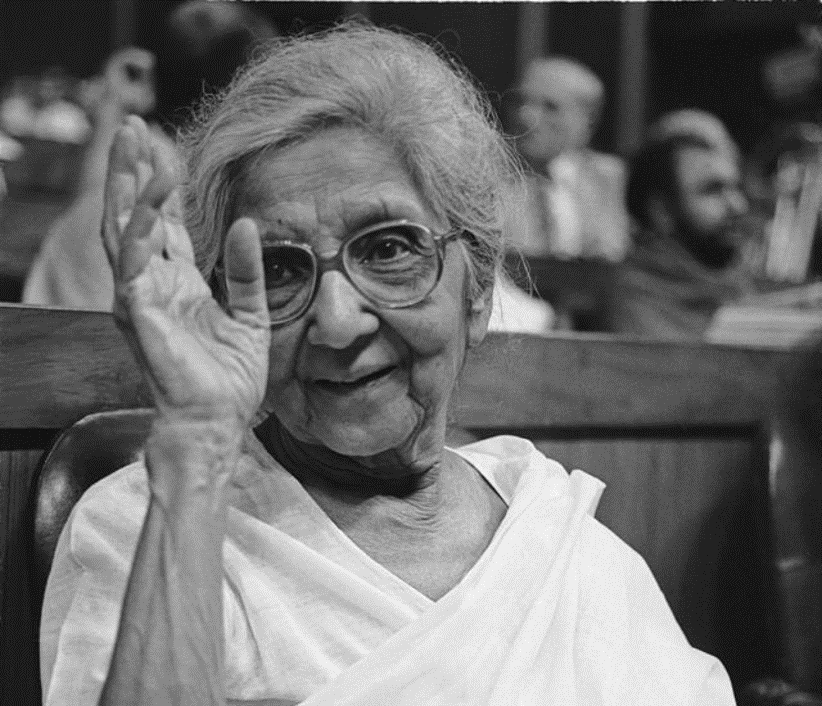
Aruna Asaf Ali is remembered for a single image: a young woman raising the Indian flag at the Gowalia Tank Maidan in Bombay on the morning of 9 August 1942, hours after the British had arrested Gandhi, Nehru, and the entire Congress leadership in the hope of suppressing the Quit India movement before it could begin. The act — defiant, public, carried out by a figure who was not among the senior leadership — provided the immediate impetus for the movement to proceed despite the absence of its leaders. It made her, overnight, the most visible symbol of a leaderless revolt.
But her life extended far beyond that moment. Before it she had participated in the Salt March of 1930, been imprisoned, gone on hunger strike, and spent nearly a decade in political education. After it she went underground for four years, worked alongside Jayaprakash Narayan and Ram Manohar Lohia in the socialist underground, and emerged to become one of the most radical voices in Congress politics. After independence she moved steadily leftward — through the Socialist Party to the Communist Party of India — and then into journalism and city governance, becoming Delhi's first elected mayor in 1958 and cofounding two publications that became significant voices of the Indian left.
Britannica calls her the "Grand Old Lady" of the Indian Independence Movement. She was awarded the Bharat Ratna — India's highest civilian honour — posthumously in 1997.
Early Life
Family Background
Aruna Ganguly was born on 16 July 1909 in Kalka, Punjab (now in Haryana). She came from a Bengali Brahmin family that had become followers of the Brahmo Samaj, a theistic reform movement within Hinduism. Her father, Upendranath Ganguly, was a restaurateur. Her mother, Ambalika Devi, was the daughter of Trailokyanath Sanyal, a well-known Brahmo Samaj leader.
Education
She studied at the Sacred Heart Convent School in Lahore and completed her college education at All Saints' College in Nainital. She then began a teaching career at Gokhale Memorial School in Calcutta.
Marriage to Asaf Ali
While teaching, Aruna met Asaf Ali, an eminent Congress lawyer more than twenty years her senior, during a visit to Allahabad. Despite family opposition to the interfaith marriage — she was Hindu, he was Muslim — they married in 1928. Britannica records that Asaf Ali "was part of the Indian National Congress, a political party whose members included nationalist leaders such as Mahatma Gandhi and Jawaharlal Nehru."
The marriage drew venomous press commentary. Raghavan's biography of Asaf Ali quotes one article: "When they see such instances, Hindus begin to feel that every Musalman is unfit to be trusted — that you never can tell when he will cut your throat." The hostility indicates the communal temperature of the period and makes the marriage itself a political statement about the possibility of Hindu-Muslim co-operation.
Through her husband, Aruna entered Congress politics and the independence movement.
The Salt March and Early Activism (1930–1932)
Aruna participated in the Salt March (Salt Satyagraha) of 1930, Gandhi's mass non-violent protest against the British salt tax. She was arrested along with thousands of others.
In 1931 the Gandhi-Irwin Pact was signed, leading to the release of political prisoners. Britannica records that the British government did not free Aruna, "causing an uproar among other women prisoners who, inspired by her revolutionary spirit, refused to leave until she was freed." Gandhi intervened to secure her release.
She was imprisoned again in 1932 in Delhi, where she went on hunger strike demanding improved conditions for prisoners. The British authorities transferred her to solitary confinement in Ambala.
The Decade of Preparation (1932–1942)
After her release from Ambala, Britannica records that Aruna "took a hiatus from direct politics for nearly 10 years." However, she did not disengage entirely. She worked with Rameshwari Nehru and the Delhi Women's League, gaining organisational experience. She was part of the All India Women's Conference (AIWC). She explored socialist ideology alongside Gandhian ideals — a dual orientation that would define her post-independence career.
The Quit India Movement (1942)
The Decision
In the first week of August 1942, Aruna travelled to Bombay with Asaf Ali and was present at the All India Congress Committee meeting on 7 August where the Congress voted to initiate the Quit India Movement.
9 August 1942: The Flag at Gowalia Tank
On the morning of 9 August 1942, British authorities arrested Gandhi and dozens of other Congress leaders, including Nehru and Asaf Ali. The intention was to decapitate the movement before it could launch.
Younger and more militant members took charge. Aruna addressed the remaining supporters at the Gowalia Tank Maidan (now August Kranti Maidan) and hoisted the Indian flag. Britannica states: "On August 9, 1942, Aruna Asaf Ali hoisted the Indian flag in Bombay, defying British orders. Her action marked the definitive beginning of the Quit India Movement."
The Guardian's obituary records: "She was, in fact, given the honour of hoisting the Congress tricolour in Bombay at the meeting in August 1942 where Gandhi asked the British to pack up and go."
The act transformed her from a relatively minor Congress figure into the symbol of a movement that operated without its leaders. Demonstrations, marches, and strikes followed across India.
Underground (1942–1946)
When the police issued a warrant for her arrest, Aruna went underground. The British announced a reward of 5,000 rupees for her capture and seized her property.
Britannica records that she "remained on the run even though Gandhi, concerned about her failing health, requested her to surrender." She refused. Operating covertly, she "spread revolutionary messages among the masses, visited villages reeling under famine, and extended support to people in need."
She worked alongside Jayaprakash Narayan, Ram Manohar Lohia, Achyut Patwardhan, and Edatata Narayanan in the socialist underground. The Cambridge University Press article on her post-independence career notes that this period cemented her leftist orientation.
End of Underground Life
In January 1946 her arrest warrant was revoked and she emerged from hiding. She resumed open political activity, delivering speeches in Calcutta, Delhi, and Bombay.
When the Royal Indian Navy mutinied in February 1946, Aruna supported the sailors' revolt despite opposition from Gandhi and Nehru. Britannica notes that this "caused a rift since Gandhi not only denounced the mutiny but also objected to Aruna's involvement in it." This episode marks the beginning of her divergence from the Congress mainstream toward the left.
Post-Independence Career
Movement Leftward
After independence in 1947, Aruna did not remain in the Congress mainstream. She joined the Congress Socialist Party, then moved to the Socialist Party in 1948. In the early 1950s she joined the Communist Party of India (CPI).
The Cambridge University Press article records that "Aruna saw domestic and international issues as intrinsically linked and believed that the Soviet Union was both a model for and guarantor of Indian postcolonial freedom." This characterises her position in the early Cold War period.
In 1954 she helped establish the National Federation of Indian Women, the women's wing of the CPI.
She left the CPI in 1956 but remained committed to socialist principles.
Journalism: Patriot and Link
In 1958, together with Edatata Narayanan, Aruna cofounded and edited the daily newspaper Patriot and the weekly publication Link. Britannica describes these as publications that "became prominent voices for progressive thought in postindependence India." They represented the non-party Indian left through the Cold War decades.
First Mayor of Delhi (1958)
In 1958 Aruna was elected the first mayor of Delhi. Britannica notes that she made "significant contributions to the city's development and governance." The Encyclopedia.com entry confirms the election.
Relationship with Asaf Ali
The marriage of Aruna and Asaf Ali was a partnership of two people who began in the same political space and diverged. Asaf was a moderate constitutionalist — a barrister, a minister, a diplomat. Aruna became a radical — underground, socialist, eventually communist.
Raghavan's biography, as reviewed in Frontline, records Asaf continuing "to love a wife who has left him and his moderations far behind." The Frontline reviewer notes "the quiet dignity with which Asaf continues to love a wife who has left him" and a country where "sly hints and allegations about the loyalty of Muslims have become commonplace."
Asaf Ali died in 1953. Aruna lived for another forty-three years, pursuing the causes she had adopted after his death: journalism, civic governance, women's rights, and the secular left.
Honours and Recognition
- Lenin Peace Prize (1965; Encyclopedia.com gives 1975)
- Jawaharlal Nehru Award for International Understanding (1991; Encyclopedia.com gives 1992)
- Bharat Ratna (awarded posthumously in 1997)
- A major road in New Delhi, Aruna Asaf Ali Marg, is named after her.
- India Post issued a commemorative postage stamp in 1998.
The discrepancies in dates between Britannica and Encyclopedia.com for the Lenin Prize and the Nehru Award are noted; this article does not resolve them.
Death
Aruna Asaf Ali died on 29 July 1996 in New Delhi. She was eighty-seven years old.
Legacy and Assessment
In the Independence Movement
Her significance rests on the act of 9 August 1942 and what followed: the demonstration that the Quit India movement could proceed without its leaders, and that younger, more radical figures were prepared to carry it forward. She was not a theorist or a legislative leader; she was a figure of direct action at a moment when direct action was what mattered.
In Post-Independence India
Her post-independence career — the movement from Congress to the CPI, the founding of Patriot and Link, the Delhi mayoralty — represents a trajectory shared by a significant section of the Indian left: from anti-colonial nationalism through socialism to a position broadly aligned with the Soviet Union during the Cold War, and then (after 1956) to an independent left position.
The Interfaith Marriage
The Aruna-Asaf marriage remains symbolically significant as an interfaith alliance during a period of intense communalism, one that survived the communal violence of Partition and lasted until Asaf's death. It is cited in the historiography of Hindu-Muslim relations as evidence that cross-communal personal bonds were possible even in the most hostile political environment.
Historiographical Note
The principal source for this article is Encyclopaedia Britannica's comprehensive entry on Aruna Asaf Ali, which provides the chronological spine of her life and career. The Encyclopedia.com entry confirms dates and key facts independently. The Guardian's 1996 obituary provides independent British journalistic confirmation of the Quit India episode. The Cambridge University Press article on her post-independence career provides the scholarly framework for understanding her leftist orientation. T.C.A. Raghavan's biography of Asaf Ali, accessed through the Frontline review, provides material on the marriage and its political significance.
No full-length scholarly biography of Aruna Asaf Ali in English has been identified beyond what may be contained in Raghavan's treatment of the marriage. The Britannica entry is the most comprehensive single accessible source.
The award dates present discrepancies between sources (Lenin Prize: 1965 per Britannica vs 1975 per Encyclopedia.com; Nehru Award: 1991 vs 1992). These are noted rather than resolved.
References and Further Reading
Primary Islamic Sources
- Quran, Surah Al-Hujurat (49:13) — "O mankind, indeed We have created you from male and female and made you peoples and tribes that you may know one another." (The verse invoked in support of interfaith co-operation and shared nationality — the framework within which the Aruna-Asaf marriage existed)
- Quran, Surah Al-Mumtahanah (60:8) — "Allah does not forbid you from those who do not fight you because of religion... from being righteous toward them and acting justly toward them." (On equitable relations across religious boundaries)
- Quran, Surah An-Nisa (4:75) — "And what is [the matter] with you that you fight not in the cause of Allah and [for] the oppressed." (On the obligation to resist oppression — the broader framework within which Aruna's activism was situated)
- Quran, Surah Ash-Shura (42:39) — "And those who, when tyranny strikes them, they defend themselves." (Self-defence against oppression)
Classical Islamic Sources
- Shah Waliullah Dehlawi. Hujjat Allah al-Balighah. [Original 18th century CE — the Indian Islamic reform tradition that shaped the cultural milieu of the family Aruna married into]
- Al-Mawardi, Abu al-Hasan. Al-Ahkam al-Sultaniyyah. [Original 11th century CE — on governance and public authority; the framework within which Muslim political thought operated in the period]
- Jamal al-Din al-Afghani. Al-Urwa al-Wuthqa. Paris, 1884. [Pan-Islamic political thought; part of the intellectual background of Indian Muslim nationalism]
- Muhammad Abduh. Risalat al-Tawhid. Cairo, 1897. [The modernist school that influenced Indian Muslim reformers of Asaf Ali's generation]
Academic and Scholarly Sources
- Encyclopaedia Britannica. "Aruna Asaf Ali." [The most comprehensive single accessible source for her life and career; provides the chronological spine of this article]
- Cambridge University Press. "Aruna Asaf Ali's 'Imperative Duties': Worldmaking and Nation Building on the Indian Left after Independence." [Scholarly article on her post-independence political orientation]
- Raghavan, T.C.A. Circles of Freedom: Friendship, Love and Loyalty in the Indian National Struggle. New Delhi: Juggernaut, 2024. [Biography of Asaf Ali treating the marriage and partnership in detail]
- Encyclopedia.com. "Ali, Aruna Asaf (c. 1909–1996)." Women in World History. [Independent reference entry confirming dates and key facts]
- Minault, Gail. The Khilafat Movement: Religious Symbolism and Political Mobilization in India. New York: Columbia University Press, 1982. [Context of the period in which Aruna entered politics]
Further Reading
- The Guardian. Obituary of Aruna Asaf Ali. 30 July 1996. [British journalistic confirmation of the Quit India episode and her broader significance]
- Frontline (The Hindu). Review of Circles of Freedom by Parvati Sharma. July 2024. [On the Aruna-Asaf partnership and its political context]
- Indiatimes. "Remembering The Icon Of Quit India Movement Who Was Much Ahead Of Her Times." [Biographical overview]
Mentioned In
1 article references this topic
More from Modern Era
Aligarh Muslim University: From the Muhammadan Anglo-Oriental College to a Central University
Aligarh Muslim University grew out of the school founded by Syed Ahmad Khan in 1875, which became the Muhammadan Anglo-Oriental College in 1877 and a university by Act of the Indian legislature in 1920. It was the central institution of the Aligarh Movement.
Hamdard Laboratories (India): From Unani Clinic to National Institution
Hamdard Laboratories (India) is a Unani pharmaceutical company and welfare institution founded in Old Delhi in 1906 by Hakeem Hafiz Abdul Majeed. Converted into a waqf in 1948 under his son Hakeem Abdul Hameed, it produces Rooh Afza and established Jamia Hamdard university in Delhi.
Jamia Millia Islamia: The National Muslim University
Jamia Millia Islamia was founded at Aligarh on 29 October 1920 by nationalist Muslim leaders and students who left the Muhammadan Anglo-Oriental College during the Non-Cooperation movement. It moved to Delhi in 1925, to Okhla in 1935, and became a central university by Act of Parliament in 1988.
Growth of Islamic Finance
Banking and financial services conducted according to Islamic law, which forbids interest and requires risk to be shared. From institutional beginnings in the 1960s the sector has grown into a multi-trillion-dollar industry serving Muslim and non-Muslim customers alike.