Asaf Ali: Barrister, Freedom Fighter, and India's First Ambassador to America
Asaf Ali (1888-1953) was an Indian barrister and Congress leader who defended Bhagat Singh and the INA officers at the Red Fort trial. He served in the Interim Government of 1946, became independent India's first Ambassador to the United States in 1947, and was Governor of Odisha to 1952.
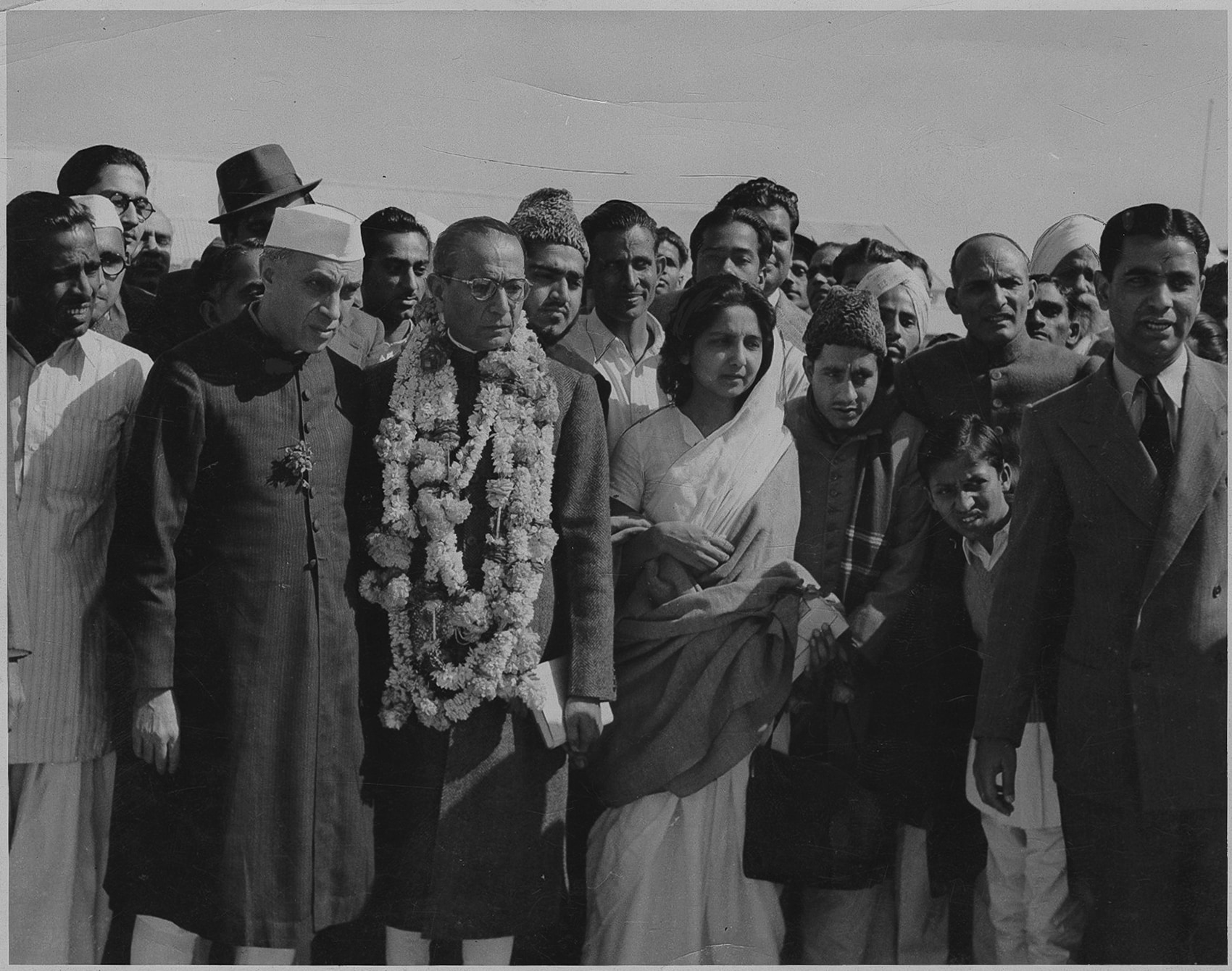
Asaf Ali's life traces the arc of a certain kind of Indian Muslim nationalist: born into the Delhi Muslim elite that had been brutalised after 1857, educated in colonial institutions, called to the English bar, and then drawn irrevocably into the Congress and the independence movement, where his Muslim identity made him simultaneously indispensable and suspect. He defended Bhagat Singh. He defended the INA officers at the Red Fort. He was imprisoned at Ahmednagar Fort alongside Nehru and the Congress Working Committee during Quit India. He served in the Interim Government and became independent India's first ambassador to the United States. And through it all, as T.C.A. Raghavan's biography Circles of Freedom makes clear, he carried the weight of being a Muslim Congressman in an era when that position was contested from every direction — by the British, by the Muslim League, and eventually by the communal violence of Partition itself.
He was not, in Raghavan's telling, "cut, fully formed, from heroic cloth but rather moulded by the pull of his own desires and the push of his challenging times." He was, as the British government described Muslim Congressmen, one of the "Muslim dummies with which the Congress dress their shop window" — a characterisation he lived with and worked against for three decades.
Early Life and Education
Family and the Shadow of 1857
Asaf Ali was born on 11 May 1888 in Seohara, in the Bijnor district of the North-Western Provinces (now Uttar Pradesh). He grew up in a haveli in Kucha Chelan, Daryaganj — a neighbourhood in Old Delhi that Raghavan's biography describes as "once home to Delhi's brightest lights and also the site of their punitive massacre after 1857."
His family belonged to the Muslim elite of Delhi — the class that had been "brutalised and marginalised after the 1857 uprising and, a half-century later, remained insecure about its prospects in British India." He was the only son of a family of depleting means. The trajectory of decline from Mughal-era prominence to colonial-era insecurity shaped the milieu in which he was formed — the same milieu from which Syed Ahmed Khan had drawn his educational project at Aligarh a generation earlier.
St. Stephen's College and Lincoln's Inn
Asaf Ali was educated at St. Stephen's College, Delhi — one of the premier institutions of colonial higher education — and then travelled to England to study law. He was called to the bar at Lincoln's Inn in 1912. Britannica confirms his legal education at Lincoln's Inn. The German-language reference sources give the same date.
In London he was part of a circle of young Indian nationalists, including Sarojini Naidu, V.D. Savarkar, and M.A. Jinnah. Raghavan records that Asaf attended Sunday debates at India House, where Savarkar — then an advocate of Hindu-Muslim unity — would read from his book on 1857, "in which he argued for the uprising as a joint Hindu-Muslim enterprise." Years later Asaf would give Aruna this book; she said it "politicised" her.
Legal Career and Political Defence Work
Barrister in Delhi
On his return to India, Asaf Ali established himself as a barrister in Delhi. The Frontline review describes him as moving from silk to khadi — from the fashionable life of a London-trained barrister to the austere costume of the nationalist movement.
Defence of Bhagat Singh
Asaf Ali defended Indian revolutionaries accused of political violence, including Bhagat Singh — the young revolutionary hanged in 1931 for the shooting of a British police officer and the bombing of the Central Legislative Assembly. This placed Asaf in a morally and legally difficult position: a moderate Congressman defending an act of revolutionary violence against the colonial state. The Frontline review notes this as part of a pattern in which Asaf "would nevertheless defend nationalists accused of political violence."
Defence of Sheikh Abdullah
He also defended Sheikh Abdullah of Kashmir — a fact recorded in the Frontline review without further detail in the accessible material.
The INA Trial at the Red Fort
Asaf Ali was among the defence team at the Red Fort trial of the Indian National Army officers in 1945–46. The team — which included Jawaharlal Nehru, Bhulabhai Desai, Sir Tej Bahadur Sapru, and Kailash Nath Katju — defended Shah Nawaz Khan, Prem Kumar Sahgal, and Gurbaksh Singh Dhillon against charges of "waging war against the King-Emperor."
Raghavan draws out the historical irony: "the very place where Bahadur Shah Zafar was found guilty of treason less than a century earlier" now saw "three officers who had defected from the British army" walk out free. "Afterwards, Shah Nawaz Khan, Prem Kumar Sahgal, and Gurbaksh Singh Dhillon marched to Asaf's house in Kucha Chelan: where once hundreds had been killed to avenge 1857, now hundreds gathered to cheer their release."
Marriage to Aruna Ganguly
In 1928 Asaf Ali married Aruna Ganguly, a young Bengali Hindu woman more than twenty years his junior. The marriage — between a Muslim barrister and a Hindu woman from a Brahmo Samaj family — was an interfaith alliance that provoked public controversy. Raghavan quotes the press reaction: "When they see such instances, Hindus begin to feel that every Musalman is unfit to be trusted — that you never can tell when he will cut your throat."
The marriage matters historically because it was itself a political act in the communally charged atmosphere of 1920s India, and because it produced a partnership in which both partners became significant figures in the independence movement — Asaf through institutional Congress politics and legal defence work, Aruna through direct action and underground resistance during Quit India.
Raghavan describes Asaf as "a romantic with a conservative heart" who "nevertheless wanted a strong, independent-minded wife." The subsequent history of their relationship — Aruna's radicalisation, her departure from his moderate politics, and their eventual separation — is part of the broader story of the Congress left's divergence from the mainstream after independence.
The Quit India Movement and Imprisonment
Ahmednagar Fort
In August 1942, following the Congress Working Committee's adoption of the Quit India resolution, Asaf Ali was arrested along with Nehru and other senior Congress leaders and imprisoned at Ahmednagar Fort. This was his last of several imprisonments during the freedom movement.
Raghavan records that during their detention, Asaf and Nehru gardened together to pass the time: "when the first sprouts appeared, Jawaharlal shouted the glad tidings to me and I felt like a child securing his first toy." The detail humanises the imprisonment and indicates the closeness of the relationship between the two men.
While Asaf was imprisoned, Aruna was outside, hoisting the Indian flag at Gowalia Tank Maidan on 9 August 1942 and then going underground for four years — the most dramatic divergence in their respective roles during the movement.
The Interim Government and Diplomacy
Minister of Railways and Transport (1946)
After release from prison, Asaf Ali was appointed to the Interim Government of India headed by Jawaharlal Nehru, which took office on 2 September 1946. He served as Minister of Railways and Transport — a portfolio that placed him in charge of one of the largest and most complex administrative systems in British India at the moment of its transition to independence.
First Indian Ambassador to the United States (1947)
Asaf Ali served as independent India's first Ambassador to the United States from February 1947. The Times of India confirms this appointment. He held the post until mid-April 1948 (some sources give 1947–1952 for the ambassadorial period in Washington, though this may conflate the US posting with his later Swiss posting).
Governor of Odisha (1948–1952)
He subsequently served as Governor of Odisha (then spelled Orissa), a position he held until 1952.
The Question of Muslim Identity in the Congress
The Position
Raghavan's biography, as the Frontline review makes clear, treats the question of Asaf Ali's Muslim identity within the Congress as a central theme. He was "a Congressman, a member of the interim government, and a living argument, therefore, against separate electorates, against the need for a confederacy." For the League, however, "he was not a real Muslim, or only one of the 'Muslim dummies', as the British government described them, 'with which the Congress dress their shop window.'"
This is the same structural position occupied by Maulana Azad, Mukhtar Ahmed Ansari, Husain Ahmad Madani, and other Muslim Congressmen — the position of being simultaneously a representative of Muslim nationalism and a repudiation of Muslim separatism. But where Madani had the weight of Deoband behind him and Azad had the Congress presidency, Asaf Ali carried only his personal standing and his legal reputation.
Partition
As Partition approached and communal violence engulfed Delhi, Raghavan records that "his crumbling haveli in Kucha Chelan filled with terrified men and women escaping the mobs of Partition." The reviewer notes that Asaf "may have wondered at how history was circling in upon itself, at whether the insecurities of the Muslim elite post-1857 would recur in the Muslim masses post-Independence."
Death
Asaf Ali died on 2 April 1953 in Bern, Switzerland. He was sixty-four years old. The circumstances of his being in Bern at the time of death are not detailed in the accessible sources — he may have been serving in a diplomatic capacity or receiving medical treatment. His death preceded by three years Aruna's departure from the Communist Party of India and her subsequent career as a publisher and Delhi's first mayor.
Legacy and Assessment
As a Legal Figure
Asaf Ali's most concrete professional legacy is his defence work: Bhagat Singh, Sheikh Abdullah, and the INA officers represent three of the most politically significant trials of the colonial period. In each case, he defended Indians against a colonial state that accused them of violence or treason, using the colonial legal system's own procedures against its political purposes.
As a Political Figure
His political significance lies in what he represented rather than what he achieved in office. His ministerial and ambassadorial careers, while substantial, are not the reason he is remembered. He is remembered because he was a Muslim in the Congress — a living refutation of the two-nation theory — at a time when that position was contested, dangerous, and ultimately insufficient to prevent the partition it argued against.
In Raghavan's Assessment
The Frontline review concludes: "Asaf 'soldiered on bravely'. Sometimes, that is the most heroic thing a person can do."
Historiographical Note
The principal source for this article is the Frontline (The Hindu) review of T.C.A. Raghavan's Circles of Freedom: Friendship, Love and Loyalty in the Indian National Struggle (Juggernaut, 2024), written by Parvati Sharma. This is a published book review in one of India's most reputable magazines, drawing on a recently published biography by a professional historian and former diplomat.
Raghavan's book itself has not been consulted directly. The details of Asaf Ali's early life, his London circle, the Kucha Chelan haveli, the INA trial aftermath, and the Partition episode derive from the review's account of the biography's content. Britannica's entry on Aruna Asaf Ali provides independent confirmation of his education (St. Stephen's, Lincoln's Inn), his Congress membership, his defence work, his ministerial and ambassadorial appointments, and his dates. The Times of India confirms the ambassadorial appointment.
The death date presents a minor discrepancy: most sources give 2 April 1953, while some German-language references give 1 April 1953. This article follows the majority dating.
No full-length scholarly biography of Asaf Ali existed before Raghavan's 2024 book. The accessible sources for his life before that publication were fragmentary.
References and Further Reading
Primary Islamic Sources
- Quran, Surah Al-Hujurat (49:13) — "O mankind, indeed We have created you from male and female and made you peoples and tribes that you may know one another." (The verse central to the Indian nationalist Muslim tradition's case for shared nationality within which Asaf Ali worked)
- Quran, Surah Al-Ma'idah (5:8) — "Be just; that is nearer to righteousness." (Justice as the duty of the legal practitioner — the principle underlying Asaf Ali's defence work)
- Quran, Surah An-Nisa (4:135) — "O you who have believed, be persistently standing firm in justice, witnesses to Allah, even if it be against yourselves." (The obligation of justice even against self-interest — relevant to a Muslim defending non-Muslim revolutionaries)
- Quran, Surah Al-Mumtahanah (60:8) — "Allah does not forbid you from those who do not fight you because of religion... from being righteous toward them and acting justly toward them." (The Quranic basis for co-operation with non-Muslims)
Classical Islamic Sources
- Shah Waliullah Dehlawi. Hujjat Allah al-Balighah. [Original 18th century CE — the Indian Islamic reform tradition from which Delhi's Muslim elite descended]
- Al-Mawardi, Abu al-Hasan. Al-Ahkam al-Sultaniyyah. [Original 11th century CE — on governance, authority, and the obligations of public office]
- Jamal al-Din al-Afghani. Al-Urwa al-Wuthqa. Paris, 1884. [Pan-Islamic political thought that shaped the generation of Indian Muslim nationalists]
- Muhammad Abduh. Risalat al-Tawhid. Cairo, 1897. [The modernist school that influenced Indian Muslim reformers of Asaf Ali's generation]
Academic and Scholarly Sources
- Raghavan, T.C.A. Circles of Freedom: Friendship, Love and Loyalty in the Indian National Struggle. New Delhi: Juggernaut, 2024. [The first full-length scholarly biography of Asaf Ali, by a professional historian and former diplomat]
- Jalal, Ayesha. The Sole Spokesman: Jinnah, the Muslim League and the Demand for Pakistan. Cambridge: Cambridge University Press, 1985. [On the political context in which Muslim Congressmen like Asaf Ali were positioned]
- Hardy, Peter. The Muslims of British India. Cambridge: Cambridge University Press, 1972. [General context of Muslim nationalist politics]
- Green, L.C. "The Indian National Army Trials." The Modern Law Review 11, no. 4 (January 1948): 47–69. [Academic treatment of the Red Fort trial in which Asaf Ali participated as defence counsel]
- Cohen, Stephen P. "Subhas Chandra Bose and the Indian National Army." Pacific Affairs 36, no. 4 (Winter 1963): 411–429. [On the INA and its trial]
Further Reading
- Frontline (The Hindu). "Asaf Ali Biography by TCA Raghavan Reveals Untold Story of Indian Independence." Book review by Parvati Sharma. July 2024. [The principal accessible source for this article]
- Encyclopaedia Britannica. "Aruna Asaf Ali." [Contains confirmed biographical details of Asaf Ali within the entry on his wife]
- Times of India. "Asaf Ali birth anniversary: 10 unknown facts." May 2023.
- Encyclopedia.com. "Ali, Aruna Asaf (c. 1909–1996)." [Confirms marriage date 1928 and Asaf Ali's death 1953]
More from Modern Era
Aligarh Muslim University: From the Muhammadan Anglo-Oriental College to a Central University
Aligarh Muslim University grew out of the school founded by Syed Ahmad Khan in 1875, which became the Muhammadan Anglo-Oriental College in 1877 and a university by Act of the Indian legislature in 1920. It was the central institution of the Aligarh Movement.
Hamdard Laboratories (India): From Unani Clinic to National Institution
Hamdard Laboratories (India) is a Unani pharmaceutical company and welfare institution founded in Old Delhi in 1906 by Hakeem Hafiz Abdul Majeed. Converted into a waqf in 1948 under his son Hakeem Abdul Hameed, it produces Rooh Afza and established Jamia Hamdard university in Delhi.
Jamia Millia Islamia: The National Muslim University
Jamia Millia Islamia was founded at Aligarh on 29 October 1920 by nationalist Muslim leaders and students who left the Muhammadan Anglo-Oriental College during the Non-Cooperation movement. It moved to Delhi in 1925, to Okhla in 1935, and became a central university by Act of Parliament in 1988.
Growth of Islamic Finance
Banking and financial services conducted according to Islamic law, which forbids interest and requires risk to be shared. From institutional beginnings in the 1960s the sector has grown into a multi-trillion-dollar industry serving Muslim and non-Muslim customers alike.