Zulfiqar Ali Deobandi
An Indian scholar, educator and writer associated with the founding of Darul Uloom Deoband and with its first consultative council for nearly four decades. He taught at Bareilly College, served in the colonial education department, and wrote Urdu commentaries on the Arabic literary classics.
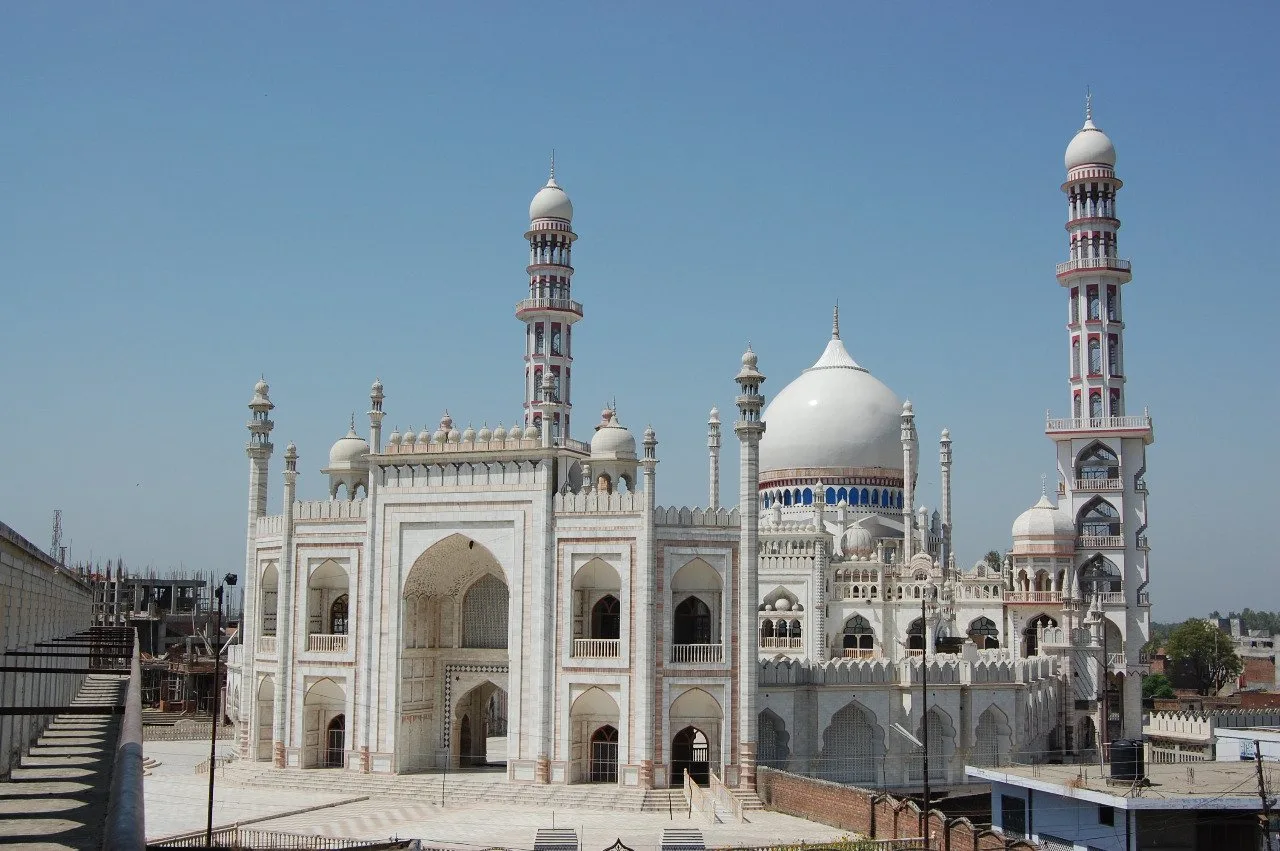
Zulfiqar Ali Deobandi (1822 – 1904) was an Indian Islamic scholar, educator and writer whose name is associated with the founding of Darul Uloom Deoband and who sat on the seminary's first consultative council, the majlis-e-shura, for close to four decades. He was also a professional educator in the colonial system: he taught at Bareilly College, rose through the government education department as an inspector of primary schools, and served after retirement as an honorary magistrate in Deoband. He wrote a series of Urdu commentaries on the classics of Arabic literature, a handbook of rhetoric, and a primer of mathematics. He was the father of Mahmud Hasan Deobandi, known as Shaykh al-Hind.
His life is of particular interest because it sits across a division that is often drawn too sharply. The reformist seminary at Deoband is usually contrasted with the Western-style colleges of the same period, and Barbara Metcalf's history of the movement examines at length how the Deobandi scholars positioned themselves in relation to colonial education and to Aligarh. Zulfiqar Ali belonged to both worlds at once. He was educated at a government college, spent his career in the colonial education department, and was at the same time among those who helped bring into being the institution that would define reformist Islamic learning in India.
Family and Education
Local histories record that Zulfiqar Ali was born at Deoband in 1822, corresponding to 1237 AH. He was the son of Shaikh Fath Ali and the younger brother of Mahtab Ali Deobandi. The family belonged to Deoband itself, and was connected to the Usmani family of the town.
He studied at Delhi College under Mamluk Ali Nanautawi and Sadruddin Khan Azurda Dehlawi, and he is listed among the prominent pupils of Mamluk Ali. Rizvi's history gives Mamluk Ali's death as 1267 AH, falling in 1850 and 1851, which places Zulfiqar Ali's study under him in the years before that — while he was still in his twenties — and means that he had left Delhi College before the upheaval of 1857. This places him at the centre of the most consequential teaching circle in mid-nineteenth-century northern India. Mamluk Ali's students included several of the men who would go on to found or lead Deoband, and Metcalf's account traces the intellectual descent of the movement in significant part through the Delhi scholarly milieu of which he was part. Delhi College itself was a government institution that taught the traditional Arabic and Persian sciences alongside English and the modern subjects, and it produced a generation equally at home in both.
Career in the Colonial Education Service
After completing his studies Zulfiqar Ali was appointed a professor at Bareilly College. He subsequently entered the government education department, serving first as Deputy Inspector and then as Inspector of primary schools. On receiving his pension he worked as an honorary magistrate at Deoband.
A salaried post in the education department carried practical consequences for the founding of a seminary. It provided a secure income independent of religious patronage, it gave its holder standing with the district administration, and it supplied direct experience of how schools were organised, examined, and financed. Metcalf's study emphasises that Deoband's distinctive achievement was organisational as much as intellectual: a permanent staff, a fixed curriculum, formal examinations, and funding by public subscription rather than by a ruler's endowment. Men with administrative experience were of evident use in building such an institution.
Role at Darul Uloom Deoband
Local histories identify Zulfiqar Ali among the early founders of Darul Uloom Deoband and describe him as an early supporter and adviser in its establishment and its first years of operation, working alongside Sayyid Muhammad Abid. Several accounts describe him directly as a co-founder of the seminary.
He is recorded as a member of its first majlis-e-shura for several decades. Qari Muhammad Tayyib, writing the seminary's centenary history, gives his tenure on the first council as running from 1283 to 1321 AH, that is from about 1866 to 1903 — a span of some thirty-seven years, ending only shortly before his death.
Rizvi's history of the seminary adds a particular responsibility to the general one. It records that he took part from the very beginning in founding and establishing the Darul Uloom, that he remained a member of its majlis-e-shura for the rest of his life, and that the seminary's treasury was placed in his charge. For an institution funded by annual public subscription rather than by a ruler's endowment, custody of the treasury was among the more consequential duties it had to assign, and it is a detail that fits the rest of his record: a man whose salaried career was spent administering schools for the government was given the seminary's money to look after.
The shura was the seminary's governing council, and continuity of membership over such a period mattered a great deal to an institution that had no endowment and depended on renewed public support each year. Zaman's discussion of the madrasa in the colonial and post-colonial periods stresses that these institutions insisted on their standing as a distinct sphere, managed by their own councils rather than by the state; the consultative council was the instrument through which that autonomy was exercised.
In 1307 AH Zulfiqar Ali wrote a short Arabic treatise, al-Hadiyya al-Saniyya fi Dhikr al-Madrasa al-Islamiyya al-Diyubandiyya, describing the Darul Uloom, its senior figures, and features of the town of Deoband, in a brief and literary style. The work is of interest as an account of the seminary written from within, in Arabic, by a member of its governing council roughly two decades after its foundation.
Writings
Zulfiqar Ali wrote in Urdu on Arabic literature and rhetoric, and also produced a work on mathematics. His purpose in the literary commentaries was pedagogical: to make the difficult classics of the Arabic canon accessible to Urdu-speaking students who were encountering them in the seminary curriculum. The titles reported in the sources include:
| Work | Subject |
|---|---|
| Tashil al-Dirasa | Urdu commentary on the Diwan al-Hamasa |
| Tashil al-Bayan | Urdu commentary on the Diwan of al-Mutanabbi |
| al-Ta'liqat 'ala al-Sab' al-Mu'allaqat | Urdu commentary on the seven Mu'allaqat |
| al-Irshad | Urdu commentary on the Qasidat Banat Su'ad |
| 'Itr al-Warda | Urdu commentary on the Qasidat al-Burda |
| Mi'yar al-Balagha, also called Tadhkirat al-Balagha | A handbook of rhetoric in Urdu, illustrated with examples from Urdu poetry |
| Tashil al-Hisab | A work on mathematics |
Two features of this list are worth drawing out. The first is the choice to write in Urdu about Arabic. The texts he treated — the Hamasa anthology, al-Mutanabbi's Diwan, the pre-Islamic Mu'allaqat, and the two celebrated odes in praise of the Prophet Muhammad (Peace Be Upon Him) — were standard components of literary training in the Dars-i Nizami curriculum, and commentaries in the students' own language made them teachable to a much wider body of students. The second is the handbook of rhetoric. Rather than confining his examples to Arabic verse, he illustrated the principles of balagha with examples drawn from Urdu poetry, applying a classical Arabic discipline to a living vernacular literature.
The biographical notice by Abdul Hayy Hasani, in the Arabic biographical dictionary Nuzhat al-Khawatir, records that Zulfiqar Ali studied under Mamluk Ali and Sadr al-Din Dehlawi, excelled in the literary sciences, and served as an inspector of primary schools, and lists among his writings the Urdu commentaries on the Diwan al-Hamasa, the Diwan of al-Mutanabbi, and the Mu'allaqat, together with his work on rhetoric.
Family and Death
Published accounts identify him as the father of Mahmud Hasan Deobandi, who lived from 1268 to 1339 AH and became the seminary's first student and later its most prominent figure, known by the title Shaykh al-Hind. Other sons named in local histories are Hamid Hasan, Muhammad Hasan, and Muhammad Mohsin, and two daughters are also noted. Some compendia record that he left a large family at his death.
He died at Deoband in 1322 AH, corresponding to 1904; Rizvi's history, which records his death twice, gives the day in its chronological account as 15 Rajab 1322. He is buried in the Qasmi cemetery, to the east of the grave of Muhammad Qasim Nanautawi, the seminary's principal founder; Muhammad Ahsan Nanautawi is reported to lie to his left. Rizvi reproduces an Urdu couplet by Fazl al-Rahman Usmani, himself a fellow pupil of Mamluk Ali and a founder of the seminary, composed to mark the position of the grave between those of Qasim Nanautawi and Muhammad Ahsan Nanautawi. Burial in that ground, beside the men with whom the institution began, reflects the position he held within it.
Historiographical Note
Three points in the record require comment.
A contested attribution to Garcin de Tassy. Rizvi's History of the Dar al-Ulum Deoband carries a passage which it attributes to the French orientalist Garcin de Tassy. As Rizvi presents it, de Tassy described a man who had been an alumnus of Delhi College, became a professor at Bareilly College, was a deputy inspector of schools at Meerut in 1857, was said by an acquaintance to be quick-witted and conversant with Persian and with Western learning, and had written Tashil al-Hisab — "Arithmetic Made Easy" — published at Bareilly in 1852.
That attribution has been challenged. The account consulted alongside Rizvi for this article reports that the person named in de Tassy's French text is Ashraf Ali, another professor at Delhi College, and that Zulfiqar Ali does not appear there at all; on that reading the attribution is an error transmitted from one work into another. Rizvi's own presentation lends some weight to that possibility, because his footnote to the passage does not cite de Tassy's book. It refers instead to a work on Maulana Muhammad Ahsan Nanautawi, which is where he found the quotation; the passage therefore reaches his history at second hand, through an intermediary, rather than from the French text itself. This article has not examined de Tassy's Histoire de la littérature hindouie et hindoustanie directly either, and so records both the passage as Rizvi transmits it and the objection to the attribution, without resolving between them. The consequence for one detail should be noted: the printing of Tashil al-Hisab at Bareilly in 1852 rests on the de Tassy attribution alone, and is therefore given here as attributed rather than as established.
His age at death. The discrepancy can now be located precisely. Rizvi states that he died at the age of eighty-five in 1322 AH, corresponding to 1904. The local histories give his birth as 1822, corresponding to 1237 AH, which would make him eighty-one or eighty-two at his death. If Rizvi's age is right, his birth would fall around 1819 instead. The year of death is not in dispute; the year of birth and the age at death cannot both be as reported. This article gives the years as the local histories report them and records Rizvi's figure here.
The foundation date of Darul Uloom Deoband. The date of the seminary's founding is given differently in different sources. Qari Muhammad Tayyib's centenary history dates the first shura from 1283 AH, that is 1866, and accounts following that reckoning place the foundation on 15 Muharram 1283 AH / 31 May 1866. Barbara Metcalf's study gives 1867. The discrepancy is small but real, and it turns on which act is treated as the founding — the initial gathering and decision, or the commencement of teaching. Readers will find both dates in reputable works, and this article does not choose between them.
References and Further Reading
Primary Islamic Sources
- The Qur'an — the foundation of the curriculum of the seminary he helped establish
- Qasidat al-Burda of al-Busiri — the celebrated ode in praise of the Prophet Muhammad (Peace Be Upon Him), on which he wrote an Urdu commentary
- Qasidat Banat Su'ad of Ka'b ibn Zuhayr — the ode delivered before the Prophet Muhammad (Peace Be Upon Him), the subject of his al-Irshad
- al-Hadiyya al-Saniyya fi Dhikr al-Madrasa al-Islamiyya al-Diyubandiyya by Zulfiqar Ali Deobandi — his own Arabic account of the seminary
Classical Islamic Sources
- The Diwan al-Hamasa of Abu Tammam — the classical Arabic anthology he treated in Tashil al-Dirasa
- The Diwan of al-Mutanabbi — the subject of his Tashil al-Bayan
- The Sab' al-Mu'allaqat — the seven pre-Islamic odes on which he wrote al-Ta'liqat
- The classical Arabic science of balagha, or rhetoric, which he presented in Urdu in Mi'yar al-Balagha
- Nuzhat al-Khawatir by Abd al-Hayy al-Hasani — the Arabic biographical dictionary carrying a notice of his life and writings
Academic and Scholarly Sources
- History of the Dar al-Ulum Deoband by Sayyid Mahboob Rizvi, translated by Murtaz Husain F. Quraishi — the seminary's own institutional history, consulted directly for this article. Its first volume carries a dedicated section on him and a further notice of his death, and is the source of his paternity of Mahmud Hasan, his studies at Delhi College under Mamluk Ali, the Bareilly College professorship and the inspectorate, the list of his writings and the treatise of 1307 AH, the honorary magistracy, his place among the earliest founders, his lifelong membership of the majlis-e-shura and his charge of the seminary's treasury, his age at death and the day of it, the position of his grave, and the passage attributed to Garcin de Tassy together with the footnote disclosing that it was taken at second hand
- Islamic Revival in British India: Deoband, 1860-1900 by Barbara Daly Metcalf — for the founding of the seminary, its organisational form and funding, the Delhi teaching circle of Mamluk Ali, and the reformist ulama's relationship with colonial education
- The Ulama in Contemporary Islam: Custodians of Change by Muhammad Qasim Zaman — for the madrasa as a self-governing sphere and the role of its consultative council
- Wikipedia, "Zulfiqar Ali Deobandi", https://en.wikipedia.org/wiki/Zulfiqar_Ali_Deobandi — consulted with the owner's authorisation for the biographical framework, the list of works, and the documented de Tassy misattribution
- Wikipedia, "Darul Uloom Deoband", https://en.wikipedia.org/wiki/Darul_Uloom_Deoband — consulted with the owner's authorisation for the foundation date given in that account
- Nazir Ahmed and Hafiz Muhammad Badshah, "Mawlavi Zulfiqar Ali Al-Deobandi and His Creative Works: A Descriptive Study", Islamic Sciences, vol. 4 no. 1 (2021) — a peer-reviewed study devoted to his writings; cited in the source consulted rather than read directly for this article
Further Reading
- Muhammadullah Khalili Qasmi, Darul Uloom Deoband Ki Jame O Mukhtasar Tareekh (Shaikh-Ul-Hind Academy, 2nd edition, 2020) — a comprehensive history of the seminary in Urdu
- Qari Muhammad Tayyib, Darul Uloom Deoband Ki Sad-Sala Zindagi (Darul Uloom Deoband, 1965) — the centenary history, which records his tenure on the first shura
- Muhammad Moj, The Deoband Madrassah Movement: Countercultural Trends and Tendencies (Anthem Press, 2015) — a modern academic treatment of the movement in English
- Gail Minault, The Khilafat Movement: Religious Symbolism and Political Mobilization in India (Columbia University Press, 1982) — for the later political setting in which his son Mahmud Hasan became prominent
- The Deobandi Movement — the school that grew from the seminary he helped found
- Darul Uloom Deoband — the institution and its history
Mentioned In
1 article references this topic
More from South Asian Islam
Darul Uloom Deoband: The Seminary and the School of Thought
Darul Uloom Deoband is an Islamic seminary founded in northern India in 1866 or 1867 and the origin of the Deobandi school of thought. Its innovation was institutional: it carried the traditional religious sciences in the form of a modern school funded by public subscription.
The Deobandi Movement
A school of Sunni thought and practice that grew from the seminary founded at Deoband in northern India in 1866 or 1867. Its scholars combined the roles of jurist and Sufi guide, built a madrasa funded by public subscription, and made hadith the centre of religious education.
The Tablighi Jamaat
A movement of lay religious preaching founded by Muhammad Ilyas Kandhlawi in the Mewat region of northern India in the 1920s. Built on short preaching tours undertaken by ordinary Muslims, it grew from one rural district into a presence across much of the Muslim world.
Ahmed Raza Khan Barelvi and the Barelvi Movement
Ahmed Raza Khan of Bareilly (1856-1921) was an Indian Hanafi jurist, Sufi of the Qadiri order and prolific writer whose defence of the veneration due to the Prophet and the saints gave rise to the movement known as Barelvi, whose adherents call themselves the ulama of the Ahl-i Sunnat wa Jamaat.