Shah Jahan Begum of Bhopal
Shah Jahan Begum (1254–1319 AH / 1838–1901 CE) ruled the princely state of Bhopal in central India in her own right, as a child under a regency and as an adult from 1868 until her death. She married twice and wrote a history of Bhopal.
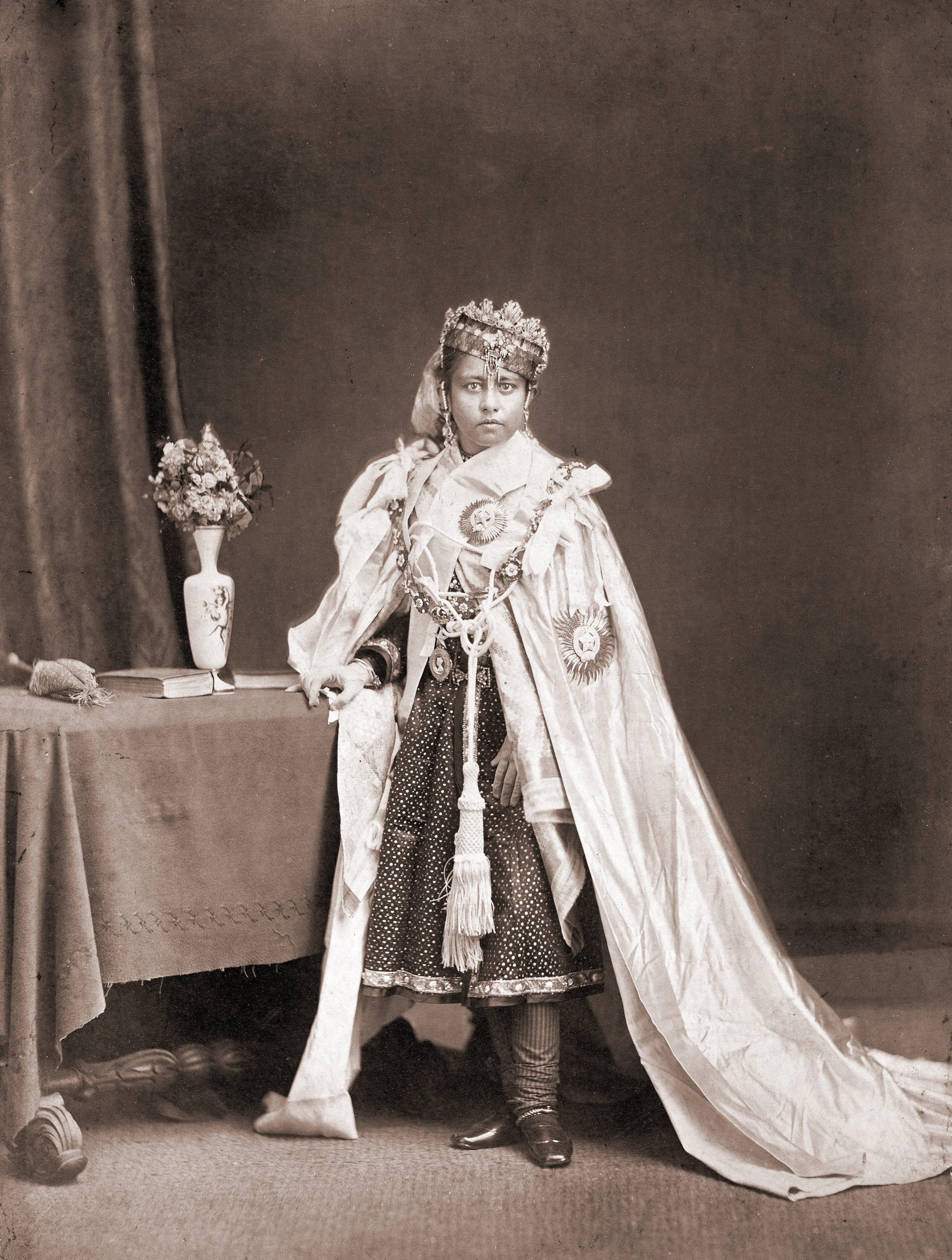
Shah Jahan Begum (1254–1319 AH / 1838–1901 CE), written Shahjahan Begam in her own history of Bhopal and Şah Cihan Begüm in the TDV İslâm Ansiklopedisi, was the ruler of Bhopal, a princely state in central India. She held the state in her own right and not as a consort.12 She was born at Islamnagar, the fort near Bhopal, the daughter of Jahangir Muhammad Khan and of Sikandar Begum.34 After her father's death she was proclaimed ruler as a child, in 1845 according to the Bhopal State Gazetteer and the TDV entry and in 1847 according to her own history, while her mother governed on her behalf.523 In 1860 she gave up her claim in her mother's favour, and on 16 November 1868, after her mother's death, she was invested as ruler again. She held the position until her death on 16 June 1901.678
She was married twice: in 1855 to Bakhshi Baki Muhammad Khan, and in 1871 to Siddiq Hasan Khan, a scholar of Kannauj who had served the state and whose honours and position the British government withdrew in the 1880s.592 Her own history of Bhopal, the Taj-ul Ikbal, was translated into English in 1876. In it she records her government of the state from 1868 to 1872, among other things the paying off of its debts, a new survey of its land and its schools, and her investiture in 1872 as a Knight Grand Commander of the Order of the Star of India.1011121314 Her daughter Sultan Jahan Begum succeeded her.18
The sources
The account of her first thirty-four years that this article follows most closely is her own. The Taj-ul Ikbal Tarikh Bhopal, which she began on 1 Muharram 1288 AH (1871), was published in Persian, Urdu and English; the English version is the translation by H. C. Barstow, who was Political Agent at Bhopal from February 1874 to October 1875 and who describes it as a literal rendering of the Urdu that may contain mistakes.1516 The text carries her reign only to the end of 1288 AH (1872).17
Beyond it the article rests on six kinds of source. The Bhopal State Gazetteer, volume III, compiled in 1908 by Captain C. E. Luard, gives the state's account of her life; its preface states that its historical portion made large use of her history, so the two are not independent where they agree.18 Hayat-i-Qudsi, the life of Qudsia Begum written by her daughter Sultan Jahan Begum and translated into English in 1918, is mainly about Qudsia Begum and is used here only for what it records of her mother's household.19 The Encyclopaedia of Islam has an entry on Bhopal by A. S. Bazmee Ansari, and an entry on her second husband by Zafarul-Islam Khan.19 The TDV İslâm Ansiklopedisi has an entry on her by Azmi Özcan and one on her second husband.220 The Arabic biographical dictionary Nuzhat al-khawatir of Abd al-Hayy al-Hasani (d. 1341 AH) has a notice of each of them in its volume for the notables of the fourteenth Islamic century, and her second husband's own books, Abjad al-ulum and al-Taj al-mukallal, mention her.212223 Finally the modern historians Barbara Daly Metcalf and Sayyid Mahboob Rizvi, writing on Deoband, mention her husband and her gift to the Dar al-Ulum.2425
Her own history stops in 1872, and her daughter's memoir refers the reader to a further work of her own, Tuzuk Sultani, for a fuller account of the quarrel within the family over the second marriage.26 What the sources give for the years 1872 to 1901 is therefore thinner than what they give for the years before. The sources also differ on her birth day, on the year of her proclamation, on who held the regency, on several dates in her marriages and in the action against her second husband, and on who governed afterwards. Those differences are given where each point is told and are gathered in the Historiographical Note at the end.
Name, family and birth
Names and titles
Her title, Nawab, was in origin a title that the Mughal emperors gave to a viceroy or provincial governor; the Encyclopaedia of Islam notes that several rulers of princely states in British Indian times bore it, among them the Nawabs of Bhopal.27 Her own history writes her name Shahjahan Begam, and its title page names her as the Nawab and Begam of Bhopal; her second husband, writing of her in al-Taj al-mukallal, calls her Nawab Shah Jahan Begum, ruler of protected Bhopal.1023 The TDV entry records two pen-names, Tâcvâr for her Urdu verse and Şîrîn for her Persian, and the Encyclopaedia of Islam lists her history under the name "Shirin".21
Parents and birth
Her father, Jahangir Muhammad Khan, was a nephew of Nadhr Muhammad Khan, the ruler of Bhopal who had made a treaty with the British. Her mother, Sikandar Begum, was Nadhr Muhammad Khan's daughter by Qudsia Begum. The Encyclopaedia of Islam writes that Qudsia Begum took power as regent for her minor daughter on her husband's death in 1236/1820; that Sikandar Begum was married late, in 1251/1835, to Jahangir Muhammad Khan; and that in 1253/1837, after a civil war within the family, the East India Company restored the administration of the state to him.1 The Gazetteer adds that relations between the Nawab and his Begum remained strained, and that she and her mother retired to Islamnagar, where her daughter was born.4
Shah Jahan Begum was born at Islamnagar on 6 Jumada I 1254 AH. Her own history gives the day as 20 July 1838; the Gazetteer gives it as 29 July 1838.34 The Nuzhat al-khawatir and her second husband's Abjad al-ulum give only the year, 1254 AH, and place Islamnagar three farsakhs from Bhopal.2122 The TDV entry gives her years as 1838 to 1901.2 Her second husband, in al-Taj al-mukallal, says she was of Afghan origin.23
She writes that she read the usual Persian reading books and learned reading, writing, accounts and the conduct of State affairs, and that on 15 Rajab 1266 AH (24 May 1850) her mother held a celebration on her having read the Quran through.3 The Nuzhat al-khawatir adds that she was brought up by her mother and learned Persian, calligraphy, composition and poetry, and was trained in the manners of rule and politics.21
The years of the regency, 1844–1860
Her father's death and her proclamation
The Gazetteer dates the death of Jahangir Muhammad Khan to 28 Dhu al-Hijja 1260 AH (9 December 1844), at the age of twenty-seven, and records his burial in the Nur Bagh; her daughter's memoir places it in 1844.419 The Gazetteer writes that his will named an illegitimate son, Dastgir, as his successor and directed that Shah Jahan Begum be married to a descendant of Wazir Muhammad Khan, that the British government set the will aside and recognised her succession, and that Faujdar Muhammad Khan, a brother of Qudsia Begum, was to act as minister in the meantime.5
The year in which she was proclaimed is given two ways. The Gazetteer writes that on 3 Rabi II 1261 AH (11 April 1845) she, then seven years old, arrived in Bhopal and was proclaimed chief of the state, and the TDV entry likewise places her proclamation as nevvâb in April 1845, at the age of seven, with her mother supervising her.52 In her own history she writes that she was set upon the throne on 15 Muharram 1263 AH (4 January 1847). The Nuzhat al-khawatir says that she succeeded her father without dispute on 15 Muharram 1263, at the age of nine, and her second husband's Abjad al-ulum also gives her age as nine in 1263 AH.32122 The Gazetteer elsewhere describes her as having succeeded nominally in 1845.7
Who held the regency
The accounts of the regency agree that Faujdar Muhammad Khan held office first and that Sikandar Begum ended as regent; they differ on when she became so. According to the Gazetteer, Sikandar Begum was regent from the proclamation, with Mian Faujdar Muhammad Khan as minister. The arrangement failed because she acted independently of the minister, and after a disturbance raised in 1846 by Amir Muhammad Khan, a paternal grandfather of Shah Jahan Begum, and the Political Agent's report that peace was impossible while the dual rule lasted, Faujdar Muhammad Khan resigned and the administration was left to Sikandar Begum until her daughter should come of age.5 The proclamation that Shah Jahan Begum later quotes in her history likewise says that her mother served as Regent during her minority.28 The Encyclopaedia of Islam writes that Faujdar Muhammad Khan, an uncle of Sikandar Begum, was regent, that he resigned in 1263/1847, and that Sikandar Begum was then appointed regent. Her daughter's memoir also names Faujdar Muhammad Khan as regent and says that the government recognised Sikandar Begum as regent only after some years.129
The sources also count these years differently. The Encyclopaedia of Islam dates Sikandar Begum's formal accession to 1261/1845 and gives her a rule of twenty-three years to 1285/1868.1 The TDV entry, by contrast, gives Shah Jahan Begum two reigns, 1845–1860 and 1868–1901, and the Gazetteer treats Sikandar Begum's installation as chief as an event of 1860.230 Under Sikandar Begum's government the Gazetteer records that revenue farming and trade monopolies were abolished, the army, police and mints reorganised, and the state's debt paid off by 1853.5
First marriage and her daughters
On 11 Dhu al-Qa'da 1271 AH (26 July 1855) she married Bakhshi Baki Muhammad Khan, according to her own history and the Gazetteer; the TDV entry gives the year as 1855, and the Encyclopaedia of Islam as 1272/1855.3521 The Gazetteer describes him as the commander-in-chief of the state army, recognised as Nawab-consort with the title Nawab Nazir-ud-daula Umrao Dula Bahadur and a personal salute of seventeen guns.5 The Encyclopaedia of Islam adds that he did not belong to the ruling house, that he and the husbands of the later Begums of Bhopal held only the status of Nawab-Consort, and that he had no effective part in the administration.1
Their daughter Sultan Jahan Begum was born on 27 Dhu al-Qa'da 1274 AH (9 July 1858). The Encyclopaedia of Islam calls her Shah Jahan Begum's only child by her first husband, whereas her mother's own history also names a second daughter, Suleman Jahan Begam, born on 12 Jumada I 1277 AH and dead on 13 Muharram 1282 AH, who is buried in the Nur Bagh; a school and a mosque in Bhopal were named after her.61
Giving up the claim to her mother
The sources give two dates for the step by which Shah Jahan Begum yielded the title to her mother. The Gazetteer writes that she came of age on 20 July 1858 and, herself coming forward, assented to her mother's investiture as chief, waiving all claim to the masnad (the throne) during her mother's lifetime. Sikandar Begum was formally installed on 9 Shawwal 1276 AH, which the Gazetteer gives as 3 March 1860.30 In her own history Shah Jahan Begum writes that on the same Hijri day, 9 Shawwal 1276, which she gives as 1 May 1860, she voluntarily resigned the title of Ruler to her mother and became heir-apparent.3 The TDV entry likewise gives 1 May 1860 as the day the British recognised Sikandar Begum, with Shah Jahan Begum's approval, and the Nuzhat al-khawatir and Abjad al-ulum say that at twenty-two she transferred authority to her mother and kept for herself the position of heir.22131 The Encyclopaedia of Islam writes that Sikandar Begum had opposed the recognition of her minor daughter as ruler and that the matter was settled when Shah Jahan Begum voluntarily gave up all claim to rule during her mother's lifetime.1
Her mother's rule and her own return, 1860–1868
Sikandar Begum governed Bhopal as ruler from 1860. The Encyclopaedia of Islam writes that she made the pilgrimage in 1280/1863–4, and the Gazetteer that she set out for Mecca in 1864 with her mother Qudsia Begum and Faujdar Muhammad Khan and returned on 10 June 1864.130 The sanad that Lord Canning issued in 1279/1862 fixed the succession on Sultan Jahan Begum, according to the Encyclopaedia of Islam.1
Baki Muhammad Khan died in 1284 AH (1867). Her own history says that he fell ill at Mecca, returned to Bhopal and died on 21 Safar and was buried in his own garden; the Gazetteer gives the day as 18 Safar, and the year is the same in the Gazetteer, the TDV entry and the Encyclopaedia of Islam.6721 After his death she came out of pardah, the seclusion of women, and the Gazetteer writes that she at once followed her mother's course in administration.7
Sikandar Begum died on 13 Rajab 1285 AH, which the Gazetteer gives as 30 October 1868, at the age of fifty-one, and was buried in the Farhat Afza garden that she had laid out.67 On 1 Sha'ban 1285 AH (16 November 1868) Colonels Osborne and Meade invested Shah Jahan Begum as ruler, and her daughter was acknowledged heir-apparent.287 The proclamation, which she reproduces in her history, states that she had been proclaimed ruler after her father's death, that her mother had served as Regent during her minority, that she had voluntarily surrendered supreme authority to her mother for her lifetime on attaining her majority, and that Sultan Jahan Begum and her issue were the successors.28 The Encyclopaedia of Islam writes that she was formally installed in 1285/1868, a year after her husband's death.1 The government resumed ordinary business on 17 Rajab, after three days of mourning for her mother.6
Government after 1868
Her own history is the main account of her first years as ruler, and the figures in this section are hers unless another source is named. The TDV entry summarises the same period: she travelled in the country to see the condition of the people, reorganised the state's revenues and taxes, modernised the army, the security organisation and the post, began cadastral work and ordered a census.2
Debts and arrears
On taking office she returned jewels valued at Rs. 72,955 that her mother had selected but whose price had not been agreed, and she arranged to pay off by instalments two debts: Rs. 1,25,688 on her mother's private estate and Rs. 6,52,752 on the state. She records that by 1289 AH the debt had been paid.11 The Gazetteer gives the debt she found in 1868 as 6.8 lakhs of rupees and says that she paid it off by 1872; it puts the state's revenue at 26.8 lakhs, of which 10.9 lakhs were alienated in jagirs and 15.9 lakhs were crown land, and records that two lakhs went to the government for the upkeep of the Bhopal Battalion.32 She gives the annual revenue as Rs. 26,83,384.33
She found that petitions, letters and reports in revenue, civil and criminal cases, from the divisional commissioners, the district and customs offices and the Vakil's office had accumulated to 4,086 in the fourteen years before her mother's death. She heard each petition in turn and passed final orders on them, and lists she had drawn up of cases pending in the courts and offices showed 16,631 undisposed of. She referred these to the heads of the offices to which they belonged, with a time limit for finishing them.11 Later she fixed the periods within which cases were to be decided: fifteen days for reports and criminal cases, one month for revenue cases and three months for civil suits.34
Taxes, land and justice
By an order of 10 February 1869 the grain tax of the city was ended from 1 Muharram 1286 AH (14 April 1869), and the pay of some of the cavalry and infantry was raised.35 Among other orders she records that poor plaintiffs might sue without court fees, that the city's watchmen were to be paid by the State, that officials were forbidden to take villages in farm, and that the contribution of Rs. 12,000 to the Sehore–Bhopal road was withdrawn, the State taking over the superintendence of roads and bridges.36 The Gazetteer writes that the judicial system was kept with changes: the nazims and tahsildars were given greater powers, judicial power was taken from the thanadars, and regular returns were required to show delays.37 Friday was made a full holiday, and religious days that had been half-holidays became full days of leave; officials received three months' leave after three years of service.3834
A plane-table survey of the state replaced the earlier survey after errors were found in it. She records that 126 surveyors worked in three divisions, that the first survey found 54,811 bigahs and 12 biswas more land than the earlier one, that the classes of land for revenue were cut from eighteen to six, and that excessive assessments were cancelled.1239 The Gazetteer names the plane-table survey as the replacement of the old jarib survey, and adds that the state was surveyed trigonometrically by the Survey of India in 1872.740
Army, post and public services
A troop of horse artillery and a military band were added to the army, and a new arsenal was built on the English pattern after she had inspected the magazine at Fort William.4142 The post office was organised on the English model from 15 Rabi I 1289 AH, with 229 employees at a yearly cost of Rs. 14,877.43 She counts forty-five medical men in the state, twenty-nine of them in the city and sixteen in dispensaries in the interior, and records that from 1 Muharram 1288 AH medical staff and a chief inspector were appointed for each pargana where troops were stationed, at Rs. 20,640 a year.4434 A Forest Department was organised after a survey of the Gunnur forest, copper coins were recalled and reissued, and a pure-silver Bhopal rupee equal to the English rupee was decided on; the Gazetteer records that silver coin was struck in four issues under Sikandar Begum and Shah Jahan Begum until the mints closed in 1899.1232
The census and her tours
A census of Bhopal city at the end of 1288 AH (1872) counted 45,197 people, which she gives as 8,458 more than in her mother's reign, and she attributes the increase to greater security of life and property; she adds that about half of the people were Hindus and half Muslims.45 The Gazetteer, which counts at other dates, gives the city's population as 37,539 in 1868 and 77,023 in 1901.46
She toured the state in person. On a tour of the eight southern districts, which began on the last day of Shawwal 1285 AH (18 February 1869), she examined 4,360 complaints, examined officials, discharged some of them, had money returned to cultivators and standardised weights.47 In December 1869 she went to Calcutta, where, the Gazetteer writes, she was introduced to the Duke of Edinburgh.487 A tour of the western division from 26 February to 4 June 1870 dealt with 3,101 petitions, one of the eastern division from 26 December 1870 with 1,534, and a second tour of the southern districts from 10 Shawwal 1288 AH with 758; on that last tour she had her camp pay cash for its supplies at market prices.495051 She reproduces letters in which the Government of India and the Secretary of State approved her measures.52
Her second marriage, 1871
The marriage
Her second husband, Siddiq Hasan Khan, was a scholar of Kannauj. The Encyclopaedia of Islam gives his birth as 19 Jumada I 1248 AH (14 October 1832) at Bareilly in Rohilkhand, and the Nuzhat al-khawatir gives Bans Bareilly, his maternal grandfather's home.953 Her history and the Gazetteer say that by 1871 he had served Bhopal for seventeen years, as Sikandar Begum's munshi (secretary), keeper of the State archives and head of the education department; the Encyclopaedia of Islam places the start of his career at Bhopal as a junior clerk in 1855–6, with a spell at Tonk in 1858.5479 He was an advocate of the Ahl-i Hadith, the Encyclopaedia of Islam writes, and in 1860 he had married Dhakiyya Begum, a daughter of Bhopal's Prime Minister, Munshi Jamal al-Din Khan.9
She records that the Political Agent, Colonel Thompson, and the Agent to the Governor-General, Colonel Meade, advised her to remarry, and that on 8 May 1871 she received the Political Agent's letter conveying the Governor-General's view.55 The Encyclopaedia of Islam and the Gazetteer place the marriage in May 1871, and the Encyclopaedia of Islam adds that it took place with formal British consent; the TDV entries give 1871, and the entry on Bhopal in the Encyclopaedia of Islam places it three years after her installation.9721 The Arabic sources give 1288 AH: her husband's al-Taj al-mukallal, which adds that officials witnessed the marriage, his Abjad al-ulum, and the Nuzhat al-khawatir in its notice of her. In its notice of him the Nuzhat al-khawatir gives 1287 AH, and adds that the British government had proposed the marriage so that a husband could help her in the business of government. None of these sources gives the day of the wedding.23312156
On the family's reception of the marriage the accounts differ. In her own history she writes that she chose him with the agreement of her family and of the officers of State, and that the marriage was held publicly before the First Minister, a qazi and officers of State.54 The Encyclopaedia of Islam writes that the ruling family disapproved, and the TDV entry that her leaving the government to her husband provoked a reaction in the ruling family.12 Her daughter's memoir records that Qudsia Begum had not been told, did not approve, and held that, if Shah Jahan Begum wished to remarry, she should have married into her own family. Shah Jahan Begum tried to conciliate her, and the two were reconciled through the Political Agent.26 After the marriage she again observed pardah, and it produced no children.7123
Her husband's offices and honours
The accounts of his position are not the same. In her history she writes that she abolished the office of Mir Dabir and raised him to the standing of her first husband, and later abolished the office of Second Minister and, with the sanction of the Government of India, conferred on him the title Nawab Wala Jah Amir-ul-Mulk.5758 The Encyclopaedia of Islam writes that two months after the marriage he became mu'tamad al-mahamm, a post second only to that of the Prime Minister; the Nuzhat al-khawatir says she made him her chief agent in 1288 AH; and the TDV entry on him says she made him a partner in authority over the affairs of the state.95620
In 1872 she petitioned that he receive the honours that had been granted to Baki Muhammad Khan, and the Governor-General agreed; sanction was conveyed in December 1872, in her account, with an estate of Rs. 75,472 assigned to him from 1 Sha'ban 1289 AH.5859 The Encyclopaedia of Islam places her request in September 1872 and describes a jagir worth Rs. 75,000 a year, followed a month later by the title Nawab Wala Jah Amir al-Mulk with a salute of seventeen guns in British India; the TDV entry on him gives an annual salary of 75,000 rupees, and the Nuzhat al-khawatir gives revenue land yielding 50,000 rupees a year and dates the title to 10 Sha'ban 1289.92056 The Gazetteer adds that the title came with the right to receive and return the visits of British officials.7
Honours, journeys and dealings with the British government
The Order of the Star of India was conferred on her in 1872. Queen Victoria's deed is dated 30 May 1872, and she writes that she was invested as Knight Grand Commander by the Viceroy at Bombay on 16 November 1872, travelling there with her daughter, her husband and officers of State.60147 On the return journey by rail to Surat and Ahmadabad a fire at Mundwa destroyed goods valued at Rs. 64,655 and her private records.6162
The Nuzhat al-khawatir and her husband's Abjad al-ulum place her meeting with the Prince of Wales at Calcutta in 1292 AH, and her visit to Delhi, where the Viceroy gave her a medal and a sword, in 1294 AH.2131 The Gazetteer records that she attended the Imperial Assemblage at Delhi in 1877 and received a banner and a medal.7 Sultan Abdülhamid II sent her the Şefkat medal, the TDV entry says; the Nuzhat al-khawatir dates the two imperial documents and the medal that he sent to 1296 AH, and the TDV entry on her husband cites Ottoman documents of 9 June, 7 July and 24 September 1879 on the medals sent to both of them.22120
Her government's dealings with the British authorities in these years are recorded in the Gazetteer: an opium agency was established in 1879; in 1880 she agreed to pay the cost of the railway from Hoshangabad to Bhopal, which opened in 1881; in 1891 land for the Bhopal–Ujjain line was ceded, a branch that opened in 1895, and salt transit duties were abolished, with Rs. 10,000 a year paid to the state in compensation.746 The TDV entry says that she built railway lines connecting Bopal to the network, which the Gazetteer's account of an agreement to pay for one line and to cede land for another does not describe.27 In 1891 Lord Lansdowne visited Bhopal, the first visit of a Viceroy to the state.8
Buildings, schools and charity
Her own history records the Shahjahan reservoir, a dam near the Eidgah ordered in 1286 AH, and a planned suburb, Shahjahanabad, to the east of it; it names her palace and the Prince of Wales School among the principal buildings of the city, and the garden Niahat Afza as her own.3863 The Gazetteer writes that she added many buildings, among them the Taj Mahal and Bara Mahal palaces, the Taj-ul-Masajid, the Lal Kothi, the Central Hospital, the Lansdowne Hospital for women and the new jail, and that the mosque was still incomplete in 1908.64 The Encyclopaedia of Islam names the Taj Mahall palace and the Taj al-Masajid among the buildings she added.1 The accounts of the mosque differ in what they say she did. The Gazetteer writes that she began it, modelled "generally on the plan of the great mosque at Delhi".8 The TDV entry writes that work on the Tâcülmesâcid began in her time and that it was completed in 1952, and that she built a city called Şahcihanâbâd with a palace there called Tac Mahal; her own history describes Shahjahanabad as a planned suburb.241
Her history describes the state's schools. It counts 48 schools and 64 schoolmasters, and describes the Sulemaniya College, named after her younger daughter, with departments of Arabic, Persian, mathematics, Urdu, Hindi, Nagri and English and a library; scholars from distant homes received food and clothing. It also describes the Victoria School, where orphans were taught to make lace, braid and embroidered caps, to weave shawls and to make shoes, and the Prince of Wales School for crafts.1365 Among the state's presses she names the Shahjahani press, called after herself, which printed school books and the weekly newspaper Amdat-al-Akhbar, beside the Sikandra and Sultani presses.3966 The Nuzhat al-khawatir adds that she founded the Jahangiriya school in her father's residence and spent large sums on printing the Quran, commentaries, hadith and works of language.67
She states that the State paid Quran readers, the staff of mosques and hospital workers, and gave food twice a day to the poor and to travellers, uncooked food replacing cooked from 1 Muharram 1290 AH.43 The TDV entry writes that she provided facilities in Mecca for Indian pilgrims and supported the Shah Jahan Mosque at Woking, completed in 1889, and the Aligarh Muslim University, and that she supported the compilation of the Hizânetü'l-luġāt, a dictionary of Hindi, Arabic, Persian, English and Turkish terms printed at Bhopal in two volumes in 1886–1887.2 Sayyid Mahboob Rizvi, in his history of the Dar al-Ulum Deoband, records that Shah Jahan Begum, ruler of Bhopal, gave a substantial sum towards the construction of the students' hostel; he gives no year for the gift.25
Her writings
Her history of Bhopal is known by three titles. The English title page of her history reads The Táj-ul Ikbál Tárikh Bhopal, Or, The History of Bhopal. The Encyclopaedia of Islam lists it as Tarikh Riyasat-i Bhopal, printed at Cawnpore in 1289–90/1873 with an Urdu version of 1873, and in the entry on her second husband as Taj al-ikbar, Kanpur 1289/1872; the TDV entry gives Tâcü'l-iḳbâl Târîḫ-i Riyâset-i Bhopâl, Kanpur 1289–90/1873, and the English translation of 1876 as The History of Bopal.10192 She says in her preface that Major Durand had advised her mother in 1268 AH (1852) to write a history of Bhopal, that Sikandar Begum collected material for seventeen years, and that the work was incomplete at her death; she undertook it herself on 1 Muharram 1288 AH.15 Its third part covers the first years of her reign, from 1 Sha'ban 1285 AH to the end of Dhu al-Hijja 1288, and she writes that she intended to collect material for a fourth part by Hijri year.17
The TDV entry records poetry in Urdu under the name Tâcvâr and in Persian under Şîrîn; the Nuzhat al-khawatir lists among her books a collection of verse and a work called Tahdhib al-nisa'.267
The British action against Siddiq Hasan Khan, 1881–1890
The British authorities brought her second husband's position in Bhopal to an end, and the sources tell the course of it with different charges and different dates. According to the Encyclopaedia of Islam entry on him, the first accusation came on 21 March 1881 and concerned the publishing of "seditious material"; it curtailed his powers as the de facto ruler of the state, since the Begum was in pardah. He was also accused, the entry adds, of administrative malpractices, of causing rifts in the royal family and of maintaining contacts with foreign personalities, among them the Mahdi of the Sudan.9 The Nuzhat al-khawatir names other charges: that the British official accredited to the Indian states accused him of urging jihad in some of his writings, of spreading the Wahhabi doctrine in India and of making her observe the veil so that he could control the government.56 The Encyclopaedia of Islam entry on Bhopal dates the action against him to 1303/1885 and gives his writings as its cause, and the TDV entry on her writes that his titles and offices were withdrawn because of his activities against the British.12
The sources date the outcome differently. The Gazetteer writes that in 1884 the Government of India intervened and deprived him of his honours, titles and salute, and Metcalf writes that in 1884 the Resident, Sir Lepel Griffin, removed his titles and responsibilities on grounds of disloyalty.724 The Nuzhat al-khawatir dates the removal of his titles and his salute to 14 Dhu al-Qa'da 1302 AH and says that in the following year he was barred from the administration.56 The Encyclopaedia of Islam entry on him writes that on 28 August 1885 he was deposed, with all his honours and authority revoked, and the TDV entry on him likewise ends his official position on 28 August 1885.920
Her response is described in different ways. The Encyclopaedia of Islam writes that the decision came as a shock to her but that she accepted it; the TDV entry that she accepted the withdrawal and tried unsuccessfully to have him restored; and the Nuzhat al-khawatir that she worked to refute the accusations and end the affair.1256
The accounts of who governed afterwards differ. The Gazetteer writes that the state was managed from then on by the Begum herself, assisted by a minister.8 The Encyclopaedia of Islam writes that she became a figurehead, that real power was exercised by her daughter Sultan Jahan Begum and by the Prime Minister whom the British appointed, and that her husband remained under house arrest in his own residence, Nur Mahall.9 Siddiq Hasan Khan died on 20 February 1890, according to the Encyclopaedia of Islam and the TDV entry on him, which places his burial in the family cemetery at Bhopal; the Nuzhat al-khawatir gives the night of 29 Jumada II 1307 AH, and the Encyclopaedia of Islam entry on Bhopal gives 1308/1890.920561 The Government of India restored his honours after his death, and the state was allowed to refer to him in official communications as the "Late Nawab and Husband of the Ruler".9
Her last years, death and succession
Her grandmother Qudsia Begum had died on 17 December 1881, according to Sultan Jahan Begum's memoir, and in 1299/1881, according to the Encyclopaedia of Islam; the memoir records that Shah Jahan Begum distributed thousands of maunds of corn to the poor as alms.681 She and her daughter Sultan Jahan Begum were estranged in her later years, as the Encyclopaedia of Islam and the Gazetteer record.18
The TDV entry records that famines in 1894 and 1899 reduced the population of the state by a third.2 Shah Jahan Begum died at Bhopal on 16 June 1901, according to the TDV entry and the Gazetteer; the Nuzhat al-khawatir gives the date as two nights before the end of Safar 1319 AH, and the Encyclopaedia of Islam writes that she died of cancer.28671 She was succeeded by her daughter, Sultan Jahan Begum, in accordance with the sanad issued by Lord Canning in 1279/1862.18 The Encyclopaedia of Islam adds that Sultan Jahan Begum ruled for twenty-five years and in 1345/1926 abdicated in favour of her son Hamid Allah Khan.1
Historiographical Note
The sources disagree on a number of details, and each difference is given in the section where the point is told, with its source. Some of them need more explanation than that.
Her birth and her own history. Her own history and the Gazetteer give the Hijri date as 6 Jumada I 1254 and differ only on the Christian day, 20 or 29 July 1838; the Nuzhat al-khawatir and Abjad al-ulum give the year 1254 alone. The Gazetteer's preface says that its historical portion made large use of her history, so where the two agree they are not independent accounts.34182122
Her proclamation and the regency. The Gazetteer and the TDV entry date her proclamation to April 1845, at the age of seven; her own history gives 15 Muharram 1263 AH (4 January 1847), and the Nuzhat al-khawatir and Abjad al-ulum put her age at nine in 1263. On the regency, the Gazetteer and the proclamation quoted in her history say that Sikandar Begum was regent from the start, with Faujdar Muhammad Khan as minister; the Encyclopaedia of Islam and her daughter's memoir name Faujdar Muhammad Khan as the regent and say that Sikandar Begum became regent only later. The Encyclopaedia of Islam counts Sikandar Begum's rule as twenty-three years from 1261/1845, whereas the TDV entry counts 1845–1860 as Shah Jahan Begum's own first reign.523282122129
Her second marriage. The year is 1871 or 1288 AH in most sources; the Nuzhat al-khawatir gives 1287 AH in one notice and 1288 in the other. Her own history presents the marriage as made with the agreement of her family and the officers of State, whereas the Encyclopaedia of Islam, the TDV entry and her daughter's memoir record disapproval. The grant made to her husband in 1872 is given as an estate valued at Rs. 75,472 in her history, a jagir of Rs. 75,000 a year by the Encyclopaedia of Islam, a salary of 75,000 rupees by the TDV entry on him, and land yielding 50,000 rupees a year by the Nuzhat al-khawatir. The offices named for him also differ.55549215620
The British action. The sources place the loss of his honours in 1884 (the Gazetteer and Metcalf), on 14 Dhu al-Qa'da 1302 AH (the Nuzhat al-khawatir), on 28 August 1885 (the Encyclopaedia of Islam entry on him and the TDV entry on him) and in 1303/1885 (the Encyclopaedia of Islam entry on Bhopal). They list different charges, and each gives them as accusations. They also give different accounts of who governed afterwards.9724562018
The remaining differences, in dates, in figures, in the number of her children by her first husband, in the debt she inherited, the census and the railways, and in the titles of her history, are differences of detail between the sources and are told with both versions in the sections concerned.
See also
- Ahl-i Hadis Movement — the movement that her second husband advocated
- Darul Uloom Deoband — the seminary whose students' hostel received a gift from her, according to Rizvi
- Deobandi Movement — the movement of the seminary
References
Citations
Footnotes
-
A. S. Bazmee Ansari, 'Bhopal', The Encyclopaedia of Islam, new edition, vol. 1 — the state, the line of the Begams, and the accounts of her regency, marriages, installation, second marriage, death and succession. ↩ ↩2 ↩3 ↩4 ↩5 ↩6 ↩7 ↩8 ↩9 ↩10 ↩11 ↩12 ↩13 ↩14 ↩15 ↩16 ↩17 ↩18 ↩19 ↩20 ↩21 ↩22 ↩23 ↩24 ↩25 ↩26 ↩27 ↩28 ↩29 ↩30
-
Azmi Özcan, 'Şah Cihan Begüm', TDV İslâm Ansiklopedisi, vol. 38 (Istanbul, 2010), pp. 252–253 — https://islamansiklopedisi.org.tr/sah-cihan-begum, register entry 2, islamansiklopedisi.org.tr. ↩ ↩2 ↩3 ↩4 ↩5 ↩6 ↩7 ↩8 ↩9 ↩10 ↩11 ↩12 ↩13 ↩14 ↩15 ↩16 ↩17 ↩18 ↩19 ↩20 ↩21 ↩22 ↩23 ↩24 ↩25
-
Nawab Shahjahan Begam, The Táj-ul Ikbál Tárikh Bhopal, Or, The History of Bhopal, translated by H. C. Barstow (Calcutta: Thacker, Spink and Co., 1876), p. 121 — her birth, her setting upon the throne, her education, the celebration of her reading the Quran, her marriage, her daughter's birth, and the surrender of the title to her mother; https://archive.org/details/tjulikbltrikhbh00begagoog, register entry 12, archive.org. ↩ ↩2 ↩3 ↩4 ↩5 ↩6 ↩7 ↩8 ↩9
-
Captain C. E. Luard (compiler), Bhopal State Gazetteer, vol. III, Text and Tables (Calcutta: Superintendent Government Printing, India, 1908), p. 29 — her birth, her father's death and burial; https://archive.org/details/in.ernet.dli.2015.123735, register entry 12, archive.org. ↩ ↩2 ↩3 ↩4 ↩5
-
Captain C. E. Luard (compiler), Bhopal State Gazetteer, vol. III, Text and Tables (Calcutta: Superintendent Government Printing, India, 1908), pp. 30–31 — the will, the proclamation, the dual rule, the first marriage; https://archive.org/details/in.ernet.dli.2015.123735, register entry 12, archive.org. ↩ ↩2 ↩3 ↩4 ↩5 ↩6 ↩7 ↩8 ↩9
-
Nawab Shahjahan Begam, The Táj-ul Ikbál Tárikh Bhopal, Or, The History of Bhopal, translated by H. C. Barstow (Calcutta: Thacker, Spink and Co., 1876), p. 122 — the second daughter, the death of Baki Muhammad Khan, the death of Sikandar Begam and the resumption of business; https://archive.org/details/tjulikbltrikhbh00begagoog, register entry 12, archive.org. ↩ ↩2 ↩3 ↩4 ↩5
-
Captain C. E. Luard (compiler), Bhopal State Gazetteer, vol. III, Text and Tables (Calcutta: Superintendent Government Printing, India, 1908), p. 33 — the investiture of 1868, her first husband's death, the second marriage, the honours, the Imperial Assemblage, the opium agency, the railways and the action of 1884; https://archive.org/details/in.ernet.dli.2015.123735, register entry 12, archive.org. ↩ ↩2 ↩3 ↩4 ↩5 ↩6 ↩7 ↩8 ↩9 ↩10 ↩11 ↩12 ↩13 ↩14 ↩15 ↩16 ↩17 ↩18
-
Captain C. E. Luard (compiler), Bhopal State Gazetteer, vol. III, Text and Tables (Calcutta: Superintendent Government Printing, India, 1908), p. 34 — the rule after 1884, the visit of Lord Lansdowne, her death and the succession, and the Taj-ul-Masajid; https://archive.org/details/in.ernet.dli.2015.123735, register entry 12, archive.org. ↩ ↩2 ↩3 ↩4 ↩5 ↩6 ↩7 ↩8 ↩9
-
Zafarul-Islam Khan, 'Nawwab Sayyid Siddik Hasan Khan', The Encyclopaedia of Islam, new edition, vol. 7 — her second husband's career, the marriage, his honours, the British accusations and deposition, and his death. ↩ ↩2 ↩3 ↩4 ↩5 ↩6 ↩7 ↩8 ↩9 ↩10 ↩11 ↩12 ↩13 ↩14 ↩15 ↩16
-
Nawab Shahjahan Begam, The Táj-ul Ikbál Tárikh Bhopal, Or, The History of Bhopal, translated by H. C. Barstow (Calcutta: Thacker, Spink and Co., 1876), title page — the style of the author and the title of the work; https://archive.org/details/tjulikbltrikhbh00begagoog, register entry 12, archive.org. ↩ ↩2 ↩3
-
Nawab Shahjahan Begam, The Táj-ul Ikbál Tárikh Bhopal, Or, The History of Bhopal, translated by H. C. Barstow (Calcutta: Thacker, Spink and Co., 1876), pp. 126–127 — the jewels, the debts and the arrears of petitions and cases; https://archive.org/details/tjulikbltrikhbh00begagoog, register entry 12, archive.org. ↩ ↩2 ↩3
-
Nawab Shahjahan Begam, The Táj-ul Ikbál Tárikh Bhopal, Or, The History of Bhopal, translated by H. C. Barstow (Calcutta: Thacker, Spink and Co., 1876), pp. 143–144 — the plane-table survey, the Sehore dispensary and the Forest Department; https://archive.org/details/tjulikbltrikhbh00begagoog, register entry 12, archive.org. ↩ ↩2 ↩3
-
Nawab Shahjahan Begam, The Táj-ul Ikbál Tárikh Bhopal, Or, The History of Bhopal, translated by H. C. Barstow (Calcutta: Thacker, Spink and Co., 1876), p. 193 — the Sulemaniya College and the number of schools; https://archive.org/details/tjulikbltrikhbh00begagoog, register entry 12, archive.org. ↩ ↩2
-
Nawab Shahjahan Begam, The Táj-ul Ikbál Tárikh Bhopal, Or, The History of Bhopal, translated by H. C. Barstow (Calcutta: Thacker, Spink and Co., 1876), pp. 170–172 — her investiture as Knight Grand Commander of the Star of India; https://archive.org/details/tjulikbltrikhbh00begagoog, register entry 12, archive.org. ↩ ↩2
-
Nawab Shahjahan Begam, The Táj-ul Ikbál Tárikh Bhopal, Or, The History of Bhopal, translated by H. C. Barstow (Calcutta: Thacker, Spink and Co., 1876), author's preface, pp. v–vi — the advice of 1268 AH, her mother's unfinished collection, and her own beginning of the work on 1 Muharram 1288 AH; https://archive.org/details/tjulikbltrikhbh00begagoog, register entry 12, archive.org. ↩ ↩2
-
Nawab Shahjahan Begam, The Táj-ul Ikbál Tárikh Bhopal, Or, The History of Bhopal, translated by H. C. Barstow (Calcutta: Thacker, Spink and Co., 1876), translator's preface, p. iv — Barstow's service as Political Agent and his description of the translation; https://archive.org/details/tjulikbltrikhbh00begagoog, register entry 12, archive.org. ↩
-
Nawab Shahjahan Begam, The Táj-ul Ikbál Tárikh Bhopal, Or, The History of Bhopal, translated by H. C. Barstow (Calcutta: Thacker, Spink and Co., 1876), p. 230 — the periods covered by the third part and her intention for a fourth; https://archive.org/details/tjulikbltrikhbh00begagoog, register entry 12, archive.org. ↩ ↩2
-
Captain C. E. Luard (compiler), Bhopal State Gazetteer, vol. III, Text and Tables (Calcutta: Superintendent Government Printing, India, 1908), the preface — its statement that the Taj-ul-Ikbal was largely used for the historical portion; https://archive.org/details/in.ernet.dli.2015.123735, register entry 12, archive.org. ↩ ↩2
-
Sultan Jahan Begum, Hayat-i-Qudsi: Life of the Nawab Gauhar Begum alias the Nawab Begum Qudsia, Bhopal, translated by W. S. Davis (London: Kegan Paul, Trench, Trubner & Co.; New York: E. P. Dutton & Co., 1918), pp. 125–126 — the year of her father's death and the first years of the regency; https://archive.org/details/hayatiqudsilifeo00sult, register entry 12, archive.org. ↩ ↩2
-
Abdulhamit Birışık and A. Cüneyt Eren, Ali Hakan Çavuşoğlu and Süleyman Akkuş, 'Sıddîk Hasan Han', TDV İslâm Ansiklopedisi, vol. 37 (Istanbul, 2009), pp. 92–98 — https://islamansiklopedisi.org.tr/siddik-hasan-han, register entry 2, islamansiklopedisi.org.tr. ↩ ↩2 ↩3 ↩4 ↩5 ↩6 ↩7 ↩8
-
Abd al-Hayy al-Hasani, Nuzhat al-khawatir, vol. 8, p. 1245 — the notice of Nawab Shahjahan Begum, Malika of Bhopal; https://shamela.ws/book/1584/1130, register entry 4, shamela.ws. ↩ ↩2 ↩3 ↩4 ↩5 ↩6 ↩7 ↩8 ↩9 ↩10 ↩11
-
Siddiq Hasan Khan, Abjad al-ulum, vol. 1, p. 732 — his notice of her: her birth, her age at her accession; https://shamela.ws/book/9579/799, register entry 4, shamela.ws. ↩ ↩2 ↩3 ↩4 ↩5
-
Siddiq Hasan Khan, al-Taj al-mukallal, vol. 1, p. 532 — his note on her: her title, origin, the marriage of 1288 AH and that it produced no children; https://shamela.ws/book/17349/531, register entry 4, shamela.ws. ↩ ↩2 ↩3 ↩4 ↩5
-
Barbara Daly Metcalf, Islamic Revival in British India: Deoband, 1860–1900 — the removal of Siddiq Hasan Khan's titles in 1884. ↩ ↩2 ↩3
-
Sayyid Mahboob Rizvi, History of the Dar al-Ulum Deoband, vol. 1 — the gift towards the students' hostel. ↩ ↩2
-
Sultan Jahan Begum, Hayat-i-Qudsi: Life of the Nawab Gauhar Begum alias the Nawab Begum Qudsia, Bhopal, translated by W. S. Davis (London: Kegan Paul, Trench, Trubner & Co.; New York: E. P. Dutton & Co., 1918), pp. 146–147 — Qudsia Begam's view of the second marriage, the efforts to conciliate her, and the reference to Tuzuk Sultani; https://archive.org/details/hayatiqudsilifeo00sult, register entry 12, archive.org. ↩ ↩2
-
C. E. Bosworth, 'Nawwab, Nawab', The Encyclopaedia of Islam, new edition, vol. 7 — the origin and use of the title. ↩
-
Nawab Shahjahan Begam, The Táj-ul Ikbál Tárikh Bhopal, Or, The History of Bhopal, translated by H. C. Barstow (Calcutta: Thacker, Spink and Co., 1876), pp. 123–126 — her investiture of 16 November 1868 and the proclamation; https://archive.org/details/tjulikbltrikhbh00begagoog, register entry 12, archive.org. ↩ ↩2 ↩3 ↩4
-
Sultan Jahan Begum, Hayat-i-Qudsi: Life of the Nawab Gauhar Begum alias the Nawab Begum Qudsia, Bhopal, translated by W. S. Davis (London: Kegan Paul, Trench, Trubner & Co.; New York: E. P. Dutton & Co., 1918), p. 126 — Faujdar Muhammad Khan as regent and the recognition of Sikandar Begam; https://archive.org/details/hayatiqudsilifeo00sult, register entry 12, archive.org. ↩ ↩2
-
Captain C. E. Luard (compiler), Bhopal State Gazetteer, vol. III, Text and Tables (Calcutta: Superintendent Government Printing, India, 1908), p. 32 — her coming of age, her assent and the installation of Sikandar Begam, the pilgrimage of 1864; https://archive.org/details/in.ernet.dli.2015.123735, register entry 12, archive.org. ↩ ↩2 ↩3
-
Siddiq Hasan Khan, Abjad al-ulum, vol. 1, p. 733 — her transfer of authority to her mother, her mother's death, her marriage and her honours; https://shamela.ws/book/9579/800, register entry 4, shamela.ws. ↩ ↩2 ↩3
-
Captain C. E. Luard (compiler), Bhopal State Gazetteer, vol. III, Text and Tables (Calcutta: Superintendent Government Printing, India, 1908), p. 65 — the debt, the revenue and the coinage; https://archive.org/details/in.ernet.dli.2015.123735, register entry 12, archive.org. ↩ ↩2
-
Nawab Shahjahan Begam, The Táj-ul Ikbál Tárikh Bhopal, Or, The History of Bhopal, translated by H. C. Barstow (Calcutta: Thacker, Spink and Co., 1876), pp. 184–185 — the state's revenue; https://archive.org/details/tjulikbltrikhbh00begagoog, register entry 12, archive.org. ↩
-
Nawab Shahjahan Begam, The Táj-ul Ikbál Tárikh Bhopal, Or, The History of Bhopal, translated by H. C. Barstow (Calcutta: Thacker, Spink and Co., 1876), pp. 146–148 — the periods for deciding cases, leave for officials, the medical staff and the arsenal; https://archive.org/details/tjulikbltrikhbh00begagoog, register entry 12, archive.org. ↩ ↩2 ↩3
-
Nawab Shahjahan Begam, The Táj-ul Ikbál Tárikh Bhopal, Or, The History of Bhopal, translated by H. C. Barstow (Calcutta: Thacker, Spink and Co., 1876), pp. 127–128 — the abolition of the city grain tax and the increase of pay; https://archive.org/details/tjulikbltrikhbh00begagoog, register entry 12, archive.org. ↩
-
Nawab Shahjahan Begam, The Táj-ul Ikbál Tárikh Bhopal, Or, The History of Bhopal, translated by H. C. Barstow (Calcutta: Thacker, Spink and Co., 1876), pp. 160–163 — the orders on plaintiffs, watchmen, farms of villages and roads; https://archive.org/details/tjulikbltrikhbh00begagoog, register entry 12, archive.org. ↩
-
Captain C. E. Luard (compiler), Bhopal State Gazetteer, vol. III, Text and Tables (Calcutta: Superintendent Government Printing, India, 1908), pp. 61–62 — the judicial system; https://archive.org/details/in.ernet.dli.2015.123735, register entry 12, archive.org. ↩
-
Nawab Shahjahan Begam, The Táj-ul Ikbál Tárikh Bhopal, Or, The History of Bhopal, translated by H. C. Barstow (Calcutta: Thacker, Spink and Co., 1876), pp. 141–142 — Friday as a holiday, and the Shahjahan reservoir; https://archive.org/details/tjulikbltrikhbh00begagoog, register entry 12, archive.org. ↩ ↩2
-
Nawab Shahjahan Begam, The Táj-ul Ikbál Tárikh Bhopal, Or, The History of Bhopal, translated by H. C. Barstow (Calcutta: Thacker, Spink and Co., 1876), p. 144 — the survey, the classes of land revenue and the third press; https://archive.org/details/tjulikbltrikhbh00begagoog, register entry 12, archive.org. ↩ ↩2
-
Captain C. E. Luard (compiler), Bhopal State Gazetteer, vol. III, Text and Tables (Calcutta: Superintendent Government Printing, India, 1908), pp. 74–75 — the surveys; https://archive.org/details/in.ernet.dli.2015.123735, register entry 12, archive.org. ↩
-
Nawab Shahjahan Begam, The Táj-ul Ikbál Tárikh Bhopal, Or, The History of Bhopal, translated by H. C. Barstow (Calcutta: Thacker, Spink and Co., 1876), pp. 142–143 — the horse artillery, the coinage, the arsenal and the planned suburb; https://archive.org/details/tjulikbltrikhbh00begagoog, register entry 12, archive.org. ↩ ↩2
-
Nawab Shahjahan Begam, The Táj-ul Ikbál Tárikh Bhopal, Or, The History of Bhopal, translated by H. C. Barstow (Calcutta: Thacker, Spink and Co., 1876), pp. 147–148 — the arsenal on the English pattern; https://archive.org/details/tjulikbltrikhbh00begagoog, register entry 12, archive.org. ↩
-
Nawab Shahjahan Begam, The Táj-ul Ikbál Tárikh Bhopal, Or, The History of Bhopal, translated by H. C. Barstow (Calcutta: Thacker, Spink and Co., 1876), pp. 196–197 — the post office, and the State's daily charities; https://archive.org/details/tjulikbltrikhbh00begagoog, register entry 12, archive.org. ↩ ↩2
-
Nawab Shahjahan Begam, The Táj-ul Ikbál Tárikh Bhopal, Or, The History of Bhopal, translated by H. C. Barstow (Calcutta: Thacker, Spink and Co., 1876), pp. 188–189 — the medical men of the state; https://archive.org/details/tjulikbltrikhbh00begagoog, register entry 12, archive.org. ↩
-
Nawab Shahjahan Begam, The Táj-ul Ikbál Tárikh Bhopal, Or, The History of Bhopal, translated by H. C. Barstow (Calcutta: Thacker, Spink and Co., 1876), pp. 200–201 — the census of 1872 and the area of the state; https://archive.org/details/tjulikbltrikhbh00begagoog, register entry 12, archive.org. ↩
-
Captain C. E. Luard (compiler), Bhopal State Gazetteer, vol. III, Text and Tables (Calcutta: Superintendent Government Printing, India, 1908), pp. 96–98 — the population of the city and the railways; https://archive.org/details/in.ernet.dli.2015.123735, register entry 12, archive.org. ↩ ↩2
-
Nawab Shahjahan Begam, The Táj-ul Ikbál Tárikh Bhopal, Or, The History of Bhopal, translated by H. C. Barstow (Calcutta: Thacker, Spink and Co., 1876), pp. 128–131 — the tour of the southern districts; https://archive.org/details/tjulikbltrikhbh00begagoog, register entry 12, archive.org. ↩
-
Nawab Shahjahan Begam, The Táj-ul Ikbál Tárikh Bhopal, Or, The History of Bhopal, translated by H. C. Barstow (Calcutta: Thacker, Spink and Co., 1876), pp. 139–140 — the visit to Calcutta in December 1869; https://archive.org/details/tjulikbltrikhbh00begagoog, register entry 12, archive.org. ↩
-
Nawab Shahjahan Begam, The Táj-ul Ikbál Tárikh Bhopal, Or, The History of Bhopal, translated by H. C. Barstow (Calcutta: Thacker, Spink and Co., 1876), pp. 140–141 — the tour of the western division; https://archive.org/details/tjulikbltrikhbh00begagoog, register entry 12, archive.org. ↩
-
Nawab Shahjahan Begam, The Táj-ul Ikbál Tárikh Bhopal, Or, The History of Bhopal, translated by H. C. Barstow (Calcutta: Thacker, Spink and Co., 1876), pp. 145–146 — the tour of the eastern division; https://archive.org/details/tjulikbltrikhbh00begagoog, register entry 12, archive.org. ↩
-
Nawab Shahjahan Begam, The Táj-ul Ikbál Tárikh Bhopal, Or, The History of Bhopal, translated by H. C. Barstow (Calcutta: Thacker, Spink and Co., 1876), pp. 159–160 — the second tour of the southern districts; https://archive.org/details/tjulikbltrikhbh00begagoog, register entry 12, archive.org. ↩
-
Nawab Shahjahan Begam, The Táj-ul Ikbál Tárikh Bhopal, Or, The History of Bhopal, translated by H. C. Barstow (Calcutta: Thacker, Spink and Co., 1876), pp. 131–132 — the letters approving her measures; https://archive.org/details/tjulikbltrikhbh00begagoog, register entry 12, archive.org. ↩
-
Abd al-Hayy al-Hasani, Nuzhat al-khawatir, vol. 8, p. 1247 — the opening of the notice of Siddiq Hasan Khan, his birth and family home; https://shamela.ws/book/1584/1132, register entry 4, shamela.ws. ↩
-
Nawab Shahjahan Begam, The Táj-ul Ikbál Tárikh Bhopal, Or, The History of Bhopal, translated by H. C. Barstow (Calcutta: Thacker, Spink and Co., 1876), pp. 150–153 — her husband's service, and the account of the marriage; https://archive.org/details/tjulikbltrikhbh00begagoog, register entry 12, archive.org. ↩ ↩2 ↩3
-
Nawab Shahjahan Begam, The Táj-ul Ikbál Tárikh Bhopal, Or, The History of Bhopal, translated by H. C. Barstow (Calcutta: Thacker, Spink and Co., 1876), pp. 149–150 — the advice to remarry and the Political Agent's letter of 8 May 1871; https://archive.org/details/tjulikbltrikhbh00begagoog, register entry 12, archive.org. ↩ ↩2
-
Abd al-Hayy al-Hasani, Nuzhat al-khawatir, vol. 8, p. 1248 — the notice of Siddiq Hasan Khan: the marriage, his titles and grants, the accusations, the removal of his titles, her efforts, and his death; https://shamela.ws/book/1584/1133, register entry 4, shamela.ws. ↩ ↩2 ↩3 ↩4 ↩5 ↩6 ↩7 ↩8 ↩9
-
Nawab Shahjahan Begam, The Táj-ul Ikbál Tárikh Bhopal, Or, The History of Bhopal, translated by H. C. Barstow (Calcutta: Thacker, Spink and Co., 1876), pp. 151–153 — the offices of Mir Dabir and her husband's standing; https://archive.org/details/tjulikbltrikhbh00begagoog, register entry 12, archive.org. ↩
-
Nawab Shahjahan Begam, The Táj-ul Ikbál Tárikh Bhopal, Or, The History of Bhopal, translated by H. C. Barstow (Calcutta: Thacker, Spink and Co., 1876), pp. 154–157 — the Second Minister's office, the title, and the petition for honours; https://archive.org/details/tjulikbltrikhbh00begagoog, register entry 12, archive.org. ↩ ↩2
-
Nawab Shahjahan Begam, The Táj-ul Ikbál Tárikh Bhopal, Or, The History of Bhopal, translated by H. C. Barstow (Calcutta: Thacker, Spink and Co., 1876), pp. 157–159 — the estate assigned to her husband and the sanction of December 1872; https://archive.org/details/tjulikbltrikhbh00begagoog, register entry 12, archive.org. ↩
-
Nawab Shahjahan Begam, The Táj-ul Ikbál Tárikh Bhopal, Or, The History of Bhopal, translated by H. C. Barstow (Calcutta: Thacker, Spink and Co., 1876), pp. 165–166 — Queen Victoria's deed and the journey to Bombay; https://archive.org/details/tjulikbltrikhbh00begagoog, register entry 12, archive.org. ↩
-
Nawab Shahjahan Begam, The Táj-ul Ikbál Tárikh Bhopal, Or, The History of Bhopal, translated by H. C. Barstow (Calcutta: Thacker, Spink and Co., 1876), pp. 175–183 — the journey to Surat and Ahmadabad and the fire at Mundwa; https://archive.org/details/tjulikbltrikhbh00begagoog, register entry 12, archive.org. ↩
-
Nawab Shahjahan Begam, The Táj-ul Ikbál Tárikh Bhopal, Or, The History of Bhopal, translated by H. C. Barstow (Calcutta: Thacker, Spink and Co., 1876), p. 182 — the value of the property destroyed at Mundwa; https://archive.org/details/tjulikbltrikhbh00begagoog, register entry 12, archive.org. ↩
-
Nawab Shahjahan Begam, The Táj-ul Ikbál Tárikh Bhopal, Or, The History of Bhopal, translated by H. C. Barstow (Calcutta: Thacker, Spink and Co., 1876), pp. 226–227 — the garden Niahat Afza and the principal buildings of the city; https://archive.org/details/tjulikbltrikhbh00begagoog, register entry 12, archive.org. ↩
-
Captain C. E. Luard (compiler), Bhopal State Gazetteer, vol. III, Text and Tables (Calcutta: Superintendent Government Printing, India, 1908), p. 78 — the buildings added in her time; https://archive.org/details/in.ernet.dli.2015.123735, register entry 12, archive.org. ↩
-
Nawab Shahjahan Begam, The Táj-ul Ikbál Tárikh Bhopal, Or, The History of Bhopal, translated by H. C. Barstow (Calcutta: Thacker, Spink and Co., 1876), p. 194 — the Victoria School and the Prince of Wales School; https://archive.org/details/tjulikbltrikhbh00begagoog, register entry 12, archive.org. ↩
-
Nawab Shahjahan Begam, The Táj-ul Ikbál Tárikh Bhopal, Or, The History of Bhopal, translated by H. C. Barstow (Calcutta: Thacker, Spink and Co., 1876), pp. 194–196 — the presses and the weekly Amdat-al-Akhbar; https://archive.org/details/tjulikbltrikhbh00begagoog, register entry 12, archive.org. ↩
-
Abd al-Hayy al-Hasani, Nuzhat al-khawatir, vol. 8, p. 1246 — the end of her notice: her schools and printing, her books and the date of her death; https://shamela.ws/book/1584/1131, register entry 4, shamela.ws. ↩ ↩2 ↩3
-
Sultan Jahan Begum, Hayat-i-Qudsi: Life of the Nawab Gauhar Begum alias the Nawab Begum Qudsia, Bhopal, translated by W. S. Davis (London: Kegan Paul, Trench, Trubner & Co.; New York: E. P. Dutton & Co., 1918), pp. 148–149 — Qudsia Begam's death on 17 December 1881 and the alms; https://archive.org/details/hayatiqudsilifeo00sult, register entry 12, archive.org. ↩
Sources
Works in the approved library. Cited by title and author, and by the entry used.
- Bearman, P. J., et al., eds. The Encyclopaedia of Islam, new (second) edition — A. S. Bazmee Ansari, 'Bhopal' (vol. 1); Zafarul-Islam Khan, 'Nawwab Sayyid Siddik Hasan Khan', and C. E. Bosworth, 'Nawwab, Nawab' (vol. 7).
- Metcalf, Barbara Daly. Islamic Revival in British India: Deoband, 1860–1900. Princeton: Princeton University Press, 1982.
- Rizvi, Sayyid Mahboob. History of the Dar al-Ulum Deoband, vol. 1. Translated by Murtaz Husain F. Quraishi. Deoband: Idara-e Ihtemam, 1981. Read at archive.org (register entry 12, archive.org).
- Nawab Shahjahan Begam. The Táj-ul Ikbál Tárikh Bhopal, Or, The History of Bhopal. Translated by H. C. Barstow. Calcutta: Thacker, Spink and Co., 1876.
- Luard, C. E., compiler. Bhopal State Gazetteer, vol. III, Text and Tables. Calcutta: Superintendent Government Printing, India, 1908.
- Sultan Jahan Begum. Hayat-i-Qudsi: Life of the Nawab Gauhar Begum alias the Nawab Begum Qudsia, Bhopal. Translated by W. S. Davis. London: Kegan Paul, Trench, Trubner & Co.; New York: E. P. Dutton & Co., 1918. Arabic works read at Shamela (register entry 4, shamela.ws).
- Abd al-Hayy al-Hasani. Nuzhat al-khawatir, vol. 8.
- Siddiq Hasan Khan. Abjad al-ulum, vol. 1.
- Siddiq Hasan Khan. al-Taj al-mukallal, vol. 1. Encyclopaedia entries read at the TDV (register entry 2, islamansiklopedisi.org.tr).
- Özcan, Azmi. 'Şah Cihan Begüm'. TDV İslâm Ansiklopedisi, vol. 38. Istanbul, 2010.
- Birışık, Abdulhamit, and A. Cüneyt Eren, Ali Hakan Çavuşoğlu and Süleyman Akkuş. 'Sıddîk Hasan Han'. TDV İslâm Ansiklopedisi, vol. 37. Istanbul, 2009.
Further reading
Offered to the reader for further study. Nothing in this article rests on the works below beyond what the sources above record of them.
- Sultan Jahan Begum. Hayat-i-Shahjehani: Life of Her Highness the Late Nawab Shahjehan, Begum of Khaufpur. Translated by B. Ghosal. Bombay, 1926 — the life of Shah Jahan Begum by her daughter, cited in the bibliographies of the TDV entry and the Encyclopaedia of Islam.
- Sultan Jahan Begum. An Account of My Life. Translated by C. H. Payne. London, 1910–12 — cited in the bibliography of the Encyclopaedia of Islam and by Metcalf.
- Muhammad Ali Hasan Khan. Ma'athir-i Siddiqi. 4 vols. Lucknow, 1924 — cited in the bibliography of the Encyclopaedia of Islam.
- Malcolm, Sir John. A Memoir of Central India. London, 1823; Malleson, G. B. An Historical Sketch of the Native States of India. London, 1875 — named in the bibliography of the Encyclopaedia of Islam and by Barstow.
External links
Approved sources only, each with its number on the Register of Approved External Web Sources.
- Şah Cihan Begüm — the TDV İslâm Ansiklopedisi, register entry 2, islamansiklopedisi.org.tr: the dedicated entry, in Turkish
- Sıddîk Hasan Han — the TDV İslâm Ansiklopedisi, register entry 2, islamansiklopedisi.org.tr: the entry on her second husband, in Turkish
- The Táj-ul Ikbál Tárikh Bhopal — her own history, in Barstow's English translation of 1876, register entry 12, archive.org
- Bhopal State Gazetteer, vol. III — register entry 12, archive.org
- Hayat-i-Qudsi — register entry 12, archive.org
- Abd al-Hayy al-Hasani, Nuzhat al-khawatir, the notice of Nawab Shahjahan Begum — register entry 4, shamela.ws: in Arabic
More from Modern Era
Aligarh Muslim University: From the Muhammadan Anglo-Oriental College to a Central University
Aligarh Muslim University grew out of the school founded by Syed Ahmad Khan in 1875, which became the Muhammadan Anglo-Oriental College in 1877 and a university by Act of the Indian legislature in 1920. It was the central institution of the Aligarh Movement.
Growth of Islamic Finance
Banking and financial services conducted according to Islamic law, which forbids interest and requires risk to be shared. From institutional beginnings in the 1960s the sector has grown into a multi-trillion-dollar industry serving Muslim and non-Muslim customers alike.
Hamdard Laboratories (India): From Unani Clinic to National Institution
Hamdard Laboratories (India) is a Unani pharmaceutical company and welfare institution founded in Old Delhi in 1906 by Hakeem Hafiz Abdul Majeed. Converted into a waqf in 1948 under his son Hakeem Abdul Hameed, it produces Rooh Afza and established Jamia Hamdard university in Delhi.
Islam in North America - Historical and Contemporary Overview
Islam has been present in North America for more than four centuries, beginning with enslaved West African Muslims. Some 3.45 million Muslims now live in the United States and 1.05 million in Canada, in communities formed by conversion and by immigration.