Muhammad Idris Kandhlawi
A scholar of hadith and Qur'anic commentary who taught at Darul Uloom Deoband, Hyderabad State, Bahawalpur and Lahore. He wrote an eight-volume Urdu tafsir, an Arabic commentary on the Mishkat al-Masabih, and a four-volume Urdu life of the Prophet.
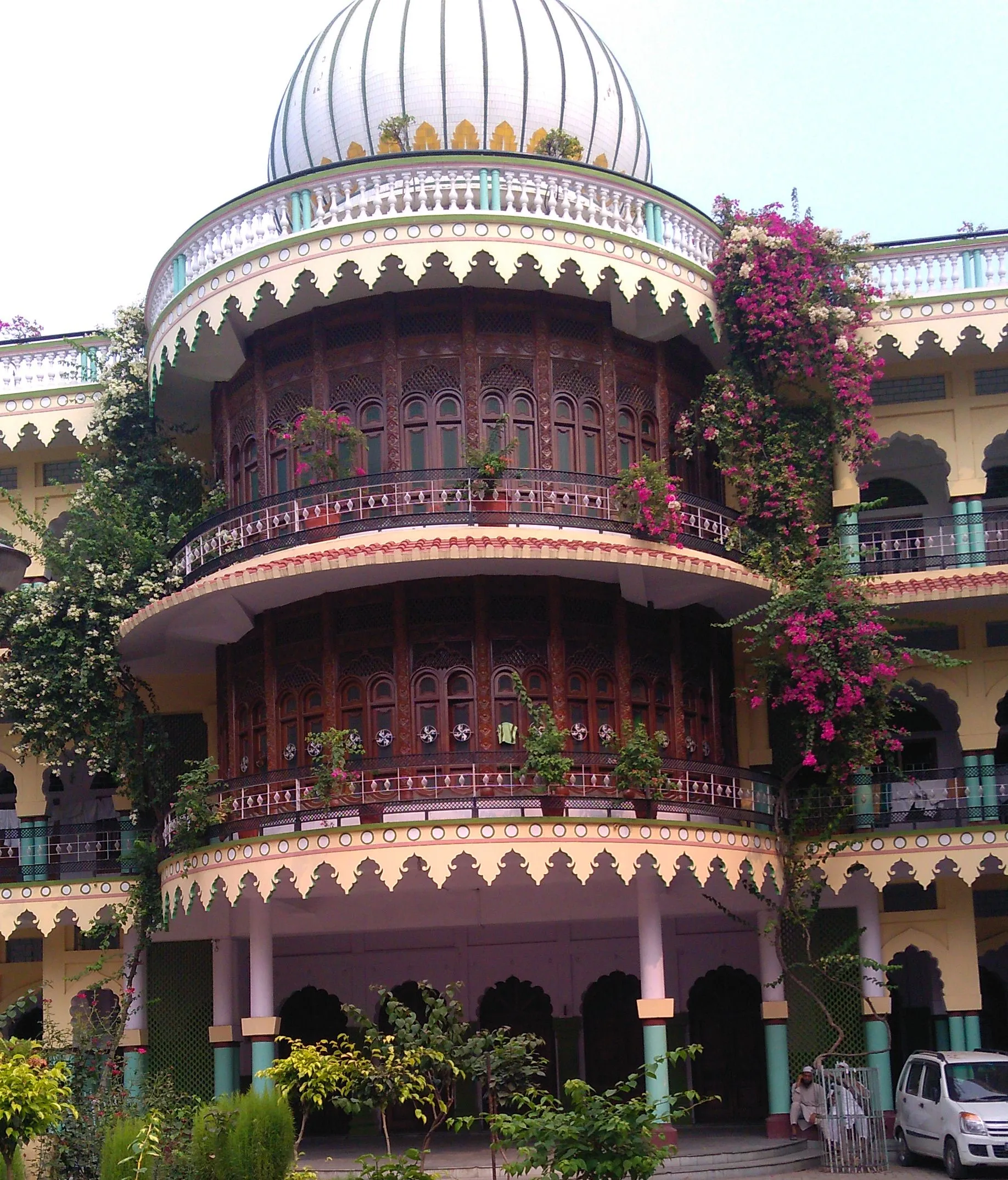
Muhammad Idris Kandhlawi (20 August 1899 – 28 July 1974) was a scholar of hadith and Qur'anic commentary who taught for more than fifty years in the seminaries of northern India and, after 1947, of Pakistan. He held the titles Shaykh al-Hadith and Shaykh al-Tafsir, and his career carried him through six institutions: Madrasa Aminia in Delhi, Darul Uloom Deoband twice, a long period in the princely state of Hyderabad, Jamia Abbasia at Bahawalpur, and finally Jamia Ashrafia in Lahore, where he taught until his death.
He wrote prolifically. His works include an eight-volume Urdu commentary on the Qur'an, a multi-volume Arabic commentary on the hadith collection Mishkat al-Masabih of which the first four volumes were published in Damascus, and a four-volume Urdu life of the Prophet Muhammad (Peace Be Upon Him). Muhammad Qasim Zaman's study of the modern ulama describes the hadith commentary as an "age-old and elitist medium" through which scholarly authority continued to be constructed even in an age of mass print, and notes alongside it the parallel growth of Urdu religious writing aimed at ordinary educated readers. Kandhlawi worked in both registers, and the range of his output — a technical Arabic commentary that found readers in the Arab world, and an accessible Urdu tafsir and sira — places him squarely within that double pattern.
Name, Lineage and Family
In the introduction to one of his works Kandhlawi describes himself as "Hafiz Muhammad Idris ibn Maulana Hafiz Muhammad Ismail Kandhlawi, Siddiqi by nasab, Hanafi by madhhab, and Chishti by mashrab" — that is, Siddiqi by lineage, Hanafi in law, and Chishti in his Sufi affiliation. In one of his Arabic works he gives a fuller formula, describing himself as al-Siddiqi al-Faruqi by lineage, al-Bawfali by birth and origin, al-Kandahlawi by home, al-Hanafi in law, and al-Naqshbandi al-Mujaddidi.
These self-descriptions repay unpacking, because each element locates him within a tradition. He traced descent on his father's side to Abu Bakr al-Siddiq and on his mother's side to Umar ibn al-Khattab, hence the paired epithets Siddiqi and Faruqi. His Sufi affiliation was to the Chishtiyya Sabiriyya, which in the Indian setting also carried the Naqshbandiyya Mujaddidiyya — the reformed Naqshbandi line associated with Ahmad Sirhindi. Multiple affiliations of this kind were normal rather than exceptional among the Deobandi scholars; Metcalf's account of the movement describes the same combination of juristic training and initiation into one or more of the Sufi orders as characteristic of its leading figures.
"Bawfali" is the Arabic rendering of Bhopali, marking his birth in Bhopal. He is nevertheless generally known by the nisba Kandhlawi, after Kandhla, the north Indian town that was his family's home and which produced an unusual number of religious scholars. He was a descendant of Mufti Ilahi Bakhsh Kandhlawi, and his patronymic is given as Muhammad Idris ibn Muhammad Ismail ibn Muhammad Ishaq ibn Muhammad Abul-Qasim ibn Ilahi Bakhsh.
Birth and Childhood
He was born on 12 Rabi al-Thani 1317 AH, corresponding to about 20 August 1899, in Bhopal, the capital of the princely Bhopal State. His father, Maulana Muhammad Ismail Kandhlawi, who died in 1942, was a religious scholar and a disciple of Haji Imdadullah Muhajir Makki, the Sufi guide whose influence ran through the founding generation of Deoband. At the time of his son's birth Muhammad Ismail was employed in the Forest Department of Bhopal State. When Idris was a few years old his father resigned that post and began teaching hadith at the Jami Masjid in Kandhla.
The household was a learned one, and the sources note that it was usual even for the women of the family to know the Qur'an by heart. Following family practice, Idris memorised the Qur'an, completing it under his father's instruction at the age of nine in Kandhla.
Education
Once he had completed hifz, his father placed him in the care of Ashraf Ali Thanawi for religious education at the Khanqah Imdadiyya Ashrafiyya in Thana Bhawan. There he worked through the elementary stages of the Dars-i Nizami curriculum under Thanawi himself and under Maulana Abdullah Gangohi. Thana Bhawan was a khanqah rather than a full seminary, and its madrasa was equipped only for the primary curriculum, so when Idris was ready for the higher sciences he had to move.
Thanawi took him personally to Saharanpur and presented him to Khalil Ahmad Saharanpuri at Mazahir Uloom, the second of the great reformist seminaries of the region. His teachers there included Saharanpuri, Maulana Sabit Ali, Maulana Abdul Latif, and Maulana Zafar Ahmad Usmani. He completed the dawra of hadith — the culminating year in which the major collections are read through — and received his sanad-i faraghat, or certificate of completion, at the age of nineteen.
He then did something that marked him out: he completed the dawra of hadith a second time, at Darul Uloom Deoband. His teachers in this second round included Anwar Shah Kashmiri, Shabbir Ahmad Usmani, Mufti Azizur Rahman Usmani, Maulana Muhammad Ahmad Nanautawi, Maulana Habibur Rahman Usmani, and Sayyid Asghar Husain Deobandi. Among his fellow students at Deoband were Muhammad Shafi, later the founder of the Darul Uloom at Karachi, and Qari Muhammad Tayyib, later Deoband's long-serving rector.
The seminary's own institutional history, Sayyid Mahboob Rizvi's History of the Dar al-Ulum Deoband, counts him among its graduates and gives the year of his graduation as 1337 AH. It records the same sequence — the elementary years at the Thana Bhawan khanqah, the hadith course at Mazahir Uloom in Saharanpur, and then a second passage through the dawra at Deoband, which it attributes to a wish for further study — and it singles out Anwar Shah Kashmiri as the teacher whose pupil he particularly was.
Career
His working life can be set out as a sequence of posts:
| Years | Institution | Position |
|---|---|---|
| 1921–1922 | Madrasa Aminia, Delhi | Teacher |
| 1922–1929 | Darul Uloom Deoband | Teacher |
| 1929–1939 | Hyderabad State | Teaching, research and authorship |
| 1939–1949 | Darul Uloom Deoband | Shaykh al-Tafsir |
| 1949–1951 | Jamia Abbasia, Bahawalpur | Shaykh al-Jamia |
| 1951–1974 | Jamia Ashrafia, Lahore | Shaykh al-Hadith wa al-Tafsir |
Madrasa Aminia, Delhi
On completing his education he was appointed in 1921 to his first teaching post at Madrasa Aminia in Delhi. This was during the period when Mufti Kifayatullah Dehlawi led the madrasa. He stayed only a year. Maulana Muhammad Ahmad Nanautawi, then muhtamim of Darul Uloom Deoband, and Maulana Habibur Rahman Usmani, the na'ib muhtamim, invited him to teach at the Darul Uloom, and he accepted.
First period at Deoband
He began teaching at Deoband in 1922. He was never given the elementary books. The texts assigned to him at the outset were the Hidaya in Hanafi law and the Maqamat of al-Hariri in Arabic literature; later he was given the hadith collection Mishkat al-Masabih, and Tafsir al-Jalalayn also fell to him. He remained nine years.
During this period he delivered a regular lecture on the Qur'an after the dawn prayer in the Darul Uloom's Naudarah building. It was attended by both intermediate and advanced students, and the discussion ranged across difficult questions in exegesis, hadith, theology, and law. The practice of a voluntary early-morning lesson outside the formal timetable was a recognisable feature of seminary life, and it is the setting in which much of his later exegetical writing took shape.
Hyderabad State
In 1929 Anwar Shah Kashmiri and Shabbir Ahmad Usmani left the Darul Uloom following disagreements with its leadership, and other teachers and students followed them. Kandhlawi also left, taking up a position in Hyderabad State, where he remained about nine years.
Hyderabad proved the most productive period of his life as a writer. Alongside teaching he undertook sustained research, and it was here that he composed al-Ta'liq al-Sabih, his multi-volume Arabic commentary on Mishkat al-Masabih. The decisive advantage was access to the Asafiya Library, one of the great manuscript collections of the subcontinent, where he was able to work from rare materials including a manuscript of al-Turbashti's commentary on the Masabih al-Sunna. He continued to teach as well, taking students through the whole of the Mishkat several times.
Hyderabad in these years was a meeting point for a remarkably varied group of scholars, and Kandhlawi's circle reflects it. He and Muhammad Marmaduke Pickthall, the English translator of the Qur'an, lived across from one another for a time and conversed often about Islam. His friends and contacts also included Manazir Ahsan Gilani and Abdul Bari Nadwi, in whose gatherings learned company regularly assembled. It was in Hyderabad, too, that he met Abul A'la Maududi and his brother Abul Khair Maududi, and he remained in contact with them for the rest of his life.
Second period at Deoband
In 1936 and again in 1937 he was invited to take a post at the Madrasa Islamiyya Arabiyya at Dabhel, where Kashmiri and Shabbir Ahmad Usmani had moved. He declined both invitations. In 1939, however, Shabbir Ahmad Usmani — who had by then returned to Deoband as sadr muhtamim — and Qari Muhammad Tayyib, then muhtamim, invited him to become Shaykh al-Tafsir at the Darul Uloom. He accepted, although the salary was less than half what he had been receiving in Hyderabad.
He held the chair from 1939 to 1949. His teaching covered Tafsir Ibn Kathir and Tafsir al-Baydawi, the principal texts of the dawra in exegesis, and he also taught Tafsir al-Jalalayn, Sunan Abu Dawud, and the Sharh Ma'ani al-Athar of al-Tahawi. His regular Qur'an lecture continued.
Bahawalpur
After the partition of India, Shabbir Ahmad Usmani, who had moved to Pakistan, repeatedly urged Kandhlawi to join him. Kandhlawi resigned from Darul Uloom Deoband in May 1949 and returned home to Kandhla. He received and declined invitations from other institutions in India, and also declined the post of Shaykh al-Hadith at Darul Uloom Hathazari in Chittagong, in what was then East Pakistan, despite the salary offered, because he intended to settle in West Pakistan.
In October 1949 he was invited to Jamia Abbasia in Bahawalpur, an old institution of the princely Bahawalpur State whose educational and administrative arrangements were then being reformed. The State's Ministry of Education had asked Shabbir Ahmad Usmani to serve as chancellor and Kandhlawi as vice-chancellor. He took up the post on 25 December. In addition to administration he taught Sahih al-Bukhari and Tafsir al-Baydawi. Shabbir Ahmad Usmani fell ill soon after arriving at Bahawalpur and died there in December 1949. Jamia Abbasia later became the Islamia University of Bahawalpur, and Kandhlawi's tenure as its head belongs to the institution's earlier phase.
Jamia Ashrafia, Lahore
In August 1951 he resigned from Jamia Abbasia and moved to the recently founded Jamia Ashrafia in Lahore at the invitation of its founder and muhtamim, Mufti Mahmud Hasan. There he served as Shaykh al-Hadith wa al-Tafsir and taught Sahih al-Bukhari, the Jami of al-Tirmidhi, and Tafsir al-Baydawi. He remained at the Jamia for the rest of his life, twenty-three years in all — the longest of his attachments to any institution.
He also took part in public affairs, working within the Jamiat Ulama-e-Islam during the movement for Pakistan, and he migrated to Pakistan after partition.
Writings
His authorship spanned more than half a century. His first work, an Arabic commentary on the Maqamat of al-Hariri of Basra, was written when he was twenty-one; he continued writing until about a fortnight before his death. Rizvi's history of the seminary puts the total number of his books at close to a hundred, and it should be read as the figure that circulated rather than as an enumerated count, since that history reports it as such and does not itself list them.
His principal works include:
- Ma'arif al-Qur'an, an eight-volume Urdu commentary on the Qur'an. He drew on the method of Thanawi's Bayan al-Qur'an, under whom he had studied, and directed the work at readers encountering exegetical questions that had not arisen for earlier generations.
- al-Ta'liq al-Sabih 'ala Mishkat al-Masabih, his Arabic commentary on the Mishkat, in five volumes, of which the first four were published in Damascus. Publication in Damascus brought his work to an Arabic-reading audience, and it was through channels of this kind that South Asian hadith scholarship became known in the Arab world.
- Sirat al-Mustafa, an Urdu life of the Prophet Muhammad (Peace Be Upon Him). The first three volumes were printed in 1941, and a fourth, conceived as a supplement, was published at Deoband in 1966.
- Khilafat-i Rashida, on the era of the Rightly Guided Caliphs.
- Works on hadith methodology, including Muqaddimat al-Hadith and a commentary on the Alfiyya in hadith terminology, and al-Fath al-Samadi, a commentary bearing on al-Bukhari. Rizvi's history records a further work on al-Bukhari, Tuhfat al-Qari fi Hall Mushkilat al-Bukhari, and a treatise on the evidentiary authority of hadith, Hujjiyat-e Hadith.
- I'jaz al-Qur'an, on the inimitability of the Qur'an, and works of doctrine and theology. Rizvi's first volume, which arranges the writings of the seminary's scholars by subject, places three of his titles under beliefs and dialectics — Aqa'id al-Islam, Ilm al-Kalam, and Hudus-e Madda wa Ruh, on the question of whether matter and spirit had a beginning — and lists Ahkam al-Qur'an, on the legal verses of the Qur'an, as a work written jointly with Zafar Ahmad Thanawi and Muhammad Shafi Deobandi.
Death
He died on the morning of 7 Rajab 1394, corresponding to 28 July 1974, in Lahore, and is buried there. Among his students was Harun Islamabadi.
Historiographical Note
Three matters need stating so that readers are not misled.
The first is a recurring confusion of identity. Muhammad Idris Kandhlawi is not the same person as Muhammad Ilyas Kandhlawi, the founder of the Tablighi Jamaat, and the two are sometimes mistaken for one another. The confusion is understandable: both bear the nisba Kandhlawi from the same town, both were the sons of men named Muhammad Ismail, and both belonged to the same scholarly milieu. A question posted to Darul Uloom Deoband's own fatwa service asks whether Idris Kandhlawi was the founder of the Tablighi Jamaat, which shows the mistake in circulation among Urdu readers. They were distinct scholars: Ilyas was born in 1885 at Kandhla and died in 1944, Idris was born in 1899 at Bhopal and died in 1974. No source consulted for this article establishes a relationship between them, and none is asserted here.
The second concerns the title Ma'arif al-Qur'an. Two separate Urdu commentaries of the twentieth century bear this name. One is Idris Kandhlawi's, in eight volumes. The other is by Mufti Muhammad Shafi, his fellow student at Deoband, and originated in a radio programme — Zaman describes that second work as an influential and widely read Urdu commentary. Readers meeting the title should check which author is meant.
The third concerns his dates, where the two principal accounts used here diverge. Darul Uloom Deoband's own institutional history and the biographical account consulted alongside it agree on the shape of his life — the six institutions, the order in which he held his posts, the identity of his teachers and of his major works, and his death at Lahore on 7 Rajab 1394, corresponding to 28 July 1974 — but they do not agree on the timing within it. Rizvi's history gives his birth as 1318 AH rather than 1317; places his first teaching period at the Darul Uloom between 1338 and 1346 AH, that is 1919 to 1927, rather than 1922 to 1929; and describes the Hyderabad years that followed as ten to twelve rather than about nine. Its figures are internally consistent, since the eight years of the first Deoband period and the ten of the second together make the eighteen years at the seminary that it states elsewhere in the same notice, so the difference is a variance between the two accounts rather than a slip within one of them. Rizvi's earlier volume supplies a further anchor for its own dating: it places Anwar Shah Kashmiri's resignation from the Darul Uloom in Safar 1346 AH, and the ten-day student strike that followed his return to Deoband in Rabi al-Awwal of the same year — which is the departure of Kashmiri that the account of Kandhlawi's own move to Hyderabad turns on, and which that history therefore dates two years earlier than the other account does. Two smaller points diverge in the same way. Rizvi puts al-Ta'liq al-Sabih at eight volumes where the other account gives five, the two agreeing that the first four were published at Damascus; and Rizvi describes him as appointed head of Jamia Abbasia at Bahawalpur, where the other account has him as vice-chancellor under Shabbir Ahmad Usmani, who died within a year of their arrival there. On the two later dates the accounts are close: Rizvi has his recall to Deoband in 1358 AH, which is 1939, and his professorship at Jamia Ashrafia running twenty-two years from 1952, against 1951 and twenty-three years in the other. This article follows the fuller chronology in the body and records the variants here rather than choosing silently between them.
References and Further Reading
Primary Islamic Sources
- The Qur'an — the subject of his eight-volume commentary and of his daily lecture at Deoband
- Sahih al-Bukhari — taught by him at Bahawalpur and Lahore
- Mishkat al-Masabih — the hadith collection he taught repeatedly and on which he wrote his major Arabic commentary
- Sunan Abu Dawud — among the collections he taught during his second period at Deoband
- Ma'arif al-Qur'an by Muhammad Idris Kandhlawi — his own commentary, the primary record of his exegetical method
Classical Islamic Sources
- Tafsir Ibn Kathir — a principal text of the dawra in exegesis that he taught at Deoband
- Tafsir al-Baydawi — the second main exegetical text of his teaching, carried through all three of his later posts
- Tafsir al-Jalalayn — assigned to him from his first years of teaching
- The Hidaya in Hanafi law, and the Maqamat of al-Hariri in Arabic literature — the texts he was first given at Deoband, and the subject of his earliest book
- Sharh Ma'ani al-Athar of al-Tahawi — among the works he taught in his second Deoband period
Academic and Scholarly Sources
- The Ulama in Contemporary Islam: Custodians of Change by Muhammad Qasim Zaman — for the hadith commentary as an instrument of scholarly authority, the growth of Urdu religious writing for a general readership, and the institutional world of the Deobandi madrasas
- Islamic Revival in British India: Deoband, 1860-1900 by Barbara Daly Metcalf — for Darul Uloom Deoband, the Dars-i Nizami curriculum, the combination of juristic and Sufi authority, and the Thana Bhawan khanqah
- Wikipedia, "Idris Kandhlavi", https://en.wikipedia.org/wiki/Idris_Kandhlawi — consulted with the owner's authorisation for the biographical framework, the career chronology, and the list of works
- History of the Dar al-Ulum Deoband by Sayyid Mahboob Rizvi, translated by Murtaz Husain F. Quraishi — the seminary's own institutional history, consulted directly for this article. Its second volume carries a biographical memoir of him among the graduates of the Dar al-Ulum, and is the source of the alternative chronology, the eight-volume extent of the Mishkat commentary, and the titles Tuhfat al-Qari and Aqa'id al-Islam; its first volume carries a subject-classified survey of the writings of the seminary's scholars, which records several further works
Further Reading
- Muhammad Miyan Siddiqi, Tazkirah-yi Maulana Muhammad Idris Kandhlawi (Maktabah-yi Usmaniyah, Jamia Ashrafia, Lahore, 1977) — the dedicated Urdu biography
- Muhammad Akbar Shah Bukhari, Akabir Ulama-i Deoband (Idarah-yi Islamiyat, Lahore, 1999) — biographical notices of the senior Deobandi scholars, in Urdu
- Muhammad Taqi Usmani, The Great Scholars of the Deoband Islamic Seminary, translated by Abdul Rahim Qidawi (Turath Publishing, London, 2013) — a modern account of the seminary's leading figures in English
- The Deobandi Movement — the school to which he belonged
- Darul Uloom Deoband — the seminary where he twice studied and twice taught
- Sufi Orders in South Asia — for the Chishti and Naqshbandi affiliations he recorded of himself
More from South Asian Islam
Darul Uloom Deoband: The Seminary and the School of Thought
Darul Uloom Deoband is an Islamic seminary founded in northern India in 1866 or 1867 and the origin of the Deobandi school of thought. Its innovation was institutional: it carried the traditional religious sciences in the form of a modern school funded by public subscription.
The Ahl-i Hadis Movement
A nineteenth-century Indian Sunni movement that set aside the authority of the historic schools of law in favour of direct recourse to the Qur'an and hadith. Led by scholars at Delhi and Bhopal, it was marked by its manner of prayer and an austere standard of interpretation.
The Deobandi Movement
A school of Sunni thought and practice that grew from the seminary founded at Deoband in northern India in 1866 or 1867. Its scholars combined the roles of jurist and Sufi guide, built a madrasa funded by public subscription, and made hadith the centre of religious education.
Ahmed Raza Khan Barelvi and the Barelvi Movement
Ahmed Raza Khan of Bareilly (1856-1921) was an Indian Hanafi jurist, Sufi of the Qadiri order and prolific writer whose defence of the veneration due to the Prophet and the saints gave rise to the movement known as Barelvi, whose adherents call themselves the ulama of the Ahl-i Sunnat wa Jamaat.